
Reviewed · SPAIN TEMPLE TOURS
From Madrid: Escorial Monastery and the Valley of the Fallen
The striking thing about this half-day trip is the contrast between two monumental sites: El Escorial, Felipe II’s vast royal monastery, and the Valley of the Fallen, a basilica cut into granite and tied to Spain’s Civil War. Together, they take you from royal power and Catholic Spain to the difficult politics of the modern nation.
I like the efficient plan and the setting. You get round-trip transport from Madrid, a guide, headsets, and skip-the-line entry, while the drive through the Sierra de Guadarrama adds a welcome change from the city. I also like that the guides, including Cristina, Beatriz, Sergio, Rafael, and Oscar, are repeatedly praised for making serious history clear and engaging.
The main drawback is time. Five hours is enough for a strong introduction, but not for lingering over every painting, garden, or viewpoint. There are also many steps, and the tour is not suitable for wheelchair users or people with mobility impairments.
Key points to know before you book
- Two very different monuments: See a royal monastery, art collection, royal tombs, and a Civil War memorial in one outing.
- A practical escape from Madrid: Both sites are difficult to visit together without a car, so the air-conditioned coach saves time and hassle.
- Strong guiding is central: English and Spanish commentary, headsets, and guides such as Cristina and Beatriz help bring meaning to imposing buildings.
- Five hours keeps the pace brisk: You will see the main areas, but personal wandering time is limited, especially at the Valley of the Fallen.
- Expect stairs and walking: Comfortable shoes are important, and the tour is not designed for wheelchair users.
- A serious historical visit: The Valley of the Fallen requires a respectful approach because it is both a major monument and a site connected to the legacy of the Spanish Civil War.
Why these two sites belong on the same day
Many day trips from Madrid chase famous towns or food stops. This one takes a different route. It focuses on how Spain represented power, faith, monarchy, war, and national memory through architecture.
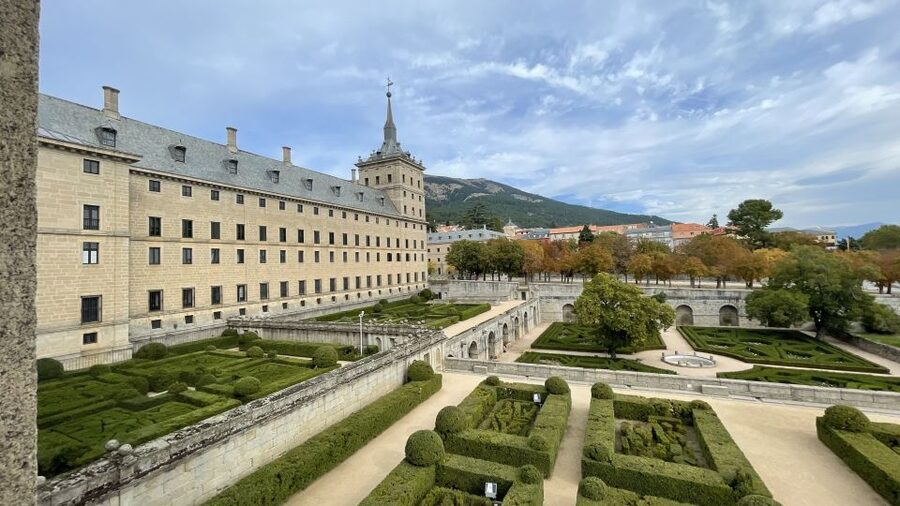
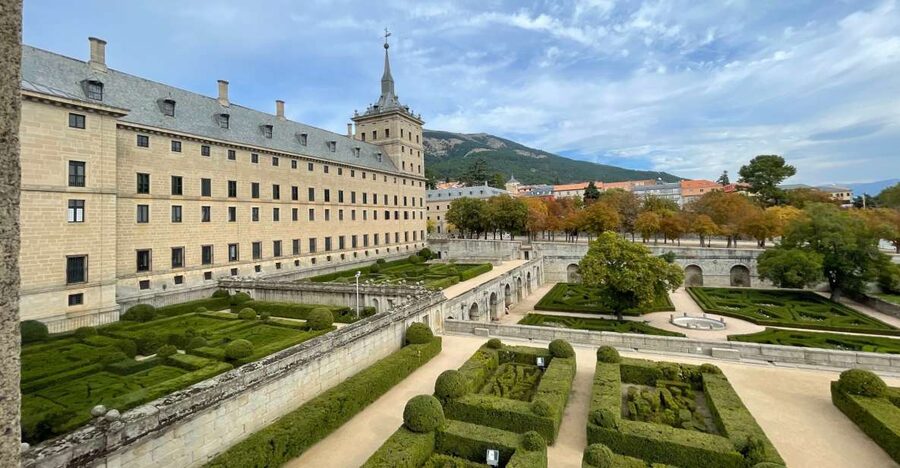
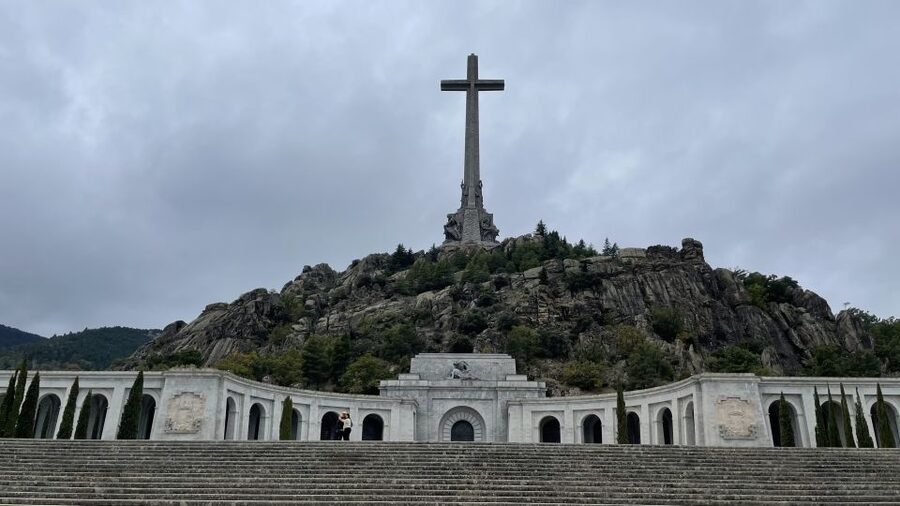
At El Escorial, Felipe II created a place that was part palace, monastery, church, library, art collection, and royal burial site. The building gives physical form to the ambitions of Spain’s Golden Age. At the Valley of the Fallen, the scale becomes even more dramatic, but the meaning is more contested. A basilica carved into rock and a giant granite cross recall the people who died in the Spanish Civil War, while the site also carries the political weight of the Franco period.
I find the pairing useful because neither site makes much sense as a quick photo stop. The architecture is large and solemn, but the guide’s explanation gives you a framework for understanding what you are seeing. Without that context, El Escorial can feel like a maze of rooms and religious art, while the Valley of the Fallen can seem like an oversized monument in the mountains.
Other temple visits near Spain we have written up
- Montserrat Monastery Half Day Experience from Barcelona
★ 5.0 · 6,014 reviews - Montserrat Monastery Small Group or Private Tour Hotel pick-up
★ 5.0 · 5,144 reviews - Escorial Monastery and the Valley of the Fallen Tour from Madrid
★ 5.0 · 2,494 reviews
Leaving Madrid and reaching San Lorenzo de El Escorial
The meeting point is outside the Commercial Gallery at San Bernardo Street 7. From there, the coach takes about 45 to 50 minutes to San Lorenzo de El Escorial.
The air-conditioned bus has Wi-Fi, and the ride gives you a break from Madrid’s streets. The coach matters here because the two sites are outside the city and are not naturally linked by a simple public transport route. If you do not have a rental car, organized transport is the practical choice.
There is a bathroom stop on arrival before the monastery visit. That small pause is useful, though one part of the visit moves on a fairly tight schedule. Bring water and wear shoes that can handle stone floors and stairs. Food and drinks are not included, so eat before leaving Madrid or plan to manage without a proper meal during the five-hour outing.
El Escorial, Felipe II’s massive royal project
The first main visit lasts about 105 minutes. You enter with a skip-the-line ticket and follow the guide through the monastery complex.
El Escorial is best understood as a statement in stone. Felipe II commissioned it as a royal residence, monastery, burial place, and center of Catholic learning. The building reflects the Spanish Golden Age, when Spain held enormous political and imperial influence and the monarchy worked closely with the Church.
The scale can be hard to grasp at first. You move through formal courtyards, religious rooms, royal spaces, and areas linked to the monastery’s daily life. The Patio de Reyes gives you one of the clearest architectural introductions, with its ordered design and royal associations.
The tour also includes the cloister and chapter rooms. These spaces help you see that El Escorial was not simply a palace decorated for show. It was a working religious institution as well as a royal residence. The guide’s explanation is especially useful here, since the functions of the rooms are not always obvious from the architecture alone.
The Pantheon of Kings and the Pantheon of Infants are among the most memorable parts of the visit. These burial places connect the building to centuries of Spanish monarchy. The experience is solemn rather than theatrical, and the compact spaces contrast with the huge scale of the monastery above ground.
You also visit the royal rooms and the library. The library is a particular highlight for anyone interested in books, scholarship, or the intellectual side of Spanish power. Several people who have taken the tour found the library, royal tombs, gardens, and spiritual character of the complex especially impressive.
The Basilica is included in the route except on Sundays. Its religious art and design add another layer to the visit, although the tour cannot give you unlimited time to study each painting. One visitor with an art history background wanted more detail about individual works, which is a fair point. If paintings are your priority, use any free moments to look closely and ask the guide specific questions.
What the guided visit adds inside El Escorial
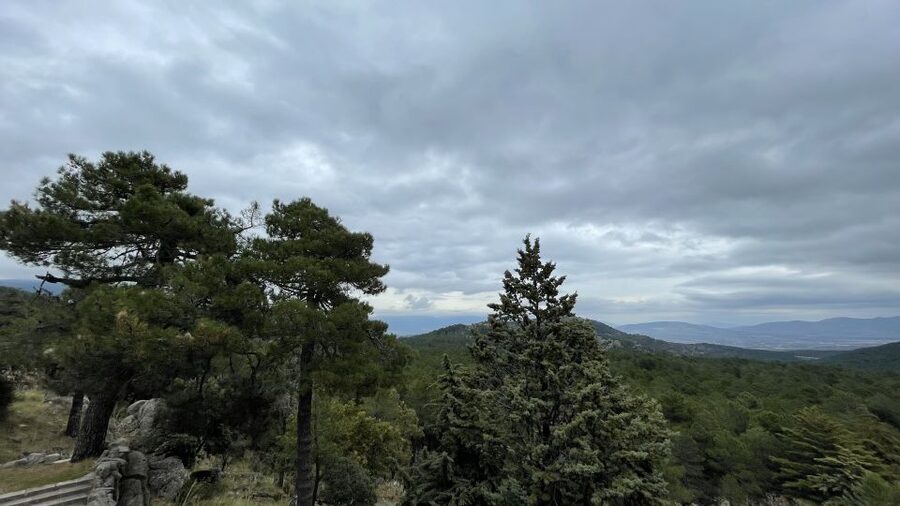
El Escorial rewards explanation. A self-guided visit can show you beautiful rooms, but it may not explain why a royal residence feels so austere or why the monastery was designed with such a strong sense of order.
Guides such as Cristina, Beatriz, Arantxa, Pilar, and Sergio have been praised for clear English, good pacing, and the ability to answer questions. Cristina is also noted for switching smoothly between Spanish and English. The headsets help you hear the commentary while moving through large rooms and busy sections.
The strongest guides do not simply recite dates. They connect Felipe II’s reign to the building’s religious purpose, royal identity, and cultural ambitions. That makes the visit useful for teenagers and adults alike. One family specifically found the historical explanation engaging for a 17-year-old.
You should still expect a group experience. The guide controls the route and timing, so you cannot stop everywhere for as long as you might on your own. This is the tradeoff for getting a clear overview in a limited morning.
A different set of gates, same trip:
- Montserrat Museum and Monastery Entry Ticket
★ 4.5 · 1,740 reviews - Montserrat Small Group: Monastery, Black Madonna & Natural Park
★ 5.0 · 1,690 reviews - Madrid: Flamenco Show at Tablao Sala Temple with Drink
★ 4.8 · 1,206 reviews - From Seville: Italica Roman City & Medieval Monastery Tour
★ 4.5 · 1,051 reviews
The short ride to the Valley of the Fallen
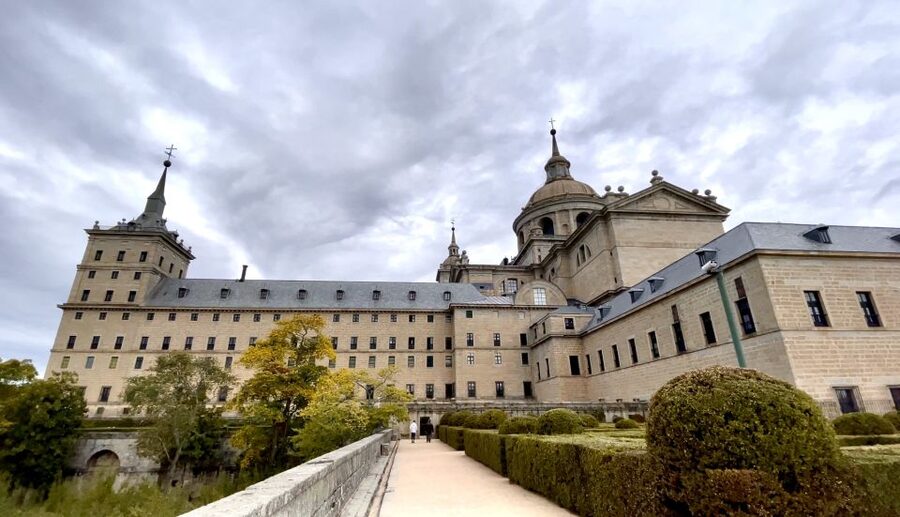
After El Escorial, the coach takes about 15 minutes to the Valley of the Fallen, located in the Peña de Cuelgamuros.
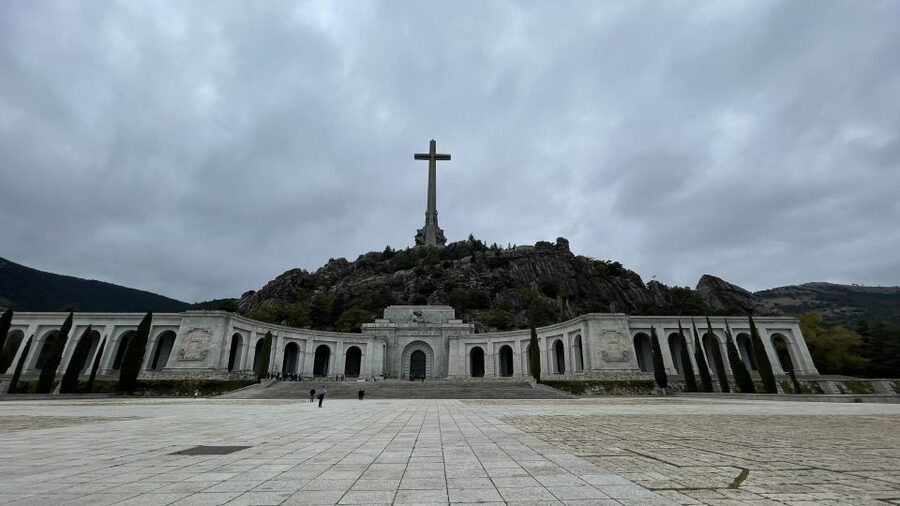
The change is immediate. El Escorial is a carefully ordered royal and religious complex. The Valley of the Fallen feels more monumental and exposed, with the mountains and the enormous stone cross shaping the approach. The cross can be seen from a long distance and gives the site its unmistakable visual identity.
The visit lasts about an hour. That is enough to see the basilica carved into the rock and learn why the site was built, but it is not enough for an unhurried exploration of every part of the grounds. Several people wanted more personal time here, so keep your camera ready and pay attention as the guide leads you through the visit.
Inside the rock-cut basilica
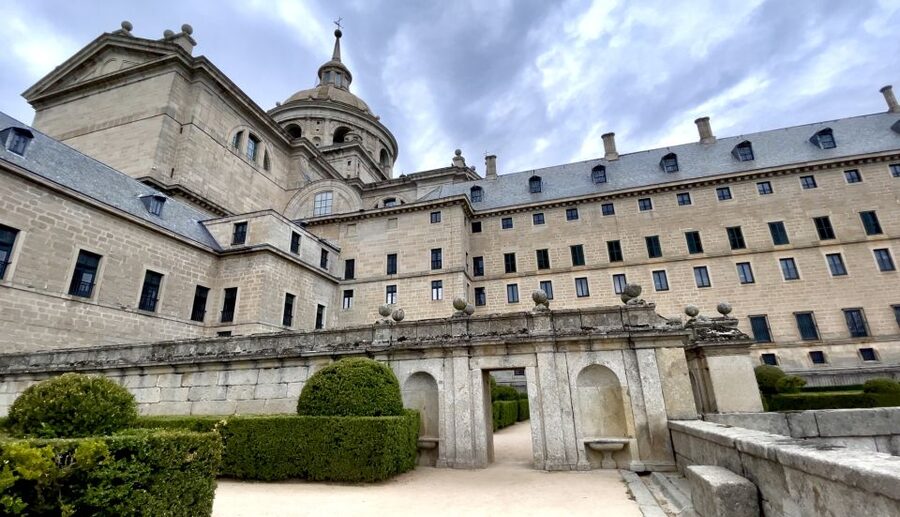
The basilica is the most startling physical feature of the outing. Instead of building a church entirely above ground, the project uses the mountain itself. The interior scale and the granite setting create a heavy, unusual atmosphere that is very different from El Escorial.
The site is also a burial place for 33,847 people who died in the Spanish Civil War. That fact changes how you experience the architecture. This is not simply a dramatic church or a mountain viewpoint. It is a place connected to mass death, dictatorship, political memory, and the long process of confronting Spain’s past.
A good guide needs to explain that history with care. The strongest examples on this tour, including Cristina, Pilar, and Oscar, are praised for giving context without turning the visit into a political argument. That matters because the monument remains controversial, and a simple heroic explanation would leave out much of what makes the site significant.
Access to the basilica can occasionally be affected by events. One guide managed to bring a group inside despite a wedding taking place, but you should understand that access conditions can vary. The tour includes entry, yet the exact flow may depend on what is happening at the site that day.
Timing, walking, and the real pace
The published schedule is straightforward:
- About 45 minutes by coach from Madrid
- Around 105 minutes at El Escorial
- About 15 minutes to the Valley of the Fallen
- Around one hour at the basilica and grounds
- About 45 minutes back to Madrid
That leaves very little spare time. The pace has been described as relaxed but organized, which is a fair way to view it. You are not rushed from room to room, but you also cannot wander at will.
There are lots of steps in both places. Comfortable clothing and shoes are not just polite advice here. They affect how much attention you can give the buildings instead of your feet. The activity is specifically not suitable for wheelchair users or people with mobility impairments.
You will have bathroom opportunities, including a stop when you arrive at El Escorial. There is no meal stop built into the plan, and refreshments are not included. If you need a coffee or lunch break during every half-day excursion, this may feel too compact.
Weather can affect the experience. The buildings remain worthwhile in rain, but the outdoor portions and views around the Valley of the Fallen are less pleasant in poor conditions. Bring an extra layer, since the setting outside Madrid can feel different from the city.
Is $73 a fair price?
At $73 per person, the value depends on what you want from the day. You are paying for round-trip coach transport, a live guide, headsets, Wi-Fi on the bus, and skip-the-line entry to both major sites.
That is a reasonable package if you do not have a car. Reaching both monuments independently takes more planning, and a self-guided visit would not give you the same historical explanation. The transport alone also removes the need to work out connections between San Lorenzo de El Escorial and the Valley of the Fallen.
The price is less attractive if you mainly want free time or detailed art study. You will see the important sections, but the schedule favors coverage and context over long, quiet visits. I would choose this tour for a first visit, especially if Spanish history is new to you. A repeat visitor or specialist in royal architecture might prefer more time at El Escorial alone.
The booking terms add flexibility: you can cancel up to 24 hours ahead for a full refund, and you can reserve without paying immediately. Those details are useful if your Madrid plans are still changing.
Who will get the most from this tour?
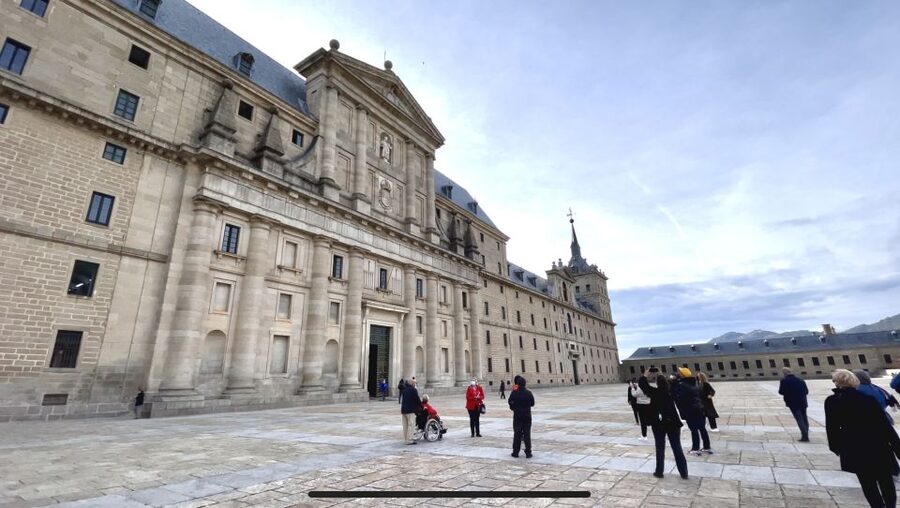
I would recommend it to you if you want a strong historical overview beyond central Madrid. It suits first-time visitors, families with older children, architecture fans, and anyone interested in the Spanish monarchy or Civil War memory.
It is also a good choice if you want to avoid renting a car. The coach is comfortable, the route is simple, and the guides provide the background that makes both sites more meaningful.
I would think twice if you have difficulty with stairs, need a wheelchair-accessible route, or dislike structured group visits. I would also skip it if your main aim is a leisurely day outdoors or a long meal in a small town. This is a history-focused outing, not a relaxed village tour.
Final verdict: book it for context and convenience
I would book this tour if you have five hours to spare in Madrid and want to understand how monarchy, religion, war, and national memory shaped Spain. El Escorial is the architectural centerpiece, but the Valley of the Fallen gives the day its harder, more modern questions.
The best reason to go with a guide is not simply convenience. It is the chance to hear the sites explained in a balanced way while you are standing inside them. Just keep your expectations clear: the schedule is brisk, the walking is real, and you will leave with an informed first look rather than total freedom to explore.
FAQ
How long does the tour last?
The tour lasts five hours, including coach travel from Madrid and visits to both sites.
Where is the meeting point?
Meet your driver outside the Commercial Gallery at San Bernardo Street 7 in Madrid.
What languages are available?
The live guide and audio guide are available in Spanish and English.
Is transportation included?
Yes. Round-trip transportation by air-conditioned coach is included, along with Wi-Fi on the bus.
Are entrance tickets included?
Yes. Skip-the-line entry tickets to the Monastery of San Lorenzo de El Escorial and the Valley of the Fallen are included.
Is food included?
No. Food and drinks are not included in the tour price.
Is the tour suitable for wheelchair users?
No. The activity is not suitable for wheelchair users or people with mobility impairments, and the route includes many steps.
Can I cancel the booking?
Yes. You can cancel up to 24 hours in advance for a full refund. You can also reserve now and pay later.
Newly written up around Spain
- Private tour: San Lorenzo de El Escorial Monastery★ 5.0 · 20 reviews
- San Lorenzo de El Escorial Monastery Private Tour★ 5.0 · 12 reviews
- Barcelona: Montserrat Private Trip with Monastery Ticket★ 5.0 · 74 reviews
- San Lorenzo de El Escorial: Monastery and Site Guided Tour★ 4.8 · 127 reviews
- Semi-Private Montserrat Monastery & Hiking Experience★ 5.0 · 132 reviews
- From Palma: Serra Tramuntana and Lluc Monastery Guided Tour★ 4.5 · 146 reviews
- Full-Day Trip Barcelona to Montserrat Monastery & Cava Winery★ 5.0 · 158 reviews
- Semi-Private Montserrat Monastery, Funicular & Scenic Nature Walk★ 5.0 · 172 reviews
Spain Temple Tours, compared.
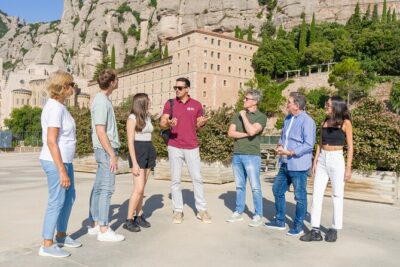
Montserrat Monastery Half Day Experience from Barcelona
Read our review →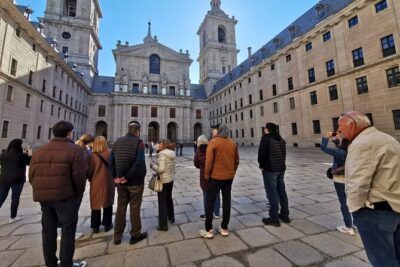
Escorial Monastery and the Valley of the Fallen Tour from Madrid
Read our review →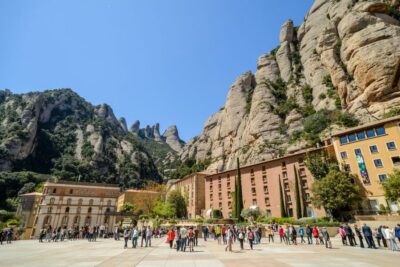
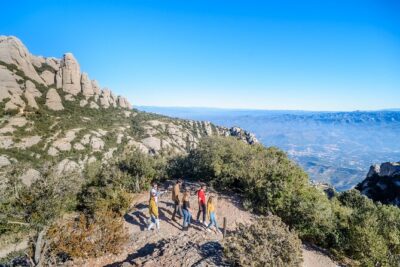
Montserrat Small Group: Monastery, Black Madonna & Natural Park
Read our review →
Flamenco Show at Tablao Sala Temple with Drink
Read our review →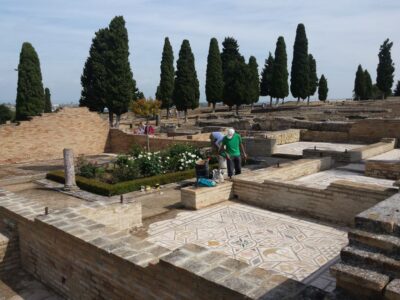
From Seville: Italica Roman City & Medieval Monastery Tour
Read our review →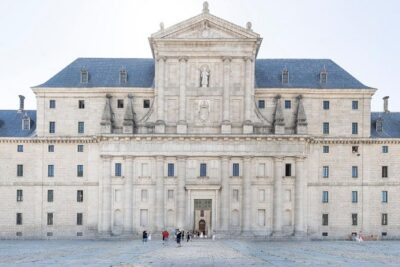
Escorial Monastery and the Valley of the Fallen from Madrid
Read our review →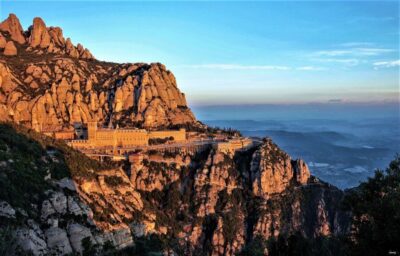
Browse the lists this tour appears in