
Reviewed · HIKING & TREKKING
Amorgos: Guided Hike of the Panagia Hozoviotissa Monastery
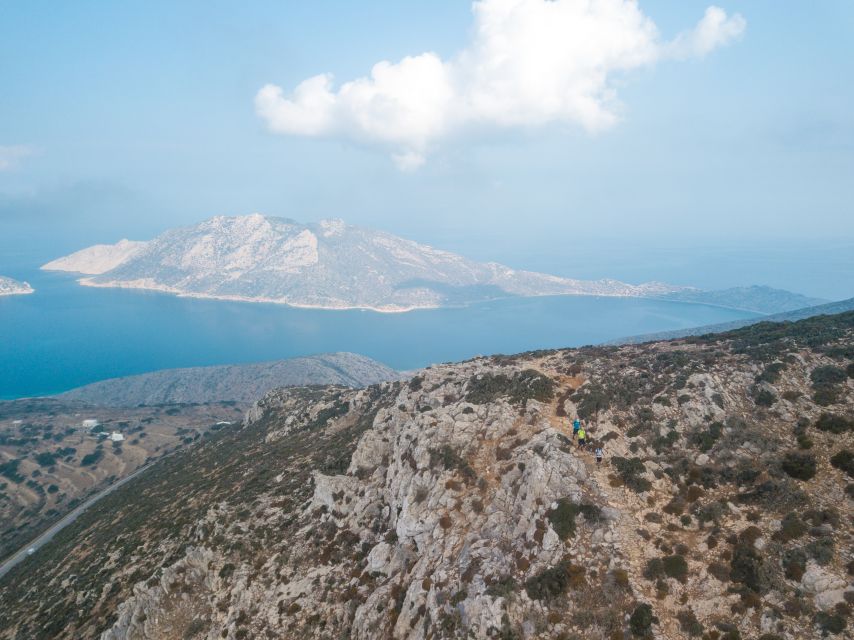
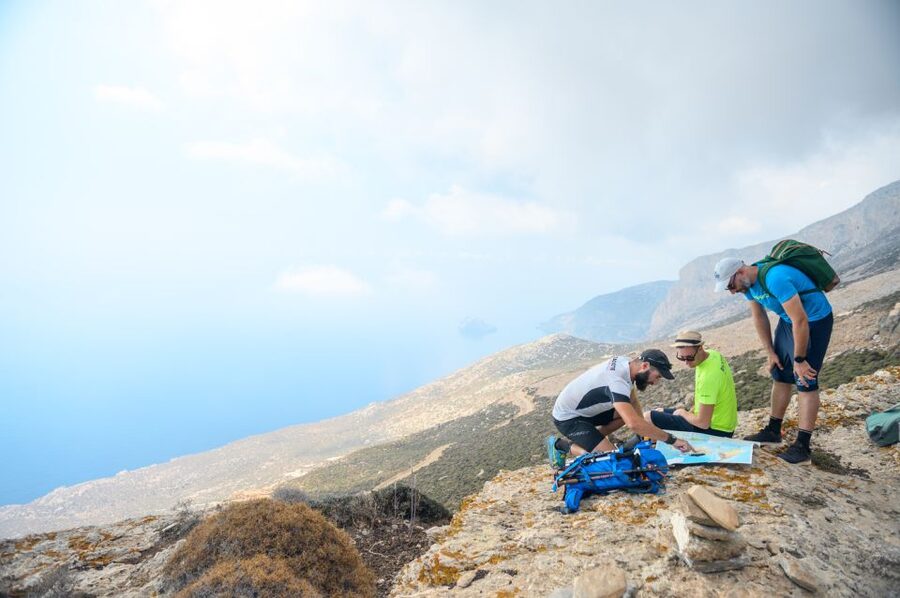
The most memorable part of this Amorgos hike is the arrival at Hozoviotissa Monastery, a whitewashed building fixed to the cliffs above the sea. You reach it on foot, after following an old route from Aegiali Bay through dry-stone country and the former monk settlement of Kapsala.
I like the mix of wild scenery and living history, and I like that guide Dimitris has shown real care in adapting the pace and interests of his group. The main caution is fitness: the route is described as moderate, but one hiker found it tiring, so sturdy shoes and water are not optional.
Key points to know before booking
- Aegiali to Hozoviotissa on foot: Follow an ancient trading path from Potamos above Aegiali Bay toward the monastery.
- Kapsala’s natural caves: See the rough shelters where monks once lived, a quiet and unusual stop on the route.
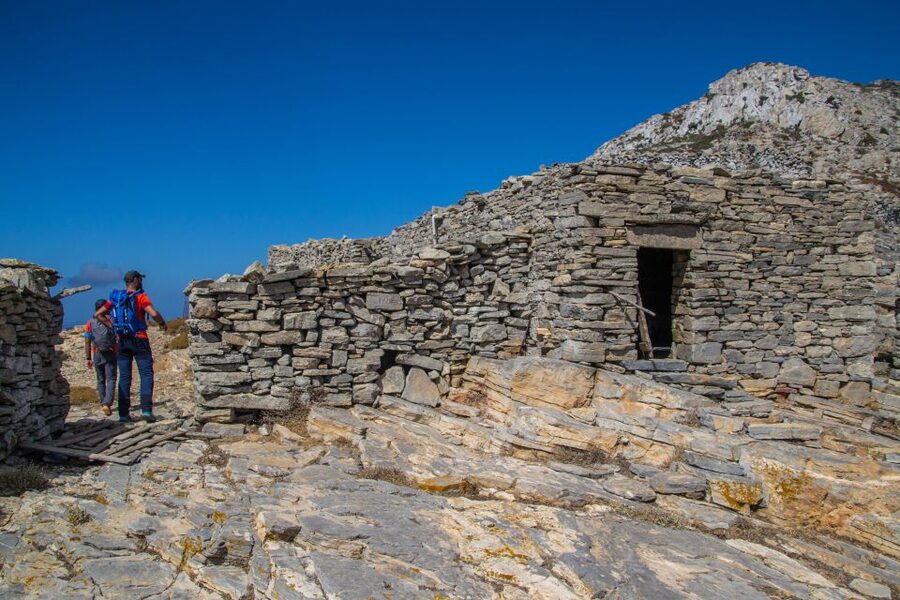
- Asfontylitis stone settlement: Walk through an abandoned rural village marked by dry-stone walls.
- Chora and sea views: Look across the South Aegean and finish with time in Amorgos’s main hill town.
- A full day outdoors: The experience lasts eight hours and includes pickup and drop-off in Aegiali, Potamos, Lagada, and Tholaria.
- Dress matters at the monastery: Women should carry or wear a long skirt, and sleeveless shirts and short skirts are not allowed.
Amorgos rewards walkers who are willing to leave the port roads behind. This guided hike gives you a full day on the island’s old paths, with a strong payoff at the end: the famous Monastery of Panagia Hozoviotissa, often described here as the second-oldest monastery in Greece.
At $112 per person, this is not a cheap casual walk. But it includes eight hours with a guide, a guided monastery visit, and pickup and drop-off from several villages in the Aegiali area. For you, the value depends on how much you want context and support on a demanding route. If you would otherwise need to arrange transport, find the trail alone, and visit the monastery without help, the price becomes easier to justify.
Starting above Aegiali Bay in Potamos
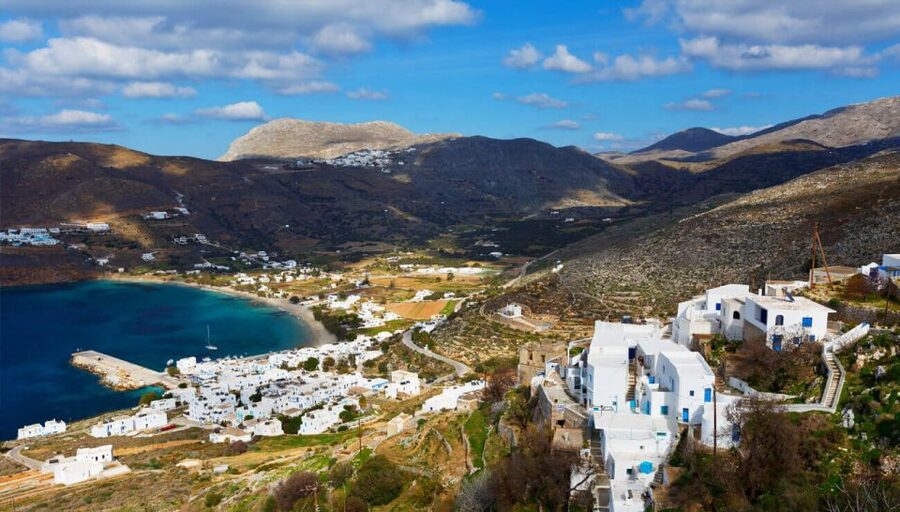
The day begins with pickup or a meeting arrangement in Aegiali, Potamos, Lagada, or Tholaria. You should be ready in your hotel lobby 15 minutes before the scheduled hiking time. The route starts at Potamos, a village above Aegiali port, rather than at the waterfront itself.
That starting point matters. You begin with a little height and move into the island’s dry, open interior instead of spending the first part of the day on busy roads. The route follows an ancient path once used for trade between settlements. You are walking through an old working network, not simply taking a scenic stroll designed for visitors.
The exact starting time depends on availability, so check it before booking. Pickup help is available from the provider if you are unsure which location applies to you. English and Greek are offered, and a French-speaking guide may be available on request.
More temple hikes and treks in Greece:
- Meteora Small Group Hiking tour with Transfer and Monastery Visit
★ 5.0 · 484 reviews - Kalabaka: Meteora Small-Group Hiking Tour w/ Monastery Visit
★ 4.9 · 205 reviews - Meteora: Hiking Tour with Local Guide and Monastery Visit
★ 4.8 · 20 reviews
The ancient route and the pace of the walk
The hike is presented as moderate and peaceful, but you should read that with care. One account describes it as somewhat strenuous, and the eight-hour duration makes this a serious day outside. The route includes uneven ground and a long period of walking, though the available information does not give a precise distance or elevation gain.
Your guide’s role is important here. Dimitris, who has led this experience, is noted for paying attention to individual pace and interests. That is useful on an island route where the enjoyment can disappear if you are pushed too hard or spend the day worrying about navigation.
Bring proper hiking shoes, water, a hat, and a camera. The advice about footwear is especially practical. Sandals or soft city shoes would make the rocky sections less pleasant and could leave you tired before reaching the monastery.
You also need to plan for the sun. Amorgos is known for open, exposed walking, and this tour description specifically calls for a hat and water. Since no meal is listed among the inclusions, carry enough water and whatever food you need for a full day. Time in Chora may include a chance to eat, but lunch is not stated as part of the tour price.
Kapsala and the monks’ cave dwellings
Kapsala gives the hike a human story. This is the area where monks once lived in natural caves, and your guide explains how these rough shelters fit into the religious life of the island.
Do not expect a polished monument at this stop. The appeal is in seeing the natural spaces and the stark setting for yourself. The caves help you understand the older, more isolated side of Amorgos, long before the island became known for its striking monastery and hiking routes.
This is one of the tour’s best reasons to use a guide. Without context, a cave can look like just another hollow in the rock. With an explanation of its former use, the stop becomes part of the island’s spiritual and social story.
The route also gives you time to listen rather than rush from one photo point to the next. The guide shares cultural history and local anecdotes along the way. Dimitris is especially useful for groups that want more than a standard march, since the experience can respond to the pace and interests of the people on it.
Asfontylitis, an abandoned village of stone
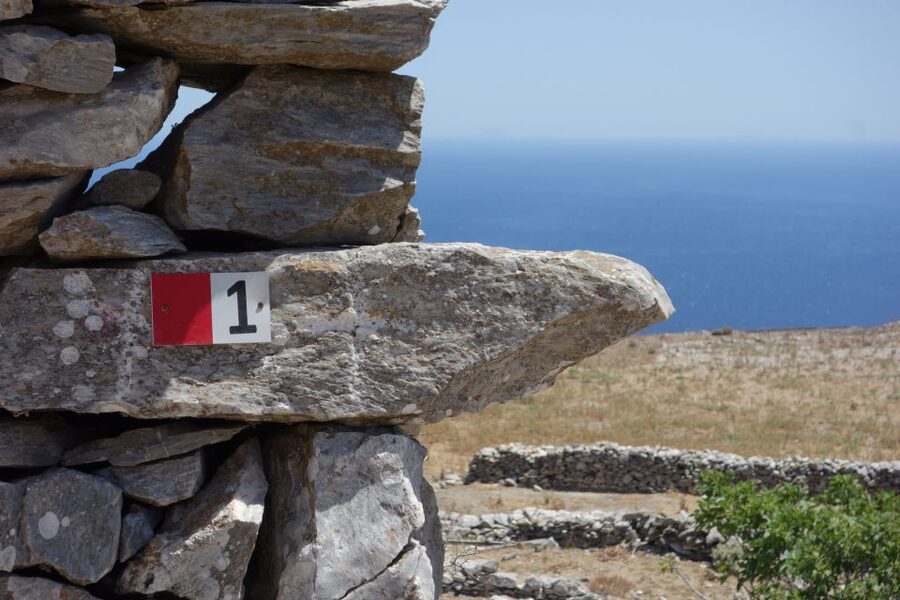
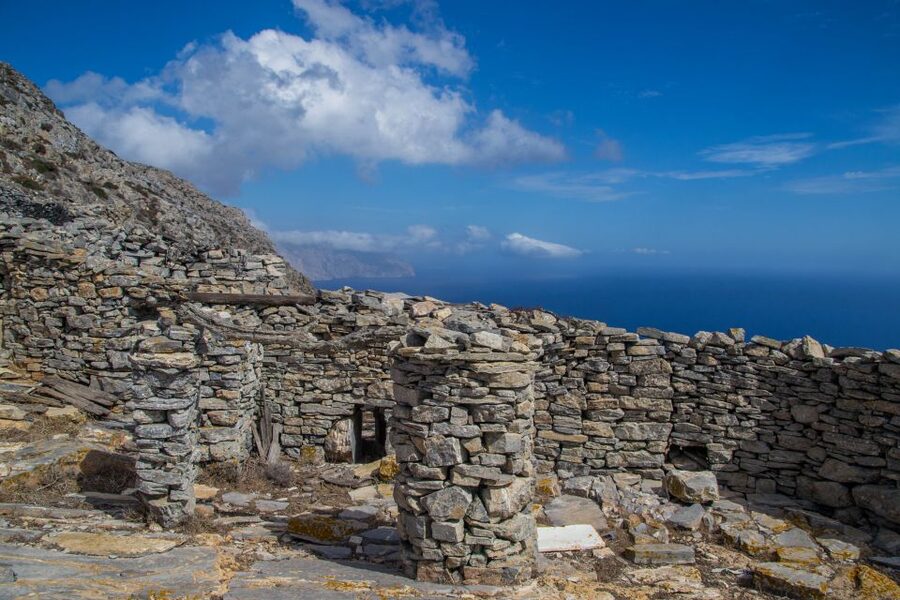
Asfontylitis, also written as Asfondilitis in the tour details, is an abandoned rural settlement known for its dry-stone walls. The walls are the main visual signature here, showing how island communities shaped fields, paths, and boundaries from local stone.
The village offers a different view of Amorgos from Kapsala. Kapsala points to solitary religious life, while Asfontylitis shows the practical side of rural life. You see the remains of a place built around work, land, and careful use of scarce materials.
An abandoned village can be a quiet stop, and that is part of its value. You are not coming for shops or a busy square. You are coming to read the traces left in the stone and to picture how a settlement once functioned.
The route’s mix of natural caves and dry-stone construction keeps the day from feeling like a simple point-to-point hike. You get scenery, but also a sense of how people lived in difficult terrain.
Other temple visits near Greece we have written up
- Athens: Cape Sounion & Poseidon Temple Sunset Half-Day Trip
★ 4.8 · 8,241 reviews - Athens: Cape Sounio & Poseidon Temple Trip with Audio Guide
★ 4.4 · 4,521 reviews - Cape Sounion and Temple of Poseidon Half-Day Small-Group Tour from Athens
★ 4.5 · 3,205 reviews - Cape Sounion & Temple of Poseidon: Small Group Tour
★ 4.7 · 1,945 reviews
The sea view and the approach to Hozoviotissa
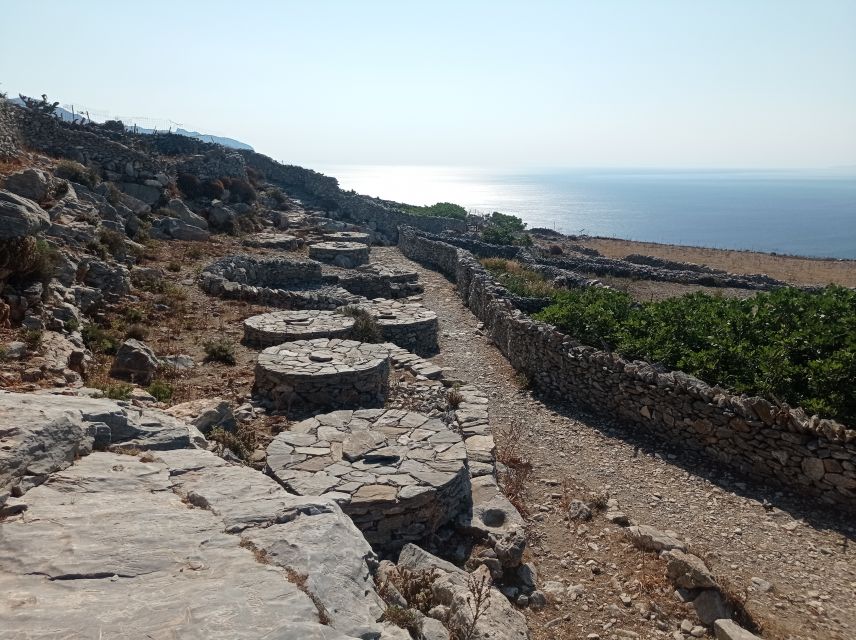
As the hike continues, the sea becomes one of the major rewards. The views stretch toward the South Aegean, and you also get views of Chora, Amorgos’s hilltop town.
This is where the long walking day begins to make sense. Hozoviotissa is not presented as an isolated sight reached by a quick vehicle transfer. You approach it through the island’s older paths, with the cliffs and sea opening out around you.
The monastery’s setting is dramatic because of its position against the rock. It is the sort of building that can look almost unreal from a distance, but the walk gives you time to understand its relationship with the cliff and the sea.
Keep your camera ready, but do not let photography turn the day into a race for the next view. The route is as much about the sequence of places as any single picture: Aegiali Bay, the old trading path, Kapsala, Asfontylitis, Chora, and finally the monastery.
Entering the white monastery above the cliffs
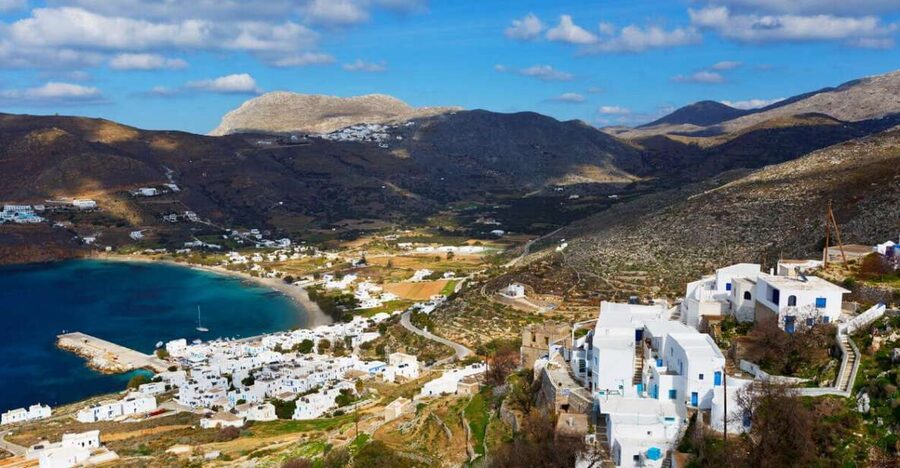
The guided visit to Panagia Hozoviotissa is included. This is the high point of the day, both in the route and in the cultural experience.
You should dress respectfully from the start. Women should wear or carry a long skirt for entry. Short skirts and sleeveless shirts are not allowed. Carrying a light long skirt is the simplest solution if you prefer to hike in practical clothing.
The monastery is an active religious site, so treat the visit as more than a photo stop. Your guide provides cultural background and helps you understand what you are seeing. The available information does not promise access to every part of the building, so expect a guided visit rather than unrestricted exploration.
The approach also helps you appreciate why this stop feels special. You have spent hours walking through the island’s dry hills and former settlements, then arrive at a monastery placed dramatically above the water. The setting is not separate from the experience. It is the payoff for following the old route.
Ending in Chora after a full day
After the monastery, the experience continues with a stroll through Chora. The tour information places Chora after the monastery, and one full-day outing extended the experience with a Chora visit and lunch.
That extension is worth noting, but do not assume lunch is included. The listed inclusions cover the guided monastery visit and transport, not a meal. If you want to eat in Chora, plan to pay separately and allow enough energy for the final part of the day.
Chora gives you a gentler finish after the open trail. It is a chance to see the town rather than only its distant outline from the route. You can shift from hiking mode to village wandering, though the exact amount of free time may depend on the day and the pace of the group.
The schedule is long, so do not book this as a light morning activity followed by an ambitious evening plan. You may be ready for a quiet night after eight hours outside.
What the $112 price includes
The $112 cost covers more than a self-guided path. You receive:
- An English or Greek-speaking guide
- A guided visit inside Hozoviotissa Monastery
- Pickup and drop-off in Aegiali, Potamos, Lagada, and Tholaria
- An eight-hour experience covering the route and cultural stops
The route itself can be walked without booking a tour if you are confident with independent hiking and comfortable researching the monastery and local sites. The paid experience earns its keep through the guide’s explanations, route support, and transport connections.
The value is strongest if you are staying in one of the listed pickup areas and want to connect several places in one day. It is also useful if you want the historical side of Amorgos explained as you walk. The value is weaker if you only want a short outing, dislike group pacing, or already know the route well.
No food, drinks, hiking equipment, or stated entrance extras are listed as included. Bring your own water and gear, and budget separately for any meal in Chora.
Who should book this hike?
I would choose this tour if you enjoy a full day of walking and want Amorgos to feel like more than a collection of viewpoints. It suits people interested in religious sites, old settlements, island traditions, and quiet paths.
It is also a good match if you want help with the logistics. Pickup is available in four local areas, and a guide can explain the route rather than leaving you to interpret every ruin on your own.
I would hesitate if you have limited mobility, are pregnant, or are not comfortable with a potentially tiring hike. The experience is specifically not suitable for people with mobility impairments or pregnant women.
You also need to accept a little uncertainty in the pace and timing. The route is called moderate, but fitness levels vary. A careful walker may enjoy the day with no trouble, while someone expecting an easy sightseeing tour could find it too demanding.
Practical preparation for the monastery and trail
Wear hiking shoes with good support. This is the clearest lesson from the available experience, and it is basic advice worth following.
Carry:
- Water
- A hat
- A camera
- Hiking shoes
- A long skirt for women entering the monastery, if needed
The monastery does not allow short skirts or sleeveless shirts, and pets are not allowed on the activity. French-speaking assistance may be available by request, subject to availability.
Free cancellation is available up to 24 hours before the activity for a full refund, and you can reserve now and pay later. Those terms help if your island plans are still shifting, but they do not change the physical demands of the hike.
Should you book the Amorgos monastery hike?
Book it if you want the long way to Hozoviotissa. The ancient path, Kapsala’s monk caves, Asfontylitis’s dry-stone remains, sea views, and Chora make this far more meaningful than a simple monastery transfer.
The strongest part is the combination of walking and interpretation. You are not only looking at a famous building. You are learning how religious and rural life took shape in Amorgos’s harsh terrain, with a guide who can adjust to your group.
Skip it if you want a short, easy day or if uneven walking is a concern. For fit hikers who want history, scenery, and a proper connection to Amorgos, $112 is a fair price for a carefully guided eight-hour outing.
FAQ
How long does the Amorgos hiking experience last?
The experience lasts eight hours. Check availability for the current starting times.
Where does the hike start?
The hike starts at Potamos, a village above Aegiali port, and follows an ancient route toward Hozoviotissa Monastery.
Is pickup included?
Yes. Pickup and drop-off are included in Aegiali, Potamos, Lagada, and Tholaria. You should be in your hotel lobby 15 minutes before the hiking start time.
What language is the guide?
The tour is offered in English and Greek. A French-speaking guide may be available on request, subject to availability.
What should I wear to Hozoviotissa Monastery?
Women should wear or carry a long skirt for entry. Short skirts and sleeveless shirts are not allowed. You should also wear proper hiking shoes for the route.
Is the hike suitable for everyone?
No. It is not suitable for pregnant women or people with mobility impairments. The hike is described as moderate, but it can feel tiring, so bring water and be prepared for a full day of walking.
Newly written up around Greece
- Sunset Private Tour to Poseidon Temple & Vouliagmeni Thermal Lake★ 4.5 · 20 reviews
- Mt. Villages of Arcadia & Clifftop Monastery Private Day Trip★ 4.5 · 5 reviews
- Mercedes Private Tour to Classical Athens and Temple of Poseidon★ 5.0 · 13 reviews
- Temple of Olympian Zeus: Self-Guided Audio Tour on your Phone (without ticket)★ 4.0 · 8 reviews
- Relax Day: Thermal Lake, Olive Oil Tasting & Poseidon Temple Tour★ 5.0 · 5 reviews
- The adventure of Athens best and Poseidon’s temple in cape Sounion★ 4.5 · 9 reviews
- Temple of Poseidon and Cape Sounion Half Day Afternoon Tour★ 4.0 · 32 reviews
- Temple of Poseidon sunset @ Cape Sounio (And dinner time)★ 4.5 · 6 reviews
Hiking & Trekking, compared.

From Sharm: Mount Moses Trekking, Sunrise & Monastery Visit
Read our review →
Munduk Waterfalls Trek, Twin Lakes and Temple Tour
Read our review →
Munduk: Twin Lake Jungle Hike, Ulun Danu Temple, & Waterfall
Read our review →
Meteora Small Group Hiking tour with Transfer and Monastery Visit
Read our review →Browse the lists this tour appears in