
Reviewed · ABU SIMBEL & PHILAE TEMPLE TOURS
Luxor: Abu Simbel Temple Private Guided Day Trip with Lunch
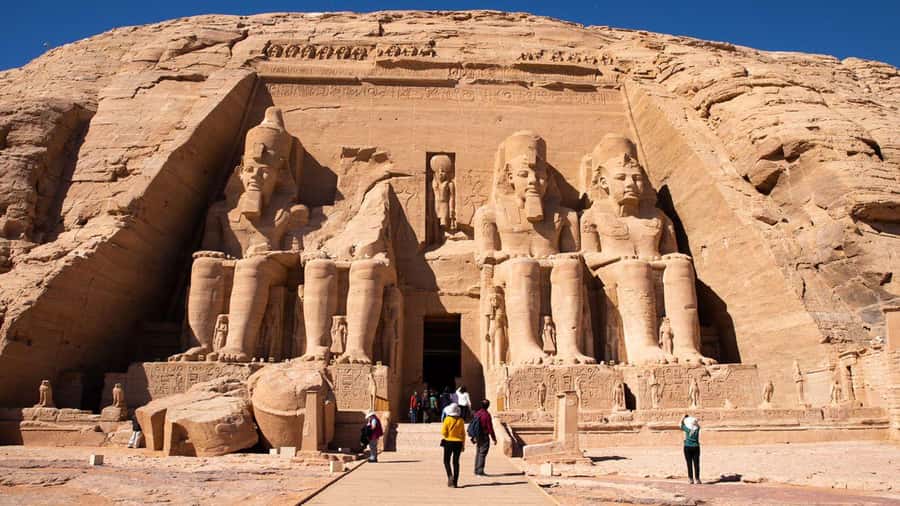
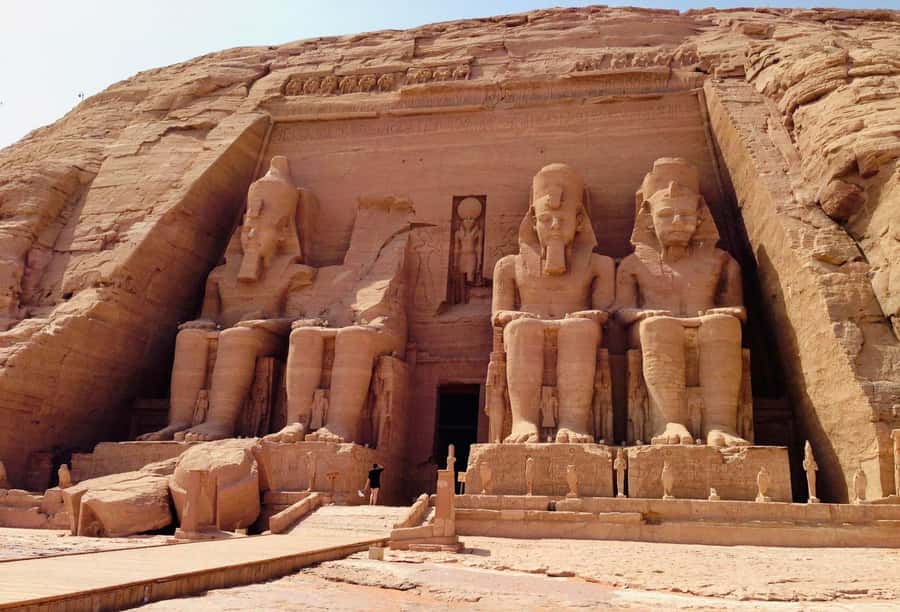
Abu Simbel is one of Egypt’s great visual jolts: four huge seated figures of Ramses II greet you before you even enter the temple. This private day trip from Luxor gives you a practical way to see it without changing hotels or arranging several separate transfers.
I like the private car and hotel pickup, since you can sleep, stop for refreshments, and set the pace during the long desert road. I also like the local guide arrangement, with guides such as Mustafa, Hani, Ahmed Ashraf, and Medo bringing the temple’s stories to life. The drawback is plain: this is a very long day, with roughly 10 to 14 hours on the road reported by different visitors.
Key points to know before booking
- A 15-hour Abu Simbel day: This is a full-day outing, not a quick side trip. Early pickup and a late return are part of the deal.
- Private transport from Luxor: You ride in an air-conditioned private car, with pickup and drop-off included for East Bank hotels.
- Two monumental temples: You see the great temple of Ramses II and the smaller temple connected with Queen Nefertari.
- A guide at the site: English guiding is included, while Spanish, German, and French options cost extra.
- Lunch in the Aswan area: A local meal is included after the temple visit, with fish and vegetarian meals mentioned as available choices.
- Strong guide and driver service: The most praised names include Ahmed Ashraf, Mustafa, Hani, Medo, George, Emad, and Abdul Rahman.
Why Abu Simbel is worth such a long day
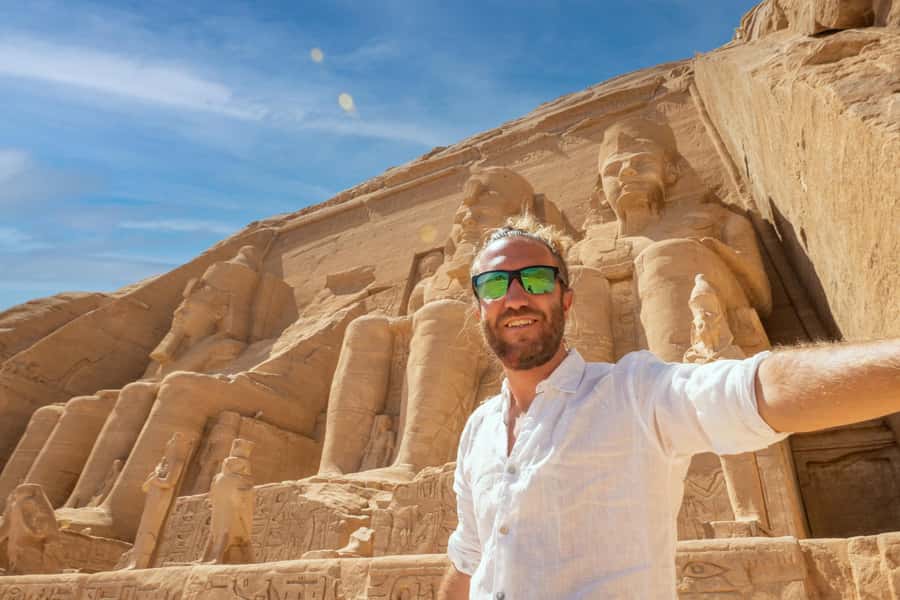
Abu Simbel is far from Luxor, but it is not just another ancient Egyptian temple. The setting near Lake Nubia, the scale of the façade, and the story of moving the temples to higher ground make this one of Egypt’s most memorable stops.
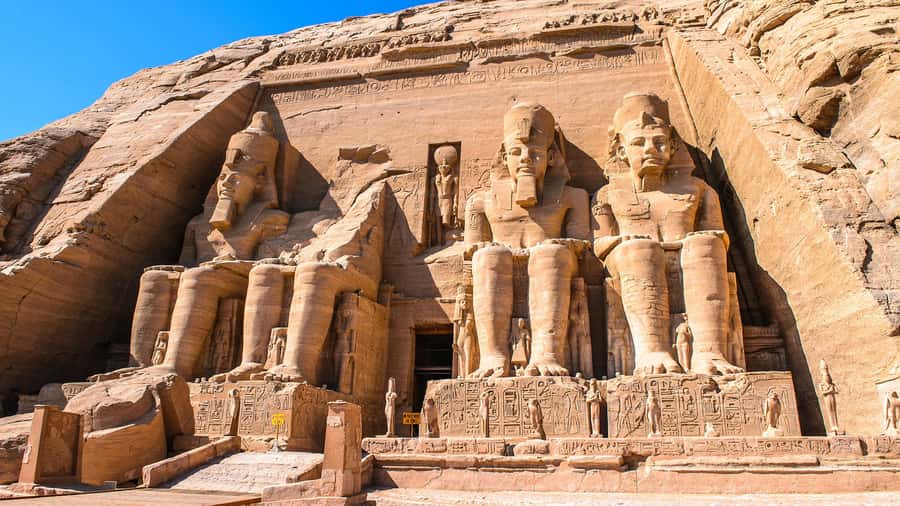
The main façade shows four seated statues of Ramses II. They are built to overwhelm you. Once inside, the carved halls shift the mood from spectacle to royal propaganda, religious scenes, and carefully planned symbolism.
You also visit the temple associated with Queen Nefertari. That pairing matters. The site is not only a celebration of Ramses II. It also shows the unusual prominence given to Nefertari, whose temple is smaller but finely detailed.
The temples were relocated when the Aswan High Dam threatened to put them underwater. Your guide may explain how the UNESCO-backed project saved the monuments and reconstructed them at their present site. This is one of the most useful pieces of context to hear in person, since the current setting is part of the story.
More Abu Simbel and Philae Temple Tours in Luxor:
- Private Day Trip to Abu Simbel Temple with Guide from Luxor
★ 4.5 · 67 reviews - From Aswan: Abu Simbel Temple Day Trip with Hotel Pickup
★ 4.4 · 2,807 reviews - Private Day Tour to Abu Simbel Temples from Aswan
★ 4.5 · 507 reviews
The early pickup and the long road south
The day begins very early, often around 4:30 a.m. One driver arrived at that hour for a previous departure, while other accounts describe different pickup times depending on the day and hotel. Check your confirmed start time carefully.
Your East Bank hotel pickup is included. West Bank pickup is available as an extra, so confirm this before paying if your hotel is on the west side of Luxor. A driver takes you south in an air-conditioned private car, usually with space to sleep during the quietest parts of the journey.
The distance is the main consideration. Reports describe about five to seven hours each way, with one estimate putting the total driving time near 12 hours. The official duration is 15 hours, so the temple visit and lunch fit into a demanding but possible schedule.
I would bring water, snacks, a hat, sunscreen, and a light layer for the early morning. You can also expect stops for refreshments or short breaks. One driver collected a jacket left at a café and returned it later, which gives you an idea of the practical help available when the driver is attentive.
The road passes through a large stretch of southern Egypt, though this should not be sold as a sightseeing drive with frequent attractions. The private car is valuable mainly because it lets you rest, control your breaks, and avoid managing several public connections.
Arriving at the Abu Simbel visitor area
At Abu Simbel, you meet the local guide near the entrance or visitor center. The handoff can feel less organized than the drive itself. One report described a wait before the explanation began, while another noted a short delay with entrance tickets.
The tour includes the entry ticket and skip-the-ticket-line access is advertised. Still, allow some patience if tickets need checking or the local guide is coordinating several people. Carry your booking details and keep your phone available in case the operator needs to contact you.
The guiding format may vary. At times the guide gives the main explanation outside or near the entrance, then allows you to explore the temple interiors on your own. One guide reportedly could not remain inside for the whole visit, so do not assume you will receive a continuous lecture in every chamber.
This is not necessarily a problem. I prefer having a clear introduction, then time to look closely, take photographs, and move at my own speed. Ask your guide when and where to regroup so you do not waste time searching for the group.
The Great Temple and its four seated kings
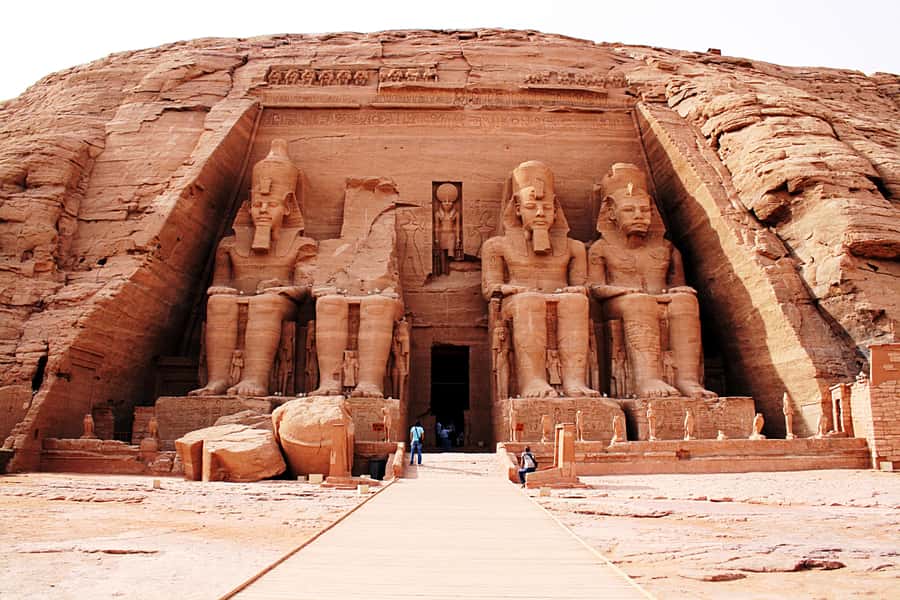
The Great Temple of Ramses II is the visual centerpiece. Four colossal seated figures dominate the façade, with smaller figures and carved details around them. You will want time simply to stand back and take in the proportions before rushing toward the entrance.
A good guide can explain how the images present Ramses II as a powerful ruler and divine figure. Guides such as Ahmed Ashraf, Mustafa, and Medo have been praised for clear explanations of Ramses II, temple symbolism, and the site’s alignment.
Inside, the scale changes. The large exterior gives way to halls and chambers covered with carved scenes. Take time to look at the walls rather than treating the interior as a corridor to cross quickly.
The most useful guides do two things well: they explain the major scenes without burying you in dates, and they step back when you want photographs. Ahmed Ashraf is repeatedly praised for giving people time to explore and take pictures. Medo is noted for explaining the symbolism and the relocation project in an easy-to-follow way.
The temple can feel crowded at busy moments, though the early departure helps you reach the site at a more favorable time. Your actual time at Abu Simbel may be around two hours, according to one detailed account. That is enough for the major sights, but not enough for a slow archaeological study.
More temple visits with lunch in Luxor:
- Luxor: Karnak Temple and Luxor Temple Tour with Lunch
★ 4.4 · 658 reviews - VIP Luxor 4-Hours Private Valley Kings, Hatshepsut Temple & Lunch
★ 5.0 · 155 reviews - Private tour West Bank Luxor, Valley of the Kings, temples, lunch
★ 5.0 · 73 reviews - Teotihuacan, Guadalupe Shrine & Tlatelolco Day Tour with Lunch
★ 5.0 · 11,603 reviews
The Temple of Queen Nefertari
The second temple is dedicated to Queen Nefertari and the goddess Hathor. It is smaller than Ramses II’s temple, yet it deserves more than a hurried glance.
The guide can help you understand why Nefertari appears in such an important setting. The temple’s decoration gives you a different view of royal power and family symbolism than the larger monument next door.
You may be given free time to move between the two temples and then return to the visitor center for a fuller explanation. That arrangement worked well for one couple: a local guide led them to both temples, followed by a detailed talk from another guide.
If photography matters to you, say so early. Guides often allow time for pictures, but the schedule is tight. With a long drive still ahead, you should enjoy the site without assuming you can linger for hours.
Lunch after the temple visit
Lunch is included, usually after the temple visit in the Abu Simbel or Aswan area. The meal is described as local, clean, tasty, and basic depending on the account. Fish received specific praise, and a vegetarian meal was arranged successfully for one visitor.
Treat lunch as a convenient stop rather than a major food tour. It breaks up the return journey and means you do not have to search for a restaurant after several hours at the monument.
If you have dietary needs, tell the operator in advance. Vegetarian food was provided when requested, but the information does not promise a broad menu or special dietary arrangements for every booking.
The return to Luxor
After lunch, you return to the same private car for the long ride north. This is where the value of private transport becomes clearest. You can nap, stop when needed, and avoid the uncertainty of finding a separate ride back.
Driver quality is a major part of this experience. George, Emad, Abdul Rahman, Rami, Mohammed, Daniel, Raymond, and others are praised for safe driving, punctuality, kindness, and handling checkpoints. A few accounts describe drivers covering close to 1,000 kilometers in one day, so the driving workload is considerable.
That praise should not make you forget the physical demands. A sedan may feel tight on a journey of this length, especially if you have several people and luggage. One person specifically suggested that a more spacious car would have made the ride easier. If comfort is important, ask what vehicle is assigned before departure.
The schedule can also shift. One pickup arrived about 30 minutes late, though the company informed the passengers and stayed responsive. Another group waited about 20 minutes for tickets. Build some flexibility into your evening plans in Luxor.
Guide quality and the role of the operator
The guide can make the temple feel like a meaningful historical place rather than a grand façade with dark rooms behind it. Ahmed Ashraf is frequently praised for detailed explanations, patience, and clear delivery. Mustafa is described as friendly, funny, and generous with free time. Hani receives similar praise for humor and warmth, while Medo is singled out for bringing Ramses II and Nefertari’s story to life.
You may receive a different guide, since several people work on this tour. The listed guiding languages are Arabic, English, French, German, and Spanish. English is included, while Spanish, German, and French may require a paid upgrade depending on the option you select.
The operator also communicates through WhatsApp in some cases. Marina is mentioned for sending instructions, confirming details, and responding to questions. Small touches such as snacks, gifts, and help with forgotten belongings are not guaranteed features, but they have been part of some departures.
What the $148 price includes
At $148 per person, the price covers hotel pickup and return on the East Bank, private transportation, Abu Simbel entry, an English-speaking guide, lunch, and the private tour arrangement. That is a fair bundle for a journey that requires a driver, fuel, site admission, local guiding, and a full day of coordination.
The price makes the strongest sense if you are short on time or do not want to move from Luxor to Aswan just to reach Abu Simbel. You are paying for convenience and control as much as for the monument itself.
It is less attractive if you dislike long road journeys or already have plenty of time in Egypt. In that case, staying in Aswan and visiting Abu Simbel from there would usually reduce the driving burden, though that alternative is not part of this tour.
West Bank pickup costs extra. French, German, and Spanish guiding may also cost more, so check the exact option before booking. The booking terms allow cancellation up to 24 hours in advance for a full refund, and you can reserve now and pay later.
Who should book this Abu Simbel trip?
I would choose this trip if Abu Simbel is high on your list and your Luxor schedule is tight. It is also a good fit for solo visitors, couples, and small private groups who want a driver and guide without joining a large coach tour.
It suits you if you can sleep in a car, tolerate a very early start, and accept that the road takes up most of the day. The private setup gives you more control than a standard group bus, but it cannot shorten the distance.
I would hesitate if you have mobility or comfort concerns that make many hours in a standard sedan difficult. I would also avoid putting a late-night flight, cruise departure, or fixed evening event immediately after the return. The 15-hour estimate is useful, but road conditions and ticket delays can affect the timing.
My verdict: a long road to a major Egyptian monument
This is a practical, well-priced way to see Abu Simbel from Luxor, especially when changing hotels is not an option. The temples are the reason to go, but the private car, careful drivers, responsive coordination, and strong local guides make the demanding day manageable.
Book it if you want Abu Simbel badly enough to accept the road. Skip it if you need a relaxed day with plenty of unplanned time. For most people with only one day available, the enormous façade, the Nefertari temple, and the story of the relocated monuments justify the early alarm and the long ride home.
FAQ
How long does the Abu Simbel day trip from Luxor last?
The listed duration is 15 hours. The driving portion may take about five to seven hours each way, depending on the departure and road conditions.
What time does the tour start?
The tour begins in the early morning. One departure started at 4:30 a.m., but you should check the confirmed pickup time for your hotel and travel date.
Is hotel pickup included?
Pickup and drop-off are included for hotels on Luxor’s East Bank. West Bank pickup is available as an add-on.
Is transportation private?
Yes. The tour includes private transportation in an air-conditioned car, with a private tour arrangement.
Is the Abu Simbel entrance ticket included?
Yes. The entry ticket to Abu Simbel Temple is included.
Is a guide included?
Yes. An English-speaking professional guide is included. Arabic, English, French, German, and Spanish are listed as available languages, with some language options costing extra.
Will I visit both Abu Simbel temples?
The experience includes the Abu Simbel temple complex, which includes the Great Temple of Ramses II and the temple associated with Queen Nefertari.
Is lunch included?
Yes. Lunch is included and is served after the temple visit, in the Abu Simbel or Aswan area.
Can vegetarian food be arranged?
A vegetarian lunch was arranged successfully for one departure. If you need vegetarian food, request it before the tour.
Can I cancel the booking?
You can cancel up to 24 hours in advance for a full refund. The reserve-now-and-pay-later option is also available.
More Day Trips in Luxor
- Athens: Cape Sounion & Poseidon Temple Sunset Half-Day Trip
★ 4.8 · 8,241 reviews - From Malta: Gozo Day Trip Including Ggantija Temples
★ 4.2 · 2,399 reviews - Montenegro: Durmitor, Tara & Ostrog Monastery Day Trip
★ 4.8 · 1,894 reviews - Rhodes: Symi Island & Panormitis Monastery Day Trip by Boat
★ 4.5 · 1,784 reviews
Newly written up around Luxor
- Karnak Temple Sound & Light Show QR Ticket with Transfer★ 5.0 · 11 reviews
- Private transfer: Luxor – Dendara Temple – Hurghada★ 5.0 · 14 reviews
- Private Transfer luxor to hurghada with Stop at Dendera Temple★ 5.0 · 18 reviews
- Luxor Private Transfer To Hurghada With visit Dendera Temple★ 4.5 · 45 reviews
- Karnak And Luxor Temples Private Tour★ 5.0 · 66 reviews
- Private Day Trip to Abu Simbel Temple with Guide from Luxor★ 4.5 · 67 reviews
- Private Tour: Luxor West Bank, Valley of the Kings and Hatshepsut Temple★ 4.5 · 111 reviews
- Private tour West Bank Luxor, Valley of the Kings, temples, lunch★ 5.0 · 73 reviews
Abu Simbel & Philae Temple Tours, compared.
Private Day Tour to Abu Simbel Temples from Aswan
Read our review →
Private Guided Tour of Philae Temple with Entry
Read our review →
Philae Temple Sound & Light Show with Entrance Fees
Read our review →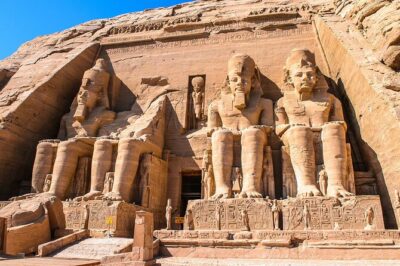
Private Day Trip to Abu Simbel Temple with Guide from Luxor
Read our review →Browse the lists this tour appears in