
Reviewed · MALAYSIA TEMPLE TOURS
Ipoh Cave Temples Tours
Ipoh’s cave temples are not one-note attractions. This tour links three very different temples, from a hilltop shrine reached by 450 steps to a cavern filled with stalagmites and stalactites, then adds Mirror Lake for a quiet finish. You get nature, religion, art, and local food in one outing.
I like the relaxed pace and the chance to ask questions as you walk. I also like the personal touch from guide Fazly, who is known for his humor, local food suggestions, and extra help with onward travel. The main drawback is that some temple areas can look worn, garish, or untidy, and the 450-step climb is a real workout.
Key points to know before booking
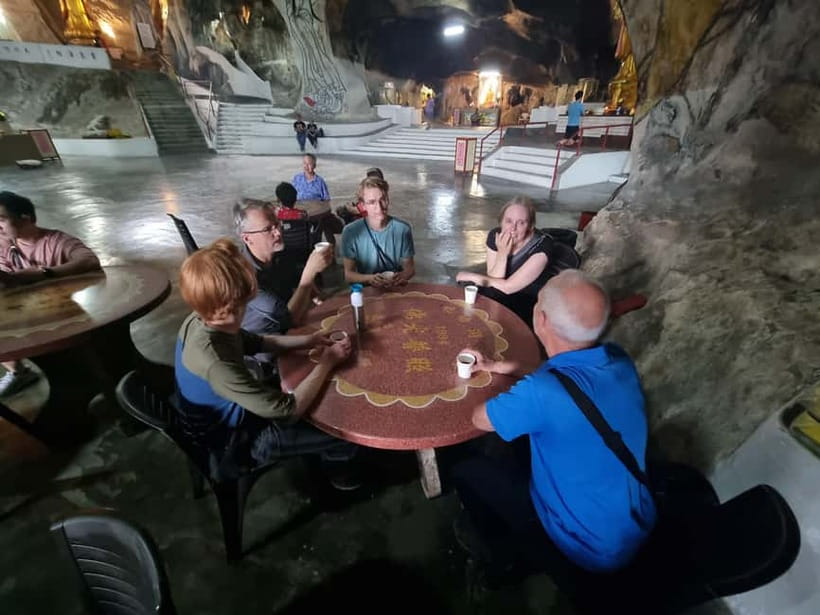
- Three temples, three different moods: Expect a hilltop viewpoint, natural cave formations, and an old Chinese-style temple.
- The 450 steps matter: The climb leads to a fine view over Ipoh, but comfortable shoes are essential.
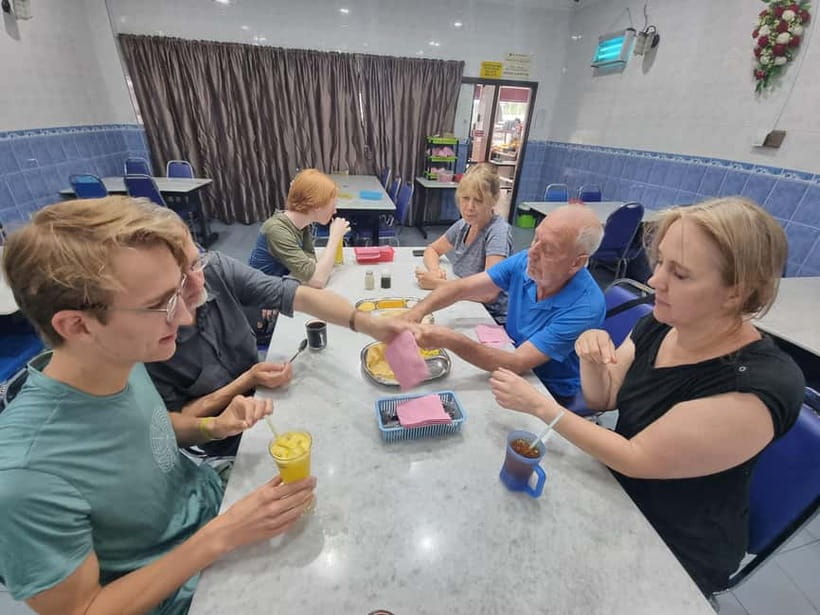
- Fazly adds local flavor: Breakfast, snacks, food tips, and even help feeding fish and tortoises may be part of the day.
- Mirror Lake costs extra: The only listed entrance fee is RM30 per person, paid at the counter.
- You are not pushed along: The tour allows time for photographs, quiet viewing, and questions.
- Come prepared for rough edges: Some cave areas may have rubbish or faded, flashy decoration alongside the beauty.
Why Ipoh’s cave temples make a strong half-day outing
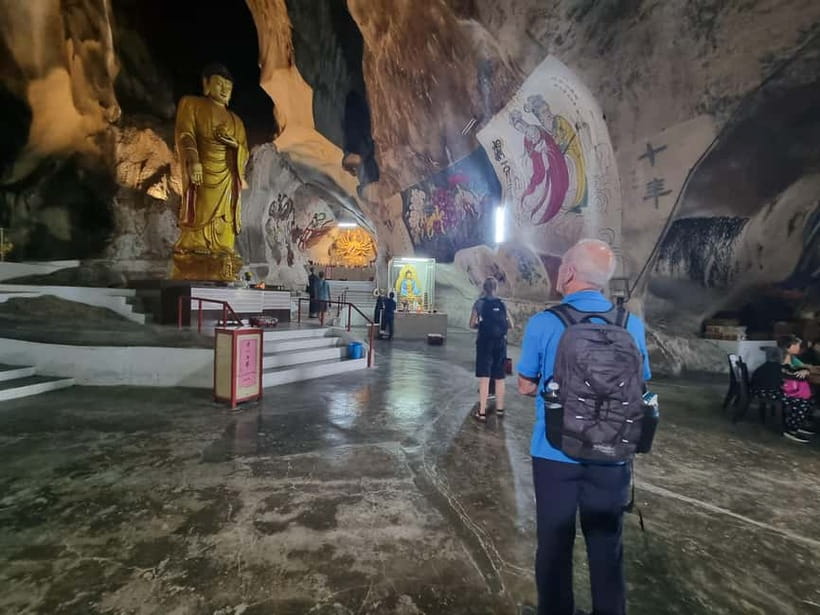
Ipoh is famous for limestone hills, and its cave temples show how religion and geology meet in practical, sometimes surprising ways. Shrines, statues, painted walls, stairways, forest, and natural rock all share the same setting.
What makes this outing worthwhile is the contrast. You do not spend the day looking at three versions of the same temple. One stop gives you a climb and a broad view. Another lets you look closely at stalagmites and stalactites that have been kept in their natural setting. The oldest temple brings a more traditional Chinese character, with features that feel strongly connected to China.
I like tours built around contrast because each stop resets your attention. After a dark cave, you want open air. After a climb, you appreciate a slow walk. After ornate religious decoration, Mirror Lake offers a calmer ending.
The experience has a five-star rating from 28 published ratings, and that fits the main strength of the outing: it is more personal than a quick transport service from one photo stop to the next. You walk with the guide, hear explanations, and have time to look around.
Other temple visits near the world we have written up
- Lisbon: Jerónimos Monastery Entrance Ticket
★ 4.1 · 14,164 reviews - Angkor Wat Sunrise or Sunset Tour with Guide from Siem Reap
★ 5.0 · 12,109 reviews - Teotihuacan, Guadalupe Shrine & Tlatelolco Day Tour with Lunch
★ 5.0 · 11,603 reviews
First stop: Perak Tong and the 450-step climb
Perak Tong is the stop that asks the most from your legs. You climb roughly 450 steps to reach the upper viewpoint, where you can look out over Ipoh and the surrounding area.
I would treat this as the physical centerpiece of the day. The staircase is manageable for many people, but it is not a casual few steps to a doorway. Pace yourself, bring water, and wear shoes with a secure sole. The tour provides a small bottle of mineral water, but you should still arrive ready for exertion.
The reward is not just the view. The climb changes how you experience the temple. You begin among rock and religious decoration, then gradually move into open air and a wider view of the town. That shift makes the site feel connected to its setting rather than sealed inside a cave.
The viewpoint also gives you a better sense of Ipoh’s surroundings. You are not simply taking another interior photograph. You are looking back across the town from a place shaped by limestone and religious practice.
I would not book this tour expecting the guide to hurry you up the stairs. The stated approach is to take time, and the guide can explain the cave temple as you go. If you need to avoid a long stair climb, ask before booking, since the 450 steps are a central part of this stop.
A cave where the rock remains part of the show
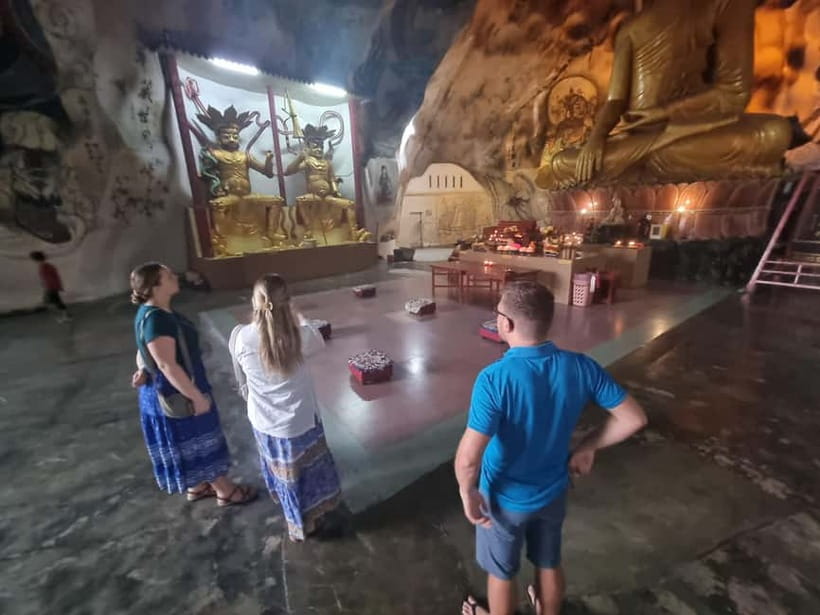
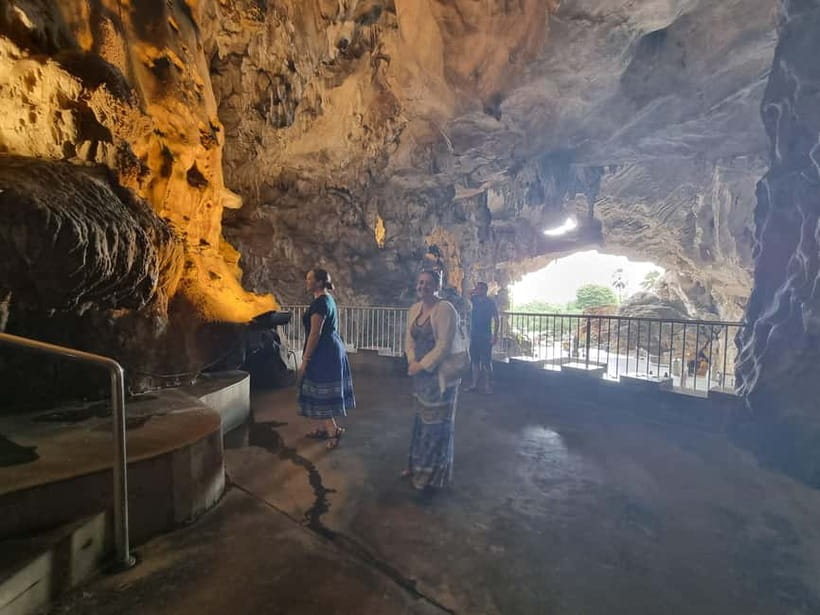
Another temple is valued for its stalagmites and stalactites. The important point here is that the cave has been kept close to its natural form, rather than being treated only as a decorated religious hall.
This creates a different experience from the hilltop stop. Instead of focusing on a view over Ipoh, you look inward at the shapes formed by water and time. The rock may be uneven, shadowed, and visually busy beside temple features, so take your time rather than racing through with a camera.
I like this part of the tour because it gives the geology room to matter. The cave is not just a backdrop for statues. Its natural formations are part of why the temple is worth seeing.
Photography should be worthwhile here, though the exact light and viewing conditions are not specified. Use the stop as a chance to notice details: the texture of the stone, the ceiling shapes, and the way built religious features sit beside the rock.
Sam Poh Tong and Ipoh’s oldest cave temple
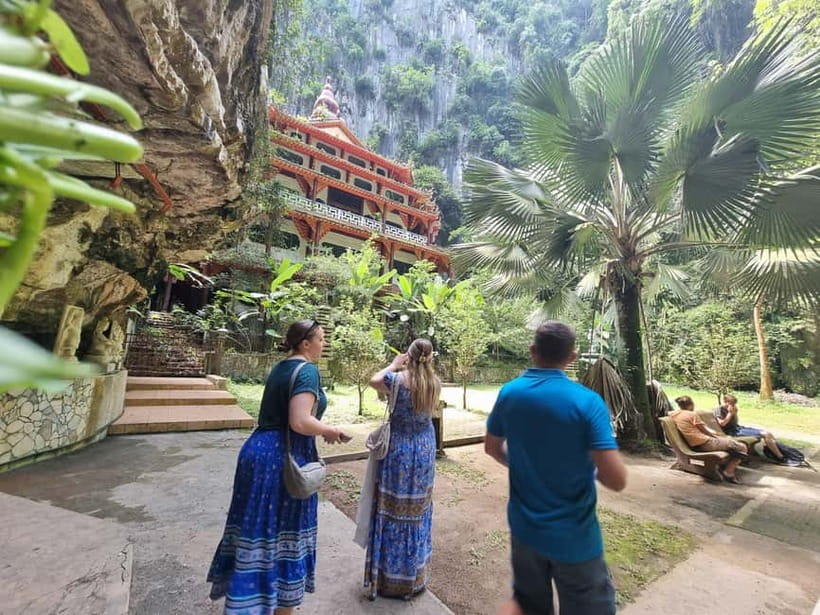
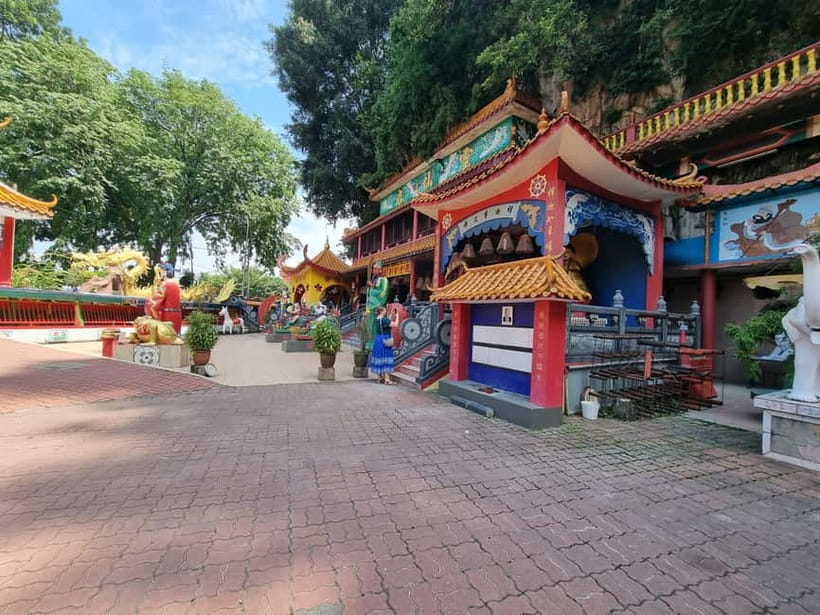
Sam Poh Tong is described as the oldest cave temple in Ipoh, and it has a distinctly Chinese architectural character. The temple complex includes a pagoda that is especially attractive, giving this stop a more formal and built appearance than the natural cave section.
I would pay attention to the contrast between the cave interior and the temple structures outside it. The pagoda provides a clear visual focal point, while the older temple setting gives you a sense of how long religious sites have been part of Ipoh’s identity.
This is also a good place to slow down and look beyond the most obvious statue or doorway. The structure is said to resemble forms more commonly seen in China, so the value lies in the details of the design and the way the complex fits against the limestone.
Sam Poh Tong may not feel polished in the modern tourist-attraction sense. Some visitors find parts of the caves run down or visually garish, and there can be rubbish around. I would keep that in mind before booking. You are coming for character, contrast, and cultural interest, not a perfectly restored museum.
That roughness does not erase the appeal, but it does shape the experience. If you prefer spotless, carefully staged attractions, you may find the presentation frustrating. If you can accept faded surfaces and a less controlled setting, you get a more direct look at a living place of worship.
A different set of gates, same trip:
- From Bangkok: Ayutthaya Temples Guided Tour with Lunch
★ 4.7 · 10,535 reviews - Siem Reap: Angkor Wat: Small-Group Sunrise or Sunset Tour
★ 5.0 · 9,444 reviews - Athens: Cape Sounion & Poseidon Temple Sunset Half-Day Trip
★ 4.8 · 8,241 reviews - Ubud: Monkey Forest, Jungle Swing, Rice Terrace, and Water Temple
★ 5.0 · 7,160 reviews
Mirror Lake adds a peaceful change of pace
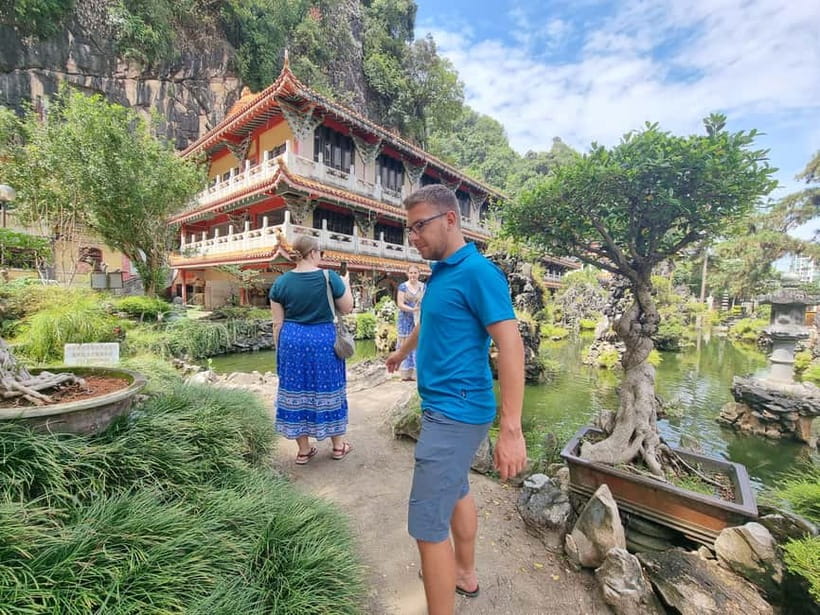
Mirror Lake is included in the experience, but its entry ticket is separate. The stated cost is RM30 per person, paid at the counter.
After the temples and the climb, this stop gives the day a softer rhythm. The lake is described as peaceful and relaxing, and a boat ride can be part of the visit. There is also a cafe beside the lake, where you can stop for food and try Ipoh white coffee.
I like this pairing because it prevents the day from becoming a temple checklist. Mirror Lake gives you open space and stillness after several enclosed or heavily decorated sites. You can take photographs, enjoy the water, and let the day slow down.
The extra fee is worth including in your budget. It is not a hidden charge in the sense of being unexpected, but it is not covered by the tour price either. At RM30, the value depends on how much you enjoy a quiet lake visit and boat ride. If you want only the temples, you may see it as an optional add-on. If you like a varied day with time near the water, it rounds out the route well.
The cafe is another useful detail. You may be able to eat there and order white coffee, a local specialty associated with Ipoh. Do not treat the drink as a minor extra. For many people, the food and coffee become part of the cultural experience rather than a simple refreshment stop.
Fazly’s guiding style is a major part of the value
The guide can make or break a cave-temple outing. These sites have enough statues, shrines, rock formations, stairs, and side areas that a rushed visit can become a blur.
Fazly is the named guide associated with this experience, and his role goes beyond pointing out the next stop. He explains the temples, answers questions, and gives you room to explore. His style is also described as funny, friendly, professional, and accommodating.
I especially like the practical touches connected with his guiding. Breakfast may be included if your accommodation does not provide it, and the food is local style. Snacks may appear during the day. You might also get the chance to feed fish and tortoises, and a pomelo farm visit has been part of the experience.
Those details matter because they connect the temples to ordinary life in Perak. You are not only looking at architecture and cave walls. You are tasting local food, learning what to order, and seeing small parts of the area that might be missed on a tightly timed sightseeing route.
Fazly has also helped with onward travel advice. That can be useful if Ipoh is one stop in a longer Malaysia trip. It does not replace a formal travel-planning service, but a local guide who can offer practical tips is a welcome bonus.
The main thing to expect is conversation. If you prefer to move quietly on your own, tell the guide when you need a little space. The experience is designed around walking together and explaining what you see, but it also promises that you will not be rushed.
Food, coffee, and small local touches
Breakfast is included when your accommodation does not provide it. The description does not specify a fixed menu, so you should expect local-style food rather than a standard hotel spread.
That uncertainty is part of the charm, but it is also worth noting for dietary planning. If you have strict food needs, raise them before the tour. The supplied information confirms local breakfast and snacks, but not specific ingredients or alternatives.
Ipoh white coffee is a must-try part of the day, especially around Mirror Lake. The coffee is not simply a caffeine stop. It gives you a taste of a local specialty and makes the lake visit feel tied to Ipoh rather than interchangeable with any scenic stop.
The pomelo farm mention is another appealing extra, though it should not be treated as a guaranteed central stop unless confirmed at booking. It suggests that the guide may add local context when the route allows.
I appreciate this kind of food focus because it gives you something to remember besides photographs. A cave temple can look impressive for an hour. A food or coffee memory often stays with you longer.
What the temples are really like
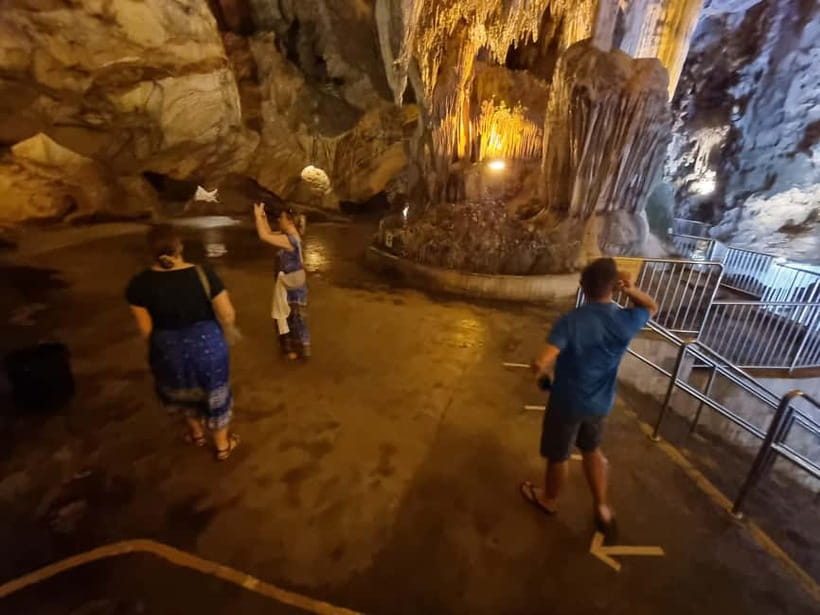
You should set realistic expectations about presentation. These are not polished theme parks, and some areas may look worn. Decorative choices can also feel very bright or garish if your taste runs toward restrained design.
There may be rubbish around some sections. That is a real drawback, particularly if you are expecting pristine religious sites. You can still appreciate the rock formations, the age of the temples, and the setting, but you should not arrive expecting every corner to be carefully maintained.
At the same time, the less polished character is part of what makes the visit feel less manufactured. The temples are functioning cultural places, not just photo sets. The mix of religious decoration, natural stone, older structures, and ordinary wear gives you a more complicated and honest experience.
I would book this for curiosity, not perfection. You need to be comfortable with visual clutter and uneven upkeep. In return, you get three sites that genuinely differ from one another.
Who will enjoy this tour most
This experience suits you if you want more than a driver dropping you at temple entrances. You get explanations, local food, photographs, nature, and a guide who can adjust the pace.
It is especially good for:
- People interested in Chinese religious architecture and cave shrines
- Visitors who want an active day with stairs and walking
- Families who appreciate snacks and chances to see fish and tortoises
- First-time visitors to Ipoh who want several major cave temples in one outing
- Anyone keen to try local breakfast and Ipoh white coffee
- Travelers who value an English-speaking guide and personal advice
It may not suit you if you dislike stairs, expect spotless attractions, or want a short, tightly scripted visit. The climb is significant, and the temples can have rough or visually overwhelming areas.
Comfortable shoes and comfortable clothes are the only listed clothing advice, but it is good advice. Choose footwear for stairs and uneven walking rather than fashion. Bring a little patience too. The point is to take photographs, ask questions, and appreciate the setting without being pushed from stop to stop.
Cost, inclusions, and practical value
The tour includes hotel or accommodation pickup, local breakfast when your accommodation does not provide breakfast, small mineral water, the three cave-temple visits, and Mirror Lake.
The one stated extra is Mirror Lake’s RM30 entry fee per person. Pay that at the counter, and remember that it may relate to access and the lake activities rather than the temple visits themselves.
The value is strongest if you want a full cultural outing rather than simple transport. You are paying for access to several sites, an English-speaking guide, local food touches, and the convenience of starting from your accommodation.
The value is less clear if you already have a car, prefer to explore independently, and only want one cave temple. In that case, a guided route may feel more structured than necessary. For a first visit to Ipoh, though, combining three distinct temples with Mirror Lake saves you from working out the route and interpreting each place alone.
You can reserve now and pay later, which helps if your schedule is still changing. Cancellation is allowed up to 24 hours in advance for a full refund. Those terms make the booking less risky for a flexible Malaysia itinerary.
Should you book the Ipoh Cave Temples Tour?
I would book this tour if you want a friendly, flexible introduction to Ipoh’s cave temples and you are happy to accept a few rough edges. The strongest reasons are the variety of the three sites, the 450-step viewpoint, the natural cave formations, Mirror Lake, and Fazly’s personal guiding style.
I would pause if stairs are a problem or if you require immaculate, carefully restored attractions. Ask about the route and physical demands before confirming, and budget RM30 per person for Mirror Lake.
For most first-time visitors who want local food, temple culture, nature, and useful conversation in one day, this is a good-value choice. Just bring sturdy shoes, an open mind, and enough time to enjoy the places instead of racing through them.
FAQ
Where does the Ipoh Cave Temples Tour take place?
The tour takes place in Ipoh, in the Malaysian state of Perak.
How many cave temples will I visit?
You will visit three cave temples, each with a different character and focus.
Is Perak Tong included?
Yes. Perak Tong is one of the temples associated with the tour and includes a climb of about 450 steps to a viewpoint.
What can I see at the temple with 450 steps?
You can climb to the top to see a view over Ipoh and the surrounding town.
Will I see stalagmites and stalactites?
Yes. One of the cave temples is known for its natural stalagmites and stalactites.
Is Sam Poh Tong part of the experience?
Yes. Sam Poh Tong is included among the cave temples visited and is described as the oldest cave temple in Ipoh.
Is Mirror Lake included?
Yes, Mirror Lake is included in the experience. Its entry ticket costs RM30 per person and is paid at the counter.
Is breakfast included?
If your accommodation does not provide breakfast, the tour includes a local-style breakfast.
What language does the guide speak?
The listed tour language is English.
What should I bring?
Bring comfortable shoes and comfortable clothes. The small mineral water provided does not replace preparing for the 450-step climb.
Newly written up around the world
- Small Group Tour to Mogosoaia Palace and Snagov Monastery★ 5.0 · 23 reviews
- Mogosoaia Palace & Snagov Monastery: Private tour from Bucharest★ 4.5 · 14 reviews
- Bulgaria Day Trip: Basarabovo Monastery, Tsarevets & Arbanasi★ 5.0 · 3 reviews
- Private Half Day Trip to Snagov Monastery and Mogosoaia Palace from Bucharest★ 4.5 · 13 reviews
- Chicken Church Local Attraction Near Of Borobudur Temple★ 3.5 · 18 reviews
- Transfagarasan Highway Balea Lake and Carta Monastery from Brasov★ 5.0 · 20 reviews
- Private Half Day trip to Slanic Salt Mine and Snagov Monastery★ 5.0 · 8 reviews
- Divine Delhi: Full-Day Tour of Temples & Spiritual Sites★ 4.5 · 3 reviews
Malaysia Temple Tours, compared.
Penang: Kek Lok Si Temple and Penang Hill Guided Tour
Read our review →
Private Half-Day Temples and Cultural Tour in Kuala Lumpur
Read our review →
Penang City & Temple Tour With Penang Hill(Fast Lane)
Read our review →
Private Penang City Tour with Kek Lok Si Temple
Read our review →
Penang: Private Highlights Tour with Temples, Hill & Gardens
Read our review →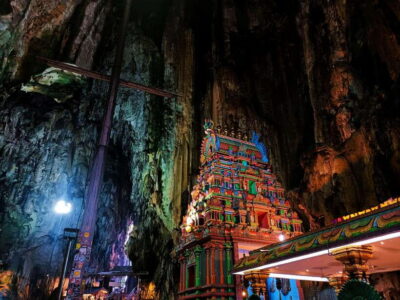
Browse the lists this tour appears in