
Reviewed · MALAYSIA TEMPLE TOURS
Kuala Lumpur: Temple & Shrine Private Half Day Tour
Kuala Lumpur’s best cultural lesson comes in a single half-day route: a Hindu shrine in limestone caves, a Chinese temple, a Buddhist center, an Anglican cathedral, a national mosque, and a Sikh gurdwara. The 140-foot Lord Murugan statue at Batu Caves is the visual knockout, but the real value is seeing so many faiths within one city outing.
I like two things here. First, the private vehicle keeps the day simple, especially when you are trying to cover sites spread around Kuala Lumpur. Second, the driver explains dress rules and visiting customs before you arrive, which helps you enter places of worship with proper respect. Guide Bala has been praised for getting the timing and route right.
The main drawback is pace. Six religious sites in 270 minutes means you will see the highlights rather than linger at every prayer hall. Traffic can also eat into your sightseeing time, and the 272 steps at Batu Caves require some effort.
Key points to know before booking
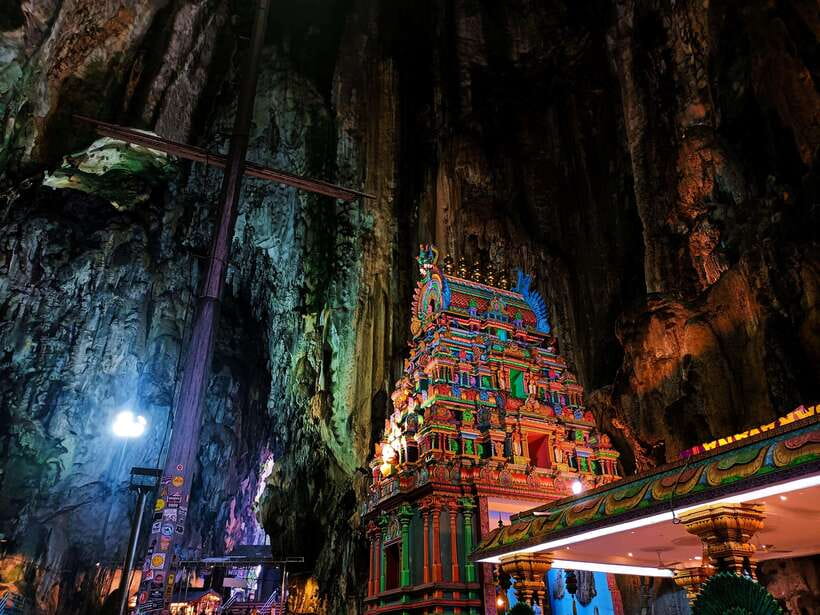
- Climb 272 steps at Batu Caves: Reach the main cave for Hindu sculptures, paintings, and city views beneath the enormous Murugan statue.
- See six distinct religious sites: The route covers Hindu, Chinese, Buddhist, Anglican, Islamic, and Sikh traditions.
- Use a private air-conditioned vehicle: You avoid a large group and travel directly between sites with an English-speaking driver.
- Expect a quick-moving schedule: This is a broad introduction to Kuala Lumpur’s religious landmarks, not a slow temple study.
- Check your pickup location carefully: Complimentary service applies to hotels and residences within 5 km of the Twin Towers.
- Ask for Bala if available: His route planning and practical site tips were singled out in the tour feedback.
Why this route gives you a sharper view of Kuala Lumpur
Kuala Lumpur is often presented through shopping malls, towers, and food streets. Those are worthwhile, but this tour points you toward a different city, one shaped by Hindu, Chinese, Buddhist, Christian, Muslim, and Sikh communities.
I like the range. You are not seeing six versions of the same building. You move from cave worship and colorful Hindu sculpture to Chinese gardens, Sri Lankan Buddhist design, English Gothic stonework, modern Islamic geometry, and Sikh devotion.
That range also explains why a private tour makes sense. The sites are not gathered in one compact pedestrian district. Your driver carries you between them in an air-conditioned vehicle, while explaining the background and reminding you about clothing and behavior. It is a practical way to connect places that would take more planning on your own.
The experience is listed at $47 per person. For a private 4.5-hour outing, transport, driver assistance, and a route covering six major religious places, that can be fair value, especially if you are traveling with others and want to avoid arranging several separate rides. It is less attractive if you prefer one temple explored at length or if you are comfortable managing Kuala Lumpur’s transport yourself.
Other temple visits near the world we have written up
- Lisbon: Jerónimos Monastery Entrance Ticket
★ 4.1 · 14,164 reviews - Angkor Wat Sunrise or Sunset Tour with Guide from Siem Reap
★ 5.0 · 12,109 reviews - Teotihuacan, Guadalupe Shrine & Tlatelolco Day Tour with Lunch
★ 5.0 · 11,603 reviews
Batu Caves and the 140-foot Lord Murugan
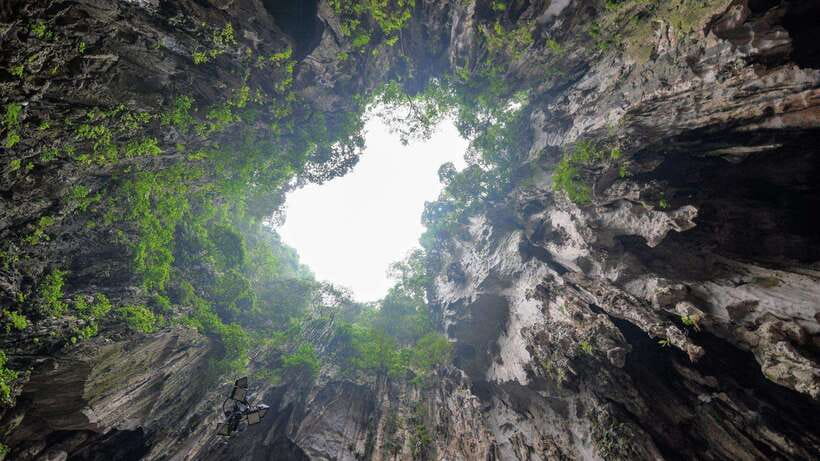
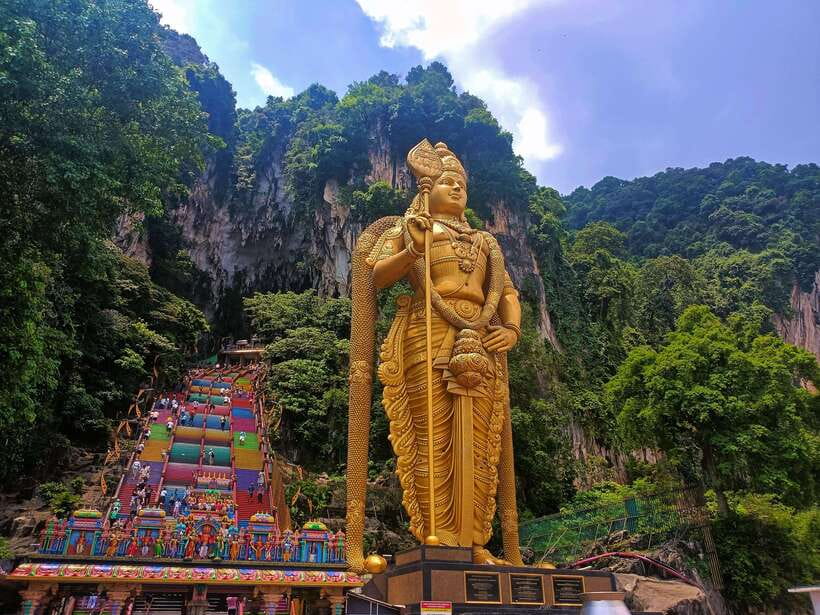
Batu Caves is the tour’s biggest visual moment. The gold-colored statue of Lord Murugan rises beside the entrance, backed by towering limestone cliffs. It gives you an immediate sense that this is not an ordinary city temple.
The main cave is reached by 272 steps. Take the climb at your own pace. At the top, you can see religious sculptures and paintings inside the sacred Hindu sanctuary, then look back toward views of Kuala Lumpur below. The steps also make this the most physically demanding part of the morning.
The cave setting is what makes Batu Caves special. The religious site is not simply placed inside a standard building. It uses the natural limestone formations as part of the experience, so the approach feels dramatic before you even reach the prayer area.
You should dress respectfully and be ready for changing conditions between the vehicle, the open steps, and the cave. Your driver is expected to explain the rules before arrival, which is useful because the site is active as a place of worship, not just a photo stop.
The tradeoff is time. The schedule includes several more sites afterward, so you should not expect a long, unhurried exploration of every section of the caves. If Batu Caves is your main reason for booking, ask how much time is planned there before the day begins.
Thean Hou Temple’s carved details and hilltop views
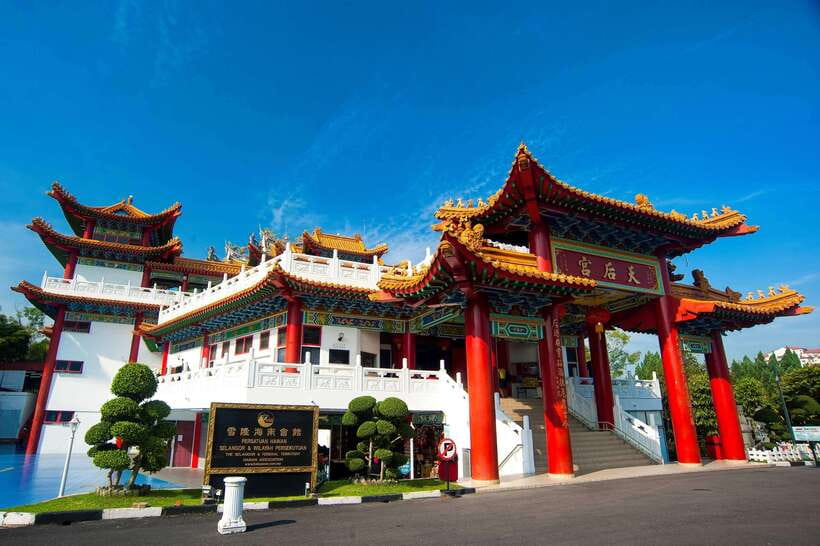
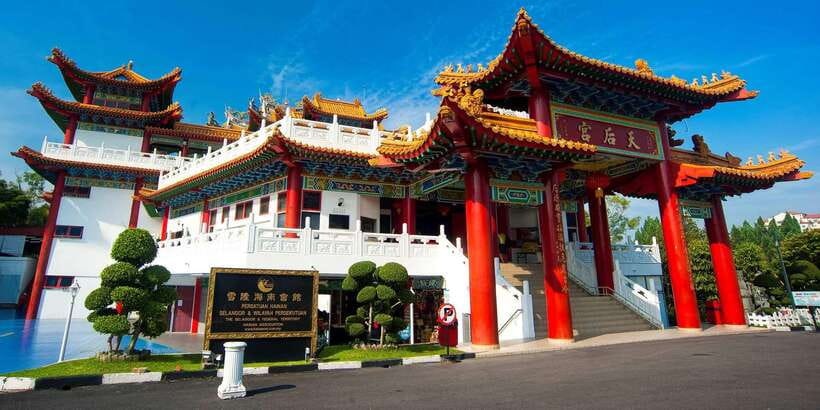
Thean Hou Temple brings you into a very different visual world. Dedicated to Mazu, the Chinese sea goddess, it uses layered roofs, detailed carvings, decorative features, and a striking six-tiered pagoda to create a formal and highly ornamented setting.
I would pay close attention to the smaller details here. The gardens, koi ponds, and prayer halls give you more than one grand facade to photograph. They also help you understand how a temple can work as a place for worship, reflection, and community life.
The temple’s design rewards a slow eye. Look at the roof lines, painted surfaces, carved sections, and the way the buildings frame the outdoor spaces. You may not have time to study every feature, but even a focused visit adds a useful contrast to the rough limestone environment at Batu Caves.
Because this stop follows the caves, it also gives you a change of pace. You leave behind the long stairway and open rock face for planned gardens and Chinese architectural decoration. That variety is one of the tour’s strengths.
Buddhist Maha Vihara and its Sri Lankan design
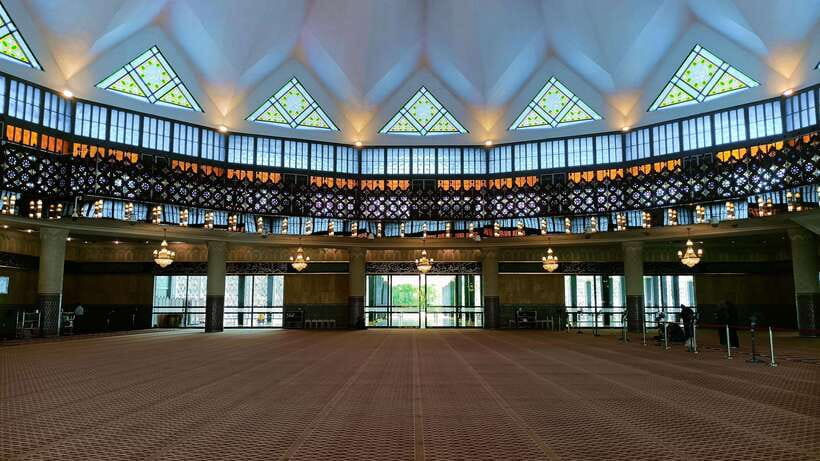
Buddhist Maha Vihara offers the quietest mood of the route. The compound follows traditional Sri Lankan architectural ideas and includes elaborate carvings, colorful paintings, and statues of Buddha, Bodhisattvas, and other important figures.
This is a good place to pause and take in the atmosphere rather than rush from one object to the next. The temple functions as a place of worship, learning, and community for Malaysian Buddhists, so respectful behavior matters. Keep your voice low, follow any instructions from your guide, and treat the prayer areas as active religious spaces.
The visit also adds context to Malaysia’s Buddhist traditions. You are not only looking at decorative architecture. You are seeing a working center connected to religious practice and community life.
Since the tour includes several different faiths, the contrast between Buddhist Maha Vihara and Thean Hou Temple is useful. Both use strong visual decoration, but the architectural language and religious figures differ. A driver who can point out those differences makes the stop more meaningful than a quick walk around the grounds.
A different set of gates, same trip:
- From Bangkok: Ayutthaya Temples Guided Tour with Lunch
★ 4.7 · 10,535 reviews - Siem Reap: Angkor Wat: Small-Group Sunrise or Sunset Tour
★ 5.0 · 9,444 reviews - Athens: Cape Sounion & Poseidon Temple Sunset Half-Day Trip
★ 4.8 · 8,241 reviews - Ubud: Monkey Forest, Jungle Swing, Rice Terrace, and Water Temple
★ 5.0 · 7,160 reviews
St. Mary’s Cathedral and Kuala Lumpur’s Christian story
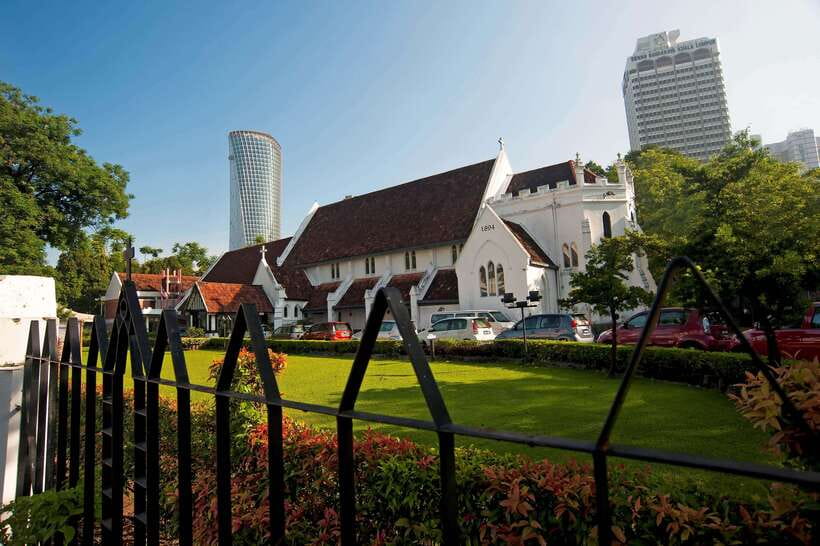
St. Mary’s Cathedral changes the visual tone once again. Built in 1894, it is an example of English Gothic Revival design, with pointed arches, stained glass, a tall spire, woodwork, and a calm interior.
After the color and outdoor detail of the temples, the cathedral feels more restrained. The pointed forms and timber features create a quieter place for reflection. It is worth looking beyond the main structure and noticing how the interior details shape the mood.
This stop is especially helpful if you want to see Kuala Lumpur’s religious history beyond its Asian temples and mosque. The tour does not treat Christianity as an afterthought. St. Mary’s is included as a meaningful part of the city’s religious mix.
Your time here may be brief, so focus on the Gothic features and interior craftsmanship. If services or other church activities affect access, follow the driver’s guidance and keep the visit respectful.
The National Mosque’s umbrella-shaped dome
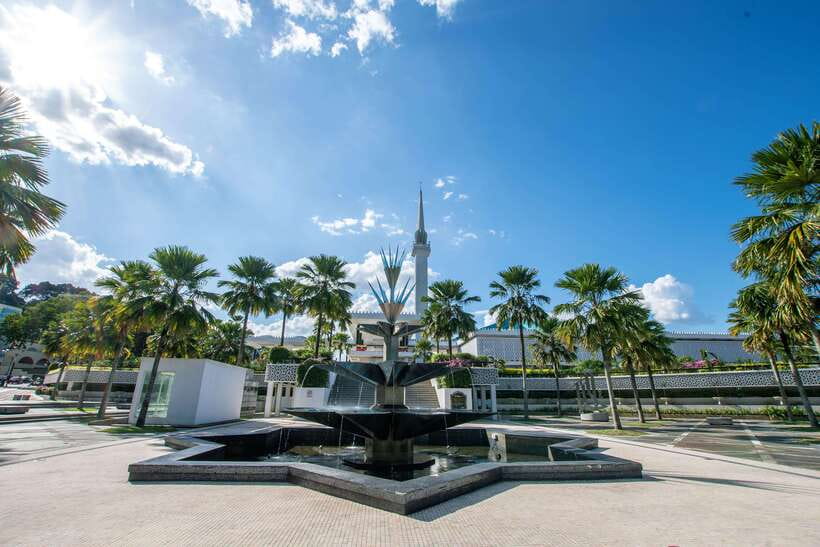
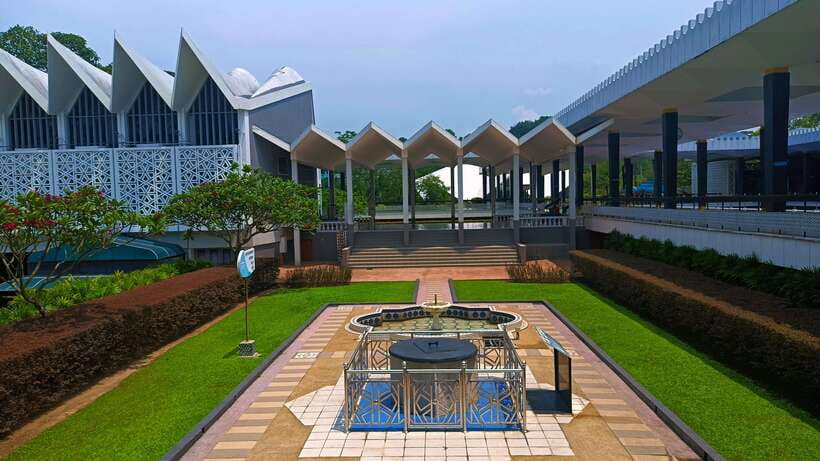
The National Mosque of Malaysia offers the most modern architectural break in the route. Completed in 1965, it uses modernist design and is known for its large blue umbrella-shaped dome.
Inside, you can see Islamic geometric patterns and calligraphy decorating the prayer hall. Outside, gardens and reflecting lakes create a calmer setting around the mosque. The water and open spaces provide a sharp contrast with the dense decoration at Thean Hou Temple.
This is also a stop where clothing and conduct are important. The driver explains the regulations and dress code during the journey, so listen carefully before you arrive. You will get more from the visit if you treat it as a functioning place of prayer rather than only an architectural attraction.
The mosque’s design is worth viewing as a whole. The dome, open spaces, geometric decoration, gardens, and reflecting water all work together. Even with a short visit, you can see why it belongs on a city culture route.
A Sikh welcome at Gurdwara Sahib
The final religious stop is Guru Nanak Darbar Tatt Khalsa Diwan Gurdwara, a place of devotion for Malaysia’s Sikh community. You can visit the main prayer hall, where the Sikh holy scripture is honored, and learn how the gurdwara also supports religious events, community gatherings, and charitable work.
This stop gives the tour an important community focus. You are not simply moving through old buildings. You are seeing places that still serve people in daily religious and social life.
As at the other sites, your clothing and behavior should show respect. Listen to the driver’s instructions before entering the complex and follow any local requirements.
Ending at the gurdwara gives the route a thoughtful final note. After Hindu, Chinese, Buddhist, Christian, and Islamic sites, Sikhism completes the picture of Kuala Lumpur as a city with several established faith communities.
What the private vehicle adds to the day
The tour lasts 270 minutes, or 4.5 hours. Pickup is available from selected hotels and residences within 5 km of the Twin Towers, and you should be ready in the lobby about 10 minutes before the scheduled time. If you are staying outside that area, you may need to reach Corus Hotel Kuala Lumpur yourself, unless you arrange an additional paid pickup with the local operator.
The vehicle is air-conditioned, which matters in Kuala Lumpur’s heat. You spend part of the tour moving between sites, so a private vehicle is more comfortable than trying to piece together taxis and public transport while watching the clock.
The private format also gives you a little more control than a large coach tour. You can ask the English-speaking driver questions and get reminders about each site as you go. Driver Bala received particular praise for his route planning and useful tips, though driver assignment can vary.
Do not expect a long lecture at every stop. The description promises a driver-assisted tour, not a specialist historian or religious studies guide. The experience works best when you want a well-arranged introduction and are happy to ask questions along the way.
The pace, cost, and practical tradeoffs
At $47 per person, the value depends on what you want from the morning. The price makes sense if you value private transport, hotel pickup within the service area, a planned route, and access to six widely separated places in one outing.
It is also a good choice for a first visit to Kuala Lumpur. You can learn which sites deserve a longer return visit, while avoiding the work of planning the order and transport.
The cost is harder to justify if your priority is extended time inside Batu Caves or Thean Hou Temple. The route covers a lot, and the travel time between stops leaves limited room for lingering. Traffic may also affect the actual time at each location.
Before booking, check three things:
- Your hotel’s distance from the Twin Towers
- Whether you are comfortable climbing 272 steps
- Whether a fast, wide-ranging route suits you better than one or two slow visits
Cancellation is free up to 24 hours before the tour, and you can reserve now and pay later. The operator uses WhatsApp to send driver and tour details by 21:00 the day before, so download the app and watch for that message.
Who should book this Kuala Lumpur temple tour?
I would choose this tour for a first-time visitor who wants a clear introduction to Kuala Lumpur’s religious and cultural variety without arranging transport. It also suits couples, families, and small private groups who prefer an air-conditioned vehicle and a flexible conversation with the driver.
It is a strong match for photographers and architecture fans. Batu Caves offers the giant statue and limestone setting, Thean Hou provides ornate Chinese design, the cathedral brings Gothic forms, and the mosque adds modern geometry and reflective water.
You should think twice if stairs are difficult for you, since Batu Caves requires a climb of 272 steps. You may also prefer a different tour if you want detailed religious teaching, long periods of quiet worship, or a slow visit to each site.
Should you book it?
Book this tour if you want to see six different expressions of faith in one organized half-day and value private transport more than extended time at any single location. The route is broad, visually varied, and practical, with Batu Caves providing the biggest spectacle and the mosque, cathedral, temples, and gurdwara filling out the cultural picture.
Skip it if you dislike a quick pace or want a specialist guide focused on one tradition. For most first visits, though, the $47 price is reasonable for the range of places covered, the air-conditioned vehicle, and the help of a driver such as Bala, who is praised for smart timing and useful local tips.
FAQ
How long does the Kuala Lumpur temple and shrine tour last?
The tour lasts 270 minutes, or 4.5 hours.
Which places of worship are included?
The route includes Batu Caves, Thean Hou Temple, Buddhist Maha Vihara, St. Mary’s Cathedral, the National Mosque of Malaysia, and Guru Nanak Darbar Tatt Khalsa Diwan Gurdwara.
Is hotel pickup included?
Complimentary pickup and drop-off are available from hotels and residences within 5 km of the Twin Towers. If you stay outside Kuala Lumpur City Centre, you should go to Corus Hotel Kuala Lumpur unless you arrange an additional pickup charge with the local operator.
How many steps are there at Batu Caves?
You need to climb 272 steps to reach the main cave.
Is the tour private?
Yes. The tour is arranged for a private group and includes an air-conditioned vehicle with an English-speaking driver.
How do I receive the driver details?
The operator uses WhatsApp as its main communication method. Driver and tour details are sent by 21:00 on the day before the tour.
Newly written up around the world
- Monastery St Simon with Cave Church and Garbage City Private Tour★ 5.0 · 15 reviews
- St Simon Monastery ,Cave Church , Garbage City and Coptic Cairo Private day tour★ 5.0 · 29 reviews
- half-day Saint Simon monastery and miracle of Moqqatam mountain★ 4.0 · 4 reviews
- Pyramids of Giza & Sphinx & valley temple Tour with Camel Ride & Egyptian lunch★ 5.0 · 5 reviews
- Shared Tour To Abu Simbel Temple From Aswan★ 5.0 · 7 reviews
- Tour to Giza Pyramids, Sphinx, Valley Temple, Camel Ride & Lunch★ 5.0 · 7 reviews
- Pyramids of Giza & Sphinx & valley temple Tour with Egyptian lunch★ 5.0 · 7 reviews
- Overnight Tour Moses Mountain St. Catherine Monastery from Cairo★ 5.0 · 21 reviews
Malaysia Temple Tours, compared.
Penang: Kek Lok Si Temple and Penang Hill Guided Tour
Read our review →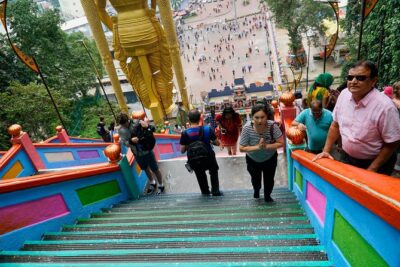
Private Half-Day Temples and Cultural Tour in Kuala Lumpur
Read our review →
Penang City & Temple Tour With Penang Hill(Fast Lane)
Read our review →
Private Penang City Tour with Kek Lok Si Temple
Read our review →
Penang: Private Highlights Tour with Temples, Hill & Gardens
Read our review →Browse the lists this tour appears in