
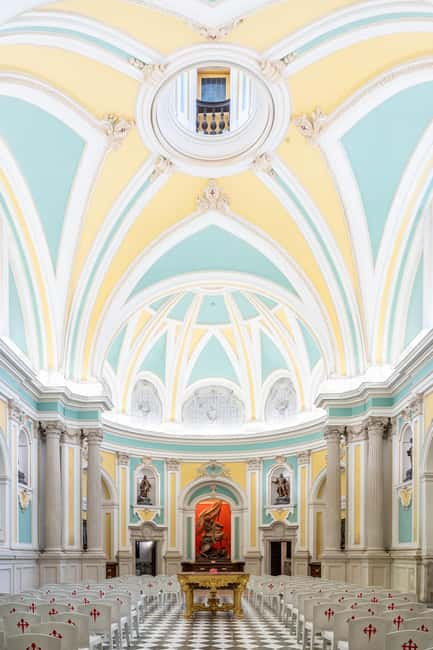
Reviewed · MADRID TEMPLE TOURS
Madrid: Entrance to the Monastery of Las Comendadoras de Santiago
The most interesting part of this visit is that you see the monastery from the nuns’ side of the church. The lower choir shows where they listened to Mass, while the Sacristy of the Knights connects the building with the Order of Santiago and its ceremonies.
I like the focused audio guide, available in English, French, and Spanish. I also like the chance to see several very different spaces in one compact visit, from the girls’ chapel to the cloister and church. The main drawback is practical: opening arrangements may not always run smoothly, so confirm the start time before you go and leave a little flexibility in your day.
Key points to know before you go
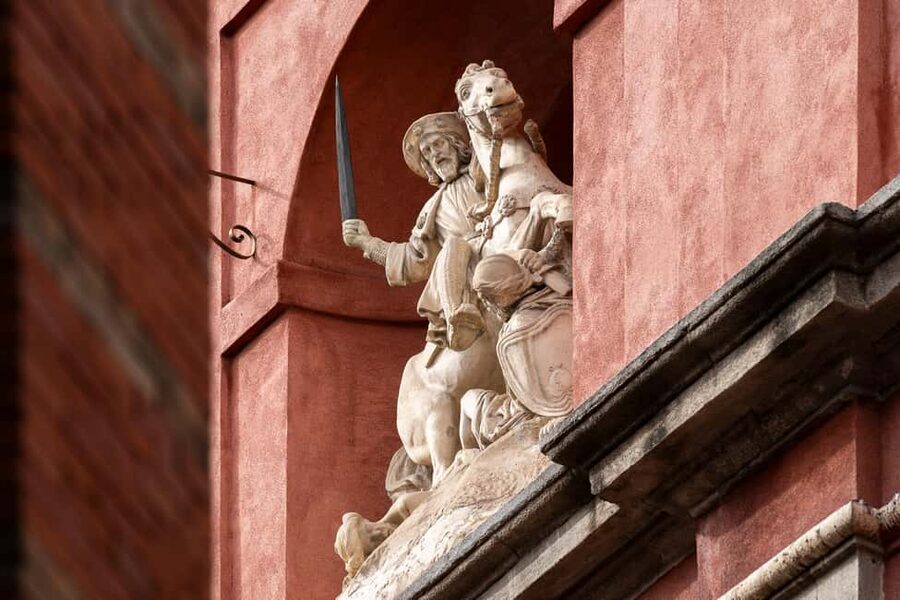
- The girls’ chapel was designed as a special space and gives the visit a more personal feel.
- The Knights’ Sacristy links the monastery to the Order of Santiago and its religious ceremonies.
- The lower choir lets you picture how the nuns attended Mass apart from the main congregation.
- A multilingual audio guide is included in English, French, and Spanish.
- The visit lasts one day on the booking calendar, with starting times depending on availability.
- A recent access problem has been reported, so check opening information and contact details before setting out.
A quieter side of Madrid’s religious history
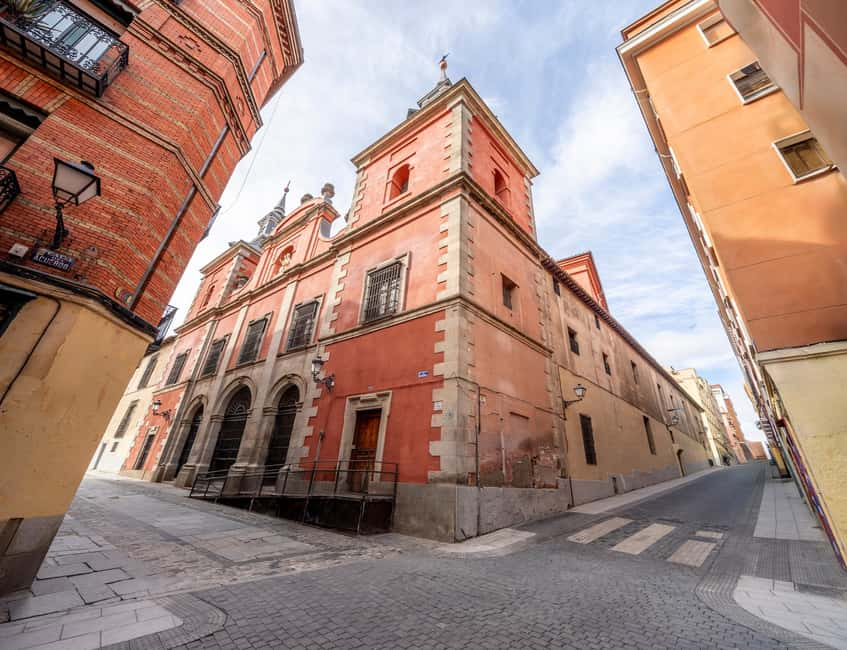
Madrid is full of grand churches, royal rooms, and famous art museums. The Monastery of Las Comendadoras de Santiago offers something less showy: a look at a working religious setting shaped by routine, prayer, ceremony, and separation from the outside world.
The monastery was founded in the 17th century. That date matters because the building is not simply an old church with decorative rooms attached. Its spaces were planned around a monastic way of life. The church served public worship, the choir gave the nuns a place to hear Mass, and the more private rooms supported the ceremonies and customs of the Order of Santiago.
You will not be rushing through a long list of attractions. The visit is about noticing how each room had a purpose. The architecture becomes easier to understand when you ask a simple question: who used this space, and why?
That makes the experience a good match for you if you enjoy religious art, historic buildings, and places that reward quiet attention. It may feel too limited if you want a large museum collection or a full guided walking tour of Madrid.
Other temple visits near Spain we have written up
- Montserrat Monastery Half Day Experience from Barcelona
★ 5.0 · 6,014 reviews - Montserrat Monastery Small Group or Private Tour Hotel pick-up
★ 5.0 · 5,144 reviews - Escorial Monastery and the Valley of the Fallen Tour from Madrid
★ 5.0 · 2,494 reviews
Entering through the church door
The meeting point is inside the temple. Enter through the church door, then find the ticket office inside. This is worth knowing before you arrive because the entrance is not described as a separate modern visitor center or street-facing ticket booth.
Admission costs $11 per person. That is a fair price if you want a short cultural stop with access to several historic spaces and an audio guide. It is less compelling if you only plan to glance into the church and leave quickly, since the value comes from taking time with the chapel, sacristy, choir, cloister, and other areas.
The visit is listed as valid for one day, with available starting times shown during booking. You should check the actual time before leaving for the monastery. One recent booking ended badly when the doors were reportedly not opened at the expected time, and the person involved said calls went unanswered. That is a serious service concern, even though it may not reflect normal operation.
I would treat the time slot as important rather than casual. Save the confirmation, check any updated information on the day, and avoid planning a tight connection immediately afterward.
The girls’ chapel and its personal scale
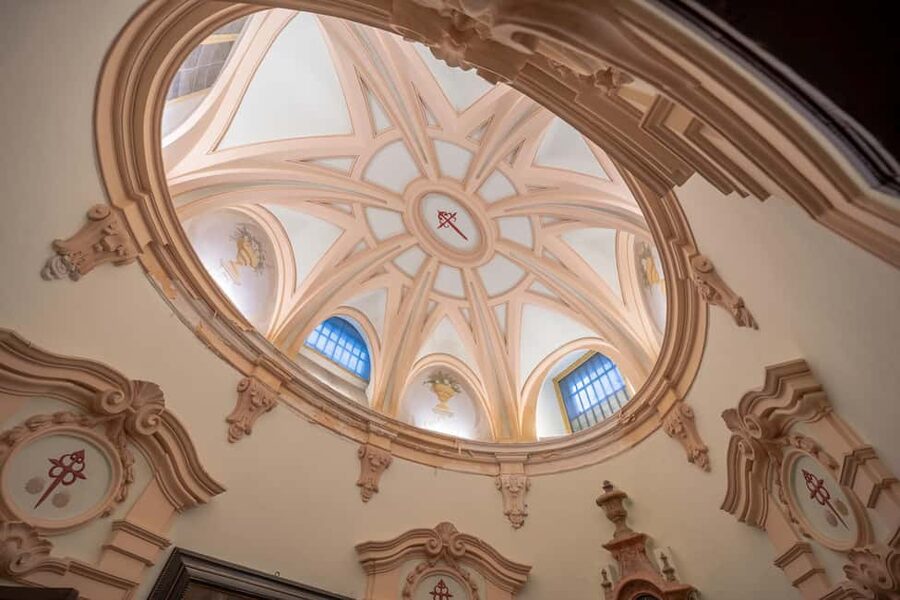
The girls’ chapel is described as a space conceived as something very special. The name suggests a more particular role within the monastery, and it gives you a chance to look beyond the main church’s public function.
This is the kind of room where small details may matter more than size. You might notice how the space is arranged, how it relates to the wider religious complex, and how its purpose differs from that of the main worship area. The supplied information does not provide a full description of its decoration, so you should use the audio guide to understand what you are seeing rather than rely on assumptions.
I like this stop because it helps break up the visit. Instead of viewing the monastery as one grand block, you encounter rooms shaped for different people and different parts of religious life. The chapel also adds a human touch to a place often understood only through its architecture.
If you have limited time, do not treat the girls’ chapel as an optional extra. It is one of the named highlights, and its special purpose is central to understanding the building.
The Sacristy of the Knights and the Order of Santiago
The Sacristy of the Knights is the visit’s clearest link to the Order of Santiago. This was the place where members were ordained under the order, giving the room ceremonial importance beyond its practical function as a sacristy.
The Order of Santiago is associated with religious and military traditions in Spain. You do not need to arrive with a detailed knowledge of the order to appreciate this room. The audio guide should help place the ceremonies in context and explain why this part of the monastery mattered.
I would pay close attention here to the difference between a room used for everyday preparation and one used for formal religious action. The Knights’ Sacristy represents the public and ceremonial side of the complex, while the lower choir points toward the nuns’ more secluded experience.
The information provided does not promise a live guide or a scheduled talk in the room. You will rely on the included audio guide, so bring headphones only if the instructions for the visit call for them. The guide is offered in English, French, and Spanish, and some content may appear in its original language.
A different set of gates, same trip:
- Montserrat Museum and Monastery Entry Ticket
★ 4.5 · 1,740 reviews - Montserrat Small Group: Monastery, Black Madonna & Natural Park
★ 5.0 · 1,690 reviews - From Madrid: Escorial Monastery and the Valley of the Fallen
★ 4.7 · 1,434 reviews - Madrid: Flamenco Show at Tablao Sala Temple with Drink
★ 4.8 · 1,206 reviews
The lower choir and the nuns’ point of view
The lower choir is perhaps the most revealing stop. This is where the nuns listened to Mass. That detail changes the way you look at the church, because it shows that worship did not necessarily mean sitting among the main congregation.
From the lower choir, you can think about separation, sound, sight lines, and routine. The nuns were present for Mass, but their position reflected the rules and structure of monastic life. The room gives you a practical sense of how devotion was organized inside the monastery.
I find this more meaningful than simply being told that the building housed nuns. A choir connected to daily worship turns that fact into something you can picture. You might imagine the repeated pattern of services, the movement through the building, and the difference between a ceremonial event and ordinary prayer.
This is also a good place to slow down. Do not rush from one named highlight to the next. The lower choir may not have the visual drama of a grand church interior, but it explains the monastery’s social and religious design better than a decorative detail alone.
The cloister, church, and monastic layout
The cloister provides the clearest image of monastic organization. Cloisters often connect different parts of a religious complex, and here it gives you a way to understand how the rooms fit together. The visit description identifies it as one of the spaces to explore, but it does not list specific dimensions, artworks, or decorative features.
That means you should approach the cloister as a place for orientation and atmosphere, not as a guaranteed showcase of famous objects. Look at how it links the monastery’s areas and use the audio guide to learn what its passages and surrounding rooms meant.
The church is described as having significant artistic value. Again, no individual artist or specific artwork is named, so I would avoid arriving with a checklist of masterpieces. The pleasure comes from seeing the church in relation to the rest of the monastery. Its public worship space, the nuns’ choir, and the more specialized rooms form one connected story.
The church may also be the easiest part of the visit to understand at first. You enter through it, find the ticket office inside, and then move into the wider complex. Give yourself a moment to look around before beginning the audio guide. That pause can help you see the building as a place of worship first and a sightseeing stop second.
How the audio guide shapes the visit
The audio guide is included in the admission price. You can use it in English, French, or Spanish, which makes this visit more accessible to international visitors who want context without booking a private guide.
No individual guide is named, and the experience is not presented as a live guided tour. That gives you control over the pace, but it also means you need to take responsibility for listening and moving through the rooms in order.
I would use the guide selectively rather than play every section at full length while walking. Start with the general introduction, then focus on the girls’ chapel, Knights’ Sacristy, lower choir, cloister, and church. Those are the places most clearly connected to the stated purpose of the visit.
Some content is shown in its original language. That is normal in a historic religious setting, but it may require extra patience if you are trying to understand every label or written item. The audio guide should be your main source of explanation.
Time, price, and practical value
The listed price is $11 per person. For that amount, you receive entrance to the monastery and the audio guide. There is no separate charge described for the main highlights, and the visit can fit neatly into a day of sightseeing in Madrid.
The value depends on your interests. If you enjoy sacred art, historic buildings, and the structure of religious life, $11 is modest. You are paying not just to enter a church, but to see the relationship between public worship, monastic seclusion, and ceremonial spaces connected with the Order of Santiago.
If you are mainly seeking famous paintings or a large royal collection, the price may feel less attractive. The monastery is a focused experience. Its rewards come from setting, purpose, and context rather than from a long list of headline objects.
The booking terms are helpful for a flexible schedule. You can reserve now and pay later, and cancellation is allowed up to 24 hours in advance for a full refund. Still, flexibility does not remove the need to check the operating time. The reported failure to open at the expected hour is the one practical warning I would take seriously.
Rules inside the monastery
Food and drinks are not allowed. The rules also prohibit drones, explosive substances, excessive noise, and entering barefoot. Drinks are listed separately as not allowed, so assume you should finish or store any beverage before going inside.
The no-noise rule fits the character of the place. This is a monastery and church, not a busy attraction designed for loud group conversation. Keep your voice low, especially in the church, choir, and chapel.
The drone restriction is straightforward, but it is useful to see it listed because historic religious buildings often have strict rules around equipment. Plan to visit with only what you need for a quiet indoor stop.
No accessibility details are provided in the information available here. If you have specific mobility or access needs, contact the monastery before booking rather than assuming that every room is easy to reach.
Who will enjoy this visit most
I would recommend the monastery to you if you like:
- Religious architecture and sacred art
- The history of Spanish orders and institutions
- Smaller cultural visits with a clear theme
- Audio-guided sightseeing at your own pace
- Quiet places where layout and ritual matter as much as decoration
Families with older children may also find the Knights’ Sacristy and lower choir useful for explaining how people lived and worshipped in the past. Younger children may lose interest if they need a highly interactive attraction, since the experience centers on rooms, history, and listening.
This is also a good choice for a repeat visit to Madrid. Once you have seen the city’s major museums and monuments, the monastery offers a different angle. It does not compete with the Prado or the Royal Palace. It adds a smaller, more specialized piece to your understanding of Madrid.
Should you book the Monastery of Las Comendadoras de Santiago?
Book it if you want a calm, focused look at a 17th-century religious complex and you care about how spaces supported monastic life. The girls’ chapel, Knights’ Sacristy, and lower choir give the visit a clear shape, while the cloister and church help connect the individual rooms.
At $11, the admission is reasonable when you use the audio guide and take time with the full visit. I would not book it as a rushed filler between major attractions, especially since opening reliability deserves caution.
Check the available starting time, save your booking details, and leave room in your schedule in case access takes longer than expected. With that small bit of planning, this can be a thoughtful way to see a quieter side of Madrid’s religious and cultural past.
FAQ
Where is the Monastery of Las Comendadoras de Santiago?
It is in the Community of Madrid, Spain.
How much does entrance cost?
Admission costs $11 per person.
How long is the ticket valid?
The ticket is valid for one day.
Where do I enter the monastery?
Enter the temple through the door. You will find the ticket office inside.
Is an audio guide included?
Yes. Entrance includes an audio guide.
Which languages are available for the audio guide?
The audio guide is available in English, French, and Spanish.
What are the main highlights?
The main highlights are the girls’ chapel, the Sacristy of the Knights, and the lower choir.
What is special about the Sacristy of the Knights?
It is the place where members were ordained under the Order of Santiago.
What is the lower choir?
It is the area from which the nuns listened to Mass.
Can I cancel for a refund?
Yes. You can cancel up to 24 hours in advance for a full refund.
Newly written up around Spain
- Montserrat Monastery Horse Riding & Walk – Small Group (Max 8)★ 5.0 · 45 reviews
- Transfer to Montserrat Monastery from Barcelona★ 4.5 · 94 reviews
- Montserrat & beyond private from Barcelona with different options★ 5.0 · 32 reviews
- Private Montserrat & Hot-Air Balloon Ride with Monastery visit★ 4.5 · 5 reviews
- Montserrat Nature Walk, Monastery and Museum from Barcelona★ 5.0 · 58 reviews
- Montserrat Monastery and Mountain Half Day Hiking from Barcelona★ 4.5 · 6 reviews
- Montserrat Tour with Cogwheel Train, Monastery & Black Madonna★ 4.0 · 10 reviews
- Montserrat Land of Shrines – One Day Small Group Hiking Tour from Barcelona★ 5.0 · 38 reviews
Madrid Temple Tours, compared.
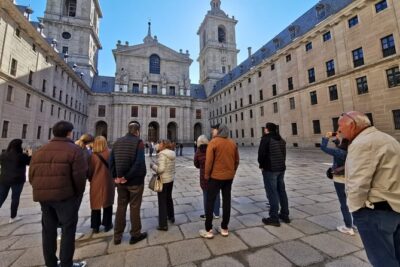
Escorial Monastery and the Valley of the Fallen Tour from Madrid
Read our review →
Flamenco Show at Tablao Sala Temple with Drink
Read our review →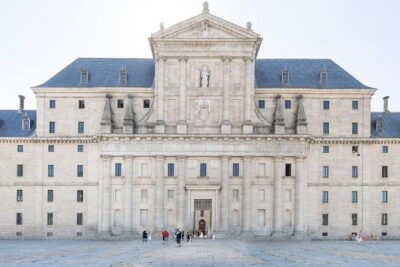
Escorial Monastery and the Valley of the Fallen from Madrid
Read our review →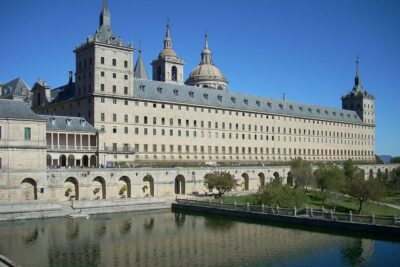
Entrance to the Flamenco Temple Room in Madrid with Tapas Option
Read our review →
Madrid Must-see with Atardeder at the Debod Temple
Read our review →
Combined admission to San Antonio de los Alemanes and the Monastery of San Plácido
Read our review →
San Lorenzo de El Escorial Monastery Private Tour
Read our review →Browse the lists this tour appears in