Reviewed · MONKEY FOREST TEMPLE TOURS
Monkey Forest, Kanto Lampo, Waterfall, Temple & Rice Terrace
Ubud’s best-known sights come together in one busy day, from macaques in a sacred forest to the cool spray of Kanto Lampo Waterfall and the stepped fields of Tegalalang. I like the mix: you get nature, Balinese religion, farming, and coffee culture rather than five similar photo stops. I also like the hotel pickup from several parts of Bali, which saves you from arranging separate transport.
The strongest part is the human touch. Guides including Reval, Tarisa, Laden, and Bossreyy have been praised for kindness, good driving, photography, and willingness to adjust the schedule. The main consideration is pace and communication: this covers a lot of ground, and one guest found English explanations difficult, so you may get more sightseeing than detailed cultural discussion.
Key points at a glance
- Five very different Ubud-area stops: Monkey Forest, Kanto Lampo Waterfall, Tegalalang Rice Terrace, Tirta Empul Temple, and a coffee plantation.
- Waterfall time is not just a quick photo stop: You can get close to the falling water and feel the spray.
- Flexible guides can shape the day: Reval was praised for changing the schedule, while Tarisa gave extra attention at waterfall stops.
- Hotel pickup covers a wide area: Pickup is available in Ubud, Kuta, Seminyak, Canggu, Nusa Dua, and Sanur.
- The $23 price is attractive: Bottled water, hotel transfers, and entrance fees are included when the selected option provides them.
- Expect a full sightseeing day: Lunch and personal spending are extra, and the guide’s English ability may vary.
Five sides of Bali in one Ubud day
I see this excursion as a sampler of central Bali. It does not focus on one long cultural visit or a quiet walk through the countryside. Instead, it connects several popular sights that each show a different part of local life.
At the Monkey Forest, you encounter Ubud’s famous macaques and sacred setting. At Kanto Lampo, the focus shifts to water and forest. Tegalalang shows how farming shapes the countryside, Tirta Empul introduces ritual purification, and the coffee plantation adds a hands-on tasting stop.
That range gives you a useful first look at Ubud. It also means you should expect some road time between stops and a schedule with plenty of movement. If you prefer to linger for hours at one temple or walk slowly through rural lanes, a private, custom day may suit you better.
More Temple and Waterfall Tours in Indonesia
- Ubud: Waterfalls, Water Temple & Rice Terraces Private Tour
★ 5.0 · 5,484 reviews - Ubud Tour with Monkey Forest Waterfalls Temples and More
★ 5.0 · 495 reviews - Ubud Top Attractions: Waterfalls, Temples and Rice Terraces
★ 5.0 · 460 reviews
Starting at Ubud Monkey Forest
The Ubud Monkey Forest is more than a place to see monkeys. It is a leafy sanctuary where long-tailed macaques move among tall trees and sacred temples. The setting gives you one of Ubud’s clearest examples of how nature, religion, and daily tourism share the same space.
You will see the animals moving freely rather than viewing them behind a conventional enclosure. That makes the visit lively, but it also means you should follow the guide’s directions and keep your belongings secure. The experience is about observing the forest and its residents, not treating the monkeys like tame pets.
This is a strong first stop because it introduces Ubud’s character quickly. You get shade, temple architecture, and animal life in one place. It is also one of the more popular sights on the route, so your guide’s ability to keep the visit comfortable and well timed matters.
The stop may be especially enjoyable if you like photography. Reval was praised for taking pictures without being asked, and other guides received similar praise for their attention to guests. Still, your guide may vary, so do not book solely expecting one named person. Guide assignments depend on availability.
Feeling the spray at Kanto Lampo Waterfall
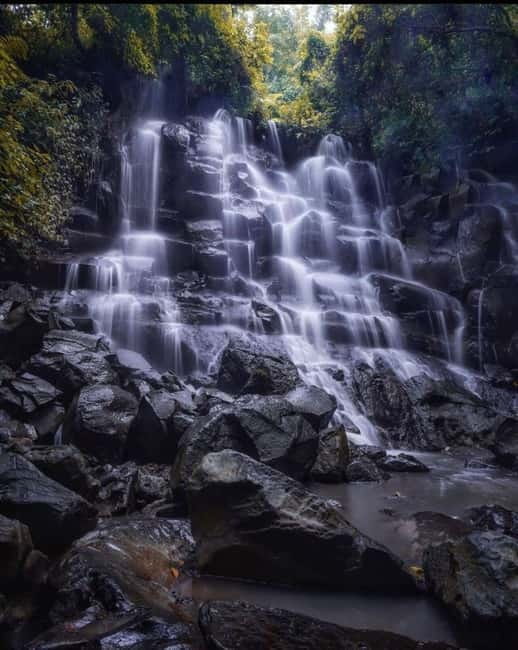
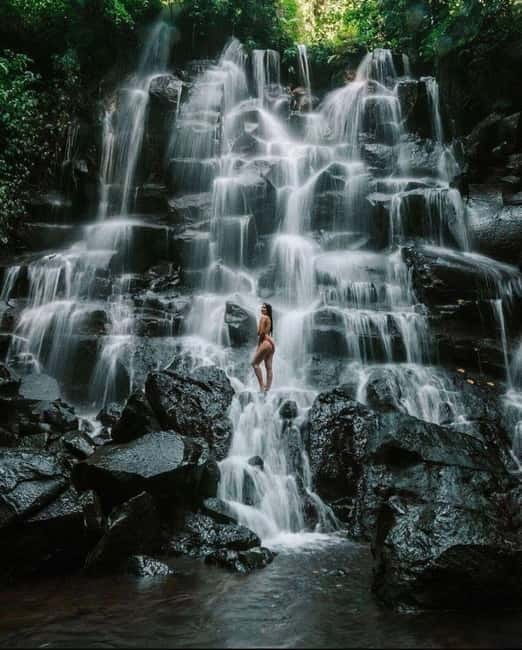
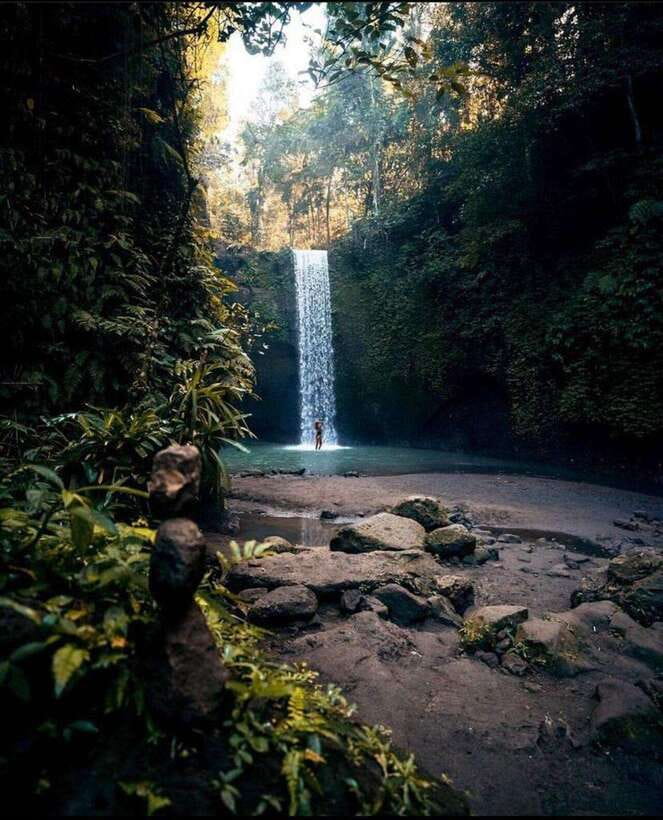
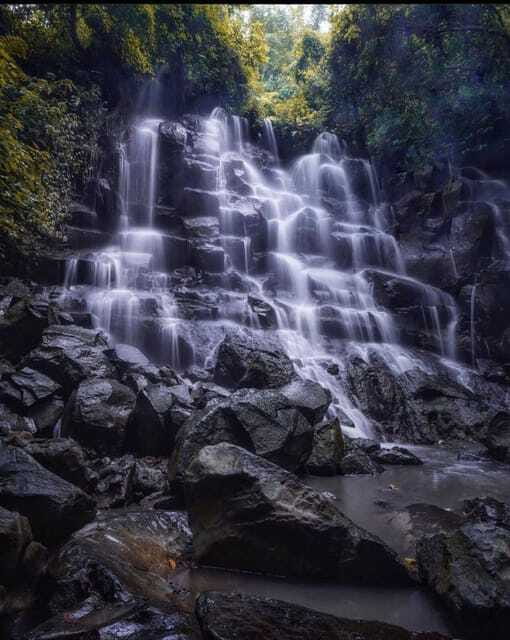
Kanto Lampo Waterfall lies south of Ubud and gives the day a welcome change of mood. Instead of looking across a broad valley, you move close to falling water and hear it breaking over the rocks.
The appeal is its intimacy. You can get near the cascade and feel the cool spray, making this more than a roadside viewpoint. One guide, Tarisa, was particularly praised for taking time at three waterfall spots and explaining what you were seeing, although the standard description for this experience specifically centers on Kanto Lampo.
You should treat this as an active nature stop rather than a simple photograph. The experience may involve walking close to the water, and conditions can affect how comfortable the visit feels. The provided details do not specify walking distances, swimming arrangements, or changing facilities, so ask your guide what is practical on the day.
I like this part of the route because it gives you a sensory break from temples and viewpoints. You hear the water, feel the mist, and get a closer look at Bali’s natural side. The drawback is that the stop can be more weather dependent than the temple or plantation visits.
Reading the fields at Tegalalang Rice Terrace
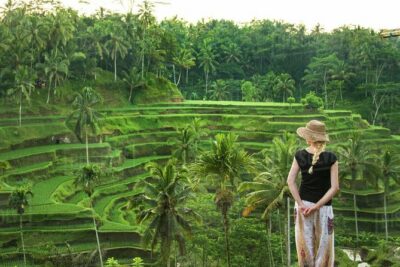
Tegalalang offers the classic Balinese countryside scene: stepped rice fields with coconut trees and green slopes. It is the sort of view many people picture before arriving in Bali, and it earns its place on a first visit to Ubud.
The value here is not only the photograph. Rice terraces show how farming works with Bali’s hilly terrain, creating usable fields where a flat plain is not available. The visit also helps connect the rest of the day. After seeing monkeys and waterfalls, you can look at the agricultural setting that supports village life.
The information provided does not state how long you spend at the terrace, so this is an important point to confirm if you care about walking time. Some people want a quick viewpoint, while others hope to wander through the fields. A flexible guide can help you decide how much time makes sense, but the number of stops means you may need to keep moving.
I would keep expectations practical. This is a scenic countryside visit, not a farming workshop. You will see the terraces and coconut trees, but the amount of explanation about irrigation, planting, or village life depends on your guide. One guest specifically wished for more detail about Balinese culture and daily life, which is a useful reminder to ask questions as you go.
More Temple and Waterfall Tours in Ubud
- From Bali: Saraswati Temple, Monkey Forest, Ubud Waterfalls
★ 4.9 · 263 reviews - Ubud Tour with Swing, Temple, Monkey Forest, and Waterfall
★ 5.0 · 224 reviews - Ubud: Monkey Forest, Temple, Rice Terraces, Hidden Waterfall
★ 4.9 · 185 reviews - Ubud: Rice Terraces, Water Temple, & Waterfalls Private Tour
★ 5.0 · 44 reviews
Purification at Tirta Empul Temple
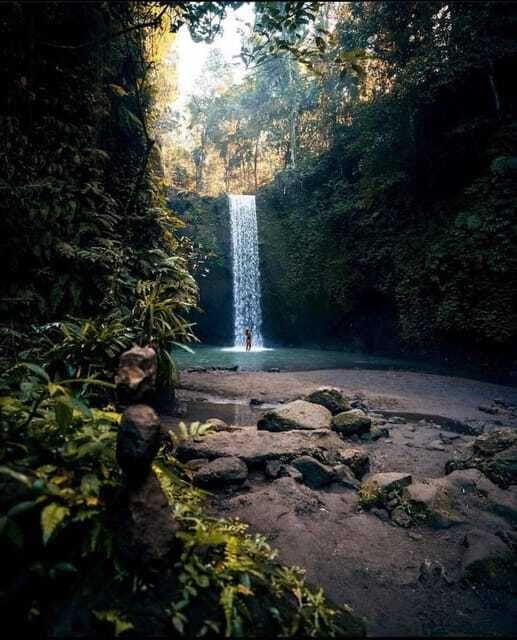
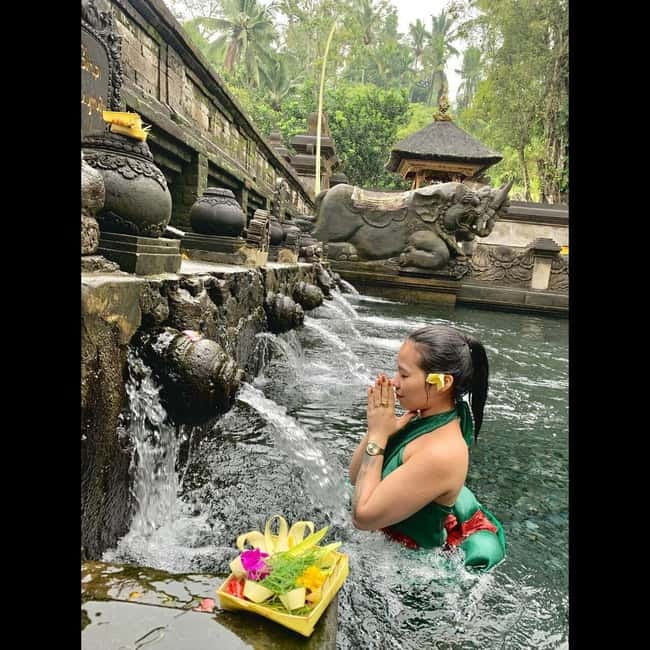
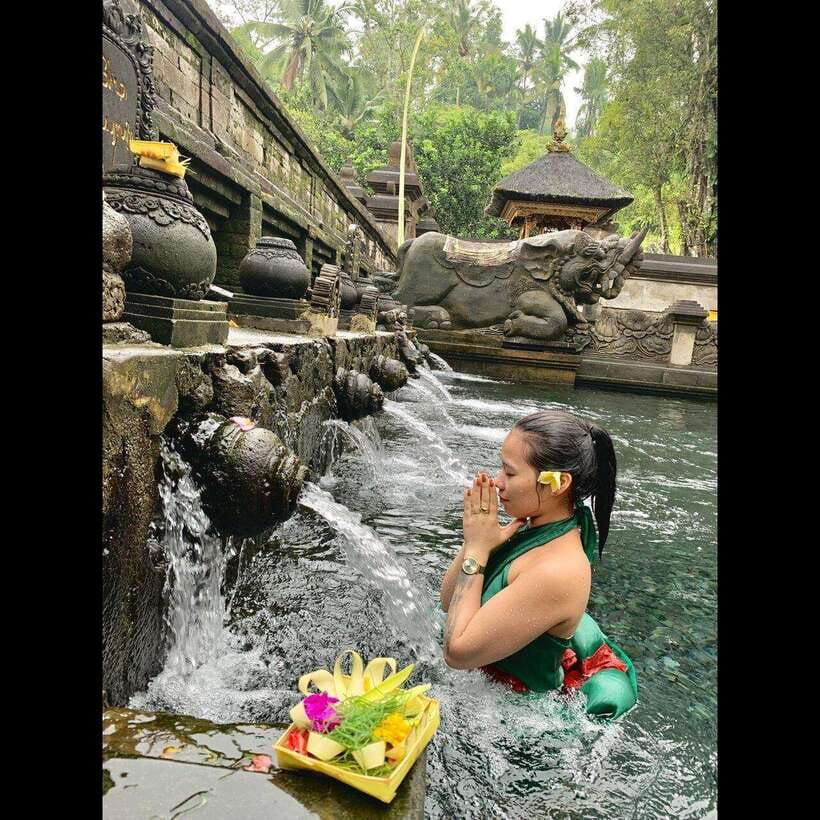
Tirta Empul, in the village of Manukaya near Tampaksiring, is a holy spring-water temple used by Balinese Hindus for ritual purification. This is the most clearly religious stop on the route, and it adds meaning to a day that could otherwise be mostly scenery.
The temple helps you see that Balinese water sites are not simply pretty places. Spring water has a role in religious practice, and purification is an important part of Balinese Hindu tradition. Your guide can help explain the setting and the difference between visiting respectfully and treating the temple as just another photo stop.
The available information does not say that the tour includes participation in a purification ritual. You should therefore expect a temple visit and cultural context, not assume that a bathing ceremony is part of the booking.
This is where guide communication matters most. A friendly guide can make the visit far more useful by explaining what you are seeing and answering questions. The guides praised on this experience were often described as attentive and flexible, but English fluency may vary. If cultural explanation is your main reason for booking, raise that priority when you meet your guide.
Tasting coffee and tea at the plantation
The coffee plantation rounds out the route with a tasting and educational stop. You can learn about different types of coffee and tea, with the visit also covering cultivation of coffee, cocoa, and other products according to the experience details.
I like this stop because it turns a familiar souvenir item into something connected to farming. Rather than simply buying a bag of coffee, you get a chance to hear how these products are grown and try them for yourself. Coffee and tea tasting is included in the activity, so it adds value without requiring a separate tasting fee.
The plantation also gives you a slower pause late in the day. After several major sights, a guided explanation and tasting can be easier on the legs than another long walk. Do keep in mind that plantation visits can vary in tone. Some people enjoy the sampling and product knowledge, while others may prefer more time at the waterfall or temple.
If you are not interested in coffee, tea, or cocoa, this will probably be the least essential stop for you. If you enjoy food culture and want to take home a local product, it is a useful addition.
What the guides add to the day
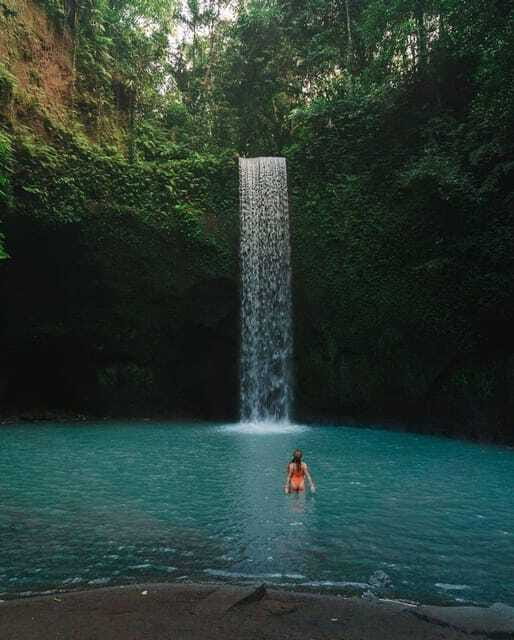
The clearest strength of this experience is the attitude of the guides. Laden was praised for being attentive throughout the day. Reval was praised for changing the schedule when asked and for taking photographs. Tarisa received high marks for making waterfall visits comfortable, explaining the sights, and allowing enough time at each stop.
Bossreyy was also praised for explaining the day’s schedule with a smile. That early explanation matters because the route has several components. You want to know what comes next, how much flexibility you have, and when to expect food or personal breaks.
The experience does not promise one specific guide, so names should be treated as examples of the service style you might receive, not a guarantee. The strongest practical advantage is flexibility. Guides have adjusted time at sights and meals when possible, which is helpful if you want more waterfall time or a shorter plantation visit.
Communication may be uneven. One guest found that English difficulties limited the amount of cultural information they received. If you want detailed explanations, ask direct questions and say early that culture and daily life matter to you. That can help your guide shape the conversation.
What $23 per person really covers
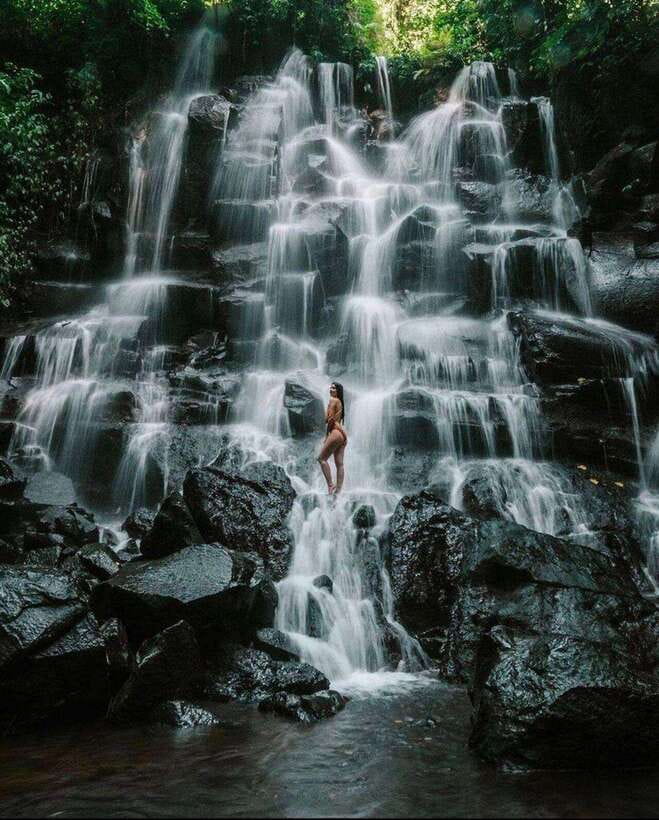
At $23 per person, this is priced as an economical way to combine several Ubud sights with transport. Hotel pickup and drop-off are included from selected areas, bottled water is provided, and entrance fees are included when you choose the option that includes them.
That last point deserves attention. Check the exact booking option before paying, because the information specifies entrance fees only if the selected option includes them. The base price is appealing, but the final value depends on what is bundled into your choice.
Lunch is not included. You should budget for your own meal, along with personal expenses. A flexible guide may help you fit in a meal, but the tour price itself does not cover it.
The value is strongest if you are staying outside Ubud. Pickup from Kuta, Seminyak, Canggu, Nusa Dua, Sanur, and Ubud removes the need to arrange separate transport to central Bali. If you are already based in Ubud and want only one or two sights, booking a shorter outing could be more efficient.
A 4.9 rating from 14 ratings suggests a very strong early response, with the main caution centered on English communication rather than poor service. I would read that as a good sign for friendliness and flexibility, not as a promise that every guide will give a detailed lecture at every stop.
Who will enjoy this route most
I would recommend this day to first-time visitors who want a broad introduction to Ubud. You see wildlife, water, farming, religion, and local products without having to coordinate several separate bookings.
It also suits couples, families, and small groups who value a private-feeling day with a guide who can adjust the order or timing. The photography help is a nice bonus if you want more than self-timer snapshots.
The route is less suited to anyone who dislikes a full sightseeing schedule. You should also think carefully if your main goal is a long spiritual visit, a serious trek, or detailed academic discussion of Balinese Hinduism. The tour touches each subject, but it does not promise extended time at any one stop.
The experience is not suitable for people over 95 according to the supplied booking information. Other accessibility details are not provided, so anyone with mobility concerns should ask about walking conditions and access before reserving.
Practical planning for a smoother day
Pickup is available from Ubud, Kuta, Seminyak, Canggu, Nusa Dua, and Sanur, but confirm that your exact hotel falls within the selected pickup area. The broad coverage is useful, though the route will naturally involve transport between different parts of Bali.
Wear clothing that works for both outdoor sights and a temple visit. The day includes a waterfall, forest, rice terraces, and a holy temple, so comfort and respectful dress are sensible priorities. The supplied details do not specify temple dress requirements or equipment, so ask the operator if you need exact guidance.
Bring some money for lunch and personal purchases. Bottled water is included, but food is not. The coffee plantation tasting is included, which helps keep extra costs under control.
You can reserve now and pay later, and cancellation is allowed up to 24 hours in advance for a full refund. That flexibility is useful if your Bali plans are still moving. The tour is offered in English and Indonesian.
Should you book this Ubud tour?
Book it if you want a wide sample of Ubud at a low price, with transport arranged and a guide who may adjust the day to suit you. The combination of Monkey Forest, Kanto Lampo, Tegalalang, Tirta Empul, and the plantation gives you a fuller picture than a route built only around viewpoints.
I would be more cautious if you need polished English interpretation at every stop or want a slow, deeply researched cultural tour. In that case, ask about guide language ability and your preferred focus before booking.
For $23 per person, the value is strong when entrance fees are included in your chosen option and you make good use of the hotel transfer. Add lunch and personal spending to your budget, then book this as an energetic introduction to central Bali rather than a quiet day with lots of spare time.
FAQ
Where does hotel pickup take place?
Pickup and drop-off are available from selected locations in Ubud, Kuta, Seminyak, Canggu, Nusa Dua, and Sanur. Confirm your exact hotel when booking.
What sights are included?
The route includes Ubud Monkey Forest, Kanto Lampo Waterfall, Tegalalang Rice Terrace, Tirta Empul Temple, and a coffee plantation.
Are entrance fees included?
All entrance fees are included if you select the option that includes them. Check the exact option before booking.
Is lunch included?
No. Lunch and personal expenses are not included in the price.
What languages are available?
The experience is offered in English and Indonesian.
Can I pay later?
Yes. You can reserve your place and pay later, so you do not need to pay at the time of booking.
What is the cancellation policy?
You can cancel up to 24 hours in advance for a full refund.
More Rice Terrace and Temple Tours in Ubud
- Full-Day Tour to Water Temples and UNESCO Rice Terraces in Bali
★ 5.0 · 2,539 reviews - Private Full-Day Tour: Balinese Temples and Rice Terraces
★ 5.0 · 246 reviews - Bali: Rice terrace, Waterfall, and water Temple Day Tour
★ 5.0 · 10 reviews - Ubud: Water Temple, Rice Terrace, and Waterfalls Tour
★ 5.0 · 5 reviews
More Monkey Forest Temple Tours in Ubud
- Ubud: Monkey Forest, Jungle Swing, Rice Terrace, and Water Temple
★ 5.0 · 7,160 reviews - Gorilla Cave ATV Bali Ubud, Monkey Forest, Temple, and Lunch
★ 5.0 · 295 reviews - BALI :Sanctuary Monkey forest, rice terrace Water temple
★ 4.9 · 14 reviews - Best Watefalls, Monkey Forest, Temple and Rice terrace
★ 5.0 · 11 reviews
Newly written up around Ubud
- Private ubud tour Rice teracce, temple & Secret waterfall★ 3.7 · 3 reviews
- Ubud: Water Temple, Rice Terrace, and Waterfalls Tour★ 5.0 · 5 reviews
- Cretya Ubud, Rice Terrace, Temple & Waterfall Day Tour★ 5.0 · 4 reviews
- Best Watefalls, Monkey Forest, Temple and Rice terrace★ 5.0 · 11 reviews
- Bali: Uluwatu Temple, Kecak Dance, and Jimbaran Dinner Tour★ 5.0 · 5 reviews
- Bali ubud : monkey forest, waterfall , temple★ 3.4 · 8 reviews
- Bali: Tirta empul Temple, Rice terrace and Waterfall★ 5.0 · 5 reviews
- BALI :Sanctuary Monkey forest, rice terrace Water temple★ 4.9 · 14 reviews
Monkey Forest Temple Tours, compared.
Monkey Forest, Jungle Swing, Rice Terrace, and Water Temple
Read our review →
Lopburi Monkey Temple & Ayutthaya Old City Tour From Bangkok
Read our review →Monkey Forest, Water Temple, Rice Terrace, Waterfall
Read our review →
Ubud Tour with Monkey Forest Waterfalls Temples and More
Read our review →
Gorilla Cave ATV Bali Ubud, Monkey Forest, Temple, and Lunch
Read our review →
Saraswati Temple, Monkey Forest, Ubud Waterfalls
Read our review →
Sok River: Bamboo Raft Ride, Monkey Temple & View Point Tour
Read our review →