
Reviewed · ABU SIMBEL & PHILAE TEMPLE TOURS
Tour To Abu Simbel Temples From Aswan
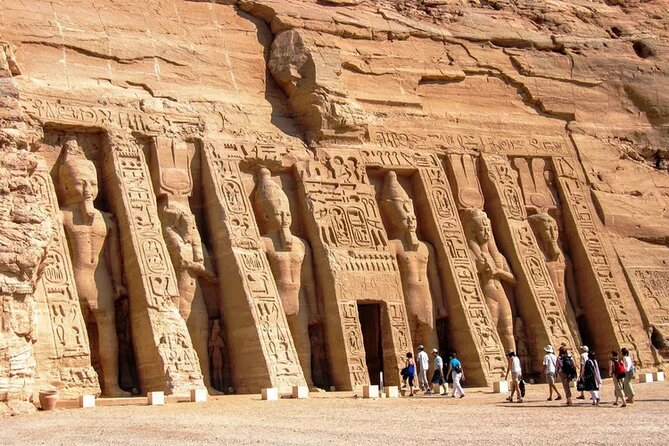
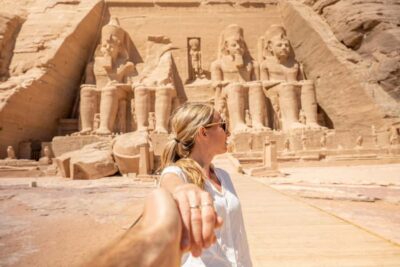
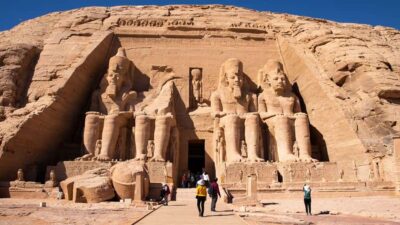
Abu Simbel is one of Egypt’s great payoffs: two enormous temples at the southern end of the country, reached by a long morning drive from Aswan. The main temple honors Ramses II and four universal gods, while the nearby temple honors Queen Nefertari and Hathor.
I like two things here. First, the air-conditioned vehicle matters on a nine to ten-hour day. Second, you get roughly three hours at the temples, enough time to see both buildings, take photographs, and listen to an explanation without being rushed through in a few minutes.
The drawback is the 4:00 am start and the long road journey. This is not a gentle half-day outing. You should book it because Abu Simbel matters to you, not because you want a relaxed morning around Aswan.
Key points about the Aswan to Abu Simbel trip
- 4:00 am departure: You leave early to make the long drive south and allow time at the temples.
- Two major temples: See the Temple of Ramses II and the Temple of Queen Nefertari, also linked with Hathor.
- About three hours on site: You have time for photographs, videos, and a proper look around.
- Air-conditioned transport: The vehicle is included and helps make the road trip more comfortable.
- Small group format: The maximum group size is 15 people.
- Strong value at $26.80: The price is modest for transport from Aswan and a full day focused on Abu Simbel.
Why Abu Simbel deserves the early alarm
The reason to take this trip is simple: Abu Simbel is not a minor stop that you squeeze in if you have spare time. It is the main event for many people visiting southern Egypt.
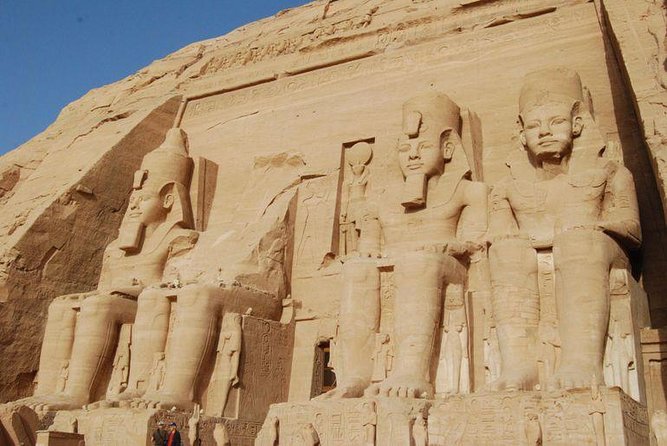
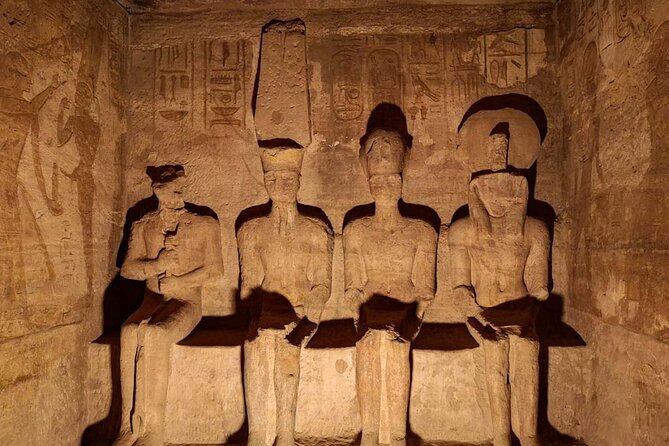
The temples were built to reflect the power and glory of Egypt’s New Kingdom. The Temple of Ramses II was dedicated to Ptah, Re-Her-Akhtey, Amun-Re, and Ramses II himself. It is also known as the Sun Temple of Ramses II.
That combination of royal power and religious purpose gives the site more weight than a quick photo stop. You are not just looking at a large ancient building. You are seeing a place designed to honor a king and connect him with major gods.
The second temple belongs to Queen Nefertari. It is also called the Temple of Hathor, identified here as the wife of the Sun God. Seeing the two temples together is important. The visit is not only about Ramses II’s giant monument. Nefertari’s temple gives the site a second focus and a different royal story.
The temples also have a modern story. The Egyptian government and UNESCO worked together to save them from flooding. That effort is part of what makes Abu Simbel especially meaningful today. The buildings remain in place for you to see because a major preservation project protected them from rising water.
More Abu Simbel and Philae Temple Tours in Aswan:
- From Aswan: Abu Simbel Temple Day Trip with Hotel Pickup
★ 4.4 · 2,807 reviews - Private Day Tour to Abu Simbel Temples from Aswan
★ 4.5 · 507 reviews - Full Day tour to Abu simbel temples from aswan
★ 4.5 · 309 reviews
Leaving Aswan at 4:00 am
Your day begins with pickup at 4:00 am. That time is not for show. The drive to Abu Simbel takes about three hours, and the full experience lasts roughly nine to ten hours.
You will be collected in an air-conditioned vehicle. Pickup is offered, and the trip uses a small-group format with no more than 15 people. That is a useful middle ground. You are not paying for a private car, but you are also not joining a huge coach group.
The early departure has two clear advantages. It gives you a full block of time at Abu Simbel, and it brings you back to Aswan after the temple visit rather than turning the trip into an overnight stay. If your schedule is tight, that makes the outing easier to fit into a visit to Aswan.
The cost is $26.80 per person. At that price, the main value is the transport and the chance to visit a site that is far from Aswan without arranging your own vehicle. The experience includes the air-conditioned vehicle. Alcoholic drinks are not included, though that is hardly a serious concern on a pre-dawn archaeological outing.
Bring patience for the road. A three-hour drive in each direction is a large part of the day. You may find the journey comfortable enough in an air-conditioned car, but you should not expect a short transfer.
The road from Aswan to Abu Simbel
The supplied schedule gives you about three hours to reach the temples and about three hours to explore them, followed by the return to Aswan. The remaining time in the nine to ten-hour duration allows for pickup, drop-off, and the practical pauses that come with a long road trip.
This structure is worth understanding before you book. You are paying for access to one of Egypt’s most important sites, but you are also committing to a full day on the move.
I would choose this trip if Abu Simbel is high on your list and you are already staying in Aswan. I would think twice if you have only one short morning in town or if long drives leave you worn out. The road itself is not the attraction. Abu Simbel is.
Several people specifically found the journey comfortable and not overly tiring, with the vehicle and organization helping the day run smoothly. That does not remove the distance, but it suggests the transport is doing its job. The driver and vehicle matter a great deal on this outing, so the air-conditioning is more than a minor feature.
Three hours among the temples
The main stop is Abu Simbel, where you have about three hours to explore both temples.
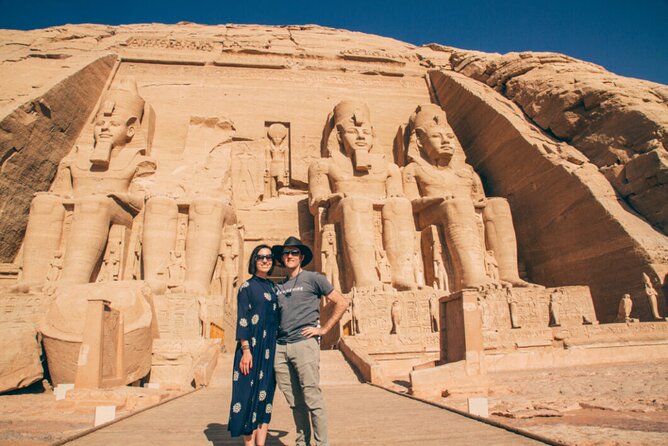
Start with the Temple of Ramses II. Its scale and unusual design are the first things likely to catch your attention. The temple was built around Ramses II and the four gods named in the tour explanation: Ptah, Re-Her-Akhtey, Amun-Re, and Ramses II himself.
Take your time with the exterior before moving inside. The large forms are what make the first impression, but the meaning of the temple becomes clearer when you connect the building with its religious dedication. Ask for the explanation of the four gods and Ramses II’s place among them.
Then give Queen Nefertari’s temple proper time. It is easy to spend most of a visit staring at the larger temple and treating the second one as an afterthought. That would be a mistake. The Nefertari temple is part of what makes Abu Simbel a complete visit, with a royal woman and Hathor receiving their own monument.
Three hours should allow you to visit both temples, take photographs and videos, and listen to an explanation. The schedule also gives you enough room to pause rather than sprint from one feature to the next.
The site is described as a masterpiece of ancient Egypt, and that praise is easy to understand from the material provided. The temples combine distinctive style, royal ambition, and religious purpose in one location. You get a place that is visually striking but also gives you plenty to ask about.
Other temple visits near Aswan we have written up
- From Aswan: Private Guided Tour of Philae Temple with Entry
★ 4.6 · 239 reviews - Full Day Tour to Abu Simbel Temples from Aswan
★ 4.5 · 218 reviews - Aswan: Philae Temple Guided Half-Day Group Tour
★ 4.5 · 202 reviews - Aswan: Philae Temple Sound & Light Show with Entrance Fees
★ 4.1 · 151 reviews
The UNESCO rescue story adds meaning
One of the most useful parts of the explanation is the rescue of the temples from flooding.
The Egyptian government and UNESCO cooperated to save Abu Simbel. That fact changes how you look at the site. You are seeing ancient monuments that survived not only from their original construction, but also through a modern effort to protect them.
For me, this is one of the strongest reasons to pay attention during the explanation instead of treating the stop as a photo session. The temples have two timelines: their ancient role under Ramses II and Nefertari, and their modern preservation.
The tour description promises information about the temples, their civilization, and Ramses II. One account also describes the explanation as clear. Hager is praised by name for being helpful, friendly, and cheerful, although you should not assume that the same person will lead every departure unless your booking confirms it.
If a guide is present for your departure, use the three hours well. Ask about the purpose of each temple, the gods connected with the main sanctuary, and the reason the temples needed rescue from flooding. Those questions will help turn a visually impressive stop into a more understandable one.
Photos, videos, and time to look properly
You are encouraged to take photographs and videos during the visit. That suits Abu Simbel, since the temples are the sort of place many people want to remember visually.
Still, do not let the camera become the whole visit. The schedule gives you enough time to put it down and look at the buildings as a group. Notice the contrast between the Temple of Ramses II and the Temple of Queen Nefertari. Consider why two royal figures received separate monuments and how the connection with the gods shapes each temple.
The three-hour visit is one of the best features of the schedule. A short stop would make the long drive feel harder to justify. Here, the time at the site is long enough to see both temples and return to details you may miss at first.
The group limit of 15 also helps in principle. You may still share the site with other visitors, but your own transport group is small enough for instructions and explanations to be manageable. The exact feel of the group will depend on how many people are booked on your date.
Who will get the most from this tour
This excursion suits you best if you:
- Are staying in Aswan and want to see Abu Simbel in one day
- Care about ancient Egyptian temples and the story behind them
- Can manage a 4:00 am departure
- Prefer arranged transport over organizing a long drive yourself
- Want several hours at the site for photos and explanation
- Are comfortable sharing a vehicle with a group of up to 15 people
- Want a low-cost way to add Abu Simbel to an Aswan itinerary
Families can also find the format workable. One family account describes spending enjoyable time exploring the temples, and the activity information says most people can participate. The main question for families is not the site itself but the early start and the long ride.
You may want a different plan if you need a private schedule, dislike early mornings, or want a leisurely day with little time in a vehicle. This tour is focused and practical. It is not designed for lingering in Aswan during the morning.
Price, timing, and the small print
At $26.80 per person, the price is attractive for a full-day trip from Aswan with air-conditioned transport. The value depends on how you view the distance. If you would otherwise need to arrange a car, driver, or separate excursion, this offers a simple way to reach Abu Simbel without taking on that planning yourself.
The listed features include pickup and a mobile ticket. Confirmation is received at booking, and the meeting time is 4:00 am. The maximum group size is 15 people, and the activity is near public transportation.
The admission details should be checked carefully at booking, since the included section specifically lists the air-conditioned vehicle and does not list alcoholic beverages or other extras. Do not assume that every possible cost is covered simply because transport is included.
Free cancellation is available when you cancel at least 24 hours before the start time. Changes or cancellations made less than 24 hours ahead are not accepted for a refund. The experience also depends on good weather and a minimum number of participants. If poor weather or insufficient bookings cause cancellation, you are offered another date or experience, or a full refund.
Should you book the Abu Simbel day trip?
I would book this tour if you are in Aswan, have one full day available, and consider Abu Simbel a must-see. The low price, air-conditioned transport, small-group limit, and three-hour temple visit make a strong case.
I would not book it casually. The 4:00 am start and three-hour drive each way are real commitments. But if you can accept the road time, the reward is a pair of extraordinary temples with a powerful story of kingship, worship, and modern preservation.
Choose it for the destination, the clear focus, and the chance to see both Ramses II’s temple and Nefertari’s temple in one organized day. Pack patience, charge your phone for photos, and be ready for an early morning that earns its keep.
FAQ
What time does the tour start?
The tour starts at 4:00 am.
How long does the experience last?
The tour lasts approximately nine to ten hours.
How long is the drive to Abu Simbel?
The schedule describes about three hours of driving to reach the temples, followed by the return drive to Aswan.
How much time do I get at Abu Simbel?
You get about three hours to explore the temples and take photographs and videos.
Which temples do I visit?
You visit the Temple of Ramses II and the Temple of Queen Nefertari, also called the Temple of Hathor.
Is transportation included?
Yes. An air-conditioned vehicle is included, and pickup is offered.
How large is the tour group?
The activity has a maximum of 15 participants.
Can I cancel for a full refund?
Yes, if you cancel at least 24 hours before the experience start time. Cancellations or changes made less than 24 hours before the start are not refunded.
Newly written up around Aswan
- Tour to Abu Simbel Temples from Aswan★ 4.5 · 7 reviews
- Sound and Light show at Philae Temple in Aswan★ 5.0 · 5 reviews
- Philae Temple and Aswan High-Dam Half-day tour★ 5.0 · 49 reviews
- Aswan Philae Temple, Obelisk, and High Dam Private Tour★ 4.5 · 17 reviews
- Visit Abu Simbel temple from Aswan by private A/C vehicle★ 5.0 · 4 reviews
- Temple of Edfu★ 4.0 · 11 reviews
- Sound And Light Show At Philae Temple In Aswan★ 3.5 · 10 reviews
- Abu Simbel Temples from Aswan★ 4.5 · 10 reviews
Abu Simbel & Philae Temple Tours, compared.
Abu Simbel Temple Private Guided Day Trip with Lunch
Read our review →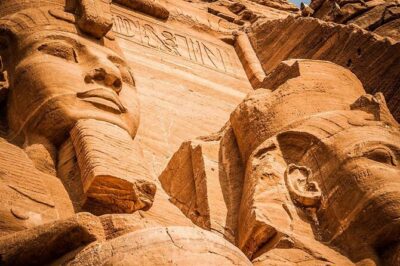
Private Day Tour to Abu Simbel Temples from Aswan
Read our review →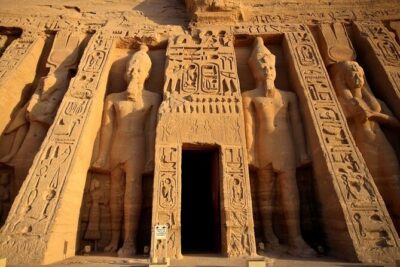
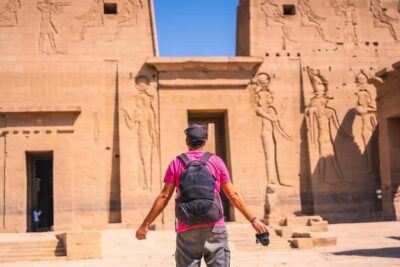
Private Guided Tour of Philae Temple with Entry
Read our review →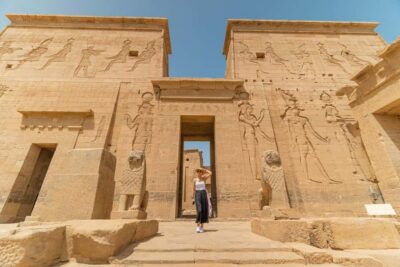
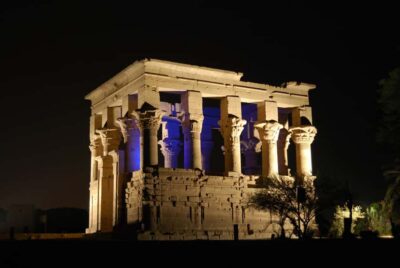
Philae Temple Sound & Light Show with Entrance Fees
Read our review →Browse the lists this tour appears in