
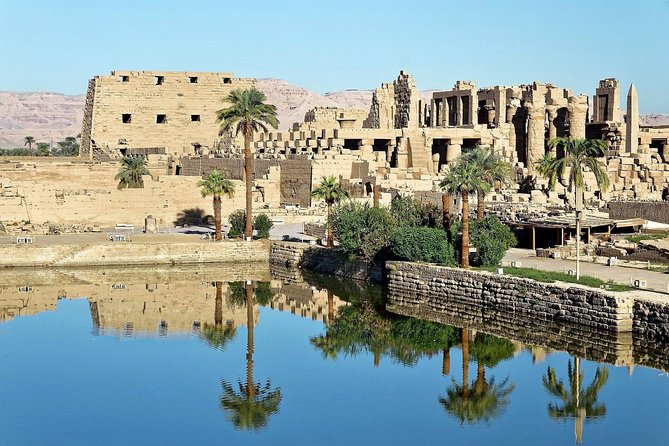
Reviewed · ASWAN TEMPLE TOURS
Nile cruise between Aswan and Luxor: Sail the best temples in Egypt
The most rewarding part of this Aswan to Luxor Nile cruise is the rhythm: ancient temples by day, quiet river views and a poolside break when you return to the boat. You see the major monuments without repacking every night, and the river gives the trip a calm center.
I especially like the included transfers from your Aswan hotel, airport, or train station, plus the return transfer in Luxor. I also like the guide-led visits, particularly when Mohamed Gaber, known as Moha, is with the group. His Spanish explanations, theatrical touches, and care with practical details have made a strong impression. The main drawback is the early start and busy schedule. Abu Simbel is optional, its entrance ticket costs extra, and the four days leave little room for slow wandering.
Key points to know before booking
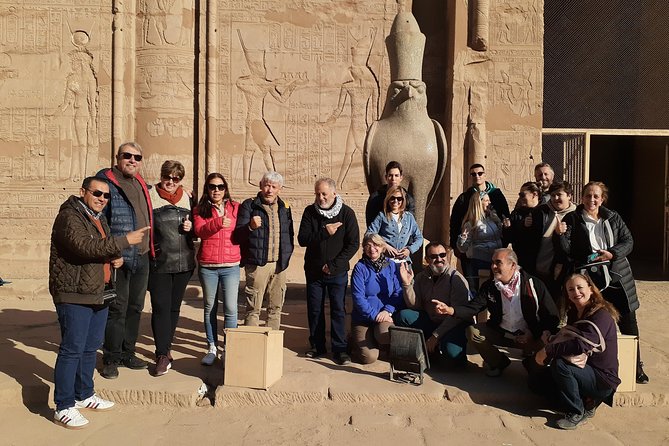
- Four nights on the Nile: Your accommodation, four lunches, and four dinners are included, giving you a simple base between sightseeing stops.
- The strongest temple sequence: Philae, Kom Ombo, Edfu, Karnak, Luxor Temple, and Hatshepsut’s temple are all part of the plan.
- Abu Simbel is extra but important: The optional two-hour visit adds one of Egypt’s most powerful monuments, but admission is not included.
- A guide can make the difference: Mohamed Gaber, or Moha, is praised for Spanish explanations, humor, short performances, and close attention to the group.
- Convenient start and finish: Pickup begins in Aswan and drop-off is arranged in Luxor at your hotel, airport, or station.
- Good value at $500: The price includes four nights, meals, transfers, and site tickets, but drinks, tips, and Abu Simbel admission are extra.
Why this cruise works so well for first-time Egypt visitors
A Nile cruise is a practical way to connect Aswan and Luxor. Instead of arranging separate hotels, cars, guides, and entrance tickets, you settle into one boat and let the river carry you between major sites.
At $500 per person, this experience offers solid value if you plan to visit the temples anyway. Four nights of accommodation are included, along with four lunches, four dinners, the listed visits, and transportation at both ends. You still need to budget for drinks, tips, and the Abu Simbel ticket, but the main cost is clear.
The experience is not simply a boat ride with monuments added on. The important benefit is the context. Egyptian temples can look like a forest of columns and carved figures when you first arrive. A good guide explains who built each place, which gods were honored, and how the monuments fit into the wider story of ancient Egypt.
That is where Mohamed Gaber, often called Moha, can add real value if he is your guide. His Spanish is praised repeatedly, and his style is energetic rather than academic. He uses humor, role-play, and small performances to make complicated groups of gods and pharaohs easier to follow. That can be especially helpful at Karnak, where the scale and long building history can otherwise feel overwhelming.
The group size is capped at 30 people. That is not an intimate private tour, but it is still manageable for a guided visit. If you prefer complete independence, this format may feel structured. If you want help understanding what you are seeing, the structure is a strength.
Other temple visits near Aswan we have written up
- From Aswan: Abu Simbel Temple Day Trip with Hotel Pickup
★ 4.4 · 2,807 reviews - Private Day Tour to Abu Simbel Temples from Aswan
★ 4.5 · 507 reviews - Full Day tour to Abu simbel temples from aswan
★ 4.5 · 309 reviews
Day 1 in Aswan, settle in before the river journey
Your pickup in Aswan can be arranged from the airport, train station, or hotel. The stated start time is 6:00 a.m., so confirm the exact meeting time and place before the day begins.
Once aboard, you have time to settle into your room and follow the meal schedule. Day 1 is intentionally light. You can rest by the pool or explore Aswan independently, which gives you a useful chance to recover from travel.
I like this gentle opening. Ancient Egypt tours can become tiring quickly, especially in the heat, and a free first day keeps the experience from feeling like one long march from one monument to the next.
The trade-off is that Aswan sightseeing is not built into this day. If you want a guided visit around the city, you will need to arrange that separately or use your free time on your own. The itinerary gives you the boat and the downtime, not a full Aswan city tour.
Abu Simbel, the optional morning worth considering
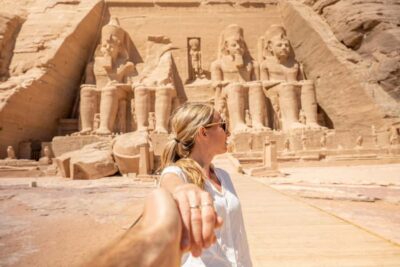
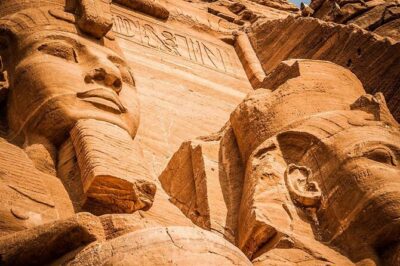
Abu Simbel is the one major extra on this cruise. The temples were cut into the rock during the reign of Ramses II and were dedicated to Ramses and his wife, Nefertari.
The visit lasts about two hours, and the admission ticket is not included. That means you should decide early if you want to go, then confirm the added cost and departure details directly with the operator.
My advice is simple: if Abu Simbel matters to you, treat it as a priority rather than an afterthought. It is not part of the standard included admissions, but the enormous rock-cut façades and royal symbolism make it an important addition to an Aswan and Luxor itinerary.
The practical downside is timing. The overall program already begins early and packs several major monuments into a short period. Adding Abu Simbel means less free time in Aswan and another demanding excursion. You need to decide if the extra monument is worth the added expense and energy.
Philae Temple, an island sanctuary to Isis
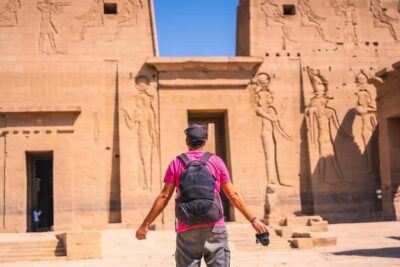
Philae is dedicated to Isis and sits on an island, so you reach it by boat. That short water crossing is part of the appeal. The temple does not feel like a roadside stop. You approach it across the river, then walk into a religious complex surrounded by water.
The scheduled visit lasts about one hour, and admission is included. That makes Philae an easy stop to appreciate without worrying about another ticket.
I find this a good early temple visit because it introduces you to the visual language of Egyptian worship: carved gods, formal gateways, courtyards, and long stone walls covered with scenes. With a guide, you can start noticing how the same deities and symbols appear again at later sites.
You should still expect the visit to feel brisk. One hour is enough for an introduction and photographs, but not for every inscription or corner. Stay close to the group and listen carefully at the beginning, when the guide usually provides the information that helps the rest of the visit make sense.
A different set of gates, same trip:
- From Aswan: Private Guided Tour of Philae Temple with Entry
★ 4.6 · 239 reviews - Full Day Tour to Abu Simbel Temples from Aswan
★ 4.5 · 218 reviews - Aswan: Philae Temple Guided Half-Day Group Tour
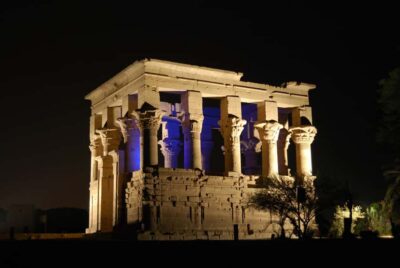
★ 4.5 · 202 reviews - Aswan: Philae Temple Sound & Light Show with Entrance Fees
★ 4.1 · 151 reviews
Kom Ombo, one temple built for two gods
Kom Ombo has an unusual plan. It was built for two gods, Sobek and Haroeris, which gives the site a divided character and a useful lesson in how Egyptian religion could bring different traditions together.
The visit takes about an hour, and the entrance ticket is included. Because the stop is compact, you can see a great deal without spending half a day ashore.
This is one of the places where a guide earns his keep. The double dedication can be confusing if you simply walk through the ruins. Moha’s style, with clear explanations and theatrical storytelling, suits this kind of stop well. He can help you follow the separate religious themes rather than seeing only columns and weathered reliefs.
Do not expect Kom Ombo to feel as grand as Karnak. Its value comes from the unusual design and the chance to see a temple with a very specific religious purpose. It works best as part of the river sequence, when you are comparing each stop with the one before it.
Edfu Temple, the best-preserved major stop
Edfu is dedicated to Horus and is described as one of the best-preserved temples in ancient Egypt. You have about two hours here, with admission included.
That extra time matters. Edfu gives you a better chance to study the walls, gateways, and carved scenes instead of rushing through a short photo stop. The temple’s preservation also helps you imagine how these places looked when their surfaces were more complete.
I would pay close attention to the explanation of Horus and the temple’s purpose. Egyptian mythology can become a jumble of names, especially when several gods appear at different sites. A guide who explains the connections in plain language can turn a long day of monuments into a story you can actually remember.
The schedule is still active. Edfu is not a quiet museum visit, and you will likely be moving with the group through a large complex. Wear comfortable shoes, carry water, and leave room on your camera or phone. The tour includes the admission, but drinks are not included.
Karnak, where Egypt’s scale becomes clear
Karnak is the largest and most demanding visit on the cruise schedule. Different pharaohs added to the complex over more than 2,000 years, creating a vast religious site rather than a single, neatly planned building.
The visit lasts about two hours and includes the ticket. You will see the famous avenue of sphinxes, the hall of columns, and the avenue of rams. These are not minor details. The scale of the columns and the repetition of carved stone make Karnak one of the places where Egypt’s building ambitions become easy to grasp.
This is also where a guide matters most. Without context, the complex can blur into a series of giant walls. With a good explanation, you can understand how different rulers added their own marks and how the site developed over centuries.
Two hours is enough for the main highlights, but not every section. You should accept that you are getting a focused introduction rather than an exhaustive archaeological visit. If you want long periods alone with the inscriptions, a group itinerary may feel too fast.
Luxor Temple after dark or late in the day
Luxor Temple was built in honor of Amun Ra, a central figure in the Egyptian religious world. The visit lasts about two hours, with admission included.
Its placement in modern Luxor gives it a different feeling from the island setting of Philae or the broad complex at Karnak. You are seeing an ancient monument within a living city, which helps connect the temples to the present-day geography of Luxor.
The guide’s explanations are useful here because the religious roles of Amun Ra, kingship, and royal ceremony can be difficult to follow from carvings alone. I would listen for the links between Luxor Temple and Karnak, rather than treating the two as unrelated stops.
This is a full sightseeing day when combined with Edfu. You may feel tired by the time you reach Luxor Temple, but the long visit allows you to take in the key areas. The planned schedule gives you a broad look at the site, not unlimited free time.
Valley of the Kings, choose three tombs carefully
On the final sightseeing day, you visit the Valley of the Kings, a major cemetery containing the tombs of many pharaohs of the New Kingdom. The program allows entry into three tombs of your choice.
That choice is important. You do not have to see every tomb, and you should think about what interests you most before entering the valley. Some people care most about painted scenes, while others want the feeling of walking down into a royal burial chamber.
The visit lasts about two hours, with admission included. The key limitation is that the three-tomb allowance does not mean every tomb or special ticket is covered. The supplied details confirm three tombs of your choice, so ask the guide which options are open on the day and if any additional charges apply.
The Valley of the Kings can also be physically demanding. The itinerary does not provide specific accessibility details, so you should ask the operator about walking conditions if that is important to you. Comfortable footwear and water are sensible choices.
Hatshepsut’s temple and the Colossi of Memnon
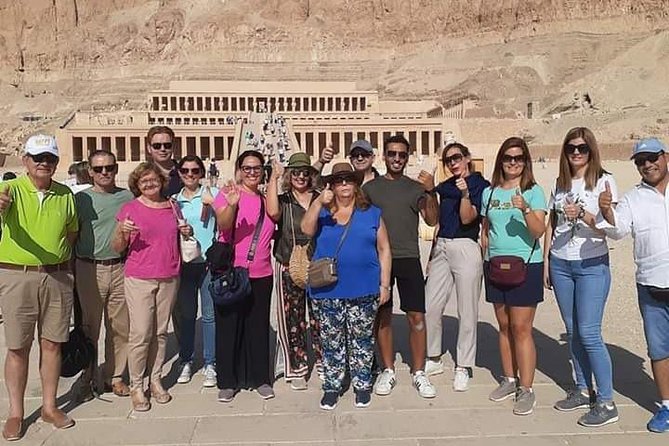
The Mortuary Temple of Hatshepsut receives about one hour of guided time. Hatshepsut was one of Egypt’s most important queens, and her temple is often described as one of the country’s exceptional monuments.
The site is visually different from the tombs in the valley. Instead of descending underground, you encounter broad terraces and a strong architectural design set against the surrounding rock. The short visit gives you the main story and the principal views, but you will not have hours to examine every relief.
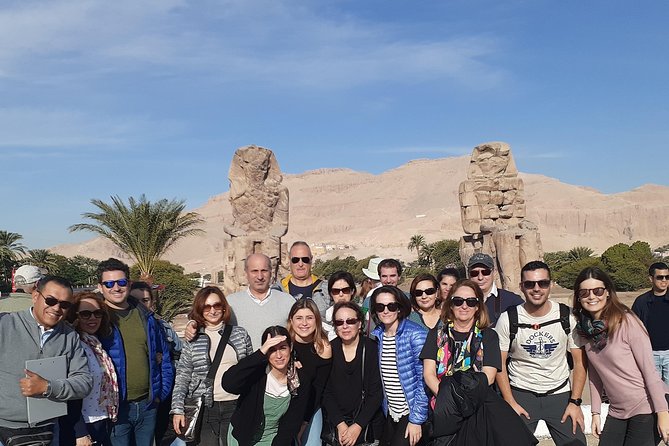
The final monument is the Colossi of Memnon, two huge stone statues representing Pharaoh Amenhotep III. The stop lasts about 15 minutes and has no separate admission charge.
Fifteen minutes is enough for photographs and a quick explanation. It is not a full visit, and you should treat the statues as a brief final stop rather than a major part of the day.
After checkout, you have about five hours of free time in Luxor before the arranged transfer to your hotel, airport, or station. This is useful breathing room after the guided visits. You can make your onward connection or explore independently, but the details of that free time are yours to arrange.
Meals, boat time, and what the $500 includes
The price includes four nights aboard the cruise, four lunches, and four dinners. It does not include drinks or tips.
That arrangement keeps the basic cost easy to understand. You are paying for the central accommodation, meals, transfers, and listed entrance tickets in one package. For a first visit, that can be less stressful than pricing each temple, vehicle transfer, and hotel night separately.
I would still ask what kind of room and boat to expect before paying, since the supplied details do not specify cabin size, boat category, or onboard facilities beyond a pool. The word cruise can cover a range of standards, and those details affect the value of $500.
The free time on Day 1 and the quiet navigation periods are important parts of the experience. You are not sightseeing every minute. You can sit by the pool, watch the Nile from the boat, and let the pace slow down between temples.
Who should book this Nile cruise?
I would recommend it to you if this is your first trip to Egypt and you want the main Aswan to Luxor monuments handled in one organized plan. It suits couples, families, and small groups who value explanations and simple transfers over complete independence.
It is also a good match if Spanish is important to you. Mohamed Gaber’s Spanish, humor, and active teaching style are repeatedly emphasized in the available feedback. His use of short performances and group participation can make the mythology easier for children and adults to remember.
I would hesitate if you want a private, slow archaeological tour. The group may reach 30 people, the visits follow a fixed schedule, and some stops are short. You also need to pay extra for drinks, tips, and Abu Simbel admission.
Booking directly through WhatsApp is suggested at +20 100 137 0325, and more information is available at conoceregypto.com. You receive confirmation at booking. Most people can participate, but ask ahead about any mobility concerns because no detailed accessibility information is provided.
The cancellation rule is straightforward: cancel at least three full days before the local start time for a full refund. Changes or cancellations inside that period are not accepted or refunded.
Should you book it?
Book this cruise if you want an efficient first look at Upper Egypt, with the major temples, four nights aboard, meals, and transfers gathered into one $500 package. The guide may be the biggest strength, especially if Mohamed Gaber leads your group in Spanish.
Think twice if you want long, unscheduled hours at each monument or if Abu Simbel must be included in the advertised price. For most first-time visitors, though, the combination of river time, strong temple coverage, and practical door-to-door transfers makes this a sensible way to travel from Aswan to Luxor.
FAQ
Where does the Nile cruise start and finish?
The cruise starts in Aswan, Egypt, and finishes in Luxor, Egypt. Pickup in Aswan can be arranged from an airport, train station, or hotel, and the final transfer in Luxor can be arranged to your hotel, airport, or station.
How long is the cruise?
The experience lasts approximately four days and includes four nights aboard the cruise.
What meals are included?
Four lunches and four dinners are included. Drinks are not included.
Is Abu Simbel included in the price?
No. Abu Simbel is an optional excursion, and its admission ticket is not included.
Which temple visits are included?
The included visits are Philae Temple, Kom Ombo Temple, Edfu Temple, Karnak Temple, Luxor Temple, the Valley of the Kings, Hatshepsut’s Mortuary Temple, and the Colossi of Memnon.
How many people can join the tour?
The activity can have a maximum of 30 travelers.
Newly written up around Aswan
- Tour to Abu Simbel Temples from Aswan★ 4.5 · 7 reviews
- Sound and Light show at Philae Temple in Aswan★ 5.0 · 5 reviews
- Philae Temple and Aswan High-Dam Half-day tour★ 5.0 · 49 reviews
- Aswan Philae Temple, Obelisk, and High Dam Private Tour★ 4.5 · 17 reviews
- Visit Abu Simbel temple from Aswan by private A/C vehicle★ 5.0 · 4 reviews
- Sound And Light Show At Philae Temple In Aswan★ 3.5 · 10 reviews
- Abu Simbel Temples from Aswan★ 4.5 · 10 reviews
- Temple of Edfu★ 4.0 · 11 reviews
Aswan Temple Tours, compared.
Private Day Tour to Abu Simbel Temples from Aswan
Read our review →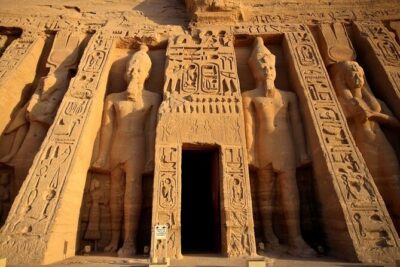
Private Guided Tour of Philae Temple with Entry
Read our review →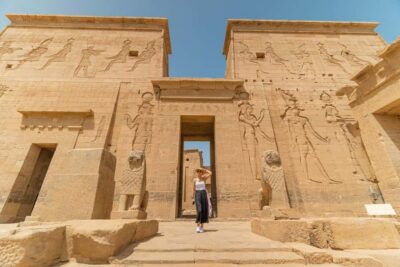
Philae Temple Sound & Light Show with Entrance Fees
Read our review →
Aswan Day Tour Visiting Philae Temple, Unfinished Obelisk and High Dam in Aswan
Read our review →Browse the lists this tour appears in