
Reviewed · ACROPOLIS & ANCIENT GREEK TEMPLE TOURS
St. Paul’s Footsteps: Biblical Ancient Corinth & Daphni Monastery
The most unusual thing about this private Athens outing is its link between Saint Paul’s Corinth and Byzantine Daphni. In one long day, you pass from a 19th-century canal to a Doric temple, a Christian preaching site, a mountain fortress, an ancient harbor, and a monastery filled with mosaics.
I like the door-to-door pickup and the freedom to set your own pace inside the sites. I also like the human scale: your group rides alone, with bottled water, air conditioning, and onboard WiFi. The tradeoff is a full schedule, and the driver cannot accompany you into the ruins as an official guide.
Key points to know before booking
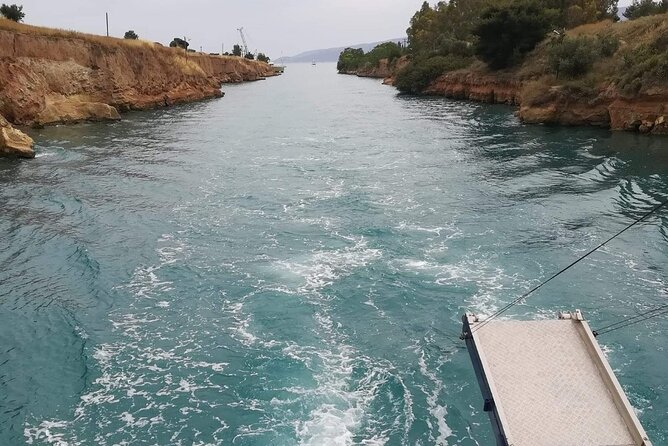
- The Corinth Canal makes a quick, striking first stop, with about 30 minutes for photos and views into the 6.4-kilometer cut.
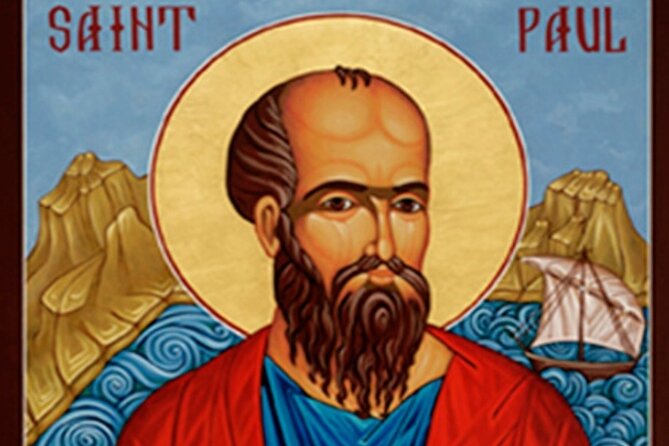
- Ancient Corinth connects directly to Saint Paul, with the Temple of Apollo, the Bema area, the Peirene Fountain, and the archaeological museum nearby.
- Acrocorinth adds height and effort, offering wide views and centuries of defensive walls, gates, and ruins.
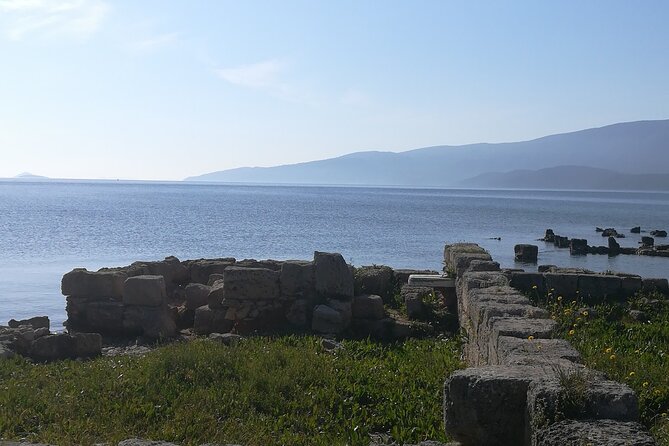
- Kechries supplies the biblical link, marking the ancient port connected with one of Paul’s journeys.
- Daphni Monastery changes the mood, shifting from classical ruins to Byzantine church art and religious mosaics.
- The $425.85 group price works best for four people, but entrance fees are extra at €15 per person for Ancient Corinth and its museum.
Why this Athens day trip feels different
Many Athens outings stay within the city or focus on one famous ancient site. This one takes you west across the Attica region and into the Corinth area, then returns to the capital by way of Daphni Monastery.
That range is the main reason to consider it. You are not simply ticking off one ruin. You are following the changing role of Corinth as a port, commercial center, religious city, military stronghold, and Christian setting.
The private format matters. You are picked up at your Athens hotel or residence, or at Piraeus port, and returned there after roughly eight hours. There is no need to find a meeting point or coordinate with a large coach. You can ask your driver for help with the order of the day and spend more or less time at a stop, within the limits of the schedule.
The driver is not a licensed guide and does not enter the archaeological sites with you. That is an important distinction. You get English commentary and local knowledge during the drive, but inside Ancient Corinth and the museum, you will be walking on your own unless you request a licensed guide in advance and one is available.
More Acropolis and Ancient Greek Temple Tours in Athens:
- Athens: Cape Sounion & Poseidon Temple Sunset Half-Day Trip
★ 4.8 · 8,241 reviews - Athens: Cape Sounio & Poseidon Temple Trip with Audio Guide
★ 4.4 · 4,521 reviews - Cape Sounion and Temple of Poseidon Half-Day Small-Group Tour from Athens
★ 4.5 · 3,205 reviews
The Corinth Canal in 30 minutes
The first major stop is the Corinth Canal, which cuts through the narrow Isthmus of Corinth and links the Aegean Sea with the Ionian Sea. The present canal dates from the 19th century and runs for about 6.4 kilometers.
You have around 30 minutes here. That is enough for photographs and a quick look at the steep-sided waterway, but not enough for an extended stop or a boat trip. Admission is free.
I like this opening because it gives you a clear sense of geography. The canal is not just a pretty cut in the ground. It explains why this strip of land mattered for ships, trade, and control between mainland Greece and the Peloponnese.
Bring your camera and keep your expectations sensible. This is a short viewpoint stop, not a major walking visit. If you prefer a slower morning, you may want to ask how the timing can be adjusted, since the overall day includes many separate places.
Walking through Ancient Corinth
Ancient Corinth is the core of the excursion. You get about an hour among the remains of one of Greece’s important city-states, followed by time at the Archaeological Museum of Corinth.
The site brings together temples, public spaces, fountains, and other fragments of city life. The Temple of Apollo is the most recognizable feature, with surviving Doric columns dating to the 6th century BC. It is one of the oldest stone temples in Greece, and its simple, heavy form gives the ruins a strong sense of age.
This is also where the Saint Paul connection becomes more than a label. Corinth was linked with Paul, Silas, Timothy, Aquila, and Priscilla, and the site includes places associated with the civic world in which early Christian preaching took place. The Bema area, or speaker’s platform, is one detail to look for as you walk through the ruins.
A driver can point out a sensible route before you enter. One account of this experience praises Spiro for explaining how to see the site, including the Bema, Peirene Fountain, Temple of Apollo, and Acrocorinth. If Spiro is assigned to your group, ask him to help you plan your walking order. If another driver takes you, request the same practical orientation.
The entrance fee for Ancient Corinth and the museum is not included. It can be purchased on site for €15 per person. That extra cost is modest compared with the overall private transport price, but you should include it in your budget.
The Temple of Apollo and the museum
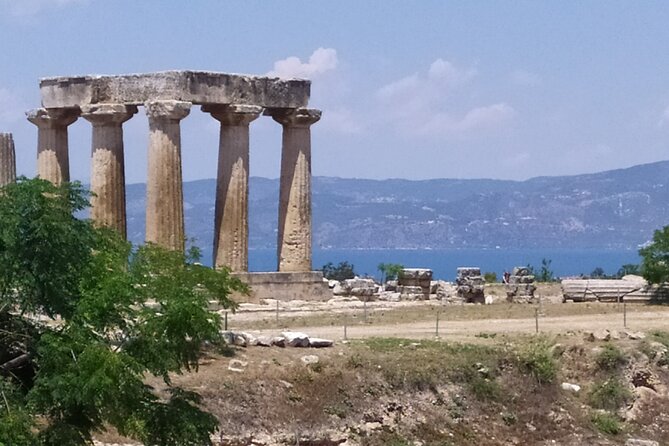
The Temple of Apollo receives its own 30-minute portion of the schedule, though it is within the Ancient Corinth visit. This gives you time to look closely rather than simply photograph it from the roadside.
The surviving columns are the main attraction, but the value is also in the setting. You can see how the temple fits into the larger city and imagine the scale of the religious center before earthquakes, war, and later building changed the site.
The museum adds the detail that open-air ruins cannot provide. Its displays include pottery, sculpture, Roman mosaics, and ordinary objects from different periods of Corinth’s past. You may find that the museum makes the scattered stones outside easier to understand.
Allow yourself enough energy for both parts. The ruins can feel more immediate, while the museum slows the pace and supplies objects you can examine at close range. If you rush through the first hour, the museum may feel like an afterthought. The private format gives you a chance to tell your driver what matters most to you.
Other temple visits near Athens we have written up
- Cape Sounion & Temple of Poseidon: Small Group Tour
★ 4.7 · 1,945 reviews - Athens: Cape Sounion & Temple of Poseidon Sunset Experience
★ 4.3 · 1,338 reviews - From Athens: Temple of Poseidon & Cape Sounion Half-Day Tour
★ 4.3 · 1,082 reviews - Athens Half Day Tour, Acropolis, Parthenon, Temple of Olympian Zeus & Hephaistus
★ 5.0 · 609 reviews
Acrocorinth: views with a price in effort
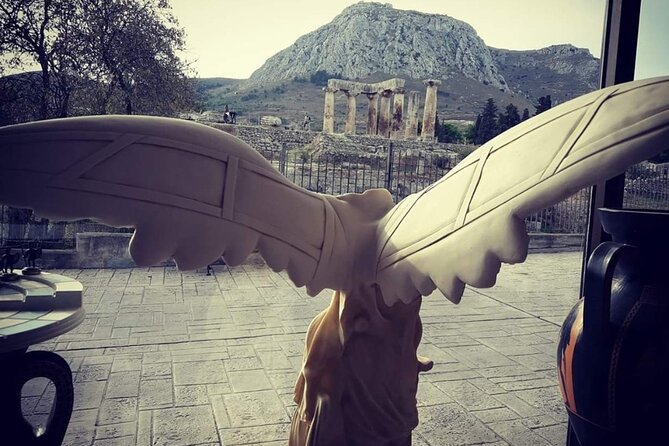
Acrocorinth rises above Ancient Corinth and served as a defensive stronghold from ancient Greek times through the Byzantine and Ottoman periods. Its walls, gates, remains of temples, and high position make it one of the most memorable parts of the day.
The schedule allows about an hour. This is not simply another flat archaeological site. You should expect walking around an old fortress setting, with the reward of broad views over the surrounding area.
The site is free according to the tour details, but free entry does not mean effortless access. Wear practical shoes and be ready for uneven ground. The information provided does not promise a specific level of walking difficulty, so ask your driver about current access and how much of the fortress you can reasonably cover in the time available.
I would give Acrocorinth priority if you enjoy military history, old walls, and viewpoints. If your group includes someone who tires easily, you may want to discuss how much time to spend here before setting out. The attraction is the combination of place and panorama, not a single polished monument.
Kechries and the Saint Paul connection
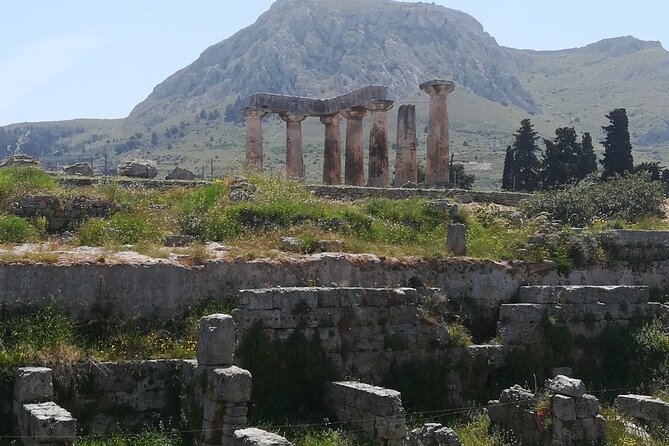
Kechries was the eastern port of Corinth and a center for trade in the Roman period. Today, the remains are quieter than the city ruins, with traces of the old harbor, docks, and warehouses.
The stop lasts about 30 minutes and admission is free. It is a good contrast after the busier archaeological areas. Instead of a large complex, you get a more reflective place tied to the movement of people and ships.
Kechries is also connected with one of Saint Paul’s missionary journeys. That detail gives the stop real meaning for visitors interested in biblical geography. You can picture Corinth not as an isolated ruin, but as a port linked to the wider Mediterranean world.
Do not expect a long guided site visit here. The value is in the setting and the connection. Your driver can explain the context on the way, then you can take a short walk and consider how the port supported Corinth’s trade and travel.
Daphni Monastery changes the tone
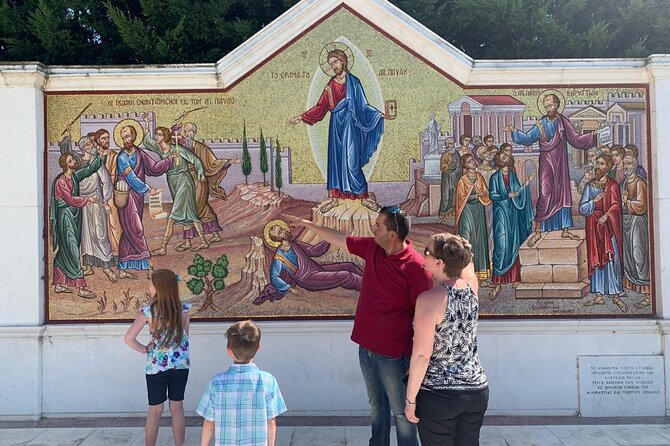
The Monastery of Daphni is the final major stop and a sharp change from classical Corinth. Located just outside Athens, this UNESCO World Heritage site is known for its 11th-century Byzantine architecture and religious mosaics.
You have about an hour here. The church and its artwork provide a quieter close to a day spent among temples, forts, and harbor ruins. The mosaics are the focus, with religious scenes rendered in a style very different from the sculpture and stonework at Ancient Corinth.
This stop is especially worthwhile if you care about Christian art, Greek Orthodox tradition, or the development of Byzantine design. It also helps the day avoid a single-period focus. You begin with ancient Greek religion, follow the setting of early Christianity, and finish with a later expression of Christian worship.
Opening conditions can affect what you see, and the supplied tour details do not give a specific visiting schedule. Ask about access before the day begins. The monastery is listed as free to enter, but you should still follow any local rules about clothing, photography, and quiet inside the church.
Transport, timing, and the private format
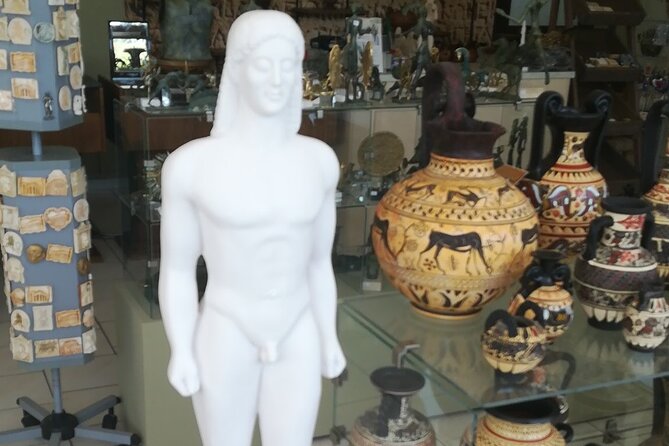
An air-conditioned vehicle, private transportation, bottled water, and WiFi are included. The WiFi is a useful small benefit on a long road day, especially if you want to avoid mobile roaming charges or share photos during the trip.
Pickup and return at your Athens address or Piraeus port remove much of the usual planning work. This is particularly useful if you are arriving by cruise ship or staying outside the central hotel area, though you should provide exact pickup details when booking.
The advertised price is $425.85 per group of up to four people. For four people, that works out to roughly $106 per person before the €15 site fee. For two people, the per-person cost is much higher, but you are paying for private transport, a full-day route, and the ability to avoid a large group.
The schedule adds up to about five hours of listed sightseeing, leaving time for road travel, pickup, meals, and transitions. It is a full day, not a quick half-day outing. You will get more out of it if you accept that the route is broad rather than slow and intimate at every stop.
What kind of help you receive
Your driver provides commentary in fluent English and can answer questions during the journey. Drivers are described as having strong historical knowledge, but they are not official site guides and will not walk through the monuments with you.
That arrangement suits you if you like exploring independently and want help with transport and orientation. It is less suitable if you want a formal lecture at every ruin or a guide beside you throughout the museum and monastery.
A licensed guide may be requested, depending on availability. Since that service is not guaranteed, ask before booking if expert archaeological interpretation is central to your plans.
The private setup also gives you room for questions. A driver such as Spiro has been associated with this route and is noted for bringing the history to life, explaining the best way to view the Corinth ruins, and adding the Kechries stop. Driver assignments can vary, so treat that as a useful possibility rather than a promise.
Who should book this experience
I would recommend this tour to you if you want biblical and ancient Greek sites in one day, prefer private transport, and value pickup from your hotel or port. It is also a strong fit for small families or groups who can share the $425.85 price.
You will get the most from it if you enjoy a mix of ruins, museums, views, and religious art. The route is broad enough to keep the day varied, but it asks you to keep moving.
I would hesitate if your main goal is a slow, highly detailed archaeological tour. The driver does not enter the sites, and the schedule gives only about an hour to several major stops. In that case, ask about adding a licensed guide or choose a tour focused only on Ancient Corinth.
Free cancellation is available if you cancel at least 24 hours before the start time. Changes or cancellations made later are not accepted for a refund.
Should you book St. Paul’s Footsteps?
Book it if you want private door-to-door transport and a wide view of Corinth’s religious, military, maritime, and artistic past. The strongest moments are the Temple of Apollo, the high walls of Acrocorinth, the Saint Paul link at Kechries, and the mosaics at Daphni.
The main decision is not the route. It is the guiding style. If you are happy to explore ruins on your own after receiving clear instructions from an English-speaking driver, the experience offers good value for a group of four. If you need a licensed guide inside every site, request one early and confirm availability before paying.
FAQ
How long does the tour last?
The experience lasts approximately eight hours, including transport between Athens and the Corinth area and the return to Athens or Piraeus.
Is hotel or port pickup included?
Yes. Pickup and return are provided from an Athens hotel or residence, and pickup is also offered from Piraeus port.
Is this a private tour?
Yes. Only your group participates. The listed price is $425.85 for up to four people.
Is a licensed guide included?
No. The driver provides English commentary but is not licensed to accompany you inside the sites. A licensed guide can be requested, subject to availability.
How much is admission to Ancient Corinth and the museum?
Entrance to Ancient Corinth and the Archaeological Museum of Corinth costs €15 per person and can be purchased on site. Other listed stops are described as free.
Is WiFi available during the tour?
Yes. WiFi is available onboard, along with bottled water and air conditioning.
Newly written up around Athens
- Sunset Private Tour to Poseidon Temple & Vouliagmeni Thermal Lake★ 4.5 · 20 reviews
- Mt. Villages of Arcadia & Clifftop Monastery Private Day Trip★ 4.5 · 5 reviews
- Mercedes Private Tour to Classical Athens and Temple of Poseidon★ 5.0 · 13 reviews
- Temple of Olympian Zeus: Self-Guided Audio Tour on your Phone (without ticket)★ 4.0 · 8 reviews
- Relax Day: Thermal Lake, Olive Oil Tasting & Poseidon Temple Tour★ 5.0 · 5 reviews
- The adventure of Athens best and Poseidon’s temple in cape Sounion★ 4.5 · 9 reviews
- Temple of Poseidon and Cape Sounion Half Day Afternoon Tour★ 4.0 · 32 reviews
- Temple of Poseidon sunset @ Cape Sounio (And dinner time)★ 4.5 · 6 reviews
Acropolis & Ancient Greek Temple Tours, compared.

Cape Sounion & Poseidon Temple Sunset Half-Day Trip
Read our review →
Cape Sounio & Poseidon Temple Trip with Audio Guide
Read our review →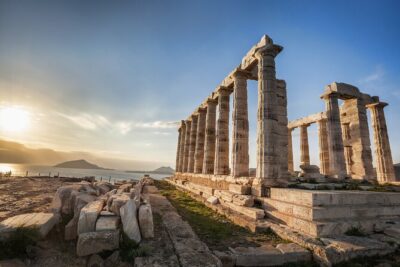
Cape Sounion and Temple of Poseidon Half-Day Small-Group Tour from Athens
Read our review →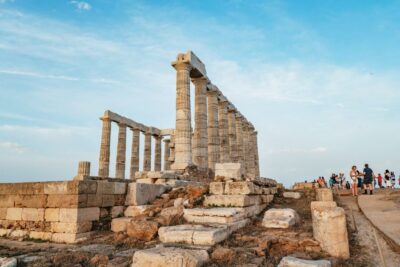
Cape Sounion & Temple of Poseidon: Small Group Tour
Read our review →
Ephesus Temple of Artemis and House of Mary Private Half Day Tour
Read our review →
Cape Sounion & Temple of Poseidon Sunset Experience
Read our review →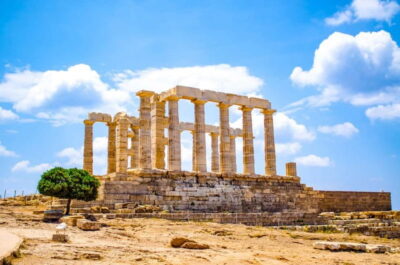
Temple of Poseidon & Cape Sounion Half-Day Tour
Read our review →
Ephesus and Temple of Artemis Private Tour from Kusadasi Port
Read our review →Browse the lists this tour appears in