
Reviewed · ACROPOLIS & ANCIENT GREEK TEMPLE TOURS
Blue Lake, Sanctuary of Hera, Mycenae, Ancient Corinth, Canal
The best thing about this day trip is the range. In roughly nine hours, you move from a 19th-century canal and Bronze Age citadel to Roman Corinth, a mountain fortress, and a clear-water cove by the Sanctuary of Hera. It gives you a real break from Athens without asking you to arrange several separate trips.
I like the private door-to-door transport, especially because the route covers a lot of ground. I also like the flexible pace: Yannis and Panos have adjusted stops, suggested a local lunch, and even swapped the Blue Lake visit for a castle when winter weather made more sense. The drawback is simple: this is a long, ambitious day, and the driver is not a licensed guide inside each site unless you pay for that service separately.
Key points to know before booking
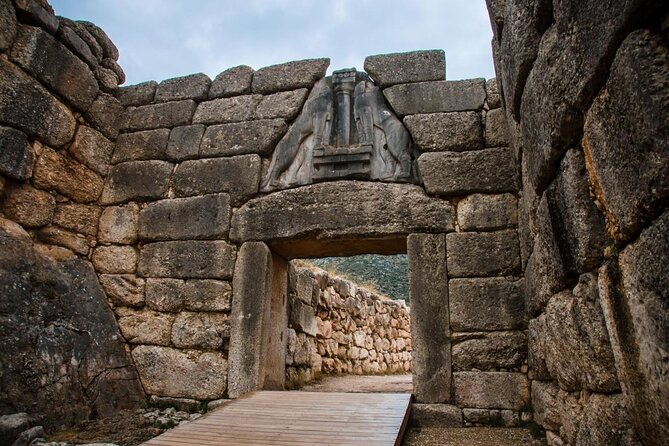
- Mycenae is the historical centerpiece: See the Lion Gate, Cyclopean walls, royal tombs, palace remains, and museum.
- Ancient Corinth gets the most time: Three hours allows room for the Temple of Apollo, Agora, Bema, museum, and lunch nearby.
- The Blue Lake stop is seasonal: It works best in warm weather, but the plan can change in winter.
- Your driver shapes the day: Yannis and Panos have been praised for useful history, kind service, good timing, and local restaurant advice.
- This is transport with historical guidance, not a fully guided archaeological tour: Add a licensed guide if you want site-by-site interpretation.
- The $337.15 price reflects privacy and convenience: Site tickets, food, drinks, tips, and a licensed guide cost extra.
Why this private Corinth and Mycenae trip works
This excursion is built for you if Athens is your base and you want to see major sites beyond the city without renting a car. Your driver collects you from your Athens hotel lobby and returns you there, with airport and port pickup available for an added cost. An apartment pickup is also possible, with the driver contacting you at the building entrance.
The vehicle is private and described as comfortable, with onboard WiFi, bottled water, refreshing wipes, and handmade Greek biscuits. Those small touches matter on a day with several hours on the road. The route is not a quick loop around the suburbs. You will cover the Corinth Canal, the Argolid, Ancient Corinth, the Acrocorinth area, and the Perachora coast before returning to Athens.
You should also set your expectations correctly. The driver provides historical background during the journey and helps you make sensible choices, but does not normally walk through the ruins or museums with you. That arrangement suits me when I want freedom to look around at my own pace. If you want every column, tomb, and inscription explained on site, request a licensed guide as an extra.
More Acropolis and Ancient Greek Temple Tours in Athens:
- Athens: Cape Sounion & Poseidon Temple Sunset Half-Day Trip
★ 4.8 · 8,241 reviews - Athens: Cape Sounio & Poseidon Temple Trip with Audio Guide
★ 4.4 · 4,521 reviews - Cape Sounion and Temple of Poseidon Half-Day Small-Group Tour from Athens
★ 4.5 · 3,205 reviews
The Corinth Canal gives you a strong opening
The first major stop is the Isthmus of Corinth, where the canal cuts through the narrow land bridge linking mainland Greece with the Peloponnese. The present canal is a 19th-century engineering project, and the stop gives you a quick sense of why this location mattered for Mediterranean shipping.
You also see Ancient Diolkos, a paved trackway that allowed boats to be hauled overland across the isthmus in ancient times. It is an excellent reminder that the idea of moving vessels across this short stretch of land is far older than the modern canal.
The planned visit lasts about 45 minutes. That is enough for the main view and a look at the old boat route, but not enough for a slow, extended exploration. Bring your camera, but also look down and around you. The value here is not only the dramatic cut in the land. It is the contrast between ancient engineering and the later canal.
Mycenae puts Homeric Greece into stone
Mycenae is the most important archaeological stop on this route. It was a leading center of the Late Bronze Age, the period associated with the Mycenaean civilization and the stories of Agamemnon. The setting is stark and powerful, with the citadel on high ground and broad views across the Argolid.
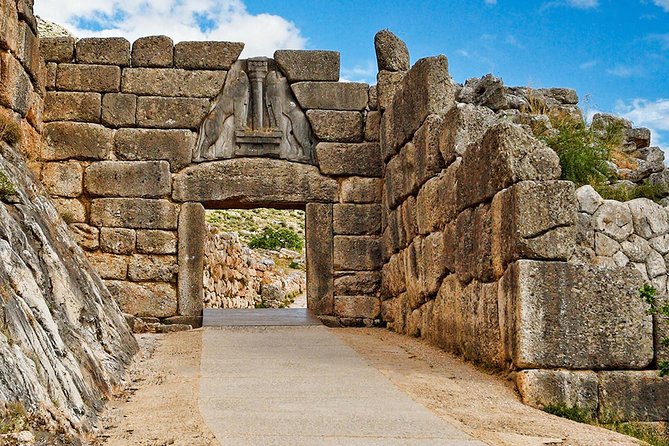
Begin at the Lion Gate, the famous entrance built in the 13th century BC. Above the gateway, two lion figures face a central column. The gate is not a delicate ruin. It is a massive statement of power, and the scale becomes clearer when you walk close to the stone blocks.
The Cyclopean walls are another highlight. Huge limestone boulders form the defenses, and later Greeks believed only the Cyclopes could have moved them. You can see why that story took hold. The walls make the citadel feel less like a palace town and more like a fortress built to withstand serious danger.
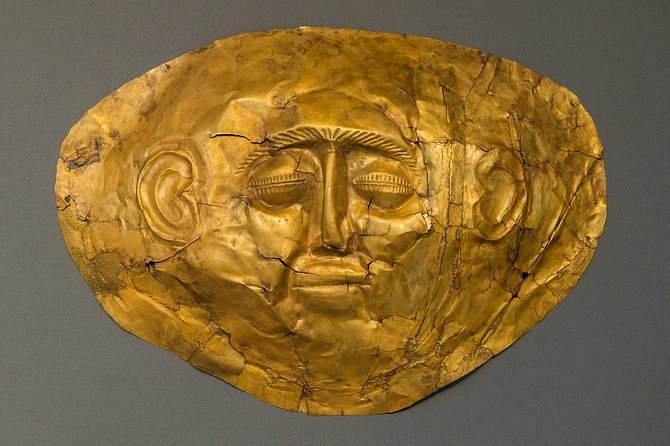
The route also includes Grave Circles A and B, royal burial areas outside the main Bronze Age citadel. The graves contained elite burials and helped make Mycenae famous for its gold objects. The Royal Palace area includes domestic rooms, the Throne Room Suite, a Grand Staircase, offices, and a forecourt, though the remains require some imagination.
You have about 90 minutes for the main Mycenae visit, with another 15 minutes listed for the Lion Gate and 15 minutes for the Citadel and Treasury of Atreus. In practice, those pieces connect naturally, so your actual pace matters. The site is uneven and exposed. Wear shoes with a firm sole, and keep water with you even though more is provided in the vehicle.
The Treasury of Atreus is the quiet surprise
The Treasury of Atreus is a large tholos tomb, built around 1250 BC. Its beehive-shaped interior is one of the most memorable spaces at Mycenae. The stonework curves upward in a clean, controlled form, and the doorway gives the tomb a solemn sense of arrival.
You also see the Tomb of Clytemnestra, another Mycenaean tholos tomb traditionally linked with the wife of Agamemnon. The names come from later tradition, so your driver can help separate the archaeological evidence from the Homeric stories during the drive.
The site is not a quick photo stop. Mycenae rewards attention to construction, burial customs, and the position of the citadel. Still, the itinerary is full, and you should not expect a completely unhurried archaeological study. If Mycenae is your main reason for booking, tell the driver early. The private format makes it possible to give this stop more weight, but only if you accept less time elsewhere.
Other temple visits near Athens we have written up
- Cape Sounion & Temple of Poseidon: Small Group Tour
★ 4.7 · 1,945 reviews - Athens: Cape Sounion & Temple of Poseidon Sunset Experience
★ 4.3 · 1,338 reviews - From Athens: Temple of Poseidon & Cape Sounion Half-Day Tour
★ 4.3 · 1,082 reviews - Athens Half Day Tour, Acropolis, Parthenon, Temple of Olympian Zeus & Hephaistus
★ 5.0 · 609 reviews
Mycenae’s museum completes the picture
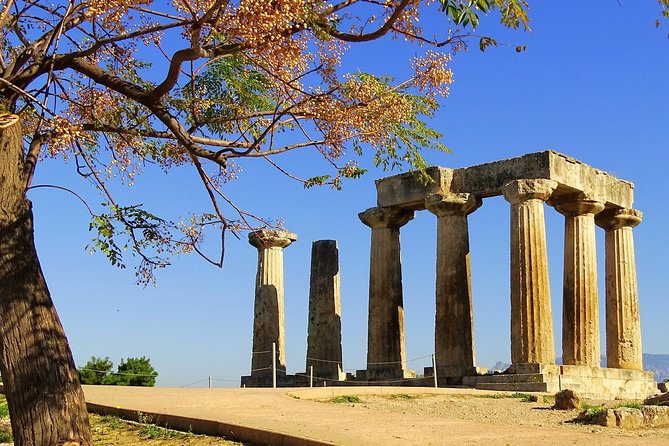
The Archaeological Museum of Mycenae displays gold grave goods, burial masks, jewelry, weapons, worship objects, and frescoes. After walking among the walls and tombs, the museum helps you picture the people who lived and died here.
I recommend saving enough energy for the museum rather than treating it as an optional extra. The outdoor ruins show the authority of the citadel. The objects show the skill, wealth, ritual life, and military culture behind it.
Admission fees are not included in the tour price. The description lists skip-the-line ticket service on request, but you should confirm the current arrangement when booking. Entrance costs, lunch, and drinks are separate, so budget beyond the advertised $337.15 per person.
Acrocorinth adds a fortress above the ruins
Later, the route reaches Acrocorinth, the acropolis of Ancient Corinth. This is a huge rocky stronghold above the ancient city, with walls, towers, gates, and layers of occupation from different periods.
The fortified entrance includes three circuit walls reinforced with towers. Within the site are remains connected with the Temple of Aphrodite, a keep, a Frankish tower, churches, mosques, houses, fountains, and cisterns. You are not looking at one neat historical period here. The power of Acrocorinth comes from the way successive rulers reused the same high defensive position.
The visit is listed as about one hour. That gives you a useful look, but the rock and fortress layout can make a full exploration difficult within the schedule. Ask your driver how far you will walk before setting off, especially if you have already spent the morning on Mycenae’s uneven ground.
The Upper Peirene Fountain is another short stop, listed at 15 minutes. The spring lies within the encircling walls and is tied to the story of Asopus and Sisyphus. It is a small feature, but it helps explain how people lived and held a fortress on this demanding site.
Ancient Corinth connects Greek, Roman, and Christian history
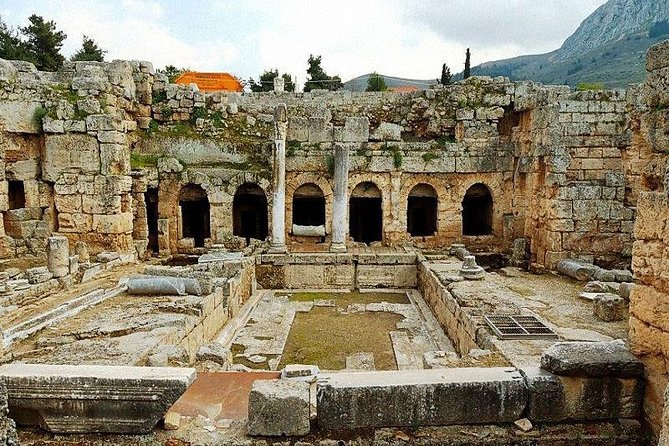
Ancient Corinth receives about three hours, the longest single stop on the day. That is sensible. The site spreads across a wide area, and it combines Greek temples, Roman buildings, shops, roads, theaters, fountains, and early Christian associations.
The Temple of Apollo is the visual anchor. Built around 560 BC, it is one of the earliest Doric temples in the Peloponnese and mainland Greece. Its monolithic columns are especially striking because each column was made from a single piece of stone.
From there, the Agora opens out as a large rectangular public area, about 160 meters long and 70 meters wide. Shops, small temples, and an altar once lined this important civic center. The Bema, or speaker’s platform, is linked with the Apostle Paul’s address to the Corinthians in AD 52. You can also see Roman buildings, the theater, the Odeon, the Asklepieion, and the Lechaion road leading toward the ancient port.
The Ancient Corinth Archaeological Museum gathers objects from the site and nearby settlements. It is worth visiting because the outdoor remains can otherwise seem scattered. The museum gives you statues, household objects, and religious material that help connect the separate ruins.
A small but distinctive stop is St. Paul’s Church, with a mosaic mural showing Saul’s vision of Christ while traveling to Damascus. The nearby Hadgimoustafa spring, built during the Ottoman period, adds another later layer to the site.
Lunch here is part of the appeal
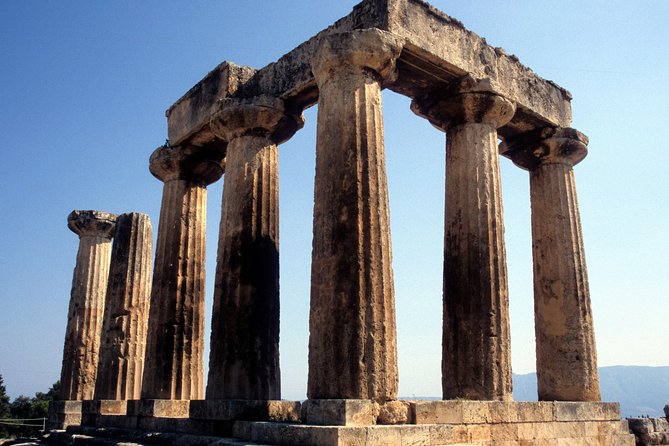
The plan includes an authentic village-style lunch on a terrace overlooking the archaeological site and Temple of Apollo. Food is not included, so this is your chance to choose what suits your budget and appetite.
The terrace setting is one of the more practical pleasures of the day. After several hours among exposed stone and open ground, sitting down with a view gives you a proper pause. Panos has been praised for recommending a good place to eat, and Yannis has also adjusted timing so the day runs smoothly.
You can browse village shops afterward for handmade souvenirs. Keep this part flexible. If you want more time at Corinth’s museum, say so. If you would rather eat slowly and shop, the private format allows some adjustment, within the limits of the return drive.
Geraneia and Perachora change the mood
The Geraneia stop provides views across the Corinthian Gulf and toward the southwest coast of the Peloponnese. It is listed at about 15 minutes, so think of it as a scenic pause rather than a hike or extended viewpoint visit.
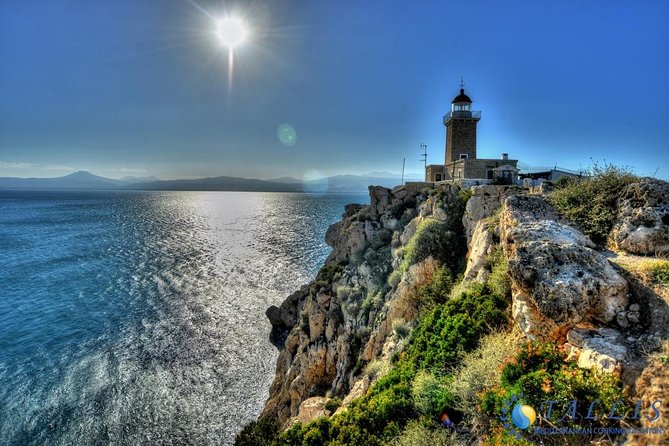
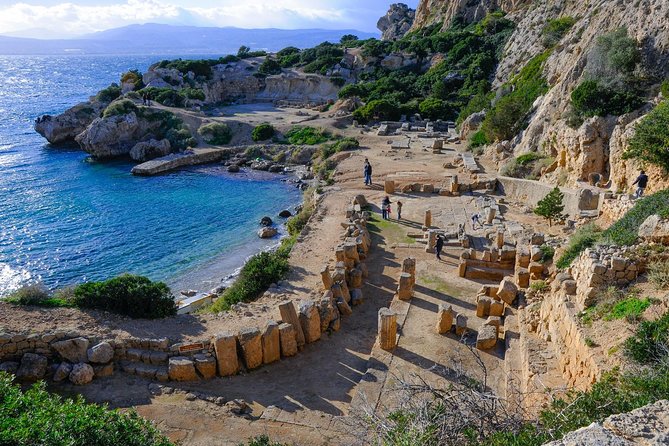
The final major stop is the Heraion, or Sanctuary of Hera, at Perachora, near the Blue Lake and Malagavi Lighthouse. The sanctuary has a beautiful coastal setting, and the day ends here with a much softer rhythm than the morning’s fortresses and tombs.
In warm weather, you can swim and bathe under the Greek sun. Bring a swimsuit, towel, and a change of clothes if you plan to enter the water. The stop is about one hour, so do not count on a long beach afternoon. It is a refreshing finish, not a separate seaside holiday.
The Blue Lake should be treated as weather dependent. A winter visit may not suit swimming, and one previous itinerary was changed to include an 18th-century castle instead. That flexibility is useful, but confirm the expected plan for your date.
What the private format is really worth
At $337.15 per person, this is not the cheapest way to reach Corinth and Mycenae. The price makes more sense for a small group that values privacy, hotel pickup, a comfortable vehicle, and the ability to change the order or length of stops.
The value is strongest when several people share the vehicle. A public excursion may cost less, but you will have less control over lunch, museum time, swimming, and departure. Here, Yannis has even made a sunset stop at Heraion and offered extra stops when time allowed.
The tradeoff is that the listed price does not cover site entrance fees, food, drinks, tips, or a licensed guide. If you add a guide, your total rises. Work out that full amount before comparing this with a standard group tour.
The day is also in high demand, with bookings made an average of 107 days ahead. That is useful planning information if your Athens dates are fixed. The tour operates in English and may offer multilingual drivers, but confirm your preferred language before paying.
Who should book this day trip?
I would choose this experience if you want to see several major sites in one day but do not want to drive. It suits couples, families, and small groups who prefer a private car and a flexible schedule.
Families may especially like the personal attention. Yannis has provided a history book that children enjoyed, along with water and practical help throughout the day. The route is long, though, so younger children need to be comfortable with a full day of driving and walking.
History fans should book it if they are happy exploring independently. If you want a formal explanation at every ruin, pay for the licensed guide. The driver can provide useful context on the road, but that is different from a guide leading you through a museum.
You should think twice if you want a relaxed beach day, a slow Mycenae visit, or a single-site tour. The itinerary covers a great deal. Some visits are short, and one previous experience ran into time pressure because too long was spent at certain stops.
Cancellation is free up to 24 hours before the start time. Changes or cancellations inside that window are not accepted for a refund. Pickup is from your Athens hotel lobby, apartment entrance, port, or airport, with airport service costing extra.
Should you book it?
Book this tour if you want a comfortable, private way to connect the Corinth Canal, Mycenae, Ancient Corinth, and Heraion in one ambitious day. The strongest reasons are the door-to-door service, the driver’s flexibility, the excellent mix of archaeology and scenery, and the chance to end with a swim.
Skip it if you want a slow, fully guided archaeological experience or dislike long road days. For most small groups based in Athens, though, the combination is hard to arrange independently without a car. Request a licensed guide if interpretation matters, confirm entrance fees and seasonal plans, and tell the driver which stop matters most to you.
FAQ
How long is the tour?
The experience lasts approximately nine hours, including the drive back to Athens.
Is hotel pickup included?
Yes. Pickup and drop-off are provided at Athens hotels. Apartment pickup is also arranged at the building entrance. Port pickup is included in the service, while airport pickup costs extra.
Is this a private tour?
Yes. Only your group participates, and transportation is provided in a private vehicle.
Is a licensed tour guide included?
No. The professional driver provides historical background during the journey but does not normally accompany you inside the archaeological sites or museums. A licensed guide can be requested for an additional cost.
Are entrance fees included?
No. Entrance fees to the archaeological sites and museums are separate from the tour price. Skip-the-line ticket service is available on request.
Is lunch included?
No. Food and drinks are not included. The schedule allows time for a village-style lunch near Ancient Corinth, with a terrace overlooking the archaeological area and Temple of Apollo.
Can I swim at the Blue Lake?
The Heraion and Blue Lake stop includes time for swimming and bathing, but conditions and season affect the plan. In winter, the stop may be changed for another attraction, such as an 18th-century castle.
Newly written up around Athens
- Sunset Private Tour to Poseidon Temple & Vouliagmeni Thermal Lake★ 4.5 · 20 reviews
- Mt. Villages of Arcadia & Clifftop Monastery Private Day Trip★ 4.5 · 5 reviews
- Mercedes Private Tour to Classical Athens and Temple of Poseidon★ 5.0 · 13 reviews
- Temple of Olympian Zeus: Self-Guided Audio Tour on your Phone (without ticket)★ 4.0 · 8 reviews
- Relax Day: Thermal Lake, Olive Oil Tasting & Poseidon Temple Tour★ 5.0 · 5 reviews
- The adventure of Athens best and Poseidon’s temple in cape Sounion★ 4.5 · 9 reviews
- Temple of Poseidon and Cape Sounion Half Day Afternoon Tour★ 4.0 · 32 reviews
- Temple of Poseidon sunset @ Cape Sounio (And dinner time)★ 4.5 · 6 reviews
Acropolis & Ancient Greek Temple Tours, compared.

Cape Sounion & Poseidon Temple Sunset Half-Day Trip
Read our review →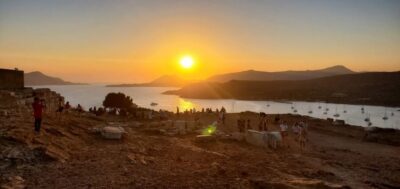
Cape Sounio & Poseidon Temple Trip with Audio Guide
Read our review →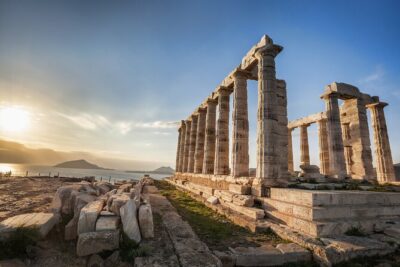
Cape Sounion and Temple of Poseidon Half-Day Small-Group Tour from Athens
Read our review →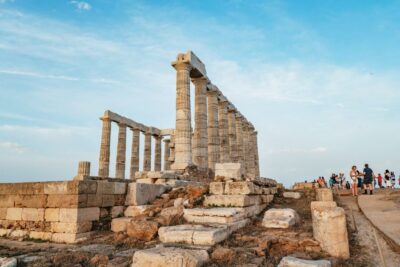
Cape Sounion & Temple of Poseidon: Small Group Tour
Read our review →
Ephesus Temple of Artemis and House of Mary Private Half Day Tour
Read our review →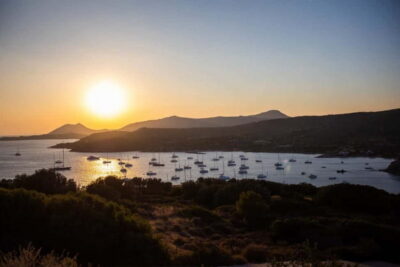
Cape Sounion & Temple of Poseidon Sunset Experience
Read our review →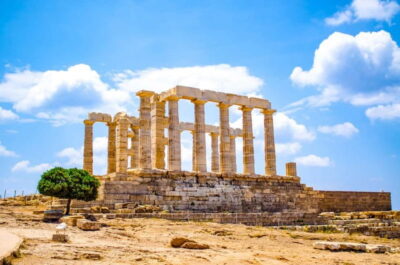
Temple of Poseidon & Cape Sounion Half-Day Tour
Read our review →
Ephesus and Temple of Artemis Private Tour from Kusadasi Port
Read our review →Browse the lists this tour appears in