
Reviewed · WHITE TEMPLE & BLUE TEMPLE TOURS
7 Wonders of Chiang Rai: Temples, Tea, and Golden Triangle
Chiang Rai’s best sights are scattered across the province, and this full-day tour links them into one busy but rewarding circuit. You’ll move from the glittering White Temple to the moody Black House, then from tea fields to the meeting point of Thailand, Laos, and Myanmar.
I like the strong variety: art, religion, food, local culture, tea, and regional history all appear in one day. I also like the small group limit of 10, which should make the English-speaking guide’s explanations and the road time more manageable. The catch is the pace. With pickup around 8:00 to 8:30 AM and a return between 6:30 and 7:00 PM, this is a long day with plenty of time in a van.
Key points to know before booking
- White Temple first: Begin with Chiang Rai’s most famous modern temple, including mirrored details and unusual contemporary murals.
- A striking art pairing: The Blue Temple offers calm color and Buddhist imagery, while the Black House presents animal bones, horns, and darker ideas about life and death.
- Culture with an ethical question: The Long Neck Karen village offers a look at brass-ring traditions and weaving, but the extra admission is not included.
- Tea and river borders: Choui Fong Tea Farm provides a quieter break before the Golden Triangle and its views of the Mekong and Ruak rivers.
- Extra costs matter: The four listed admissions total 530 baht per person if you enter every paid stop.
- Best for a full Chiang Rai day: Pickup and drop-off are within 3 kilometers of central Chiang Rai, but returning to Chiang Mai afterward is not recommended.
Why this Chiang Rai day works
This tour is useful because Chiang Rai’s major attractions do not sit within easy walking distance of one another. You get hotel pickup, transport, an English-speaking guide, a Thai lunch buffet, drinking water, and travel insurance for $41 per person.
That price is good value if you plan to enter most of the paid sites. The listed admission fees add another 530 baht: 100 baht for Wat Rong Khun, 80 baht for the Black House, 300 baht for the Long Neck Karen village, and 50 baht for the House of Opium Museum. Entry is optional, so you can keep costs down, but skipping several stops weakens the value of a tour built around seeing them.
The day is designed for variety rather than long, quiet visits. You’ll usually have about 30 to 60 minutes at each major stop, with 45 minutes for lunch and 40 minutes at the tea farm. That is enough to see the main areas and take photographs, but not enough for a slow museum reading or an extended temple visit.
The group is limited to 10 people. That is a useful middle ground: more affordable than a private tour, but less unwieldy than a large coach. The guide’s role matters here. The tour is presented as carefully planned, with a guide who brings experience and humor to a demanding schedule, though no guide name is provided in the booking details.
More White Temple and Blue Temple Tours in Chiang Rai:
- From Chiang Mai: Chiang Rai Temples and Golden Triangle Tour
★ 4.5 · 1,770 reviews - From Chiang Rai: Famous Temples and Golden Triangle Day Tour
★ 4.7 · 115 reviews - Chiang Rai: 3 Temples and Golden Triangle 1 Day Tour
★ 4.8 · 37 reviews
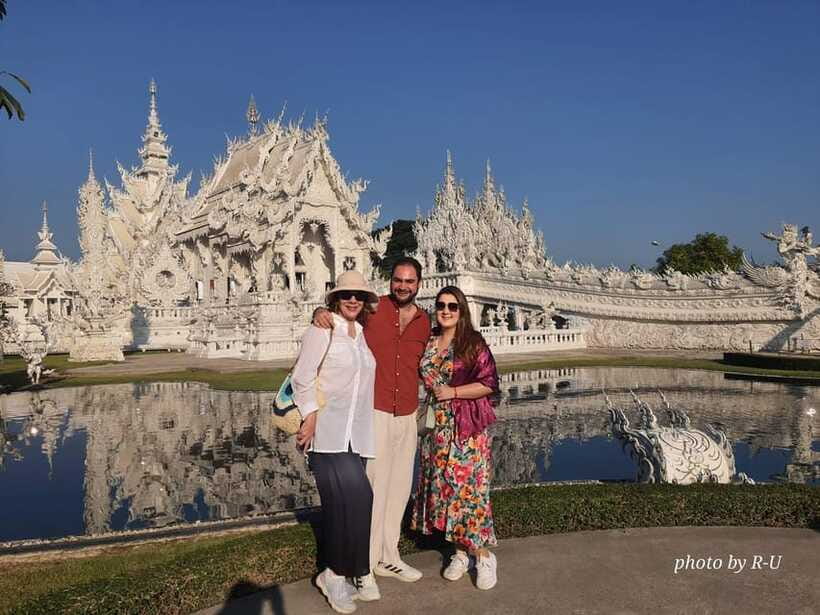
Wat Rong Khun, Chiang Rai’s White Temple
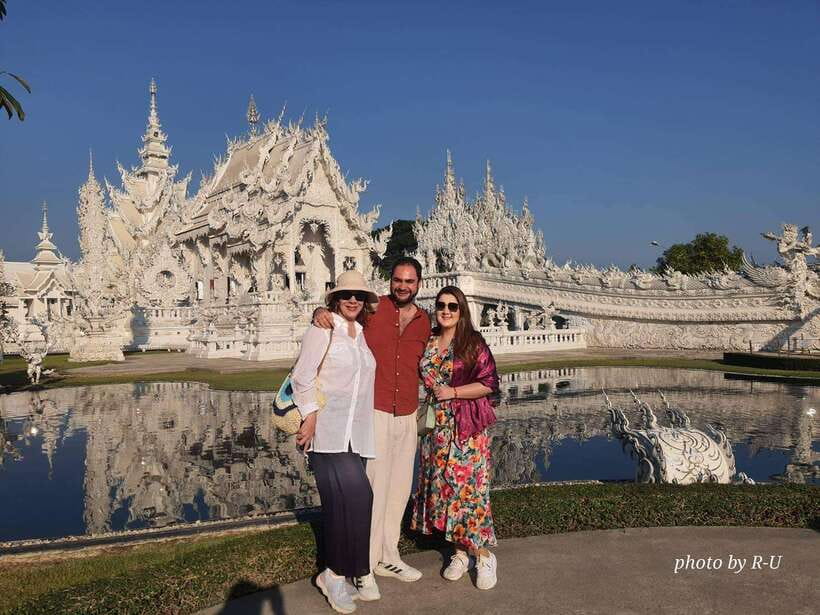
Your first major stop is Wat Rong Khun, better known as the White Temple. The drive from the starting area in Mueang Chiang Rai takes about 30 minutes, so you reach the temple early in the day.
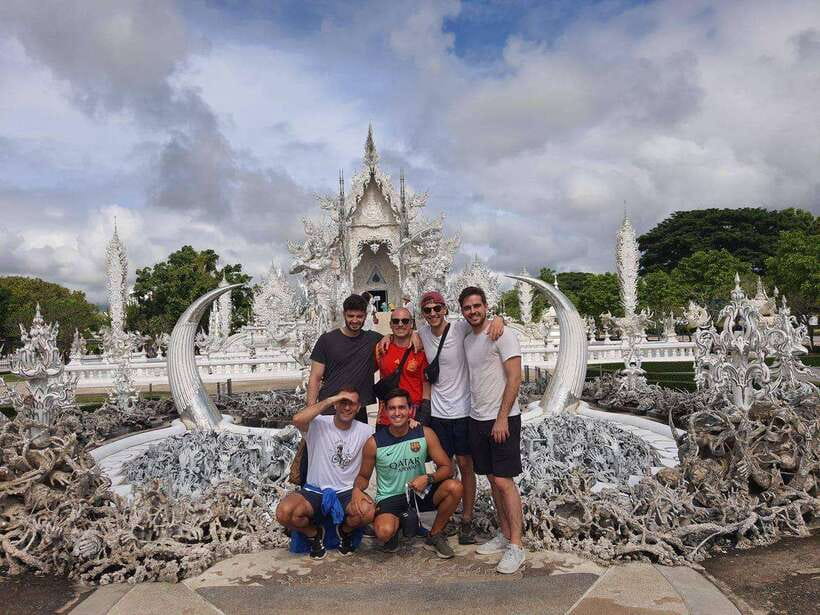
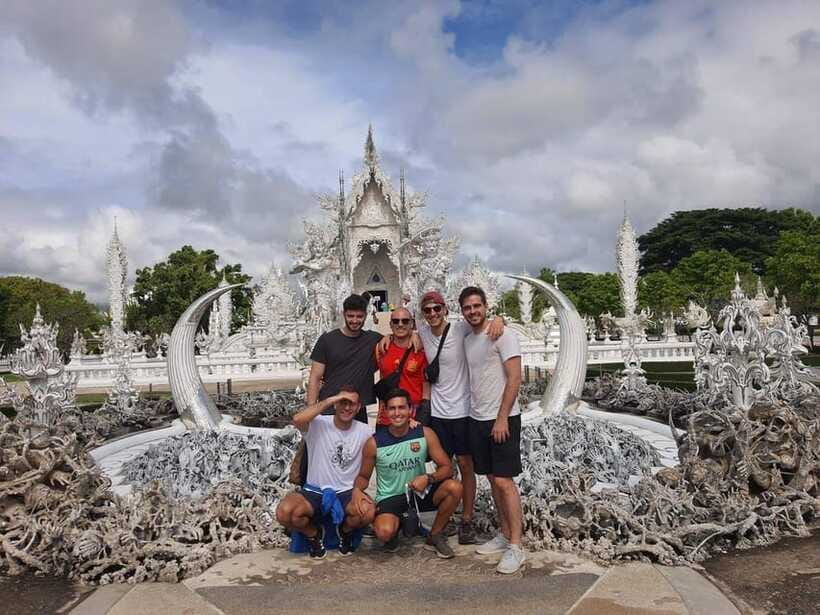
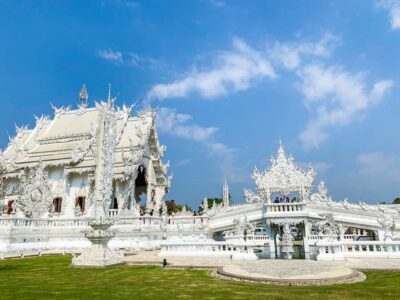
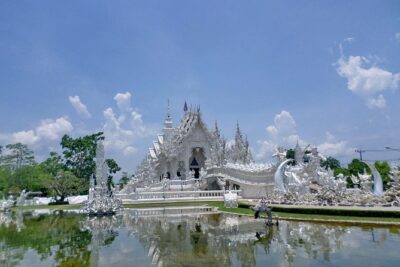
The temple was created by artist Chalermchai Kositpipat. Its white surfaces and small pieces of mirrored glass catch the sunlight, giving the site a bright, almost unreal appearance. The design represents purity, but it is not an old temple preserved exactly as it was. It is a modern work shaped by traditional Buddhist forms.
Look closely at the details. The surfaces are covered with elaborate patterns, figures, and symbolic designs. Inside, the murals mix Buddhist themes with modern references from popular culture. That unusual combination is one reason the temple feels different from the older religious sites you may see elsewhere in Thailand.
You have about an hour here for a guided visit, sightseeing, and photographs. The entrance fee is 100 baht and is not included. Wear shoes that are easy to walk in, since the stop involves moving around the complex rather than simply viewing the building from the road.
This is likely to be one of the most visually rewarding stops of the day. It is also one of the busiest-feeling parts of the route, so listen carefully during the guide’s introduction and then use your free time for photographs.
Wat Rong Suea Ten, the Blue Temple
The Blue Temple, or Wat Rong Suea Ten, follows with a shorter 30-minute visit. Its name means Dancing Tiger, linked to local stories about tigers that once lived in the area.
The color is the main event. Deep blue walls and ceilings are set off by gold decoration, giving the temple a cooler and more dramatic mood than the White Temple. The building uses modern interpretations of Lanna design, so you get a sense of northern Thai style without visiting a centuries-old structure.
Inside, a serene white Buddha image anchors the room. Detailed murals cover the surrounding surfaces, giving you plenty to look at during a quick visit. The compact stop works well after the White Temple because the two buildings have such different visual moods.
There is no entrance fee listed for the Blue Temple. Since you have only half an hour, this is a place to focus on the main hall, the Buddha image, and the exterior details rather than trying to inspect every mural.
Baan Dam, where art takes a darker turn
The Black House, or Baan Dam Museum, changes the tone of the day. Created by artist Thawan Duchanee, it is an art complex rather than a conventional temple.
The buildings and displays explore death, mortality, and the less comfortable side of human existence. Animal bones, skins, and horns appear throughout the collection. For some people, this is the most thought-provoking stop on the route. For others, the displays may feel stark or unsettling.
That contrast is valuable. The White Temple presents brightness and purity, while Baan Dam asks you to consider the opposite end of life’s cycle. They are not a matched pair in a formal sense, but seeing both gives the day more depth than a simple procession of photogenic temples.
Plan on about an hour here. The entrance fee is 80 baht. The site rewards a guide’s explanation because the objects are not always self-explanatory. Give yourself time to look beyond the most striking animal displays and consider how the artist uses materials and architecture to shape the mood.
Other temple visits near Chiang Rai we have written up
- Chiang Rai: Iconic Temples & 7 Major Sites—River View Buffet
★ 4.9 · 692 reviews - Chiang Rai: White, Blue, Red Temples, Long Neck Tour
★ 4.8 · 652 reviews - Chiang Rai: Half Day Tour – 3 Famous Temples & Lalita Cafe’
★ 5.0 · 79 reviews - Chiang Rai: 3 Temples, Long Neck Village & Lalitta Café
★ 4.7 · 63 reviews
Meeting the Long Neck Karen community
The Long Neck Karen village takes about 45 minutes. Women in the community wear brass rings around their necks as part of a tradition connected with beauty and cultural identity. The rings create the appearance of a longer neck, although the tradition is more complex than the visual effect alone suggests.
The visit gives you a chance to learn about daily life, see weaving, and purchase handmade goods. Those purchases can provide direct support to the people selling them. The tour description frames this as a cultural visit, but you should approach it with respect and ask before taking close photographs.
The admission fee is 300 baht, not included in the tour price. This is the most expensive of the listed extra charges, so decide in advance if the visit fits your interests and budget. The stop may appeal most to people who want cultural context and a chance to support local crafts, rather than those looking only for temples and scenic views.
A short stop cannot explain every aspect of Karen history or migration. Treat it as an introduction, not a complete account of the community’s experience.
Lunch and the road north
Lunch at a local restaurant lasts about 45 minutes and is provided as a Thai buffet. This is a practical feature on such a long day. You do not need to spend time choosing a restaurant, and you can sample several dishes rather than committing to one meal.
The tour includes drinking water, but bring extra cash or a card for admission fees, souvenirs, and anything else you choose to buy. The day includes a lot of sightseeing from the road, so comfortable shoes and a camera are sensible choices.
Choui Fong Tea Farm
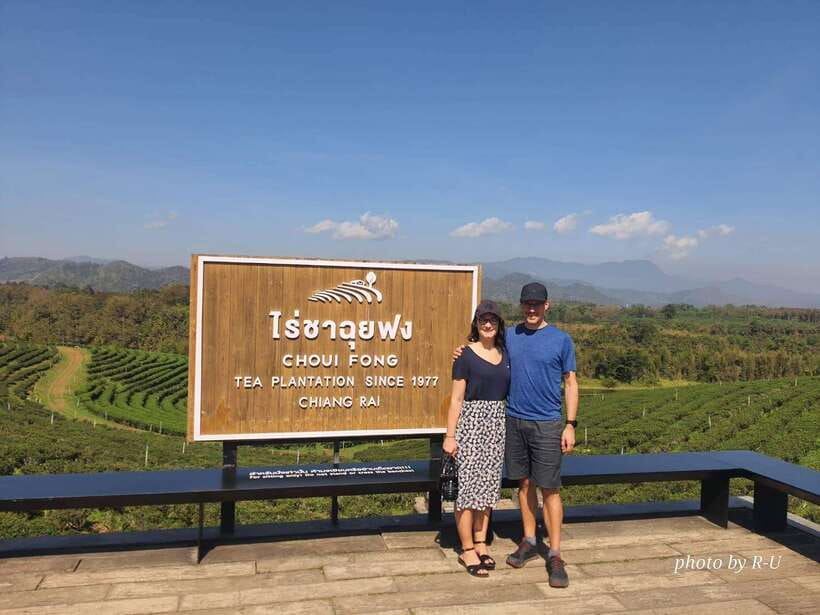
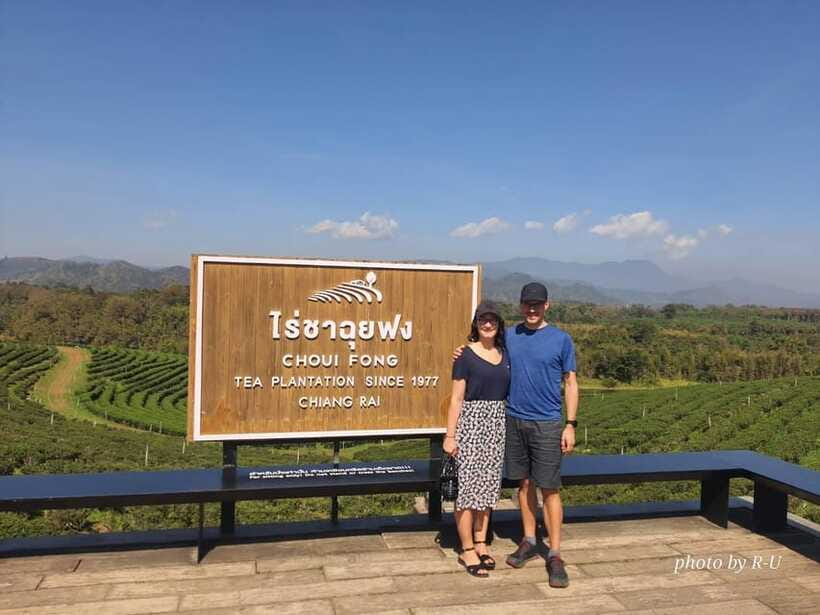
After lunch, the group stops at Choui Fong Tea Farm for about 40 minutes. The tea fields spread over rolling green hills, with neatly trimmed rows that make this one of the calmer photographic stops.
You can walk through the fields, learn how tea is grown, and take in broad views from the plantation. The cafe serves freshly brewed tea and tea-based desserts. This is a welcome pause after the more intense displays at Baan Dam and the cultural focus of the village.
Forty minutes is enough to see the planting areas and have a drink or dessert, but it is not a long tea lesson. If you like tea, use the guide’s explanation to understand the basics of cultivation, then save a little time for the cafe. If you are not interested in tea, the scenery still gives you a pleasant break from the van.
The Golden Triangle from the Thai side
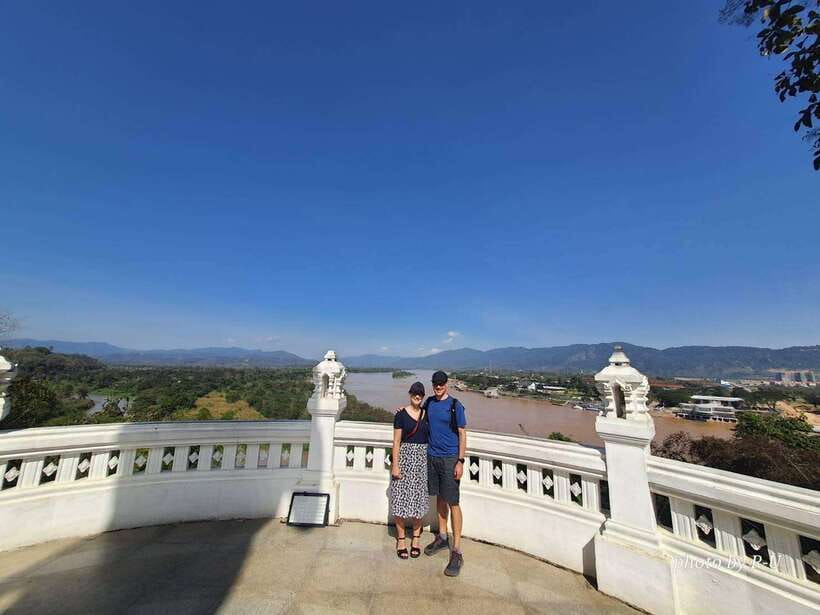
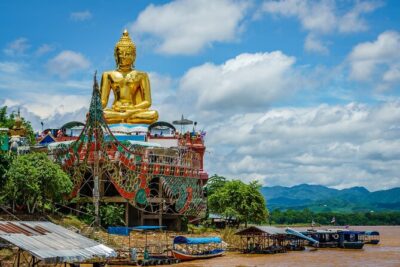
The Golden Triangle is the day’s largest geographic idea. From Thailand, you look toward the point where Thailand, Laos, and Myanmar meet. The Mekong and Ruak rivers help define the area, and the viewpoint gives you a clear sense of why this border zone has mattered for trade and politics.
The region was once closely linked with the opium trade. Today, the area is more peaceful, and the stop focuses on views and the story of how the region changed. You get about 30 minutes for photographs, free time, and an introduction from the guide.
Do not expect a long river excursion or an extended border crossing. This is a viewpoint stop within a tightly organized day. Its value comes from the setting and the context, especially if you have not visited a three-country border region before.
The House of Opium Museum
The nearby House of Opium Museum provides a more focused look at the trade that shaped the Golden Triangle’s reputation. The collection includes opium pipes, tools, and displays explaining cultivation and smuggling.
At about 40 minutes, the visit is short but useful. It gives the guide a chance to connect the broad view from the Golden Triangle with the local effects of opium production and international efforts to stop the trade.
The museum is smaller than a major national institution, so do not expect a huge collection. Its strength is the direct subject matter. The 50-baht entrance fee is extra, and there is time for shopping as well as walking through the exhibits.
For me, this stop helps keep the Golden Triangle from becoming only a photo opportunity. You see the rivers and borders first, then learn why the area became so well known.
Transport, timing, and the real cost
Pickup is available from hotels within 3 kilometers of Chiang Rai city center. You should wait in the hotel lobby between 8:00 and 8:30 AM. The exact pickup time depends on your location, so be ready for the full window.
The return drive is listed at about 80 minutes, and the tour normally finishes between 6:30 and 7:00 PM. That makes this a proper full-day outing, not a half-day city tour. If you are staying in Chiang Mai, do not plan to return there the same evening. The schedule may run too late.
The tour price includes transport, guide service, lunch, water, and insurance. It does not include four attraction fees, which total 530 baht if you enter everything. Bring both cash and a card, since the tour specifically recommends both.
Free cancellation is available up to 24 hours before departure, and you can reserve now and pay later. Babies under 1 year and people over 80 are not considered suitable for the activity, with a separate upper limit of 95 also stated in the tour information. Strollers and bicycles are not allowed, and alcohol and drugs are prohibited.
Who should book this tour?
I would choose this tour if you have one full day in Chiang Rai and want the main sights handled without arranging several separate rides. It suits first-time visitors, photographers, art fans, tea drinkers, and anyone curious about the Golden Triangle.
The tour is less suitable if you want long visits at each temple, a private schedule, or a quiet day with little time on the road. The Long Neck Karen village may also require personal thought, since some people prefer cultural visits with more time and context than a 45-minute stop allows.
At $41, the package offers solid value when you count transport, lunch, water, a small group, and the wide range of sites. Add the 530 baht in admission fees if you want the complete route. Book it for variety and convenience, not for an unhurried pace.
FAQ
How long does the Chiang Rai tour last?
The tour lasts one full day. Pickup is scheduled between 8:00 and 8:30 AM, and return is expected between 6:30 and 7:00 PM.
Where is pickup available?
Pickup and drop-off are available within 3 kilometers of Chiang Rai city center. You should wait in your hotel lobby during the pickup window.
Is lunch included?
Yes. A Thai lunch buffet is included, along with drinking water.
Are entrance fees included?
No. Admission fees are optional and paid separately. The listed prices are 100 baht for Wat Rong Khun, 80 baht for the Black House, 300 baht for the Long Neck Karen village, and 50 baht for the House of Opium Museum.
How much are all the listed entrance fees together?
Entering all four paid attractions costs 530 baht per person based on the listed prices.
What language does the guide speak?
The live tour guide speaks English.
How many people are in the group?
The tour is limited to 10 participants.
Can I return to Chiang Mai after the tour?
Returning to Chiang Mai the same day is not recommended because the tour may finish as late as 7:00 PM.
What should I bring?
Bring comfortable shoes, a camera, cash, and a credit card.
Newly written up around Chiang Rai
- Private trip Chiang Rai Day trip, White Temple, Blue temple★ 4.8 · 13 reviews
- From Chiang Mai: Day Trip Chiang Rai White, Blue, Red Temple★ 5.0 · 4 reviews
- From Chiang Rai 3 Temples & Golden Triangle &Tea Plantation★ 4.8 · 20 reviews
- From Chiang Mai : 3 Temples & Golden Triangle with Lunch★ 4.5 · 17 reviews
- ChiangRai:Full Package!Temples,Long Neck,The Golden Triangle★ 4.7 · 9 reviews
- Chiangrai : Half Day Tour 3 Famous Temples / (Private tour)★ 5.0 · 4 reviews
- Chiang Rai: Temple Treasures & Popular Sightseeings (Buffet)★ 4.7 · 10 reviews
- Chiang Rai Tour: White & Blue & Big Buddha (Red)Temples★ 3.3 · 3 reviews
White Temple & Blue Temple Tours, compared.
Chiang Rai White Temple and Blue Temple Day Tour
Read our review →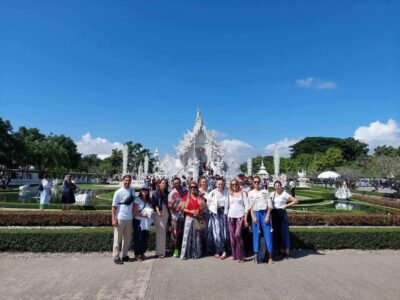
Chiang Rai White Temple, Blue Temple and more from Chiang Mai
Read our review →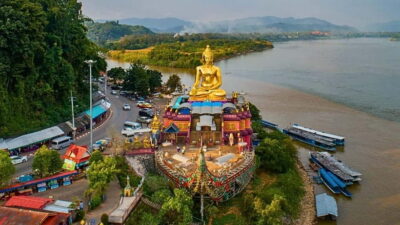
Chiang Rai Temples, Golden Triangle & Boat Tour
Read our review →
Visit Dantewada(Angel Land), Blue Temple, and Sticky Waterfall
Read our review →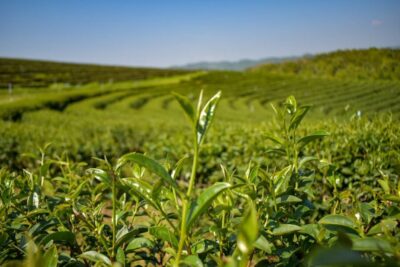
One Day Tour Chiang Rai(White Temple , Blue Temple, Black House) Private Tour
Read our review →Browse the lists this tour appears in