
Reviewed · PRIVATE TEMPLE TOURS
Beijing:Customizable Temple and Religious Sites Private Tour
Beijing’s religious sites reveal a side of the city that the big sightseeing circuit often skips. This private tour lets you build a route around Buddhist, Taoist, Muslim, Catholic, or Confucian places, rather than being pushed through one fixed schedule. I especially like the chance to visit the White Cloud Temple or Niujie Mosque, places with a quieter, more local feel than Beijing’s headline sights.
I also like having a guide who can explain what you are seeing instead of leaving you to decode unfamiliar rituals and symbols. Guides such as Lucy, Alice Ji, Susan Shan, and Ms. Duan have been praised for clear English, patience, historical insight, and help with subway navigation. The main catch is simple: you cannot visit every listed site in one day, so you must choose carefully and confirm the exact route, timing, and transport package before booking.
Key points to know before booking
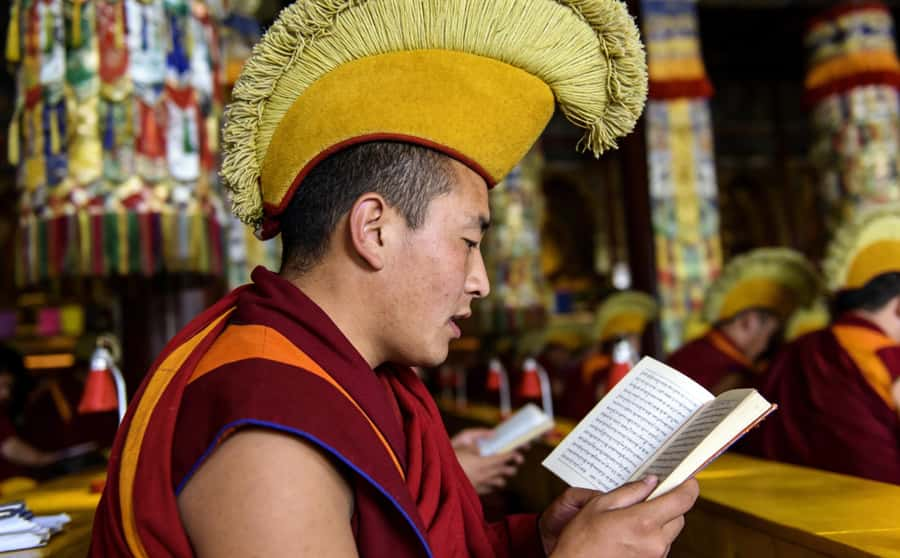
- Six very different faith traditions: Choose among Tibetan Buddhism, Taoism, Islam, Catholicism, and Confucianism, with the Temple of Heaven offering imperial ritual on a grand scale.
- A genuinely private route: Your guide can shape the visit around the sites that matter most to you, rather than following a one-size-fits-all plan.
- Strong guide support: English-speaking guides explain art, rituals, symbols, history, and local customs, with past guide names including Lucy, Alice Ji, Susan Shan, and Ms. Duan.
- Private car on selected options: Car-inclusive packages make it easier to connect several sites, while no-transport packages require you to arrange your own travel or use the subway.
- Timing affects access: The Temple of Heaven and Confucius Temple close on Mondays, while prayer times at Niujie Mosque and Mass times at the churches can restrict access.
- Good value for a focused visit: At about $77 per person, the price makes the most sense for couples, families, or small groups who want private transport and tailored explanations.
Why this tour works for Beijing’s religious sites
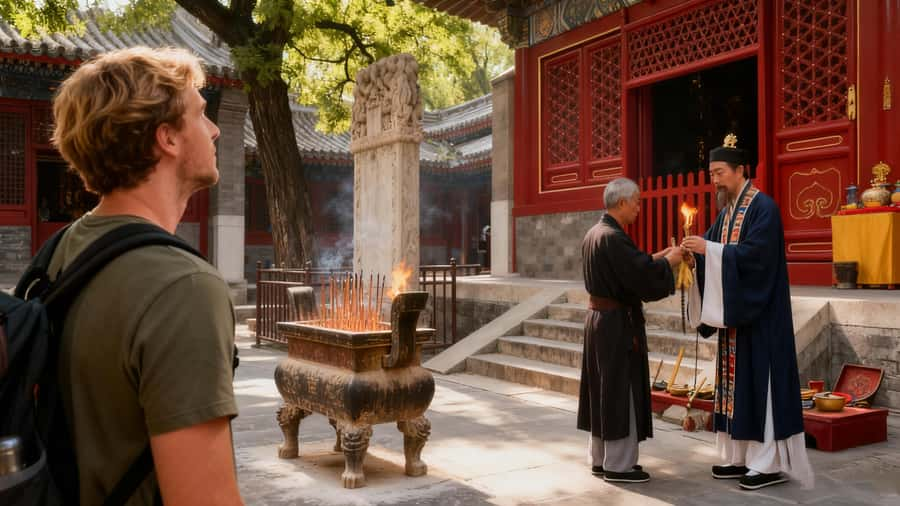
Beijing can feel like a city of grand imperial buildings, broad avenues, and major museums. Its religious buildings add a more personal layer. Here you see people praying, lighting incense, touching sacred objects, studying inscriptions, or simply sitting in a courtyard. The buildings also show how Chinese beliefs developed alongside imperial power and foreign influence.
This experience is not a standard sightseeing loop. You choose a combination from several very different sites, then spend four to seven hours with a private English-speaking guide. The available packages are described as ranging from four to eight hours, so I would confirm the exact length when you select your option.
That flexibility matters. A half-day focused on the Lama Temple and Confucius Temple will feel very different from a route combining White Cloud Temple with Niujie Mosque. You can also choose the Temple of Heaven if imperial architecture and ancient ceremony interest you more than smaller neighborhood religious sites.
The guide is the main reason to book privately. At these places, a roof, statue, tablet, or courtyard may carry meaning that is not obvious at first glance. Ms. Duan, for example, has a university background in history and a personal Buddhist practice. She explained the different types of Buddha images at the Lama Temple and used maps to make the route easier to follow. That kind of explanation can turn a quick temple visit into a useful lesson in Chinese culture.
More Private Temple Tours in Beijing
- Beijing Private Tour of Temple of Heaven, Tian’anmen Square, Forbidden City
★ 5.0 · 184 reviews - Beijing: Temple of Heaven and Forbidden City Private Tour
★ 4.9 · 110 reviews - Beijing Private Tour to Temple of Heaven, Panda House and Summer Palace
★ 5.0 · 101 reviews
The Lama Temple and its towering sandalwood Buddha
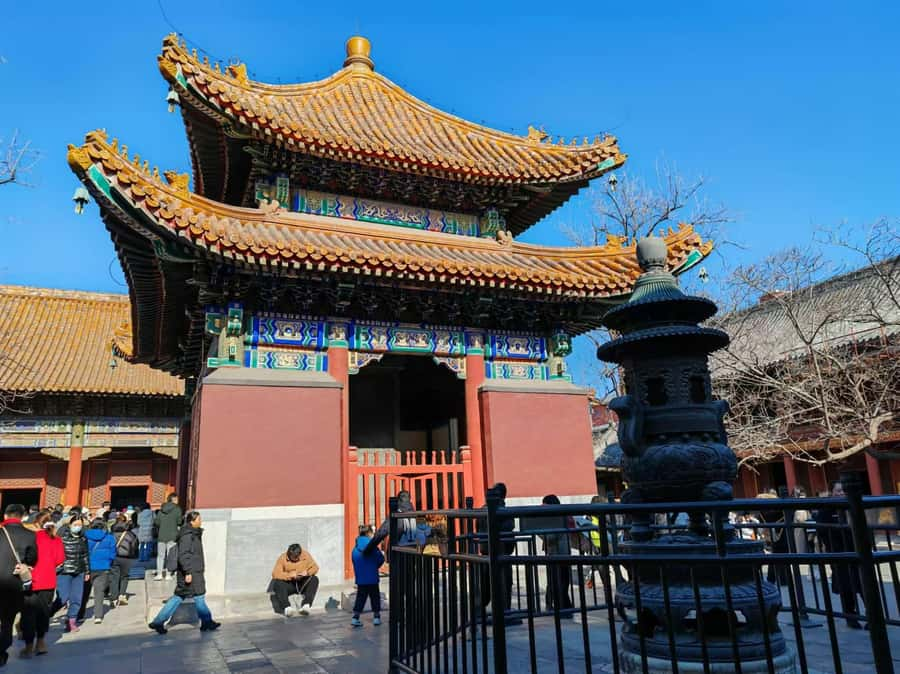
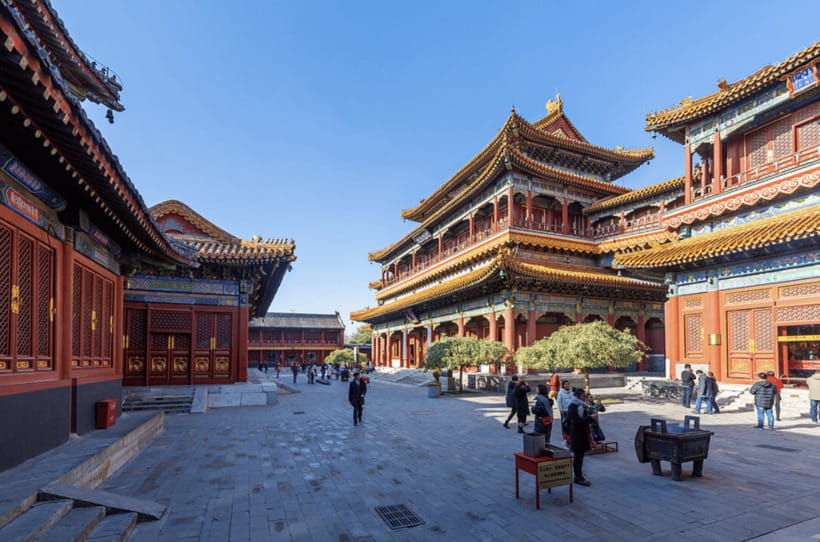
The Lama Temple, also called Yonghe Temple, is the strongest choice for visitors who want a major Buddhist site. It began as an imperial residence before becoming a temple, and its golden roof tiles, painted woodwork, and orderly courtyards reflect both palace design and Tibetan Buddhist practice.
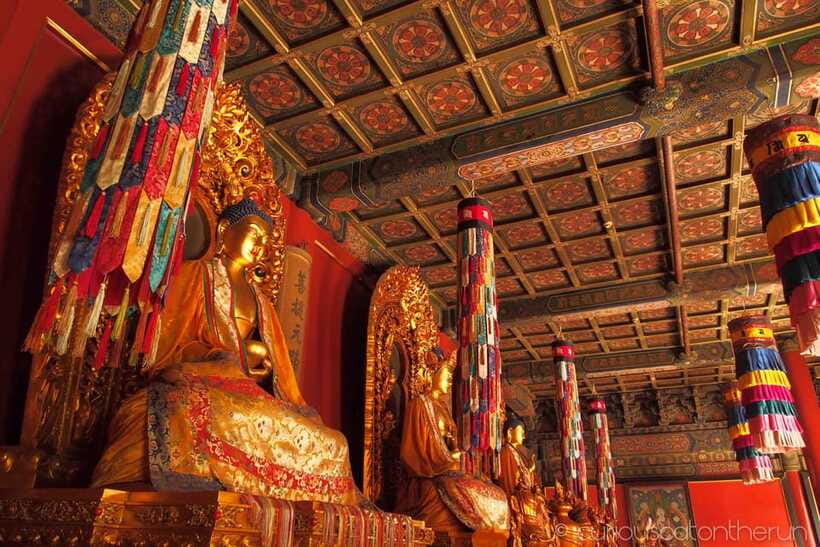
The most memorable feature is the enormous sandalwood Buddha, about 18 meters tall. It is carved from a single tree and fills the hall from floor to ceiling. You will also see Buddhist images and decorative details that are difficult to interpret without help. Ask your guide about the different Buddha forms, their hand positions, and the role of Tibetan Buddhism in northern China.
This is not an off-the-radar stop. The Lama Temple is one of Beijing’s best-known religious buildings, so it can feel busy. Still, a private guide helps you focus on details rather than simply moving with the crowd. The temple is open daily, which makes it useful when other sites are closed on Mondays.
I would choose the Lama Temple if you have never visited a Buddhist temple in China, or if religious sculpture and architecture interest you. If you want quiet courtyards and a less famous setting, White Cloud Temple may suit you better.
The Temple of Heaven and imperial prayer
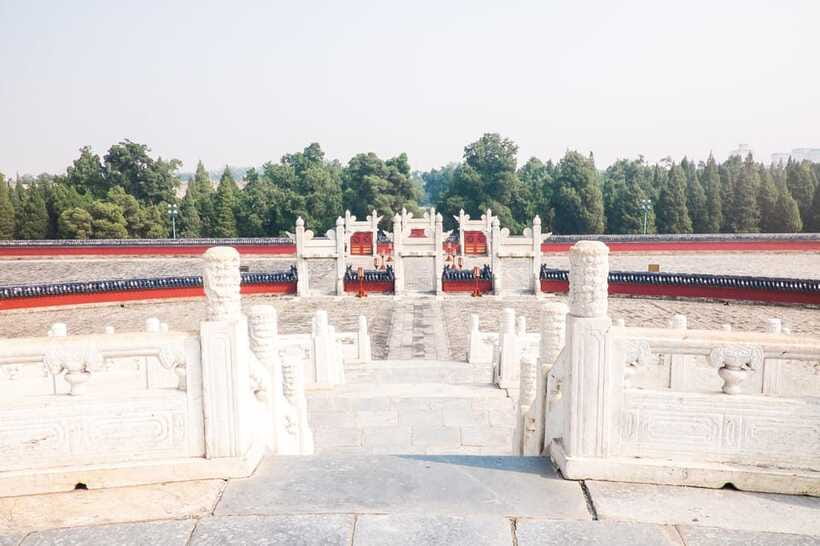
The Temple of Heaven is Beijing’s most famous Taoist site and a UNESCO World Heritage Site. It was built for emperors to worship heaven and pray for good harvests, so the scale and design feel more ceremonial than intimate.
The Circular Mound Altar and Hall of Prayer for Good Harvests are the key sights. Their geometry expresses the old Chinese idea of heaven and earth, while the layered roofs and careful proportions show how architecture served imperial ritual. Your guide can explain why the complex was used by the emperor, who was regarded as the link between the human world and heaven.
This is the best option for you if grand imperial design matters more than active neighborhood worship. The grounds are also large, so allow enough time to walk between major structures. A private car can be useful when the Temple of Heaven is combined with another site on the other side of central Beijing.
The Temple of Heaven is closed on Mondays. It is also a popular major attraction, so do not expect the same quiet mood as White Cloud Temple. You are paying for access to a landmark of national importance, but the experience is less intimate than the smaller temples.
White Cloud Temple, a quieter Taoist choice
White Cloud Temple, or Baiyunguan, is one of China’s most important Taoist temples. It is about 1,300 years old and is known as the First Taoist Temple Under Heaven. The cypress-lined courtyards and preserved religious traditions give it a calmer feel than Beijing’s most famous imperial sites.
This is my pick for anyone who wants to understand Taoism as a living religious tradition. The temple preserves rituals and old scriptures, and your guide can place the courtyards, halls, and religious practices in context. You may find the visit more atmospheric than a stop built mainly around monumental architecture.
White Cloud Temple is open daily, making it a useful choice for a Monday itinerary. It also pairs well with another site that shows a different faith, such as Niujie Mosque or the Catholic churches. That comparison helps you see how Beijing’s religious communities developed side by side.
The tradeoff is that visitors who want a single famous landmark may find it less immediately dramatic than the Temple of Heaven. I would choose it for the explanations, courtyards, and sense of continuity rather than for one spectacular object.
More Private Temple Tours in China
- Temple of Heaven, Summer Palace&Forbidden City Private Tour
★ 4.9 · 53 reviews - 4-Hour Private Tour: Lama Temple, Confucius Temple, Guozijian Museum with Dim Sum
★ 5.0 · 21 reviews - Beijing:Temple of Heaven Private Tour w/Option Show & Dinner
★ 4.8 · 18 reviews - Private Tour: Temple of Heaven with Roast Duck and Acrobatic show
★ 4.5 · 13 reviews
Niujie Mosque and Beijing’s Muslim quarter
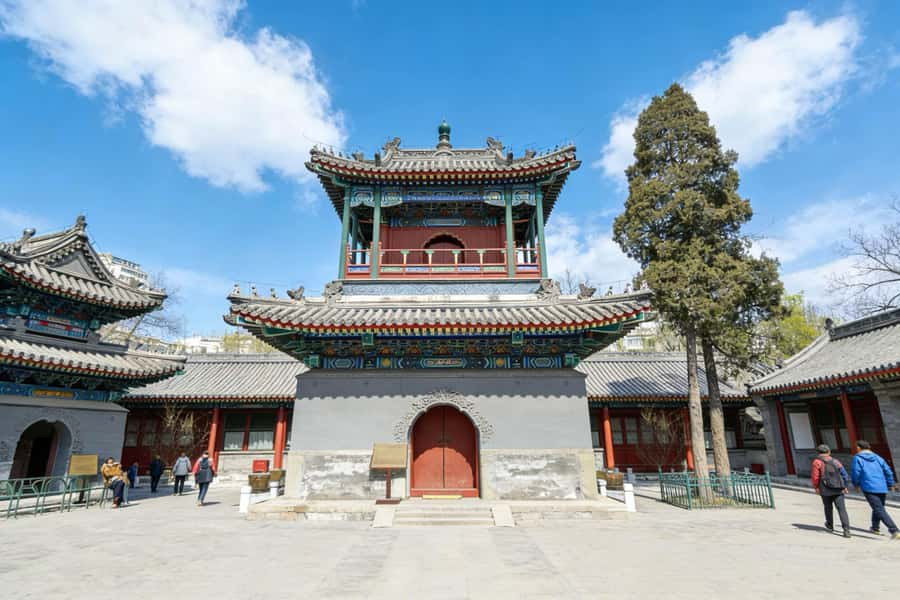
Niujie Mosque was founded in the 10th century and is Beijing’s oldest and largest mosque. Its design mixes Chinese courtyard planning with Islamic decorative elements, including arabesques and domed features.
This combination makes the mosque especially useful for understanding cultural exchange. It does not look like a mosque transplanted unchanged from another region. Instead, it uses local Chinese architectural forms while serving an Islamic community.
Your guide can explain the building’s layout, religious purpose, and place in Beijing’s Muslim life. Keep in mind that prayer times may restrict access to some areas. Dress and behavior should be respectful, and you should follow any instructions given at the entrance or by your guide.
Niujie Mosque is a strong choice for repeat visitors who have already seen Beijing’s palaces and gardens. It is also a good stop for families and students because the architecture opens a conversation about religion, trade, migration, and Chinese identity without requiring a separate museum visit.
Xuanwumen Church and St. Joseph’s Gothic details
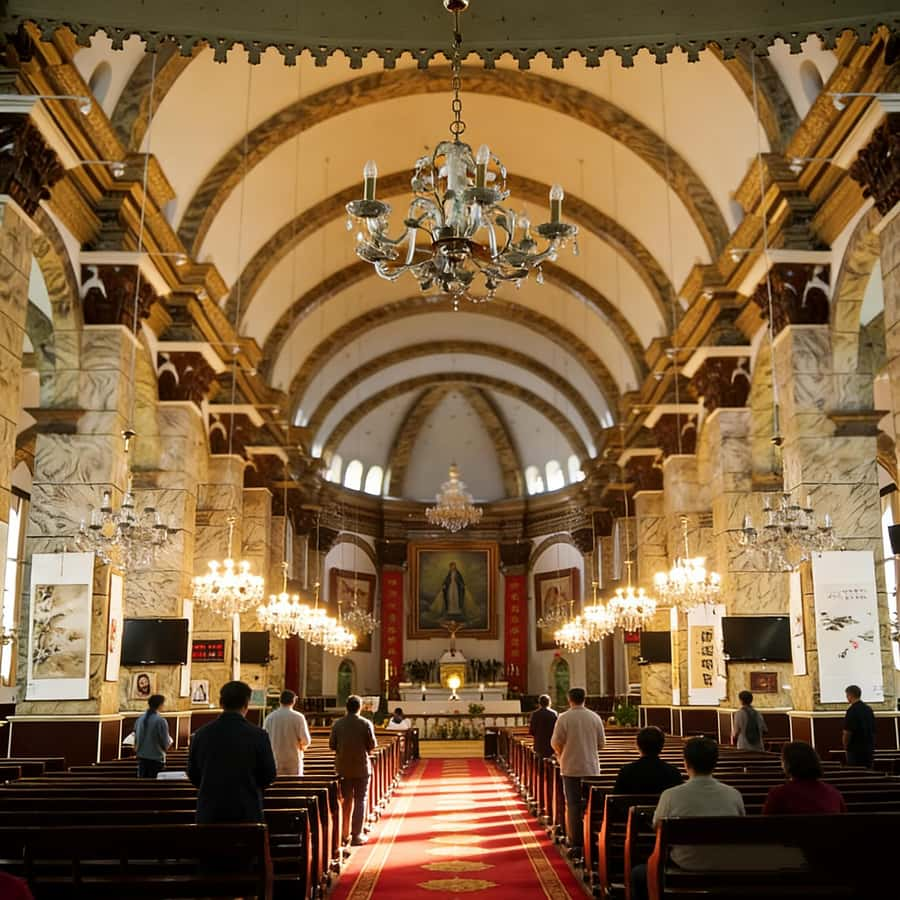
The Catholic church options add a sharp visual contrast to the temples. Xuanwumen Church, also called St. Joseph’s, is a late 19th-century Gothic Revival building and one of Beijing’s early Catholic churches.
Expect pointed arches, stained glass, and a spire rather than tiled imperial roofs and carved Buddhist halls. The church shows how European religious architecture entered a city shaped by Chinese traditions. Your guide can explain the building’s place in Beijing’s religious and architectural story.
The church is open daily, but Mass times apply. That means parts of the visit may be limited during services, and you should treat the space as an active place of worship rather than only a sightseeing stop.
This is a particularly good choice if you want architectural variety. A route that includes a Buddhist temple, a Taoist complex, and St. Joseph’s gives you three very different visual languages in one day. The drawback is that the church visit may be shorter or more restricted than expected if the timing is not right.
Confucius Temple and the stone examination tablets
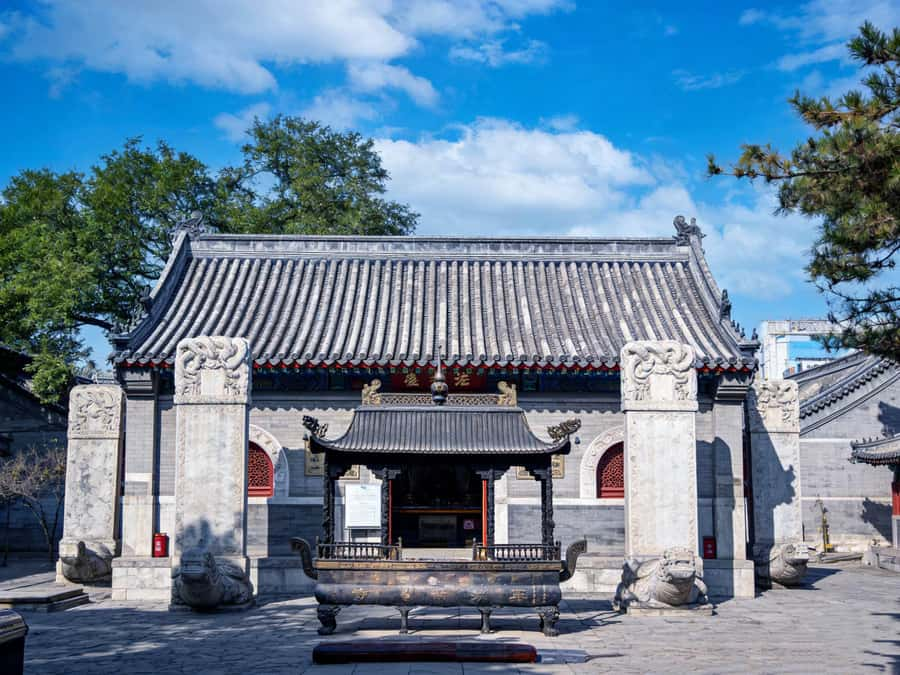
Beijing’s Confucius Temple is more than a religious building. It honors Confucius and shows how his ideas shaped education, public service, and social order in China.
The site is over 700 years old and contains more than 500 imperial examination stone tablets. These tablets connect the temple to the examination system that selected officials for government service. Your guide can help you understand why Confucius became so important to the state and how his teachings affected daily life, schooling, and official culture.
The temple’s halls and tablets reward a slower visit. Without explanation, the stones may seem repetitive. With context, they become evidence of a system that influenced Chinese society for centuries.
The Confucius Temple is closed on Mondays. I would pair it with the Lama Temple, since the two sites are close enough in theme and location to create a useful comparison between Buddhist devotion and Confucian learning. Confirm the exact routing with your guide, since the tour does not include every listed site.
How the private transport changes the day
Some packages include a private car, while the four-hour no-transport option requires you to arrange your own travel or use the subway. That distinction matters in Beijing, where crossing the city can take time even when sites look close on a map.
A car gives you more control and reduces the work of connecting several religious sites. It is especially useful if your group includes older adults, children, or anyone who does not want to manage subway transfers. One past guide, Ms. Duan, also helped visitors navigate the Beijing subway, so the no-car option can still work if your guide supports you with the route.
Pickup is included for the relevant packages. The guide meets you in your hotel lobby holding a sign with your name. A private group also means you can ask for pauses, explanations, and a pace that fits your interests.
Do not assume every package includes the car. Check the package details before paying, along with which entrance tickets are covered. Meals and personal expenses are not included.
Is $77 per person a fair price?
At around $77 per person, the tour can be good value if you want a private guide and a focused religious itinerary. The price includes a professional English-speaking guide, tickets for the selected sites, and private car transfers on car-inclusive packages.
The value is strongest for two or more people who want to avoid building a route, buying separate tickets, and researching the meaning of every site. You are paying for interpretation and coordination, not just admission.
The value is weaker if you only want to enter one temple and walk around independently. Beijing’s subway can be practical, and the four-hour no-transport package may suit confident visitors who want help inside the sites but prefer to manage transfers themselves.
Ask yourself how much structure you want. If you have limited time in Beijing and a clear interest in religion, the private format saves planning effort. If you prefer wandering without a schedule, the fixed start time and selected package may feel restrictive.
Guide quality and the small details that matter
The strongest part of this experience is the guide’s role. Lucy has been described as warm, flexible, and attentive, while Alice Ji has been praised for clear English, a comfortable car, and easy explanations of Chinese history. Susan Shan is noted for detailed explanations of Chinese customs and history.
These details matter because religious sites can be confusing without context. You may want to ask about rituals, the meaning of statues, the difference between Taoism and Buddhism, or how Confucian ideas shaped the government. A guide who welcomes questions will make the day much more useful.
The tour is conducted in English and is designed for a private group. It is wheelchair accessible, though you should still discuss the exact route and site combination when booking because access can vary between historic buildings.
The activity allows cancellation up to 24 hours before the start for a full refund, and you can reserve now and pay later. That is useful when your Beijing schedule depends on flight times or changing plans.
Choosing the right route for your interests
Use the following combinations as a starting point, then confirm what your selected package actually includes:
- For first-time temple visitors: Lama Temple and Confucius Temple. You get Buddhist art, imperial connections, and the examination system.
- For Taoist traditions: Temple of Heaven and White Cloud Temple. One presents imperial ceremony, while the other offers an older, more active Taoist setting.
- For religious variety: Lama Temple, Niujie Mosque, and St. Joseph’s, if the timing and package allow. The contrast in architecture and practice is the point.
- For a quieter day: White Cloud Temple and Confucius Temple. Both reward explanation and careful looking.
- For architecture: Temple of Heaven and St. Joseph’s. The difference between Chinese imperial design and Gothic Revival forms is striking.
- For a short visit: Choose one or two sites close enough to avoid spending much of your time in traffic.
Remember that these are not guaranteed combinations. You will not visit all six sites in one day. The final route depends on the package you choose, the available time, opening days, prayer or Mass schedules, and transport arrangements.
Should you book this private temple tour?
Book it if you want more than photographs of famous buildings. The tour suits you best if you are curious about religious practice, Chinese architecture, imperial customs, or the way several faiths coexist in Beijing. It is also a smart choice for a small group that values private transport and direct access to an English-speaking guide.
I would not book it without checking the exact site combination. The phrase customizable is useful only if you know which four to eight-hour option includes your preferred stops, tickets, and car. Also check Monday closures and religious service times.
For the best balance, choose two or three sites with a clear theme instead of trying to collect every address. The Lama Temple with Confucius Temple gives you a strong first introduction. White Cloud Temple with Niujie Mosque offers more local religious character. Add St. Joseph’s if architecture and cultural exchange are high on your list.
FAQ
How long does the private temple tour last?
The listed duration is about four to seven hours. The tour choices are also described as packages ranging from four to eight hours, so confirm the exact length when selecting your package.
Can I choose which religious sites to visit?
Yes. The experience offers customizable packages, and you select a preferred combination from the available options. You cannot visit every listed site in one day.
Which sites are included in the tour options?
The listed choices include the Lama Temple, Temple of Heaven, White Cloud Temple, Niujie Mosque, Xuanwumen Church or St. Joseph’s, and Confucius Temple.
Is private transportation included?
Private car transfer is included only with car-inclusive packages. The four-hour no-transport option requires you to arrange your own transportation or use the subway.
Is hotel pickup included?
Pickup is included for the applicable packages. Your guide meets you in the hotel lobby holding a sign with your name.
Is the tour conducted in English?
Yes. The tour has a live English-speaking guide.
Are entrance tickets included?
Entry tickets for the sites in your selected package are included. Additional tickets not specified in the package are not included.
Is the tour private?
Yes. It is offered for a private group rather than as a shared group tour.
Are all the sites open every day?
No. The Temple of Heaven and Confucius Temple are closed on Mondays. Niujie Mosque may limit access during prayer times, and Mass times apply at the Catholic churches.
Can I cancel the booking?
You can cancel up to 24 hours in advance for a full refund. Reserve now and pay later is also available.
Newly written up around Beijing
- Temple of Heaven Morning Walking Tour with Ticket★ 5.0 · 7 reviews
- 3-Hour Private Tour: Temple of Heaven and Lama Temple★ 5.0 · 3 reviews
- Summer Palace and Temple Of Heaven Private Tour★ 5.0 · 9 reviews
- 4-Hour Private Tour: Lama Temple, Confucius Temple, Guozijian Museum with Dim Sum★ 5.0 · 21 reviews
- Full-Day Beijing Forbidden City, Temple of Heaven and Summer Palace Tour★ 4.5 · 40 reviews
- Small Group Beijing Temple of heaven and Summer Palace with Pearl market★ 5.0 · 3 reviews
- Private Day to T-Square, Forbidden city, Temple of heaven, Summer palace Tour★ 5.0 · 54 reviews
- Private Day Trip of Forbidden City, Temple of Heaven and Summer Palace★ 4.5 · 3 reviews
Private Temple Tours, compared.
Waterfalls, Water Temple & Rice Terraces Private Tour
Read our review →
Full-Day Angkor Wat Sunrise Private Tour with Guide from Siem Reap
Read our review →
Chiang Rai Temples: Private Tour from Chiang Mai
Read our review →
Private Tour: Teotihuacan and Guadalupe Shrine
Read our review →
Grand Palace, Wat Pho, and Wat Arun Private Tour
Read our review →
Ephesus and Temple of Artemis Private Tour from Kusadasi Port
Read our review →
Browse the lists this tour appears in