
Reviewed · HISTORICAL TOURS
Chongqing: Historical Blocks, Temple, and Mountain Tour
Chongqing’s best surprise may be how quickly its old neighborhoods give way to forested hills. This private tour links Longmenhao Old Street with Nanshan’s mountain paths, a Taoist temple, and a quieter old street where traditional buildings and local life feel less polished for visitors.
I like the mix of city and nature, and I like having a guide who can connect Chongqing’s geography, history, food, and daily life as you walk. Tiian is warm and flexible, tailoring the visit to your interests and continuing to offer Chongqing tips after the tour. The main consideration is the pace: stone stairs and uphill walking are part of the deal, while food and transport cost extra.
Key points to know before you book
- Longmenhao opens the tour with old lanes, traditional buildings, and smart little shops.
- Nanshan brings forest paths, fresh air, and wide views over Chongqing.
- The mountain’s less commercialized old street offers a quieter look at local life.
- Chongqing’s largest Taoist temple adds a calm spiritual stop to the route.
- This is a private tour, so your guide can adjust the conversation and pace to your interests.
- Bring good walking shoes and budget separately for public transport, snacks, and drinks.
Why this Chongqing tour works so well
I like this experience because it does not force you to choose between Chongqing’s old city and its green hills. In four hours, you get both: narrow lanes and traditional architecture first, then forest air, mountain streets, temple courtyards, and a high view across the city.
That combination gives you a better sense of Chongqing than a single viewpoint or a quick neighborhood walk. The city is famous for its steep terrain, layered streets, and dramatic setting, and this route lets you feel those changes under your own feet.
The private format matters. You are not tied to the needs of a large group, and your guide can spend more time on subjects that interest you. You might want to ask about Taoism, Chongqing’s geography, local food, old housing, or how people manage daily life on steep ground. The guides speak English, French, Italian, or Spanish.
There are a few practical limits. The price is $88 per person, but it does not include transport or food. You will use the metro or other public transport, taxi, or Didi as needed, and the tour includes a food stop rather than a paid meal. That keeps the tour flexible, but you should carry some extra money.
More History Tours in China:
- Beijing Historical Tour II including Summer Palace, Lama Temple & Panda Garden
★ 4.0 · 187 reviews - Beijing Historical Tour I – Forbidden City, Tiananmen Square & Temple of Heaven
★ 4.0 · 120 reviews - Chiang Mai: Historic Temples and City Guided Walking Tour
★ 4.7 · 650 reviews
Starting at Longmenhao Old Street
Meet your guide at Exit 2 of Shangxinjie Station. This is a useful starting point because you begin near one of the city’s renewed historic areas rather than spending the first part of the tour crossing town.
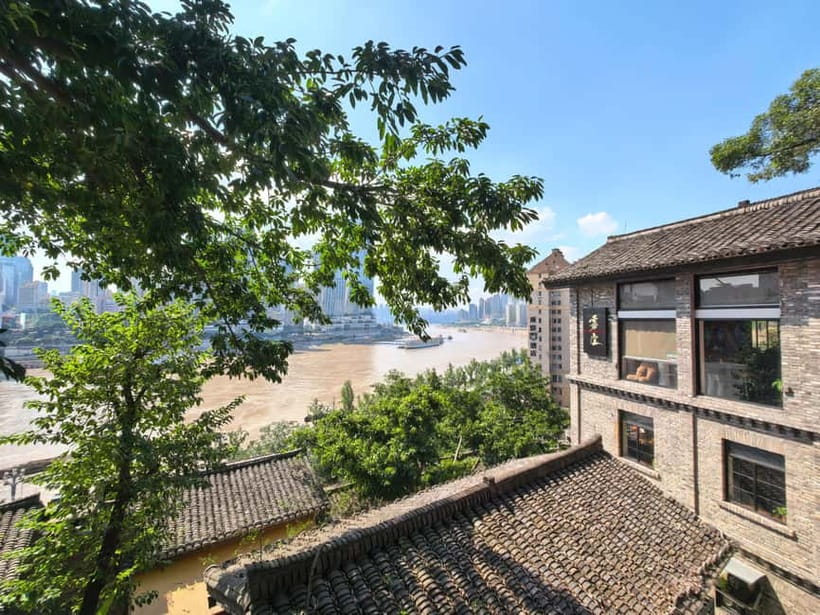
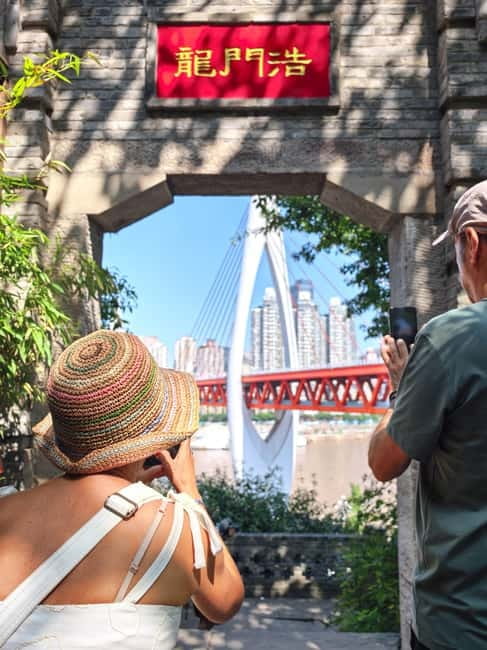
Longmenhao Old Street gives you an easy introduction to Chongqing’s older character. Expect alleyways, traditional architectural details, small stylish shops, and street scenes that feel lived in rather than arranged as a museum display.
The area has been renewed, so it is not untouched old Chongqing. That is worth knowing. You will see restored buildings and polished storefronts alongside older forms and local activity. For many people, that balance works well: the paths are easier to follow, but the neighborhood still gives you a feel for the city’s past.
The planned visit here lasts about 90 minutes. I would use this time to look up and down, not just straight ahead. Chongqing’s older districts are often interesting because of how buildings, stairs, lanes, and slopes fit together.
Your guide can fill in the local context as you go. You will learn about the area’s history, the city’s physical setting, and the ways traditional neighborhoods have been renewed. If you enjoy architecture, street photography, or small shops, this first section may be the most relaxed part of the tour.
Moving from the city to Nanshan
The route then uses the metro for about 15 minutes. Transport is not included, so plan to pay separately for this section and any other public transport used during the tour.
I see the transfer as part of the experience rather than dead time. Chongqing makes more sense when you notice how quickly its dense urban areas shift toward hills. A short ride helps connect the lower city with Nanshan, where the tone becomes quieter and more natural.
Since the tour is private, your guide can help with the route and explain what you are seeing along the way. Still, keep your expectations practical: this is not a private car tour, and you should be comfortable using public transport.
Walking through Nanshan’s forests and old streets
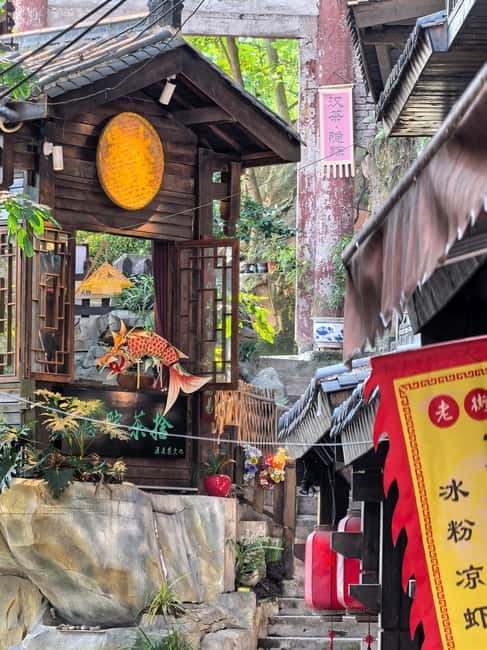
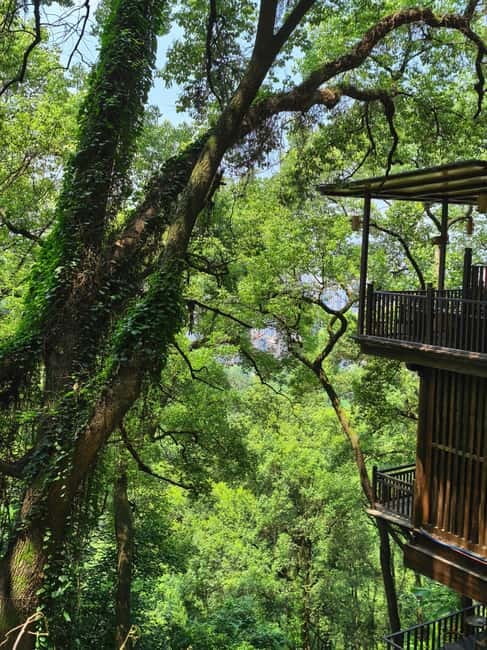
The Nanshan section takes about two hours, making it the heart of the experience. Here you trade busy city lanes for green forest, stone stairs, and open mountain air.
The route includes hiking, scenic stops, and guided sightseeing. You might find the change surprisingly quick. One minute you are dealing with Chongqing’s dense city pattern; soon you are walking among trees and following paths that feel far removed from the main roads.
This part suits you if you enjoy walking with a purpose. It is not a drive-up viewpoint where you step out, take a picture, and leave. You need to climb stairs and walk on uneven stone surfaces, so comfortable shoes are essential. If your knees or balance make stairs difficult, ask about the exact route before booking.
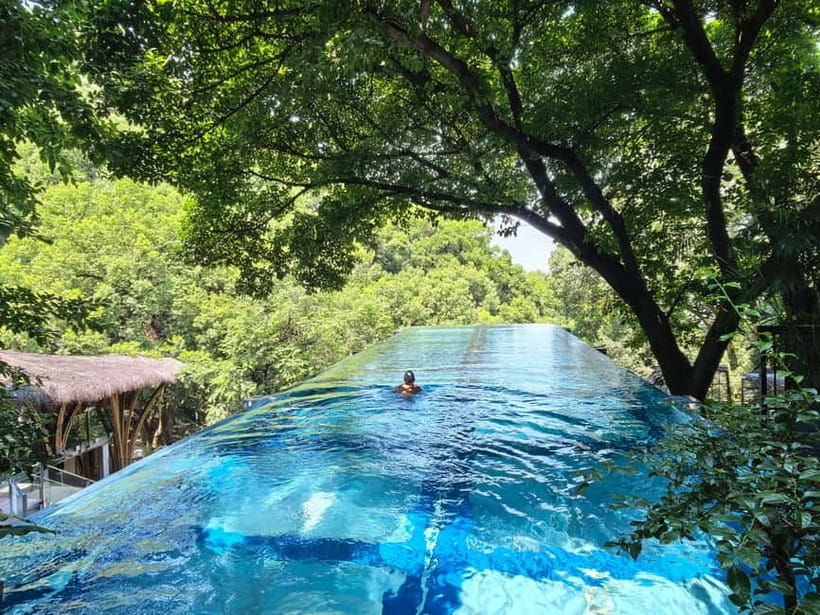
The forest setting also gives the tour a different mood. The aim is not only to collect views, but to slow down and notice the contrast between the city and the hills. Fresh air, quiet paths, and shaded stretches make this a welcome pause from central Chongqing.
The mountain old street adds a cultural layer. It is described as less commercialized than the renewed areas, which means fewer polished shops and a more ordinary local feel. You may see traditional buildings, local food stalls, and street activity without the same visitor-focused presentation found in heavily restored districts.
That trade-off is important. A less commercialized area can feel more genuine, but it may also be less tidy, less predictable, and less designed for sightseeing. I would choose this stop if you want a glimpse of everyday Chongqing rather than a perfectly finished historic quarter.
Other temple visits near China we have written up
- Mini Group Xian Day Tour to Terracotta Army, City Wall, Pagoda and Muslim Bazaar
★ 5.0 · 1,320 reviews - Beijing: The Temple of Heaven or Summer Palace Entry Ticket
★ 4.6 · 1,286 reviews - Beijing Classic Full-Day Tour including the Forbidden City, Tiananmen Square, Summer Palace and Temple of Heaven
★ 4.0 · 610 reviews - Temple of Heaven Ticket
★ 5.0 · 482 reviews
Entering Chongqing’s largest Taoist temple
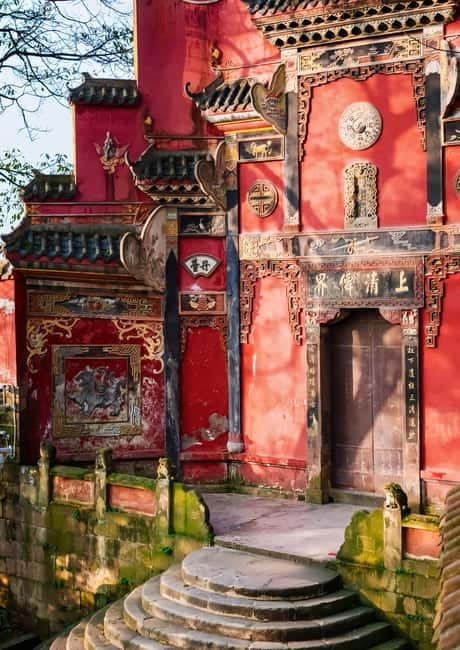
The Taoist temple is the spiritual center of the mountain section. It sits within the natural setting, giving you a chance to see how religious spaces in China can relate closely to hills, trees, and walking paths.
The visit is not just a quick photo stop. Your guide can explain Taoist ideas and how the temple reflects harmony between people and nature. Even if you know little about Taoism, the setting makes the stop easy to appreciate: the temple offers a quiet break from the noise and movement of the city.
You should dress and behave respectfully in the temple area. The supplied information does not specify a required dress code, but modest clothing and a calm manner are sensible for any religious site.
The temple also helps explain the tour’s overall shape. Longmenhao shows the city’s built past, the mountain trails show its natural setting, and the temple brings those two ideas together. You are not simply moving between unrelated attractions.
Finding the God’s-eye view
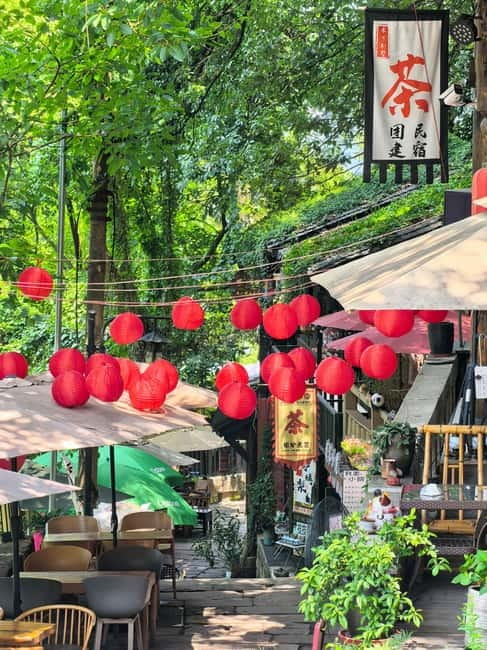
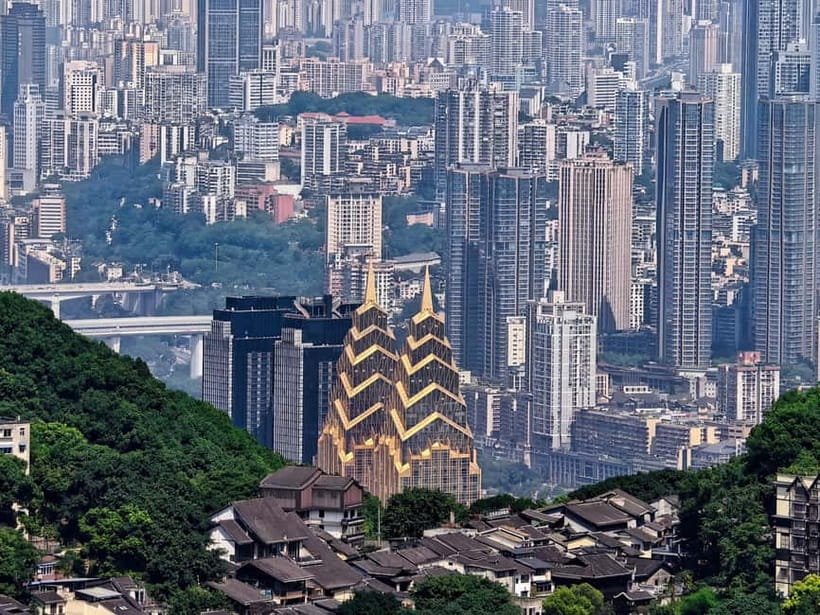
The mountain provides the tour’s broadest views. From higher ground, you can take in Chongqing’s unusual arrangement of hills, urban blocks, and changing elevations.
I would not treat the view as a guaranteed single postcard moment. The exact outlook depends on the route, weather, and visibility. Still, the experience promises panoramic scenery, and Nanshan is a strong place to understand the city’s scale from above.
Bring a phone or camera, but do not let photography turn the walk into a checklist. The point is also to see how Chongqing is shaped by its hills. A guide can help you connect the view with the city’s geography instead of leaving you with only a wide picture.
This is one reason the tour offers more value than a simple city stroll. You see Chongqing from street level and from above, then walk through the natural area between those two viewpoints.
Local snacks and a short food stop
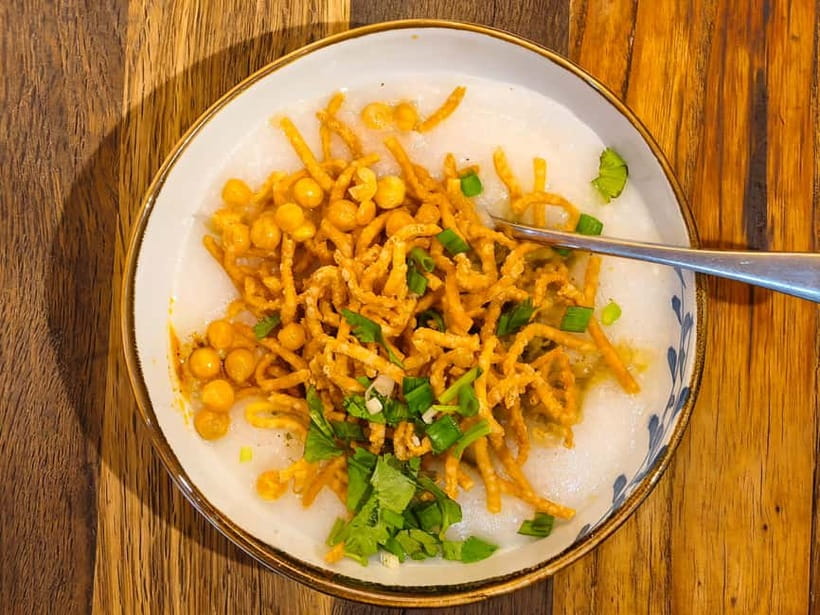
The tour includes about 30 minutes at a local restaurant or food stop for lunch, street food, and local snacks. Food and drinks are not included, so you choose and pay for what you want.
That arrangement is useful if you have particular tastes or a limited appetite. You can ask your guide what is suitable and try something small rather than committing to a full meal. It also gives you a chance to ask about local eating habits and ingredients.
Do not expect a long food tour. Thirty minutes is enough for a snack or quick meal, not a leisurely series of restaurant visits. If food is your main reason for visiting Chongqing, you will want to plan other meals outside this experience.
I like the stop because it keeps the tour connected to ordinary life. A quick local bite after walking through old streets and mountain paths feels more relevant than an isolated restaurant meal chosen only for convenience.
What the private guide adds
The guide is the part that can make this route either useful or merely pleasant. You are not only being led from one stop to the next. The guide is expected to explain local history, geography, lifestyle, architecture, and Taoist culture as you move through the city.
Tiian received especially warm praise for being friendly, fun, and well informed, while also adjusting the visit to the group’s interests. Another guide built the conversation around the travelers’ background and questions, then continued offering Chongqing advice after the formal tour ended.
That kind of flexibility is valuable in a private group. You can ask for more detail at the temple, spend longer on architecture, or keep moving if you are eager to reach the mountain views. The exact quality depends on your assigned guide, but the multilingual format gives you a good chance to communicate comfortably.
I would arrive with a few questions ready. Ask about why Chongqing developed where it did, how its hills affect transport, what makes Taoism different from other Chinese traditions, or which local foods are worth trying. A private guide can respond to your curiosity in a way a fixed audio guide cannot.
Is $88 per person good value?
At $88 per person, this is not the cheapest way to see Chongqing. You also pay for transport, food, and drinks, so the final cost will be higher.
The value comes from the combination of a private guide, several different settings, and a focused four-hour route. You are paying for local explanation and route planning as much as for entry to the places themselves. If you tried to link the old streets, Nanshan, the temple, and the mountain views alone, you would need to research the route and manage the transfers yourself.
The price makes the most sense for a first visit, a short stay, or anyone who wants a clear introduction without joining a large group. It is less compelling if you only want a viewpoint, dislike walking uphill, or prefer to explore at your own slow pace.
The tour has a five-star rating from four verified bookings, including strong praise for guide warmth, organization, and personal attention. That is encouraging, though the sample is small. I would treat the guide service as the main reason to book, not expect the price to cover every expense.
Who should book this experience?
I would recommend it to you if you want several sides of Chongqing in one half-day: old streets, restored buildings, a quieter local district, forest paths, a temple, and a city view.
It is especially suitable for couples, families with older children, and small private groups who enjoy walking and asking questions. The multilingual service also helps if you prefer French, Italian, Spanish, or English.
You should think twice if stone stairs are a problem, if you want a fully vehicle-based tour, or if you need every cost included upfront. This is a walking experience with public transport, not a luxury sightseeing transfer.
Wear comfortable shoes, carry water, and leave room in your schedule for the pace of the group. The tour is designed to feel calm and genuine, so it is a better fit for someone who values local atmosphere over rushing through a long list of attractions.
My verdict on the Longmenhao and Nanshan route
I like this tour because it gives Chongqing a clear shape. You start among old lanes and renewed buildings, climb toward forest and mountain streets, pause at a Taoist temple, and look back across the city from above.
The route is active, and the extras cost more than the advertised price. But if you want a private, guide-led introduction that joins culture, nature, food, and views in four hours, I think it is a strong choice. Book it for the guide and the range of settings, not simply for a quick photo stop.
FAQ
Where does the tour begin?
Meet your guide at Exit 2 of Shangxinjie Station. The guide will be waiting there to greet you.
How long does the experience last?
The stated duration is four hours. The schedule includes visits to Longmenhao Old Street, Nanshan, a local food stop, and public transport.
Where does the tour end?
The tour returns to Longmenhao Old Street.
Is this a private tour?
Yes. The experience is arranged for a private group.
Which languages are available?
Live guiding is available in English, French, Italian, and Spanish.
Does the price include transport?
No. Taxi, Didi, metro, and other public transport costs are not included.
Is food included?
No. Food, drinks, lunch, street food, and local snacks are paid for separately.
What should I wear?
Wear comfortable shoes and prepare for hiking on stone stairs. The route includes walking and mountain paths.
Newly written up around China
- Private Tour to Lama Temple, Tian’anmen Square and Forbidden City★ 5.0 · 3 reviews
- Private Day to T-Square, Forbidden city, Temple of heaven, Summer palace Tour★ 5.0 · 54 reviews
- Private Day Trip of Forbidden City, Temple of Heaven and Summer Palace★ 4.5 · 3 reviews
- Private Half-Day Temple of Heaven and Lama Temple Tour★ 5.0 · 13 reviews
- Private Day Tour:Tiananmen Square,Forbidden City Temple of Heaven★ 5.0 · 16 reviews
- Private Tour to the Temple of Heaven and Tea tasting at the Maliandao Tea city★ 5.0 · 3 reviews
- Local’s Beijing: Forbidden City Insider Tour +Temple +Duck Feast★ 4.5 · 66 reviews
- Temple of Heaven Ticket with Optional Guide Service★ 5.0 · 120 reviews
Historical Tours, compared.
Mt. Fuji Heritage Tour: Traditional Villages, Lakes & Shrine
Read our review →
Malta: Prehistoric Temples, Limestone Heritage & Blue Grotto
Read our review →
Day Trip From Addis Ababa See Historical Monastery,Stunning Nature,Animals,Birds
Read our review →
Beijing Historical Tour II including Summer Palace, Lama Temple & Panda Garden
Read our review →
“Porto: Fado Show with Guided Tour in a Historic Monastery”
Read our review →
Private Half-Day Temples and Cultural Tour in Kuala Lumpur
Read our review →
Beijing Historical Tour I – Forbidden City, Tiananmen Square & Temple of Heaven
Read our review →Browse the lists this tour appears in