
Reviewed · ABU SIMBEL & PHILAE TEMPLE TOURS
Abu Simbel temples by Private air-conditioin Vehicle
Abu Simbel is one of Egypt’s great sights: two enormous temples cut into rock, far south of Aswan and built by Ramses II. The private trip gives you a quieter, more personal ride than a shared coach, while an Egyptologist explains the temples, their discovery in 1813, and their remarkable move in 1960.
I like the door-to-door hotel pickup and the fact that your own group travels together in a private, air-conditioned vehicle. I also like that the $120 price includes entrance fees, transport, water, soft drinks, and the guide, so the main costs are clear before you leave.
The main drawback is the long day. You should also know that guiding inside the temples is not permitted, according to the operator’s response to a booking complaint. Your guide may explain the monuments before you enter and then allow you time to look around on your own.
Key points to know before booking
- Two major temples in one stop: See the Sun Temple of Ramses II and the smaller Temple of Queen Nefertari.
- A private Aswan departure: Your group travels alone in a private air-conditioned vehicle, with hotel pickup and return.
- A remarkable rescue story: Both temples were moved in 1960 with help from the Egyptian government and UNESCO to protect them from the rising Nile.
- About three hours at Abu Simbel: The listed stop lasts around three hours, giving you time for both temples and photographs.
- A clear $120 package: Entrance fees, transport, taxes, bottled water, and soft drinks are included. Tips and personal extras are not.
- Best for independent groups: This suits you if you value privacy and a personal schedule more than the lowest possible price.
Why Abu Simbel is worth the long day from Aswan
The appeal of Abu Simbel is not just its age. It is the combination of scale, setting, political purpose, and modern engineering.
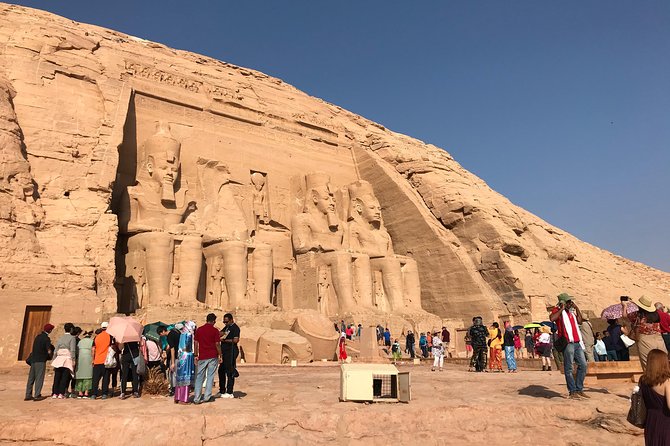
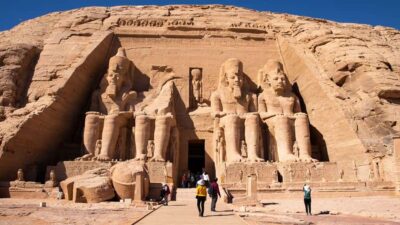
Ramses II built the larger temple largely to honor himself. Four huge seated figures of the king guard the entrance, giving the front of the temple a forceful, almost theatrical feel. Inside, a mural shows the Battle of Kadesh, where Ramses II claimed victory over his enemies. The monument is both a place of worship and a royal statement.
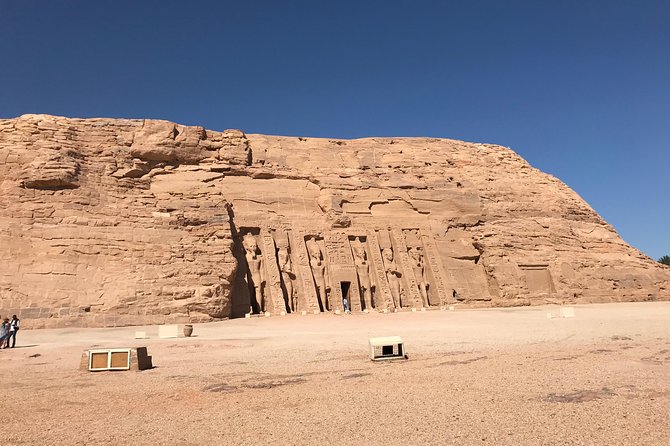
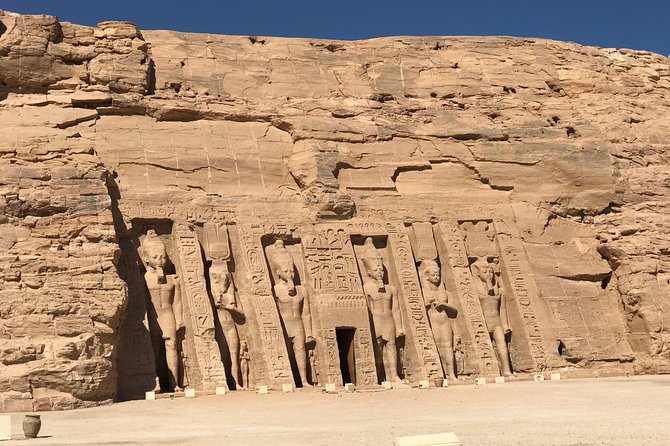
The second temple honors Queen Nefertari. It is smaller than Ramses II’s temple, but do not treat it as an afterthought. The pair of temples was planned together, and the presence of the queen beside the king tells you something about how Ramses II wanted his power and family to be remembered.
The temples were discovered in 1813, when much of the complex was almost buried under sand. Their survival then faced a newer threat. The rising waters connected with the Nile made it necessary to move the temples in 1960, with help from UNESCO and the Egyptian government. That rescue is a major part of the story you are there to see. Abu Simbel is an ancient site shaped by both pharaonic ambition and modern conservation.
More Abu Simbel and Philae Temple Tours in Egypt:
- From Aswan: Abu Simbel Temple Day Trip with Hotel Pickup
★ 4.4 · 2,807 reviews - Luxor: Abu Simbel Temple Private Guided Day Trip with Lunch
★ 4.6 · 546 reviews - Private Day Tour to Abu Simbel Temples from Aswan
★ 4.5 · 507 reviews
Leaving Aswan in a private air-conditioned vehicle
The day begins with pickup at your hotel in Aswan. A Gate 2 Egypt representative collects you and takes you south in a private, air-conditioned vehicle. The exact pickup time is not provided, but the full experience lasts about 11 hours, so you should plan for most of the day to be occupied.
Private transport matters here because Abu Simbel is not a quick side trip. You are traveling a long distance from Aswan, and an enclosed vehicle with air conditioning is especially useful in Egypt’s heat. You are not sharing the vehicle with an unrelated group, so your party can travel together and speak directly with the representative or guide.
The private format does not necessarily make the journey short. It simply makes the road time more personal and less dependent on other people. If you dislike waiting for a large group to board, gather, or return to a coach, this arrangement has a real advantage.
The package includes bottled water and soft drinks on board. That is a practical touch during a long outing, though food is not listed as included. You should plan accordingly rather than expect a full meal as part of the price.
Meeting Ramses II at the Great Sun Temple
The main temple is the visual centerpiece of the visit. Ramses II’s massive statues dominate the entrance, and the scale is hard to grasp from photographs alone. You approach a monument designed to make the king appear larger than ordinary human life.
Inside, the decoration connects Ramses II with religion, warfare, and royal power. The mural connected with the Battle of Kadesh is especially important because it shows how the king wanted his military success recorded. Your Egyptologist can provide the historical setting and point out why the temple was built as more than a simple place of prayer.
The name Sun Temple reflects the religious role of the monument and its connection with Ramses II. The supplied program describes this as the main attraction at Abu Simbel, and it is where you will likely spend much of your attention. Give yourself time to look carefully at the reliefs rather than rushing through for a few quick photographs.
One practical detail can affect how you experience the visit: the operator says that guides are not allowed to conduct explanations inside the temples. That means your Egyptologist may explain the history before you enter or near the entrance, then give you time to explore independently. Some people prefer this arrangement because it lets them move at their own pace. Others may prefer continuous commentary while standing beside the carvings.
If the details matter to you, listen carefully before entering and ask your questions then. A short explanation outside can help you understand what you are seeing once you are inside.
Seeing Queen Nefertari’s Temple
The Temple of Queen Nefertari sits north of Ramses II’s temple. It is part of the same Abu Simbel visit, not a separate excursion, and the contrast between the two monuments gives the stop its balance.
Ramses II’s temple is built around the king’s imposing public image. Nefertari’s temple gives you a different angle on the royal family and the role of the queen. The two buildings were placed together so that the power of the king and the importance of the queen could be presented as a pair.
This is where the value of an Egyptologist becomes clear. Without context, you can admire the carved figures and decorated rooms. With an explanation, you can better understand why these two temples were created side by side and what Ramses II was trying to communicate.
The listed Abu Simbel stop lasts about three hours. That is a useful amount of time for seeing both temples, but it is not an open-ended visit. If you like to study every wall at length, you may want to move with purpose. Start with the guide’s explanation, then make a simple plan: larger temple first, smaller temple second, followed by any final photographs or questions.
One of the supplied comments praised the chance to stay a little longer, especially during a July visit when the person felt the site became very quiet. The tour details do not promise extra time or a particular crowd level, so treat this as a useful suggestion rather than a guarantee. Still, it is worth asking your representative how much time your group has once you arrive.
Other temple visits near Egypt we have written up
- Luxor Day Tour: Valley of Kings & Queens & Hatchepsut Temples
★ 5.0 · 1,496 reviews - Luxor: Valley of the Kings and Hatshepsut Temple Day Tour
★ 4.4 · 1,404 reviews - Luxor: Valley of Kings, Hatchepsut Temple ,Karnak & Luxor-DayTour
★ 5.0 · 735 reviews - Full Day Tour of Luxor West Bank Temples and Tombs (Private)
★ 5.0 · 722 reviews
The engineering story behind the 1960 move
The modern rescue of Abu Simbel is nearly as striking as the ancient construction. The temples were moved in 1960 because the Nile’s rising waters threatened to cover them. UNESCO and the Egyptian government worked together to save the monuments.
This changes how you read the site. You are not simply looking at temples that survived for thousands of years untouched. You are looking at monuments that were taken apart or relocated as part of a major preservation effort. Their present position reflects a decision to protect Egypt’s past from a modern water project.
Your guide’s explanation can help connect the ancient and modern parts of the story. Ask about the move before entering, since the operator says guiding inside is not allowed. Once you know the reason for the relocation, the site feels less like an isolated ruin and more like a place that required constant care.
What the $120 price really covers
At $120 per person, this is not the cheapest way to reach Abu Simbel, especially if you are traveling alone. The price becomes easier to justify if you are sharing the private vehicle with friends or family, and group discounts may be available.
You are paying for more than a ride. The package includes:
- Private transportation
- An air-conditioned vehicle
- Hotel pickup and return in Aswan
- Entrance fees to the listed historical sites
- All fees and taxes
- An Egyptologist
- Bottled water and soft drinks
That list removes several common add-on costs. You do not need to arrange separate transport from your hotel, buy the temple tickets yourself, or pay for drinks during the ride. Tips and extras are not included.
The biggest value is control over the day. A private tour means only your group participates, so the trip can feel less hurried than a large shared outing. The tradeoff is that you may pay more per person for the same temples. If your main aim is to spend as little as possible, compare the group options. If you care about privacy, hotel convenience, and a direct guide relationship, the higher price may be sensible.
The long-day tradeoff
The full experience lasts approximately 11 hours, while the Abu Simbel stop itself is listed as about three hours. That leaves a substantial portion of the day for the journey, pickup, return, and time around the visit.
You should book this as a major day trip, not as a small morning activity. Wear practical clothing, bring anything you need for a long outing, and keep your schedule light afterward. Air conditioning and included drinks make the ride easier, but they do not change the distance.
The long journey is the central drawback, yet it is also part of why Abu Simbel feels special. The temples are not another quick monument in central Aswan. Reaching them takes commitment, and the reward is a site with a scale and setting that differ from the more compact attractions closer to town.
The private format helps with comfort, but it cannot remove the travel time. Book it because Abu Simbel matters to you, not because you expect a relaxed half-day.
Who will get the most from this tour
I would choose this trip for a couple, family, or small group that wants its own vehicle and guide. It is also a good fit if you prefer hotel pickup, included entrance fees, and a simple package instead of arranging each part yourself.
You should be comfortable with a long day and with exploring parts of the temples without a guide standing beside you. The operator’s explanation makes clear that inside guiding is not allowed, so the experience is partly guided and partly self-directed.
This tour is less suitable if you want a slow, highly detailed lecture in every room or if the lowest price matters most. The guide’s pre-entry explanation can give you the context you need, but you will then need to look closely and make your own observations inside.
The tour is suitable for most people, according to the supplied participation information. Confirmation is received at booking, and pickup begins in Aswan Governorate.
Booking, cancellation, and practical details
The starting point is Aswan, with pickup from your hotel and return after the visit. The experience offers mobile ticketing, and confirmation is provided at the time of booking.
Free cancellation is available if you cancel at least 24 hours before the start time. Cancellations made within 24 hours are not refunded, and changes within that period are not accepted. The experience also depends on good weather and a minimum number of participants. If the operator cancels for either reason, you are offered another date or experience, or a full refund.
Tipping is not included. Any other personal expense not named in the package is also your responsibility.
Should you book Abu Simbel by private vehicle?
Book it if you want to see one of Egypt’s most impressive monuments without joining a large group, and if your budget allows $120 per person. The private air-conditioned vehicle, hotel transfers, entrance fees, Egyptologist, water, and soft drinks make the package easy to manage.
Think twice if you dislike long road days or if you want the absolute lowest price. Also set your expectations about the guide: you will receive historical explanation, but the operator says guides cannot lead inside the temples.
For most people who have made room in their Aswan schedule for Abu Simbel, the trip is worth the effort. The enormous Ramses II temple, Queen Nefertari’s companion monument, and the story of their rescue from the rising Nile give you plenty to remember after the long ride home.
FAQ
Where does the Abu Simbel tour start?
The tour starts in Aswan Governorate, Egypt, with pickup from your hotel in Aswan.
How long does the complete experience last?
The full excursion lasts approximately 11 hours.
How long is the visit at Abu Simbel?
The listed stop at Abu Simbel lasts about three hours.
Which temples will I visit?
You will visit the Great Sun Temple of Ramses II and the Temple of Queen Nefertari.
Is transportation private?
Yes. The tour uses private transportation in an air-conditioned vehicle, and only your group participates.
Are entrance fees included?
Yes. Entrance fees to the historical places named in the program are included, along with all listed fees and taxes.
Are drinks included?
Yes. Bottled water and soft drinks are provided on board the vehicle.
Is tipping included in the price?
No. Tipping is not included.
Can I cancel for a full refund?
Yes, if you cancel at least 24 hours before the experience start time. Cancellations within 24 hours are not refunded.
Newly written up around Egypt
- Tour to Abu Simbel Temples from Aswan★ 4.5 · 7 reviews
- Sound and Light show at Philae Temple in Aswan★ 5.0 · 5 reviews
- Philae Temple and Aswan High-Dam Half-day tour★ 5.0 · 49 reviews
- Aswan Philae Temple, Obelisk, and High Dam Private Tour★ 4.5 · 17 reviews
- Visit Abu Simbel temple from Aswan by private A/C vehicle★ 5.0 · 4 reviews
- Sound And Light Show At Philae Temple In Aswan★ 3.5 · 10 reviews
- Abu Simbel Temples from Aswan★ 4.5 · 10 reviews
- Temple of Edfu★ 4.0 · 11 reviews
Abu Simbel & Philae Temple Tours, compared.
Abu Simbel Temple Private Guided Day Trip with Lunch
Read our review →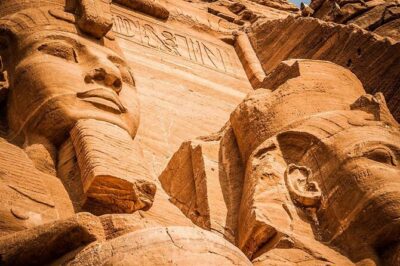
Private Day Tour to Abu Simbel Temples from Aswan
Read our review →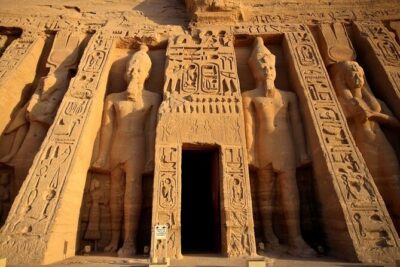
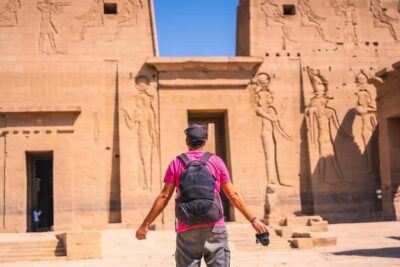
Private Guided Tour of Philae Temple with Entry
Read our review →
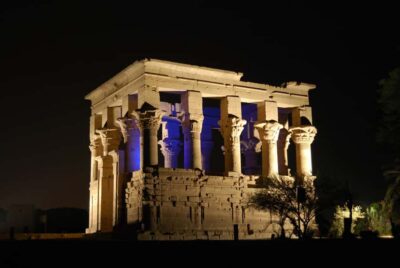
Philae Temple Sound & Light Show with Entrance Fees
Read our review →Browse the lists this tour appears in