
Reviewed · VALLEY OF THE TEMPLES TOURS
Agrigento: Valley of the Temples Ticket & App Audioguide
The most striking thing here is the scale. Agrigento’s Valley of the Temples spreads across about 1,300 hectares, with Doric temples, aqueducts, terraces, and open countryside laid out along a long ridge. You are not stepping into one compact ruin. You are walking through the remains of Akragas, a major Greek colony founded in the 6th century BC.
I like the freedom of a self-guided visit, especially because you can linger at the Temple of Concordia or move quickly through less familiar remains. I also like the chance to visit at sunset, when the temples shift from warm stone to a softly lit evening view. The catch is that skip-the-line does not always mean instant entry: you must exchange your voucher for a paper ticket, and the digital audioguide has drawn mixed comments.
Key points to know
- The Temple of Juno ticket office is the only voucher exchange point, near the Temple of Juno on Via Panoramica Valle dei Templi.
- The archaeological area is enormous, so wear sensible shoes and allow plenty of time for walking.
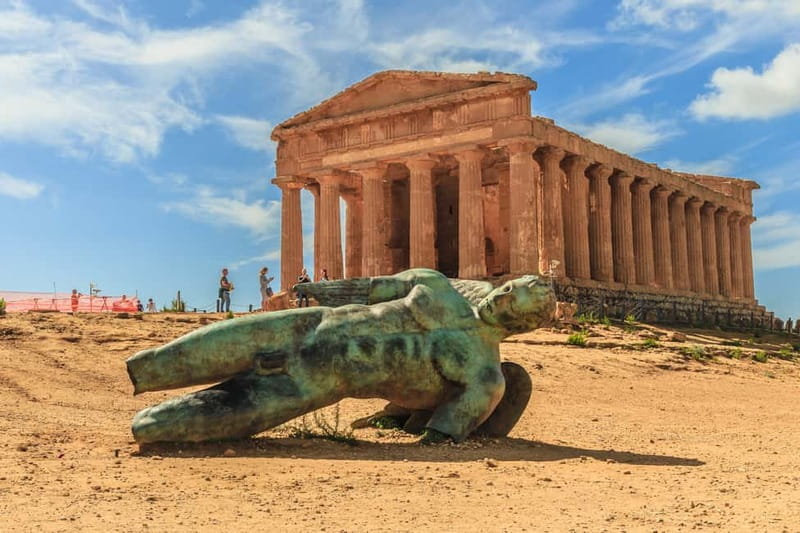
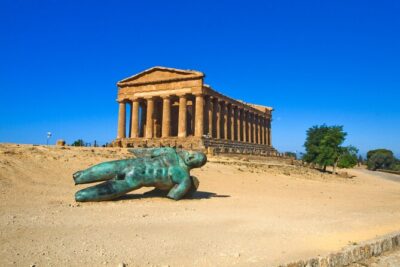
- The Temple of Concordia is the visual star, one of the best-preserved Greek temples in the area.
- Sunset timing can be superb, but morning is a better choice for cooler temperatures.
- The app audioguide is included, though some visitors found the separate on-site guide more useful.
- The $19 price needs a careful look, since children, reduced-price visitors, and some combination tickets may offer better value.
Why Agrigento’s Valley of the Temples matters
Agrigento was once Akragas, a Greek colony founded in the 6th century BC. Its public center grew across a long stretch of high ground, where temples and civic buildings overlooked the surrounding Sicilian countryside and the sea beyond.
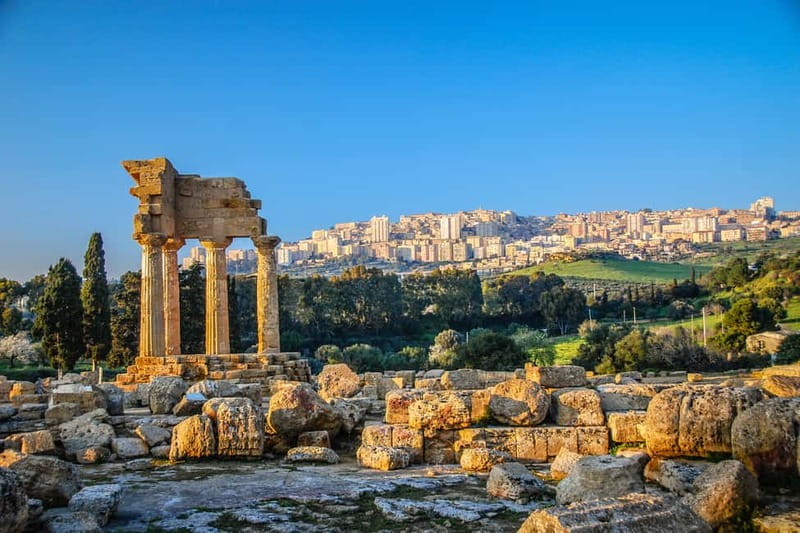
The name Valley of the Temples can be misleading. Much of the site follows elevated terraces rather than sitting in a low valley. The setting is part of the attraction. Ancient stone, almond trees, distant hills, and open sky share the view, giving the ruins room to breathe.
This is also a site of contrasts. Some temples survive in remarkably complete form, while others appear as scattered columns and fallen blocks. You get enough intact architecture to understand the Greek design, but enough damage to remind you that this was a working city, not a stage set preserved for modern visitors.
A self-guided ticket suits the place well. You can stop for photographs, read the signs, listen to the app, or simply sit and look at the columns. The site does not force you into a fixed route or a set commentary.
More Valley of the Temples Tours in Italy:
- Agrigento: Valley of the Temples Skip-the-Line Sunset Tour
★ 4.5 · 1,512 reviews - Palermo: Agrigento and the Valley of the Temples Day Tour
★ 4.2 · 1,240 reviews - Agrigento: Valley of the Temples E-Scooter Tour
★ 4.6 · 557 reviews
Exchanging your voucher near the Temple of Juno
Your visit begins at the Temple of Juno ticket office on Via Panoramica Valle dei Templi. This detail matters. The supplied voucher can only be exchanged at this entrance, so do not assume that every gate or ticket booth can process it.
The ticket exchange is usually the first practical hurdle. The product is sold as skip-the-line entry, but you may still wait briefly to turn the QR code into an official paper ticket. At busy times, that shorter queue can still help. During quieter periods, the advantage may be small, and some people have found little or no regular queue at the entrance.
After the ticket exchange, you must pass a security check. Keep your voucher available on your phone and bring identification if you booked a reduced-price ticket. The ticket gives you one entry only, so plan to see the site in one visit rather than leaving and returning later.
The entrance position is useful because the Temple of Juno is one of the main monuments. You can begin among substantial ancient remains instead of spending your first minutes trying to find the archaeological route.
The Temple of Juno and the first stretch of ruins
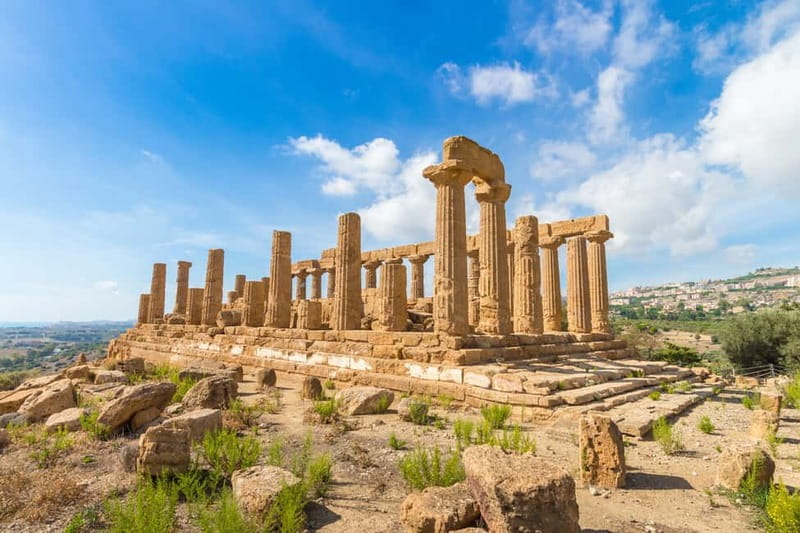
The Temple of Juno sits along the upper part of the archaeological area. Its surviving columns and raised position make it a strong opening stop, especially if you arrive early and the air is still cool.
From here, the route leads through a broad series of ancient remains. You will see traces of terraces and public spaces rather than a neat row of complete buildings. The scale becomes clear as you walk: the ruins are spread out, and each monument needs time to absorb.
This upper route also gives you some of the best open views. The setting is not a minor backdrop. It helps explain why Akragas became an important Greek city. You can see how the ancient public center occupied a commanding position above the surrounding area.
The ground is manageable but walking is unavoidable. One direct comment from the experience is worth taking seriously: the route is not strenuous, but you should be ready for a decent amount of walking. Wear shoes with firm soles, carry water, and avoid treating this as a quick stop between other sights.
The Temple of Concordia, the site’s great survivor
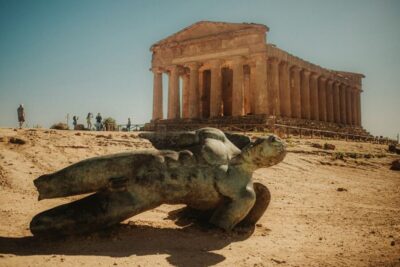
The Temple of Concordia is the monument most likely to fix itself in your memory. Its long colonnade and strong proportions show the power of Doric design better than a pile of fragments can.
This is where the audio commentary can add value. Look at the base, the columns, the entablature, and the way the temple holds its shape across the open ground. The building feels both solid and graceful, a combination that is easy to miss if you only pause for a photograph.
The surrounding area is excellent for photos, but take a moment to look away from the temple too. The view across the site shows how the monuments relate to one another. The ancient city was not just a collection of isolated shrines. It had public areas, athletic spaces, water systems, and routes connecting the buildings.
The Temple of Concordia is also a good place to decide how much help you want. If the app commentary works smoothly on your phone, you can learn as you go. If it feels thin or awkward, the site’s signs and maps can still help you understand the basic route. Some visitors preferred buying a separate €5 audio guide at the entrance, but that costs extra and is not part of this ticket.
More self-guided temple routes in Italy:
- Rome’s Iconic Temple: Pantheon Audio Guided Tour with Fast Access
★ 4.0 · 1,188 reviews - Agrigento: Valley of the Temples Entry Ticket & Audio Guide
★ 4.1 · 268 reviews - Athens: Cape Sounio & Poseidon Temple Trip with Audio Guide
★ 4.4 · 4,521 reviews - Lisbon: Jerónimos Monastery E-Ticket and Audio Guide
★ 3.7 · 660 reviews
The Temple of Heracles and the Temple of Zeus
The Temple of Heracles, also called the Tempio di Eracle, offers a different kind of encounter. You see a more broken set of remains, with columns and stones spread across the ground. It is less immediately complete than Concordia, but that makes the site’s long story easier to read.
The Temple of Zeus is tied to the ambition of Akragas. Its remains are imposing, even where the original structure no longer rises intact. Large architectural pieces and the broad footprint help you picture the size of the ancient project.
Do not expect every stop to offer a complete temple. The pleasure here comes from comparing states of preservation. Juno gives you an elevated introduction, Concordia provides the clearest surviving temple form, Heracles shows a more fragmentary ruin, and Zeus brings the scale of the city’s building program into view.
The audio guide should be most useful at these stops if you want help connecting names, functions, and surviving stone. Still, keep your expectations realistic. This is a digital guide rather than a live specialist leading you from monument to monument. You set the pace, and you also do the work of finding the right place on the route.
Aqueducts, terraces, and the ancient gymnasium
The temples receive most of the attention, but the aqueducts and terraces help make the visit feel like a city tour rather than a temple checklist. The aqueducts show how ancient residents managed water, while the terraced levels reveal the organization of public life.
The gymnasium is another valuable stop. It was used for athletic, educational, and recreational activity, so it broadens your picture of daily life in Greco-Roman Agrigento. You are no longer looking only at religion and monumental architecture. You are also seeing the spaces where people trained, learned, and gathered.
This section rewards curiosity. The remains may be less instantly recognizable than a row of tall columns, but they explain how the city functioned. If you have children or prefer shorter sightseeing bursts, use the more open areas for pauses. The route has little shade in places, and a short rest can make the later monuments more enjoyable.
There is a café roughly halfway through the long route, according to practical information from the visit. Its position can be helpful if you are walking with younger children or need a break. Bring water anyway, since some fountains may not be working and the afternoon sun can be intense.
Choosing the best time: morning, late afternoon, or sunset
Time of day can make a major difference here. Summer afternoons are hot, and much of the archaeological area offers limited shade. If you dislike heat, arrive early. You will have cooler conditions and a better chance of seeing the main monuments before the strongest sun.
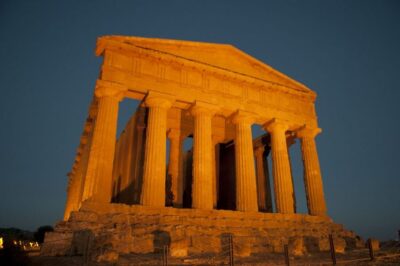
Late afternoon is the most attractive choice for many photographers. A 6 p.m. visit can begin in daylight, continue through sunset, and finish with the temples illuminated after dark. The changing light gives the stone several different moods in one visit.
Sunset timing is not automatically best for everyone. You need enough daylight to see the route and the smaller remains. If you arrive too late, you may rush through the site or miss details that are easy to spot in full light.
Spring can bring its own reward, with almond trees in bloom and a sweet scent around the path. The scenery changes by season, so the same ruins can feel quite different from one visit to another. Check the available starting time carefully before booking, since the ticket is valid for one day but your chosen entry slot still affects your plan.
Is the app audioguide worth using?
The digital audioguide is included, which gives this ticket an advantage over a bare entry pass. It lets you explore independently and hear context without joining a group or following a guide’s fixed schedule.
The quality may not satisfy everyone. Some people found the app commentary weak and preferred the €5 audio guide sold at the site. Others had trouble getting the digital guide to work on more than one phone, which matters if several people in your group want to listen separately.
I would treat the app as a useful extra rather than the main reason to buy the ticket. Download or open everything before you move far from the entrance, and bring headphones if you have them. Use the printed signs and maps as a backup. The maps make navigation fairly straightforward, but the long site can still feel confusing if you hurry.
A live guide is not included. If you want detailed answers, a clear narrative, and someone to point out small architectural details, you may prefer a separate guided visit. If you like quiet exploration and control over your pace, the app arrangement is more fitting.
The Pemcards souvenir option
The ticket includes access to Pemcards, a service that turns a digital photo into a real postcard sent anywhere in the world. It is a pleasant idea, especially from a site where the temple views are easy to remember but less easy to share in a traditional way.
The practical weakness is finding the Pemcards stand. It has not always been obvious where to go, and staff may not be able to direct you clearly. I would ask about the service as soon as you collect your ticket rather than waiting until the end.
Think of Pemcards as a small bonus, not a reason to pay for the ticket. If the stand is easy to find and you want a physical souvenir, it can add a personal touch. If you cannot locate it, the visit still works perfectly well without it.
What $19 buys you, and when it is good value
At $19 per person, you are paying for entry, the digital audioguide, skip-the-line handling, and Pemcards access. The price is reasonable if you visit during a busy period and value arranging everything before arrival.
The value is less clear in quiet periods. You may exchange the voucher and find no meaningful line to skip. Some practical comparisons also point to a lower standard admission price, around €13, while children may enter free and reduced-price rules may apply. There are also combination tickets that include the archaeological museum, which can offer better value if you plan to see both.
Before booking, check three things:
- The direct entrance price for your date
- The price of a museum combination ticket
- Whether anyone in your group qualifies for free or reduced admission
The prepaid option does give you flexibility. You can reserve now and pay later, and cancellation is free up to 24 hours before the visit. That is useful if your Sicily plans are still shifting. It is not, however, a guarantee that every part of the on-site process will be instant.
Who should book this self-guided visit?
I would choose this option if you want to arrange your ticket ahead of time, prefer exploring independently, and are visiting when queues may be long. It is also a sensible fit for couples or families who do not want to keep up with a group.
The site is wheelchair accessible, though the large area and long walking route still make planning important. If you have limited mobility, ask about the shuttle service mentioned at the entrance. A local shuttle has been available between parts of the site for an extra charge, including a reported €3 ride, but that service is not included in this ticket.
Families should start early or late in the day, bring water, and use the café stop as a planned pause. Photographers should consider the late afternoon. History enthusiasts may want a longer visit, since the aqueducts, gymnasium, and terraces deserve more than a quick walk between the famous temples.
Should you book the Agrigento ticket?
Book it if convenience, flexible timing, and independent sightseeing matter more to you than getting the lowest possible admission price. The Valley of the Temples is genuinely exceptional, and the ticket gives you a straightforward way to enter one of Sicily’s most important ancient sites.
Skip it and buy directly if you are visiting in a quiet season, want the cheapest standard entry, need a museum combination ticket, or qualify for free admission. You might also prefer a separate live tour if the story matters more to you than setting your own pace.
My practical choice would be an early or late entry, firm shoes, plenty of water, and modest expectations for the app. The temples are the main event. The ticket helps you reach them, but the value depends on how much the skip-the-line service and included guide matter on your particular date.
FAQ
Where do I exchange the voucher?
Exchange it at the Temple of Juno ticket office near the Temple of Juno on Via Panoramica Valle dei Templi. This is the only entrance listed for voucher exchange.
How long is the ticket valid?
The ticket is valid for one day, and it allows a single entry into the Valley of the Temples.
Is a live guide included?
No. The ticket includes a digital audioguide, but it does not include a live guide.
Is transportation included?
No. Transportation to or from the archaeological site is not included.
Is the site wheelchair accessible?
Yes, the activity is listed as wheelchair accessible. The site is very large, so you should still allow extra time for moving between the monuments.
Do I need identification?
Bring a valid ID if you selected a reduced-price ticket. You will also need to pass a security check before entry.
Can I cancel the booking?
Yes. You can cancel up to 24 hours in advance for a full refund. The reserve-now, pay-later option is also available.
Newly written up around Italy
- Sunset visit Valley of the Temples Agrigento★ 4.5 · 93 reviews
- Agrigento: Valley of the Temples Private Tour★ 4.6 · 66 reviews
- Paestum: Private Tour of Greek Temples and Archaeological Museum★ 5.0 · 60 reviews
- Agrigento; Valley of the Temples, Scala dei Turchi from Palermo, Private Tour★ 5.0 · 68 reviews
- Agrigento Valley of the Temples and Villa Romana del Casale Tour from Palermo★ 4.5 · 134 reviews
- Catania: Valley of the Temples & Piazza Armerina with Snack★ 4.5 · 136 reviews
- Valley of the Temples and Villa Romana del Casale Day Trip from Taormina★ 4.0 · 137 reviews
- Agrigento and Valley of the Temples Day Trip from Palermo★ 4.0 · 140 reviews
Valley of the Temples Tours, compared.
Valley of the Temples Skip-the-Line Sunset Tour
Read our review →
Agrigento and the Valley of the Temples Day Tour
Read our review →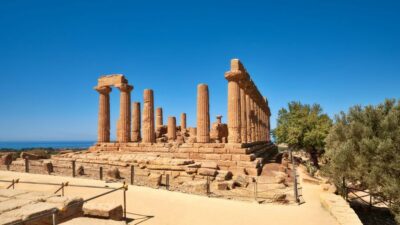
Valley of the Temples and Scala dei Turchi Day Trip
Read our review →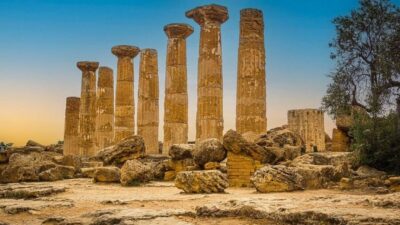
Valley of the Temples and Turkish Steps with Snack
Read our review →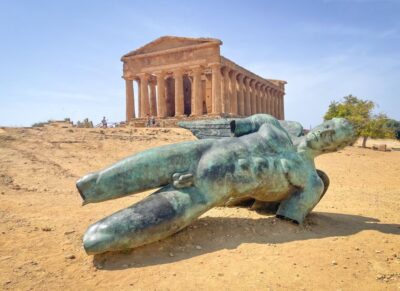
Valley of the Temples Entry Ticket & Audio Guide
Read our review →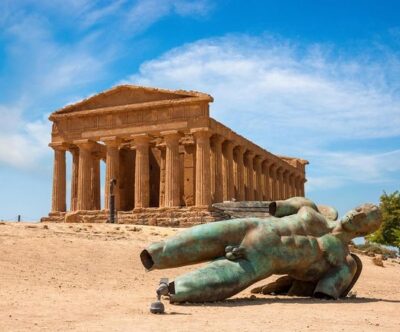
Electric scooter tour inside the Valley of the Temples Agrigento
Read our review →Browse the lists this tour appears in