
Reviewed · ULUWATU & TANAH LOT TEMPLE TOURS
Bali: Archeology Museum, Gunung Kawi & Goa Gajah Temple Tour
The best part of this tour is the way it connects Bali’s sacred places with its older archaeological remains. You move from the holy spring at Tirta Empul to royal rock-cut shrines at Gunung Kawi, then on to carvings, a cave temple, and a museum filled with stone relics and sarcophagi.
I like the private format, which lets your guide adjust the pace and sometimes tackle the steepest site before the heat rises. I also like the strong cultural focus. Guides such as Suker, Sumadi, Joe, and Komang Sparsa are praised for explaining mythology, religious customs, and daily Balinese life rather than simply pointing out photo stops.
The main drawback is physical: Gunung Kawi, Yeh Pulu, and Goa Gajah involve stairs, uneven paths, and outdoor walking. Seven hours can feel long in hot weather, especially if you add rafting, an ATV ride, or a massage.
Key points at a glance
- Tirta Empul’s holy springs: Learn how purification rituals work at one of Bali’s most important water temples.
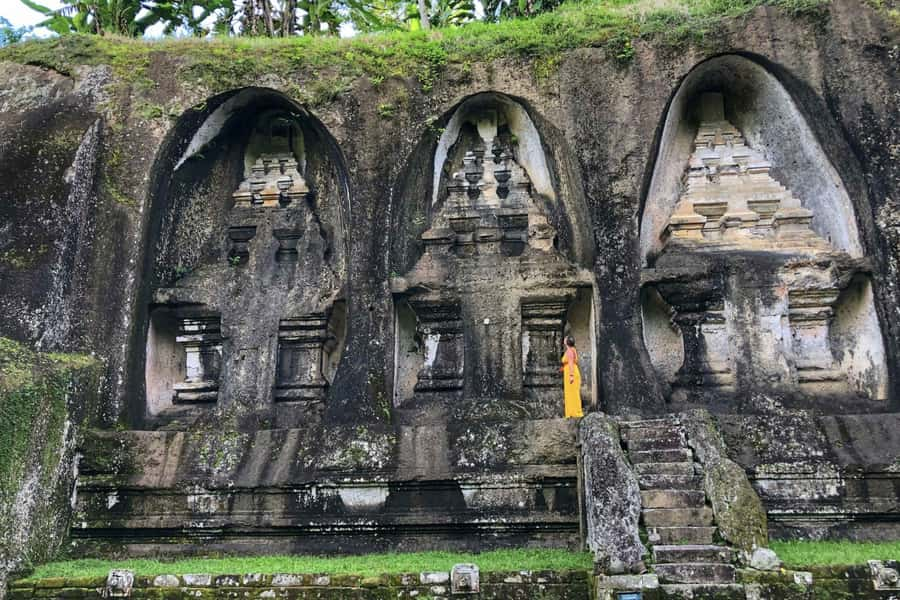
- Gunung Kawi’s royal shrines: Walk down a long stairway to 11th-century monuments carved into cliff walls beside the Pakerisan River.
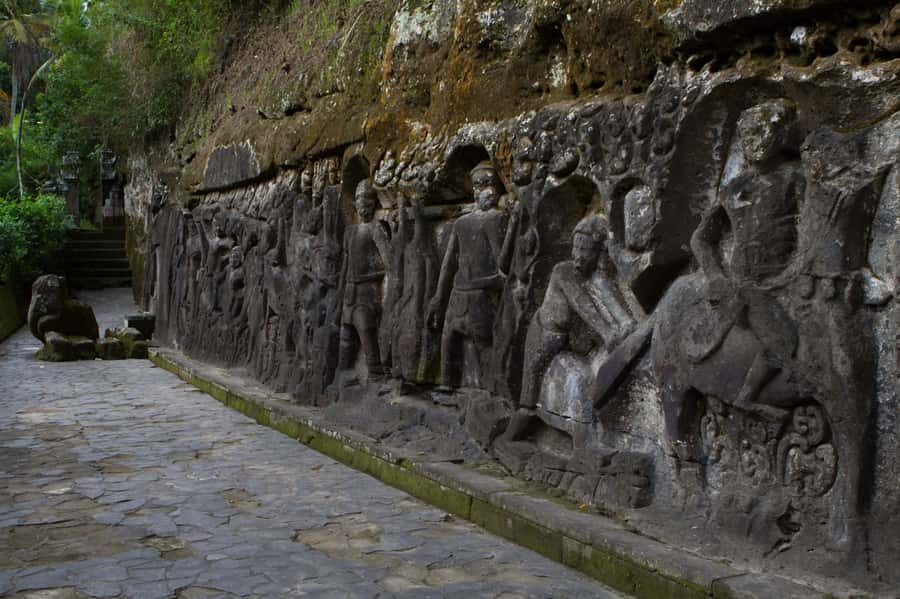
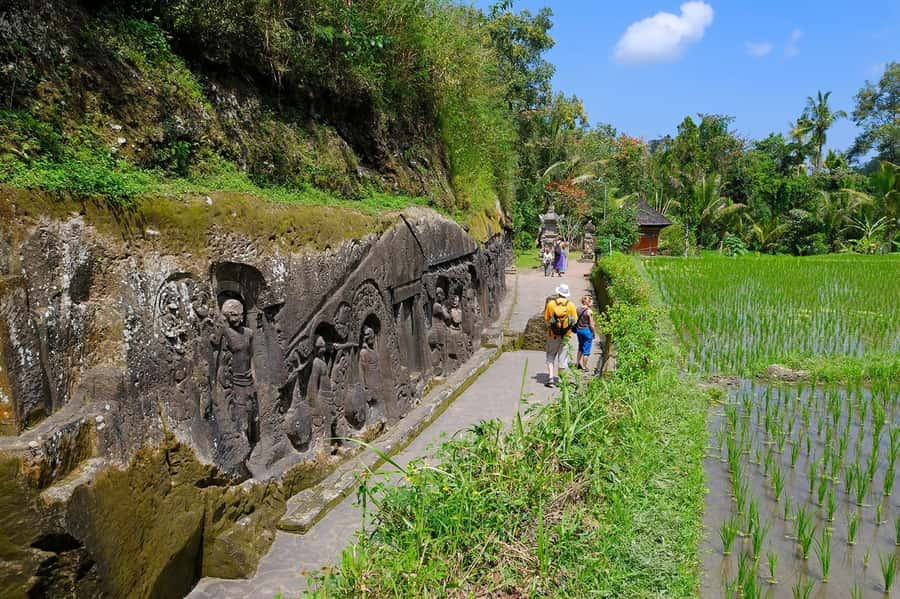
- Yeh Pulu’s unusual carvings: See a 25-meter rock panel showing gods, mythological figures, and scenes from ordinary village life.
- Goa Gajah’s cave entrance: Explore a 9th-century sanctuary with a dramatic demon-mouth entrance and meditation spaces.
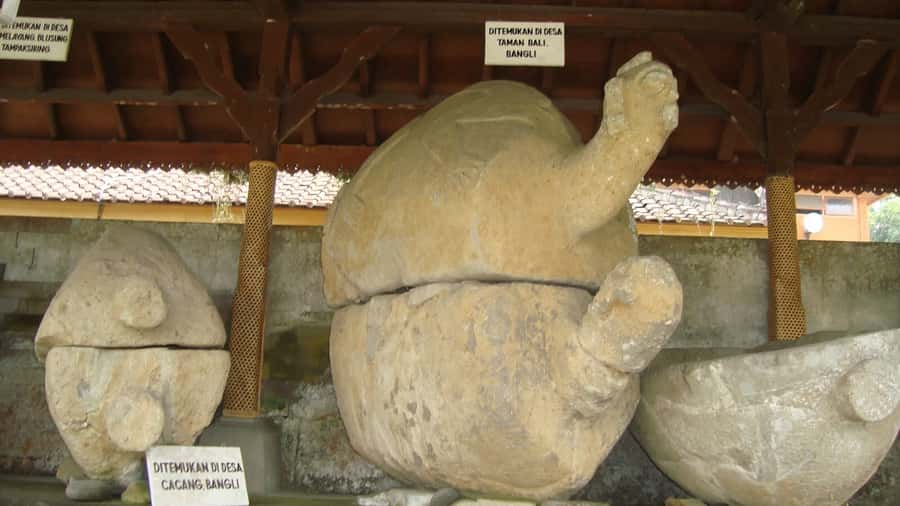
- Gedong Arca Museum: Finish among ancient relics, stone objects, and sarcophagi from Bali’s past.
- Flexible private touring: Hotel pickup, admission fees, water, and an English-speaking guide are included, while optional extras can change the day’s focus.
Why this archaeology tour is different from a standard temple day
Many Bali day trips string together famous temples with little explanation between stops. This one has a clearer theme: the old kingdoms, sacred water, religious practice, and stone art of central Bali.
You spend much of the day around Tampaksiring, Bedulu, and the Pakerisan River area. That matters because the sites are not isolated curiosities. Your guide can help connect them to the development of Hindu-Balinese culture and to the rulers, priests, artists, and villagers who shaped this part of the island.
The private setup is another advantage. You travel with your own guide and vehicle, rather than waiting for a large group at every entrance. Past guests have singled out guides including Suker, Dharma, Sumadi, Joe, Subi, and Komang Sparsa for clear explanations, good timing, humor, and the ability to answer questions beyond the official sights.
At $36 per person, the tour offers strong value if the price applies to your selected option. Hotel transport, entry fees, mineral water, and a private group are included. Food, drinks, and personal spending are not. Optional extras cost more, so check the selected package before assuming that coffee, a massage, or an activity is part of the base price.
More Uluwatu and Tanah Lot Temple Tours in Bali:
- Bali: Besakih Temple & Lempuyang Temple Gates of Heaven Tour
★ 4.8 · 3,243 reviews - Bali Sunset: Uluwatu Temple, Kecak Dance and Jimbaran Bay
★ 4.7 · 2,397 reviews - Bali: Tanah Lot Temple Half Day Sunset Tour
★ 4.4 · 702 reviews
Tirta Empul and the meaning of sacred water
Tirta Empul is a natural first stop because it introduces an important part of Balinese Hindu practice. The temple dates to the 10th century and is built around a holy spring believed to have healing powers.
You will see bathing pools supplied by the spring. Balinese worshippers use them for melukat, a purification ritual, and visitors may be able to take part in the cleansing process under the temple’s rules. Ask your guide exactly what is permitted before entering the water. This is a working place of worship, not simply an old monument.
The atmosphere can change quickly. One moment you are looking at carved stone and temple gates, and the next you are watching a family or worshipper carry out a religious ceremony. Keep your voice low, dress with shoulders and knees covered, and avoid treating the ritual as a staged performance.
This stop is valuable because your guide can explain why water, offerings, prayer, and purification matter in Balinese life. Without that context, the bathing pools can look like an attractive photo setting. With it, Tirta Empul becomes a useful introduction to the beliefs that continue through the rest of the tour.
Gunung Kawi and the long stairway to the Pakerisan River
Gunung Kawi is likely to be the day’s most demanding stop. The route includes a long descent and ascent, with many stone steps. One guide reportedly gave an honest warning about roughly 300 steps, and that is good advice to take seriously.
The effort pays off. The complex contains large shrines cut directly into cliff walls, generally dated to the 11th century. These are often described as royal memorials connected with Balinese rulers, though the site also carries layers of legend and uncertainty. Your guide’s role is especially useful here, since the stones do not explain themselves.
The walk leads through the Pakerisan River area, where water, rock, and old monuments come together. The setting helps explain why this was an important sacred zone. You are not just viewing a freestanding building. You are following an old route into a place shaped by cliffs, river flow, ritual use, and royal memory.
Wear shoes with a firm sole. Stone steps may be slippery after rain, and shade is limited in places. Take the walk slowly. The private format lets you stop for breath, photographs, and questions instead of being pushed along by a group timetable.
I would put Gunung Kawi near the start of the day if possible. Several guides have adjusted the order to tackle the most strenuous walking before it becomes too hot. That small scheduling choice can make the difference between enjoying the site and merely surviving it.
Yeh Pulu’s 25-meter story in stone
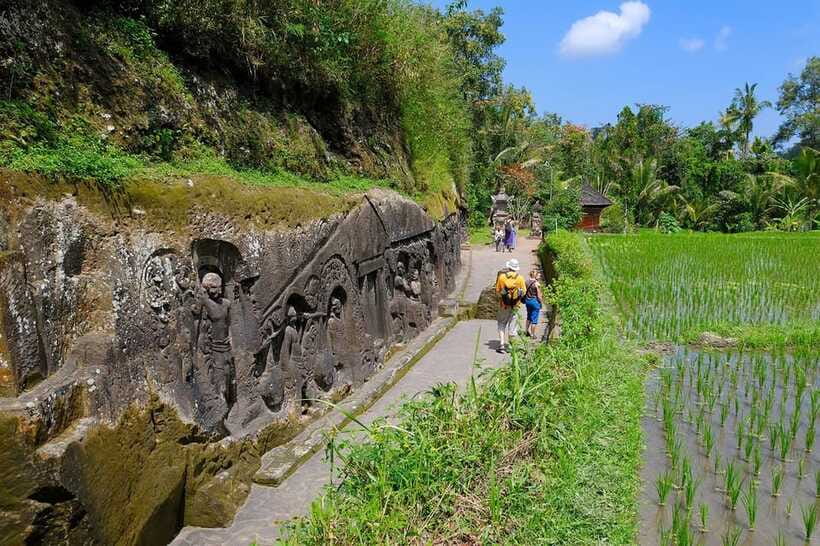
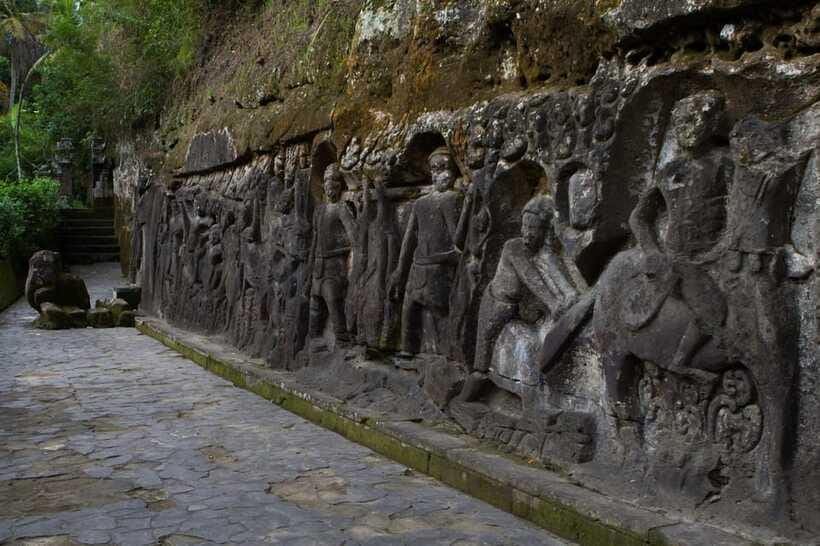
Yeh Pulu is one of the most distinctive stops because its carvings feel closer to a visual story than a conventional temple façade. A rock face carries a roughly 25-meter-long series of carved scenes.
You will see mythological figures, Hindu gods, and people engaged in ordinary activities. That mix is the point. The carvings do not present only grand religious images. They also offer glimpses of village life and the way sacred and everyday subjects could sit side by side in Balinese art.
The site is in Bedulu, a central Bali village with several archaeological places nearby. It is less about one dramatic building and more about reading a long carved surface with your guide. Ask what is known, what is suggested, and what remains uncertain. A good explanation will help you notice details that are easy to miss when walking past on your own.
The paths here are uneven, so this is not a good choice for anyone who needs step-free access. Bring water and sun protection. There may be little shade, and the combination of heat and walking can build up by this point in the day.
More Museum Visits in Bali:
- Montserrat Museum and Monastery Entry Ticket
★ 4.5 · 1,740 reviews - Lisbon: Belem, Jeronimos Monastery, and Coach Museum Tour
★ 4.8 · 478 reviews - From Sofia: Rila Monastery and Optional Museum, Cave or Spa
★ 4.6 · 270 reviews - Takua Pa: Food Market, Tsunami Museum, Temple, & Old Town
★ 4.9 · 165 reviews
Goa Gajah and the cave with the demon’s mouth
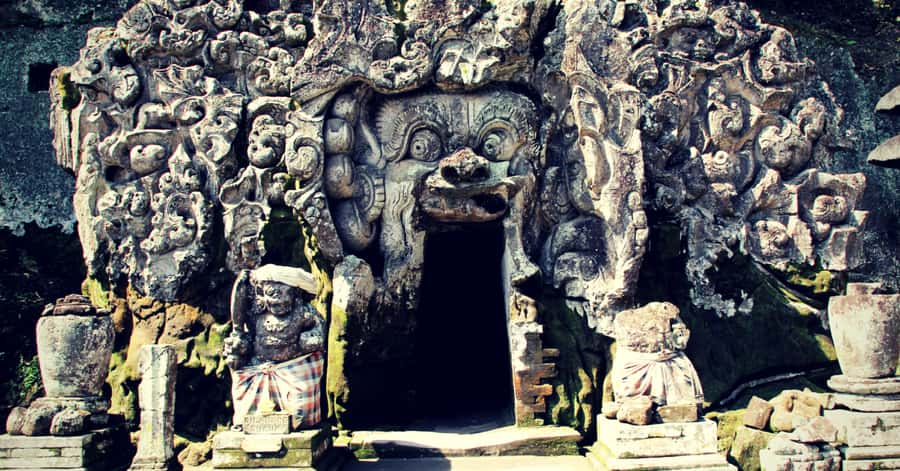
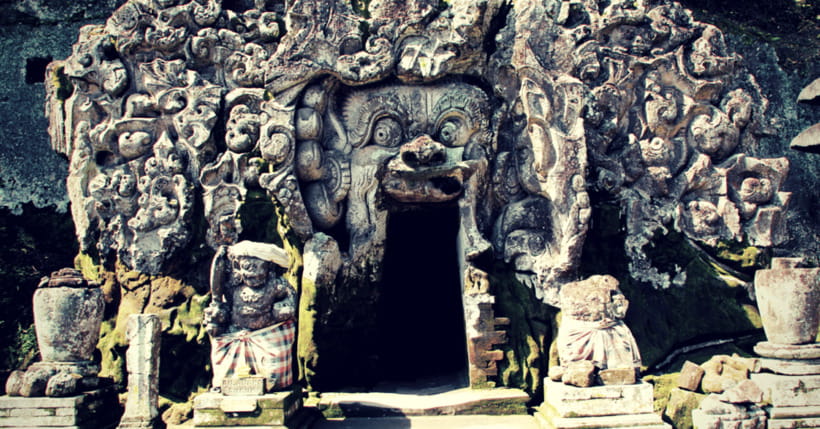
Goa Gajah dates to the 9th century and is one of Bali’s most recognizable archaeological sites. Its entrance is carved to look like a threatening open mouth, often described as a demon’s face.
The doorway leads into a small cave associated with meditation and spiritual practice. Inside, you can examine stone carvings and religious structures in a much darker, quieter setting than the open temple courtyards outside.
The visual drama makes Goa Gajah easy to remember, but the site deserves more than a quick photograph at the entrance. Ask your guide about the cave’s religious role and the layers of Hindu and older local traditions connected with the area. The surrounding grounds also contain stone remains and water features, so allow time to look beyond the famous doorway.
As with the other ancient sites, do not touch carvings or enter restricted areas. Photography is allowed, but drone use may be limited. Your guide can tell you where cameras are appropriate.
Gedong Arca Museum and Bali’s stone record
The final main stop is the Bali Gedong Arca, also called the Bali Archaeological Museum, in Tampaksiring Village. It gathers heritage objects found and preserved across Bali, including ancient stone pieces and sarcophagi.
This museum gives the day a useful ending. At the temples, you see monuments in their original settings. Here, you can look closely at objects removed from the field and compare forms, markings, and construction styles. The collection adds a physical record to the stories you have heard about early Bali.
Museum hours can affect the plan. A past visit had to be changed when the museum was closed on a Sunday, and the guide substituted another temple. If the museum matters greatly to you, confirm its operating day when booking and keep some flexibility in your schedule.
That flexibility is one of the private tour’s practical strengths. Guides have adjusted routes for closures, traffic, crowds, lunch needs, and family requirements. You should still confirm changes directly, but the format allows more room than a fixed coach excursion.
Guides, pacing, and the private vehicle
The guide can make or break a history-focused day. Here, the strongest pattern is clear cultural interpretation combined with a relaxed pace. Joe, Sumadi, Suker, Dharma, Subi, and Komang Sparsa are among the guides singled out for explaining history, folklore, religious practice, and modern Balinese life in accessible English.
You can expect more than a memorized speech if you ask questions. Guides have answered queries about places beyond the itinerary, adjusted the order to avoid heavier crowds, stopped for photos, and changed the day around a child’s needs.
Pickup and drop-off at your hotel are included. The transport has received a 98 percent perfect score for its quality, and the private vehicle removes the hassle of arranging separate rides between scattered sites. You should still expect Bali traffic to affect the timing, especially around Ubud and central routes.
The tour lasts seven hours. That is enough time for the main sites, but not enough to linger endlessly at every location and add every extra activity. If you want a slow archaeological study day, tell your guide at the start. If you want the optional swing, coffee, rafting, or ATV activity too, expect the schedule to feel more packed.
Add-ons: useful extras or too much in one day?
The base tour is already full. Optional additions include Luwak coffee tasting, a jungle swing with coffee, a one-hour traditional massage, a two-hour massage, rafting with a buffet, solo or tandem ATV riding, a Polaroid package, and guides speaking German or Korean. A female guide is also available for some options.
A coffee tasting can fit the theme reasonably well, especially if you want a slower break between sites. Several people have enjoyed adding it. The jungle swing is more about photographs and scenery than archaeology, while rafting and ATV riding change the day into an active adventure.
The massage is a sensible choice if you want to finish gently after the stairs. Rafting or an ATV ride may be less sensible after several ancient sites, since both add time and physical effort. Decide what you want the day to be before selecting an add-on.
Optional services are not automatically part of every booking. Check the exact package, since some extras are available only with certain options and may change the price.
What to wear and how hard is the walking?
Dress for a religious site, not a beach outing. Cover your shoulders and knees, and bring a sarong if your clothing does not meet temple requirements. Comfortable walking shoes are more important than stylish sandals here.
Bring a camera, sunscreen, a hat if you use one, cash, and a light raincoat. Mineral water is included, but you should still keep drinking throughout the day. Rain can make stone paths slick, and some areas have limited shade.
This tour is not suited to pregnant women, wheelchair users, people with mobility impairments, or people over 70 according to the stated restrictions. It is also a poor fit if you dislike stairs or cannot manage uneven ground. You do not need to race, but you do need to be comfortable walking at ancient sites.
Local custom also prevents people who are menstruating from entering the temples. This is important to know before booking so you are not surprised at the entrance.
Who should book this seven-hour tour?
I would choose this tour if you want to understand Bali beyond beaches, shopping, and quick temple photos. It suits people who enjoy archaeology, mythology, Hindu-Balinese traditions, old stonework, and conversations with a local guide.
It also works well for couples, families with older children who can manage the steps, and solo visitors who want private transport without arranging every detail. The flexible pacing is helpful if you want to stop for photographs or ask many questions.
I would choose a different tour if your main goal is relaxation, a short sightseeing loop, or step-free access. The price is attractive, but the value depends on using the day for what it is designed to offer: a walking-heavy cultural visit with several historical sites.
The cancellation policy is generous, with full refunds available when you cancel at least 24 hours ahead. You can also reserve now and pay later, which helps if your Bali plans are still shifting.
Should you book it?
Book this tour if you want a serious look at central Bali’s sacred sites and ancient remains, with a private guide who can explain what you are seeing. The combination of Tirta Empul, Gunung Kawi, Yeh Pulu, Goa Gajah, and Gedong Arca gives you more variety than a temple-only outing.
Before booking, check the museum’s opening day, confirm your pickup area, and be honest about your fitness. Start early if you can, wear proper shoes, and treat the religious sites with care. If that sounds like your kind of Bali day, $36 per person is a very good value for private transport, entry fees, water, and seven hours of guided sightseeing.
FAQ
How long does the Bali archaeology tour last?
The tour lasts seven hours. Starting times depend on availability when you book.
Is hotel pickup and drop-off included?
Yes. Hotel pickup and drop-off are included in the tour.
Which sites are included?
The route includes Tirta Empul Temple, Gunung Kawi, Yeh Pulu, Goa Gajah Temple, and the Bali Gedong Arca Archaeological Museum.
Is the tour private?
Yes. The experience is offered as a private group tour.
What language does the guide speak?
The standard live guide language is English. German-speaking, Korean-speaking, and female guide options are available with selected add-ons.
Are admission fees included?
Yes. Entry fees and mineral water are included. Food, drinks, and personal spending are not included.
Can I take part in the purification ritual at Tirta Empul?
Visitors may be able to participate in the sacred cleansing experience, but you should follow local customs and your guide’s instructions at the temple.
How difficult is the walking?
Expect extensive walking, stairs, and uneven paths, especially at Gunung Kawi, Yeh Pulu, and Goa Gajah. Some paths may be slippery after rain.
Can I cancel the booking?
You can cancel up to 24 hours in advance for a full refund. Reserve-now, pay-later booking is also available.
Newly written up around Bali
- The Three Temples of Bali Half Day Private Tour★ 4.0 · 5 reviews
- Bali Famous Beach, Kecak Dance, Uluwatu Temple, Sunset, Dinner★ 5.0 · 8 reviews
- Bali Pura Taman Ayun Temple, Monkey Forest & Tanah Lot Excursion★ 4.0 · 123 reviews
- Ubud: Rice Terrace, Holy Water Temple & Waterfalls Trek Tour★ 4.9 · 115 reviews
- Bali: Water Temple, Waterfalls and Unesco Rice Terrace Tour★ 4.9 · 66 reviews
- Bali: Beaches, Uluwatu Temple Sunset & Fire Kecak Dance Show★ 4.9 · 9 reviews
- Bali: Uluwatu ATV Quad Bike with Temple Tour & Kecak Dance★ 4.4 · 8 reviews
- Bali: Uluwatu Temple, GWK, and Padang Beach Full-Day Tour★ 4.7 · 107 reviews
Uluwatu & Tanah Lot Temple Tours, compared.

Besakih Temple & Lempuyang Temple Gates of Heaven Tour
Read our review →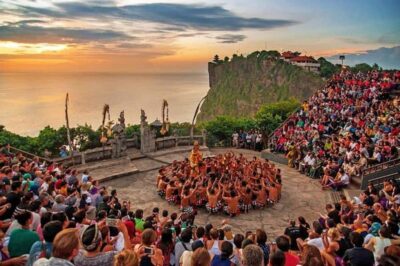
Kecak Fire Dance Show & Uluwatu Temple Entry Ticket
Read our review →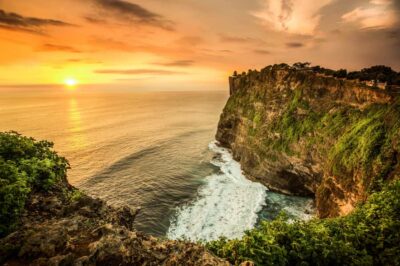
Bali Sunset: Uluwatu Temple, Kecak Dance and Jimbaran Bay
Read our review →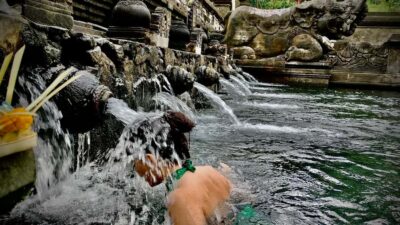
Tirta Empul: Temple Tour with Optional Spiritual Cleansing
Read our review →Private Uluwatu Temple and Kecak Fire Dance Evening Tour in Jimbaran Bay
Read our review →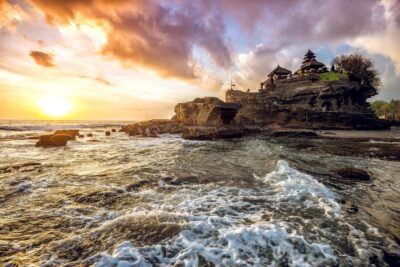
Munduk: Twin Lake Jungle Hike, Ulun Danu Temple, & Waterfall
Read our review →
Uluwatu Temple Entry and Kecak Fire Dance Ticket
Read our review →Browse the lists this tour appears in