
Reviewed · TEMPLE & WATERFALL TOURS
Bali: Hidden Canyon, Waterfall & Temples Small Group Tour
Beji Guwang Hidden Canyon is the reason to book this day out. You will wade, swim, climb over rock, and squeeze through narrow sections with a local canyon guide, so this is far more active than a standard sightseeing loop. I like the small maximum group of five, and I like the way the day mixes physical adventure with Goa Gajah and Gunung Kawi. The main catch is that the canyon is a real water activity, not a gentle walk.
I also like the practical hotel pickup, air-conditioned transport, and guides such as Komang, Dewa, Anom, and Alit, who are often praised for clear explanations and good photography help. Allow extra cash for entry fees and lunch, bring water shoes, and think carefully before booking if you are not a confident swimmer or have mobility, heart, respiratory, or pregnancy concerns.
Key points to know before booking
- The canyon requires swimming and climbing: Expect slippery rocks, uneven footing, and sections with water around you.
- The group is capped at five people: This gives the guide more time to help with footing, timing, and photographs.
- The day combines nature and culture: You get a waterfall, a canyon, the Elephant Cave, and Gunung Kawi in one long outing.
- Water shoes are the smartest item to pack: Several parts of the canyon have sharp or uncomfortable stones.
- The waterfall can be crowded: Tegenungan is beautiful, but it is also one of Bali’s best-known stops.
- The listed price is not the full day’s cost: Standard tours exclude lunch and entry fees, with canyon access and guiding costing IDR 300,000.
Why the Hidden Canyon is the main event
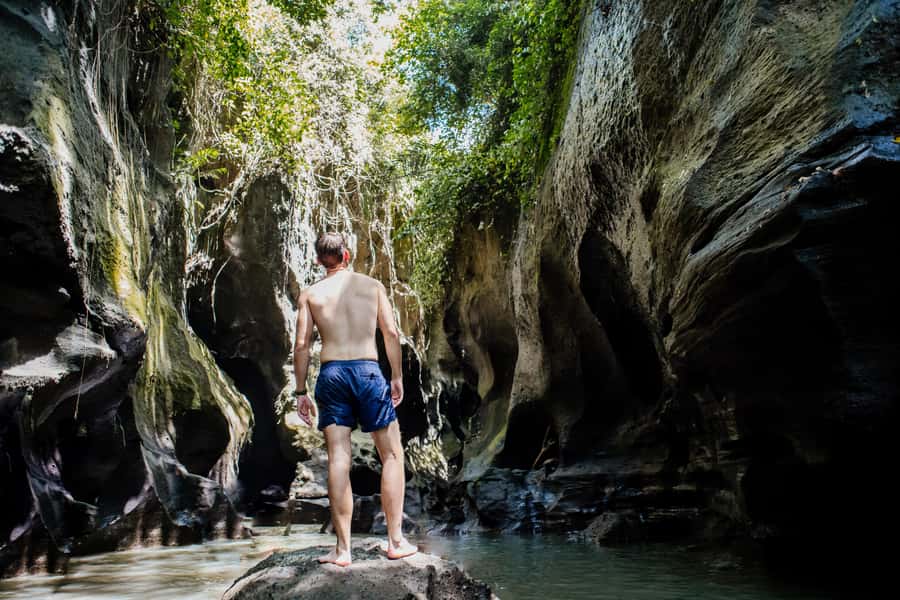
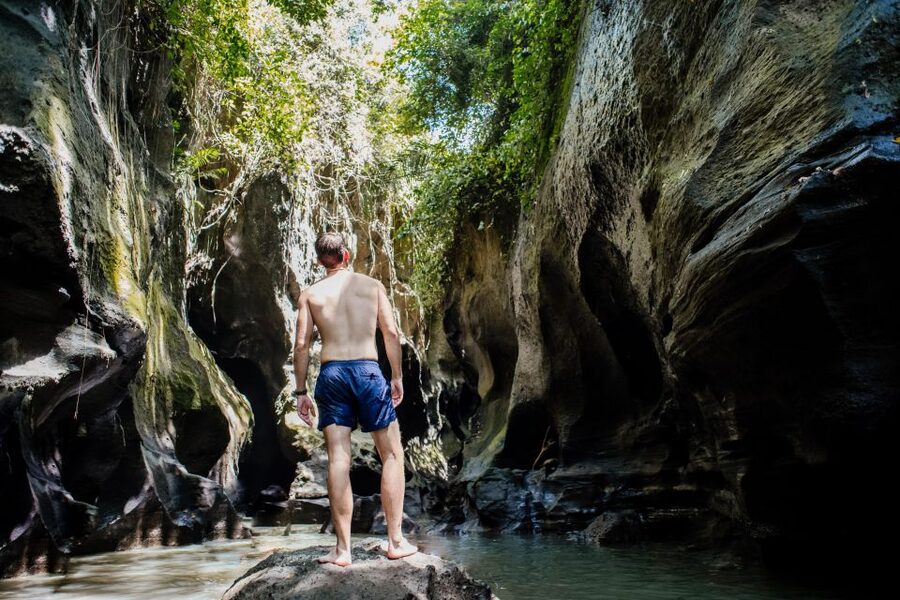
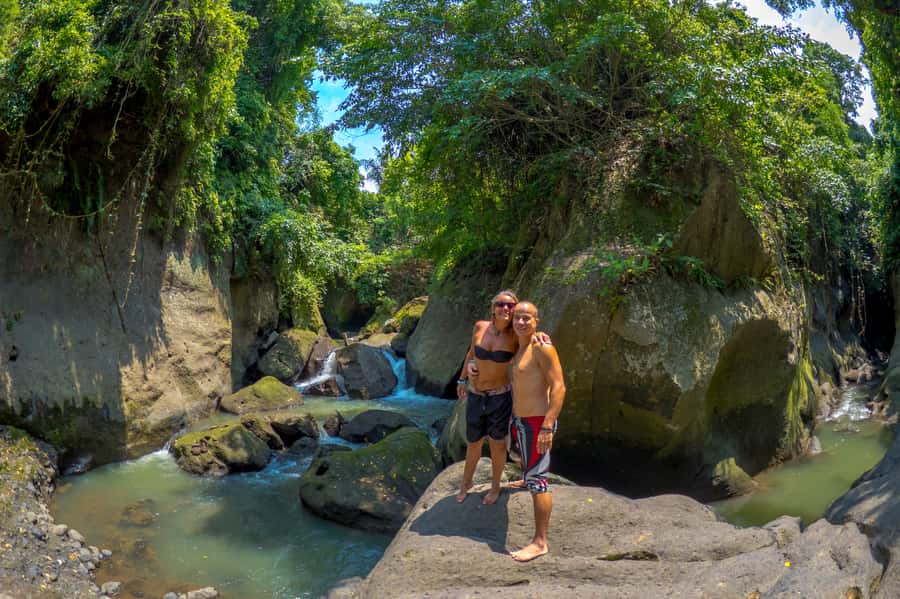
This tour begins with the sort of activity that quickly separates it from Bali’s usual temple-and-waterfall circuits. At Beji Guwang Hidden Canyon, you change into swimwear, leave ordinary walking behind, and follow a canyon guide through water and rock.
The route includes wading, swimming, scrambling, and occasional jumps. The canyon walls close in around you, and the experience depends on using your hands and feet rather than simply following a paved path. Several people found the canyon more demanding than expected, especially where currents were strong or the rock was uneven.
That is also what makes it memorable. You are not looking at the canyon from a platform. You are moving through it, with a guide pointing out safe places to step and helping you manage slippery sections. The local canyon guides are separate from the main driver-guide, and their help matters here.
Your group size makes a difference. With no more than five participants, the guide can wait while you find your footing, help with a tricky passage, and take photographs without turning the activity into a rushed procession. If you are a confident swimmer and comfortable in water, this may be the strongest part of the day by a wide margin.
Do not treat the canyon as a casual photo stop. You should be comfortable getting wet, walking barefoot or in water shoes, and using your arms for balance. One person who enjoyed the experience still advised that the activity is best for people who feel secure in the water. That is sound advice.
More Temple and Waterfall Tours in Indonesia
- Ubud: Waterfalls, Water Temple & Rice Terraces Private Tour
★ 5.0 · 5,484 reviews - North Bali: Sunrise Tour with Dolphins, Waterfalls & Temples
★ 4.6 · 831 reviews - Bali: Munduk Waterfalls Trek, Twin Lakes and Temple Tour
★ 4.8 · 545 reviews
Water shoes, swimwear, and what to carry
Water shoes are the single most useful item on the packing list. The canyon rocks can feel sharp, and wet stone is slippery. Mesh-style water shoes were specifically suggested by one participant, while several others said that proper footwear made the route much easier.
Wear comfortable shorts and a T-shirt. A change of clothes is essential, since the canyon section can leave you wet. You should also carry sunscreen, insect repellent, sunglasses, a hat, and a camera or phone in suitable protection.
Towels, lockers, welcome drinks, and water are included with the Hidden Canyon options. Check the exact package you select, since entry tickets and canyon access may depend on the option booked. Oversize luggage is not allowed, so leave large bags at your accommodation.
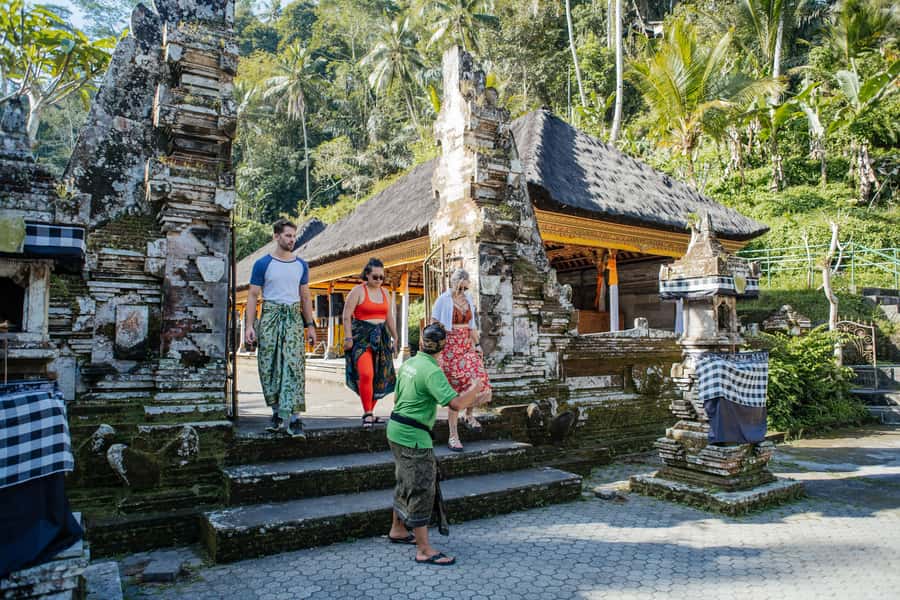
A sarong is needed at the temples. If you do not already have one, the tour information advises bringing it. Cash is useful for entrance fees, lunch, and any small personal expenses.
Tegenungan Waterfall after the canyon
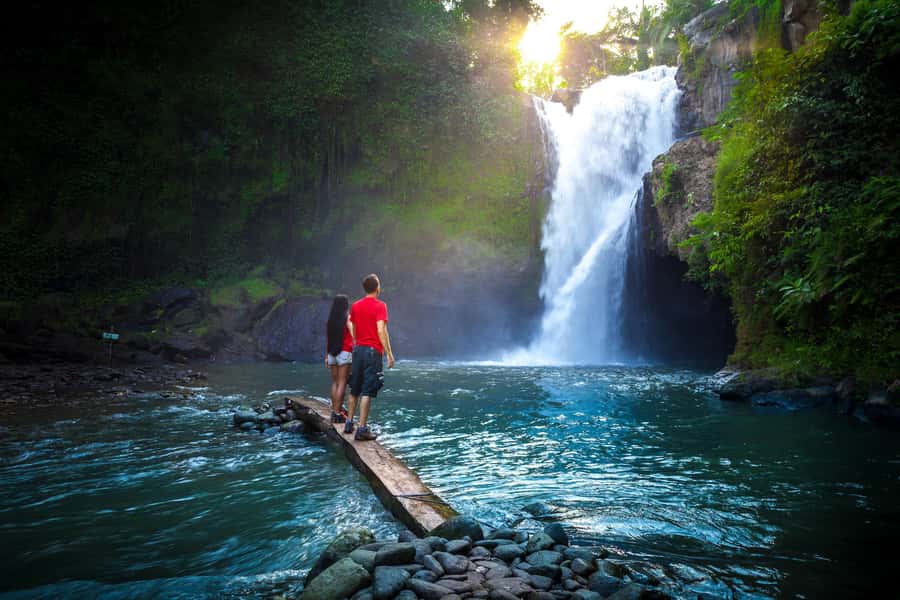
After the canyon, the tour continues to Tegenungan Waterfall, a popular stop not far from Ubud. You walk down more than 100 steps to reach the waterfall area, then climb back up afterward. That is manageable for many people, but it comes at the end of a physically active canyon visit, so pace yourself.
Tegenungan is a photogenic place, with water dropping into a broad natural setting surrounded by tropical greenery. The stop lasts about 90 minutes, giving you time to see the falls and take pictures rather than simply step out of the vehicle for five minutes.
The practical drawback is popularity. Tegenungan can be crowded, and several people found it much busier than the temples. Heavy rain can also affect the experience. After a night of strong rain, the water may turn dirty, and swimming may not be possible. The waterfall is still worth seeing, but do not build your whole day around a swim here.
The listed entrance fee is IDR 20,000. This is separate from the tour price unless your selected package says otherwise.
Lunch and the long road between stops
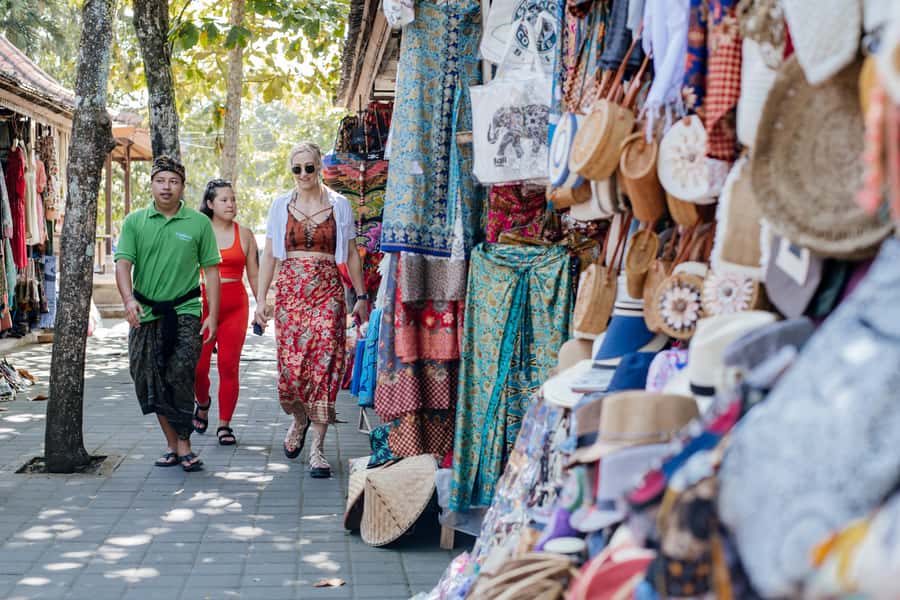
The schedule includes a 90-minute break at a local restaurant. Lunch is not included in the standard tour, so you should budget for it. One person specifically enjoyed nasi goreng during the break, but the supplied information does not promise a fixed menu.
The lunch stop gives you a chance to dry off, eat properly, and recover before the temples. That matters because this is an ambitious day. The canyon is active, the waterfall involves stairs, and both temple visits require walking.
Transport is by air-conditioned minibus. Pickup is available from areas including Kuta, Legian, Seminyak, Jimbaran, Sanur, Kerobokan, Canggu, Nusa Dua, and Ubud. The exact pickup time depends on where the other participants are staying, and the driver contacts you the evening before to confirm it.
The total duration is 510 minutes, or about eight and a half hours. The listed driving sections can add up to a substantial amount of road time, particularly when pickups are spread across Bali. One person noted that group transport took longer than expected, though the small group made the day feel more personal once the sightseeing began.
This is not an efficient tour for someone who wants to remain in one part of Bali. It is a full-day circuit. The value comes from having the driver, vehicle, guide, and several major stops arranged for you.
A different set of gates, same trip:
- Ubud: Monkey Forest, Jungle Swing, Rice Terrace, and Water Temple
★ 5.0 · 7,160 reviews - Bali: Besakih Temple & Lempuyang Temple Gates of Heaven Tour
★ 4.8 · 3,243 reviews - Bali: Kecak Fire Dance Show & Uluwatu Temple Entry Ticket
★ 4.2 · 3,023 reviews - Full-Day Tour to Water Temples and UNESCO Rice Terraces in Bali
★ 5.0 · 2,539 reviews
Goa Gajah, Bali’s Elephant Cave
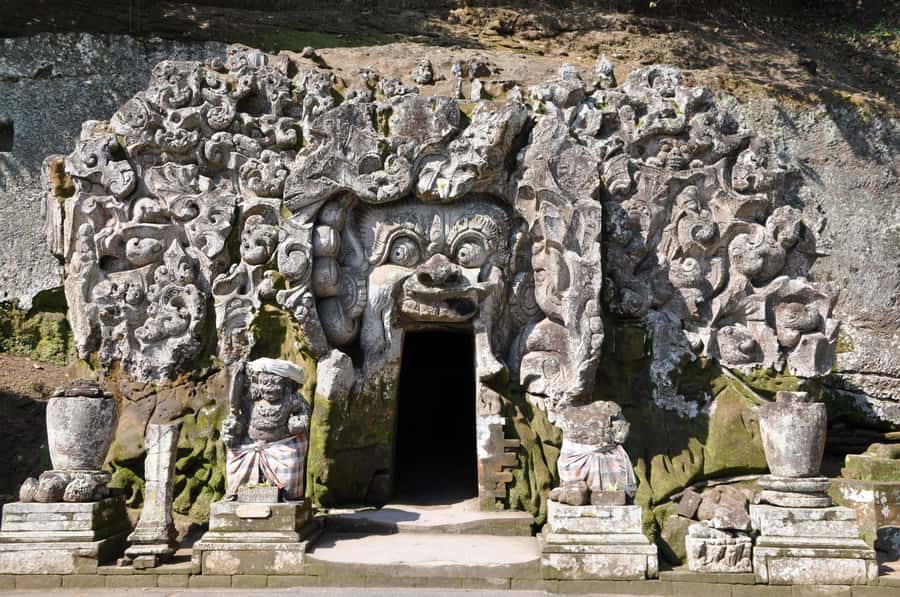
The afternoon continues at Goa Gajah, often called the Elephant Cave. Despite the name, the main visual surprise is the carved entrance, a dark and expressive stone doorway surrounded by elaborate details and heavy tree roots.
The site has a different mood from the canyon and waterfall. You move from water and rock into a place shaped by religious practice, carved stone, and Balinese temple design. The roots and masonry give parts of the setting an ancient, atmospheric look, but your guide is important for explaining what you are seeing rather than leaving you with photographs alone.
The visit is listed at about 90 minutes. Expect walking and some uneven ground. You will need suitable temple clothing, including a sarong, and respectful behavior at the religious site.
Goa Gajah is a good point in the day for asking questions about Balinese Hindu customs, family life, and local traditions. Guides such as Komang and Dewa have been praised for explaining religion and culture in an approachable way. That personal conversation can be more useful than a memorized speech, especially if this is your first day in Bali.
The entrance fee is listed as IDR 50,000. Keep this separate from the waterfall fee and the Gunung Kawi fee.
Gunung Kawi through the rice terraces
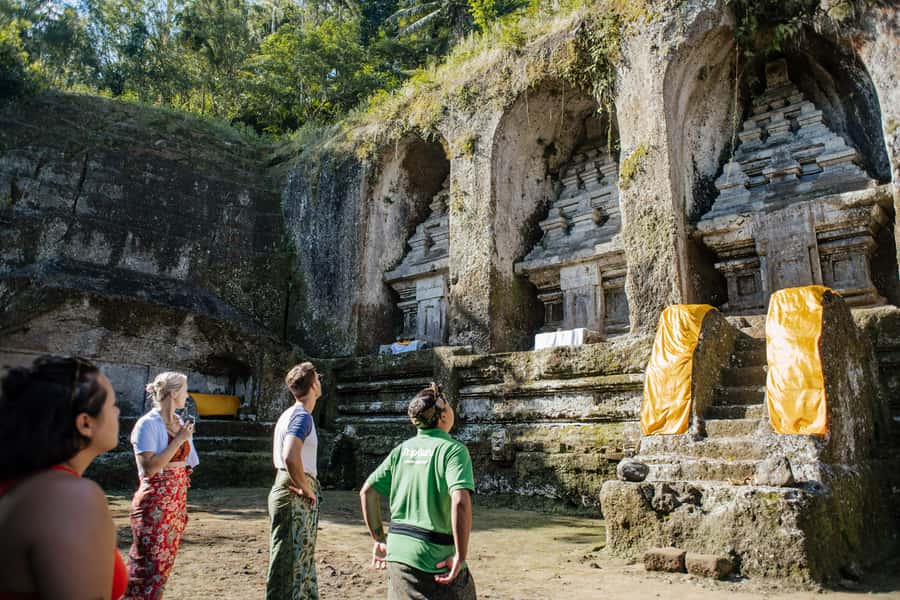
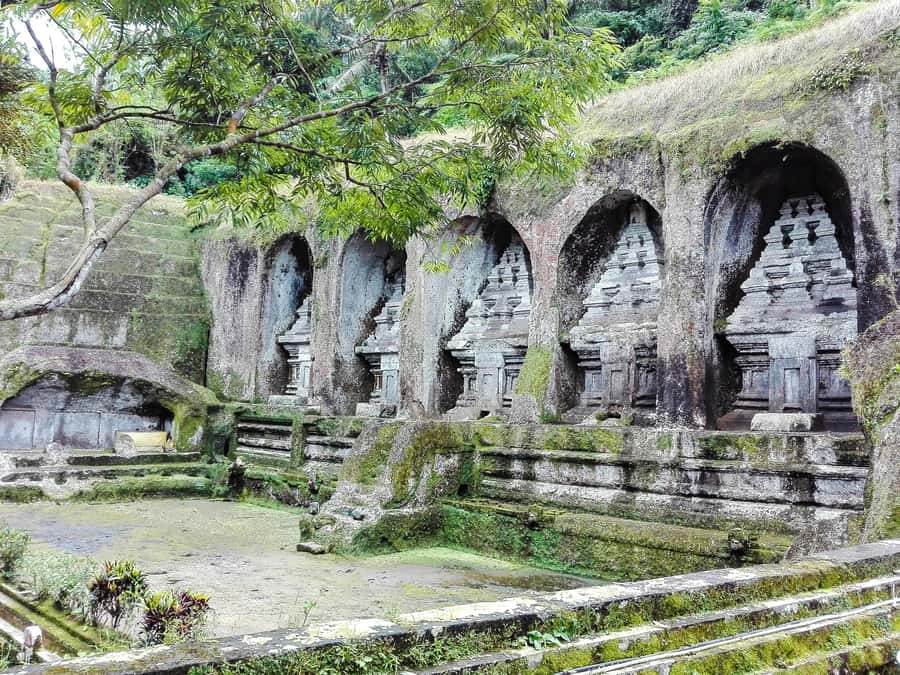
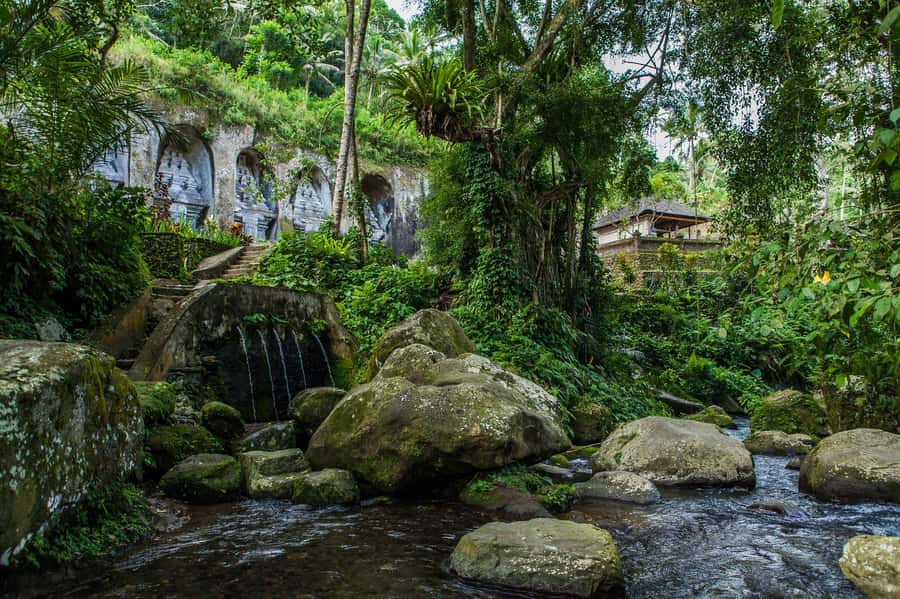
Gunung Kawi is the final major stop, and it offers a calmer finish than the canyon. Reaching it involves passing through the terraced rice fields Bali is known for, then walking through a historic site with large rock-cut monuments.
The setting is one of the strongest reasons to include this temple. The approach through the terraces provides a sense of how religious places fit into Bali’s countryside, rather than appearing as isolated attractions beside a road. You also get time to notice the transition from farm country to sacred space.
Gunung Kawi is described as one of Bali’s oldest monuments. The site has a quiet, reflective quality, and several people preferred it to the waterfall because it felt more peaceful. You should expect steps and walking, though the pace can usually be adjusted within the small group.
The entrance fee is listed as IDR 50,000. Add that to IDR 20,000 for Tegenungan Waterfall and IDR 50,000 for Goa Gajah. Hidden Canyon access and guiding are listed at IDR 300,000, so standard-package guests should prepare cash for roughly IDR 420,000 in entry-related costs, plus lunch. Confirm the exact inclusions when booking because some options include tickets and canyon fees.
Guides make the difference
The driver usually serves as your main guide between stops. Names connected with this experience include Komang, Dewa, Anom, Alit, Putu, Depik, Suma, and Agus. The strongest pattern is not one particular personality, but the combination of driving, local knowledge, flexibility, and practical help.
Komang is repeatedly singled out for friendly conversation, cultural explanations, good timing, and help with photographs. Dewa has been praised for explaining Balinese culture and history while keeping the day cheerful. Anom is noted for being courteous and honest, while Alit is described as well informed about historical and traditional places.
The canyon guide has a different job. That person leads you through the water, points out safe footing, and helps you move over the rocks. Do not expect the vehicle guide to handle every part of the canyon route.
The available tour languages are English, French, and German. The guide may also help with photographs, umbrellas in rainy weather, and small schedule adjustments. A few participants received suggestions for extra stops when time allowed, but you should regard that as a bonus rather than a promised part of the plan.
Is $73 good value?
At $73 per person, this tour offers fair value if you want several experiences in one day and do not want to arrange transport yourself. You get hotel pickup and drop-off, an air-conditioned vehicle, a guide, water, and a group limited to five people. That small group limit is important because private touring in Bali can cost much more.
The price needs careful reading. Standard small-group bookings do not include lunch, and entry tickets may not be included. You may also need to pay IDR 300,000 for Hidden Canyon entry and guiding, plus the three listed site fees. This can add around IDR 420,000 before lunch.
I would compare the price against the cost and effort of hiring a car and guide for a full day, then arranging canyon access separately. The tour saves you from coordinating four different stops and gives you a local guide for the cultural sites. If you only want a waterfall and one temple, it may be more than you need.
The score attached to the experience is 4.7 from 563 ratings, with 89 percent awarding transport a perfect score. More useful than the number itself is the repeated praise for punctual pickups, smooth driving, clear communication, and guides who did not make people feel rushed.
Who should book this day?
I would recommend it to active visitors who want Bali to be more than viewpoints and temples. It suits couples, small groups of friends, and families with children aged seven and over, provided everyone is comfortable in water and able to manage uneven terrain.
It also works well as an early Bali outing. The day introduces you to nature, religious sites, local customs, rice terraces, and Balinese food without requiring you to plan separate excursions.
I would not choose it for a relaxed sightseeing day. Pregnant people, anyone with mobility impairments, heart problems, or respiratory issues should not book it. You should also reconsider if you dislike swimming, have poor balance, or want guaranteed dry conditions at the waterfall.
The canyon is the deciding factor. If that sounds exciting, the waterfall and temples give the day variety. If the canyon sounds stressful, the rest of the itinerary may not make the tour worthwhile.
Final verdict
Book this tour if you want a full, active day that combines a genuine water adventure with Bali’s religious and rural character. The Hidden Canyon is the standout, while Gunung Kawi is likely to be the most peaceful stop and Tegenungan the most visually immediate.
Go in prepared: bring water shoes, swimwear, dry clothes, a sarong, cash, and a willingness to climb. Expect a long day, some road time, crowds at the waterfall, and extra charges beyond the headline price. For the right person, that tradeoff buys a varied and well-supported introduction to Bali.
FAQ
How long does the Bali Hidden Canyon tour last?
The tour lasts 510 minutes, or about eight and a half hours. Pickup and drop-off timing can vary based on the locations of the participants.
What is the maximum group size?
The group is limited to five participants.
Does the tour include hotel pickup and drop-off?
Yes. Hotel transfers are available from Kuta, Legian, Seminyak, Jimbaran, Sanur, Kerobokan, Canggu, Nusa Dua, Ubud, and other listed areas. The driver confirms the exact pickup time the evening before.
Do I need to swim during the Hidden Canyon visit?
Yes. The canyon experience includes swimming, wading, climbing, and walking over rocks. You should be confident in the water.
Are water shoes required?
They are not stated as mandatory, but they are strongly advisable because the rocks can be sharp and slippery.
Is lunch included?
No. Lunch is not included in the standard small-group tour. You should bring cash for the restaurant stop.
Are the entrance fees included?
They depend on the option selected. The listed fees are IDR 20,000 for Tegenungan Waterfall, IDR 50,000 for Goa Gajah, and IDR 50,000 for Gunung Kawi. Hidden Canyon entry and guiding are listed at IDR 300,000.
What languages are available?
The live guide languages are English, French, and German.
Can children join the tour?
Participants must be at least seven years old. Children should also be comfortable with swimming, climbing, and uneven ground.
Who should not take this tour?
The tour is not suitable for pregnant women or people with mobility impairments, heart problems, or respiratory issues. It may also be a poor fit for anyone uncomfortable in water or on slippery rocks.
Newly written up around Indonesia
- Ulun Danu Bratan Temple with Tanah Lot Sunset★ 5.0 · 22 reviews
- Ubud Rafting – Rice Terrace – Tegenungan Waterfall – Tanah Lot Sunset Temple★ 5.0 · 41 reviews
- Uluwatu Temple Sunset and Kecak Fire Dance★ 4.5 · 20 reviews
- Beautiful Beaches of Bali and Sunset at Uluwatu Temple with Kecak Dance Show★ 5.0 · 24 reviews
- Yogyakarta; Sunrise from Borobudur Temple & Prambanan Guided★ 4.9 · 80 reviews
- Tanah Lot Bali Temple Sunset Small Group Tour – Half Day★ 4.0 · 14 reviews
- Hill’s Sunrise and Temples Tour from Yogyakarta★ 4.5 · 56 reviews
- Bali Spa Tour, Beaches, Uluwatu Temple Sunset & Jimbaran Bay Dinner★ 5.0 · 13 reviews
Temple & Waterfall Tours, compared.
Waterfalls, Water Temple & Rice Terraces Private Tour
Read our review →
Nikko Toshogu Shrine and Kegon Waterfall Tour
Read our review →
North Bali: Sunrise Tour with Dolphins, Waterfalls & Temples
Read our review →
Munduk Waterfalls Trek, Twin Lakes and Temple Tour
Read our review →Monkey Forest, Water Temple, Rice Terrace, Waterfall
Read our review →
Munduk: Twin Lake Jungle Hike, Ulun Danu Temple, & Waterfall
Read our review →
Ubud Tour with Monkey Forest Waterfalls Temples and More
Read our review →
Ubud Top Attractions: Waterfalls, Temples and Rice Terraces
Read our review →Browse the lists this tour appears in