
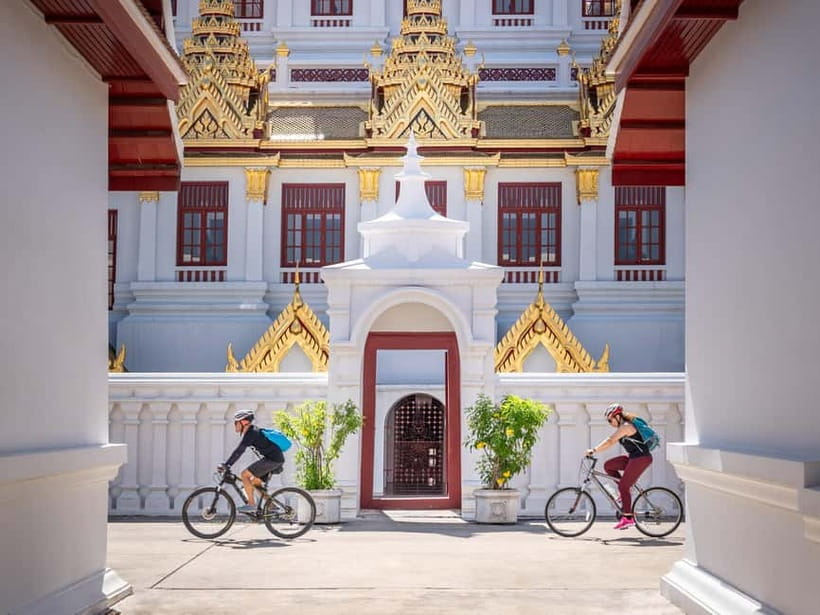
Reviewed · CYCLING TOURS
Bangkok: Backstreets and Historic Temples Bike Tour
Bangkok’s best surprise may be found away from its famous sights. This 15-kilometer bike ride slips through narrow lanes, canal-side communities, food markets, and old temple districts where daily life matters more than monuments. You cross the Rama VIII Bridge, ride around Bangkok Noi, and return by local river boat before finishing near the Giant Swing.
I like the way the tour shows ordinary Bangkok, not just the city’s postcard temples. I also like the practical touches: good mountain bikes, regular drinks and water, snacks along the way, and guides such as Max, Bett, and Seen who are praised for keeping riders safe and explaining local culture clearly.
The main consideration is the riding itself. Narrow alleys, markets, bridges, and traffic require decent bike control and attention. The route is mostly flat, but you may miss some of the guide’s comments when traffic is loud or the group stretches out.
Key points to know before booking
- About 15 kilometers in four hours: The pace includes stops, food breaks, sightseeing, and the river crossing.
- Bangkok Noi is the heart of the route: You ride beside canals and through small lanes in Muslim and Buddhist communities.
- The route favors local life over famous monuments: This is not the best choice if you want a long stop at the Grand Palace or Wat Pho.
- The Baan Bu bronze community may be open: If conditions allow, you can see a working bronze bowl foundry and old steam engines near the Thonburi train depot.
- Good equipment and careful guiding matter here: The bikes are imported mountain bikes, and guides stay alert in traffic and tight spaces.
- Dress and booking details are important: Wear comfortable shoes and sunscreen, avoid shorts and sleeveless shirts, and provide each rider’s height in advance.
Why this bike tour shows a different Bangkok
Many first visits to Bangkok revolve around the Grand Palace, Wat Pho, Khaosan Road, and a few major shopping areas. Those places have their value, but they do not tell you much about how the city works between the headline sights.
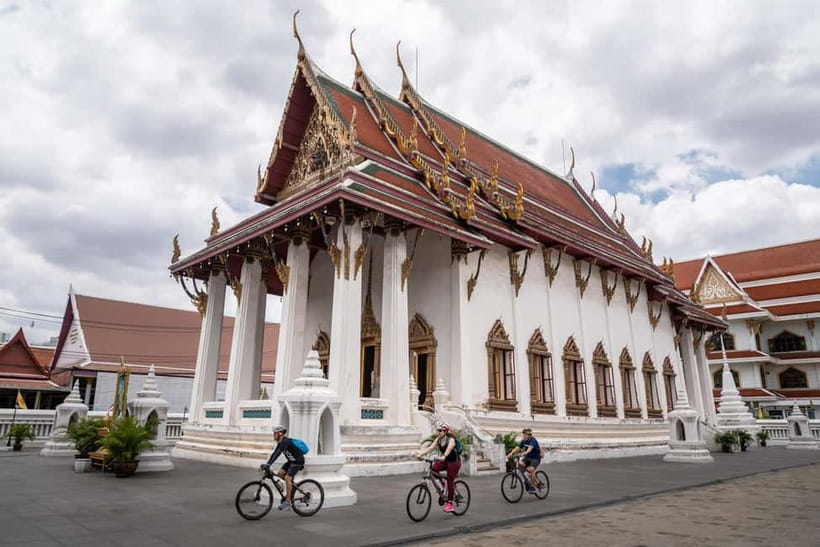
This tour takes a quieter route through the old city and across the Chao Phraya River. You pass houses, small workshops, markets, shrines, canals, and neighborhood temples. The sights are not polished into one neat display. That is the point.
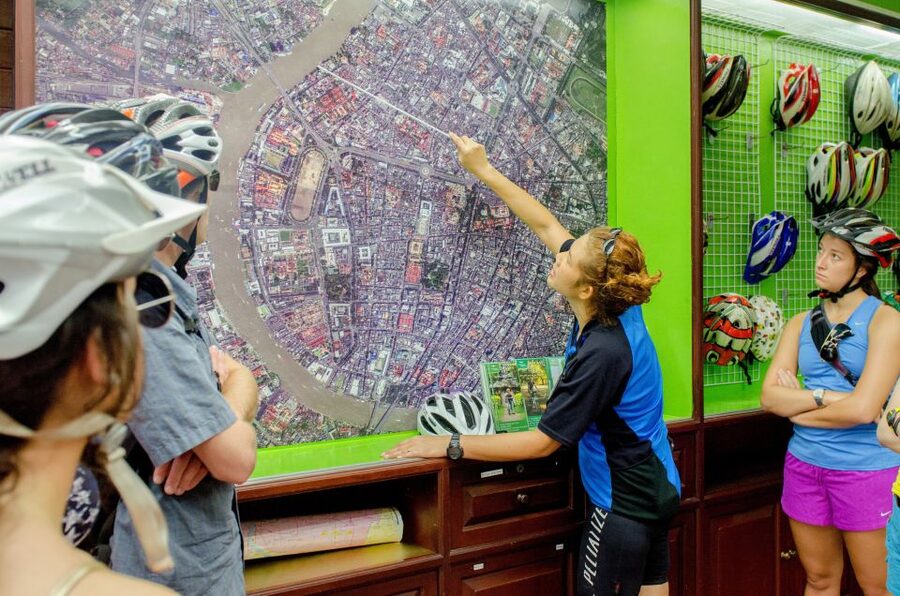
You begin near MRT Sam Yot Station at the Discova Day Tour Shop on Mahachai Road. The meeting point is at 719 Mahachai Road, next to the Miramar Hotel and beside the canal. Arrive by 8:30 am for the bike fitting and safety briefing. Departure is at 9 am sharp.
The route covers roughly 15 kilometers and finishes around 1 pm. That distance is manageable for many casual cyclists because the tour includes frequent stops, but Bangkok’s traffic and narrow lanes make bike handling more important than raw fitness.
More Cycling Tours in Bangkok:
- Bangkok: Temples, Canals & Local Life Bike Tour
★ 4.9 · 3,511 reviews - Bangkok: Night Bike Tour with Temples & Flower Market Visit
★ 4.8 · 751 reviews - Bangkok: Night Bike Tour with Temples & Flower Market Visit
★ 5.0 · 223 reviews
From Khaosan Road to the Rama VIII Bridge
The first section carries you through the central city and the Khaosan Road area. You do not spend the morning following the main tourist road. Instead, the route quickly turns into smaller lanes.
This change happens fast. Bangkok can feel loud and crowded on its main roads, but just a short turn away you may find low-rise homes, local shops, shrines, and canal paths. The guide’s job is especially useful here because these lanes are not always easy to follow on your own.
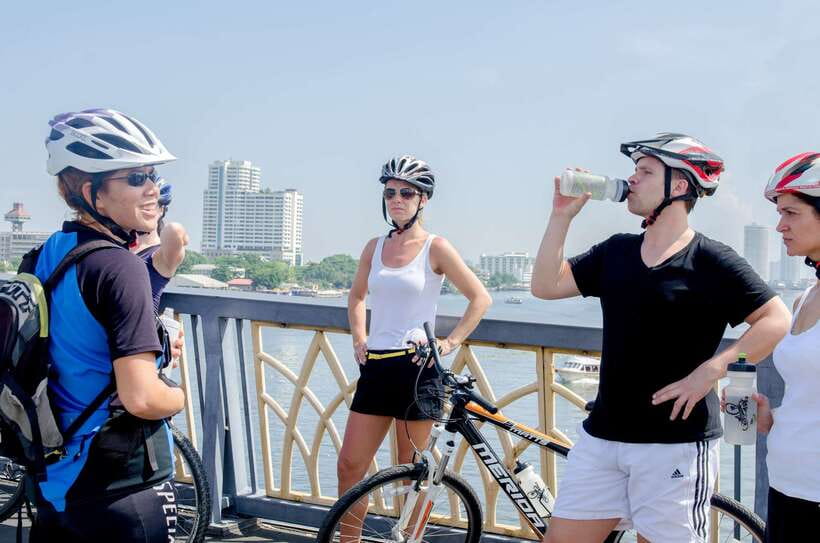
The first major landmark is the Rama VIII Bridge. The bridge offers a clear sense of Bangkok’s scale, with the river cutting through the old city and the newer road network rising around it. The planned stop here lasts about 30 minutes, giving you time for a short explanation and photos.
One practical point: the bridge section includes active city traffic. You need to follow the guide’s instructions closely and stay aware of the riders around you. A rider named Ronald found the guide very good at giving directions and protecting the group in traffic, while another rider noted that spoken explanations could be hard to hear when the road noise rose.
That is a fair picture of the experience. You will learn more when stopped than while pedaling, so save your questions for the pauses.
Bangkok Noi, where canals become neighborhood streets
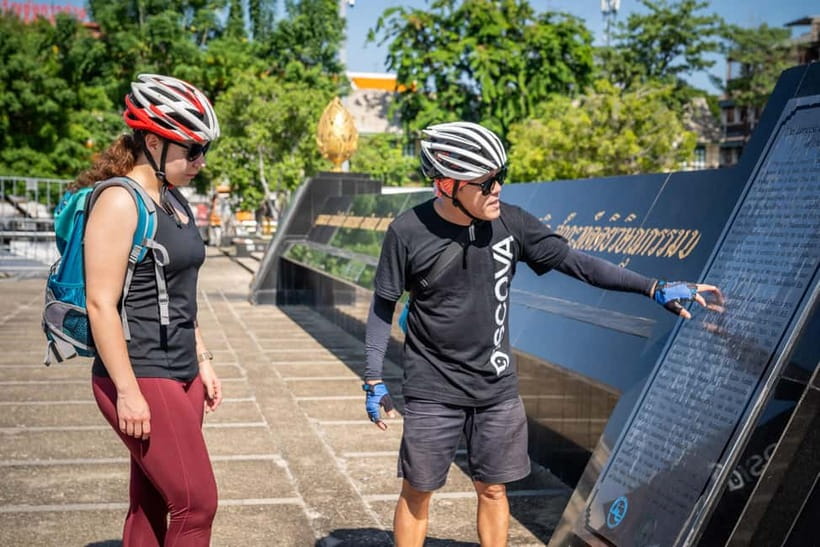
After crossing the river, the route reaches Bangkok Noi. The name refers to a large canal connected with the Chao Phraya River, but this is not a simple waterfront viewing stop. You ride along the canal and through tight alleyways where homes and community life sit close to the water.
This is one of the strongest parts of the tour. You see Bangkok at ground level, where the city is shaped by footpaths, bridges, food stalls, small religious buildings, and local work. The lanes can be narrow enough that you must ride carefully and follow the guide’s line.
The route passes through a Muslim community and later moves past Buddhist temples. That contrast gives the ride much of its value. You are not just collecting temple photos. You are seeing how different communities share the old city, with religious buildings, homes, markets, and workshops close together.
The Buddhist temples along the canal are often more valuable for atmosphere than for famous architecture. They provide a quiet break from the traffic and a chance to hear about local customs and religious images. Guides have been praised for explaining temple paintings, Buddhist traditions, and the history of the neighborhoods in clear detail.
Baan Bu bronze work and the old Thonburi rail yard
The Baan Bu Bronzework Community adds a working craft element to the morning. If it is open, you may visit a bronze bowl foundry and see how an old local trade fits into the neighborhood.
This stop is less predictable than a standard museum visit, since access depends on whether the workshop is open. That uncertainty is worth accepting. A working community is more interesting than a staged demonstration, but you should not book this tour on the assumption that every optional stop will be available.
The route also passes one of Bangkok’s first train depots in the Thonburi area. If open, you may see old steam engines. Together, the foundry and railway site show two different parts of the city’s past: local metalwork and the transport links that helped Bangkok grow.
The scheduled visit lasts about 30 minutes. It is a useful pause from cycling and one of the details that separates this ride from a basic city sightseeing loop.
More History Tours in Bangkok:
- Bangkok: Backstreets and Temple Historic Bike Tour
★ 5.0 · 84 reviews - Bangkok Heritage Highlights: Grand Palace & Three Temples Tour
★ 4.5 · 52 reviews - Bangkok History Temples Markets and Food Tasting
★ 5.0 · 40 reviews - Bangkok: Historical Temples Tour & Hidden Bar at Sunset
★ 4.8 · 29 reviews
Crossing the Chao Phraya by local boat
At some point, you leave the lanes for a local river crossing. The route information describes a local ferry, while the timing includes about an hour for Chao Phraya River sightseeing and a long-tail boat ride. In practical terms, you should expect a short boat transfer as part of the route rather than a separate private river cruise.
The crossing changes your view of Bangkok. On a bicycle, you notice alleys and doorways. From the water, you see the city as a river settlement, with temples, bridges, homes, and major roads linked by the Chao Phraya.
This is also a useful rest from pedaling. The boat ride is part of the transport between districts, not the main focus of the tour, so do not expect a long sightseeing cruise. Still, it adds variety and lets you experience a form of local movement that a standard walking tour misses.
Passing the Grand Palace and entering a former royal park
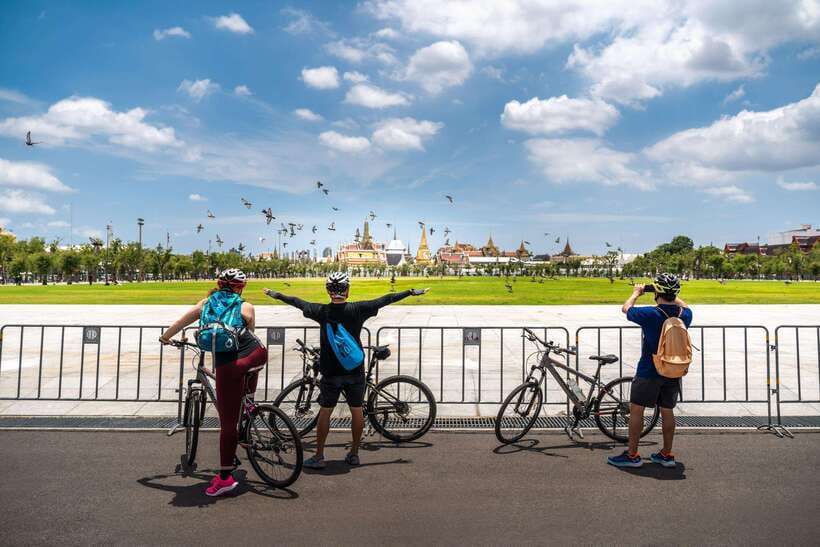
After returning across the river, the route passes the Grand Palace area. You do not spend the day touring the palace interiors, so this section works best for people who have already seen the major royal sights or want a different view of the surrounding old city.
The group takes a walk through a public park that was once reserved for the royal family. This offers a calmer stretch after the river and traffic. It also gives the guide a natural place to explain how royal spaces, public areas, temples, and working neighborhoods sit close together in Bangkok’s historic center.
You then return to the smaller lanes. This back and forth between major landmarks and everyday streets is the central design of the tour. The Grand Palace provides context, but the lanes provide the strongest sense of place.
Markets, Buddha images, and the Giant Swing
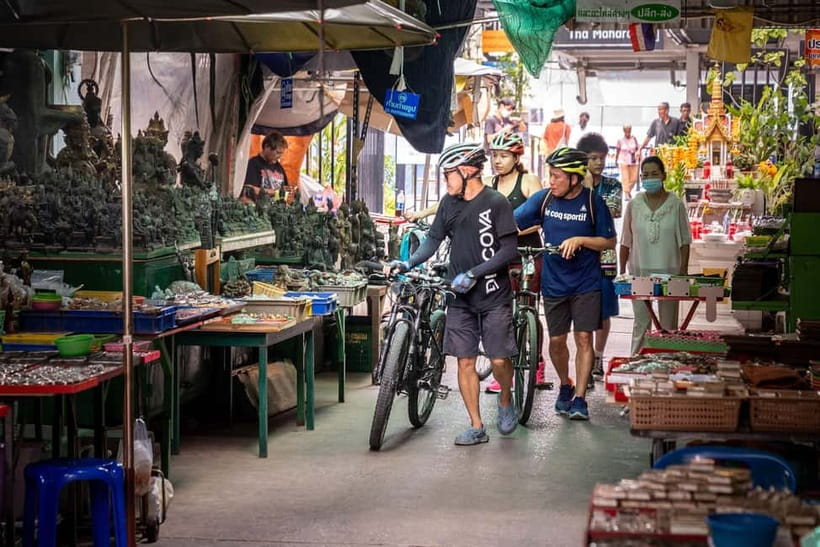
Near the end, the ride passes through a food market. This is where the included snacks make sense. You may stop for local tastes, and the guide can help explain what is being served. One rider who arrived without breakfast was able to eat at a market during the tour, which shows why it is wise not to depend on a full meal before departure.
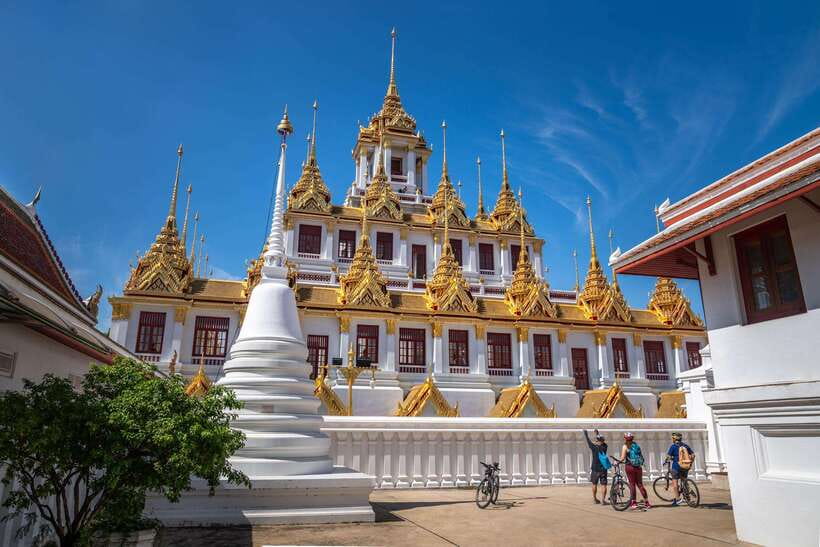
You also pass rows of Buddha images and sacred objects. The area around the Giant Swing is known for making and selling Buddha images, so this part connects religious practice with local commerce. It is not simply a photo stop. You get a look at the people and businesses that support Bangkok’s temples.
The Giant Swing itself is one of the city’s landmarks. It was once used for an important Hindu ceremony and now serves as a striking reminder of the old city’s religious and royal connections. The stop is mainly sightseeing and passing by, with roughly 30 minutes in the area.
From here, it is a short ride back to the Discova shop. The tour ends around 1 pm, leaving your afternoon open for lunch, a nap, or another Bangkok visit.
The bikes, guides, and level of effort
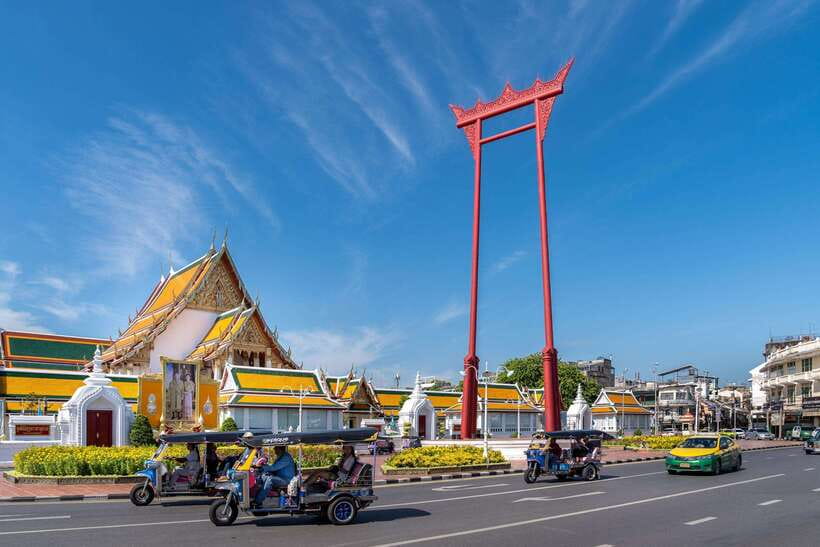
The tour provides an imported quality mountain bike, helmet, English-speaking guide, drinks, water, and snacks. Several riders specifically praised the condition of the bikes. That matters in Bangkok, where a poorly adjusted bike would make narrow lanes and uneven surfaces far less pleasant.
You should give the operator each participant’s full name for insurance and each rider’s height so the correct bike size can be arranged. Child seats are available on request for children weighing up to 14 kilograms.
The guides are a major part of the experience. Max was praised for being friendly and for making the ride feel easy. Bett helped a rider who needed a food stop and kept the pace comfortable. Seen received repeated praise for his city and cultural knowledge, his handling of the bikes, and his care with teenage riders.
The company uses several guides, so you cannot request that the exact same person will lead your tour unless the operator confirms it. What you can reasonably expect is an English-speaking leader who knows the route and manages a small or private group.
The ride is flat, but that does not mean effortless. You need to brake, turn, and stop confidently. One rider described the route as requiring fairly good bike handling and traffic awareness. That is the most useful warning to take seriously.
What to wear and what to bring
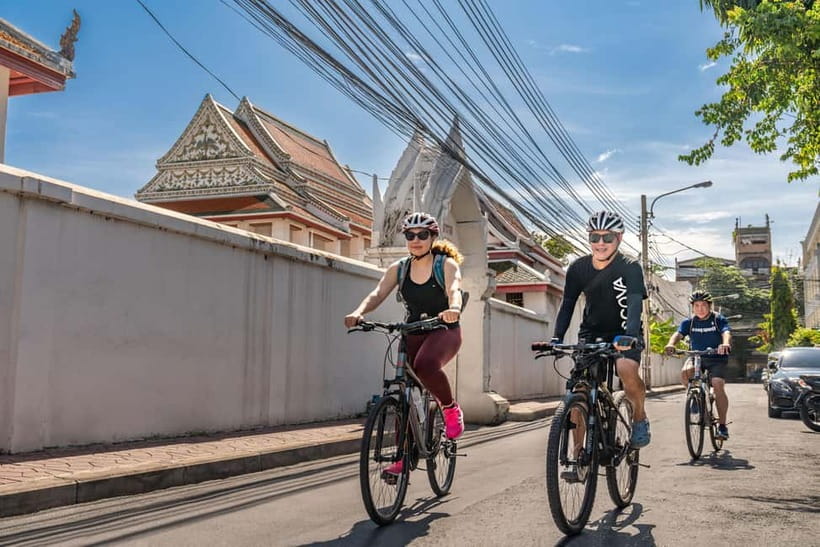
Wear comfortable shoes and bring sunscreen. The tour does not permit shorts or sleeveless shirts, so dress in lightweight clothing that covers your shoulders and knees.
The clothing rule matters because the route passes Buddhist temples and sacred areas. It is also easier to meet the requirement from the start than to discover at the shop that your outfit needs changing.
Bring a bottle if you like, though drinks and water are provided. You should also arrive having eaten something unless you are happy to wait for a market stop. Snacks are included, but this is not presented as a full breakfast or lunch tour.
Pregnant people should not book this activity. Children may use a requested child seat only up to the stated 14-kilogram limit.
Is $39 a fair price?
At $39 per person, the tour offers good value if you want more than a bike rental. The price covers the bicycle, helmet, guide, water, drinks, snacks, and a four-hour route that includes the bridge, canals, neighborhoods, temples, market areas, and river crossing.
You are paying for access and local judgment as much as for equipment. The most interesting lanes are not places you would easily connect on your own, and a guide helps you move through traffic, understand the communities, and find the less obvious stops.
The value is lower if your main goal is a checklist of Bangkok’s biggest monuments. You will pass the Grand Palace and see the Giant Swing, but the route does not center on long visits to famous attractions. Choose this tour for local streets, canals, workshops, and neighborhood life.
Free cancellation is available up to 24 hours before departure, and you can reserve now and pay later. Private and small-group formats are available, which may be worth considering if you want more time for questions or need a gentler pace.
Who should book this ride?
I would choose this tour early in a Bangkok stay. It helps you understand the old city before you spend later days visiting individual temples and markets. It is also a strong choice if you have already seen the usual sights and want something more local.
It suits confident casual cyclists, couples, families with older children, and people who like a little grit with their sightseeing. Teenagers can enjoy it, and one family found that the route offered both fun and useful cultural lessons.
I would think twice if you dislike traffic, narrow lanes, hot weather, or riding through working neighborhoods. This is not a polished sightseeing circuit. You may pass imperfect streets and gritty urban scenes, but that is part of seeing Bangkok as a lived-in city.
Should you book the Bangkok backstreets bike tour?
Book it if you want Bangkok at street level: canals, local communities, food markets, temple districts, workshops, and a river crossing in one morning. The strongest features are the route, the careful guides, the good bikes, and the chance to see places that are awkward to reach independently.
Skip it if your priority is a full tour of famous temples or a relaxed ride on wide, quiet paths. For most visitors who can handle city cycling, the $39 price is sensible, especially because equipment, guidance, snacks, drinks, and water are included.
FAQ
Where does the Bangkok bike tour start?
It starts at the Discova Day Tour Shop Bangkok, 719 Mahachai Road, Kwaeng Wang Burapha Phirom, Khet Phranakorn. The shop is next to the Miramar Hotel and beside the canal, near MRT Sam Yot Station.
What time should I arrive?
Arrive at 8:30 am for the bike fitting and briefing. The tour departs at 9 am sharp and finishes around 1 pm.
How far do you cycle?
The route covers about 15 kilometers over four hours. The time includes sightseeing stops, food and drink breaks, the river crossing, and explanations from the guide.
Are drinks and food included?
Drinks, water, and snacks are included. The route also passes a food market, but the experience is not described as a full breakfast or lunch.
What should I wear?
Wear comfortable shoes and sunscreen. Shorts and sleeveless shirts are not allowed, so choose clothing that covers your shoulders and knees.
Can children join the tour?
Child seats are available on request for children weighing up to 14 kilograms. You should provide each participant’s full name and height when booking so the operator can arrange insurance details and the correct bike size.
Newly written up around Bangkok
- 3-Hour Bangkok Walking Tour: Wat Pho and Wat Arun★ 5.0 · 102 reviews
- Bangkok Half Day Guided Tour: Grand Palace, Wat Arun & Wat Pho★ 5.0 · 4 reviews
- Visit Wat Pho and Wat Arun with Local Expert★ 4.0 · 14 reviews
- Bangkok 3 Temple Walking Tour: Wat Arun, Wat Pho, Wat Traimit★ 5.0 · 4 reviews
- Top 3 Bangkok Temples: Multilingual Private Tour [EN,ES,DE,IT,FR]★ 5.0 · 9 reviews
- Visit temples in and around Bangkok with a former monk of 10 years★ 5.0 · 30 reviews
- Bangkok Heritage Highlights: Grand Palace & Three Temples Tour★ 4.5 · 52 reviews
- Grand Palace & Emerald Buddha Private Tour [Optional Luxury]★ 5.0 · 27 reviews
Cycling Tours, compared.
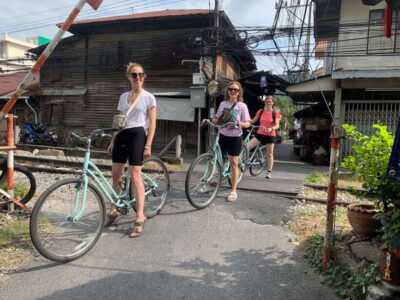
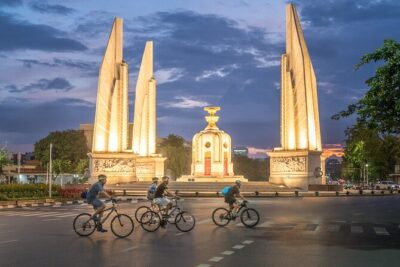
Night Bike Tour with Temples & Flower Market Visit
Read our review →
Half-Day Ubud Electric Cycling Tour to Tirta Empul Water Temple
Read our review →Night Bike Tour with Temples & Flower Market Visit
Read our review →
E-Bike Nara Highlights – Todaiji, Knives, Deer, Shrine
Read our review →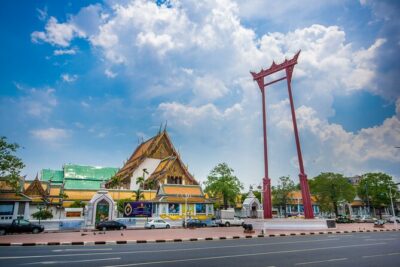
Browse the lists this tour appears in