
Reviewed · TRAIN EXPERIENCES
Datong Yungang Grottoes and Hanging Monastery 1-day from Beijing by Train
The most remarkable part of this day trip is the contrast: thousands of Buddhist sculptures carved into rock at Yungang, followed by a temple clinging to a cliff at Hengshan. The new Beijing to Datong bullet train makes these major sights possible without changing hotels.
I like the smooth two-hour train ride each way, and I like having a private Datong team rather than trying to connect two distant sights alone. Guide Star has been singled out for clear English and strong time management. The catch is the clock: this is a full 12-hour day, and the Hanging Monastery can require a long wait in peak season.
Key points to know before booking
- Two UNESCO-level sights in one day: See the Yungang Grottoes and the remarkable Hanging Monastery from Beijing.
- Fast bullet train connection: The rail journey takes about two hours each way, making Datong practical as a day trip.
- Private guiding in Datong: Only your group participates, with a dedicated English-speaking guide.
- Yungang admission included: Allow about two hours for the carved caves and their thousands of statues.
- Peak-season warning: From March through October, advance reservations for the Hanging Monastery are required and competitive.
- A demanding schedule: The tour lasts about 12 hours, so it suits you best if you want major sights rather than a slow day.
Why Datong makes sense as a Beijing day trip
Datong is far enough from Beijing to feel like a real change of scene, but the bullet train has shortened the trip to roughly two hours each way. That changes the calculation. You can sleep in Beijing, spend the day among some of northern China’s finest historic sites, and return without arranging a separate overnight stay.
You should still think of this as a serious outing, not a casual side trip. Rail travel, road transfers, two large attractions, lunch, and a return train all have to fit into about 12 hours. The schedule rewards people who prefer a focused day with clear priorities.
The private format matters here. Yungang and the Hanging Monastery are not next door to one another, and the day works best when someone is watching the clock. A private guide can keep your group moving and explain what you are seeing without forcing you to match the pace of a large busload.
The Datong guide is based locally, and the English-speaking guide Star has received particular praise for professional service, local history, and careful timing. That combination is useful when you have only one day. You are not simply being dropped at two famous sights and left to work out the details yourself.
More temple trips by train in Beijing:
- Beijing to Datong See YunGang Cave, Hanging Temple (Bullet Train)
★ 5.0 · 39 reviews - Beijing:Bullet Train Tour to Hanging Temple&Yungang Grottoes
★ 5.0 · 16 reviews - Bangkok: Railway and Floating Market Tour with Dragon Temple
★ 4.6 · 1,225 reviews
The Beijing to Datong train sets the tone
The train is one of the strongest reasons to choose this experience. The journey takes about two hours each way, and the ride has been described as smooth and quiet. Compared with a long road transfer, that gives you a more comfortable start and a better chance to rest before the sightseeing begins.
The early start is part of the bargain. You need enough energy for a long day, and the second half can feel especially full after two major visits. Still, the train turns what used to be a difficult excursion into a reasonable option for someone with an extra day in Beijing.
Pickup is offered, and the meeting information lists operating hours from 7:00 AM to 11:30 PM daily during the stated booking period. Your confirmation is subject to availability and is expected within 48 hours of booking. Since the tour is often reserved well ahead, with an average booking lead time of 88 days, do not leave this until the last minute if your Beijing dates are fixed.
The exact rail arrangements should be checked when your booking is confirmed. The key point is simple: the train handles the long distance, while the local private team handles Datong.
Yungang Grottoes: two hours with Northern Wei sculpture
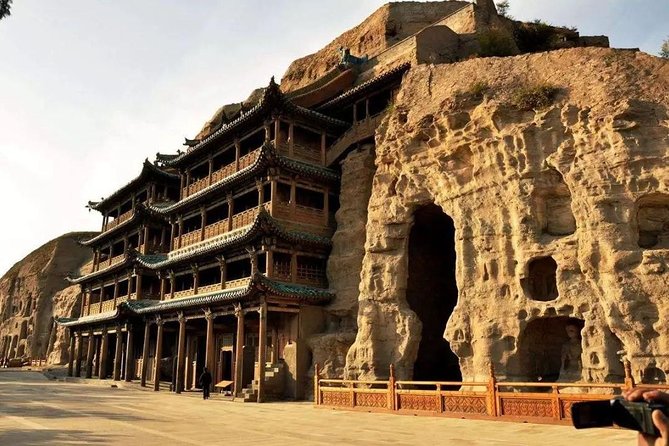
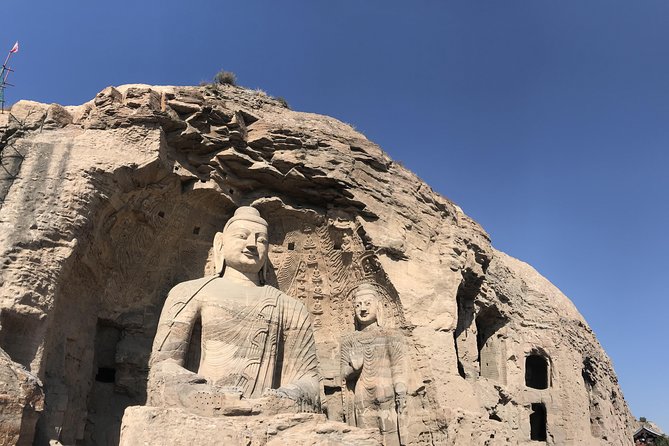
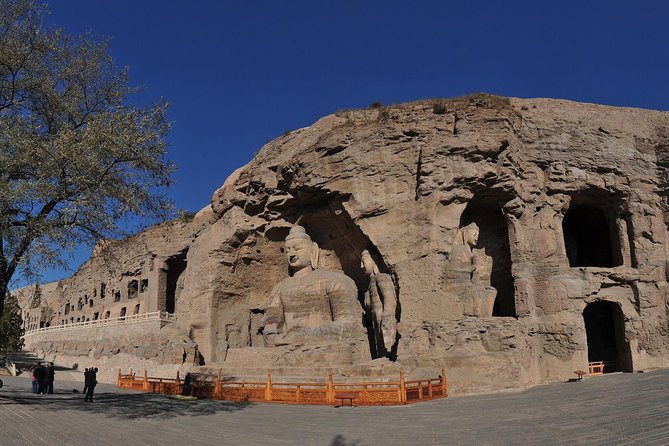
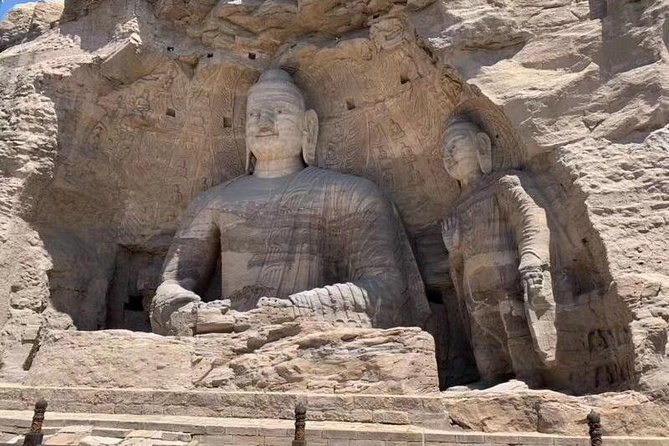
The Yungang Grottoes are the artistic centerpiece of the day. They were created between 460 and 525 AD during the Northern Wei Dynasty, when Buddhist cave art was taking root in China. The site contains 252 grottoes and more than 51,000 Buddha statues and smaller figures.
Those numbers can sound abstract until you begin looking at the carved surfaces. The caves are not just rooms with one statue each. They contain large Buddhas, smaller figures, decorative work, and layers of detail cut directly into the rock. You will see how religious art, architecture, and political power were joined in one place.
Yungang is one of China’s three best-known ancient sculptural sites, and UNESCO added it to the World Heritage list in 2001. Its importance comes partly from the way Buddhist artistic ideas from south and central Asia were combined with Chinese traditions in the fifth and sixth centuries.
That context makes an English-speaking guide especially valuable. Without explanation, you might see a series of impressive caves and move on. With a guide such as Star, you can connect the carvings to the Northern Wei period, the spread of Buddhism, and the changing visual language of early Chinese sculpture.
Plan on about two hours here. That is enough for a meaningful introduction, but not enough for every cave and every carving. The benefit is that the schedule protects the second major visit. The drawback is that you will need to accept a selective look rather than a slow, scholarly study.
I would pay attention to scale and preservation. Some figures are monumental, while others are small details that reward a closer look. The rock-cut setting also matters: these are not sculptures moved into a museum. The cave walls, ceilings, openings, and statues form one work of art.
The site can be visually intense. If you try to inspect every figure, you may tire quickly. I recommend choosing a few spaces to study carefully, then stepping back to understand the overall design. Your guide can help you decide where to spend those limited two hours.
A Shanxi lunch breaks up the sightseeing
The tour also gives you a chance to try Shanxi-style food, which offers a regional change from what you may have encountered in Beijing. The information provided does not specify the restaurant, menu, or whether lunch is included in the listed price, so you should confirm those details before booking.
Still, the meal has real value beyond filling a gap in the schedule. A day trip can become a parade of monuments with little sense of place. Regional food gives you another way to understand Shanxi, and it creates a useful pause between the grottoes and the mountain temple.
Keep your expectations practical. This is a sightseeing day built around two major sites, not a dedicated food tour. The meal is best viewed as a chance to sample local cooking while staying on schedule.
More Day Trips in Beijing:
- All-inclusive Private Day Trip: Hutongs, Lama Temple & Panda House with Lunch
★ 4.5 · 13 reviews - Private Day Trip of Forbidden City, Temple of Heaven and Summer Palace
★ 4.5 · 3 reviews - Athens: Cape Sounion & Poseidon Temple Sunset Half-Day Trip
★ 4.8 · 8,241 reviews - From Aswan: Abu Simbel Temple Day Trip with Hotel Pickup
★ 4.4 · 2,807 reviews
The Hanging Monastery: an hour on the cliff
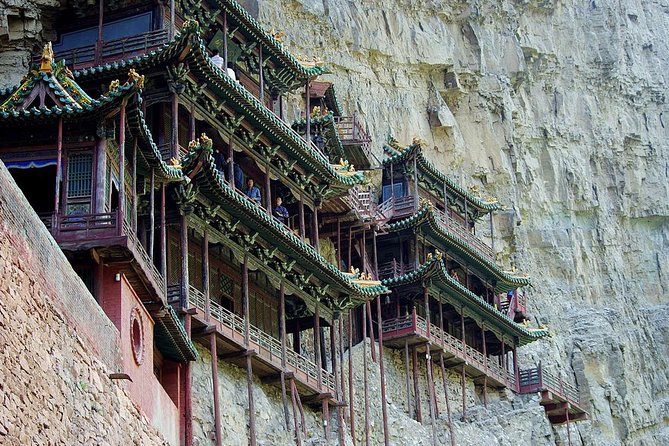
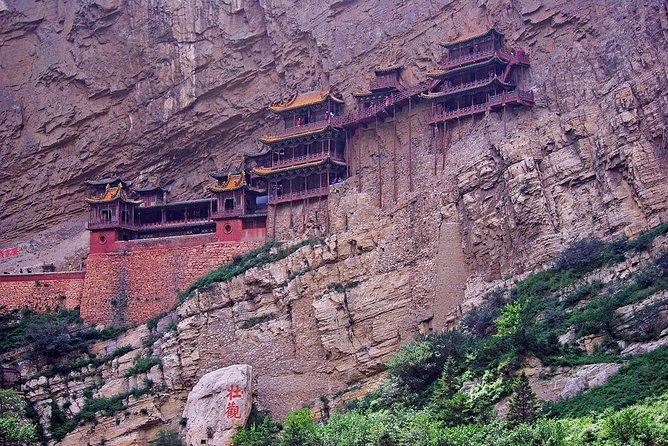
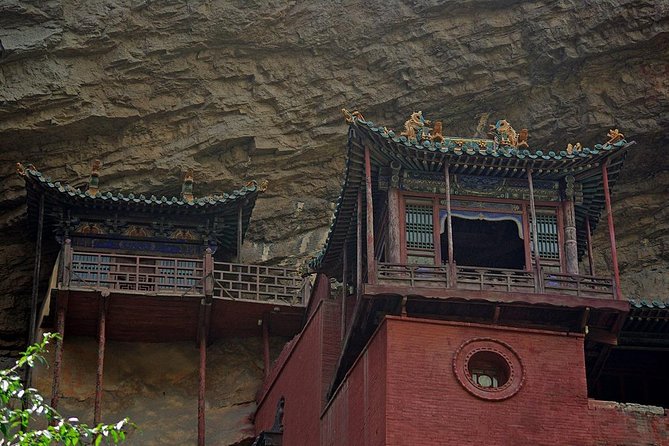
The Hanging Monastery, also called Xuankong Temple, is the visual surprise of the excursion. The 1,500-year-old complex is built into a sheer cliff near Datong, with wooden supports and beams embedded in the rock. Its position gives the temple a dramatic appearance, but the site is more than a striking photograph.
The complex brings together Buddhism, Taoism, and Confucianism. That combination is unusual and gives the visit a different character from Yungang, where the focus is primarily on Buddhist sculpture. Here, the interest comes from the building itself, its religious mix, and the way it occupies the cliff.
The temple is naturally sheltered from some weather by the surrounding rock. You may notice how closely the structure follows the cliff rather than sitting on a broad level foundation. The setting forces you to think about construction, access, and daily religious life in a very different way from a ground-level temple.
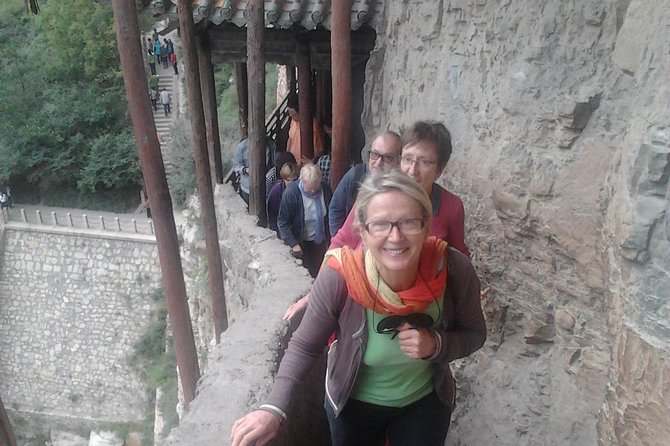
The planned visit lasts about one hour. That is enough to appreciate the setting and see the main features, but it is not a leisurely architectural study. The walkways and spaces are part of the experience, so people who dislike heights or confined historic structures should consider that before booking. The supplied information does not describe specific accessibility arrangements, so ask the operator if that is important for you.
Peak season can change the Hanging Monastery plan
The main practical warning concerns March through October. Visitor numbers are high, and advance reservations of at least one week are required. These reservations are described as highly competitive, so booking early is not just a nice idea. It may determine whether you enter the temple at all.
If the wait to enter exceeds 1.5 hours, the recommended approach is to view the temple from below rather than lose a large part of the day in line. That is a sensible rule. The view from below lets you appreciate the building’s position on the cliff, while a long queue could threaten the train schedule and shorten your time at the other sights.
This is also why a private, locally managed day trip has an advantage over trying to improvise everything yourself. A guide can explain the situation, watch the time, and help you make a practical choice. You should not assume that paying for the tour guarantees a long interior visit during the busiest months. The entry conditions are the part most likely to affect the day.
If entering the temple is your top priority, reserve well ahead and confirm the current arrangement before departure. If your main goal is to see both major Datong sights in one day, be prepared to accept the exterior viewpoint if the wait becomes unreasonable.
What the $399 price means
At $399 per person, this is not a budget day trip. The price makes more sense if you value private service, an English-speaking guide, included admission, rail access, and a tightly organized visit to two sites that are difficult to combine independently in one day.
A cheaper do-it-yourself plan might be possible, but you would need to coordinate the Beijing to Datong trains, local transportation, admission, the distance between Yungang and the Hanging Monastery, meal timing, and the return journey. A mistake in one connection could affect the entire day. You are paying for reduced friction and local coordination as much as for the transport itself.
The private format also changes the value calculation for couples, families, or small groups. You do not share the activity with strangers, and group discounts are offered. Ask how the discount applies to your party before booking, since the published price is stated per person.
The price is harder to justify if you dislike early starts, prefer long stays at one site, or want a relaxed meal and plenty of free time. This experience is built for coverage and efficiency. It gives you two major places in a single day, but it cannot give each one the time of a separate excursion.
Who will get the most from this day
I would choose this tour if you have an extra day in Beijing and want to use it for major cultural sites rather than another city walk. It fits you especially well if you value clear English explanations, private transport arrangements in Datong, and help managing a tight schedule.
It is also a good match if Yungang’s Buddhist art and the Hanging Monastery’s unusual construction are both on your list. The two sites are different enough that the day does not feel like seeing the same type of monument twice.
You may want a different plan if you need a slow pace, dislike long days, or want to spend several hours examining the grottoes. The peak-season entry problem at the Hanging Monastery is another concern. You need to be comfortable with the possibility of viewing the temple from below if the queue becomes too long.
Most people can participate, and the activity is private. Pickup is offered, but you should confirm the exact pickup and train meeting arrangements during booking. Free cancellation is available up to 24 hours before the experience begins. Changes or cancellations inside that 24-hour period are not accepted for a refund.
Should you book the Datong day trip?
Book it if you want the most efficient way to see Yungang and the Hanging Monastery from Beijing, and if you value a private guide who can keep a demanding day on track. The bullet train is the key advantage, while the English commentary adds meaning to places that can otherwise blur into a string of photographs.
I would be cautious if you want guaranteed interior access at the Hanging Monastery during March through October. Reserve at least a week ahead, confirm availability, and accept that a wait longer than 1.5 hours may mean seeing the temple from below.
For a culture-focused visitor with one spare Beijing day, the price can be fair because it covers planning, local coordination, admissions, and a dedicated team. Just book with realistic expectations: this is a fast, rewarding survey of Datong’s two headline sights, not a restful day.
FAQ
How long does the Datong day trip take?
The experience lasts about 12 hours from start to finish.
How long is the bullet train ride from Beijing to Datong?
The bullet train takes about two hours each way.
Which attractions are included?
The tour visits the Yungang Grottoes and the Hengshan Hanging Monastery, also called Xuankong Temple.
Is admission included?
Admission tickets for both listed attractions are included.
Is this a private tour?
Yes. Only your group participates, and a dedicated team works with you in Datong.
Is an English-speaking guide provided?
Yes. The Datong guide is English-speaking. Star is specifically identified as an experienced guide for this experience.
Do I need to reserve the Hanging Monastery in advance?
From March through October, advance reservations of at least one week are required, and availability is highly competitive.
What happens if the Hanging Monastery wait is too long?
If the on-site wait exceeds 1.5 hours, the recommended option is to view the temple from below instead of waiting to enter.
Can I cancel for a full refund?
Yes. You can cancel at least 24 hours before the experience start time for a full refund. Cancellations or changes made less than 24 hours before the start time are not accepted for a refund.
Newly written up around Beijing
- Private Day to T-Square, Forbidden city, Temple of heaven, Summer palace Tour★ 5.0 · 54 reviews
- Private Day Trip of Forbidden City, Temple of Heaven and Summer Palace★ 4.5 · 3 reviews
- Private Tour to Lama Temple, Tian’anmen Square and Forbidden City★ 5.0 · 3 reviews
- Private Half-Day Temple of Heaven and Lama Temple Tour★ 5.0 · 13 reviews
- Private Day Tour:Tiananmen Square,Forbidden City Temple of Heaven★ 5.0 · 16 reviews
- Private Tour to the Temple of Heaven and Tea tasting at the Maliandao Tea city★ 5.0 · 3 reviews
- Local’s Beijing: Forbidden City Insider Tour +Temple +Duck Feast★ 4.5 · 66 reviews
- Temple of Heaven Ticket with Optional Guide Service★ 5.0 · 120 reviews
Train Experiences, compared.

Railway and Floating Market Tour with Dragon Temple
Read our review →
From Malta: Gozo Full-Day Tour with Guide, Temples, & Train
Read our review →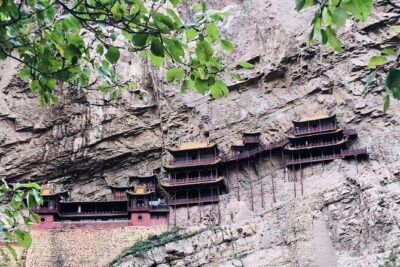
Beijing to Datong See YunGang Cave, Hanging Temple (Bullet Train)
Read our review →
From Thessaloniki: Train Trip to Meteora & Monastery Tour
Read our review →
Grand Tour-Ek Phnom. Baset. Bamboo Train. Wat Banan. Phnom Sampov
Read our review →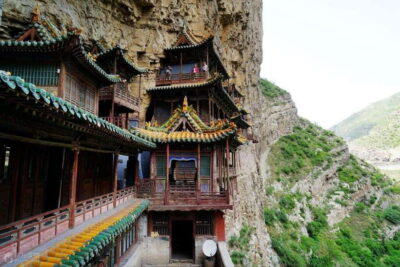
Bullet Train Tour to Hanging Temple&Yungang Grottoes
Read our review →
Full-day: Original bamboo train, Wat Banan, Phnom Sampov
Read our review →
Private Floating & Train Market + DRAGON Temple + Thai Cafe
Read our review →Browse the lists this tour appears in