
Reviewed · KARNAK & VALLEY OF THE KINGS TOURS
Luxor East and West Bank: Valley of the kings, Habu Temple,Karnak&Luxor Temples
Luxor packs some of Egypt’s greatest ancient sites into one long day. This private tour crosses both banks of the Nile, taking you from royal tombs in the Valley of the Kings to the giant columns of Karnak and the beautifully preserved Medinet Habu.
I like two things here: you get a private vehicle and guide rather than being tied to a large group, and the route includes both famous highlights and a less-visited treasure, Ramesses III’s temple at Medinet Habu. Guides Laila and Mohamed Noor are repeatedly praised for clear English, strong knowledge, patience, and practical help.
The main drawback is pace. The listed visits add up to more than eight hours before driving and hotel transfers, and admission fees are not included in the $85 price. Bring water, a snack, sun protection, and enough energy for a full day on your feet.
Key points to know before booking
- Seven major stops in one day: The route covers the Valley of the Kings, Hatshepsut’s temple, Colossi of Memnon, Karnak, Luxor Temple, Medinet Habu, and return transport.
- Private touring: Only your own group takes part, with an air-conditioned vehicle and an English-speaking Egyptologist.
- The guide matters: You may be assigned Laila or Mohamed Noor. Laila is especially praised for her English, organization, photography help, and care with guests who need a slower pace.
- Admissions cost extra: Entrance fees are not part of the $85 price, so check the current charges before you go.
- Start early: Pickup is listed for 7:00 am, a sensible time for avoiding the worst heat and keeping the day moving.
- Good value for a small group: The price includes transport, hotel or Nile cruise pickup, a guide, and bottled water, but the final cost rises once site tickets and tips are added.
Why this Luxor day works
Luxor is split by the Nile. The East Bank is home to the great temple complexes of Karnak and Luxor, while the West Bank contains the ancient Theban Necropolis, including royal tombs and funerary temples.
Seeing both sides in one day saves you from arranging separate transport. It also lets you understand how ancient Thebes functioned: temples for public worship on the East Bank, tombs and memorial temples among the hills on the West Bank.
The private format is important. You are not simply driven from gate to gate. A good guide can explain why a tomb is decorated differently from a temple, point out figures hidden in reliefs, and adjust the amount of detail to suit your group.
The tour begins at about 7:00 am with pickup from your hotel or Nile cruise. You ride in a private, air-conditioned vehicle and receive one bottle of water. The listed location says Cairo, but the route and return details describe a Luxor-based tour, so confirm your exact pickup point before booking.
More Karnak and Valley of the Kings Tours in Cairo:
- Luxor: Valley of the Kings and Hatshepsut Temple Day Tour
★ 4.4 · 1,404 reviews - Luxor: Valley of Kings, Hatchepsut Temple ,Karnak & Luxor-DayTour
★ 5.0 · 735 reviews - Full Day Tour of Luxor West Bank Temples and Tombs (Private)
★ 5.0 · 722 reviews
Royal tombs in the Valley of the Kings
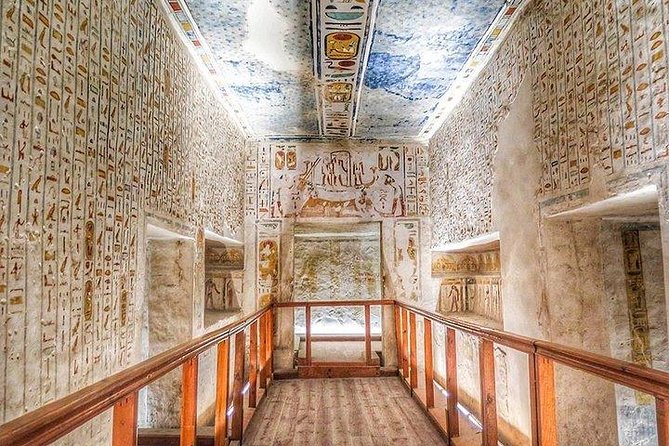
The Valley of the Kings is the day’s headline stop, and it deserves the full two hours assigned to it. The valley lies on the West Bank, opposite ancient Thebes, inside the larger Theban Necropolis.
This is not a place where the main attraction sits in one open courtyard. Tombs are cut into the hills, and the visit means walking between entrances, descending into selected burial chambers, then climbing back into the sun.
Your ticket normally covers a specified number of tombs, while special tombs can require an extra fee. The tour price does not include entrance fees, so ask your guide which tombs are open and what the ticket covers that day.
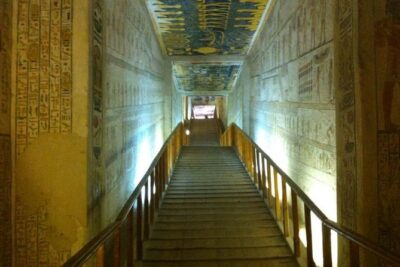
The tour description specifically mentions visits to the tombs of Ramesses III, Ramesses IV, and Ramesses IX. Their decorated corridors and chambers give you a close look at the ancient Egyptian concern with the afterlife. Painted figures, sacred texts, and images of gods were meant to guide and protect the dead king.
You should not expect to see every famous tomb in the valley. Time, ticket rules, closures, heat, and walking all affect the visit. If you have one priority, tell the guide early. A private tour gives you a better chance of shaping the stop around your interests.
The valley can be tiring. Wear shoes with a firm sole, carry water, and be ready for uneven ground and strong sun. If someone in your party needs to rest, the guide may be able to help with pacing. Laila is specifically praised for staying with a guest’s mother while another family member visited the tombs, a useful sign for mixed-ability groups.
Hatshepsut’s temple beneath the cliffs
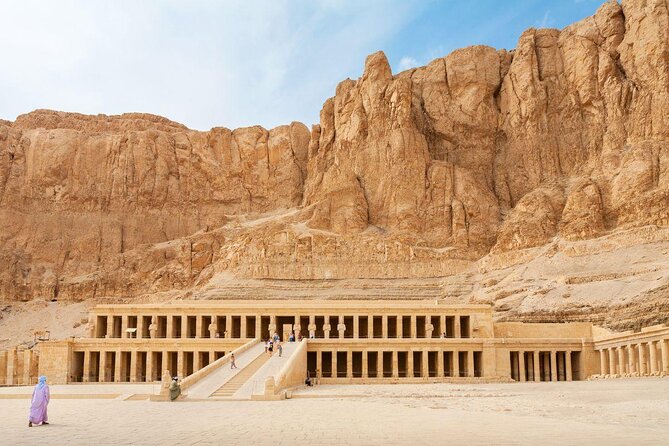
From the valley, the route continues to the Temple of Hatshepsut at Deir el-Bahari, with about 90 minutes here. The temple rises in broad terraces against the cliffs, creating a very different mood from the enclosed tombs.
Hatshepsut ruled during Egypt’s Eighteenth Dynasty and is remembered as one of the country’s most successful female rulers. Her reign was unusual because she adopted the full role and imagery of a pharaoh. Your guide can help explain how the reliefs present her authority and connection to Amun.
The site works best when you take time to look at the structure as well as the carved scenes. Long approaches, terraces, ramps, and the cliffs behind the temple create a powerful sense of scale. The open setting also means intense sun, so a hat and sunscreen are not optional comforts.
Admission is extra. The stop is long enough for a proper explanation and photographs, but this is another place where the day’s packed schedule matters. If you linger at every terrace, you may have less time later at Karnak or Luxor Temple.
A quick stop at the Colossi of Memnon
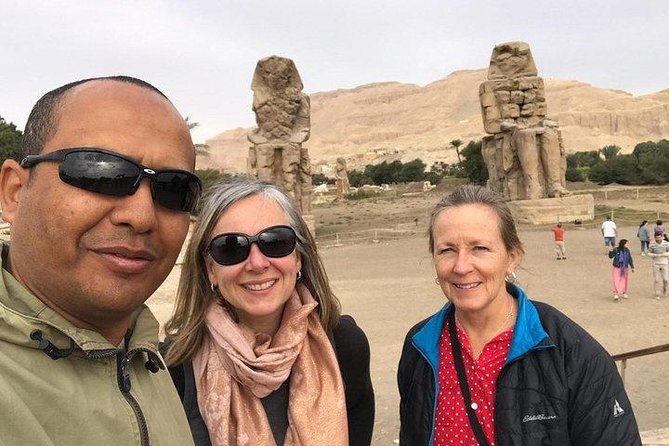
The Colossi of Memnon takes about 30 minutes and has no admission fee. These two enormous seated statues once guarded the memorial temple of Amenhotep III, built around 1350 BC.
Only the statues remain from the original temple complex. They face toward the Nile and depict Amenhotep III seated, with smaller figures beside him. Their size is the point: even after centuries of damage and change, the figures give you a strong sense of the scale ancient rulers wanted to project.
This is a short photo stop rather than a full site visit. That makes sense in a busy day, but you should not expect a long guided walk or an extended look at the remains of the temple itself.
Other temple visits near Cairo we have written up
- Cairo Old Coptic Church and Monastery St Simon Cave Church
★ 5.0 · 66 reviews - Luxury Cruise from Aswan to Luxor 4 Days with Abu Simble Temple
★ 5.0 · 60 reviews - Giza Pyramids and Sphinx with Camel ride & Mummification Temple
★ 5.0 · 38 reviews - Private Giza pyramid,sphinx, Mummification temple& inside pyramid
★ 5.0 · 32 reviews
Karnak’s giant courts and columns
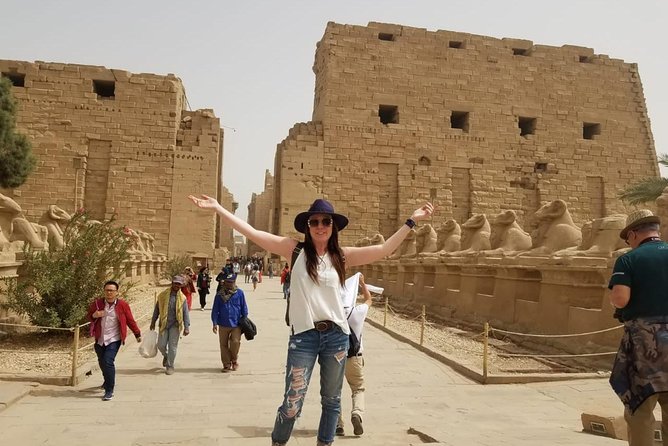
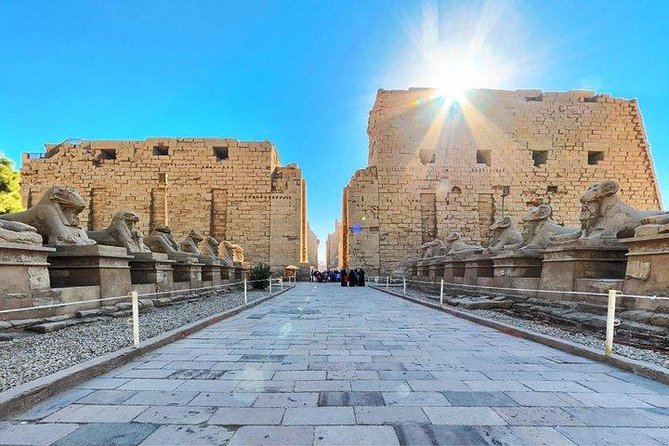
Karnak receives about two hours, and that time is well used. The complex grew over many centuries, from the Middle Kingdom through the Roman period, as successive rulers added temples, courtyards, pylons, and columns.
Most people use Karnak to mean the temple of Amun-Ra, though the wider complex was linked to the Theban Triad: Amun, his wife Mut, and their son Khonsu. A guide helps you sort out this large religious center, which can otherwise feel like a jumble of monumental stone.
The Great Hypostyle Hall is the visual star, with its forest of massive columns and surviving carved decoration. But do not rush straight through it. Pylons mark ceremonial entrances, open courtyards reveal the changing plan of the complex, and carved names show how later rulers added their own claims to an older sacred center.
Karnak is also one of the places where a well-organized guide saves time. The site is large, and a clear route prevents you from spending your energy wandering without context. Laila is often described as presenting the material in an accessible way, while Mohamed Noor is praised for leading a strong East and West Bank day.
Admission is not included. Ask in advance whether any particular area is covered by the standard ticket and confirm if photography rules apply to the places you most want to photograph.
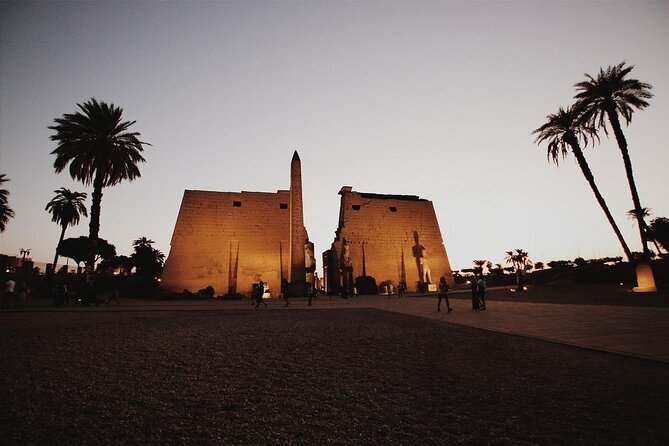
Luxor Temple after sunset-colored stone
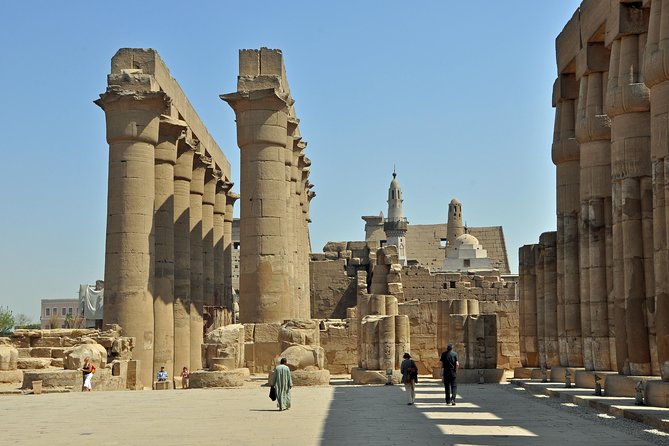
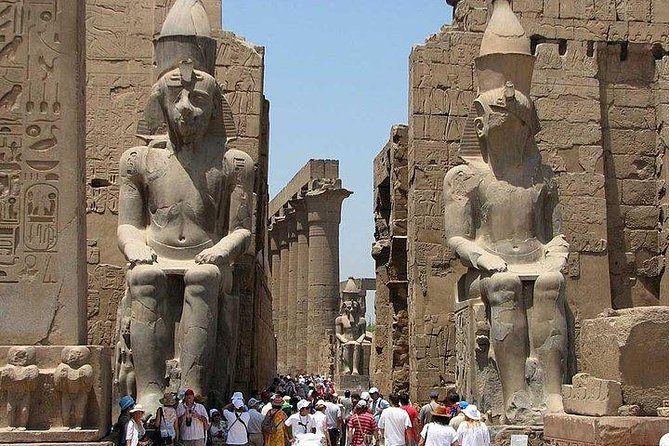
The final major monument is Luxor Temple, with about 90 minutes. It sits on the East Bank in modern Luxor, close to the river and city streets, so it feels more connected to daily life than the remote tombs and desert-edge temples.
The temple was founded around 1400 BC and developed under rulers including Amenhotep III and Ramesses II. Later additions include the courtyard, entrance pylon, and obelisks associated with Ramesses II. The complex was dedicated to Amun-Ra, Mut, and Khonsu, the same Theban religious family linked with Karnak.
Look for the relationship between Karnak and Luxor Temple. The two sites were connected by a ceremonial route, and Luxor Temple played an important role in festivals honoring the gods. Your guide can make that connection clear, turning two separate visits into one larger picture.
This is a good place to save some attention for atmosphere. The columns, courtyards, and statues are impressive on their own, but the temple is also surrounded by the modern city. You get a stronger sense here of how ancient monuments remain part of present-day Luxor rather than isolated museum pieces.
As with Karnak, the entrance ticket is extra. If you are already tired, the 90-minute visit may feel demanding, but the compact plan gives you enough time for the major structures without turning the stop into a quick drive-by.
Medinet Habu, the day’s quieter highlight
Medinet Habu, also called the Temple of Ramesses III, is scheduled for about 90 minutes on the West Bank. For many people, this becomes the surprise favorite because it is less immediately famous than the Valley of the Kings or Karnak, yet much of the temple remains in strong condition.
The complex lies at the southern end of the Theban Necropolis and is enclosed by a large mud-brick wall that may have had a defensive purpose. Inside, carved scenes and architectural remains help you picture the temple as a working royal memorial rather than a collection of disconnected ruins.
The site is also linked with the first recorded labor strike in history, when workers protested against Ramesses III. That detail gives the monument a human angle. Ancient Egypt was not only about kings, gods, and grand ceremonies. Workers, wages, food, and daily conditions mattered too.
Your guide can point out the difference between Medinet Habu and the royal tombs. One is a memorial temple built for ceremonies and offerings, while the other is an underground burial place designed for the king’s journey after death.
Entrance fees are not included. Because the tour already contains six major sightseeing stops, use the 90 minutes well. Ask your guide to focus on the best-preserved reliefs and the temple’s unusual wall and gateway rather than trying to examine every surface.
Guides, pacing, and the private format
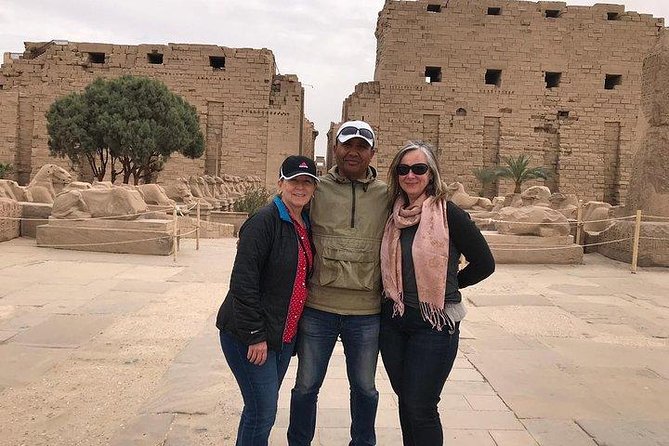
The operator provides a qualified English-speaking Egyptologist. Laila is the name most often associated with this tour, and she is praised for clear English, strong explanations, patience, organization, and help with photographs. Mohamed Noor is also specifically praised for leading a well-rounded East and West Bank day.
That does not guarantee which guide you will receive. If a particular guide matters to you, request that person when booking, but understand that availability can change.
The private setup gives you useful flexibility. You can ask for more explanation at Karnak, less time at a crowded stop, help taking photographs, or a pause when someone needs to rest. The guide is also in a better position to keep the day orderly when your group has different interests.
There is one caution. One piece of feedback raises concern about pressure to spend extra money during the day. The details are incomplete, so I would not treat it as proof of a standard practice, but you should still ask clearly about optional purchases, entrance fees, and any extra stops before leaving. A simple agreement keeps the day comfortable.
Is $85 a fair price?
At $85 per person, the tour can be good value if you want private transport and a guide for both banks. You are paying for a full day of driving between sites, hotel or Nile cruise pickup and return, an air-conditioned vehicle, bottled water, and guided visits.
The headline price is not the final sightseeing cost. Entrance fees, tips, and anything not listed are extra. Add those costs before comparing this tour with a package that appears more expensive but includes tickets.
The price makes the most sense for a couple, family, or small group that would otherwise need to arrange a car and guide separately. Solo visitors should compare the per-person cost carefully, since the private format does not become cheaper simply because the group is small.
The route also covers a lot. If you want slow photography, long museum-style explanations, or time for an unplanned local lunch, this may feel too compressed. If you have only one day in Luxor and want the major monuments handled in one organized run, the value is stronger.
Practical details for a smoother day
Pickup begins at 7:00 am. The stated stop times total roughly eight hours and 45 minutes, before transfers, so the advertised eight-hour duration is approximate. Expect the actual day to vary with traffic, site conditions, ticket lines, and how long your group spends at each monument.
Bring a snack. One direct piece of advice from the available feedback is that the day is long, and there is no meal listed among the inclusions. You receive one bottle of water, but carry more if possible.
Admission tickets are not included at any of the main paid sites. Tipping is also excluded. Free cancellation is available if you cancel at least 24 hours before the start time. Within 24 hours, the payment is not refunded, and poor weather may lead to a different date or a full refund.
This tour suits you best if you want:
- A single organized day covering both banks
- A private vehicle rather than a large group
- An English-speaking guide for ancient sites
- Help keeping a busy schedule on track
- A chance to request a particular guide, such as Laila or Mohamed Noor
It is less suitable if you dislike early starts, long walking days, extra admission costs, or a fixed sightseeing plan.
Should you book this Luxor tour?
Book it if you have one full day, want the major East and West Bank sights, and value a private guide who can explain what you are seeing. The inclusion of Medinet Habu gives the route more substance than a simple Valley of the Kings and Karnak circuit.
Before paying, confirm the pickup location, the guide’s availability, the current entrance fees, and what the $85 excludes. Ask for Laila or Mohamed Noor if possible, but do not assume the request is guaranteed.
For an energetic first visit to Luxor, this is a practical and ambitious choice. Just treat it as a full working day, not a leisurely outing.
FAQ
How long does the tour last?
The tour is advertised as approximately eight hours. The individual sightseeing periods add up to about eight hours and 45 minutes, so the actual duration may vary.
What time does pickup begin?
The listed start time is 7:00 am.
Where can I be picked up?
Pickup is offered from your hotel or Nile cruise, with return transport included. Because the information also lists Cairo as the location while describing a Luxor route, confirm your exact pickup point before booking.
Is this a private tour?
Yes. Only your group participates in the activity.
Is transportation included?
Yes. Transfers are provided in a private, air-conditioned vehicle.
Is a guide included?
Yes. The tour includes a qualified English-speaking Egyptologist guide.
Are entrance fees included?
No. Entrance fees for the Valley of the Kings, Hatshepsut’s temple, Karnak, Luxor Temple, and Medinet Habu are not included.
What else is not included?
Tips and anything not specifically mentioned are excluded. One bottle of water is included, but food is not listed.
Can I cancel for a refund?
You can receive a full refund if you cancel at least 24 hours before the experience begins. Cancellations or changes made within 24 hours are not refunded or accepted. If poor weather causes the tour to be canceled, you are offered another date or a full refund.
Newly written up around Cairo
- Monastery St Simon with Cave Church and Garbage City Private Tour★ 5.0 · 15 reviews
- St Simon Monastery ,Cave Church , Garbage City and Coptic Cairo Private day tour★ 5.0 · 29 reviews
- half-day Saint Simon monastery and miracle of Moqqatam mountain★ 4.0 · 4 reviews
- Pyramids of Giza & Sphinx & valley temple Tour with Camel Ride & Egyptian lunch★ 5.0 · 5 reviews
- Shared Tour To Abu Simbel Temple From Aswan★ 5.0 · 7 reviews
- Tour to Giza Pyramids, Sphinx, Valley Temple, Camel Ride & Lunch★ 5.0 · 7 reviews
- Pyramids of Giza & Sphinx & valley temple Tour with Egyptian lunch★ 5.0 · 7 reviews
- Overnight Tour Moses Mountain St. Catherine Monastery from Cairo★ 5.0 · 21 reviews
Karnak & Valley of the Kings Tours, compared.
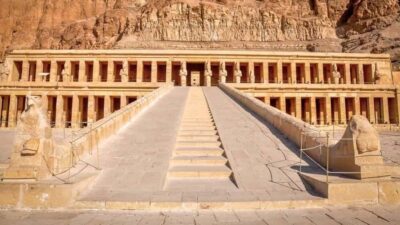
Valley of the Kings and Hatshepsut Temple Day Tour
Read our review →
Valley of Kings, Hatchepsut Temple ,Karnak & Luxor-DayTour
Read our review →
Full Day Tour of Luxor West Bank Temples and Tombs (Private)
Read our review →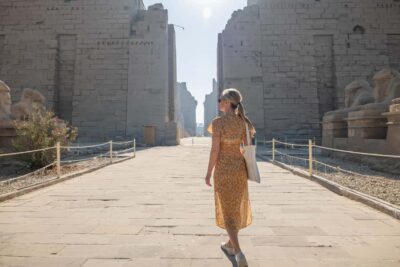
Private Half Day West Bank Tour to Valley of the Kings Queen Hatshepsut Temple and Colossi of Memnon
Read our review →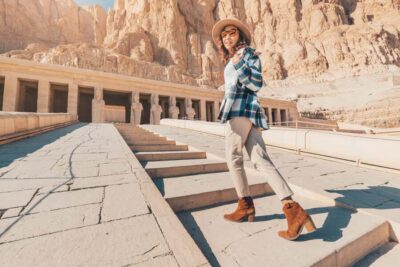
Valley of the Kings and Hatshepsut Temple w/Nile Boat
Read our review →
Dendera Temple All-Inclusive Tour & Felucca Ride
Read our review →
Hot Air Balloon Ride Over Temple of Hatshepsut
Read our review →Browse the lists this tour appears in