
Reviewed · MEXICO CITY TEMPLE TOURS
Mexico City: Teotihuacan, Tlatelolco & Guadalupe Shrine Tour
Teotihuacan is the headline attraction, but the real strength of this day is the contrast between three very different sides of Mexico. You move from an ancient city and its massive pyramids to the modern religious power of Guadalupe, with Tlatelolco connecting the two through Mexico City’s difficult past.
I like the way the guides bring the sites to life, especially storytellers such as Alex, Lili, Alan, and Alicia. I also like the value: for $49, you get transport, entrance to Teotihuacan, guided visits, tequila tasting, and several major sights in one day. The tradeoff is a long schedule with potentially large groups, sometimes 25 to 50 people, and lunch may be a basic tourist-oriented buffet rather than a memorable local meal.
Key points to know before booking
- Tlatelolco adds serious historical context: You learn about temples, human sacrifice, mass graves, and the 1968 massacre site before reaching the pyramids.
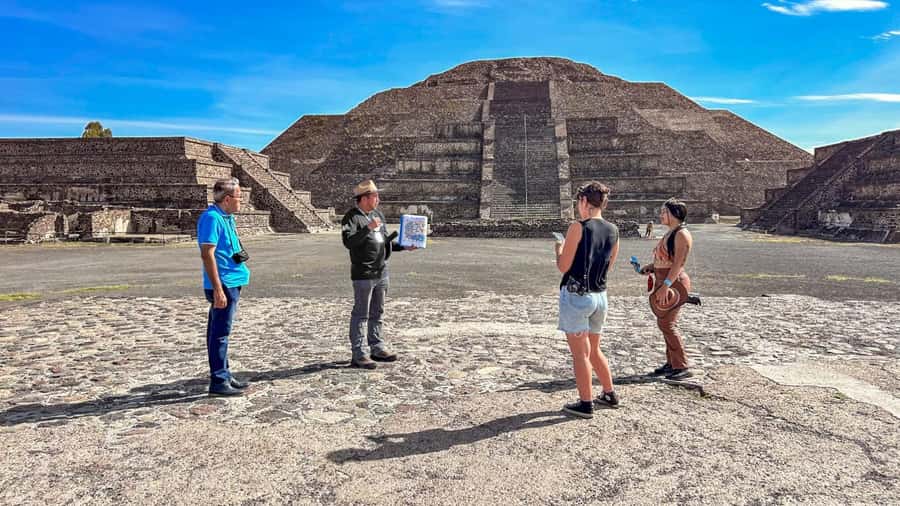
- Teotihuacan is the grand finale: You have about two hours for the Avenue of the Dead, Pyramid of the Sun, Pyramid of the Moon, and nearby temples.
- The guides make or break the day: Alex, Lili, Alan, Alicia, Leo, and several others receive especially strong praise for clear explanations and lively storytelling.
- The tequila stop is broader than tequila: Tastings may include pulque, mezcal, and other agave-based drinks, along with an obsidian workshop.
- Lunch is optional and worth considering carefully: Some people enjoy the buffet and music, while others find it overpriced or too touristy.
- Prepare for heat and walking: Bring water, sunscreen, and a hat for the open archaeological site.
Why this nine-hour route works
Mexico City has enough major sights to fill several days, so fitting Tlatelolco, Guadalupe, and Teotihuacan into one outing is ambitious. This tour works best if you want a broad introduction rather than a slow, scholarly visit to one site.
The route also has a useful historical shape. Tlatelolco introduces the city’s pre-Hispanic and modern political past. Guadalupe shows the religious identity that grew after the Spanish conquest. Teotihuacan then takes you farther back, to one of the great ceremonial cities of ancient Mesoamerica.
You will spend much of the day on a coach, but that is part of the value. Teotihuacan is far beyond central Mexico City, and reaching it independently takes planning. Here, the driver handles the city traffic and the long road to the archaeological zone while your guide prepares you for each stop.
The downside is pace. This is not a relaxed day with long café breaks. It is a full itinerary, and traffic can affect the timing. You should expect to return tired, especially after walking in the sun at Teotihuacan.
Other temple visits near the world we have written up
- Lisbon: Jerónimos Monastery Entrance Ticket
★ 4.1 · 14,164 reviews - Angkor Wat Sunrise or Sunset Tour with Guide from Siem Reap
★ 5.0 · 12,109 reviews - Teotihuacan, Guadalupe Shrine & Tlatelolco Day Tour with Lunch
★ 5.0 · 11,603 reviews
Tlatelolco begins with Mexico City’s difficult past
The first major stop is Tlatelolco, reached after roughly 30 minutes by coach. The guided visit lasts about 45 minutes, giving you time to see the archaeological remains and hear the story behind the site.
Tlatelolco was an important pre-Hispanic city with temples dedicated to Mexican deities. The guide also covers the darker side of its past, including human sacrifice and mass graves. The area is tied to the so-called Lovers of Tlatelolco, one of the site’s more intriguing archaeological discoveries.
This stop matters because it complicates the usual Mexico City story. You are not simply looking at old stones. You are hearing about a major indigenous center, the Spanish invasion, and the layers of history that remain beneath the modern capital.
Tlatelolco also carries modern importance because of the 1968 massacre. The supplied schedule does not promise a long, separate treatment of that event, so your experience will depend on the guide and the time available. Still, the stop gives you an early dose of the city’s political and social history before the tour turns toward religion and ancient architecture.
I would pay close attention here. It is the shortest major historical stop, and the explanations provide useful context for everything that follows.
Guadalupe shows the living heart of Mexican Catholicism
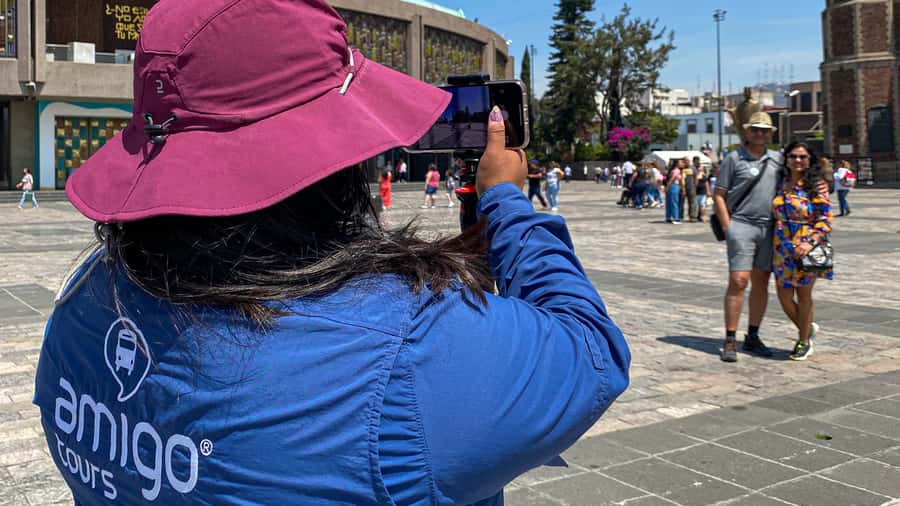
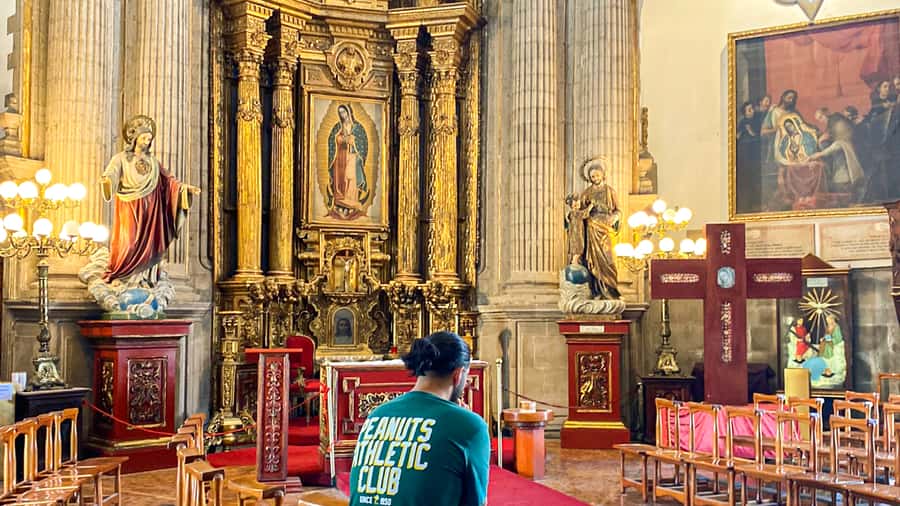
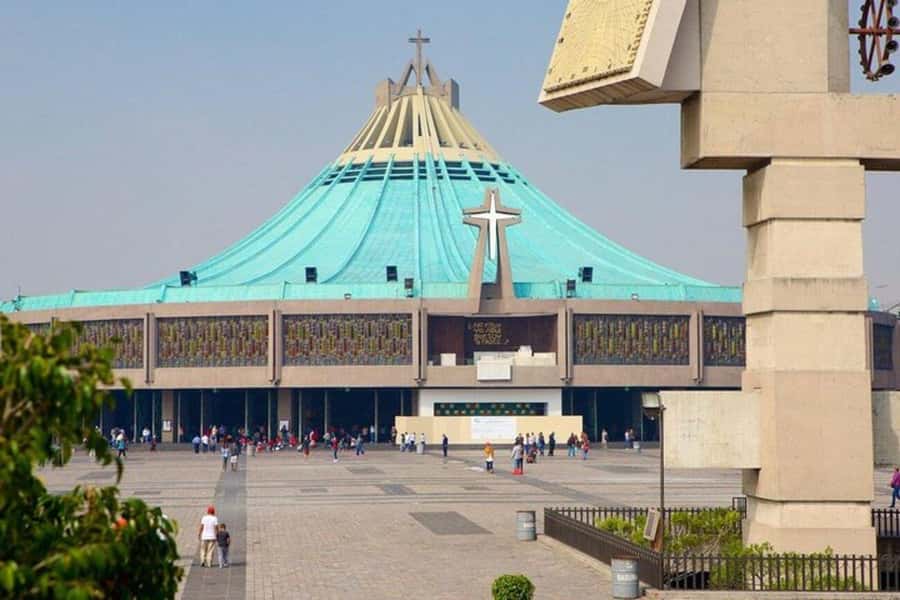
After Tlatelolco, the coach continues for about 15 minutes to the Basilica of Our Lady of Guadalupe. The guided visit lasts around 90 minutes, making this one of the day’s more substantial stops.
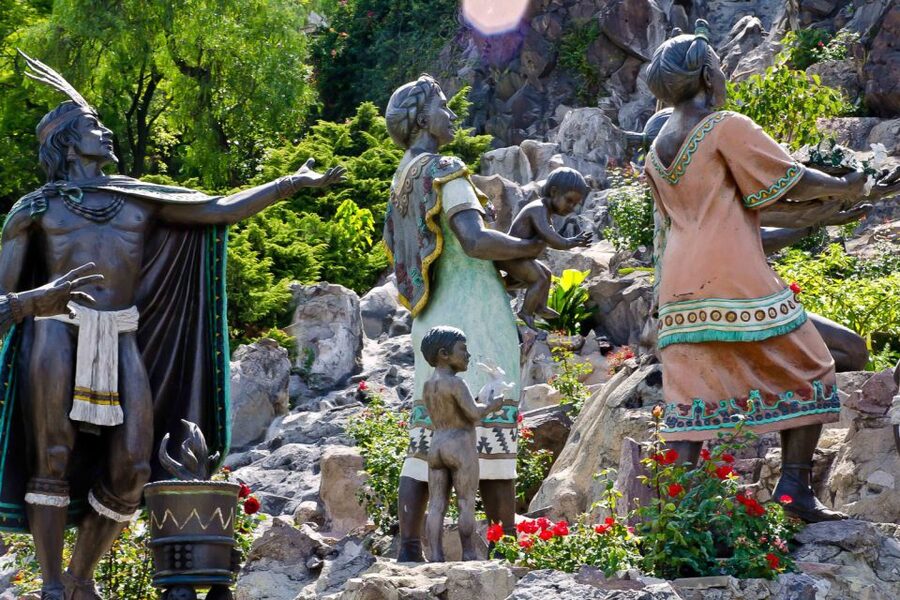
The Basilica is one of the world’s leading Catholic pilgrimage sites. Inside, you can see the cloak bearing the image of Guadalupe and learn why the shrine matters so much to Mexican culture and religious life.
The story centers on the appearance of Our Lady of Guadalupe to an Indigenous Mexican, a tradition that helped shape Mexican Catholic identity. Your guide explains the story and its place in modern Mexico, rather than treating the Basilica as just another church interior.
This is a very different experience from Teotihuacan. At the pyramids, you are looking at the remains of a ceremonial city. At Guadalupe, the faith is still active and personal. That contrast is one of the strongest reasons to choose this particular combination of sites.
A few people who enjoyed the tour wished for more time at the Basilica, so keep your expectations realistic. Ninety minutes can feel short if you want to study every detail or attend to the religious side of the visit at a slower pace. Still, the stop is long enough to understand why Guadalupe is more than a photo opportunity.
The agave tasting adds a lighter break
After the Basilica, you spend about an hour on the road before reaching the tasting and shopping stop. This section lasts roughly 40 minutes and includes an obsidian workshop, free time, and spirits tasting.
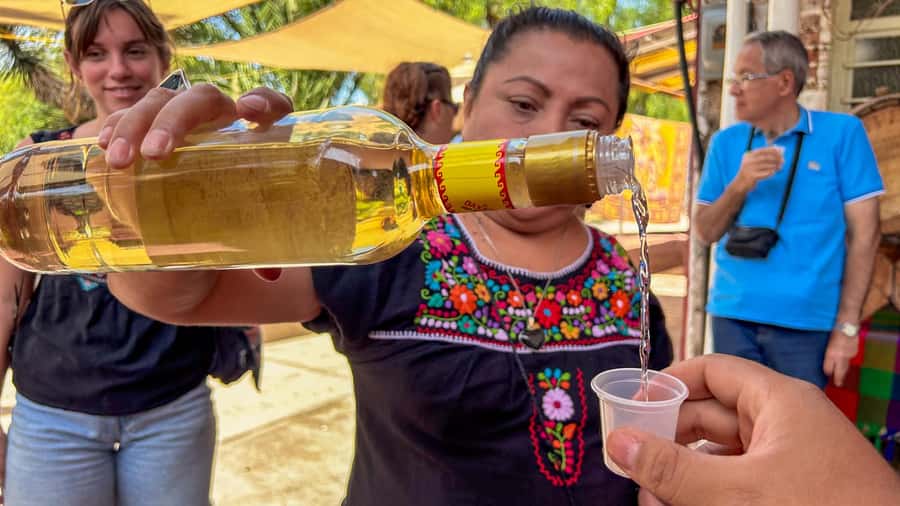
The advertised highlight is tequila, but the tasting can include a wider range of agave drinks. Pulque and mezcal have also appeared in the experience, giving you a chance to compare different Mexican traditions rather than simply sample one familiar spirit.
The obsidian workshop adds a useful cultural element. You learn about an ancient craft and see how this volcanic glass has been shaped and used. The stop also gives you time to browse and possibly buy something, though shopping is clearly part of the visit.
This section will appeal to you if you enjoy food, drink, and demonstrations alongside formal sightseeing. If you prefer archaeological sites without commercial stops, it may feel like a detour. The tasting is included, but any purchases are your choice, and the schedule does not promise a long workshop.
A different set of gates, same trip:
- From Bangkok: Ayutthaya Temples Guided Tour with Lunch
★ 4.7 · 10,535 reviews - Siem Reap: Angkor Wat: Small-Group Sunrise or Sunset Tour
★ 5.0 · 9,444 reviews - Athens: Cape Sounion & Poseidon Temple Sunset Half-Day Trip
★ 4.8 · 8,241 reviews - Ubud: Monkey Forest, Jungle Swing, Rice Terrace, and Water Temple
★ 5.0 · 7,160 reviews
Lunch and the fiesta depend on your chosen option
The next stop is Tlacaelel, with about 45 minutes set aside for lunch. A Mexican buffet is included only if you select that option when booking. Food and drinks are otherwise not included.
The meal is designed as a cultural break, with traditional dances and music creating a typical fiesta atmosphere. Some people enjoy the live entertainment and find the buffet convenient, especially with a packed day ahead.
I would read the meal option carefully before paying for it. Some visitors find the food delicious and appreciate the easy arrangement. Others describe the restaurant as a tourist trap, with basic buffet food and extra charges for drinks and tips. One useful suggestion is to choose the meal only if convenience and entertainment matter more to you than finding your own lunch.
The schedule is tight, so bringing snacks is sensible even if you purchase the buffet. A nine-hour outing with several transfers can leave you hungry between stops. Water is especially important because the final archaeological visit is outdoors.
Teotihuacan delivers the day’s biggest view
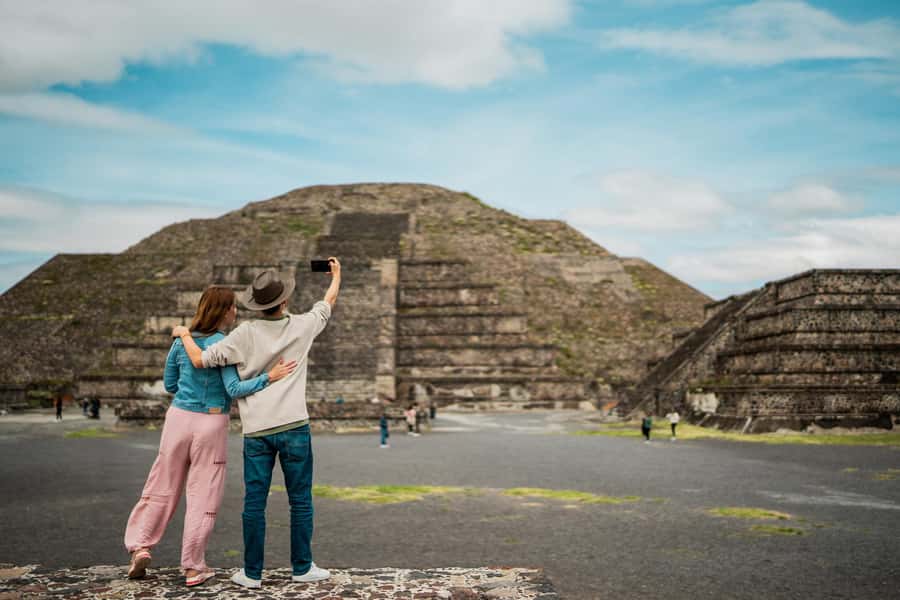
The final major stop is Teotihuacan, reached after about 15 minutes from lunch. You have approximately two hours for a guided visit, photos, sightseeing, and personal exploration.
This is the tour’s main event. Teotihuacan was a major religious city, and its scale is difficult to grasp until you see the Avenue of the Dead stretching between the monuments. The Pyramid of the Sun rises more than 200 feet and is the largest pyramid in Mesoamerica.
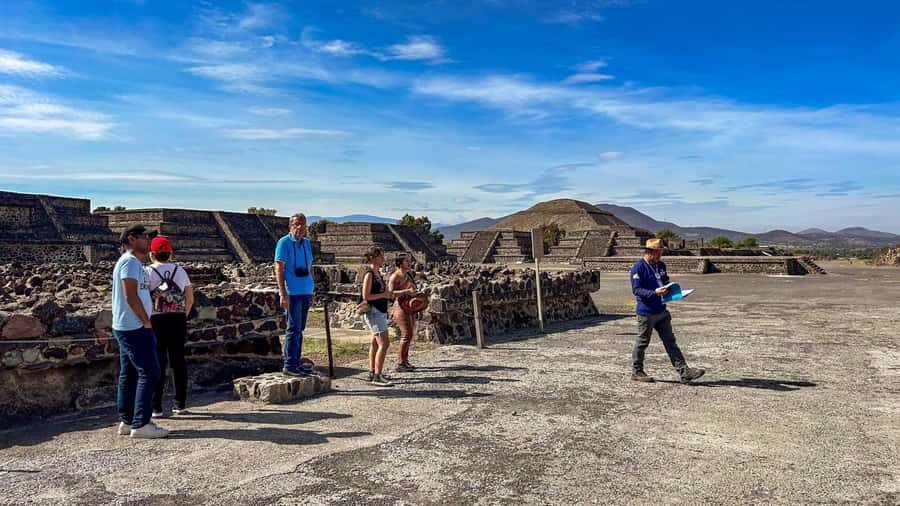
Your guide covers the origins of the city and points out major structures, including the Pyramid of the Moon, the Temple of the Feathered Shells, and the temples of Quetzalpapalotl. The tour helps you understand that Teotihuacan was not simply a pair of pyramids. It was a planned ceremonial center with broad avenues, plazas, temples, and a powerful religious system.
Two hours is enough to see the principal sights and take photographs, but not enough for every corner of the archaeological zone. You will need to follow the guide’s timing and decide what matters most to you. Some people would gladly trade time at the Basilica for more time here, while others appreciate having a balanced day.
Bring a hat, sunscreen, and water. The site is exposed, and the walking adds up. Comfortable shoes are essential. The open setting also makes this the most physically demanding part of the tour, although the activity is not suitable for wheelchair users.
Guides are the strongest part of the experience
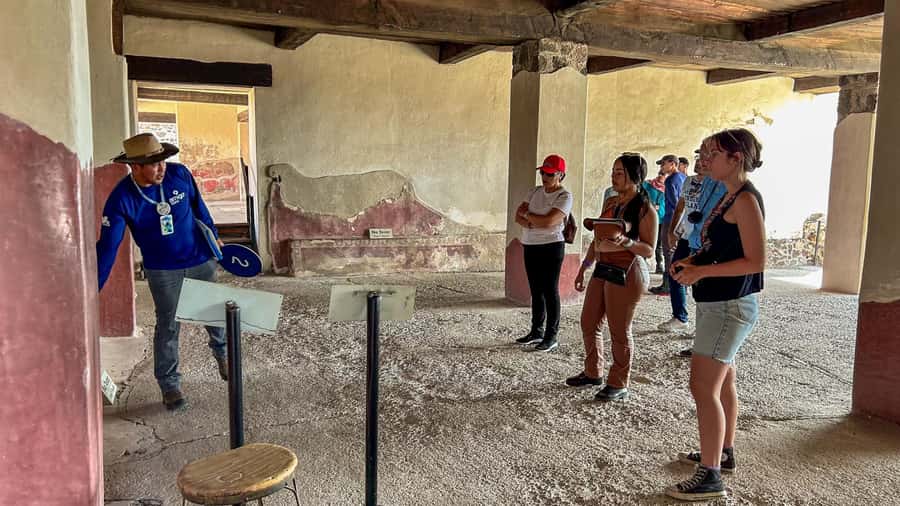
The tour is available in English or Spanish, and guide quality appears to be its most consistent strength. Names vary by departure, but Alex, Lili, Alan, Alicia, Leo, Sergio, Fernanda, Gio, and others have been praised for clear explanations, humor, patience, and strong storytelling.
Alex is repeatedly described as energetic and able to keep a long day moving. Lili is praised for expressive storytelling and for explaining the schedule clearly. Alan receives high marks for answering questions about Mexico City, the Spanish invasion, and Teotihuacan. Alicia is noted for precise explanations and enthusiasm.
This matters because the sites are much better with context. Without a guide, Tlatelolco can look like a small ruin, Guadalupe can seem like a crowded church complex, and Teotihuacan can become a photo stop. A good guide connects the places and explains how different periods of Mexican history fit together.
The tour may divide a large coach group into smaller language groups. That helps, but you should still expect some waiting and group management. One useful tip is to listen carefully whenever the guide explains where to meet and how much free time you have. The transitions can be busy, and the schedule is not always obvious at first.
Transport and group size shape the day
Pickup is offered at MIGA Café at about 8:20 AM or behind the Palace of Fine Arts at about 8:50 AM. The listed meeting points are central, but MIGA Café can be crowded and chaotic at departure time. Arrive early and look for the tour staff rather than assuming the coach will be easy to spot.
The coach provides welcome air conditioning between stops. That is valuable in Mexico City traffic and on the longer ride toward Teotihuacan. Drivers such as Emerson, Felix, Panchito, and José Luis have been praised for safe and patient driving.
Group size is the main practical uncertainty. Some departures feel relatively personal with around 25 people, while others may place 40 to 50 people on the coach before splitting into smaller guided groups. If you want quiet, flexible sightseeing, look for the private or small-group option.
The return is scheduled to the central drop-off points after roughly one hour on the road from Teotihuacan. Traffic can affect the actual arrival time, so avoid booking an evening activity that requires you to be back at a precise minute.
Is $49 good value?
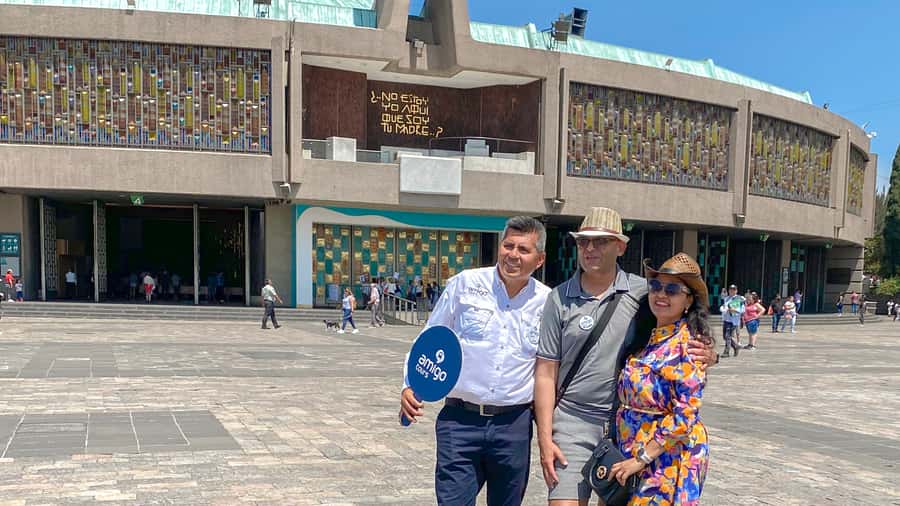
At $49 per person, this is a strong value if you want several major sights in one day. Transport alone to Teotihuacan takes time and planning, and the tour adds a guide, the archaeological entrance, Tlatelolco, Guadalupe, and a tasting stop.
The value is less clear if you want a slow visit or a carefully chosen meal. Lunch is not automatically included, and the optional buffet may not suit people seeking independent local food. The tour also includes shopping and a tasting stop, which some people enjoy and others would rather skip.
I see the price as best for a first visit to Mexico City. You get a broad overview and can decide which places deserve a return visit. Teotihuacan is the obvious candidate for a longer second outing, while Guadalupe may deserve more time if religious art and pilgrimage sites interest you.
Who should book this tour?
Book it if you want history, religion, archaeology, and Mexican food and drink in one organized day. It suits first-time visitors, families who prefer a planned route, and anyone who does not want to arrange transport to Teotihuacan alone.
It is also a good choice if you enjoy guides who tell stories, answer questions, and keep a large group engaged. The repeated praise for Alex, Lili, Alan, Alicia, and other guides suggests that the human side of the tour can make a major difference.
Think twice if you dislike coach groups, commercial tasting stops, or fixed schedules. Independent visitors may prefer to spend a full day at Teotihuacan and choose their own restaurant. Anyone with mobility concerns should note that the activity is not suitable for wheelchair users.
Final verdict
I would book this tour for an efficient first look at Mexico City’s ancient, religious, and modern identity. Teotihuacan is the payoff, but Tlatelolco and Guadalupe give the pyramids more meaning by placing them within Mexico’s long and complicated story.
Go prepared for a long day, variable group size, plenty of walking, and a lunch option that may be more convenient than memorable. Bring water, sunscreen, a hat, and an open mind about the tasting stop. If you value strong storytelling and broad coverage over a leisurely pace, $49 is a sensible buy.
FAQ
How long does the tour last?
The tour lasts about nine hours, including transport, guided visits, tasting, lunch time, and the return journey to Mexico City.
What languages are available?
The live tour guide is available in English or Spanish.
Where does pickup take place?
Pickup is offered at MIGA Café at about 8:20 AM and behind the Palace of Fine Arts at about 8:50 AM.
Is lunch included?
A Mexican buffet lunch is included only if you select that option. Food and drinks are not included otherwise.
What is included in the price?
Round-trip transportation from the meeting point, a professional guide, entrance to Teotihuacan, visits to Tlatelolco and the Guadalupe Shrine, and tequila tasting are included. Hotel pickup is included only with the private option.
Is the tour suitable for wheelchair users?
No. The activity is listed as unsuitable for wheelchair users.
Newly written up around the world
- Kyoto: Fushimi Inari Taisha Shrine Walking Tour with Guide★ 4.8 · 18 reviews
- Xi’an: Terracotta Army, Lunch, City Wall, Pagoda, Bazaar★ 5.0 · 72 reviews
- Varanasi in a Day Ancient Temples Sarnath and Ghats★ 5.0 · 17 reviews
- Hidden Corners of Varanasi Secret Alleys Temples and Traditions★ 5.0 · 9 reviews
- Terracotta Army, Big Wild Goose Pagoda&City Wall Full Day Tour★ 4.5 · 47 reviews
- Xi’an: Daci’en Temple(Great Wild Goose Pagoda) E-ticket★ 3.3 · 57 reviews
- Transfer from Jodhpur to Udaipur via Jain Temple in Ranakpur★ 4.6 · 28 reviews
- Bangkok: Grand Palace and Wat Arun Guided Walking Tour★ 4.5 · 118 reviews
Mexico City Temple Tours, compared.
Private Tour: Teotihuacan and Guadalupe Shrine
Read our review →
Teotihuacan, Shrine of Guadalupe & Tlatelolco Day Tour
Read our review →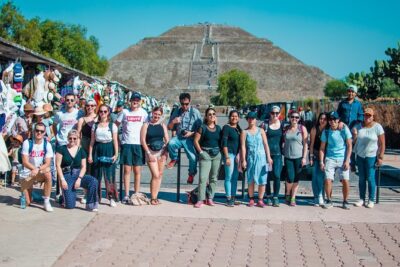
Pyramids of Teotihuacan, Guadalupe Shrine & Tlatelolco Tour
Read our review →
Teotihuacan & Guadalupe Shrine + Xochimilco, Coyoacán & Frida Kahlo Combo Tour
Read our review →
Balloon Flight with Teotihuacan & Guadalupe Shrine Full day Tour
Read our review →Browse the lists this tour appears in