
Reviewed · NEW DELHI TEMPLE TOURS
New Delhi: Akshardham Temple Tour with Water and Light Show
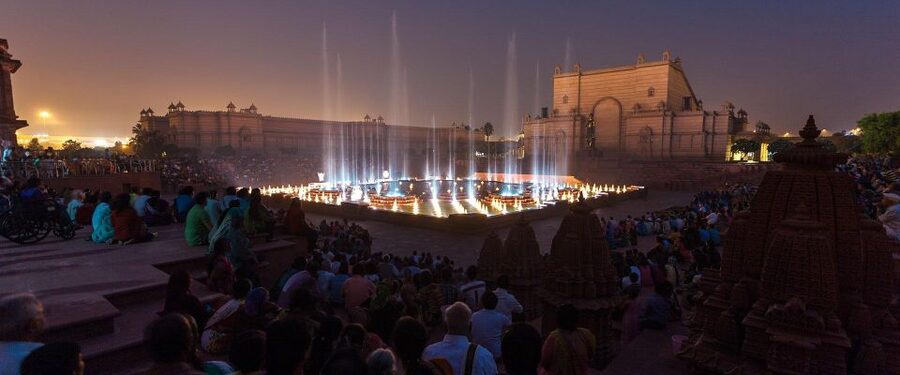
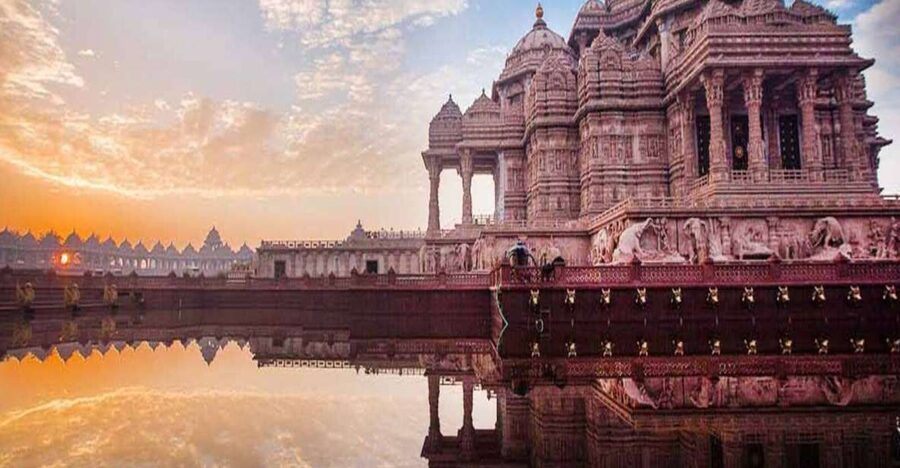
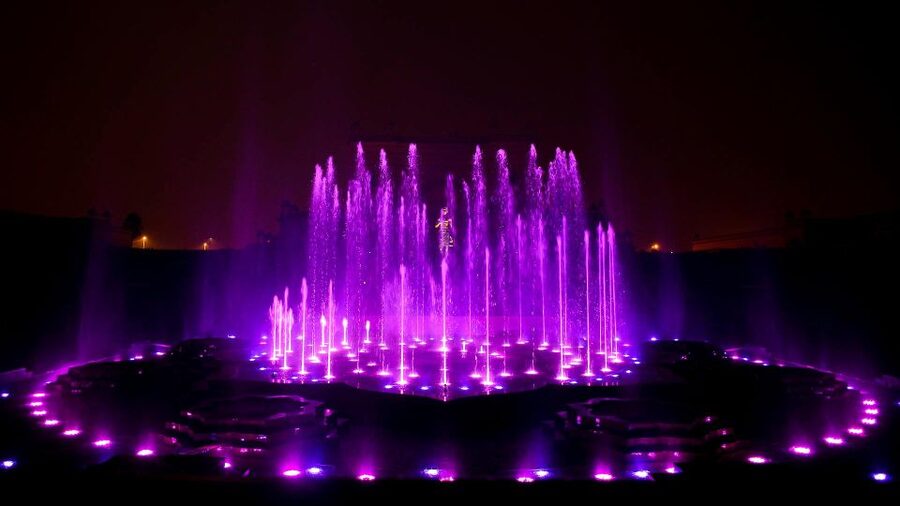
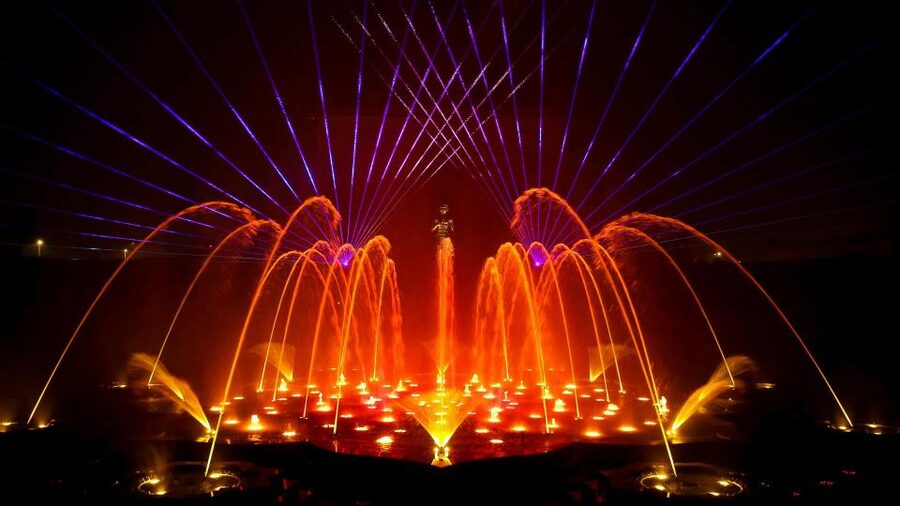
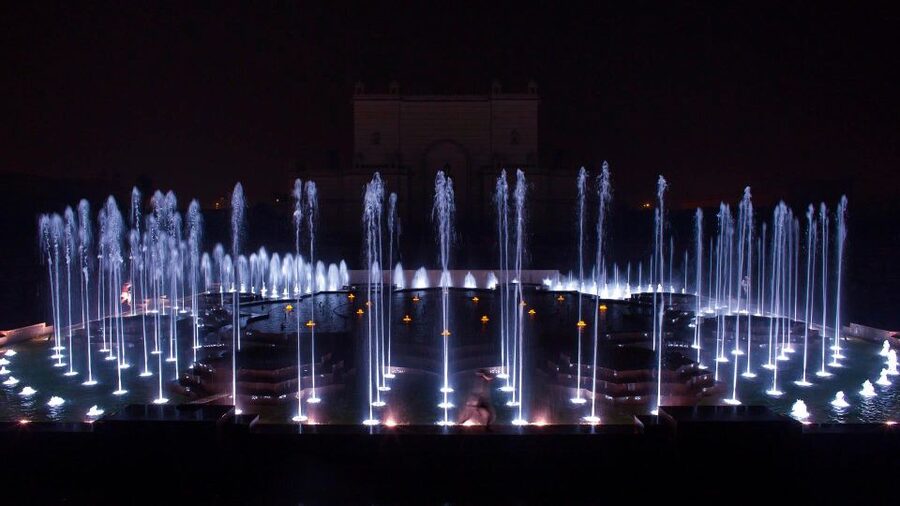
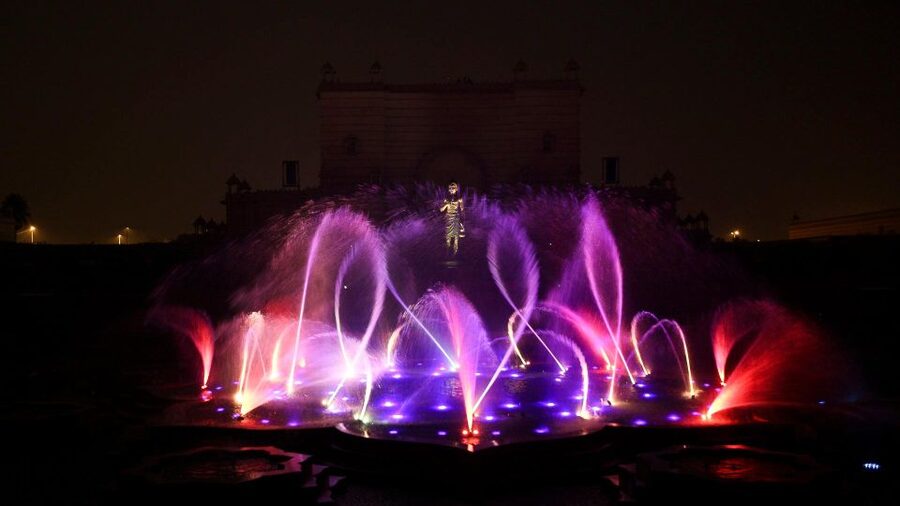
The evening finale is the 24-minute Sahaj Anand Water Show, where fountains, lasers, video projections, underwater flames, and surround sound tell a story from the Kena Upanishad. Before that, you explore a vast temple covered in detailed carvings, including depictions of thousands of gods and goddesses, then move through exhibitions about Indian culture, faith, science, and family values.
I like the private car and pickup service, especially in Delhi traffic, and I like having a guide to handle security procedures and explain what you are seeing. The main drawback is strict entry control: phones, cameras, and some bags are not allowed inside, so you must store them or leave them behind. The temple is also closed every Monday.
Key points at a glance
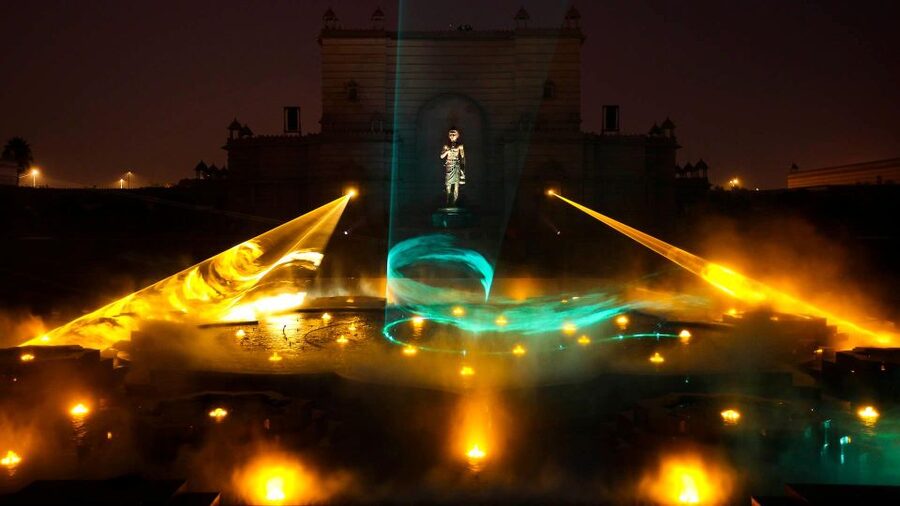
- The water show is the evening highlight: A 24-minute production combines fountains, lasers, projections, flames, music, and narration.
- Three exhibitions add substance: Sahajanand Darshan, Neelkanth Darshan, and Sanskruti Darshan cover moral values, a spiritual journey across India, and ancient Indian achievements.
- Private transport saves effort: Pickup and drop-off are available from hotels, airports, stations, Gurugram, Noida, or another agreed location in New Delhi.
- Guides make the temple easier to understand: Guides such as Anas, SK, Jassi, Anmol, and Vikram have helped visitors follow the stories and entry procedures.
- Security rules are strict: Do not bring pets, alcohol, drugs, short skirts, phones, cameras, or prohibited bags into the temple complex.
- The $21 price is strong value if tickets are included: Check the selected option carefully, since the ticket is listed as included only when that option is chosen.
Why the water and light show is worth planning around
Akshardham is impressive during the day, but the show gives the visit a clear finish. The production tells a story from the Kena Upanishad through water jets, colored light, video, fire effects, music, and spoken narration. It is not simply a fountain display. The message gives the spectacle a spiritual and cultural frame.
You may find the show more moving if your guide translates or explains the story. Guides have helped visitors follow the narration in English, Spanish, or French, and some have positioned their groups for a better view. Ask your guide about the best place to sit before the performance begins.
The show lasts 24 minutes, but your total visit takes much longer. The temple, exhibitions, security checks, walking, and waiting for the performance are all part of the evening. Allow three to five hours for the full outing, and more time if Delhi traffic is slow.
One practical point matters: some visitors wanted to remain until the final moment but left early to avoid the crowd afterward. You can ask your guide about the exit plan, but leaving early means missing part of the production. I would stay for the complete show unless you have a tight airport connection.
Other temple visits near India we have written up
- Old Delhi Food-Spice Market-Temples Tour Soon Featured on NETFLIX
★ 5.0 · 304 reviews - Private Guided Spiritual Walk in Banganga Hindu Temples
★ 5.0 · 271 reviews - Taj Mahal Sunrise with Lord Shiva Temple:- All Inclusive
★ 5.0 · 207 reviews
Entering Akshardham with the right expectations
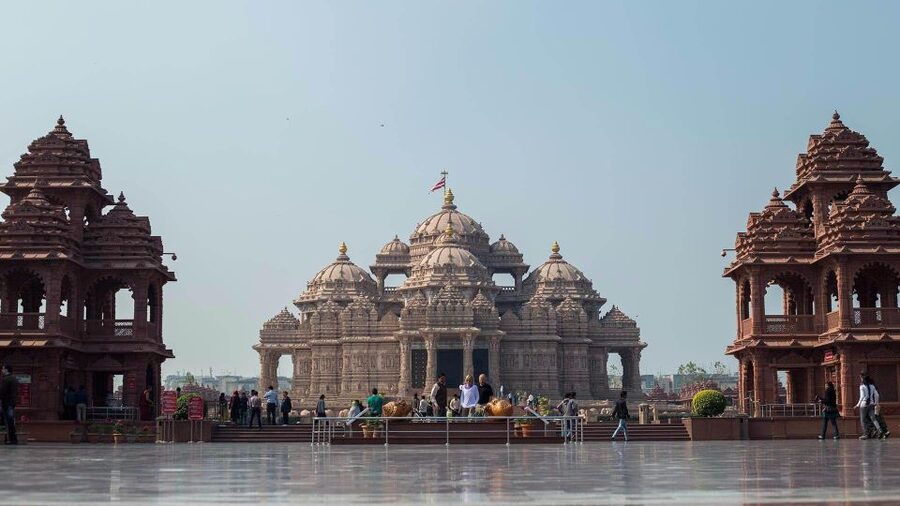
Akshardham is a major religious and cultural complex, not just a photo stop. The scale is the first thing you notice. Detailed stonework covers the temple, and the supplied description highlights around 20,000 carved figures of gods and goddesses. You will want time to look up, across, and along the walls rather than rushing from one stop to the next.
The carvings are only part of the experience. The temple presents a carefully ordered view of Indian religious stories, moral values, art, and cultural achievement. A guide adds useful context, especially if you are not familiar with Hindu traditions or the names of the figures shown.
Security is serious. Phones and cameras are not allowed inside, and restrictions can also apply to backpacks and other personal items. Several visitors specifically wished they had received clearer instructions before arrival. Plan for this by carrying as little as possible and asking your operator exactly what you may bring.
Dress modestly. Short skirts are not permitted, and the setting calls for respectful clothing. Pets, alcohol, and drugs are also prohibited. These rules are easy to follow, but knowing them before pickup makes the visit calmer.
The no-camera rule is frustrating if you want a record of the carvings. It also changes the mood of the visit. Instead of stopping for photos, you spend more time looking at the building itself. If photography is central to your sightseeing, this limitation may bother you. If you can accept it, the visit feels less hurried and less focused on taking pictures.
Sahajanand Darshan and the values behind the exhibits
The first exhibition, Sahajanand Darshan, uses multimedia displays to present ideas such as nonviolence, perseverance, prayer, morality, and family harmony. The format is designed to give each exhibit its own message and presentation rather than treating the building as one long gallery.
This section is useful if you want more than architecture. You receive an introduction to the values that shape the temple’s religious message, and the displays give your guide something concrete to explain. The content is devotional, so it may appeal most to people interested in faith, culture, and moral teaching rather than only ancient buildings.
The multimedia approach also makes this portion easier to follow for first-time visitors. You do not need a detailed background in Indian religious stories to understand the broad themes. Still, the experience is presented from a particular spiritual viewpoint, not as a neutral museum survey of every Indian tradition.
That distinction helps you set the right expectation. This is a temple complex presenting its own beliefs and ideals. I would approach it as a cultural and religious experience, with curiosity rather than expecting a conventional art museum.
Neelkanth Darshan follows a 12,000-kilometer journey
Neelkanth Darshan follows Neelkanth Varni on an epic journey across the Indian subcontinent. The route stretches from the icy Himalayas in the north to the warm beaches of the south, covering a stated distance of 12,000 kilometers.
The presentation focuses on sacrifice, service, faith, and the eternal soul. It gives the visit a human journey to follow, which helps connect the spiritual ideas to places and movement across India. Your guide can explain how the route fits into the wider story and point out the meaning behind the scenes.
I find this section particularly helpful for putting India’s size into perspective. You are not only hearing abstract lessons. You are following a figure across mountains, plains, and coasts, with the story moving through different parts of the country.
The pace of the tour matters here. If your pickup is late or Delhi traffic eats into the schedule, you may feel rushed through the exhibitions before the show. Confirm your start time and allow enough room for traffic. One booking that began around 4 p.m. found that timing well suited to seeing the complex and reaching the show without a frantic finish.
A different set of gates, same trip:
- Old Delhi Temples and Spiritual Sites Private 6-Hour Tour
★ 4.8 · 204 reviews - Private Delhi Temples and Spiritual Sites 6 Hours Tour
★ 5.0 · 171 reviews - Tipu Palace + Koté Vishnu + Fort + KR Market + Jain Temple = Bengaluru Pété Walk
★ 5.0 · 150 reviews - Mumbai: Kanheri Caves and The Golden Pagoda Temple
★ 4.7 · 108 reviews
The 12-minute cultural boat ride
Sanskruti Darshan is a 12-minute boat ride through ancient Indian history. You board a boat and pass scenes showing life in the Vedic era, an old university, and an eye operation said to have taken place more than a thousand years ago.
The ride presents Indian contributions to learning, medicine, education, and culture in a compact format. It is a change of pace after the walking and indoor displays, and it gives families or mixed-interest groups something easy to enjoy together.
Do not think of it as a long river cruise. Twelve minutes goes quickly. Its value comes from the scenes and narration, not from time on the water. Guides have helped visitors understand the boat ride alongside the other exhibitions, which is useful because the displays can move at a steady pace.
Some people may prefer more time with the temple carvings, while others appreciate the boat as a break from religious architecture. The private format gives your guide some room to adjust the pace, although the show schedule still sets a firm end point.
Delhi sights before Akshardham
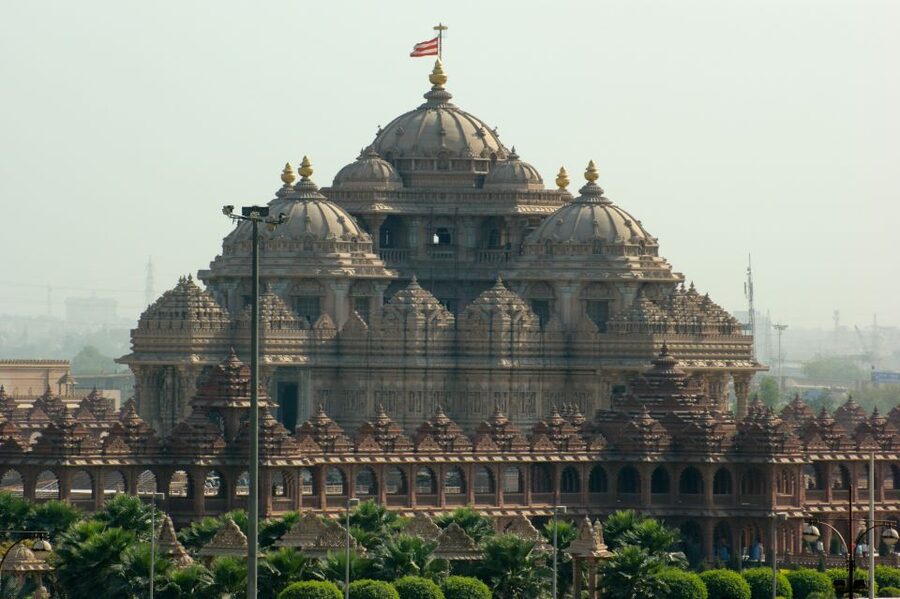
The published route begins with pickup from your hotel or another selected location, followed by Delhi landmarks. India Gate is a war memorial and one of the city’s best-known symbols. You can see the monument and hear about its place in modern Delhi.
The route also refers to Rajpath, the ceremonial avenue leading toward Rashtrapati Bhavan and Parliament House. You view these government buildings from outside, since entry is not included. This is more of a quick orientation to New Delhi than a full architectural tour.
That distinction matters. If you want extended time for photographs at India Gate or the government district, tell your guide early. One person felt the experience would have improved with more time to stop and take pictures at India Gate and Parliament. The itinerary then moves toward Akshardham, which is the main event.
Some reported outings also included places such as Qutub complex, Humayun’s Tomb, or Old Delhi, but these additions are not guaranteed by the core description. Ask what is planned for your booking instead of assuming every Delhi landmark is included. The tour is at its best when you know if you are buying an Akshardham evening visit or a broader day of sightseeing that ends there.
Private transport through Delhi traffic
Pickup is available from a hotel, airport, railway station, or another agreed location in New Delhi, Gurugram, or Noida. The private car is a real benefit in a city where traffic can turn a short route into a long one.
Several guides and drivers have been praised for arriving on time, handling busy roads calmly, and helping solo visitors feel secure. Names that have received particularly warm attention include SK, Anas, Anmol, Jassi, Vikram, Ali, Adin, and Nagendra Singh, though your assigned guide may be different.
The driver and guide perform different jobs. The driver gets you through Delhi and back safely, while the guide explains the temple, helps with procedures, and may translate parts of the show. That division works well, especially if you are visiting Delhi for the first time or arriving directly from the airport.
Expect traffic delays. One outing took about an hour to reach the temple because of heavy traffic. Build that possibility into your plans, especially if you are connecting to a flight or have a fixed evening appointment after the show.
The pickup flexibility also works well for a first day in Delhi. You can see a few central sights, have a guide take care of the confusing parts of the visit, and end at Akshardham without working out several separate taxi rides.
Guide quality and language support
The guide can make the difference between a beautiful building and a meaningful visit. The experience offers English, Spanish, and French guides. Confirm your requested language before the day, since one Spanish booking did not receive the promised Spanish guide. Fortunately, the assigned guide still helped explain each part, but it is better to settle this point in advance.
A good guide will explain the temple’s symbolism, describe the exhibitions, help you handle security, and translate or summarize the water show. Guides such as Anas, SK, Jassi, Anmol, and Vivek Mathur have been praised for clear explanations, patience, and thoughtful support.
Solo visitors may especially value the private format. One solo woman felt safe and welcomed with her guide and driver, while another solo visitor appreciated having help in an area where phones were not allowed. That kind of practical support is more useful here than a long lecture about dates and architecture.
Ask questions. The tour works best when you treat the guide as a cultural interpreter, not simply someone who leads you from door to door.
Is $21 good value?
At $21 per person, the tour is reasonably priced if your chosen option includes the temple and exhibition tickets. The package includes hotel pickup and drop-off, private car transport, a professional guide, parking fees, taxes, and a water bottle. The ticket is listed as included only when that option is selected, so check the exact booking choice before paying.
You are paying for transport, organization, and explanation as much as for admission. Delhi taxis and traffic can be tiring to manage, and private transport removes much of that work. The value is strongest for first-time visitors, families, solo visitors, and anyone arriving from an airport or station.
The ticket price alone does not tell the whole story. If you already have transport and can arrange your own entry, a self-guided visit may cost less. You would also need to manage the strict security rules, timing, and return journey yourself.
Dinner is not part of the listed inclusions. Some outings have included a meal stop, but the quality and setting may vary, and one meal was found too spicy and served in a noisy venue. Treat dinner as an optional extra, not a reason to book this experience.
You can cancel up to 24 hours before the activity for a full refund, and the reserve-now, pay-later option keeps your plans flexible. Availability and start times should still be checked before you commit.
Who should book this experience?
I would recommend it to you if you want Akshardham’s architecture, exhibitions, and water show in one organized evening. It suits a first visit to Delhi, particularly when you want hotel pickup, a private vehicle, and someone to explain religious and cultural details.
It also works well for people who dislike negotiating city transport. The driver handles Delhi roads while the guide handles the temple procedures. That makes the outing feel calmer than arranging several separate rides.
Families may appreciate the mix of short-format exhibits, a boat ride, large-scale carvings, and a colorful show. People interested in Hindu traditions, Indian history, and spiritual storytelling will get more from the visit than someone seeking only a quick photo stop.
I would hesitate if you need to keep your phone or camera with you, dislike strict dress rules, or want a quiet, self-directed museum visit. The no-photography rule is firm, and the show can attract a crowd at the exit.
Should you book it?
Book this tour if the Sahaj Anand Water Show is high on your Delhi list and you want the practical work handled for you. The private car, flexible pickup, guide support, and included parking make the $21 price attractive when the ticket option is selected.
Before booking, confirm the ticket choice, pickup time, guide language, and what Delhi sights are included in your exact plan. Wear modest clothing, bring as little as possible, leave phones and cameras behind, and avoid Monday, when Akshardham is closed.
If you can accept those rules, this is a well-shaped introduction to one of Delhi’s most striking religious and cultural sites, with a memorable evening show to finish.
FAQ
How long does the Akshardham Temple tour take?
The activity lasts about 3 to 5 hours, depending on the starting time, traffic, temple visit, exhibitions, and water show schedule.
Is hotel pickup included?
Yes. Pickup and drop-off are available from hotels, airports, stations, or another agreed location in New Delhi, Gurugram, or Noida.
What languages are available for the guide?
Live guides are available in English, Spanish, and French. Confirm your requested language before the tour.
Is the water and light show included?
The activity includes the Sahaj Anand Water Show when the selected ticket option covers the attraction. Check the exact option when booking.
Can I bring my phone or camera inside?
Phones and cameras are not allowed inside the temple complex. Backpacks and other items may also be restricted, so bring as little as possible.
What should I wear?
Wear modest clothing. Short skirts are not allowed, and respectful dress is expected at the temple.
Is Akshardham Temple open every day?
No. Swaminarayan Akshardham Temple is closed every Monday.
Newly written up around India
- Varanasi in a Day Ancient Temples Sarnath and Ghats★ 5.0 · 17 reviews
- Hidden Corners of Varanasi Secret Alleys Temples and Traditions★ 5.0 · 9 reviews
- Akshardham Temple Tour Exhibition, Light & Water Show with Transfers★ 4.5 · 29 reviews
- Transfer from Jodhpur to Udaipur via Jain Temple in Ranakpur★ 4.6 · 28 reviews
- Private Transfer From Jodhpur To Udaipur Via Ranakpur Jain Temple★ 4.5 · 35 reviews
- Private Transfer From Udaipur To Jodhpur Via Jain Temple & Kumbhalgarh Fort★ 4.5 · 63 reviews
- Kunjapuri Temple Sunrise Trek With Professional Guide★ 5.0 · 13 reviews
- Private Guided Trek to Kunjapuri Temple & Waterfall at Sunrise★ 5.0 · 14 reviews
New Delhi Temple Tours, compared.

Old Delhi Food-Spice Market-Temples Tour Soon Featured on NETFLIX
Read our review →
Taj Mahal Sunrise with Lord Shiva Temple:- All Inclusive
Read our review →
Old Delhi Temples and Spiritual Sites Private 6-Hour Tour
Read our review →
Private Delhi Temples and Spiritual Sites 6 Hours Tour
Read our review →
Akshardham Temple Tour Exhibition, Light & Water Show with Transfers
Read our review →Browse the lists this tour appears in