
Reviewed · PRIVATE TEMPLE TOURS
Private Tour: Kalabsha Temple on Lake Nasser
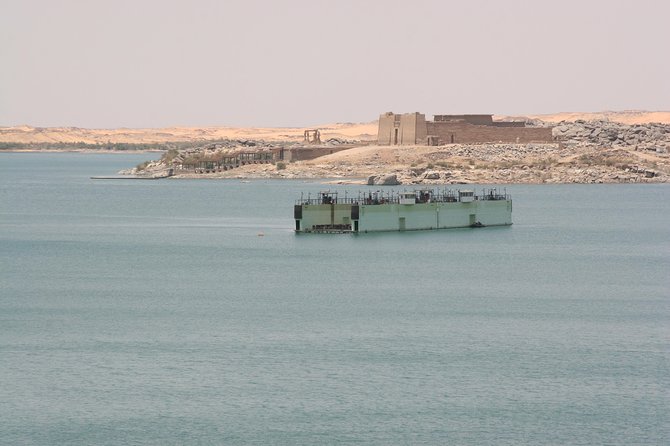
Kalabsha Temple gives you an unusual look at Egypt’s past: a Roman-era Nubian temple rebuilt beside Lake Nasser after the Aswan High Dam threatened to drown it. I like the private Egyptologist guide and the chance to study Egyptian, Roman, and Christian carvings in one compact site. I also like that the tour includes private transport and a motorboat ride around the island.
The main drawback is simple: Kalabsha is not usually the most visually spectacular temple in the Aswan area. One visitor also found that hotel pickup did not happen as expected, so confirm that detail before setting out. The temple can feel quiet and remote, which is part of its appeal, but also means you should not expect a packed sightseeing program.
Key points about the Kalabsha visit
- A relocated temple beside Lake Nasser: Kalabsha was taken apart and rebuilt in the 1960s to protect it from the rising water behind the Aswan High Dam.
- Three eras in one place: Egyptian religious traditions, Roman rule, and later Christian use all appear in the carvings and walls.
- A truly private outing: Your group has its own air-conditioned minivan and Egyptologist guide.
- A small boat ride adds variety: The experience includes sailing by motorboat around the island.
- Strong language option for English speakers: English guiding is included, while other languages require a 1,000 Egyptian pound supplement.
- Allow about three hours: The timing works well as a half-day addition to an Aswan schedule, especially if you have already seen Abu Simbel.
Why Kalabsha is worth your morning
Most people visiting Aswan head first to Philae, the Unfinished Obelisk, or Abu Simbel. Kalabsha gets less attention, yet it offers something different. It is not simply another ancient building in its original setting. It is also a record of one of Egypt’s largest rescue projects.
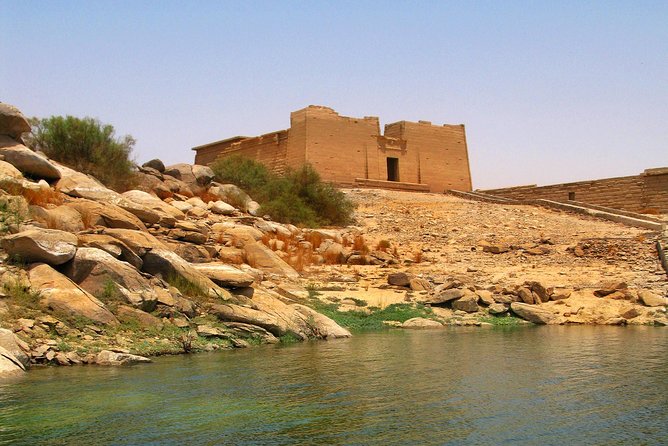
When the Aswan High Dam was built, rising Lake Nasser threatened many monuments in Nubia. Kalabsha was one of 18 monuments moved to safer ground. Workers dismantled the temple and rebuilt it beside the new lake in the 1960s. Your guide explains this process while you travel south from Aswan, giving the boat ride and lakeside setting more meaning.
I like this combination of archaeology and modern engineering. You are not only looking at old stone. You are seeing the result of a major international effort to keep that stone above water.
Kalabsha was largely completed under Roman Emperor Octavius Augustus around 30 BC. It was dedicated to Mandulis, a Nubian deity connected with the sun and fertility. The building is considered one of the best examples of a free-standing Nubian temple, meaning the main structure can be appreciated as a complete monument rather than as a surviving fragment.
The temple was never fully finished, which gives some surfaces a plainer appearance. That unfinished quality is useful, though. It lets you compare undecorated areas with carved sections and see how much work went into the finished parts.
More Private Temple Tours in Aswan
- Private Day Trip To Kom Ombo And Edfu Temples From Aswan
★ 4.5 · 41 reviews - Private Day Tour to Abu Simbel Temples from Aswan – Private Tour
★ 5.0 · 35 reviews - Aswan: Private Tour to Philae Temple and Nubian Village By Boat & Entrance Fees
★ 5.0 · 34 reviews
The drive from Aswan to Lake Nasser
Pickup is scheduled for 9:00 a.m. from your Aswan hotel. You travel in a private, air-conditioned minivan with your guide. The route takes you through palm groves and desert scenery toward the shore of Lake Nasser.
A private vehicle matters here. You avoid organizing a taxi, finding the site yourself, or waiting for a large group to assemble. You can also ask questions as you go, which is especially useful if you want more context about the dam, Nubia, or the temple relocation project.
The advertised duration is about three hours, including transport, the boat element, and the temple visit. That makes it a manageable morning rather than an all-day commitment. You return to Aswan with a hotel drop-off at the end.
One practical warning deserves attention. Hotel pickup is offered, but a visitor reported that the promised pickup did not take place and that the agency would not correct the problem. I would confirm the meeting point and pickup arrangement directly with South Sinai Travel before the morning of the tour. Get the confirmation in writing if possible.
Reaching the temple by motorboat
The experience includes a motorboat ride around the island. This gives you a welcome change from road travel and lets you approach the monument from Lake Nasser.
The water setting is one of Kalabsha’s best features. The temple sits at the edge of the lake, with desert and water forming a stark frame around the stonework. You can take in the site from outside before focusing on the carved walls.
The boat portion is also part of the larger story. Kalabsha was relocated because the original site would have been flooded. Seeing the temple beside the lake helps you understand the scale of the change caused by the dam.
The exact length of the boat ride is not specified, so you should think of it as a transport and sightseeing feature rather than a separate cruise. The included details also refer to other temples on the island, although the main focus of this experience is Kalabsha. If seeing those additional monuments matters to you, ask exactly what the boat route includes.
Entering through Kalabsha’s pylon
Your temple visit begins with the impressive pylon and broad outer façade. The front is partly undecorated, but that does not make it dull. The simple areas give the building a strong, solid look and help you focus on the carved surfaces farther inside.
The pylon marks the transition from the outside world into the temple complex. As you pass through, your guide explains how Egyptian temple design organized movement through a series of increasingly private spaces.
Kalabsha includes a court, halls, columns, a hypostyle hall, and a sanctuary. You are not racing from one isolated wall to another. The layout lets you see how a temple functioned as a sequence, from a more open gathering area toward the sacred center.
I would pay close attention to the way light changes as you move through these spaces. The court feels open, while the columned and inner halls feel more enclosed. Even without an elaborate ceremony taking place, the design makes the sanctuary feel like the destination.
More Private Temple Tours in Egypt
- Aswan : Private Tour to Unfinished Obelisk, High Dam and Philae Temple by BOAT
★ 4.5 · 22 reviews - Aswan Philae Temple, Obelisk, and High Dam Private Tour
★ 4.5 · 17 reviews - Private Tour: Philae Temple, Aswan High Dam and Unfinished Obelisk
★ 4.5 · 11 reviews - Private Tour to Abu Simbel Temple From Aswan
★ 5.0 · 10 reviews
Reading the Egyptian and Roman reliefs
The carvings are the heart of the visit. Your guide points out Egyptian religious scenes and Roman-era details, including a relief of Augustus presenting an offering to Mandulis.
That image captures the unusual character of Kalabsha. Augustus was a Roman ruler, but the temple followed Egyptian and Nubian religious traditions. Roman authority appears within a setting built for a local deity, showing how Roman power adapted to older forms of worship.
You will see columns and wall panels with motifs that reward a slow look. A private guide is particularly useful here because the meaning of a figure or gesture is not always obvious at first glance. You can stop, ask what you are seeing, and return to a detail that catches your eye.
The temple is a good choice for someone who likes connections between cultures. It is not only an Egyptian site, and it is not only a Roman site. The reliefs show how different political and religious layers occupied the same place over time.
Christian marks and the Meroitic inscription
Kalabsha’s story did not end with the ancient Egyptian or Roman period. The temple was later used as a Christian church, and you can see evidence of that change in the form of Coptic crosses and a relief associated with St George.
These marks are valuable because they show the building being reused rather than abandoned. Sacred sites often change meaning as communities change, and Kalabsha lets you see that process on the walls themselves.
You can also view an inscription in Meroitic, an ancient language that remains difficult for Egyptologists to understand. This is one of the most intriguing details at the site. Much of ancient Egypt can be interpreted through familiar hieroglyphic study, but Meroitic writing still contains unanswered questions.
I would ask your guide to point out the Meroitic inscription early in the visit. It is easy to overlook among larger reliefs, yet it adds a Nubian layer that makes Kalabsha different from the better-known temples around Luxor.
How the private format changes the visit
This is a private tour, so only your group participates. That gives you one-to-one attention from an Egyptologist guide rather than a fixed speech delivered to a crowd.
For a site like Kalabsha, this format has real value. The temple’s importance is not immediately obvious from a quick glance. You benefit from someone who can connect the dam, the relocation, the Roman dedication, the Christian reuse, and the Meroitic inscription into one clear story.
A private guide also lets you set the pace. If you care most about architecture, you can spend more time with the columns and sanctuary. If you prefer political history, ask about Augustus and the Roman period. If the rescue of Nubian monuments interests you, make that the main topic during the drive.
The tour details do not provide a guide’s personal name. They do specify an expert qualified Egyptologist. If you want a French or another non-English guide, ask for that in advance. A supplement of 1,000 Egyptian pounds applies to all languages other than English.
A private tour can be less useful if you prefer to wander silently with no commentary. In that case, the guide may feel like more structure than you need. For most visitors who want to understand what they are seeing, the format is a strong match.
What $67.86 per person gets you
At $67.86 per person, the price is reasonable if you are traveling with enough people to make good use of the private vehicle and guide. You are paying for hotel pickup and drop-off, an air-conditioned minivan, private guiding, and the motorboat element, not just entry to an ancient monument.
The value improves for anyone who would otherwise need to arrange separate transport to the lake. Kalabsha is not the kind of stop you casually add while walking around central Aswan. Having the route, vehicle, boat, and guide organized saves time and removes a fair amount of guesswork.
Group discounts are available, though the exact savings are not stated. Since this is a private tour, ask for the total price based on your party size before booking. A group of several people may find the per-person cost more attractive than a solo booking.
Landing and facility fees are not included. Ask what additional charges apply on your date so the final cost does not come as a surprise. English guiding has no stated language supplement, while other languages add 1,000 Egyptian pounds.
The tour is booked, on average, 42 days in advance. That suggests you should reserve early if this visit is important to your plans, especially during a busy season. Confirmation is provided at booking.
The best fit for this three-hour outing
I would recommend Kalabsha to you if you have already seen Abu Simbel and want another Nubian monument with a different character. One French-speaking visitor had already visited Abu Simbel and found Kalabsha well worth adding. That comparison makes sense: Abu Simbel is larger and more dramatic, while Kalabsha gives you more room to study a layered site at a quieter pace.
This is also a good choice for ancient-history fans who enjoy the overlap of Egyptian and Roman traditions. The Christian carvings and Meroitic inscription add extra interest for anyone who wants more than a standard pharaoh-focused visit.
You may want to skip it if your Aswan schedule is extremely tight or if you only want Egypt’s biggest monuments. The temple is described as less beautiful than some better-known sites, and its appeal comes more from its setting, history, and details than from overwhelming scale.
Bring a phone or camera if you want to record the reliefs and the Lake Nasser views. Since the tour lasts only about three hours, ask your guide early about any detail you especially want to see. That helps you make the most of the short visit.
Should you book the Kalabsha Temple tour?
Book it if you want a private, well-organized half-day from Aswan with a strong historical angle. The combination of a motorboat ride, a lakeside temple, Roman and Egyptian reliefs, Christian marks, and a mysterious Meroitic inscription gives the morning plenty of substance.
I would be especially keen to book it after visiting Abu Simbel, when you may want a quieter site rather than another major monument. The private guide is the biggest advantage, since Kalabsha rewards explanation more than a quick photograph.
Before paying, confirm hotel pickup, the exact boat arrangements, extra facility fees, and the language of the guide. If those details are clear, the $67.86 price offers good value for a private outing that reaches a less-visited part of Aswan’s ancient world.
FAQ
How long does the Kalabsha Temple tour last?
The tour lasts approximately three hours, including transport from Aswan, the motorboat portion, the temple visit, and the return to your hotel.
What time does the tour start?
The scheduled start time is 9:00 a.m.
Is hotel pickup included?
Pickup and hotel drop-off are offered, but you should confirm the arrangement with the provider before the tour. One reported booking had a pickup problem.
Is the tour private?
Yes. Only your group participates, and you receive private transportation and a private guide.
What type of vehicle is used?
Transport is provided in a private, air-conditioned minivan.
Is an Egyptologist guide included?
Yes. The tour includes a private, qualified Egyptologist guide. English guiding is included, while a 1,000 Egyptian pound supplement applies to other languages.
Does the experience include a boat ride?
Yes. The included features specify sailing by motorboat around the island.
Can I cancel for a full refund?
Yes, if you cancel at least 24 hours before the experience start time. Cancellations made less than 24 hours in advance are not refunded, and changes within that period are not accepted.
Newly written up around Aswan
- Tour to Abu Simbel Temples from Aswan★ 4.5 · 7 reviews
- Sound and Light show at Philae Temple in Aswan★ 5.0 · 5 reviews
- Philae Temple and Aswan High-Dam Half-day tour★ 5.0 · 49 reviews
- Aswan Philae Temple, Obelisk, and High Dam Private Tour★ 4.5 · 17 reviews
- Visit Abu Simbel temple from Aswan by private A/C vehicle★ 5.0 · 4 reviews
- Sound And Light Show At Philae Temple In Aswan★ 3.5 · 10 reviews
- Abu Simbel Temples from Aswan★ 4.5 · 10 reviews
- Temple of Edfu★ 4.0 · 11 reviews
Private Temple Tours, compared.
Waterfalls, Water Temple & Rice Terraces Private Tour
Read our review →
Full-Day Angkor Wat Sunrise Private Tour with Guide from Siem Reap
Read our review →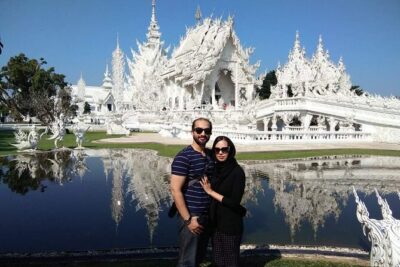
Chiang Rai Temples: Private Tour from Chiang Mai
Read our review →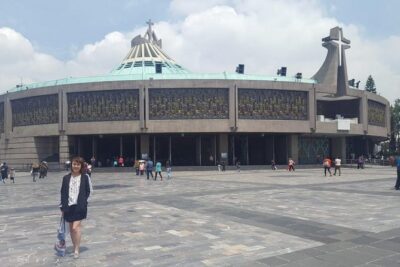
Private Tour: Teotihuacan and Guadalupe Shrine
Read our review →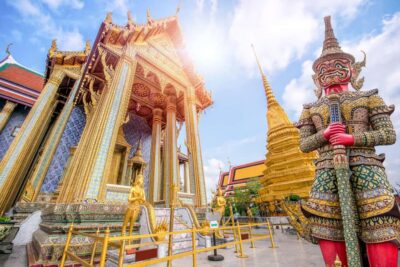
Grand Palace, Wat Pho, and Wat Arun Private Tour
Read our review →
Ephesus and Temple of Artemis Private Tour from Kusadasi Port
Read our review →
Browse the lists this tour appears in