Reviewed · TICKETS
Eltville: Eberbach Monastery Entry Ticket
Eberbach Monastery is a place where wine, stone, and film history meet. You can walk through the basilica, cloister, monks’ bedrooms, dining hall, and old cellars, then connect the rooms to scenes from Sean Connery’s The Name of the Rose. The giant presses and old barrels make the monastery feel less like a silent monument and more like a working part of the Rheingau wine story.
I especially like the freedom to explore at your own speed and the mix of medieval monastic rooms with local wine culture. The Abbey Museum adds documents, paintings, sculptures, and religious objects, so there is more here than a quick photo stop. The main caution is access: public transport is limited, parking is tight, and the site is not suitable for wheelchair users.
Key points to know before you go
- Film location: Several rooms were used for Sean Connery’s The Name of the Rose, giving the visit an extra layer of atmosphere.
- Historic wine equipment: See enormous wine presses in the Baroque dining hall and old barrels in the cellar.
- A full abbey visit: The ticket covers the basilica, cloister, monks’ rooms, dining spaces, ice cellar, treasure chamber, and Abbey Museum.
- Wine at the source: The monastery wine house offers a chance to try wine made from grapes grown at Eberbach.
- Plan your arrival: Bus 172 runs hourly from Eltville station to the Kloster Eberbach stop, while on-site parking is very limited.
- Allow time: Your ticket is valid for one day, which suits a slow visit rather than a rushed hour inside.
Why Eberbach Monastery feels different
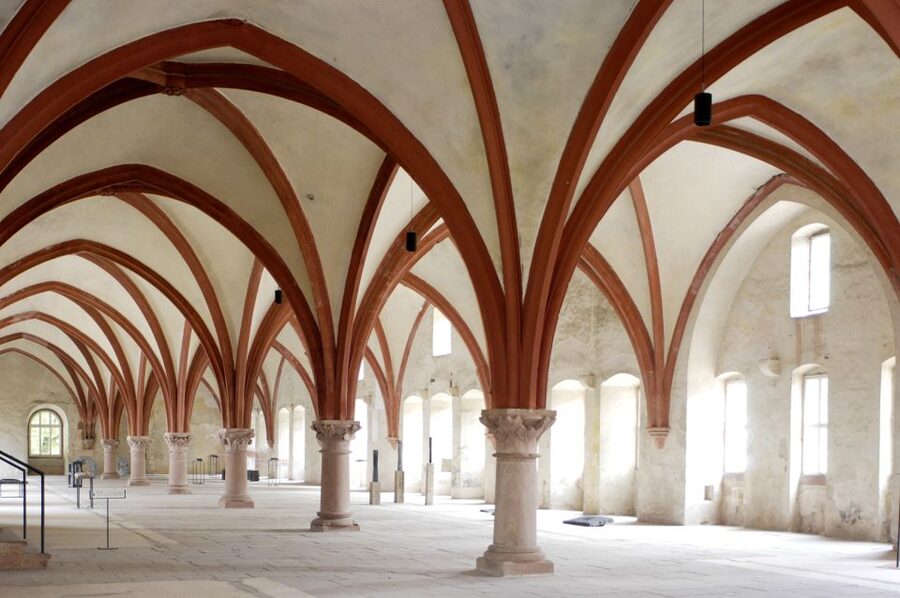
Many monasteries are mainly about architecture. Eberbach adds a second story: wine. The former Cistercian complex preserves the spaces where monks prayed, ate, slept, stored food, and produced wine. That combination gives you a clearer sense of daily life than a bare church and a few display cases would.
The buildings also have a strong connection to cinema. Sean Connery’s The Name of the Rose used Eberbach as a filming location, and the stone corridors and severe rooms can look familiar if you know the movie. Even if you do not, the film connection helps you notice how the monastery’s dark, spare design creates atmosphere.
I would not treat this as a quick entrance ticket for a 30-minute stop. The ticket is valid for one day, and the site includes enough separate areas to reward a steady pace. You can look closely at the old presses, read museum displays, pause in the cloister, and finish with wine at the monastery wine house.
More Entry Tickets in the world:
- Lisbon: Jerónimos Monastery Entrance Ticket
★ 4.1 · 14,164 reviews - Bali: Kecak Fire Dance Show & Uluwatu Temple Entry Ticket
★ 4.2 · 3,023 reviews - Montserrat Museum and Monastery Entry Ticket
★ 4.5 · 1,740 reviews
Entering through the basilica and cloister
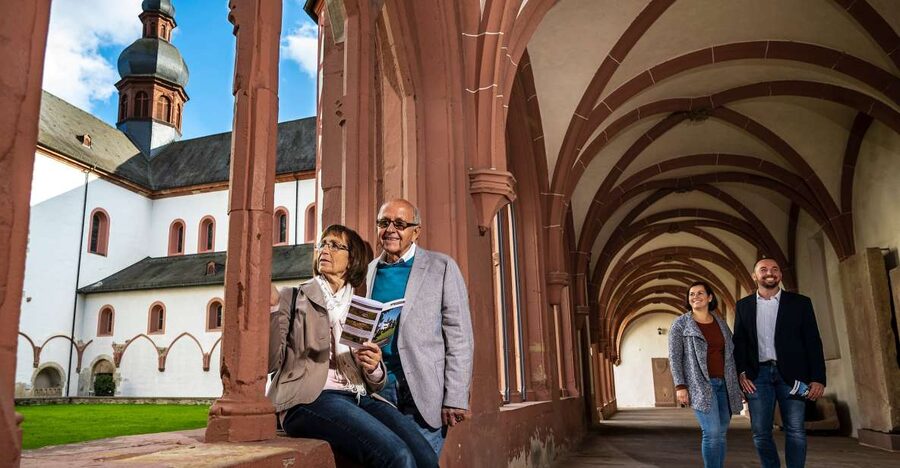
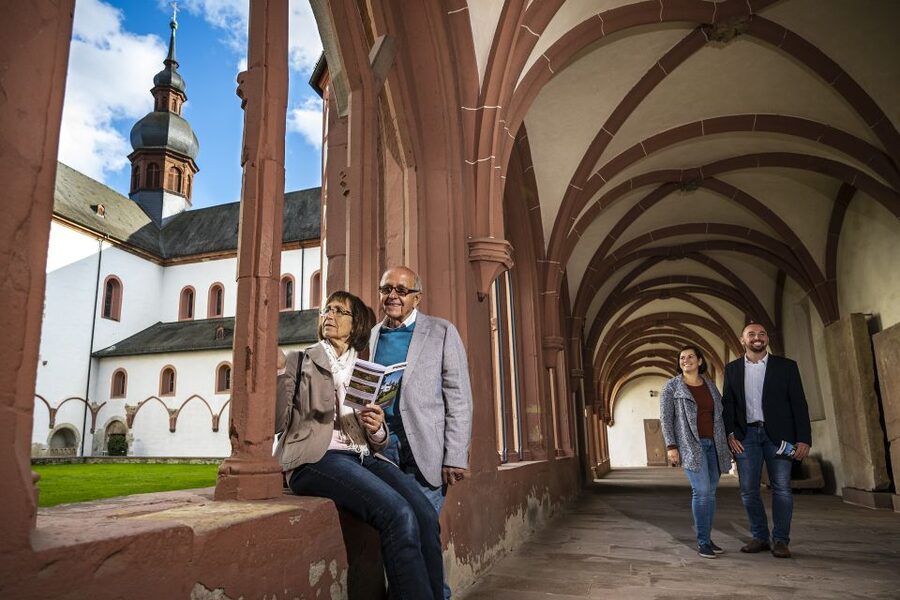
Start at the main entrance, where you show either a paper ticket or a digital copy. The basilica gives you an immediate sense of the site’s scale and religious purpose. From there, the cloister offers a quieter change of pace, with its arcades framing the interior spaces.
One unusual feature is the cloister arcade window designed by the internationally known artist Thomas Bayrle. It adds a modern note to a place most people associate with medieval life. That contrast is worth noticing rather than rushing past. Eberbach is not presented as a frozen reconstruction. It contains layers from different periods.
The basilica and cloister are also good places to get your bearings. You can then decide how much time to give the museum, wine cellars, and living quarters. If you are visiting with someone who prefers architecture while you prefer social history, both sides of the experience begin here.
The monks’ rooms and the Baroque dining hall
The rooms where the monks slept and ate help turn the monastery from an impressive shell into a place with human routines. You can walk through the former bedrooms and dining room, imagining the disciplined rhythm of life inside the complex. The rooms are not presented as a modern interactive attraction, so you will get the most from them if you take your time and think about how they functioned.
The Baroque dining hall is one of the more memorable stops because it contains giant historic wine presses. Their size makes the work of production clear. Wine was not a decorative side business here. It required large equipment, storage space, labor, and careful use of the monastery’s resources.
This is also a good point to remember that the experience is not only religious sightseeing. The wine-making facilities connect the monks to the economy of the Rheingau. The old presses show how closely spiritual life and agricultural work were linked.
Cellars, barrels, ice, and stored bottles
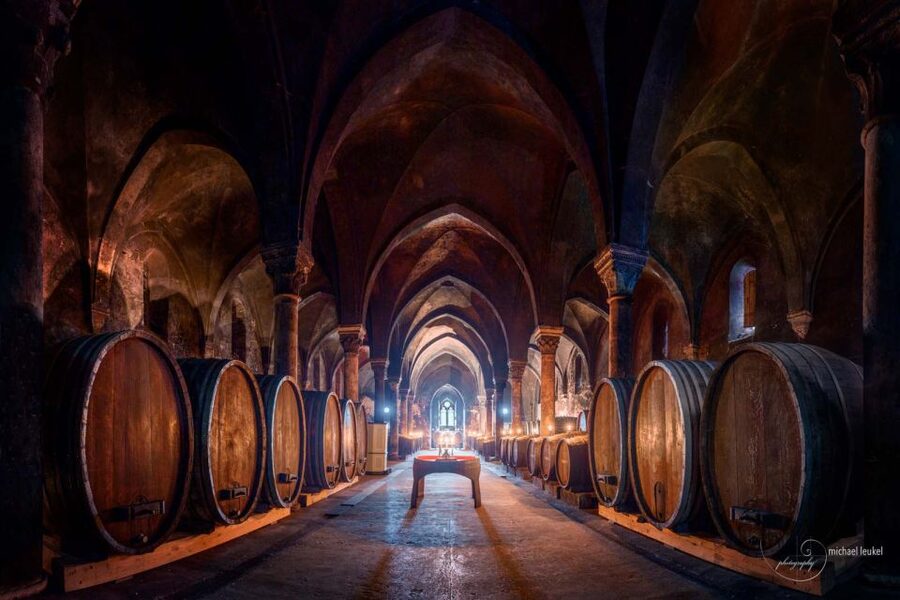
The wine cellar brings the monastery’s wine story underground. You can see barrels and learn how much space was needed to store the product. The cooler, darker rooms contrast with the open cloister and the formal dining hall.
You can also visit the ice cellar, a less obvious feature that adds practical detail to the tour. It reminds you that large historic households needed systems for food and drink long before modern refrigeration.
The treasure chamber is another atmospheric stop. Despite its grand name, it is a cellar filled with wine bottles, not a room of gold and jewels. That is part of its charm. Here, the monastery’s treasure is tied directly to its vineyards and cellars.
If you like historic technology, this section may be more interesting than the decorative rooms. The presses, barrels, storage areas, and ice cellar show how the site worked behind the scenes. Wear comfortable shoes, since the visit involves moving through a large complex with different types of rooms and surfaces.
Other temple visits near the world we have written up
- Angkor Wat Sunrise or Sunset Tour with Guide from Siem Reap
★ 5.0 · 12,109 reviews - Teotihuacan, Guadalupe Shrine & Tlatelolco Day Tour with Lunch
★ 5.0 · 11,603 reviews - From Bangkok: Ayutthaya Temples Guided Tour with Lunch
★ 4.7 · 10,535 reviews - Siem Reap: Angkor Wat: Small-Group Sunrise or Sunset Tour
★ 5.0 · 9,444 reviews
The Abbey Museum and its changing exhibitions
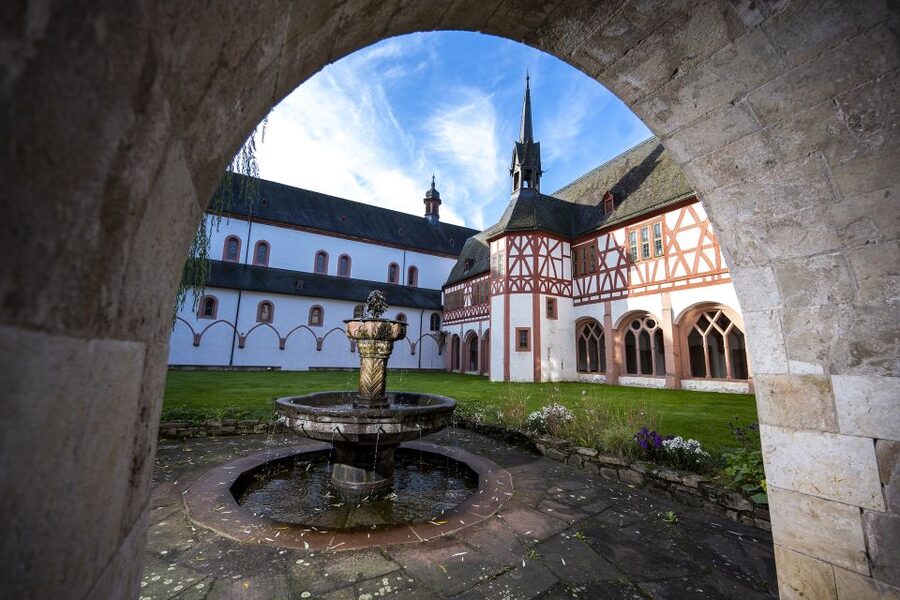
The Abbey Museum provides the clearest account of Eberbach’s past. Its displays include documents, sculptures, paintings, and religious objects preserved at the monastery, along with loans from public, church, and private collections. The museum gives context to the building, so you are not left to guess what each space meant.
The collection also helps explain the religious life of Eltville and the surrounding area. Art and sacred objects show what the community valued, while documents can offer a more direct link to the monastery’s activities.
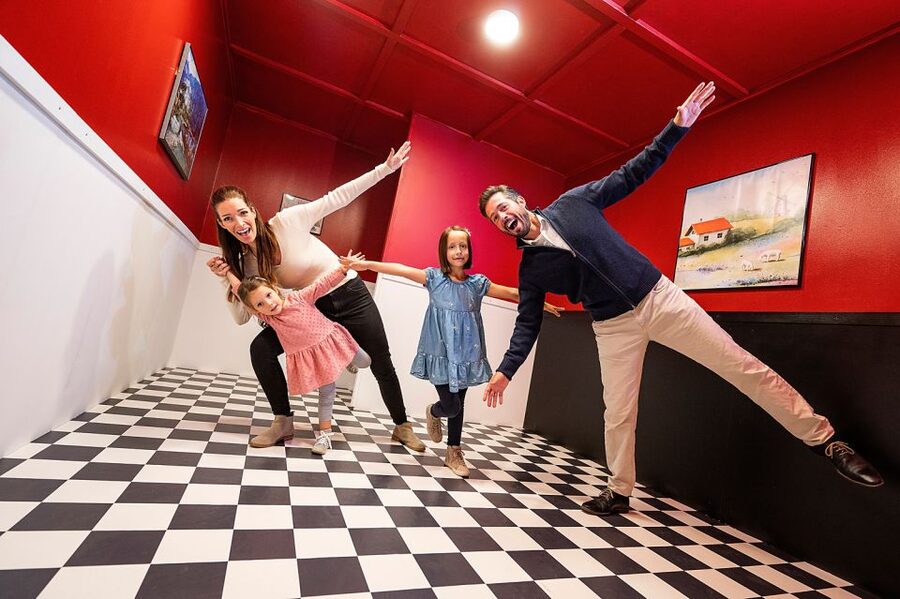
The supplied information also describes a temporary optical illusion exhibition called VERTRICKST!, which opened in September 2022 for one year. It included moving images, kaleidoscopes, mirror rooms, slanted installations, augmented reality, black-light displays, and more than 100 objects. Because that exhibition was planned for one year, you should not assume it is still on view. Treat it as a past example of the museum’s temporary programming rather than a guaranteed part of your visit.
If a temporary exhibition is running during your visit, it may make the museum especially appealing to families and visitors who want hands-on visual experiences. The permanent displays remain the safer reason to include the museum in your plans.
Spotting the scenes from The Name of the Rose
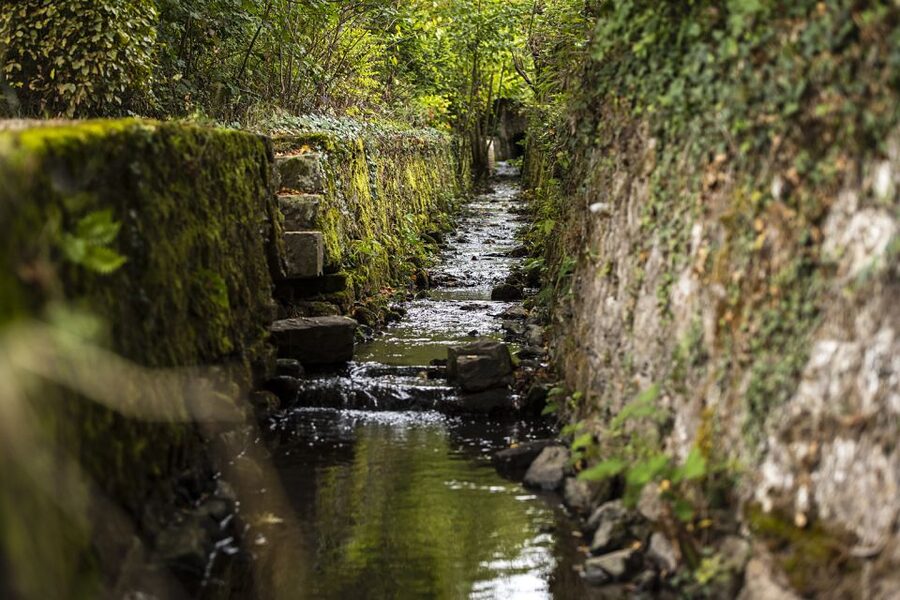
The film connection is one of Eberbach’s strongest extras. The Name of the Rose, starring Sean Connery, used the monastery’s interiors as filming locations. The austere corridors, vaulted rooms, cloister, and old stone surfaces suit the movie’s medieval mystery setting.
You do not need to be a film expert to enjoy this. The architecture already has presence, but knowing that scenes were filmed here encourages you to look at the rooms as sets as well as historic spaces. If you have watched the film, you may recognize particular settings and connect the production to the real building.
One practical point: this is not described as a dedicated film tour. The entry ticket gives you access to the monastery, not necessarily a guided presentation about every filming spot. You can make your own connections as you walk. For a deeper explanation, check whether a separate guided visit is available on your date.
A recent guided visit led by Mr. Susenberger was praised for bringing the events to life. That suggests a guide can add useful storytelling, but the basic ticket itself is for entry and self-guided exploration.
Ending at the monastery wine house
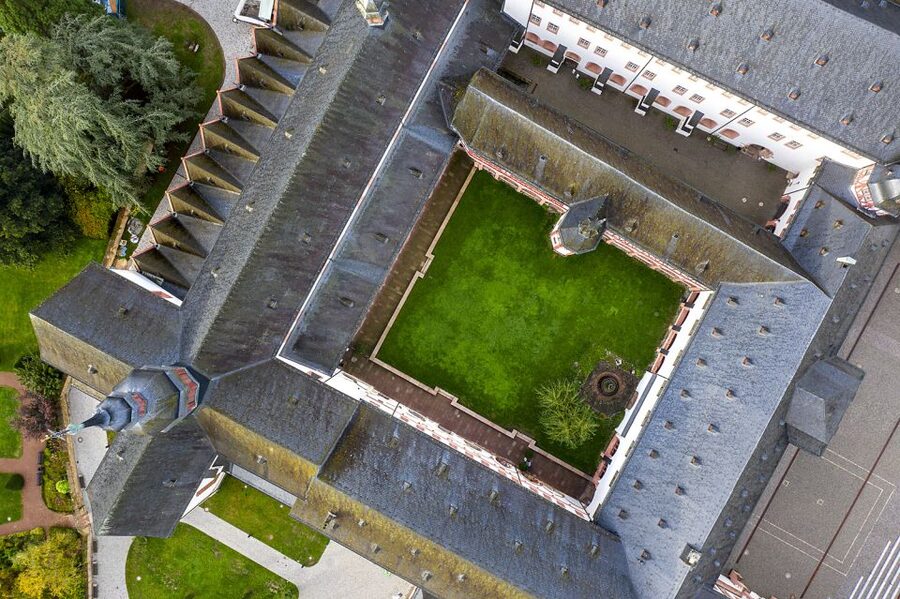
The wine house is a natural final stop. After seeing the presses, barrels, and storage rooms, you can try wine grown at the monastery itself. This gives the visit a satisfying connection between past and present.
The wine tasting is not listed as a separate included service with the entry ticket, so plan to pay for anything you order there. The setting also includes a monastery shop, where you might find wine and other items connected with the site.
I like this ending because it keeps the experience rooted in the Rheingau rather than treating the monastery as only a museum. You have seen how wine was made and stored, then you can taste the product in a modern setting. It is a simple way to connect the building’s history with the region’s continuing wine culture.
Getting there from Eltville, Wiesbaden, and Frankfurt
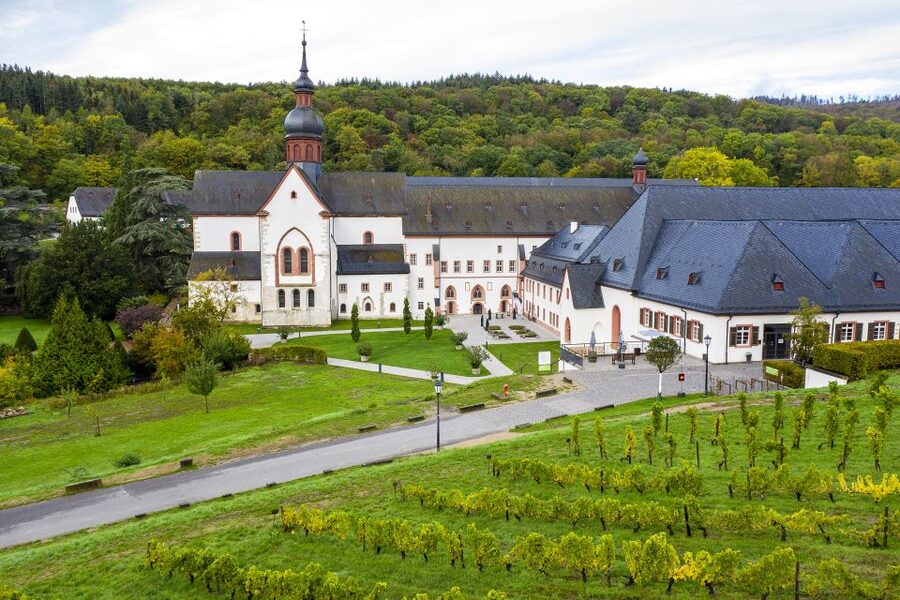
Transportation is not included, so you need to plan the approach yourself. By car, you can drive to the monastery, but parking facilities on site are very limited. This matters most during major public events, when arriving without a plan could create unnecessary trouble.
By public transport, travel first to Eltville station, then take bus 172. The bus runs hourly to the Kloster Eberbach, Barockpforte stop. For exact times, check the timetable for the Kloster Eberbach stop and enter both the stop and your travel date on the Rhein-Main-Verkehrsverbund website.
Long-distance connections are recommended from Wiesbaden, Mainz, or Frankfurt. The final bus connection means you should check both the outbound and return schedules before setting off. An hourly service can work well, but missing the bus may leave you with a long wait.
Bring water, comfortable clothes, and a packed lunch if you want to spend much of the day at the site. The ticket is valid for one day, but that does not mean you must remain there all day. It simply gives you room to explore without squeezing the basilica, cellars, museum, and wine house into a short visit.
Is the $18 ticket good value?
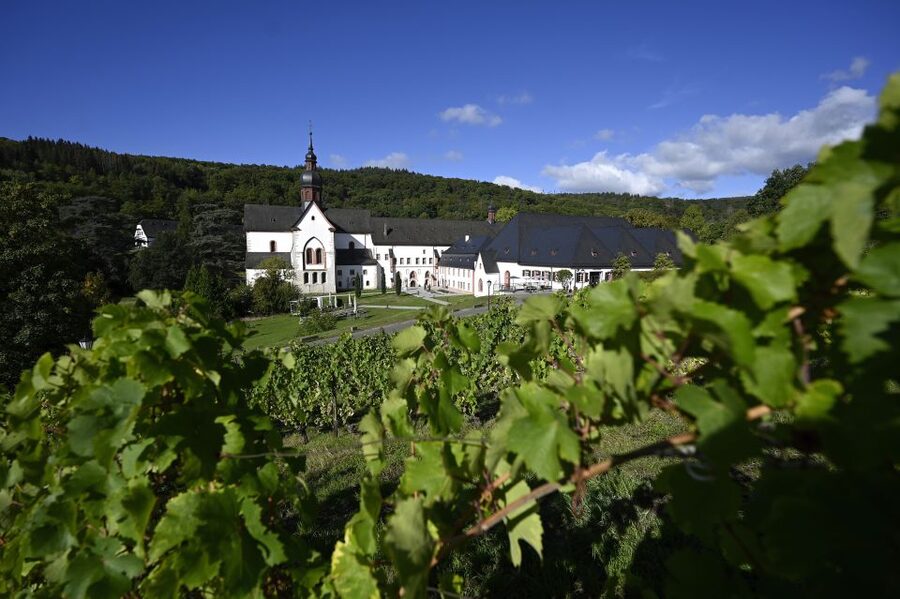
At $18 per person, the ticket is reasonably priced if you plan to see several parts of the complex. You are paying for access to the monastery buildings, wine cellars, historic presses and barrels, monks’ rooms, basilica, cloister, ice cellar, treasure chamber, and Abbey Museum.
The value improves if you like history, architecture, wine, or film locations. You can easily justify the price by treating it as a half-day or full-day outing rather than a single museum admission. The freedom to explore at your own pace is useful for couples and families with different interests.
The price feels less attractive if you only want a quick look at the famous film locations. In that case, the transport time may be out of proportion to the visit. You should also remember that wine tasting, transportation, and food are not included.
There has been at least one issue with digital entry codes. A QR code did not work at the entrance on a recent visit, but the staff issued replacement tickets and the problem was resolved. To reduce the chance of delay, carry the ticket in a format you can display clearly, and keep your booking details available.
Who will enjoy Eberbach most?
I would recommend this for anyone who likes historic buildings with a practical story behind them. Wine enthusiasts will appreciate the presses, barrels, cellars, and chance to try local wine. Film fans will enjoy matching the monastery’s rooms to The Name of the Rose.
It also suits independent visitors who do not want to follow a fixed schedule. You can spend more time in the museum, linger in the cloister, or move quickly through the rooms that interest you less.
Families may enjoy the size of the complex and any temporary exhibition designed around visual experiences. The former VERTRICKST! exhibition, with mirror rooms, slanted spaces, augmented reality, and black-light art, would have offered a playful change from the quieter museum displays, though it was only scheduled for one year from 2022.
This is less suitable if you need wheelchair access, since the experience is specifically listed as not suitable for wheelchair users. It may also frustrate anyone who wants a fully guided tour included in the price. The ticket gives you entry, while guided visits may be separate.
Should you book the Eberbach Monastery ticket?
Book it if you want more than a church visit. The combination of monastic rooms, wine-making equipment, cellars, museum objects, film history, and local wine makes Eberbach a layered stop in the Rheingau.
I would be especially keen to go if I were already staying in Eltville, Wiesbaden, Mainz, or Frankfurt and could plan the bus connection. I would allow several hours, wear sturdy comfortable shoes, and save time for the wine house.
Skip it if parking and public transport complications will outweigh your interest in the site, or if you only want a short film-location photo. For most visitors who enjoy history and wine, though, the $18 admission offers a solid day of independent exploring.
FAQ
How much does entry to Eberbach Monastery cost?
The listed price is $18 per person.
How long is the ticket valid?
The ticket is valid for one day.
What does the entry ticket include?
It includes entry to Eberbach Monastery, including the monastery buildings, wine cellars, and Abbey Museum.
Is transportation included?
No. You need to arrange your own transportation.
How can I reach the monastery by public transport?
From Eltville train station, take bus 172 to the Kloster Eberbach, Barockpforte stop. The bus runs hourly.
Is parking available at Eberbach Monastery?
Parking is available on site, but facilities are very limited, especially during major public events.
Can I visit the monastery with a wheelchair?
The experience is listed as not suitable for wheelchair users.
Can I try wine at Eberbach Monastery?
Yes. The monastery wine house offers wine grown at the monastery. Wine tasting or purchases are not listed as included in the entry ticket.
Can I cancel the booking?
You can cancel up to 24 hours in advance for a full refund. The booking also offers a reserve-now, pay-later option.
Newly written up around the world
- Small Group Tour to Mogosoaia Palace and Snagov Monastery★ 5.0 · 23 reviews
- Mogosoaia Palace & Snagov Monastery: Private tour from Bucharest★ 4.5 · 14 reviews
- Bulgaria Day Trip: Basarabovo Monastery, Tsarevets & Arbanasi★ 5.0 · 3 reviews
- Private Half Day Trip to Snagov Monastery and Mogosoaia Palace from Bucharest★ 4.5 · 13 reviews
- Chicken Church Local Attraction Near Of Borobudur Temple★ 3.5 · 18 reviews
- Transfagarasan Highway Balea Lake and Carta Monastery from Brasov★ 5.0 · 20 reviews
- Private Half Day trip to Slanic Salt Mine and Snagov Monastery★ 5.0 · 8 reviews
- Divine Delhi: Full-Day Tour of Temples & Spiritual Sites★ 4.5 · 3 reviews
Tickets, compared.
Kecak Fire Dance Show & Uluwatu Temple Entry Ticket
Read our review →
The Temple of Heaven or Summer Palace Entry Ticket
Read our review →
Valley of the Temples Ticket & App Audioguide
Read our review →