
Reviewed · AZERBAIJAN TEMPLE TOURS
Baku: Atashgah Fire Temple & Burning Mountain Half-Day Tour
Ates hgah Fire Temple and Yanardag offer two very different looks at Absheron’s famous natural flames. At the temple, you’ll see a stone courtyard built around a gas-fed fire and small cells once used by ascetics and pilgrims. At Yanardag, a wall of flame burns directly from the hillside.
I like the way this three-hour outing covers both major fire sites without taking a full day. I also like the low $23 price, which includes transport, an English or Russian-speaking guide, and entry tickets.
The main concern is organization. Some departures have been folded into a longer day tour, creating long waits for lunch, buses, or transfers. Confirm the meeting point, start time, and exact plan before you set aside your afternoon.
Key points to know before booking
- Ateshgah comes first: Explore a compact stone temple with a central fire fed by natural gas beneath the ground.
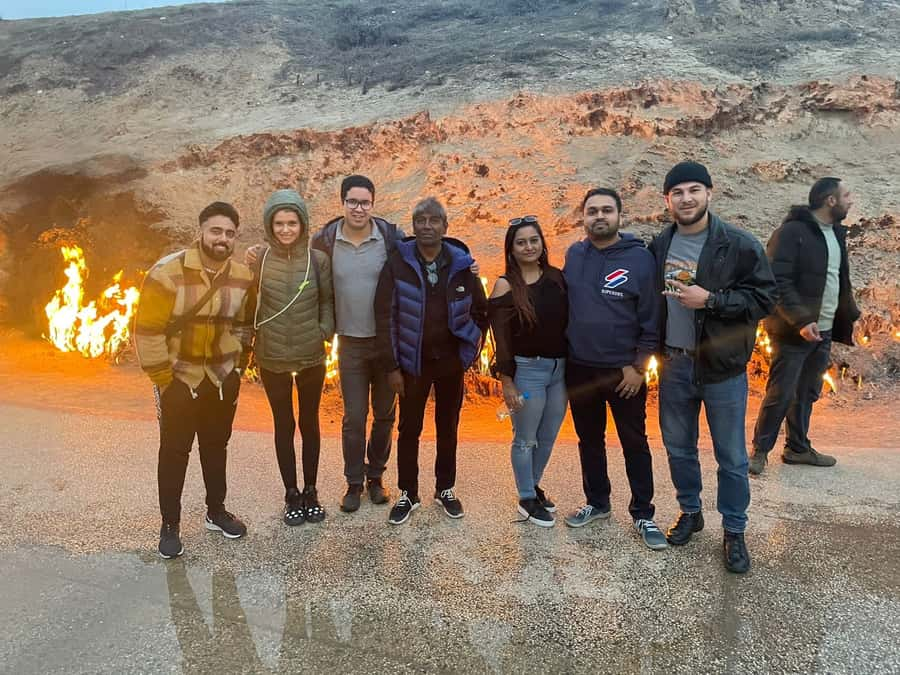
- Yanardag burns in the open air: The Burning Mountain is a natural gas fire on a hillside, not a built flame display.
- The trip is short on paper: The advertised duration is three hours, with roughly 35 to 40 minutes needed to reach Yanardag after the temple stop.
- Transport and admission are included: You travel by minivan or van with an English or Russian-speaking guide.
- The price is strong for a quick side trip: At $23 per person, the main value comes from combining two separate Absheron sights in one booking.
- Timing needs attention: Previous departures involved delays and an unadvertised lunch stop, so ask for firm pickup details before the day begins.
Why these two fire sites matter
Baku is often introduced through its old city, grand boulevards, and Caspian setting. But the Absheron Peninsula has another identity, one tied to gas rising from below the ground and burning at the surface.
That underground gas shaped the religious importance of Ateshgah and the reputation of Yanardag. The two stops let you compare a human-built place of worship with a natural fire that still burns from the rock.
You are not getting a long archaeological tour or a full history course here. This is a compact outing built around a striking local phenomenon. If you have only a short stay in Baku, it gives you a useful look beyond the city center without demanding a full day.
The tour costs $23 per person. That is a reasonable deal when you consider that transport, guide service, and entry tickets are included. A private group option is also available, though the price for that arrangement is not provided.
More Half-Day Tours in Baku:
- Athens: Cape Sounion & Poseidon Temple Sunset Half-Day Trip
★ 4.8 · 8,241 reviews - Cape Sounion and Temple of Poseidon Half-Day Small-Group Tour from Athens
★ 4.5 · 3,205 reviews - From Athens: Temple of Poseidon & Cape Sounion Half-Day Tour
★ 4.3 · 1,082 reviews
Ateshgah Fire Temple and its gas-fed flame
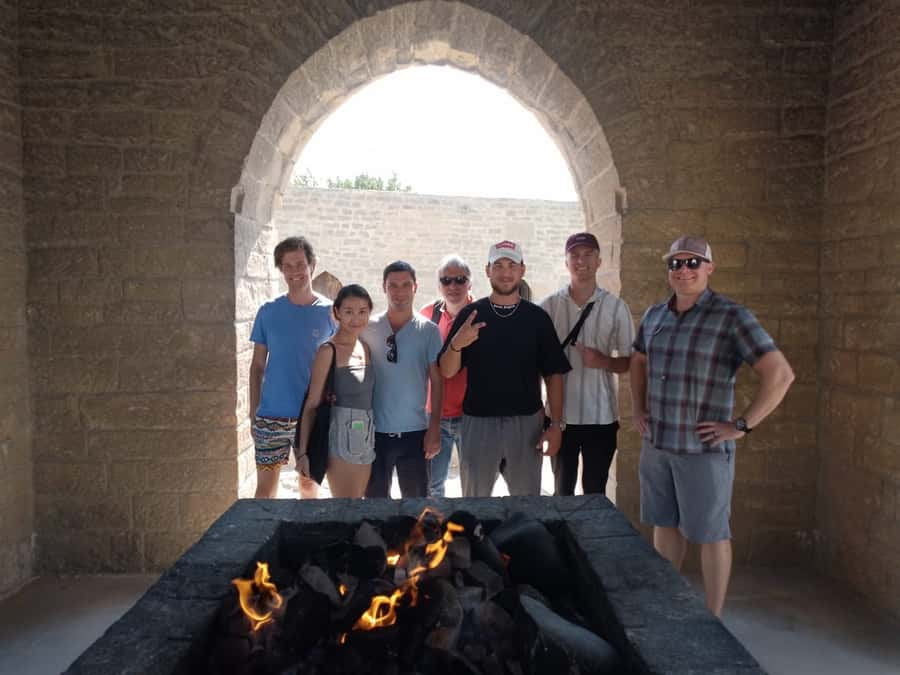
The first scheduled stop is Ateshgah, also called the Fire Temple of Baku. It lies about 21 kilometers east of Baku, in the Absheron area.
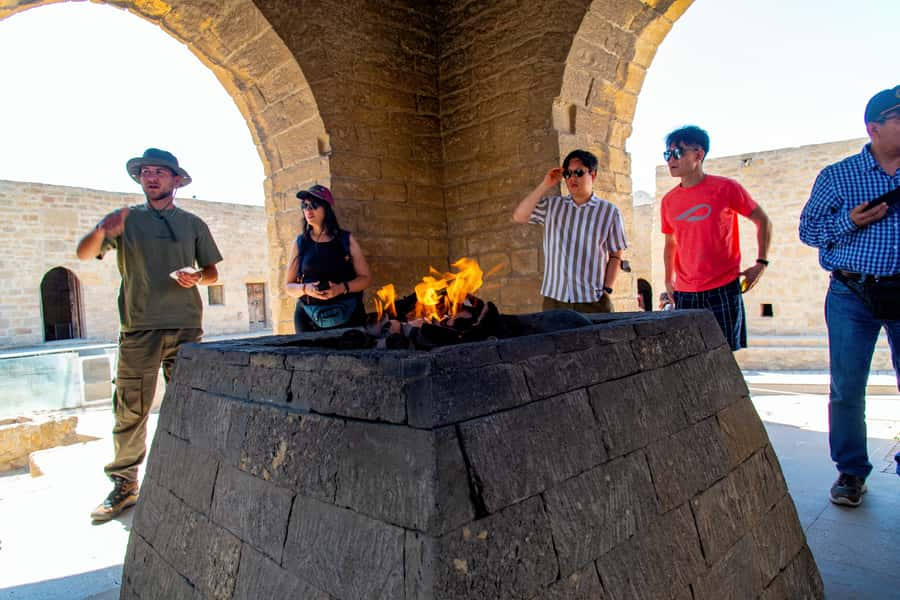
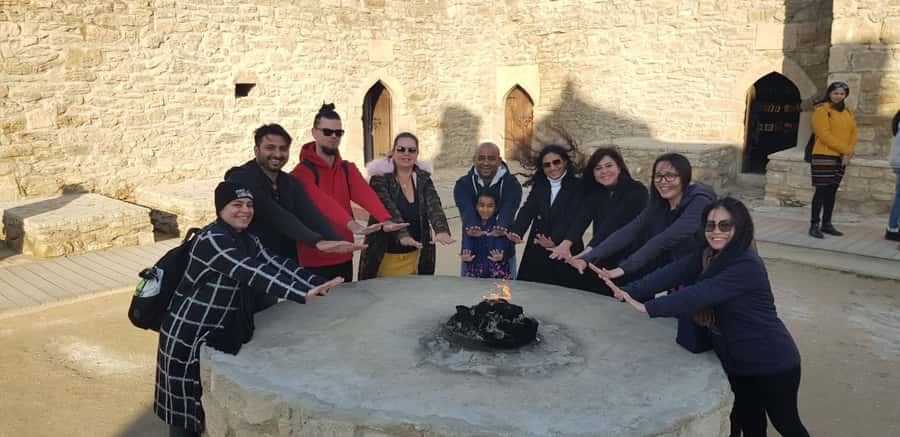
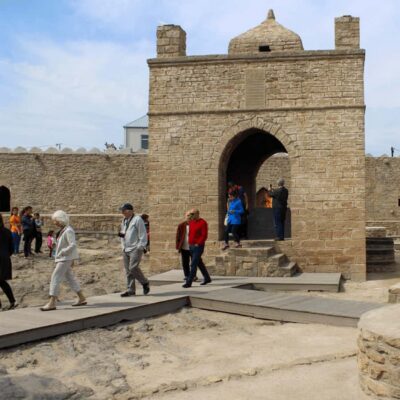
The temple has the shape of a small fortress. A stone wall encloses a central courtyard, and small rooms line the inside of the compound. The design is easy to grasp, which helps on a short guided visit. You can walk around the courtyard, look into the cells, and return your attention to the fire at the center.
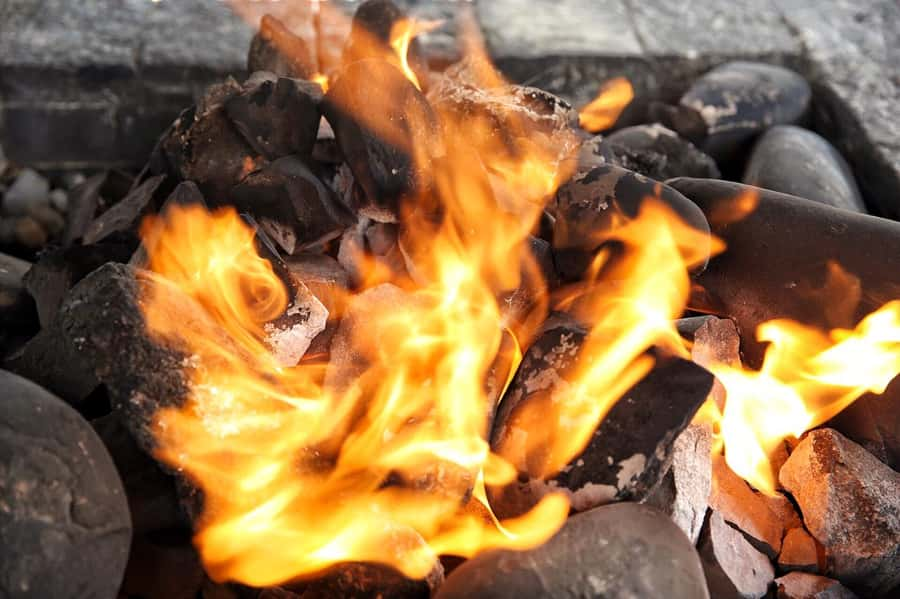
The central flame is fed by natural gas ventilation from below. Four smaller flames were also placed at the corners of the pavilion roof, creating the familiar image of a temple built around fire.
The site is linked with fire worship and with Indian merchants who built the temple in the 18th century. The cells housed ascetic believers and pilgrims. Your guide can help connect the stone rooms, the flame, and the religious practices that once took place here.
The wording around the site can sometimes make it sound like the fire itself has burned unchanged for all time. The key point for you is simpler: natural gas from beneath the ground made this location important, and people built a religious complex around that unusual fuel source.
I like Ateshgah because it gives the fire a human setting. At Yanardag, you see nature doing the work. At Ateshgah, you see walls, rooms, ritual space, and architecture shaping how people understood the flames.
Allow time to notice the small details rather than rushing straight to the central fire. The cells are part of the experience. They help you picture the site as a place where pilgrims and ascetics stayed, not just as a photo stop.
The 35 to 40 minute ride to Yanardag
After Ateshgah, the tour continues toward Yanardag State Historical, Cultural and Natural Reserve. The journey takes about 35 to 40 minutes.
That travel time matters because the tour is advertised as three hours. A transfer of this length leaves a limited amount of time for each site, especially if pickup is late or a meal stop is added.
Transport is provided by minivan or van. The vehicle format is practical for an outing outside central Baku, though the exact group size is not stated. A private group can be requested if you prefer not to share the experience, but you should check the added cost and arrangements before booking.
Use the drive to keep your schedule flexible. If you have a flight, dinner reservation, or museum booking later in the day, do not assume the tour will finish exactly three hours after departure. That warning comes from real timing problems on some departures, not from the attractions themselves.
Yanardag, the Burning Mountain
Yanardag means Burning Mountain. Its main attraction is a wall of flames burning directly from a hillside.
Natural gas escapes through cracks in the rock because of underground geological activity and volcanic material. The gas catches fire and creates a line of flame that can continue burning without a visible fuel source.
This is a very different sight from Ateshgah. There is no enclosed courtyard and no temple architecture to frame the experience. You are looking at fire coming out of the earth. That direct quality is the reason Yanardag has attracted attention for centuries.
Marco Polo is said to have mentioned flames in and around Baku during his travels. The exact age of the Yanardag fire is uncertain, but the site has a long reputation as one of the region’s unusual natural attractions.
Do not expect a broad mountain hike or a large wilderness reserve. The appeal is concentrated in the burning hillside. You go to see the flames, understand why they occur, and compare this natural site with the constructed fire temple.
Yanardag is particularly interesting for visitors who enjoy geology as much as history. The flame is not simply a theatrical display. It is connected to gas leaking from below the surface, which gives the stop its force.
Other temple visits near Baku we have written up
- Baku: Gobustan, Mud Volcano, Fire Mount, Temple Lunch Entry
★ 4.9 · 3,246 reviews - Baku: Gobustan, Volcanoes, Fire Temple and Yanardag Day Trip
★ 4.7 · 433 reviews - Gobustan & Mud, Fire Temple, Burning Mountain (Group & Private)
★ 4.5 · 418 reviews - Gobustan-Mud Volcan-Fire Temple and Mountain Tour/Entrance inc
★ 5.0 · 267 reviews
The guide makes the short visit work
The tour includes a live guide in English or Russian. That matters at both sites because the physical attractions are compact. Without context, you could walk through Ateshgah, see the fire, photograph Yanardag, and miss why these places matter.
The strongest praise for this experience focuses on the guide service. One highly positive account describes the guide as friendly and informative, with the fire temples making a particularly strong impression. That is the right role for a guide here: explain the religious use of Ateshgah, clarify the natural gas at both locations, and keep the short schedule moving.
No guide names are provided, so I would not book this expecting a particular individual. Instead, confirm the guide language you need and ask how the group will be handled.
The short duration also means the guide’s time management matters. A clear explanation at each stop is useful. Long delays before departure are not.
The biggest issue is not the fire sites
The attractions themselves are straightforward. The weak point is the handling of some half-day departures.
One departure began around two and a half hours late. The group first met at a meeting point, was sent to an office, then waited before being transferred by taxi to another location. Only after that did the group join a bus heading to the sites.
Another departure involved waiting about an hour and 20 minutes while people from a longer tour ate lunch. The half-day group was not told clearly in advance that it would join that larger itinerary. The tour then finished more than an hour later than expected.
A separate account describes a one-hour lunch stop that was not advertised as part of the half-day plan. Lunch may make sense for people taking a full-day outing, but it is a poor use of time when you have paid for a three-hour experience.
This does not mean every departure will run badly. Other accounts describe a smooth trip, including one that worked well for a solo participant. Still, the pattern is important enough to act on.
Before departure, ask these questions:
- Where exactly is the pickup point?
- What is the confirmed departure time?
- Is this a standalone half-day trip or part of a longer tour?
- Will the group stop for lunch?
- What time should you expect to return?
Get the answers in writing if possible. This is especially important if you are traveling independently and have a tight Baku schedule.
Is $23 good value?
Yes, if the tour operates close to its advertised schedule.
For $23, you receive transportation, a guide, and admission to both Ateshgah and Yanardag. Arranging both sites yourself could require separate transport and more planning, so the combined format is useful.
The price is also attractive for solo visitors. A smooth shared departure lets you see two places outside Baku without paying for a private car. The option for a private group gives you another choice, though you will need to confirm the rate.
The value drops sharply when a three-hour outing loses an hour or more to an unadvertised lunch or a delayed group transfer. You are not only losing sightseeing time. You are also losing the convenience that makes a guided half-day tour worth booking.
Think of the price as good value with one condition: verify the operating plan. The low rate is appealing, but precise timing is part of what you are paying for.
Who should book this half-day trip?
I would recommend it to you if you want to see Absheron’s fire sites without planning transport yourself. It suits a first visit to Baku, a short city break, or an open afternoon when you want something outside the central sights.
It is also a good fit if you enjoy a mix of religious history and geology. Ateshgah gives you the built setting, while Yanardag shows the natural force behind the region’s old fire traditions.
Solo visitors can benefit from the shared transport and guide. English and Russian options make the tour accessible to a broad range of visitors, and wheelchair access is listed as available.
I would be more cautious if you have a strict schedule. The reported delays are too specific to ignore. Families with young children, people catching an evening flight, and anyone with a timed reservation should ask for firm details before paying.
The tour may also feel brief if you want a slow, detailed look at both sites. One participant wanted more free time to explore. That is a fair point. Three hours is enough for an overview, but not for lingering at length.
What to bring and how to plan the afternoon
Keep your plan simple. Wear comfortable shoes for walking around the temple compound and the reserve. The tour is not described as a long hike, but you will want to move easily between the main points.
Set aside more than three hours if your day allows. The stated duration is three hours, yet a 35 to 40 minute transfer and possible group delays can stretch the outing.
Do not count on lunch being part of the plan unless the operator confirms it. At least one departure included a meal stop that was not clearly advertised, while others appear to have focused on the sites. Bring a small snack if needed, but rely only on confirmed information for food arrangements.
Check the weather before you go. The tour information does not specify seasonal conditions or shelter, so you might find the open-air Yanardag stop less comfortable in poor weather.
Should you book Ateshgah and Yanardag?
Book this tour if you want a low-cost, guided look at two of Absheron’s best-known fire sites and can keep your schedule flexible. The combination is worthwhile, the subject is unusual, and the included transport and admission make $23 a fair price.
Do not book it blindly if you need exact timing. Confirm the pickup point, ask if you will join a full-day group, and check whether lunch is included. If the operator gives clear answers, this is an efficient way to see Ateshgah and Yanardag in one outing. If the timing remains vague, arrange more flexible plans or consider a private option.
FAQ
Where does the tour take place?
The tour visits Ateshgah Fire Temple and Yanardag State Historical, Cultural and Natural Reserve in the Absheron area outside Baku.
How long does the tour last?
The advertised duration is three hours. The journey from Ateshgah to Yanardag takes about 35 to 40 minutes.
What is included in the price?
The price includes an English or Russian-speaking guide, transportation by minivan or van, and entry tickets.
How much does the tour cost?
The listed price is $23 per person.
Is the tour available in English?
Yes. The tour offers a live guide in English or Russian.
Is this a private tour?
A private group option is available. The standard group format and private-group price should be confirmed when booking.
Is the tour wheelchair accessible?
Yes, the activity is listed as wheelchair accessible.
What is Ateshgah Fire Temple?
Ateshgah is a stone, fortress-like temple about 21 kilometers east of Baku. It was built by Indian merchants in the 18th century around natural gas flames rising from below the ground.
What is Yanardag?
Yanardag means Burning Mountain. It is a hillside where natural gas escapes through the rocks and creates a constantly burning wall of flames.
Newly written up around Baku
- Qobustan rock arts, Mud Volcanoes, Fire temple Ateshgah, Yanardag★ 5.0 · 30 reviews
- Fire Temple and Fire Mountain Tour★ 5.0 · 22 reviews
- Gobustan, Mud volcanoes, Fire temple, Fire mountain PRIVATE TOUR★ 5.0 · 47 reviews
- Gobustan, Mud volcanoes, Fire temple, Fire mountain GROUP TOUR★ 4.5 · 19 reviews
- Gobustan, Mud volcanoes, Fire temple, Fire mountain PRIVATE TOUR★ 5.0 · 28 reviews
- Ateshgah Fire Temple & Yanar Dag mountain (Group & Private)★ 4.5 · 7 reviews
- Gobustan, Mud Volcano, Burning Mountain and Fire Temple Tour★ 5.0 · 12 reviews
- Baku: Gobustan, Mud Volcano, Fire Temple & Burning Mountain★ 4.0 · 9 reviews
Azerbaijan Temple Tours, compared.
Gobustan, Volcanoes, Fire Temple and Yanardag Day Trip
Read our review →
Gobustan & Mud, Fire Temple, Burning Mountain (Group & Private)
Read our review →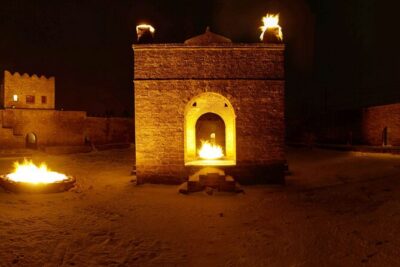
Gobustan-Mud Volcan-Fire Temple and Mountain Tour/Entrance inc
Read our review →
Gobustan Mud Volcanoes Temple & Entry tickets included
Read our review →
Gobustan, Mud volcanoes, Fire temple, Fire mountain PRIVATE TOUR
Read our review →
Gobustan & Mud, Fire Temple, Burning Mountain, H.A. Center
Read our review →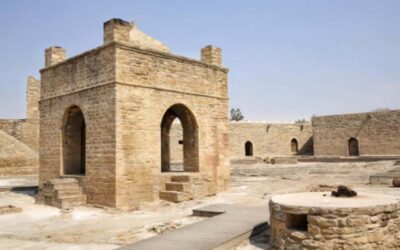
Gobustan, Mud Volcanoes, Fire Temple, & Yanar Dag Tour
Read our review →Browse the lists this tour appears in