
Reviewed · ANGKOR WAT TOURS
Angkor Wat Bike Tour with Lunch Included
Angkor is easier to understand from a bicycle than from the back seat of a vehicle. This seven-hour tour links Angkor Wat, Ta Prohm, Bayon, and Angkor Thom with quieter forest paths, so you get grand monuments and smaller ruins in one day. Guide Pok is especially good at explaining the temples and taking photos, while Meam is also praised for clear historical details.
I like the small group of up to eight and the solid Giant mountain bikes, which come with disc brakes, front suspension, and a wide gear range. I also like the local lunch, fresh fruit, hotel pickup, and the chance to reach Ta Nei, a quiet ruin that many people miss.
The main thing to consider is the pace. Seven hours of cycling in a large temple complex takes energy, and the temple pass is not included. Also, Ta Keo appears in the tour highlights, but the stated day-by-day schedule does not list a stop there, so ask before booking if that pyramid temple matters to you.
Key points to know before you book
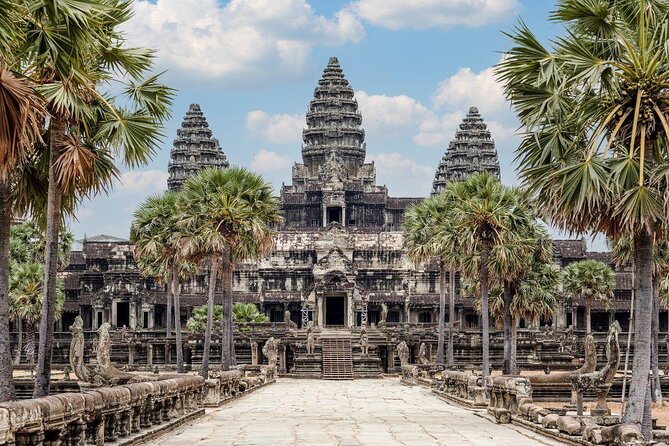
- You cycle between major temples and forest ruins: The route includes Angkor Wat, Ta Prohm, Ta Nei, Bayon, Angkor Thom, and the Terrace of Elephants.
- Pok and Meam are named guides: Pok is known for strong temple explanations, helpful photo-taking, and warm service. Meam is praised for historical detail.
- The bikes are better than basic rental bicycles: Giant mountain bikes have large gear sets, disc brakes, and front suspension.
- Lunch and refreshments are covered: You receive lunch, bottled water, locally grown fruit, and support transportation.
- The group stays small: No more than eight people makes it easier to ask questions and keep the ride together.
- The temple pass costs extra: Include that separate cost in your budget before comparing this tour with a car or tuk-tuk day.
Why cycling works so well at Angkor
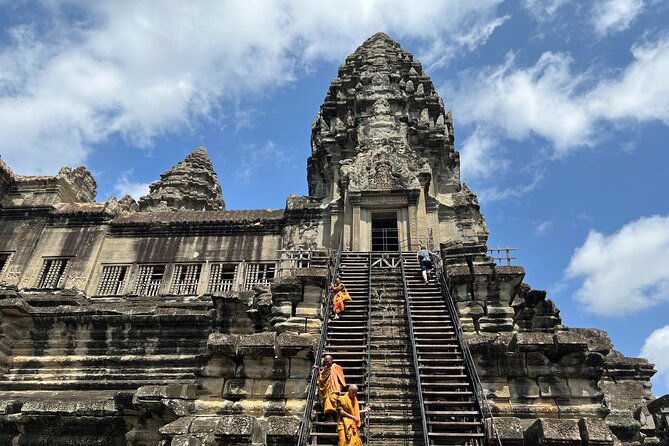
Angkor is not one temple. It is a vast group of monuments spread through forest, with broad roads, smaller tracks, and long stretches between the best-known stops. A bicycle gives you a better sense of that scale than a quick sequence of vehicle drop-offs.
You see the trees and old walls changing around you as you ride. The route uses hard-packed dirt and some paved paths, with minimal traffic according to the tour information. That makes the journey part of the sightseeing rather than wasted time between temples.
Cycling also lets the guide use quieter routes. The route to Ta Nei is a good example. It gives you a break from the most famous monuments and places a ruined temple in a more secluded forest setting. You should still expect a full day of movement, not a leisurely ride with long pauses at every stop.
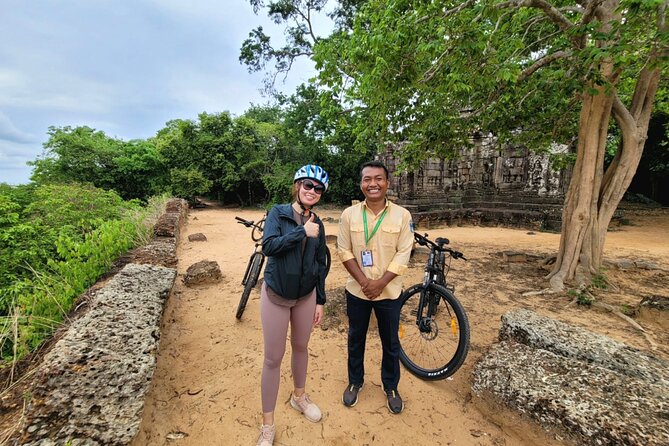
The bikes matter here. These are Giant mountain bikes with front suspension, disc brakes, and large gear sets. That equipment is useful on uneven dirt paths and helps you manage the changing effort of a long ride. Helmets are included.
The tour is limited to eight people. That is a useful middle ground. You get the social feel of a small group, but the guide can still answer questions and help keep the route organized.
More Angkor Wat Tours in Siem Reap:
- Angkor Wat Sunrise or Sunset Tour with Guide from Siem Reap
★ 5.0 · 12,109 reviews - Siem Reap: Angkor Wat: Small-Group Sunrise or Sunset Tour
★ 5.0 · 9,444 reviews - Siem Reap: Angkor Wat 2-Day Tour with Sunrise and Sunset
★ 4.9 · 4,429 reviews
8:30 am pickup and the first look at Angkor Wat
The day begins with hotel pickup at about 8:30 am by tuk-tuk or car. That removes one of the annoying parts of visiting Angkor: arranging your own way to the temple area before the sightseeing even begins.
Angkor Wat comes first. Built in the 12th century, it is widely regarded as the great masterpiece of Khmer temple architecture. The complex shows Khmer art at its peak, and the scale can be hard to grasp until you are moving through it yourself.
The schedule allows time at Angkor Wat before the cycling begins at about 10:00 am. That split is practical. You can focus on the major temple first, then switch to the bicycle for the rest of the circuit.
Your English-speaking guide is an important part of this first stop. The stones are impressive, but the carvings, religious ideas, and royal purpose are easier to follow with someone explaining what you are seeing. Pok is specifically praised for answering questions and giving useful historical context.
Take your time here, but remember that Angkor Wat is only the first major stop. If you want a long, highly detailed visit inside every gallery, the seven-hour route may feel fast. This tour aims to give you a strong overview of several temples rather than a slow study of one monument.
10:00 am to Ta Prohm and its famous trees

Around 10:00 am, you start cycling toward Ta Prohm. The route is part of the appeal. You leave the most formal monument behind and ride through forest paths toward a temple famous for the way tree roots have grown across its stonework.
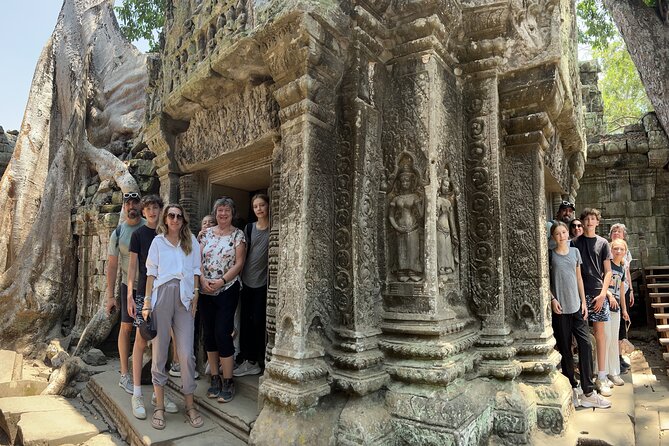
Ta Prohm was left in a partly ruined condition, allowing visitors to see how the forest and monument have interacted over time. Its most memorable feature is the huge roots twisting over walls and doorways. The setting was also used for the film Tomb Raider, starring Angelina Jolie, which has made the temple especially familiar to film fans.
The movie connection is fun, but it should not be the whole point of the visit. Ta Prohm shows the tension between preservation and nature in a direct, visual way. You can see how a temple changes when trees, weather, and time work on the structure together.
Cycling helps here because you approach Ta Prohm through the wooded setting rather than arriving only for a quick photograph. You get a sense of the temple as part of a larger area, not as an isolated film set.
This is also one of the busier and more famous stops on the route, so your guide’s timing and explanations matter. Pok is known for taking good photos and sharing them with the group. That can be useful at a place where everyone wants an image of the roots and narrow temple passages.
11:30 am lunch at a local restaurant
At about 11:30 am, the tour pauses for lunch at a local restaurant. Lunch is included, and the available information describes the restaurant as clean, with very good entrees.
That matters because meal stops around major sights can be hit or miss. Here, you do not need to arrange lunch in the middle of a cycling day, and you get a proper break before continuing.
The pause also gives you time to recover from the morning. Seven hours is a long outing, even if the route is not presented as a race. You will want the food and sitting time before the afternoon portion.
Bottled water is included, and fresh locally grown fruit is served at the end of the tour. Those touches keep the day simple. You do not need to plan every small refreshment stop, though personal expenses remain your responsibility.
The lunch is one reason the $55 price feels reasonable. The cost includes a guide, bicycle, helmet, water, lunch, fruit, support transportation, and hotel pickup and drop-off. The temple pass is separate, so compare the full cost rather than treating $55 as the final amount.
More Cycling Tours in Siem Reap:
- Siem Reap: Bike the Angkor Temples – Full-Day 30km Tour
★ 5.0 · 463 reviews - Siem Reap: Bike the Angkor Temples – Full-Day 30km Tour
★ 4.9 · 159 reviews - From Siem Reap: Angkor Wat Sunrise and Temples E-Bike Tour
★ 5.0 · 52 reviews - Angkor Wat: Guided Sunrise Bike Tour w/ Breakfast and Lunch
★ 4.8 · 48 reviews
1:00 pm Ta Nei and the quieter side of Angkor
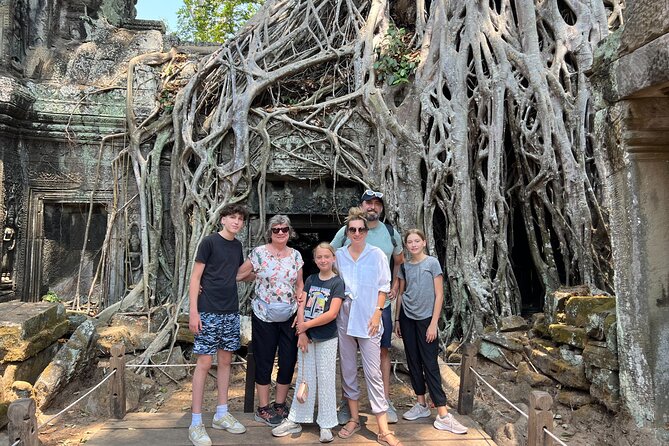
After lunch, you cycle toward Ta Nei. This is one of the most appealing parts of the route for anyone who wants more than the standard temple circuit.
Ta Nei is a ruined temple in the jungle and receives far less attention than Angkor Wat, Ta Prohm, or Bayon. The tour describes it as a place many people do not see. That makes it valuable not because it is grander than the famous temples, but because it offers a quieter change of mood.
The forest setting also gives the ride some variety. You are not simply moving from one large stone complex to another. You pedal along less crowded routes and then reach a smaller ruin with a different scale and feel.
Your guide can help you notice why the site matters. Without context, a smaller ruined temple can look like a pile of weathered stones after the spectacle of Angkor Wat. With an explanation, you can better appreciate the layout, location, and relationship between the temple and the surrounding forest.
This stop is also where the quality of the bicycle becomes most useful. The route includes hard-packed dirt and some paved paths, rather than only smooth roads. The front suspension and broad gearing should make the ride more manageable, but you still need to be comfortable sitting on a bicycle for several hours.
2:00 pm Bayon and Angkor Thom
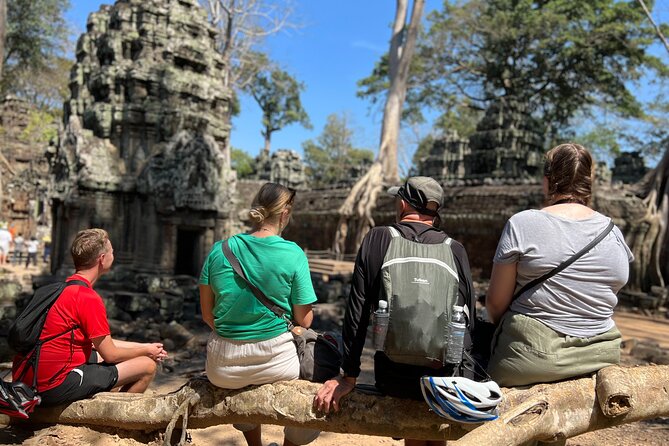
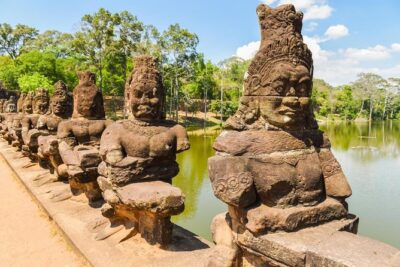
Around 2:00 pm, the route reaches the east gate of Angkor Thom and continues to Bayon. Angkor Thom was the great city of the 13th century, and Bayon served as the state temple of Jayavarman VII, a Mahayana Buddhist king.
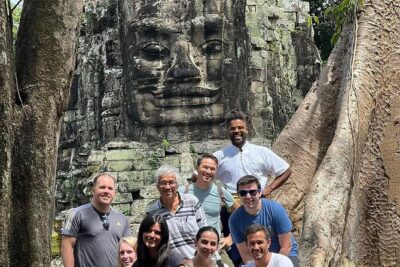
Bayon is known for its enormous stone faces. These smiling heads of Avalokiteshvara look out from the towers and give the temple its unmistakable character. The faces are one of the most memorable sights in Angkor, but the crowded, multi-level structure can be confusing without a guide.
This is where a strong explanation earns its keep. The guide can point out how the faces relate to the temple’s religious and royal purpose instead of leaving you with only the familiar image of smiling stone heads.
The eastern gate of Angkor Thom gives the afternoon a useful sense of arrival. You enter the old city before reaching the temple, so the stop is not just about Bayon itself. It helps you understand the scale of the urban center that once surrounded the royal monuments.
The route then includes the Terrace of Elephants. This was the main terrace from which the king watched the training of elephants. It is a long ceremonial structure, and its purpose becomes clearer when you think of it as a royal viewing platform rather than simply another carved wall.
By this point, the tour has covered several different types of Angkor experience: the monumental temple at Angkor Wat, the tree-covered ruins at Ta Prohm, the quiet forest setting of Ta Nei, the royal city of Angkor Thom, and the expressive faces of Bayon.
What about Ta Keo?
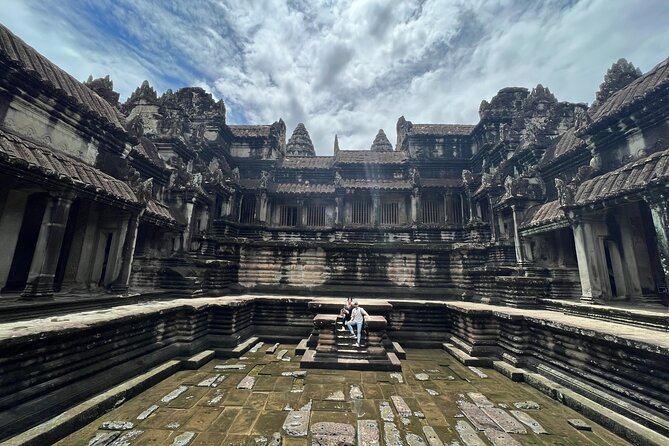
Ta Keo is described among the highlights as a sandstone pyramid temple dating from the 10th century. However, the detailed schedule lists Angkor Wat, Ta Prohm, Ta Nei, Bayon, Angkor Thom, and the Terrace of Elephants, but not Ta Keo.
That difference is worth clearing up before you reserve. It may reflect a route variation, but the supplied timing does not promise a Ta Keo stop. If you specifically want to climb or photograph this pyramid-style temple, ask the operator whether it is included on your chosen date.
This is a small but important planning point. The tour already covers a lot in seven hours, and adding another temple may require changing the timing. Do not assume every temple named in the highlights will receive a full visit.
3:00 pm fruit, transport, and the value of the package
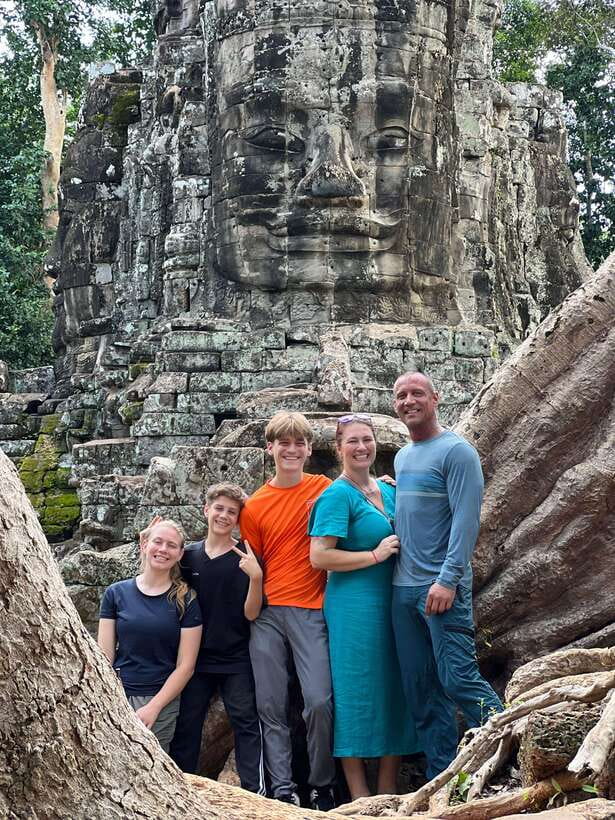
The planned temple visits finish around 3:00 pm. The guide serves locally grown fruit, then you return to your accommodation by tuk-tuk.
That ending is practical. You finish with food and arranged transport instead of needing to find your way back after a full day on the bike. The support vehicle is also part of the package, which adds reassurance if the group needs assistance during the route.
At $55 per person, this is not the cheapest way to see Angkor, especially since the temple pass is extra. Still, the value is strong if you want an active day and would otherwise need to arrange a guide, bicycle, lunch, drinks, transport, and route planning separately.
You are paying for structure as much as equipment. The guide handles the sequence of temples, gives the sites meaning, leads the forest paths, and keeps the group moving. The small group limit makes that service more personal than a large coach excursion.
The price makes the most sense for people who want to cycle. If you would rather sit in air-conditioned transport between each temple, a vehicle-based tour may suit you better. This experience is about seeing Angkor at bicycle speed.
Guides, bikes, and the small-group feel
Pok receives especially strong praise for communication, temple explanations, family warmth, and photography. He is also described as someone who takes care of the practical details, including timely pickup and sharing the photos he takes.
Meam is another named guide. He is praised for explaining the temples and Cambodia’s historical background. Since the exact guide may depend on the date, you should not assume Pok will lead every departure.
The tour is conducted in English. That is important because the quality of the day depends partly on how well the guide can explain complex religious and royal subjects while you move between sites.
The bikes are modern Giant mountain bikes with large gear sets, disc brakes, and good front suspension. Helmets are included. These are meaningful features for a route using dirt paths, paved sections, and forest tracks.
You should still choose this tour only if you are comfortable with a long bicycle outing. The description does not provide a mileage total or difficulty grade, so you cannot judge the exact distance from the published details. The safe assumption is that you should be prepared for sustained riding, temple walking, and a full seven-hour day.
Who should book this Angkor bike tour?
I would choose this tour if you want a broad first look at Angkor and prefer moving through the complex under your own power. It suits active visitors, couples, friends, and small groups who want the major temples plus a quieter stop at Ta Nei.
It is also a good choice if you have limited time in Siem Reap. The route covers several key places in one organized day, and hotel pickup reduces wasted time. The guide’s explanations help you get more from each stop than you would from simply following a map.
I would hesitate if you want a slow, deeply detailed visit to Angkor Wat alone. I would also think twice if you dislike cycling for several hours or want guaranteed visits to every temple in the highlights list. Ask about Ta Keo before booking.
Free cancellation is available up to 24 hours before the activity for a full refund, and you can reserve now and pay later. Those terms are useful if your plans are still moving, but they do not change the need to budget separately for the temple pass and personal spending.
Should you book it?
Book this tour if you want Angkor by bicycle rather than from a tuk-tuk seat, especially if Ta Nei and the forest paths appeal to you. The mix of major monuments, quieter ruins, lunch, quality bikes, and a small group gives you a well-rounded day for the price.
Skip it if your priority is maximum comfort, a very slow temple study, or a confirmed stop at Ta Keo. For everyone else, this is a practical and active way to get a useful overview of Angkor, with Pok or Meam adding the local context that turns a long ride into a meaningful visit.
FAQ
How long does the Angkor bike tour last?
The tour lasts seven hours, with pickup at about 8:30 am and the planned end of the temple visits around 3:00 pm.
What temples are included in the route?
The stated schedule includes Angkor Wat, Ta Prohm, Ta Nei, Bayon, Angkor Thom, and the Terrace of Elephants.
Is Ta Keo included?
Ta Keo appears in the tour highlights, but it is not listed in the detailed schedule. Ask the provider to confirm whether it will be visited on your departure.
Is the temple pass included in the $55 price?
No. The Angkor temple pass is not included, and personal expenses are also separate.
What does the tour price include?
The price includes an English-speaking guide, Giant mountain bike, helmet, bottled water, lunch, fresh fruit, support transportation, and hotel pickup and drop-off by tuk-tuk or car.
What type of bicycle is provided?
You receive a modern Giant mountain bike with a large gear set, disc brakes, and front suspension.
Is hotel pickup available?
Yes. Pickup and drop-off at your hotel are included by tuk-tuk or car.
What language is the tour conducted in?
The live tour guide speaks English.
How large is the group?
The tour is limited to eight participants.
More temple visits with lunch in Siem Reap
- Angkor Wat Sunset Small Group Tour with Lunch Included
★ 5.0 · 3,059 reviews - Angkor Wat Small Group Tour and Sunset with Lunch Included
★ 5.0 · 398 reviews - Full-Day Explore Angkor Temples Sunset Tour (with Lunch)
★ 4.7 · 46 reviews - Angkor Wat: Small-Group Tour with Balloon Ride and Lunch
★ 4.6 · 13 reviews
Newly written up around Siem Reap
- Sunrise at Angkor Wat Temple: 3-Hour Private Tour★ 4.7 · 30 reviews
- Small-Group Explore Angkor Wat Sunrise Tour with Guide★ 5.0 · 3 reviews
- Siem Reap : Private Tuk-Tuk Tour of the Magnificent Temples.★ 4.9 · 14 reviews
- Siem Reap: Ultimate Angkor Wat Offbeat Experience by Jeep★ 4.9 · 8 reviews
- SiemReap: Private Angkor Wat Tour in English or German guide★ 5.0 · 5 reviews
- Siem Reap: 1-Day Angkor Wat Tour in Portuguese★ 5.0 · 4 reviews
- Angkor Wat: Sunrise 2.5 Days Temples & Tonle Sap-Small Group★ 5.0 · 10 reviews
- Siem Reap: Grand Circle Temples Tour With Private Tuk-Tuk★ 5.0 · 4 reviews
Angkor Wat Tours, compared.
Angkor Wat Sunrise or Sunset Tour with Guide from Siem Reap
Read our review →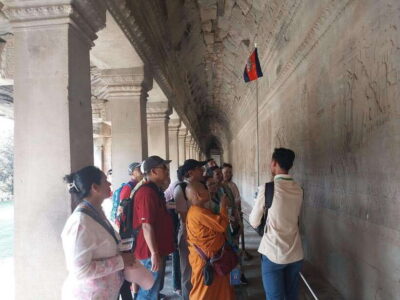
Angkor Wat: Small-Group Sunrise or Sunset Tour
Read our review →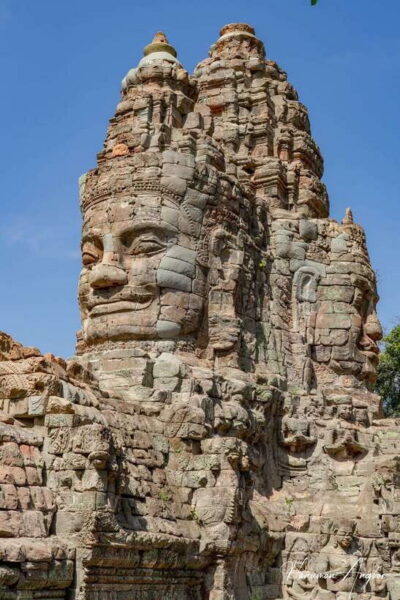
Angkor Wat 2-Day Tour with Sunrise and Sunset
Read our review →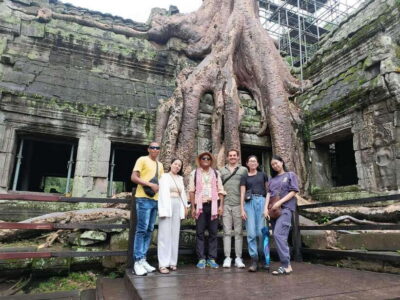
Angkor Wat Sunrise tour with Small – Group and Guide tours
Read our review →
Angkor Wat Highlights and Sunrise Guided Tour from Siem Reap
Read our review →
Angkor Wat Sunset Small Group Tour with Lunch Included
Read our review →
Full-Day Angkor Wat Sunrise Private Tour with Guide from Siem Reap
Read our review →Browse the lists this tour appears in