
Reviewed · ANGKOR WAT TOURS
Angkor Wat Guided Sunrise Tour
Angkor Wat at sunrise is the headline here, but the best part is the full sweep of the ancient capital. You begin before dawn, see the temple towers reflected in the lotus pond, then spend the morning among Angkor Thom’s giant stone faces and the tree roots of Ta Prohm. It is a long, early outing, but it covers the essential temples in one day.
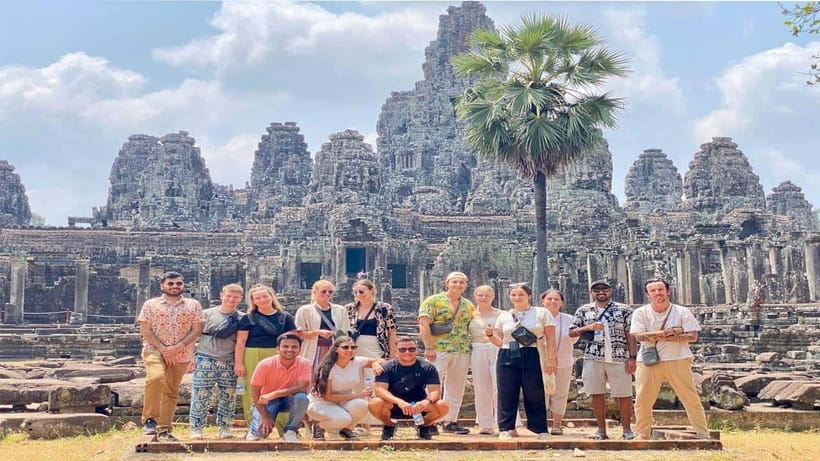
I like the small group limit of 14 and the included hotel pickup, air-conditioned minibus, and bottled water. I also like having a guide with more than 20 years of dedicated work around the temples, since Angkor’s carvings and religious changes are much easier to understand with context.
The main concern is service reliability. One recorded January 2024 booking involved a guide who had not arrived by 5am, a last-minute recommendation to hire a tuk-tuk for an extra $10, and a Japanese-language booking handled by an English-speaking guide. Confirm your pickup and language before you go.
Key points to know before booking
- Sunrise begins before breakfast: Pickup is scheduled around 4:45am, with breakfast taken at your hotel before the later temple visits.
- The $10 price is not the full cost: Add the $37 Angkor temple pass, plus breakfast, food, drinks, and personal expenses.
- Three major temple areas are included: You visit Angkor Wat, Angkor Thom and Bayon, and Ta Prohm.
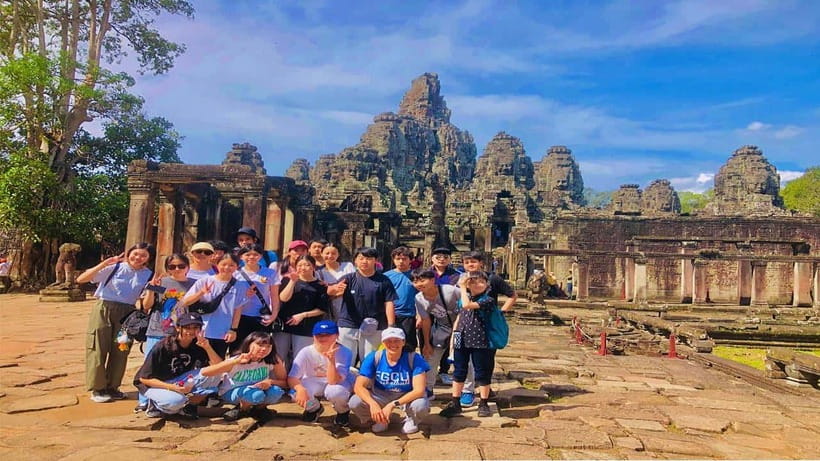
- The group is capped at 14 people: That is more manageable than a large coach tour, though the group size can still affect how easily you move through busy temple areas.
- Languages need confirming: English, French, and German are offered, but a Japanese-language booking was reportedly handled in English.
- You must protect the sunrise plan: If pickup fails, you may miss the best light and face extra transport costs.
Why this seven-hour route works
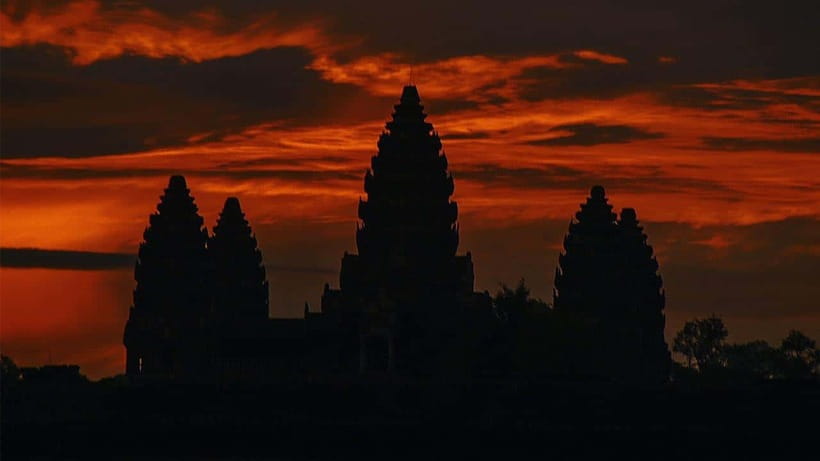
This is a classic first visit to Angkor because it joins the three places most people want to see: Angkor Wat, Angkor Thom, and Ta Prohm. You get the famous reflection at dawn, the smiling faces of Bayon, and the dramatic tree roots made famous by Tomb Raider.
The route also gives you a useful sense of scale. Angkor Wat is not an isolated monument. It belongs to a much larger former capital, with gates, terraces, temples, roads, reservoirs, and jungle paths spread across the Siem Reap area. A guide can connect these places instead of leaving you with a string of impressive but unrelated ruins.
The schedule is listed as seven hours, although the detailed timing is not perfectly clear. The written plan places sunrise at Angkor Wat, followed by hotel breakfast, Angkor Thom, Bayon, Ta Prohm, and another extended visit to Angkor Wat. The time blocks also list Bayon and Angkor Wat in an order that does not fully match that description. I would ask for the exact sequence before departure, especially if you have a firm breakfast time or another afternoon plan.
More Temple Sunrise Tours in Cambodia
- Angkor Wat Sunrise or Sunset Tour with Guide from Siem Reap
★ 5.0 · 12,109 reviews - Siem Reap: Angkor Wat: Small-Group Sunrise or Sunset Tour
★ 5.0 · 9,444 reviews - Siem Reap: Angkor Wat 2-Day Tour with Sunrise and Sunset
★ 4.9 · 4,429 reviews
The 4:45am start and the road to Angkor Wat
Your guide and driver are scheduled to meet you in your hotel lobby at about 4:45am. The exact time depends on your hotel’s location, and you are told the final pickup time one day before departure.
That early start is necessary. You first need to travel to the ticket point and purchase the Angkor pass before entering the temple area. The official place to buy it is the Angkor Enterprise website, listed as angkorenterprise.gov.kh. The pass is not included, so allow $37 per person for the temple ticket.
The included air-conditioned minibus is a real help at this hour and later in the day. You will be walking on temple paths and stairs, and the heat can build quickly. Chilled bottled water is included, but food is not.
The sunrise plan depends heavily on punctual pickup. A serious problem was recorded on January 14, 2024, when the guide had not arrived by 5am and the office had not given an early warning. After contacting the office, the guest was told that sunrise might be missed and was advised to hire a tuk-tuk to the entrance for an additional $10. The guide was found at the viewing point, but the extra cost and lost confidence changed the morning completely.
I would contact Angkor Pro Travel shortly before the tour and confirm four things: pickup time, pickup location, guide language, and the transport plan if the guide is late. Save the provider’s contact details on your phone. At Angkor, a few lost minutes before dawn matter.
Watching the towers reflect at sunrise
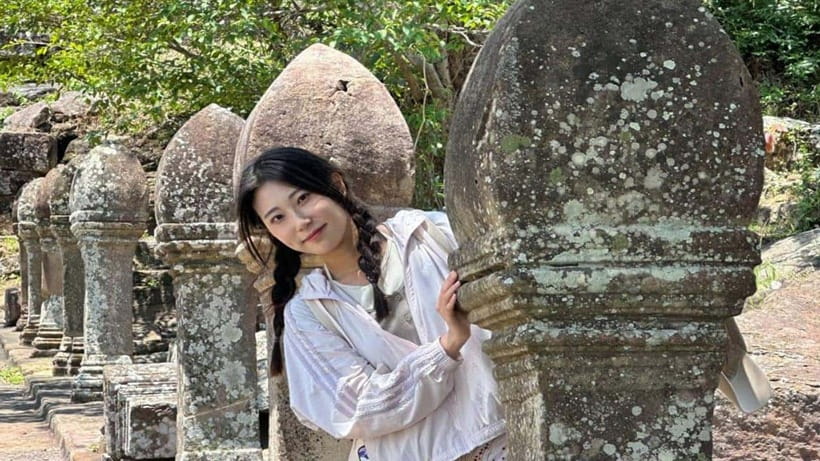
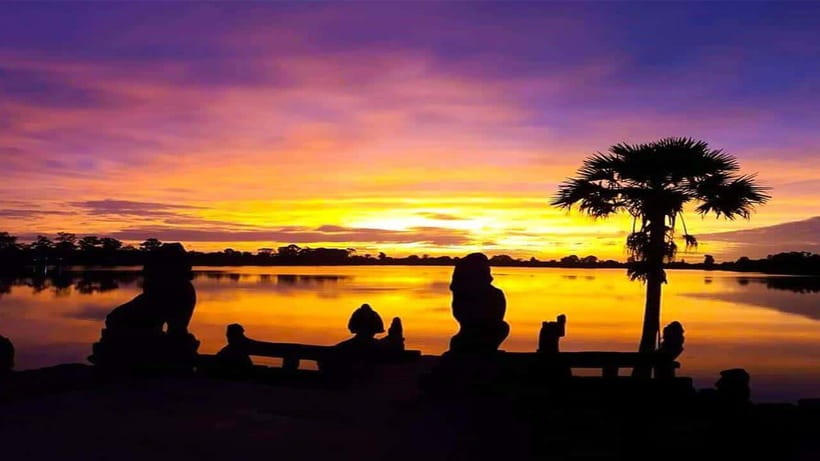
The plan is to reach the area near Angkor Wat before sunrise and wait by the lotus pond. In the right conditions, the temple’s towers appear above the water as the sky brightens. This is the image that brings many people to Angkor, and it is worth planning around.
Sunrise is also the busiest part of the day at the most famous viewing point. You should expect other groups to gather near the pond. The tour’s small-group format helps your guide keep everyone together, but it cannot make the public viewing area private.
Your guide can give you the basic religious and architectural setting while you wait. Angkor Wat was built by Suryavarman II in the 12th century as a Hindu monument and later became an important Buddhist site. Its galleries show Hindu scenes and Khmer carvings, while Buddhist statues reflect the temple’s later religious life.
Do not judge the visit only by the photograph. The reflection may be strong, faint, or absent depending on conditions, and the light changes quickly. The real reward is seeing the towers shift from shadow to warm morning color while you begin to understand the scale of the complex.
One scheduling question deserves attention. The description says you return to your hotel for breakfast after sunrise, then head back to the temples. The itinerary also gives Angkor Wat a separate two-hour guided visit later in the day. That could mean a quick sunrise stop followed by a more detailed interior visit later, but the exact arrangement should be confirmed.
Angkor Thom and the four-faced South Gate
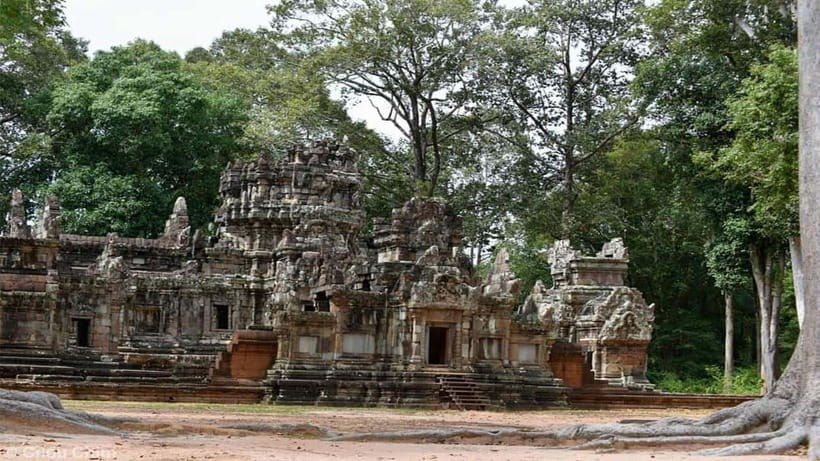
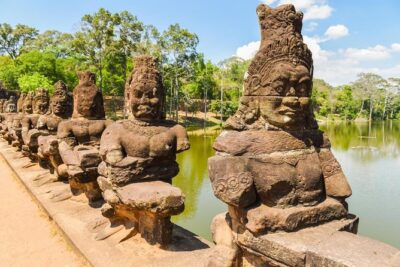
After breakfast, the route moves to Angkor Thom, the enormous walled city that served as a major center of the Khmer Empire. You enter through the South Gate, approached by a causeway and topped by four giant faces.
The faces are described through the religious qualities of compassion, sympathy, equanimity, and charity. That gives you a useful way to read the gate, rather than seeing it as only a dramatic photo stop. The gate announces a sacred and royal city at the same time.
Angkor Thom is not one building. It is a broad area containing several important monuments, so you should expect walking between stops. The route includes Bayon, Baphuon, Phimeanakas, the Terrace of the Leper King, and the Terrace of the Elephants.
That list is valuable because many short Angkor tours focus only on Bayon and skip the surrounding monuments. Here, you get a better sense of how ceremony, royal power, and religion were arranged around the central temple.
More Temple Sunrise Tours in Siem Reap
- Angkor Wat Sunrise tour with Small – Group and Guide tours
★ 5.0 · 3,655 reviews - Angkor Wat Highlights and Sunrise Guided Tour from Siem Reap
★ 5.0 · 3,213 reviews - Full-Day Angkor Wat Sunrise Private Tour with Guide from Siem Reap
★ 5.0 · 2,920 reviews - Angkor Wat Sunrise & 3 Main Temples with Breakfast – Small Group
★ 5.0 · 2,857 reviews
Bayon’s 200 stone faces
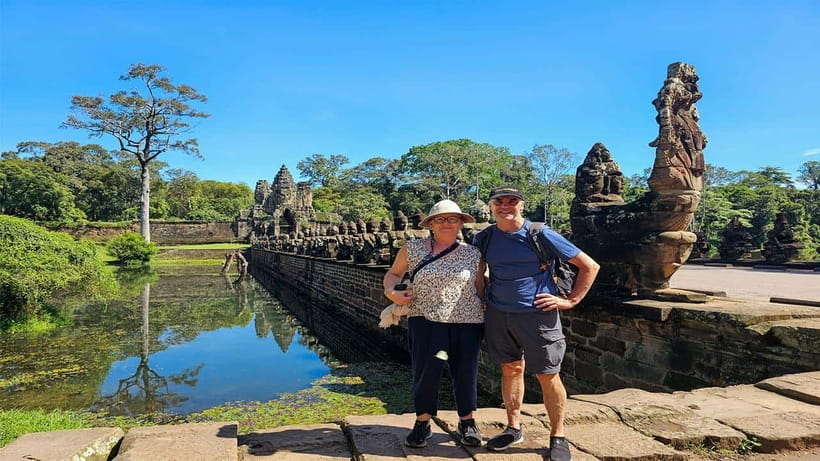
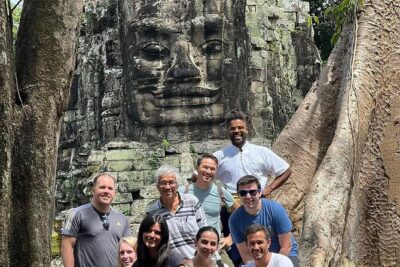
Bayon is the emotional center of the Angkor Thom visit. More than 200 smiling stone faces look out from its towers, often appearing between narrow passageways and partially ruined galleries.
The faces are difficult to understand at a glance. From one angle, a tower may look isolated. From another, several faces appear at once, creating the feeling that the temple is watching you. A guide can explain the religious meaning and the debate around the images, while pointing out details you might otherwise miss.
The three-hour time block associated with Bayon and the sunrise portion of the schedule is generous on paper. It may include the surrounding Angkor Thom monuments rather than Bayon alone. Ask how the time is divided so you know if you will have enough time inside the temple and at the terraces.
Bayon’s narrow corridors and uneven surfaces reward slow walking. If you rush through for photographs, you can miss the carved scenes along the walls. The guide’s advertised experience matters most here, because the faces are famous, but the surrounding reliefs give the temple much of its meaning.
Baphuon, Phimeanakas, and the royal terraces
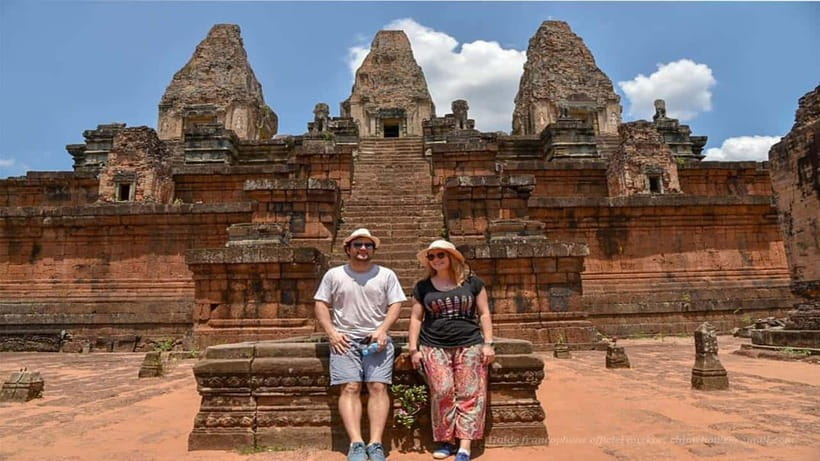
Baphuon adds another layer to Angkor Thom. It is one of the major monuments in the city and helps show that the area was a working royal center, not simply a collection of ruins.
Phimeanakas and the nearby terraces bring you closer to the ceremonial side of Khmer kingship. The Terrace of the Leper King and Terrace of the Elephants are especially useful stops for understanding public display, processions, and royal power.
These places may not have the instant recognition of Angkor Wat or Ta Prohm. I like that they are included because they prevent the tour from becoming a three-photo checklist. You see several kinds of Khmer architecture and decoration in one morning.
The drawback is pace. Angkor Thom covers a large area, and a seven-hour tour must keep moving. If you want long photography sessions or a slow study of every relief, a private full-day guide would suit you better.
Ta Prohm and the famous tree roots
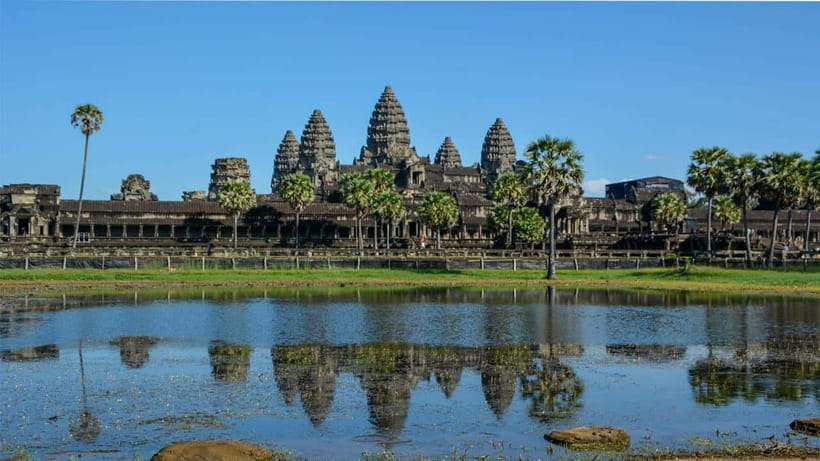
Ta Prohm is the most theatrical stop. Large tree roots spread across stone walls and doorways, making the temple look as if the forest is reclaiming it. The site was used as a filming location for Lara Croft: Tomb Raider, which helped make it one of Cambodia’s best-known ruins.
The trees are not just decoration. They show the constant tension between preservation and nature at Angkor. Roots support some structures, damage others, and make the temple feel different from the more open spaces around Angkor Wat.
You should expect uneven ground, tight passages, and pauses as the group moves through the best-known sections. The two-hour time allocation gives room for a guided visit, though actual time may depend on the day’s crowd levels and the rest of the schedule.
Ta Prohm is a good place to listen rather than simply take pictures. Your guide can explain the temple’s place in the wider Angkor complex and point out Hindu carvings and Buddhist images among the damaged galleries.
Returning to Angkor Wat for the main visit
The afternoon description returns to Angkor Wat for a longer look at the monument itself. Built in the 12th century under Suryavarman II, it is recognized as a UNESCO World Heritage site and is often described as the world’s largest religious monument.
The scale becomes clearer after seeing Angkor Thom and Ta Prohm. Angkor Wat is carefully ordered, with galleries, towers, courtyards, and long approaches. Its carvings are not random decoration. They tell religious stories and show the skill of Khmer artists working centuries ago.
You will see Hindu carvings and sacred Buddhist statues, reflecting the monument’s changing religious use. That mixture is one reason a guide adds value. Without explanation, it is easy to treat every carved figure as part of one single belief system.
The tour advertises two hours at Angkor Wat, in addition to the sunrise stop. That is enough for a strong first visit, but not enough to inspect every gallery in detail. Wear shoes suited to walking and keep water with you. The minibus and hotel return provide a welcome break after the temple circuit.
What the $10 price really covers
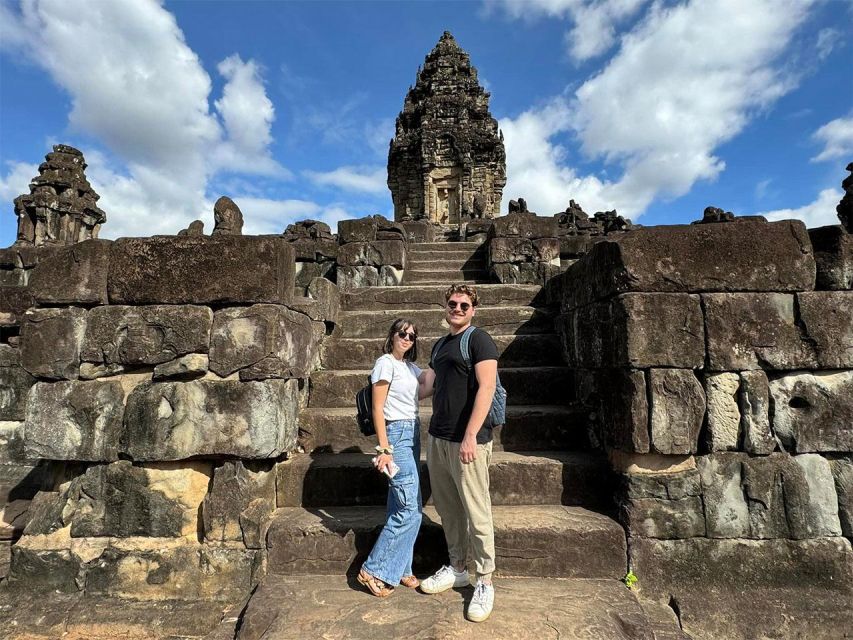
At $10 per person, the advertised price is unusually low for a seven-hour guided tour with hotel pickup, a driver, an air-conditioned minibus, a live guide, temple transport, and bottled water. The small group limit adds to the value.
The required temple pass changes the calculation. Add $37 per person, and your basic cost becomes $47 before breakfast, lunch, drinks, or personal purchases. The tour price itself is inexpensive, but the full morning and afternoon budget is not just $10.
Breakfast is also at your own expense. Since the plan includes a return to the hotel after sunrise, you may be able to eat there, but confirm the timing with your hotel and guide. Food and drinks beyond the bottled water are not included.
For a first-time visitor who wants the main temples without arranging transport, the total can still be fair. The value depends on dependable service and clear communication. A missed sunrise or unexpected $10 tuk-tuk ride quickly reduces the savings.
Guide languages, group size, and the service question
Live guiding is offered in English, French, and German. A guide with more than 20 years of dedicated work is assigned in the description, but no guide’s personal name is provided. If you need French or German, confirm that language before paying. If you need another language, do not assume it is available.
The group limit is 14 people. That is small enough for a guide to explain carvings and keep track of the group, though it is not the same as a private tour. At busy temple entrances, you may still need to wait for other members.
The most serious practical issue is the documented failure to provide timely pickup and the language mismatch on a Japanese-language booking. The booking was also reportedly canceled after the tour had begun without the guest’s consent. I would treat this as a reason to confirm the details in writing, not as proof that every departure will fail.
The activity offers free cancellation up to 24 hours before departure and allows you to reserve now and pay later. Those terms help if your plans are uncertain, but they do not solve a same-morning communication problem. Keep your phone charged and check messages the day before.
Who should book this Angkor tour
I would consider this tour if you want the major sights in one organized outing, prefer hotel pickup, and are comfortable with a very early start. It suits first-time visitors who want a guide to explain the religious images, Khmer architecture, and connection between the separate temple areas.
It is also a good match if you want to keep transport simple. You do not need to arrange a tuk-tuk between Angkor Wat, Angkor Thom, and Ta Prohm, and the minibus offers air conditioning during breaks in the temple walking.
I would choose another option if sunrise is the single most important part of your Cambodia trip and you cannot tolerate a backup plan. I would also look elsewhere if you need Japanese, want a private pace, or want to spend a full day studying every gallery.
Should you book it?
Book it for the low base price, useful temple selection, small group, and included transport, but confirm the operational details first. Ask Angkor Pro Travel to verify your hotel, pickup time, guide language, and exact sunrise plan.
The tour gives you the essential Angkor introduction: dawn at Angkor Wat, the four-faced gate and Bayon at Angkor Thom, Ta Prohm’s roots, and a longer look at Angkor Wat’s carvings. Just remember that the $10 headline price becomes about $47 after the temple pass, and breakfast and drinks remain extra.
If the provider confirms everything clearly, this can be a practical first-day choice. If communication is vague, the low price is not worth risking the one morning when Angkor Wat’s sunrise matters most.
FAQ
What time does the tour begin?
Pickup is scheduled around 4:45am at your hotel lobby. The exact pickup time depends on your hotel’s location, and the provider says it will be confirmed one day before the tour.
Is the Angkor temple pass included?
No. The temple pass costs $37 per person and must be purchased separately. The official purchase website provided for the pass is angkorenterprise.gov.kh.
Which temples are included?
The route includes Angkor Wat, Angkor Thom, Bayon, Baphuon, Phimeanakas, the Terrace of the Leper King, the Terrace of the Elephants, and Ta Prohm.
Is hotel pickup included?
Yes. Hotel pickup and drop-off in Krong Siem Reap are included. The exact pickup details depend on your hotel location.
Which languages are offered?
The live guide languages are English, French, and German. Confirm your preferred language before departure, since a Japanese-language booking was handled by an English-speaking guide.
What else do I need to pay for?
You need to pay separately for the $37 temple pass, breakfast, food, drinks beyond the included bottled water, and personal expenses.
More Angkor Wat Tours in Siem Reap
- Siem Reap: Full-Day Angkor Wat Guided Tour with Sunset
★ 4.9 · 3,803 reviews - Angkor Wat Sunset Small Group Tour with Lunch Included
★ 5.0 · 3,059 reviews - Siem Reap: Angkor Wat Sunrise and Full-Day Sightseeing Tour
★ 4.9 · 2,828 reviews - Siem Reap: Angkor Wat Private Tuk-Tuk Tour
★ 4.9 · 2,222 reviews
Newly written up around Siem Reap
- Sunrise at Angkor Wat Temple: 3-Hour Private Tour★ 4.7 · 30 reviews
- Small-Group Explore Angkor Wat Sunrise Tour with Guide★ 5.0 · 3 reviews
- Siem Reap : Private Tuk-Tuk Tour of the Magnificent Temples.★ 4.9 · 14 reviews
- Siem Reap: Ultimate Angkor Wat Offbeat Experience by Jeep★ 4.9 · 8 reviews
- SiemReap: Private Angkor Wat Tour in English or German guide★ 5.0 · 5 reviews
- Siem Reap: 1-Day Angkor Wat Tour in Portuguese★ 5.0 · 4 reviews
- Angkor Wat: Sunrise 2.5 Days Temples & Tonle Sap-Small Group★ 5.0 · 10 reviews
- Siem Reap: Grand Circle Temples Tour With Private Tuk-Tuk★ 5.0 · 4 reviews
Angkor Wat Tours, compared.
Angkor Wat Sunrise or Sunset Tour with Guide from Siem Reap
Read our review →
Angkor Wat: Small-Group Sunrise or Sunset Tour
Read our review →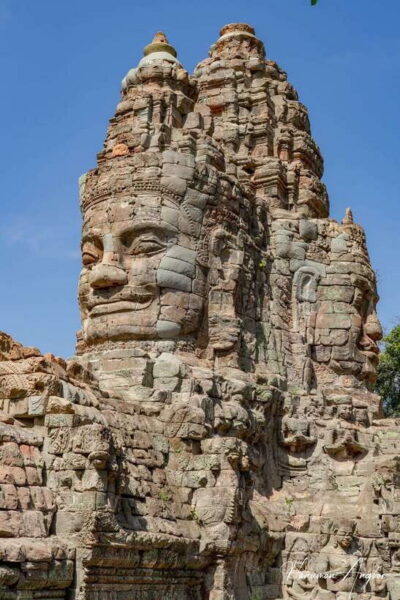
Angkor Wat 2-Day Tour with Sunrise and Sunset
Read our review →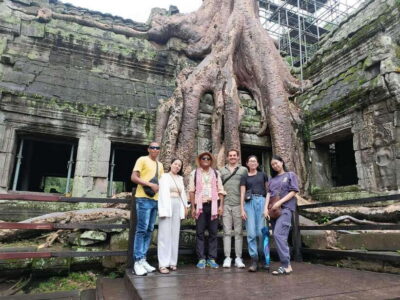
Angkor Wat Sunrise tour with Small – Group and Guide tours
Read our review →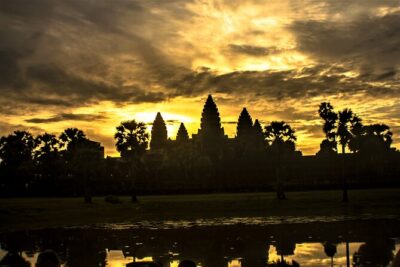
Angkor Wat Highlights and Sunrise Guided Tour from Siem Reap
Read our review →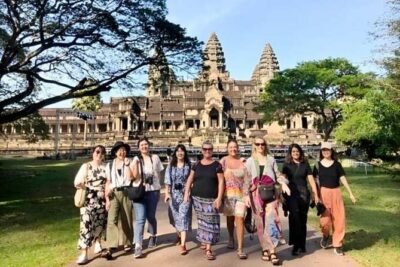
Angkor Wat Sunset Small Group Tour with Lunch Included
Read our review →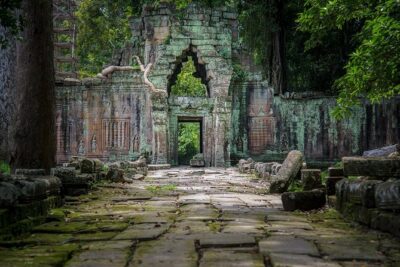
Full-Day Angkor Wat Sunrise Private Tour with Guide from Siem Reap
Read our review →Browse the lists this tour appears in