
Reviewed · MADRID TEMPLE TOURS
From Madrid: Escorial Monastery & Valley of the Fallen Trip
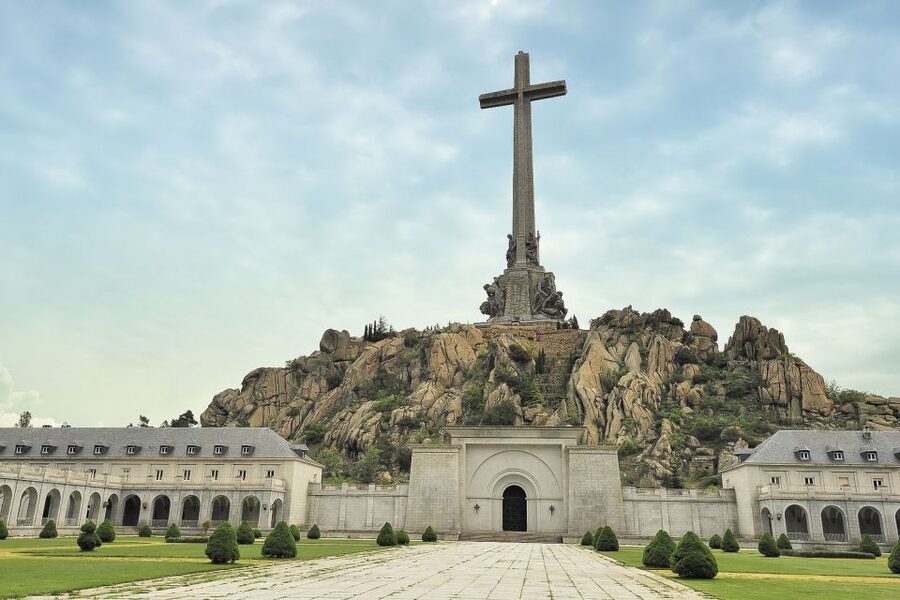
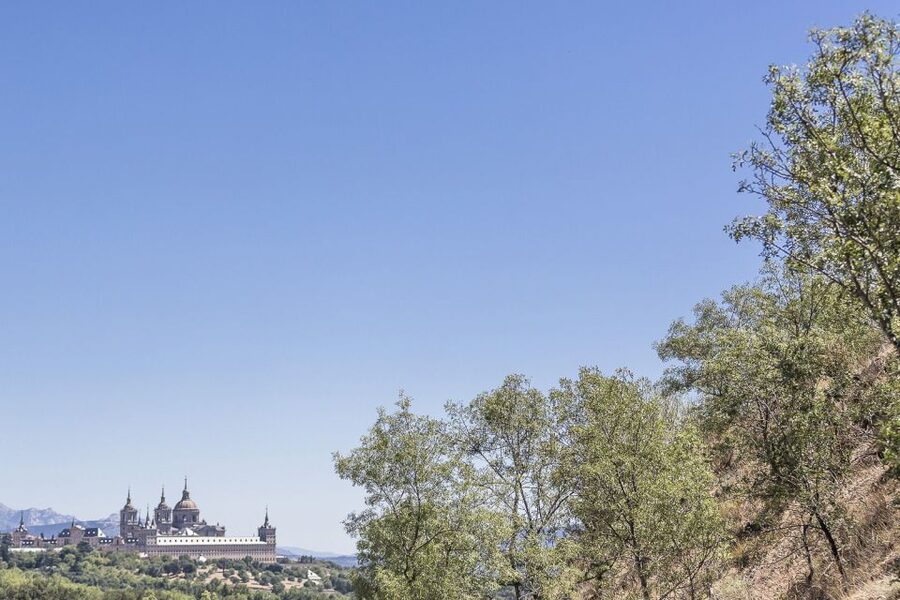
The day’s most striking sight is the Valley of the Fallen, where an underground basilica is cut into the mountain beneath a 152-meter cross visible for miles. Before that, you visit El Escorial, the vast Renaissance complex built by Spain’s 16th-century monarchy.
I like the way this trip joins two very different monuments in one half-day outing. I also like the comfortable coach, central meeting point, and guides such as Jorge, Carmen, Alex, and Manuel, who have been praised for clear explanations and good organization. The main drawback is time: the Valley of the Fallen visit can feel rushed, and El Escorial has far more rooms, gardens, and views than this schedule allows.
Key points to know before booking
- Two major monuments in one morning: Visit El Escorial and the Valley of the Fallen without arranging separate transport.
- Royal interiors at El Escorial: See the Habsburgs’ Palace, the Kings and Princes Mausoleum, basilica, Chapter House, and library.
- A church inside the mountain: The Valley of the Fallen basilica is reached as part of a guided visit, but explanations are given outside rather than inside.
- A bilingual tour: English and Spanish are used during the tour, with a radio guide system to help you hear.
- A physically demanding visit: Expect stairs and walking. Full accessibility is not guaranteed, and the tour is not suitable for wheelchair users.
- Good value at $78: Admission to both monuments, coach transport, and a local guide are included, though food and hotel transport are not.
Why El Escorial makes this more than a quick palace trip
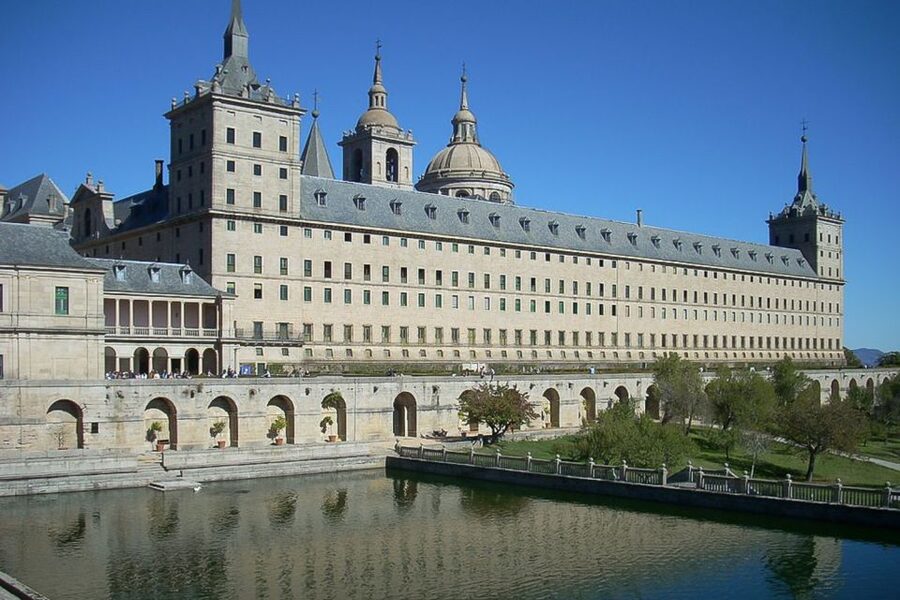
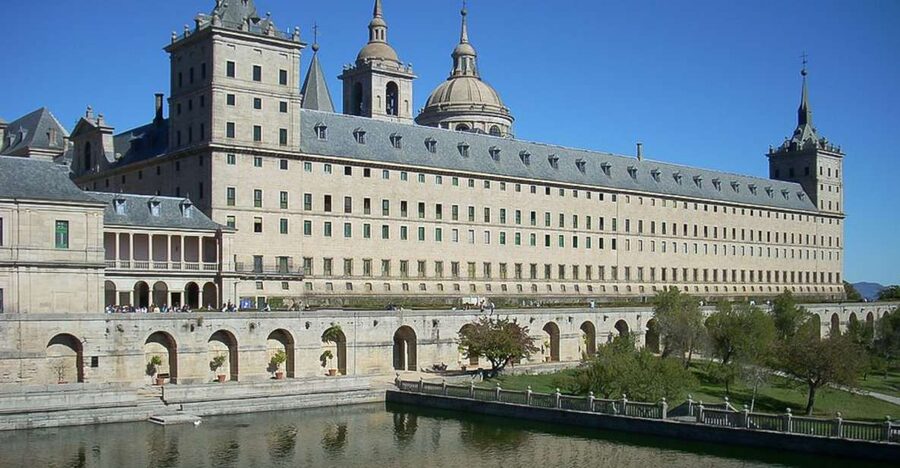
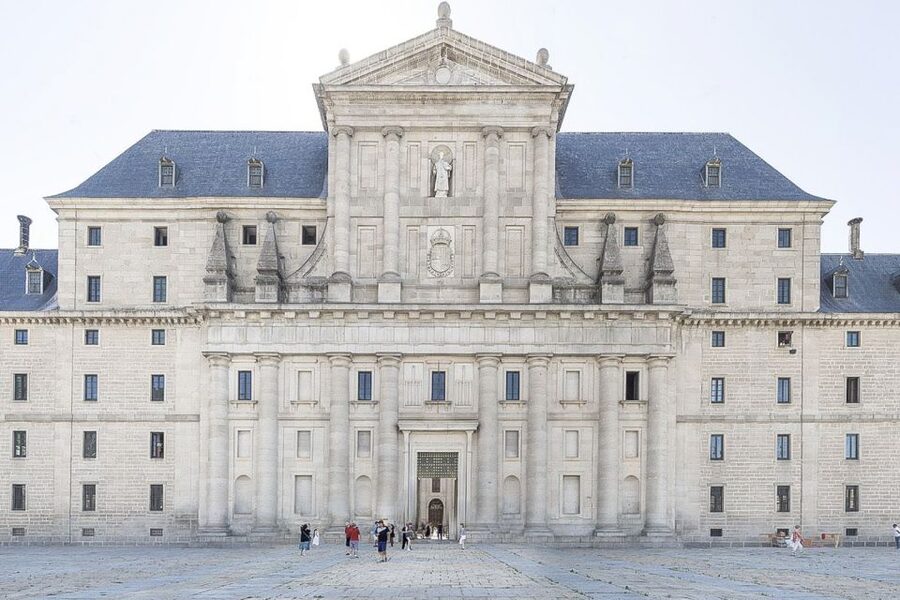
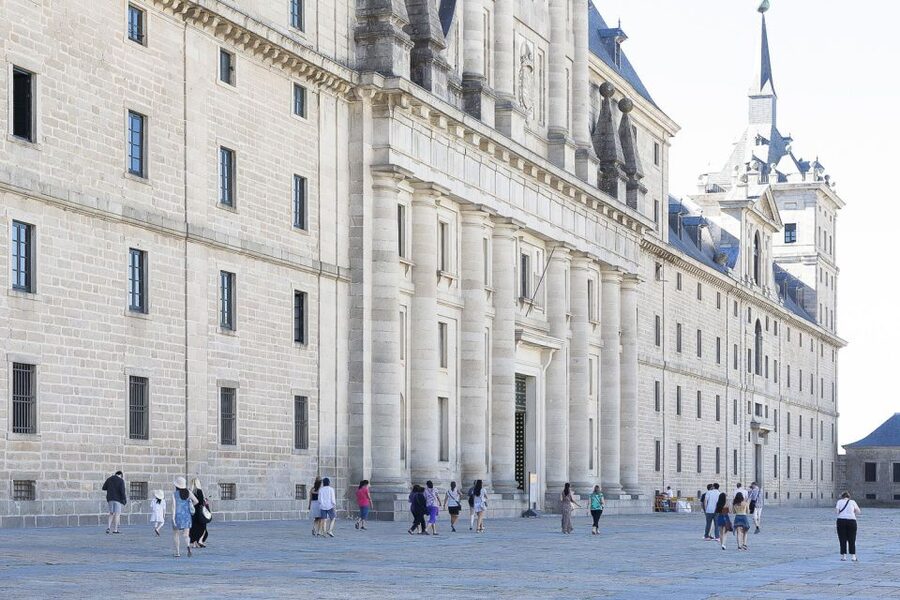
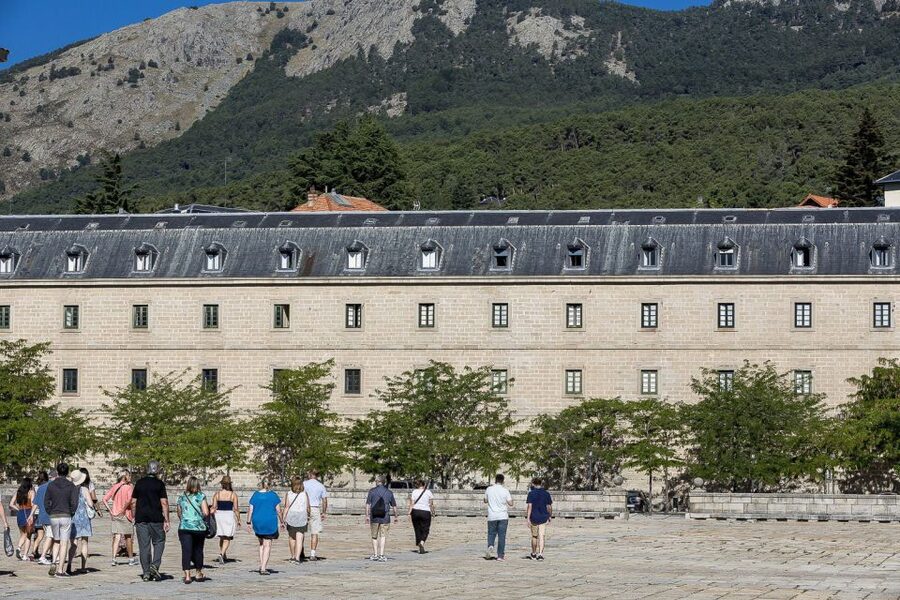
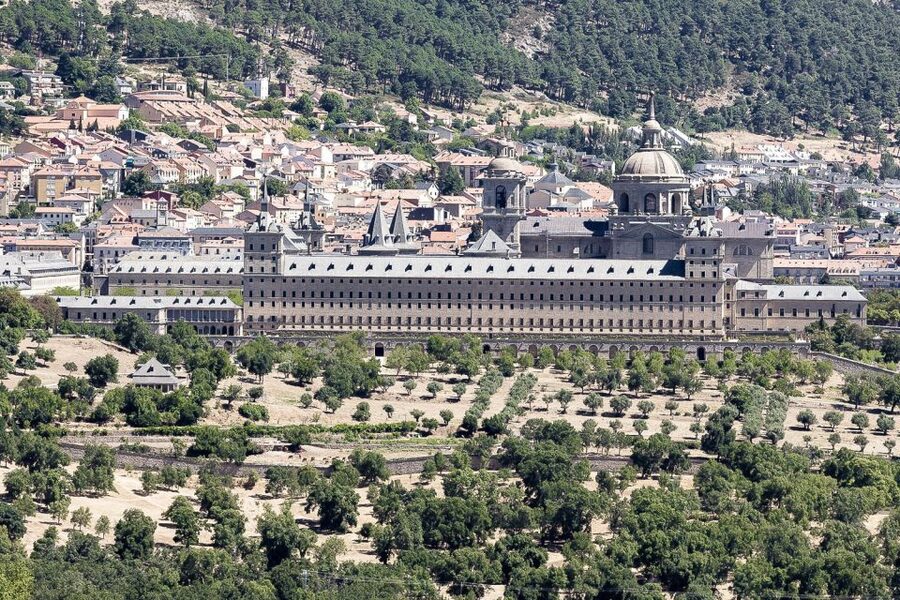
El Escorial is not simply a royal residence. It is a huge architectural complex built in the 16th century, combining palace rooms, religious spaces, royal burial areas, a library, and formal working rooms. Its Renaissance design is highly ordered, with strong symmetry that gives the building a serious, almost fortress-like character.
The visit focuses on the Habsburgs’ Palace, the Chapter House, the Basilica, and the remarkable library. You also see the Mausoleum of the Kings and the adjoining burial areas for princes, princesses, and royal consorts. This gives the visit more weight than a standard palace tour, since you are moving through the public, private, religious, and funerary parts of the monarchy.
I especially like that a guide helps you understand how these rooms fit together. Without context, El Escorial can feel like a long succession of grand spaces. With a good guide, the building becomes easier to read: royal power, Catholic devotion, court life, and dynastic memory are all gathered under one roof.
The tour does not give you unlimited time. Some people have found they wanted longer to see the gardens and exterior views, while others felt the schedule covered the essential interiors well. If you want a slow architectural study, a full independent day would suit you better. If you want the main royal rooms explained without spending a whole day away from Madrid, this format works well.
Other temple visits near Spain we have written up
- Montserrat Monastery Half Day Experience from Barcelona
★ 5.0 · 6,014 reviews - Montserrat Monastery Small Group or Private Tour Hotel pick-up
★ 5.0 · 5,144 reviews - Escorial Monastery and the Valley of the Fallen Tour from Madrid
★ 5.0 · 2,494 reviews
The Habsburg palace and the royal burial rooms
The palace section is the core of the El Escorial visit. You walk through rooms connected with the Spanish Habsburg monarchy, then continue to the royal burial areas where kings, princes, princesses, and consorts were laid to rest.
These rooms are valuable because they show a less polished side of royal life. A palace is often presented as decoration and ceremony, but here the mausoleums and religious spaces keep mortality in view. The result is solemn rather than flashy.
The route includes a large number of stairs. One account specifically counted about 75 stairs up and down to the crypts, so you should wear shoes that can handle stone floors and repeated climbs. The monument’s architecture also means that full accessibility cannot be guaranteed.
Photography rules matter. One past visitor noted that photographs were not permitted in both locations. You should be ready to put your camera away and pay attention to the spaces themselves.
The basilica and library at El Escorial
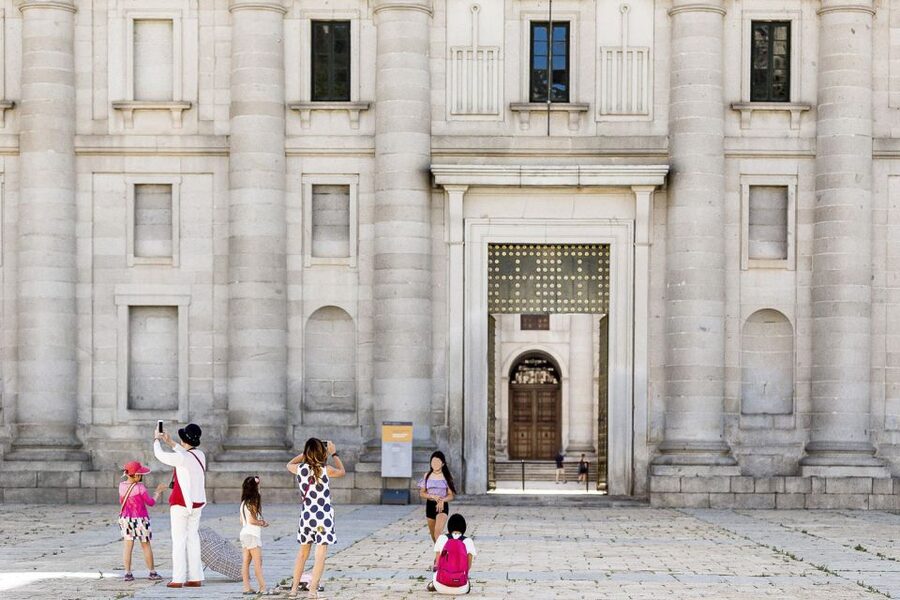
The Basilica is one of the major interiors on the route. Its scale helps explain why El Escorial was built as such a large complex in the first place. The Chapter House adds another important stop, with its connection to the religious and administrative life of the site.
The library is one of the most appealing parts for many visitors. It gives the complex an intellectual side, not just a royal and religious one. You are seeing a place designed to gather power, worship, learning, and dynastic memory together.
The guide uses a radio system, which is useful when the group is spread across large rooms. The maximum is 30 people per guide, so this is not a private visit unless you select a private or small-group option. A group of that size can still feel busy in narrow rooms, but the audio equipment should make it easier to follow explanations.
The road from Madrid and what the timing means
The tour begins at the local partner’s office at Calle San Nicolás 15, next to Plaza de Ramales in central Madrid. You should arrive 15 minutes before departure. Hotel or apartment pickup may be available with some options, but it must be arranged and confirmed when booking.
The coach journey to the first site takes about an hour. The air-conditioned buses used for the trip have been described as clean, modern, spacious, and comfortable. That matters because the visit itself includes plenty of standing and walking, so a decent ride gives you a chance to rest.
After El Escorial, the coach takes about 20 minutes to reach the Valley of the Fallen, which is roughly 9 kilometers away. The return journey to Madrid takes about 45 minutes, with drop-off listed at Plaza de Oriente and another location depending on the selected option.
The full outing lasts about 5 to 5.5 hours. It is a useful length for a morning or early afternoon, but the schedule is tight. Delays caused by traffic, city events, or late arrivals can reduce your time at the monuments. A past trip was affected by a triathlon in central Madrid and arrived late at the sites, leaving less time inside the basilica.
A different set of gates, same trip:
- Montserrat Museum and Monastery Entry Ticket
★ 4.5 · 1,740 reviews - Montserrat Small Group: Monastery, Black Madonna & Natural Park
★ 5.0 · 1,690 reviews - From Madrid: Escorial Monastery and the Valley of the Fallen
★ 4.7 · 1,434 reviews - Madrid: Flamenco Show at Tablao Sala Temple with Drink
★ 4.8 · 1,206 reviews
The Valley of the Fallen and its mountain-cut basilica
The second stop feels very different from El Escorial. The Valley of the Fallen is set in the Sierra de Guadarrama, with a monumental cross rising above the site. At 152 meters, it is the defining feature of the visit and can be seen from a long way off.
The basilica is built into the mountain rather than placed beside it. You enter an underground church with an imposing scale, followed by time to take in the unusual setting. The contrast is memorable: El Escorial is a carefully planned Renaissance complex, while this site makes its impact through rock, darkness, height, and sheer size.
There is an important restriction here. The guide cannot provide explanations inside the basilica under the site’s regulations. The guide gives the information outside, and you visit the interior on your own. If you want detailed commentary while standing inside the church, this may disappoint you.
The scheduled guided visit lasts about 50 minutes. That is enough to see the main parts, but not enough for a slow examination of every detail, especially if the group arrives late. Several people have felt that this stop deserves an extra hour. You should treat it as a powerful introduction rather than a long, unhurried study.
Weather also affects the experience. Fog can hide the cross entirely, removing the monument’s most famous external view. On a clear day, the scale is much easier to appreciate. Since the site is exposed and the tour includes outdoor walking, bring suitable clothing as well as comfortable shoes.
How the bilingual guiding works
The tour operates in English and Spanish. Guides move between the two languages, so the rhythm can be slower than on a single-language tour. Most visitors should expect explanations to be delivered in both languages rather than having separate English and Spanish departures.
The quality of the day depends heavily on the guide. Jorge, also referred to as George in some booking details, has been praised for detailed explanations, kindness, and strong knowledge of the sites. Alex has been appreciated for presenting historical facts in an engaging way, while Carmen has been described as organized and firm about keeping the group together and following site rules.
That said, accents and speaking speed can affect how much you understand. One person had difficulty following a guide who spoke too quickly. If you struggle to hear, use the radio guide system, stay close to the guide, and ask for clarification when needed.
The best guides add value by showing you what to notice rather than simply naming rooms. At El Escorial, that means pointing out how the palace, church, library, and burial areas work as one royal project. At the Valley of the Fallen, it means preparing you for the basilica before you enter, since commentary is not allowed inside.
Is $78 good value?
At $78 per person, the cost is reasonable for a half-day outing that includes admission to both monuments, an official local guide, and air-conditioned coach transport. Buying separate tickets and arranging transport would take more planning, and the coach removes the need to work out the route between Madrid, El Escorial, and the Valley of the Fallen.
The price is strongest if you value efficient transport and historical context. You are paying for access, logistics, and explanations, not just a ride to the sites. The guide is particularly useful at El Escorial, where the complex can be hard to understand without help.
The value is less clear if you prefer long visits and independent wandering. Food and drinks are not included, and you do not get a full day at either site. There is a café near the bus stops at the Valley of the Fallen, but you should not depend on the tour for a proper meal.
Reserve now and pay later options are available, and cancellation is allowed up to 24 hours before departure for a full refund. The operator can change or cancel the route for force majeure reasons, and Spain’s heritage authority may alter access to parts of the monuments.
Who should book this half-day trip
I would choose this tour if you have a few days in Madrid and want to see two important sites outside the city without renting a car or planning regional transport. It suits first-time visitors who want a guide to explain the royal complex and travelers who prefer a clear schedule.
It also works well for people who enjoy architecture, royal history, religious buildings, and unusual monuments. The Valley of the Fallen is not a conventional sightseeing stop, and the mountain-cut basilica gives the day a strong visual contrast with El Escorial.
I would hesitate if you have reduced mobility, dislike stairs, or need guaranteed step-free access. The tour is not suitable for wheelchair users, and the interiors include many stairs.
I would also think twice if your main aim is photography or a relaxed garden visit. Photography restrictions may apply, the Valley of the Fallen can be foggy, and the timetable leaves limited space for lingering outdoors at El Escorial.
Practical tips for a smoother visit
- Wear supportive shoes: You will walk through large monuments and climb stairs, including the route toward the crypts.
- Arrive 15 minutes early: The departure point is central, but the coach will not wait for a late arrival.
- Bring layers: Conditions can change between Madrid and the Sierra de Guadarrama.
- Expect bilingual commentary: The guide speaks English and Spanish, so allow extra time for explanations.
- Keep the schedule in mind: The Valley of the Fallen has only about 50 minutes, and delays can make that visit shorter.
- Do not count on photography: Previous visitors have been told that photos are not allowed at both sites.
- Plan food separately: Meals and drinks are not included, though a café is available near the Valley of the Fallen bus area.
Should you book it?
Book this trip if you want a well-priced, organized introduction to El Escorial and the Valley of the Fallen. The combination is hard to arrange as neatly on your own, and the coach, admissions, guide, and radio system cover the essentials.
Skip it if you want to spend hours in the gardens, study every room, or take your time inside the basilica. For most visitors with limited time in Madrid, though, the tour offers a strong mix of grand architecture, royal burial sites, and one of Spain’s most unusual monumental churches. Just set your expectations correctly: you will see a lot in five hours, but you will not see everything.
FAQ
Where does the tour depart from?
Tours depart from the local partner’s office at C/ San Nicolás 15, next to Plaza de Ramales in central Madrid.
How early should I arrive?
You should check in 15 minutes before the scheduled departure time.
How long does the tour last?
The tour lasts approximately 5 to 5.5 hours, depending on the selected starting time and option.
What language is the tour offered in?
The tour is offered in English and Spanish, with a live guide and radio guide system.
Is hotel pickup available?
Hotel or apartment pickup may be available with selected options. If you choose it, provide your accommodation details when booking.
What is included in the price?
The price includes admission to the Royal Monastery of El Escorial, admission to the Valley of the Fallen and its Basilica, an official local guide, air-conditioned coach transport, and a radio guide system.
Are food and drinks included?
No. Food and drinks are not included in the tour price.
Is the tour suitable for wheelchair users?
No. The tour is not suitable for wheelchair users, and full accessibility cannot be guaranteed because of the monuments’ architectural features and numerous stairs.
Can the guide explain the Valley of the Fallen basilica from inside?
No. Under the site’s regulations, the guide gives explanations outside the basilica. You visit the interior on your own.
Newly written up around Spain
- Barcelona: Montserrat Private Trip with Monastery Ticket★ 5.0 · 74 reviews
- Private tour: San Lorenzo de El Escorial Monastery★ 5.0 · 20 reviews
- San Lorenzo de El Escorial Monastery Private Tour★ 5.0 · 12 reviews
- San Lorenzo de El Escorial: Monastery and Site Guided Tour★ 4.8 · 127 reviews
- Semi-Private Montserrat Monastery & Hiking Experience★ 5.0 · 132 reviews
- From Palma: Serra Tramuntana and Lluc Monastery Guided Tour★ 4.5 · 146 reviews
- Full-Day Trip Barcelona to Montserrat Monastery & Cava Winery★ 5.0 · 158 reviews
- Semi-Private Montserrat Monastery, Funicular & Scenic Nature Walk★ 5.0 · 172 reviews
Madrid Temple Tours, compared.
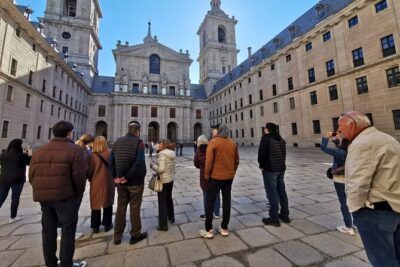
Escorial Monastery and the Valley of the Fallen Tour from Madrid
Read our review →
Flamenco Show at Tablao Sala Temple with Drink
Read our review →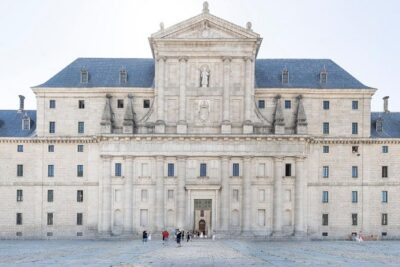
Escorial Monastery and the Valley of the Fallen from Madrid
Read our review →
Entrance to the Flamenco Temple Room in Madrid with Tapas Option
Read our review →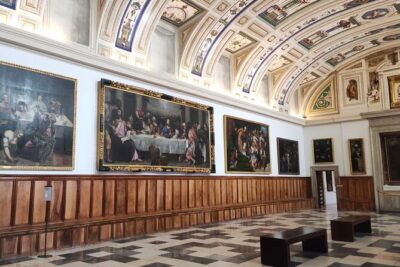
San Lorenzo de El Escorial Monastery Private Tour
Read our review →Browse the lists this tour appears in