
Reviewed · ANGKOR WAT TOURS
Siem Reap: Angkor Wat Small Group Tour with Spanish Guide
Angkor is easier to understand when someone explains what those stone faces, galleries, roots, and reservoirs mean. This tour gives you a Spanish-speaking guide, hotel pickup, temple transport, and a clear route through the Khmer Empire’s great monuments. Guides such as Mario and Samuel also help with photos, which is useful when the light and crowds are changing fast.
I like the choice between a one-day hit of the main temples and a two-day plan with Banteay Srei. I also like the practical touches: cold water, cold towels, and a guide who points out good photo positions instead of simply walking you from gate to gate.
The main drawback is heat and effort. The one-day route packs in several large sites, while the second day repeats the temple setting to some degree. You will also pay the Angkor entrance fee separately, and lunch is not included.
Key points to know before booking
- Spanish guidance throughout: Mario and Samuel are named guides associated with this experience, and the tour is designed for Spanish-speaking visitors.
- One day covers the major sights: Ta Prohm, Angkor Thom, Bayon, Baphuon, the Elephant Terrace, and Angkor Wat.
- Two days add quieter, more detailed stops: Preah Khan, Neak Pean, Ta Som, East Mebon, Pre Rup, and Banteay Srei.
- Sunrise changes the day: Pickup moves to 5:00 AM, with the tour finishing around noon.
- Transport depends on group size: One or two people generally ride by tuk-tuk, while larger groups use an air-conditioned van or bus.
- Budget for the temple pass: Add $37 for one day or $62 for a two to three-day pass to the $50 tour price.
Why the Spanish guide matters at Angkor
Angkor is not just a collection of old buildings. The carvings show Hindu and Buddhist stories, royal power, warfare, religion, and daily life. Without an explanation, it is easy to admire the stones while missing what makes each temple different.
A Spanish-speaking guide lets you ask questions as they occur, without translating every detail in your head. That matters at Bayon, where the famous faces can look alike at first, and at Angkor Wat, where the galleries are filled with scenes and symbols that reward context.
The guide also helps with the rhythm of the day. Mario is praised for combining detailed explanations with humor and photography, while Samuel is noted for patience and for adjusting the pace to a family. That flexibility is especially useful in the heat, when a planned one-hour visit may feel different from a one-hour visit on paper.
This is not a silent transport service with a few facts added along the way. You are paying for a person to connect the temples, answer questions, and help you use your time well.
More Angkor Wat Tours in Siem Reap:
- Angkor Wat Sunrise or Sunset Tour with Guide from Siem Reap
★ 5.0 · 12,109 reviews - Siem Reap: Angkor Wat: Small-Group Sunrise or Sunset Tour
★ 5.0 · 9,444 reviews - Siem Reap: Angkor Wat 2-Day Tour with Sunrise and Sunset
★ 4.9 · 4,429 reviews
Choosing one day or two days at Angkor
The one-day tour costs $50 per person before the park ticket, so the basic total is $87 per adult with the one-day Angkor pass. It is the right choice if you have limited time in Siem Reap and want the essential circuit with a guide.
The two-day tour costs the same listed tour price of $50 per person, but the entrance fee rises to $62 for a two to three-day pass. That brings the basic adult total to $112, excluding meals and tips. For a second day of guided sightseeing, transport, water, and hotel transfers, that can be good value if Angkor is a main reason for your visit.
I would choose two days if you dislike rushing or want more than the standard photographs. The second day reaches Banteay Srei, whose pink sandstone carvings are much finer and more delicate than the massive scale of Angkor Wat. You also get time for several different temple styles.
The tradeoff is repetition. The stone corridors, tropical growth, long walks, and hot weather continue on day two. One direct assessment of the program points out that the second day can feel more repetitive, especially if you skip sunrise. That is fair. Two days work best for people who enjoy architecture, sculpture, and slow looking, not for anyone who wants a quick monument checklist.
Starting the day in Siem Reap
Pickup takes place at your hotel lobby, normally between 8:30 and 9:00 AM. The guide and driver then take you to the ticket booth, unless you have already bought the pass online.
The park ticket is not included, so plan for that extra payment. The current stated prices are $37 for one day and $62 for two to three days. Children under 12 do not need a ticket, but you must show a passport as proof.
You can also select a sunrise start. That means pickup at 5:00 AM and a finish around noon. Bring breakfast from your hotel, since the early schedule is designed to keep moving after sunrise rather than return to the hotel for a meal.
The early start is worth considering if you want the famous morning atmosphere at Angkor Wat. It does make the day longer in terms of fatigue, even though the finish comes earlier. If you are not a morning person, the regular 8:30 to 9:00 AM pickup gives you a more forgiving start.
Ta Prohm, where roots take over the stone
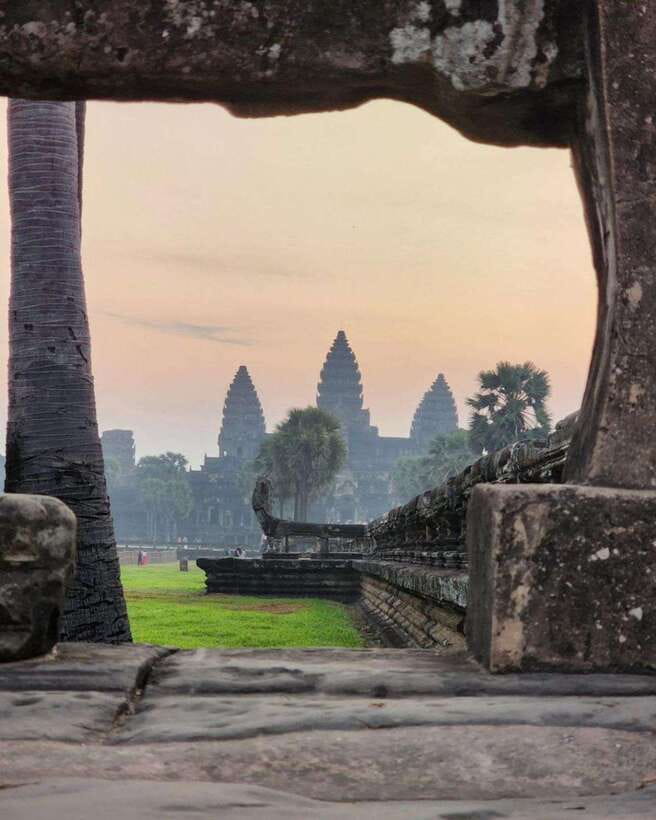
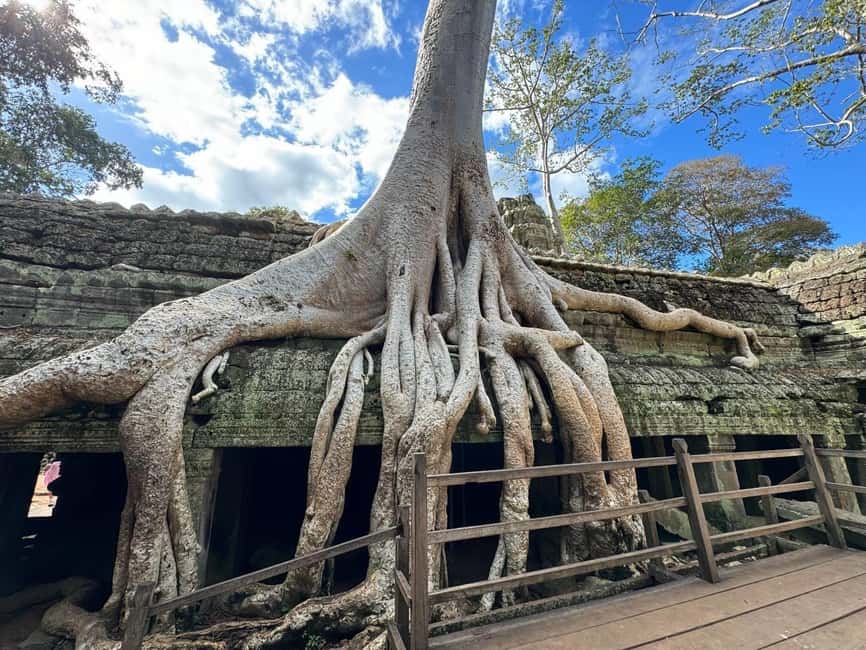
Ta Prohm is often the most immediately dramatic stop. Large tree roots push across temple walls and doorways, making the ruins look caught between human construction and the forest.
The guided hour here helps you separate the movie image from the actual monument. You can look for carved details, door frames, galleries, and the way the trees have become part of the visual character of the site. Your guide can also direct you toward useful photo positions, rather than leaving you to photograph the first root you see.
Ta Prohm is popular, so expect the experience to be visual and busy rather than quiet. Wear shoes with good grip and be ready for uneven surfaces. This is one of the places where comfortable clothing matters more than looking polished.
Other temple visits near Siem Reap we have written up
- Siem Reap: Full-Day Angkor Wat Guided Tour with Sunset
★ 4.9 · 3,803 reviews - Angkor Wat Sunrise tour with Small – Group and Guide tours
★ 5.0 · 3,655 reviews - Angkor Wat Highlights and Sunrise Guided Tour from Siem Reap
★ 5.0 · 3,213 reviews - Angkor Wat Sunset Small Group Tour with Lunch Included
★ 5.0 · 3,059 reviews
Entering Angkor Thom through the Victory Gate
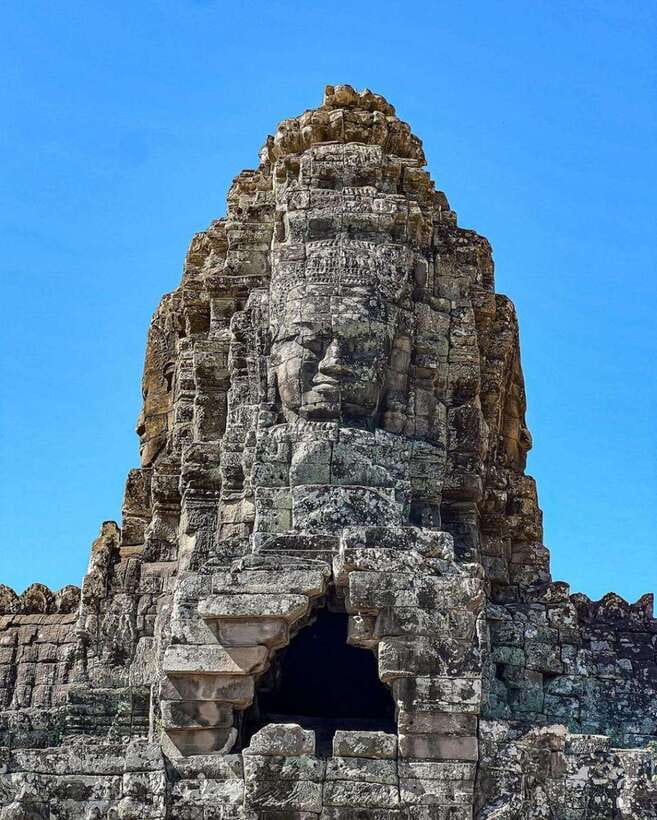
The route includes a short photo stop at the Victory Gate, followed by a longer visit inside Angkor Thom. The gate gives you a quick look at the monumental scale of the old city and a chance to photograph the approach before moving farther into the complex.
Angkor Thom is not one temple. It is a large walled city with several important monuments. The two-hour visit allows the guide to give you the larger setting, rather than treating each building as an isolated stop.
That broader view adds value. You begin to see how entrances, terraces, towers, and ceremonial spaces fitted together. The site is large, so the walking can become tiring, especially in the middle of the day.
Bayon, Baphuon, and the Elephant Terrace
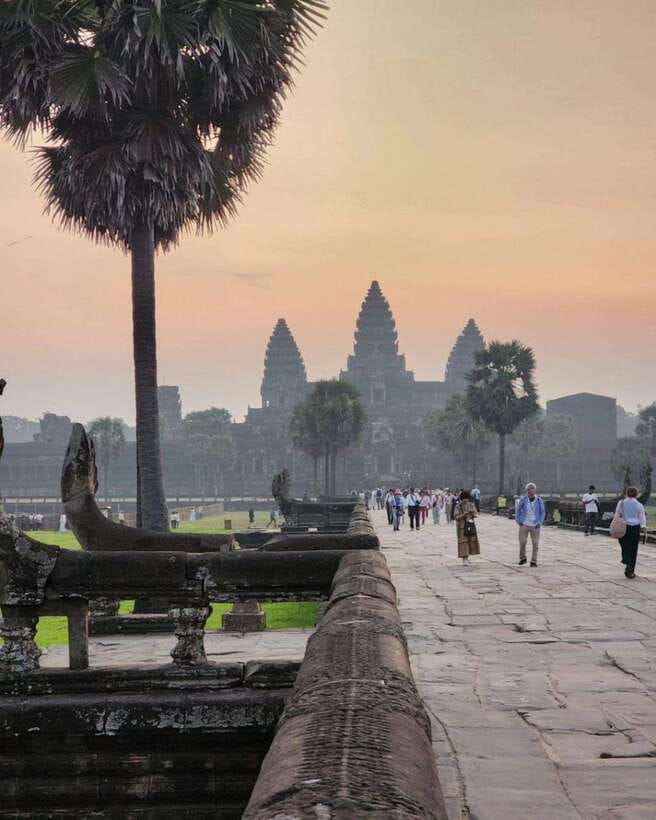
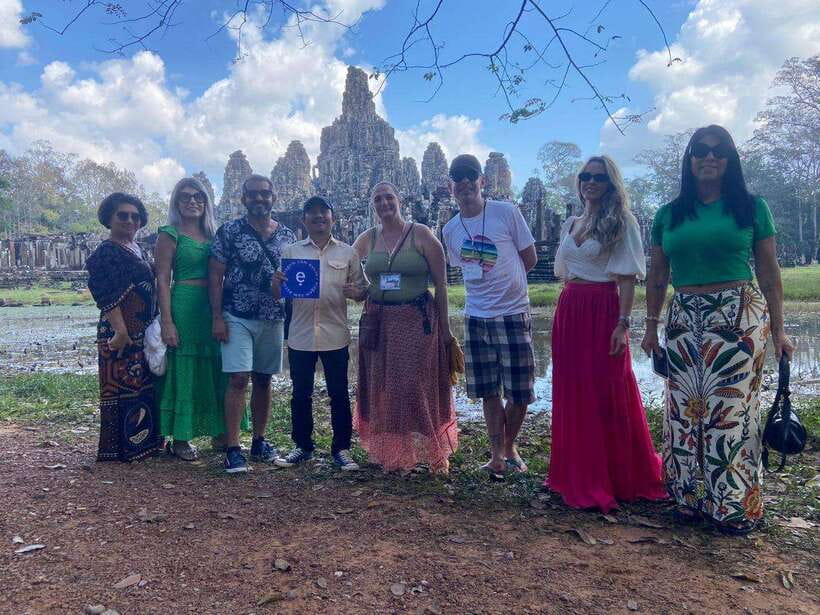
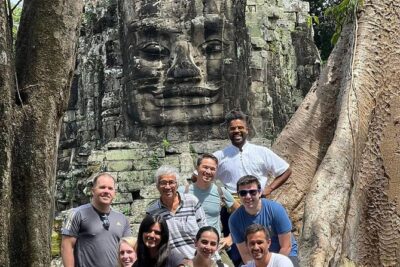
Bayon is the visual star of Angkor Thom. Its towers carry the serene stone faces that appear from different angles as you move through the temple. The effect is striking, but the layout can be confusing without help.
Your guide can point out how the faces relate to the tower arrangement and explain the carvings around the temple. The planned 45-minute visit is enough for the main features, though you may want more time if photography is a priority.
Baphuon brings a different mood. Its elevated structure and long approach show the scale of Khmer temple building. The planned 30 minutes gives you a focused look without letting the larger circuit slow to a crawl.
The Terrace of the Elephants is another short, guided stop. Its carved elephants and ceremonial setting make more sense when connected to Angkor Thom’s royal center. It is not a standalone temple visit, but it adds useful context to the city.
The sequence is well chosen for a first day. You see the city, its state temples, its terraces, and its carved faces before moving to Angkor Wat. The limitation is pace. Several stops in one morning can feel packed, so tell your guide if you need a little more time at one site and less at another.
Lunch near Srah Srang
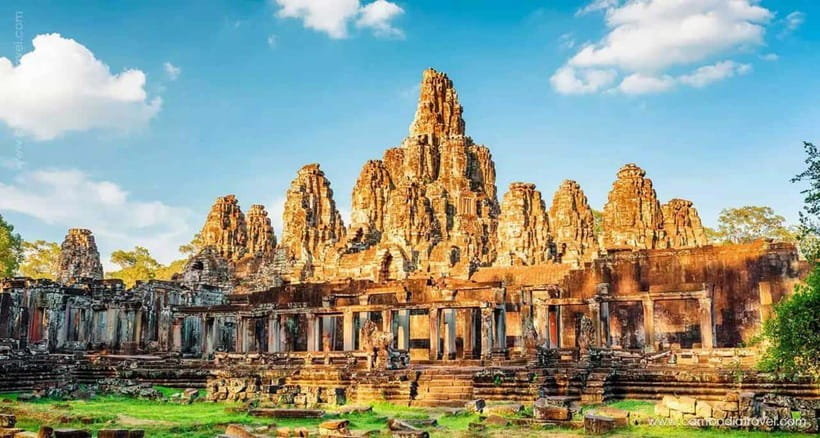
Lunch is not included, and the schedule allows about an hour for a break near Srah Srang. You pay for your own Cambodian meal at a nearby restaurant.
This is a practical pause rather than a major cultural stop. Use it to drink water, cool down, and recharge before Angkor Wat. The tour includes cold drinking water and cold towels, but they do not replace a proper meal or regular hydration.
If you select the sunrise version, bring breakfast from your hotel. The early finish around noon makes that especially important.
Angkor Wat deserves the long afternoon
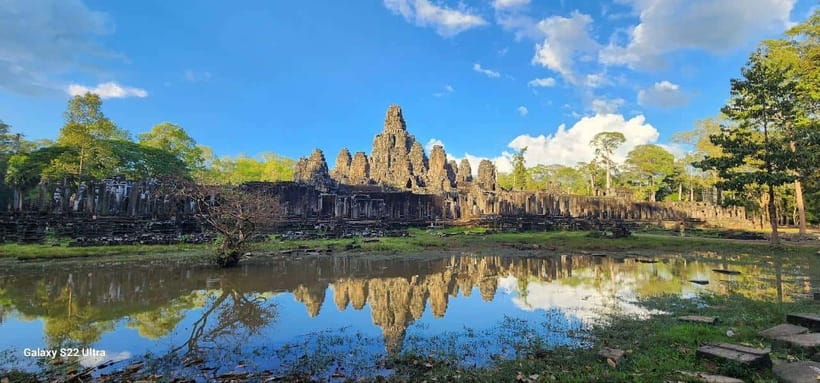
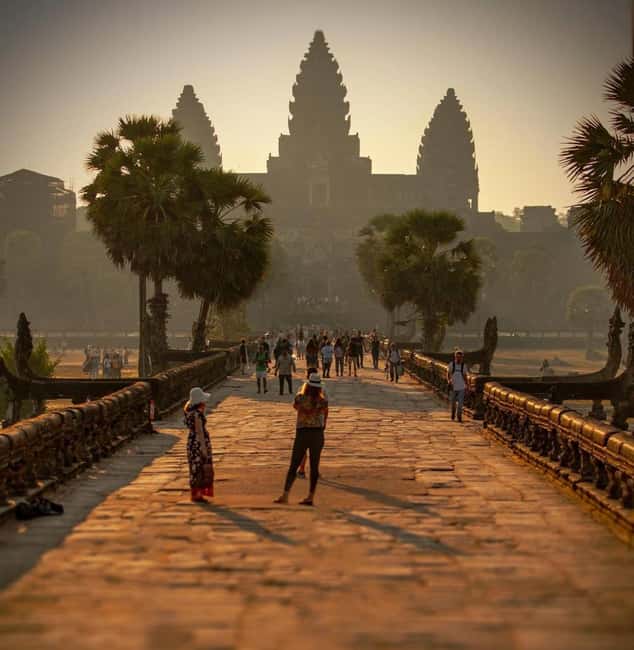
The final major stop on the one-day route is Angkor Wat, with about two and a half hours for a guided visit. That is the right amount of time for a first encounter because the complex is vast and rewards a slower pace.
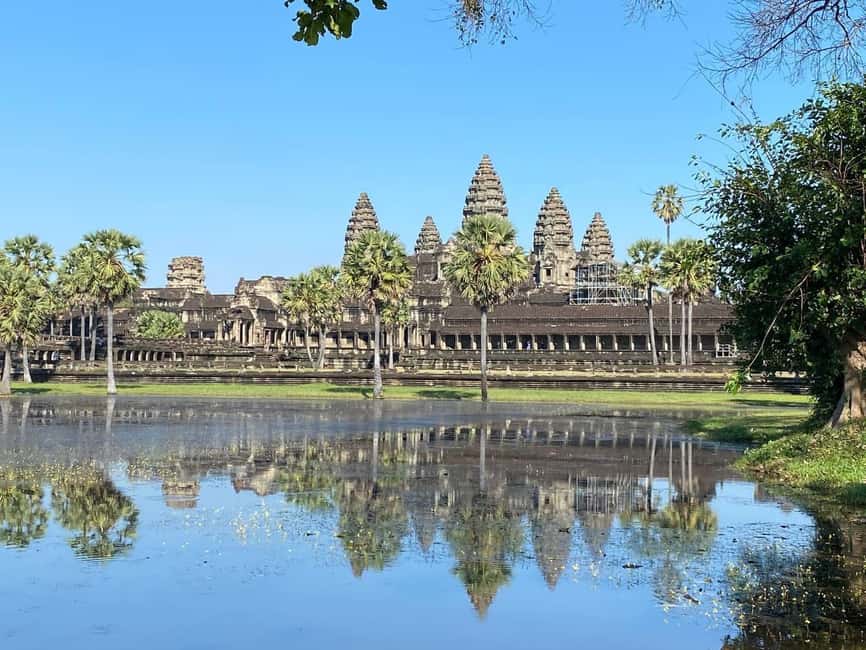
Angkor Wat was built as a major religious monument, and its galleries, towers, courtyards, and long approaches work together. Your guide can explain the art, history, and symbolism instead of leaving you with only the famous central towers.
The scale can be overwhelming. You will walk across open areas and through stone corridors, often in strong heat. A hat, sunscreen, sunglasses, comfortable shoes, and insect repellent are sensible additions to the supplied water and towels.
Dress rules matter here. Pants or skirts must cover the knees, and shirts must cover the shoulders. Short skirts, shorts, tank tops, and sleeveless shirts are not accepted at the temples. A scarf may cover knees and shoulders at some places, but proper clothing is the safer choice for Angkor Wat.
The guide’s photography help is a real practical benefit. Mario is specifically praised for taking many photos and showing people good locations. That can save you from asking strangers or trying to manage a group photo with a timer.
The second day: Preah Khan to Pre Rup
The extended route begins with Preah Khan, a large monastic complex filled with corridors, carvings, and partially ruined spaces. It feels more spread out than the headline temples, and the extra time lets you notice smaller details.
Neak Pean is a compact temple surrounded by pools. Its setting gives the day a change of pace after the long corridors of Preah Khan. The stop is smaller, so your guide’s explanation helps you understand why this modest structure mattered.
Ta Som is known for its tree-covered gate. It echoes the visual drama of Ta Prohm on a smaller scale, making it a good stop for photography without the same sense of vastness.
East Mebon once stood on an island in a huge reservoir. You will see a temple shaped by the water-management system of Angkor, not just a building placed in isolation. That is one reason the second day adds useful context: it shows how the Khmer capital depended on large reservoirs and planned infrastructure.
Pre Rup is a mountain-style temple with broad views across the Cambodian countryside. The climb and steps can be tiring, and this is another point where sturdy shoes help. The reward is a strong sense of the temple’s height and form.
Lunch is again at your own cost, at a nearby restaurant. The second day finishes around 4:00 PM, unless you choose the sunrise version, which finishes around noon. Confirm the exact start option at checkout so you know how much time you have for the circuit.
Banteay Srei and the finest carvings
Banteay Srei is the final stop on the two-day plan and one of its best reasons to book. It is often called the Citadel of Women, and it is admired for intricate pink sandstone carvings.
The temple is smaller than Angkor Wat, but the carving work is unusually fine. You can see more delicate detail in the lintels and decorative surfaces, so this stop suits anyone who likes sculpture and close observation rather than sheer size.
Its distance from the central Angkor group also helps the two-day tour feel different from the first day. You are not simply repeating Angkor Wat, Bayon, and Ta Prohm. You are adding a distinct style and a more intimate scale.
Transport, group size, and comfort
Transport depends on the number of people and the option you select. Shared groups of one or two generally use a tuk-tuk, while groups of three to six use an air-conditioned van. A private one-day tour uses a tuk-tuk for one or two people unless you choose a car, with a van or bus for three or more.
On the private two-day plan, one or two people use a tuk-tuk on day one and a car on day two. Larger private groups use an air-conditioned van or bus.
A tuk-tuk gives you open-air movement and a closer feel for the roads around Siem Reap, but it offers less protection from heat and dust. The air-conditioned vehicle makes more sense for families, larger groups, or anyone who finds the Cambodian heat draining.
Hotel pickup and drop-off are included. Give the provider your hotel name or address and a contact number when booking. The transport score is high, but the guide remains the main reason to choose this experience.
Who should book this Angkor tour
I would recommend the one-day version to first-time visitors with limited time, people who want the essential temples, and anyone who prefers a focused day. It covers the monuments most people hope to see, with explanations in Spanish and help taking photographs.
I would recommend the two-day version to anyone who enjoys ancient architecture, detailed carving, or a less compressed schedule. It is also a better fit for families if you want the guide to adjust the pace, as Samuel did for one family according to the available feedback.
This is not a good fit for wheelchair users because the temples include uneven ground and steps. It is also not suitable for people over 95. Alcohol and drugs are not allowed, and the dress code is enforced.
Cancellation is free up to 24 hours before the start, and you can reserve now and pay later. Those terms help if your Siem Reap plans are still changing, but you should still confirm the pickup address and sunrise selection before the day.
Should you book it?
Book this tour if you want Angkor explained in Spanish, prefer hotel pickup, and value a guide who can manage the pace and take photos. Mario and Samuel are the names to look for, with Mario receiving especially strong praise for his energy, detail, and photography.
Choose one day for the essential temples and better efficiency. Choose two days if Banteay Srei and the smaller Grand Circuit temples matter to you, and accept that the second day can feel more repetitive.
At $50 before the park pass, lunch, and tip, the price is reasonable for a guided experience, especially when private options, transport, cold water, and hotel transfers are included. Just budget the true adult cost: about $87 for one day or $112 for two days before food and gratuities.
FAQ
Is the Angkor entrance ticket included?
No. The Angkor Archaeological Park pass costs $37 for one day or $62 for two to three days and must be purchased separately.
What time does the regular tour start?
Hotel pickup is scheduled between 8:30 and 9:00 AM. The one-day tour generally finishes around 5:00 PM.
Is a sunrise option available?
Yes. If selected at checkout, pickup is at 5:00 AM. The sunrise tour finishes around noon, and bringing breakfast from your hotel is recommended.
Which temples are included on the one-day tour?
The one-day route includes Ta Prohm, Victory Gate, Angkor Thom, the Terrace of the Elephants, Baphuon, Bayon, and Angkor Wat, with a lunch break near Srah Srang.
What does the two-day tour add?
The second day includes Preah Khan, Neak Pean, Ta Som, East Mebon, Pre Rup, and Banteay Srei.
Is lunch included?
No. Lunch is taken at a nearby restaurant, but you pay for your own meal.
What transport is used?
One or two people generally travel by tuk-tuk. Groups of three or more use an air-conditioned van or bus. A car can be selected for some private tour options.
Can children join for free?
Children under 12 can join free of charge on the private tour only. Children under 12 do not need an Angkor ticket, but a passport must be shown as proof.
What should I wear to the temples?
Wear clothing that covers the knees and shoulders. Angkor Wat requires pants or skirts covering the knees and shirts covering the shoulders. Bring comfortable shoes, sunglasses, a hat, sunscreen, and insect repellent.
Newly written up around Siem Reap
- Siem Reap: Angkor Wat Private Tour by Tuk-Tuk★ 4.5 · 117 reviews
- Phnom Kulen Waterfall and Banteay Srei Temple Tour from Siem Reap★ 5.0 · 30 reviews
- 5-Day All Major Temples & Kulen Mount Waterfall & Koh Ker & Beng Mealea★ 5.0 · 13 reviews
- 3-Day Angkor Wat & All Interesting Major Temples & Kulen Mount Waterfall★ 5.0 · 63 reviews
- Angkor Wat Tour Deutsch | Private Führung★ 5.0 · 134 reviews
- Small-Group Full Day Angkor wat Guide tour with Sun set★ 5.0 · 136 reviews
- Full day exclusive tour for the main temples in Siem Reap★ 5.0 · 135 reviews
- Angkor Wat Private Tour by Tuk-Tuk with English Speaking Driver★ 5.0 · 142 reviews
Angkor Wat Tours, compared.
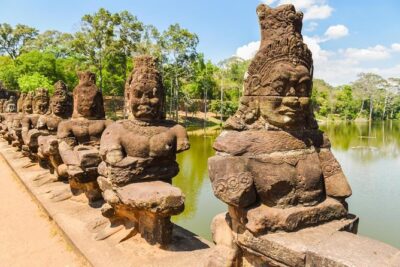
Angkor Wat Sunrise or Sunset Tour with Guide from Siem Reap
Read our review →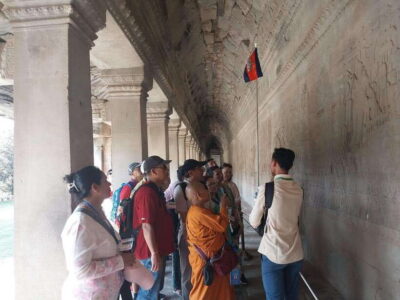
Angkor Wat: Small-Group Sunrise or Sunset Tour
Read our review →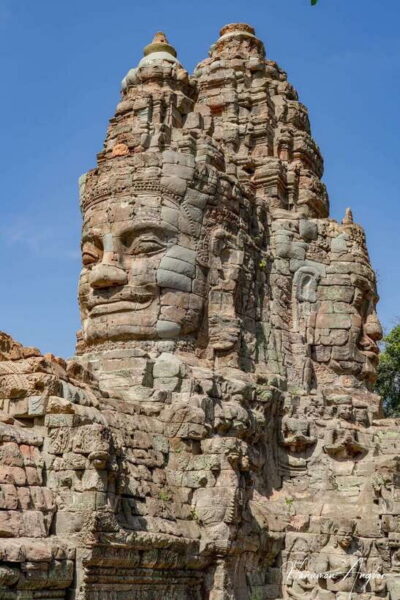
Angkor Wat 2-Day Tour with Sunrise and Sunset
Read our review →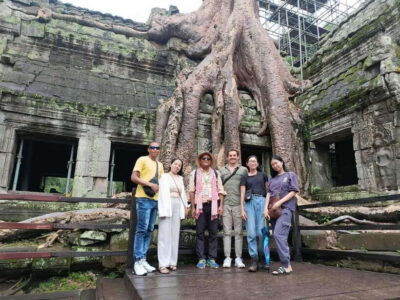
Angkor Wat Sunrise tour with Small – Group and Guide tours
Read our review →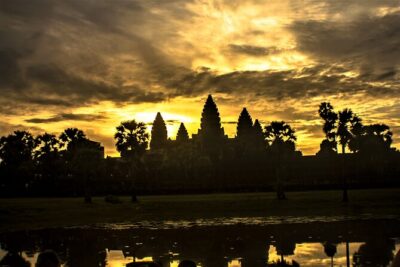
Angkor Wat Highlights and Sunrise Guided Tour from Siem Reap
Read our review →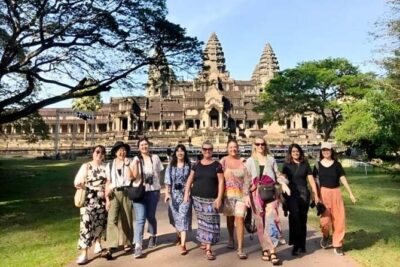
Angkor Wat Sunset Small Group Tour with Lunch Included
Read our review →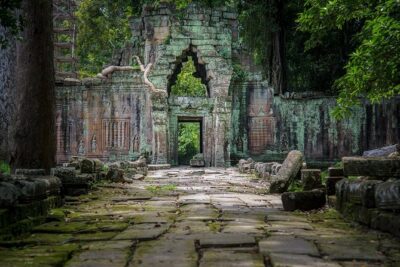
Full-Day Angkor Wat Sunrise Private Tour with Guide from Siem Reap
Read our review →Browse the lists this tour appears in