
Reviewed · ANGKOR WAT TOURS
Siem Reap: Angkor Wat Temples & Phnom Kulen Park 3-Day Tour
Angkor Wat is only one piece of this three-day route. You also reach delicate Banteay Srey before the crowds, see the mountain where Angkor’s royal era began, visit a floating village on Tonle Sap, and finish with sunrise at Angkor Wat. That broad mix gives you a better sense of Cambodia than a one-day temple dash.
I like the private format, which lets your guide adjust the pace and helps families or small groups avoid being pushed through every ruin at the same speed. I also like the thoughtful road service: chilled water, cold lemon-scented cloths, and umbrellas in wet weather. The main drawback is the schedule. Early starts, long drives, heat, and many temples in three days can leave you tired, while Phnom Kulen and the temple pass cost extra.
Key points at a glance
- Banteay Srey before the crowds: See some of Angkor’s finest stone carving on the first morning.
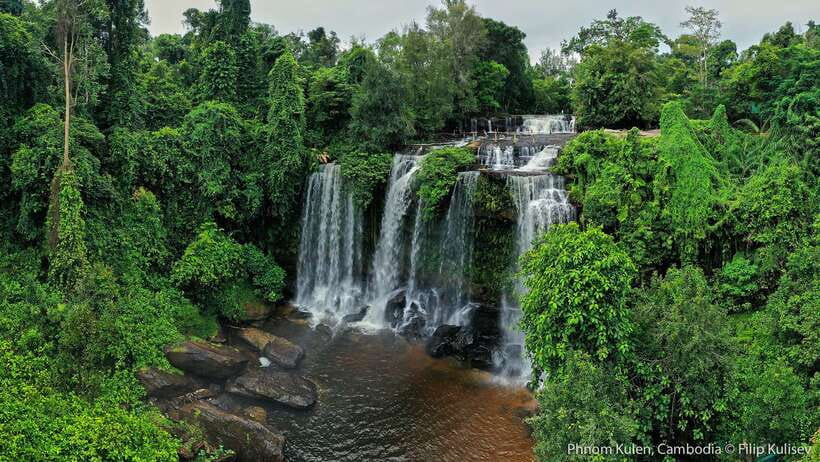
- Phnom Kulen adds important context: Visit the mountain linked with the start of the Angkor royal era in 802 AD.
- Kampong Phluk changes the rhythm: Trade temple walls for life on Tonle Sap Lake.
- Sunrise and sunset are built in: Watch sunrise at Angkor Wat and sunset from Phnom Bakheng.
- Private guiding makes the difference: Guides including Paul, Praim, Noy, Sa, and Samuth have been praised for flexibility, stories, and photo help.
- Budget carefully: The $336 price covers up to three people, transport, driver, guide, water, and cold cloths, but not meals or admission tickets.
Why three days works better than one
A single day at Angkor can give you the headline sights, but it often turns the experience into a hot race between famous doorways. This itinerary spreads the temples over three days and adds Phnom Kulen and Tonle Sap, two places that show how Angkor connected to the wider region.
At $336 per private group of up to three, the value improves sharply when you fill the vehicle. That works out to $112 per person for three people, before tickets, food, and other personal costs. For one person, the same group rate is much less attractive, so this tour makes the most financial sense for a couple, family, or small group.
You get a car, gasoline, driver, licensed English-speaking guide, drinking water, cold handkerchiefs, and seasonal umbrellas. You do not get accommodation, meals, the three-day temple pass, the Phnom Kulen ticket, or the $5 Landmine Museum admission. Add those costs before you decide.
The 4.8 rating from nine reviews reflects a strong overall experience, especially for guiding and driving. Still, the comments also give you a useful warning: one four-star assessment found the guide helpful with carvings, stones, and photo stops but not especially talkative about the larger historical story. If you want a nonstop lecture, say so early. If you prefer a quieter guide who points out details you might miss, that style may suit you well.
More Angkor Wat Tours in Siem Reap:
- Angkor Wat Sunrise or Sunset Tour with Guide from Siem Reap
★ 5.0 · 12,109 reviews - Siem Reap: Angkor Wat: Small-Group Sunrise or Sunset Tour
★ 5.0 · 9,444 reviews - Siem Reap: Angkor Wat 2-Day Tour with Sunrise and Sunset
★ 4.9 · 4,429 reviews
Day one: Banteay Srey and the beginning of Angkor
Your first pickup is suggested for 7:30 AM. The early start matters because Banteay Srey is one of the most popular smaller temples, and its compact courtyards can feel crowded later in the day.
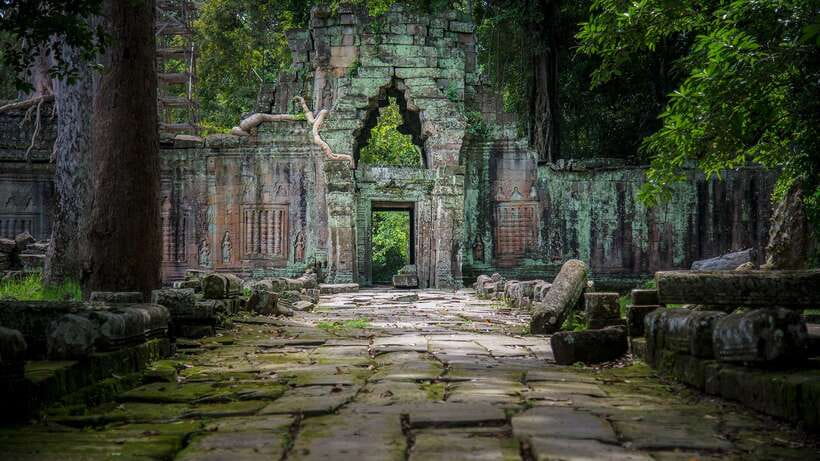
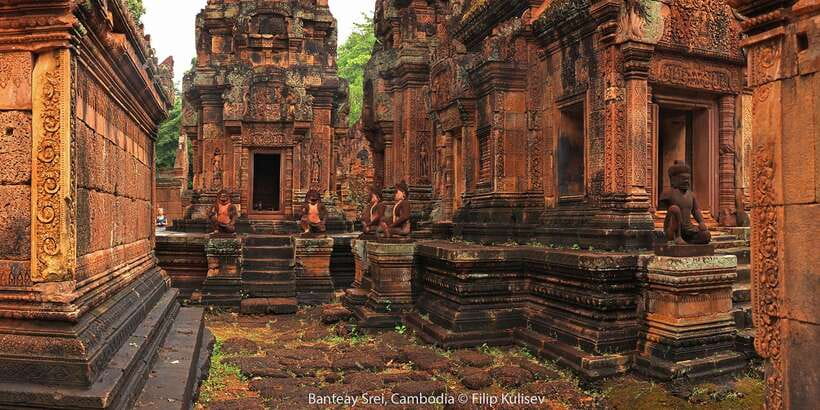
Banteay Srey is famous for its intricate carvings. The temple is smaller than Angkor Wat, but that is part of its appeal. You can focus on the fine detail instead of trying to take in a huge complex all at once. Pay attention to the stone work around the doorways and lintels, and ask your guide to explain the figures and stories carved there.
The drive out also gives you a change from the main temple zone. You pass traditional Khmer villages and palm sugar plantations, with your guide able to explain what you are seeing. These views are not a separate attraction with a set presentation. They are simply part of the road, so keep your camera ready if the driver agrees that it is safe to stop.
You then choose between the Landmine Museum and Phnom Kulen National Park. The museum costs $5 and adds a sobering look at Cambodia’s recent past. It is a useful option if you want modern history alongside ancient monuments, but choosing it may reduce the time available at Phnom Kulen.
Phnom Kulen gives the day its historical weight. The mountain is linked with King Jayavarman II and the start of the royal God of the King Linga cult in 802 AD. In practical terms, this is where you begin to understand that Angkor did not appear suddenly as a collection of spectacular temples. Its power began in a wider setting, tied to sacred places, rulers, and water.
This part of the day also adds a long road journey. You should expect a full schedule rather than a quick side trip. The private vehicle helps here, especially if you need a quiet break between sites. A family traveling with a young child can also ask the driver to adapt the pace, something one family found especially useful.
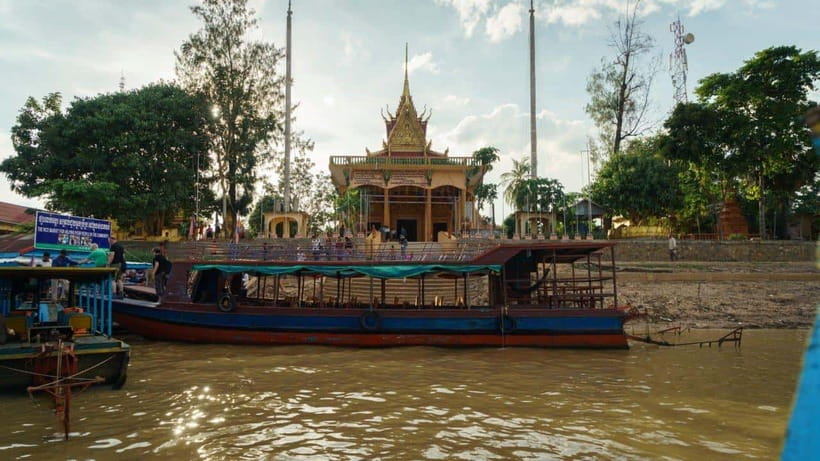
The final stop is Kampong Phluk, a floating village on Tonle Sap Lake. After a morning of carved stone, the village offers a completely different view of Cambodian life. The lake is central to the region, and seeing homes and daily routines connected to the water helps put the temple cities in context.
The floating village is not for everyone. Some people come mainly for ancient architecture and may find the village less compelling than another temple. I think it earns its place because it breaks up the ruins and gives the first day a wider local focus. Keep your expectations realistic: the appeal is the setting and way of life, not a polished attraction with a long list of formal sights.
Day two: Angkor Thom and the jungle at Ta Prohm
Day two begins around 8:00 AM, a little later than the first morning. You start at Angkor Thom, the ancient city that contains several major monuments.
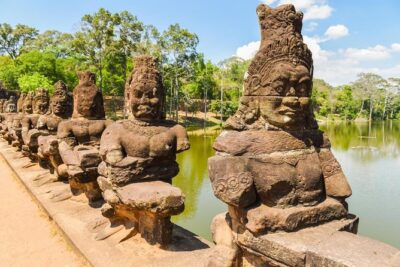
The South Gate is an impressive approach, with a broad entrance leading into the city. From there, the route includes Bayon, Baphuon, Phimeanakas, the Terrace of the Elephants, the Terrace of the Leper King, and the North and South Khleangs. Each stop has a different character, so a guide is useful for giving the large complex some order.
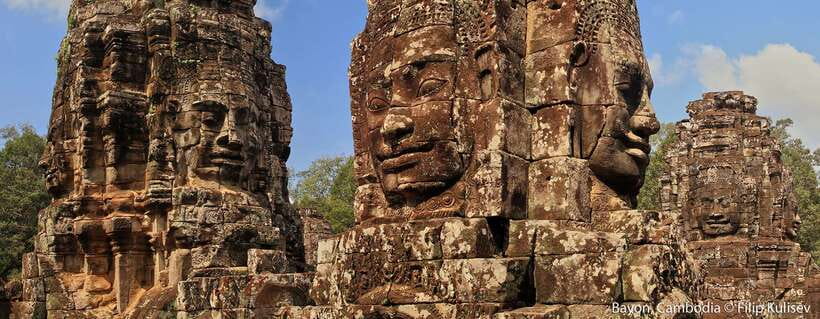
Bayon is the main event inside Angkor Thom. Its towers and carved faces create a more intimate feeling than Angkor Wat’s long galleries. A good guide can help you read the scenes on the bas-reliefs, explain how the temple fits into Jayavarman VII’s reign, and point out details hidden in the stone.
Baphuon gives you a different kind of visit, with a large temple structure that makes you think about scale and restoration. Phimeanakas and the terraces are less likely to dominate your memory, but they fill in the picture of Angkor Thom as a royal city rather than a single temple.
This is also the busiest part of the tour in terms of monuments. You are not simply visiting one famous site and moving on. You are walking through a sequence of courtyards, towers, terraces, and gates. Comfortable shoes matter, and you should not expect every stop to receive the same amount of time.
The small circuit follows with Chau Say Tevoda, Thommanon, and Ta Keo. These sites are useful because they let you compare different periods and designs without the same crowd pressure as Angkor Wat. Ta Keo, in particular, makes the climb and stone mass part of the experience.
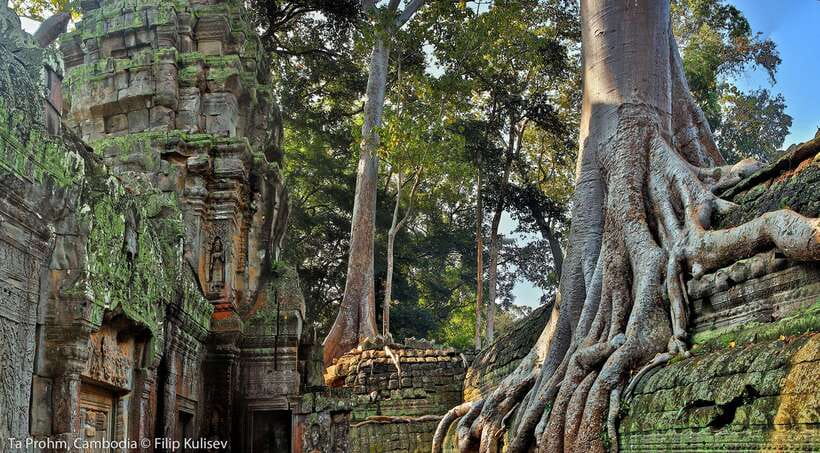
Then comes Ta Prohm, the temple associated with Tomb Raider. The film connection draws people here, but the temple deserves more than a movie reference. Trees press against walls, roots cross stonework, and the ruins feel less controlled than the restored monuments nearby.
That jungle setting can make Ta Prohm one of the most memorable stops, though it also creates the day’s biggest crowd challenge. The narrow passages can slow you down. Ask your guide to show you quieter details rather than spending the whole visit chasing the most photographed tree.
After lunch, you visit Banteay Kdei. This Buddhist temple is a calmer counterpoint to Ta Prohm and gives you time to explore at your own pace. That freedom matters after a morning of structured stops. You can look closely, take photos, or simply sit for a moment without needing to absorb another full explanation.
The day ends at Phnom Bakheng for sunset. The timing is appealing, but sunset positions can be crowded and the climb adds to a long day. Treat this as a chance to see the temples and surrounding area in evening light, not as a promise of perfect color every night. Weather controls that part.
Day three: sunrise at Angkor Wat and the outer temples
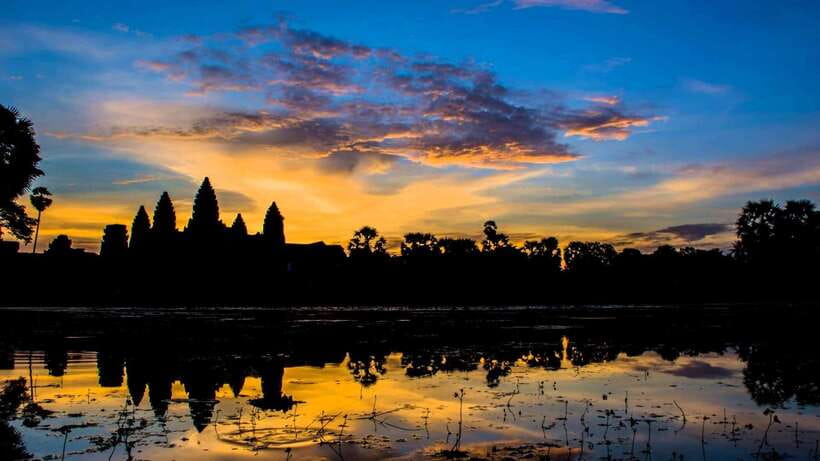
The final day starts at about 5:00 AM for sunrise at Angkor Wat. This is the earliest morning, but it is worth understanding why the timing matters. You want to arrive before daylight, claim a viewing position, and then have time to explore the temple after the sky brightens.
Sunrise itself is not guaranteed to be dramatic. Clouds and weather decide that. The value of the early start is also the atmosphere around the temple and the chance to see Angkor Wat before the hottest part of the day.
After the early crowd thins, you get time to explore at your own pace with your guide. This is where the private arrangement pays off. You can ask for more attention to the galleries, carvings, layout, or religious meaning instead of moving on simply because a large group is ready to leave.
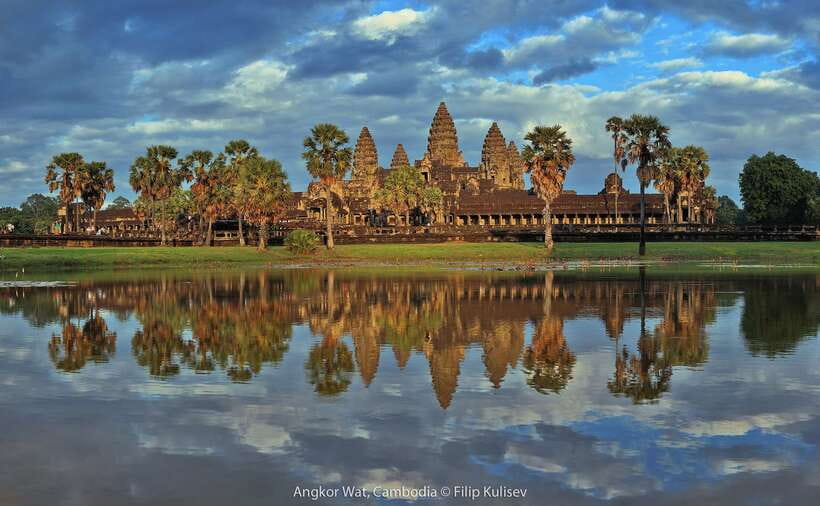
Angkor Wat is vast, so do not judge the visit by how many photos you take. Give yourself time to understand the long approach, the galleries, the towers, and the relationship between the temple and its reflecting pools. Your guide can help you notice details that a quick self-guided visit might miss.
After Angkor Wat, the route includes Pre Rup and Banteay Samre. Pre Rup has a strong, elevated structure and is easy to compare with other temple designs you have already seen. Banteay Samre is farther from the main cluster and can feel like a change of pace after the major landmark.
After lunch, you continue to East Mebon, Ta Som, Neak Pean, and Preah Khan. This is another full run of monuments, but the variety keeps it from feeling repetitive.
East Mebon gives you another look at a temple built within the old water system. Ta Som is smaller and known for its atmospheric stonework. Neak Pean is especially different in layout, with its central feature and water-related design. Preah Khan is a fitting final temple because it combines long corridors, courtyards, and partially restored ruins on a substantial scale.
By this point, you may be temple-tired. That is not a flaw in the route so much as a fact of Angkor. The three-day schedule is generous, but it is also ambitious. Take the offered water, use the cold cloths, and tell your guide when you need a slower walk or a shaded pause.
On the way back to Siem Reap, the drive passes local villages. You may be able to stop for photographs, depending on road conditions and timing. These final views bring you back from the grand scale of Angkor to ordinary daily life.
More three-day temple trips in Siem Reap:
- 3-Day Angkor Wat & All Interesting Major Temples & Kulen Mount Waterfall
★ 5.0 · 63 reviews - Angkor Region: 3-day Private Tour of Top Temples
★ 5.0 · 47 reviews - From Siem Reap: Angkor Wat and Floating Village 3-Day Trip
★ 5.0 · 39 reviews - 3-Day Angkor Wat Tour with Kulen Mountain & Floating Village
★ 5.0 · 12 reviews
Guides, drivers, and the private touring style
The strongest part of this experience is the people handling the road and temple days. Paul received especially warm praise for staying attentive, adapting the route to different abilities, and explaining Cambodian history in an engaging way. Praim was also singled out for strong guiding and photography, while Noy was described as helpful and well informed.
Sa was praised for excellent English, flexibility, and showing special places. Samuth offered a different strength: less extended narration, but useful explanations of carvings and stones, along with well-chosen photo stops. These examples show why you should communicate your preferred style at the start.
The driver matters just as much as the guide on a route this long. Sol was praised for chilled water and lemon-scented cold cloths, small touches that become valuable when you return hot and dusty from a temple. A smooth ride is also important on the longer and rougher sections, particularly if you are traveling with a child.
Transport is by a Mini Lexus RX300 or Mercedes Istana minivan, with gasoline and driver included. The tour is private, not a mixed coach group, and pickup is included from hotels in Krong Siem Reap. The private group format is limited to three people, so larger parties should confirm how their booking will be handled before paying.
What to bring and how to handle the heat
Wear comfortable shoes. You will walk through temple grounds, climb at some sites, and spend long stretches outdoors.
Dress with shoulders, knees, and chest covered for both men and women. Lightweight clothing can still meet that rule. Bring sunscreen, insect repellent, and a hat, and drink water regularly. The itinerary notes hot weather for most of the year, so do not save hydration for when you already feel tired.
The tour is listed as suitable for all ages, but suitable does not mean effortless. Young children, older adults, and anyone with limited mobility may need a slower pace and more breaks. The private guide and driver can adapt the day, but the sites themselves remain large and uneven.
Free cancellation is available up to 24 hours in advance, and you can reserve while paying later. Those terms are useful if your Siem Reap plans are still changing, but the more important practical step is checking the starting times and adding the excluded tickets and meals to your budget.
Should you book this three-day route?
I would choose this tour if you want a guided introduction to Angkor that includes more than the famous central temples. Banteay Srey, Phnom Kulen, Kampong Phluk, Ta Prohm, Angkor Thom, and the sunrise at Angkor Wat create a strong three-day picture of the area.
I would be more cautious if you dislike early mornings, long sightseeing days, or fixed routes. Independent visitors can arrange cheaper transport, and someone who wants to spend an entire day studying one temple may find this schedule too packed.
For a couple or small family, the value is good because the private $336 rate is shared by up to three people. Book it for range, personal attention, and easy transport, not because every meal or admission is included. If you tell your guide whether you want more history, more quiet time, or better photo stops, the private format can make this ambitious route work very well.
FAQ
How long is the tour?
The experience lasts three days.
What time does pickup begin?
Suggested pickup is 7:30 AM on day one, 8:00 AM on day two, and 5:00 AM on day three for sunrise at Angkor Wat.
Is hotel pickup included?
Yes. Pickup is included from hotels in Krong Siem Reap.
Is this a private tour?
Yes. It is a private group experience for up to three people.
Are temple tickets included?
No. The three-day temple ticket is not included, and the Phnom Kulen ticket is also separate.
Are meals and accommodation included?
No. Meals, accommodation, and personal expenses are not included.
What language does the guide speak?
The live tour guide speaks English.
Newly written up around Siem Reap
- Sunrise at Angkor Wat Temple: 3-Hour Private Tour★ 4.7 · 30 reviews
- Small-Group Explore Angkor Wat Sunrise Tour with Guide★ 5.0 · 3 reviews
- Siem Reap : Private Tuk-Tuk Tour of the Magnificent Temples.★ 4.9 · 14 reviews
- Siem Reap: Ultimate Angkor Wat Offbeat Experience by Jeep★ 4.9 · 8 reviews
- SiemReap: Private Angkor Wat Tour in English or German guide★ 5.0 · 5 reviews
- Siem Reap: 1-Day Angkor Wat Tour in Portuguese★ 5.0 · 4 reviews
- Angkor Wat: Sunrise 2.5 Days Temples & Tonle Sap-Small Group★ 5.0 · 10 reviews
- Siem Reap: Grand Circle Temples Tour With Private Tuk-Tuk★ 5.0 · 4 reviews
Angkor Wat Tours, compared.
Angkor Wat Sunrise or Sunset Tour with Guide from Siem Reap
Read our review →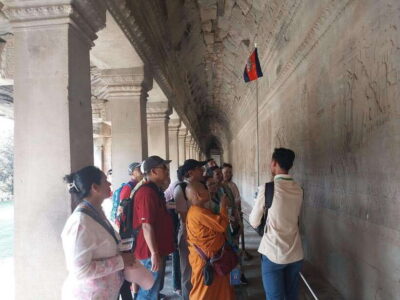
Angkor Wat: Small-Group Sunrise or Sunset Tour
Read our review →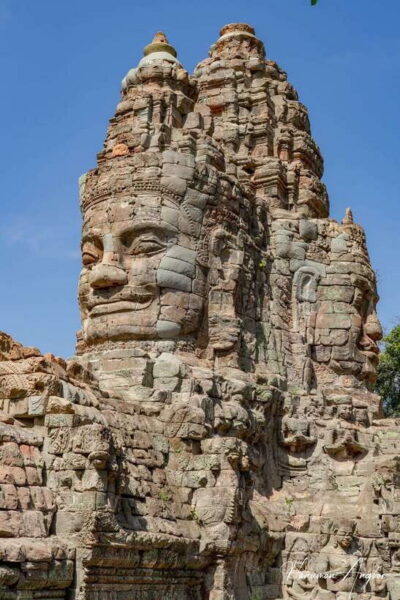
Angkor Wat 2-Day Tour with Sunrise and Sunset
Read our review →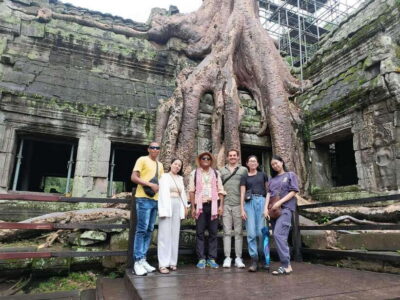
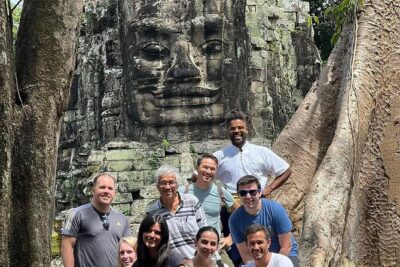
Angkor Wat Sunrise tour with Small – Group and Guide tours
Read our review →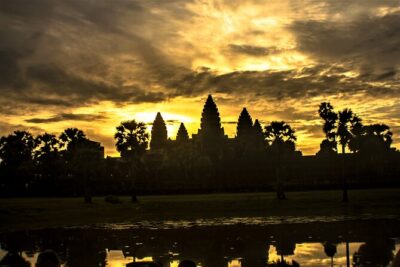
Angkor Wat Highlights and Sunrise Guided Tour from Siem Reap
Read our review →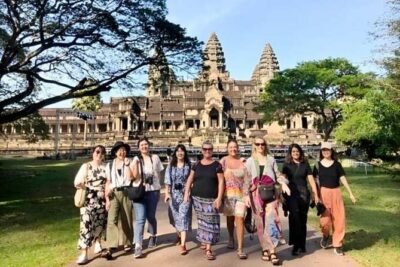
Angkor Wat Sunset Small Group Tour with Lunch Included
Read our review →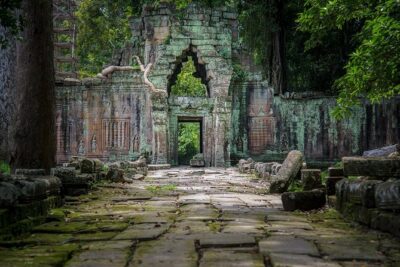
Full-Day Angkor Wat Sunrise Private Tour with Guide from Siem Reap
Read our review →Browse the lists this tour appears in