
Reviewed · AZERBAIJAN TEMPLE TOURS
Gobustan, Mud Volcano, Burning Mountain and Fire Temple Tour
Gobustan’s Stone Age rock carvings and cold mud volcanoes give this outing its unusual character. Then the route shifts from ancient geology to living fire at Ateshgah and Yanar Dag. I like the strong mix of natural and cultural sights, and I like that your group travels privately in an air-conditioned vehicle with an English-speaking driver. The tradeoff is a brisk schedule, with several stops lasting only 10 to 30 minutes.
I also like the range packed into one day: prehistoric art, bubbling earth, Zoroastrian history, Islamic architecture, and Azerbaijan’s oil past. Guides such as Kamran, Max, and Saddar are noted for friendly service, clear explanations, safe driving, and attention to comfort. Keep in mind that entrance fees and lunch are not included, and poor weather or an unmet minimum number of participants can lead to a change or cancellation.
Key points at a glance
- Gobustan’s ancient carvings: Spend about an hour among one of the world’s major collections of Stone Age rock engravings.
- Cold mud volcanoes: See methane and underground sludge bubble from low mounds instead of hot lava.
- Two kinds of fire: Compare the religious story of Ateshgah with the natural gas flames of Yanar Dag.
- Private transport: Your group travels alone in an air-conditioned vehicle with an English-speaking driver.
- A broad Baku-area route: Add Bibi-Heybat Mosque and the world’s first oil well to the main sights.
- Fast-paced value: The $80 price covers transport and the driver, but you must budget separately for admission fees and lunch.
Why this tour is different from a standard Baku day out
Many excursions outside Baku focus on one theme. This one moves across several chapters of Azerbaijani culture and nature in a single 5 to 7 hour outing.
You begin with prehistoric human marks in the hills of Gobustan. From there, the ground itself becomes the attraction at the mud volcanoes. Later, fire takes over, first in the form of Ateshgah, a former Zoroastrian pilgrimage center, and then at Yanar Dag, where natural gas burns on a hillside.
The final stops add two short but useful pieces of modern history. Bibi-Heybat Mosque gives you a look at Azerbaijan’s Islamic heritage by the Caspian Sea. The first oil well connects the region to the industrial story that helped shape Baku.
I like this range because it gives you a better sense of the country than a string of city viewpoints would. You see how geology, religion, trade, and petroleum all meet around Baku. The downside is that no single stop gets a long, leisurely visit. This is best viewed as a focused overview rather than a slow study of Gobustan or the fire sites.
Other temple visits near Baku we have written up
- Baku: Gobustan, Mud Volcano, Fire Mount, Temple Lunch Entry
★ 4.9 · 3,246 reviews - Baku: Gobustan, Volcanoes, Fire Temple and Yanardag Day Trip
★ 4.7 · 433 reviews - Gobustan & Mud, Fire Temple, Burning Mountain (Group & Private)
★ 4.5 · 418 reviews
Gobustan’s Stone Age carvings and ravines
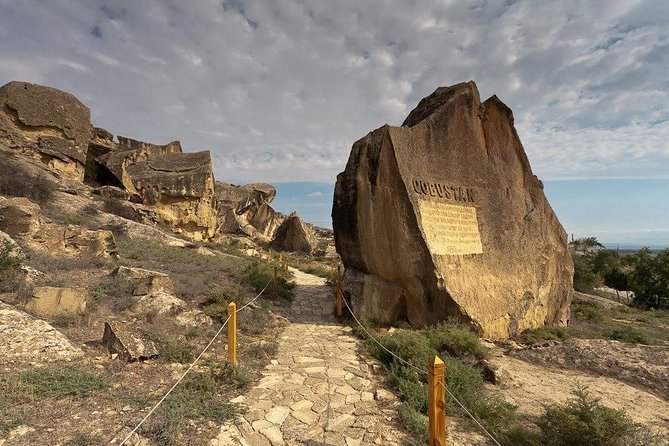
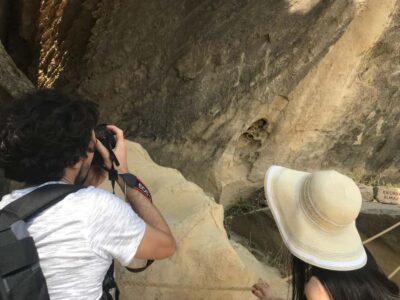
Gobustan sits about 60 kilometers south of Baku on the southeastern spur of the Great Caucasian Range. Its name means ravine land, a fitting description for the gullies, rocky outcrops, caves, and semi-desert ground that shape the area.
The main draw is its collection of petroglyphs, or rock engravings. People settled here as far back as the Stone Age, leaving images that make the region one of the major ancient rock-art sites in the world. Your visit lasts about an hour, enough to get a clear introduction and see the setting around the carvings.
I find this stop valuable because the art is not separated from its surroundings. You are not simply looking at marks on a wall in a museum. The rocks, ravines, and open ground help explain why this site served as a place of human activity for so long.
The admission ticket is not included, so check the current cost before you go. Wear shoes suited to uneven ground, since the site is described as a rocky, gullied area rather than a polished urban attraction. The schedule allows about an hour, so you should not expect an extended archaeological visit.
Gobustan’s cold mud volcanoes
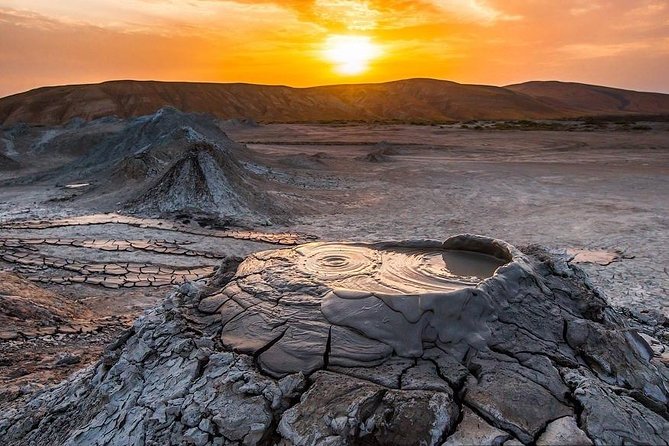
The mud volcanoes near Gobustan offer one of the strangest sights on the route. These are not lava volcanoes. Their mounds contain cold underground sludge and methane, which can ooze, gurgle, and bubble at the surface.
That distinction matters. You are not watching molten rock or standing beside a steaming crater. Instead, you see the earth pushing up mud and gas in a slow, messy way. It is a small-scale natural show, but one that feels very different from the usual mountains, waterfalls, and coastlines found on a sightseeing route.
The volcanoes are located around Gobustan National Park and near the Caspian Sea. Your planned stop lasts about an hour, which gives you time to look at the formations and take photographs without turning the outing into a full geology lesson.
The site may feel basic compared with the better-developed attractions closer to Baku. That is part of its appeal, but it also means you should value the natural oddity more than visitor facilities. Admission is not included. Stay attentive to your driver’s instructions around the mounds, and avoid treating the mud as a novelty for close contact.
Ateshgah, Baku’s fire temple
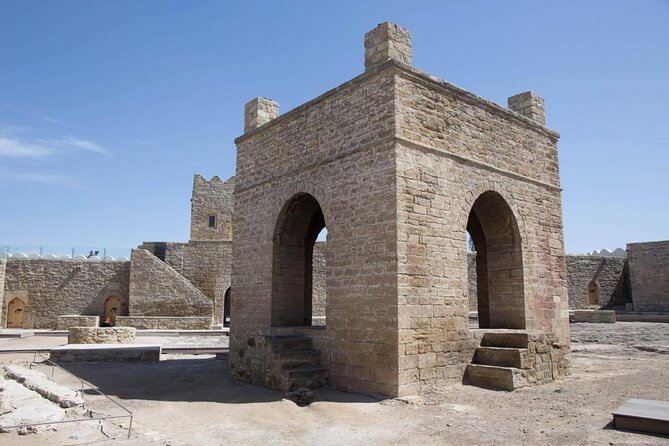
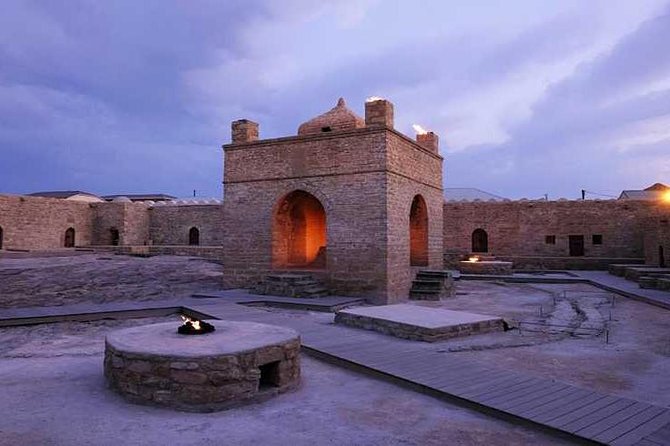
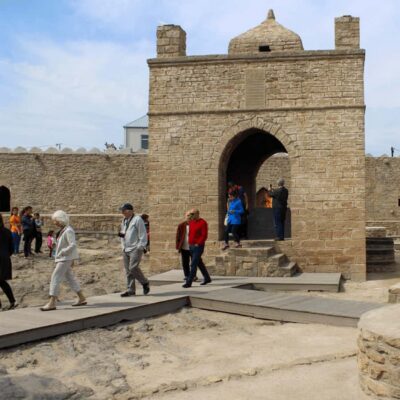
Ateshgah is a castle-like temple in Surakhani, east of central Baku. It served as a pilgrimage and philosophical center for Zoroastrians from the northwestern Indian subcontinent, who had commercial links with the Caspian region along the old Grand Trunk Road.
The visit lasts around 50 minutes. That is enough time to walk through the temple complex and consider its compact cells, once used by monks and pilgrims. Today, the site functions as a museum that introduces visitors to the basic ideas of Zoroastrianism.
I like the way Ateshgah gives the fire theme a human and religious dimension. The flames at Yanar Dag are a natural event. Here, fire is tied to belief, pilgrimage, trade, and ritual. Seeing both places on the same outing makes the contrast much clearer.
The temple was last restored in 1975, and its low dark cells help you picture the austere setting used by religious visitors. Admission is not included, so set aside money for the ticket. The short visit also means you may want to read a little about Zoroastrianism beforehand if you enjoy historical context.
A different set of gates, same trip:
- Gobustan-Mud Volcan-Fire Temple and Mountain Tour/Entrance inc
★ 5.0 · 267 reviews - Baku:Gobustan Mud Volcanoes Temple & Entry tickets included
★ 4.8 · 178 reviews - Gobustan, Mud volcanoes, Fire temple, Fire mountain PRIVATE TOUR
★ 5.0 · 47 reviews - Gobustan & Mud, Fire Temple, Burning Mountain, H.A. Center
★ 4.6 · 46 reviews
Yanar Dag and the fire on the hillside
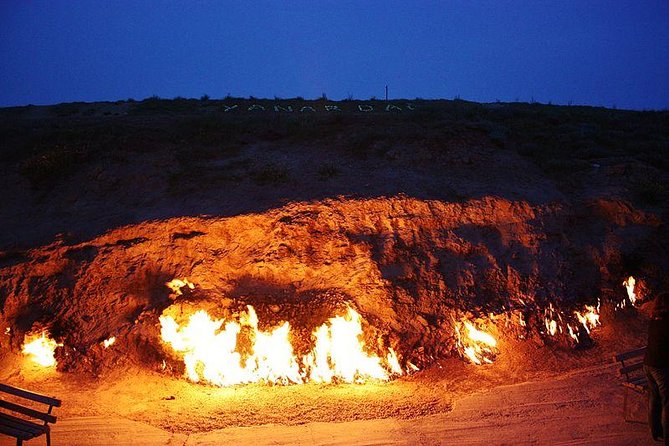
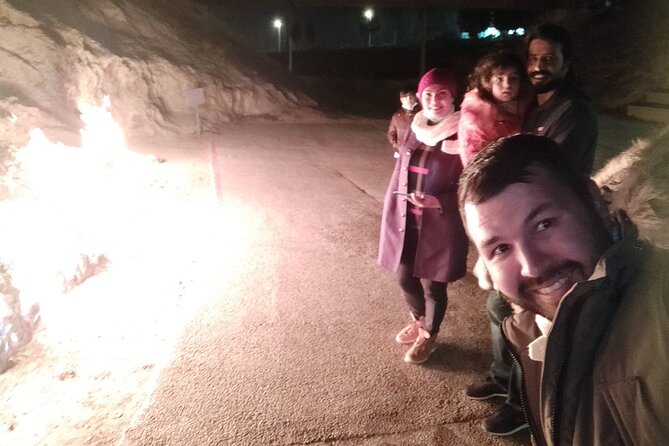
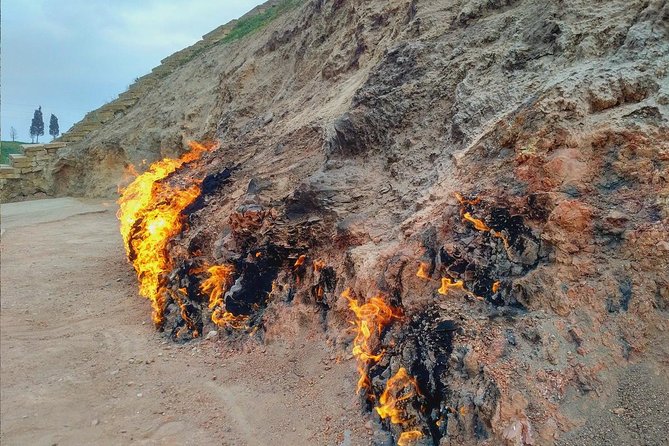
Yanar Dag means Burning Land. It is a natural gas fire on a hillside of the Absheron Peninsula, near Baku and the Caspian Sea. Flames rise from a thin, porous sandstone layer and can reach about 3 meters high.
The fire was reportedly noticed after a shepherd accidentally lit it in the 1950s. That detail gives the site a human connection, but the attraction itself is the natural gas burning from the ground.
You have about 30 minutes here. That is a sensible amount of time for a short walk, photographs, and a look at the flames. Do not expect a vast park or a long hike. Yanar Dag is a focused stop, and its impact comes from the simple sight of fire emerging from a hillside.
Admission is not included. I would place this stop after Ateshgah in your mental map, since the two sites work best together. At Ateshgah, fire is linked to worship and community. At Yanar Dag, the ground itself supplies the spectacle.
Bibi-Heybat Mosque by the Caspian Sea
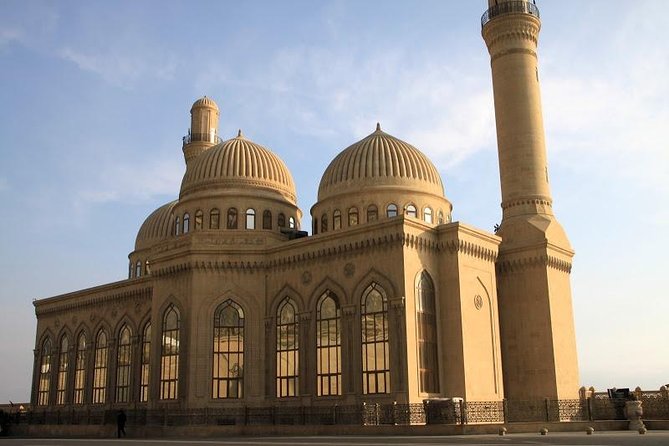
Bibi-Heybat Mosque is a historic mosque near the Caspian Sea, known for its detailed architecture and cultural importance. The scheduled visit lasts only 10 minutes, so this is an exterior-focused photo stop or a very brief look rather than a full mosque visit.
That short timing is worth noting. If religious architecture is a main interest for you, do not expect the same level of attention given to Gobustan or Ateshgah. Still, the mosque adds an important contrast to the Zoroastrian temple and the prehistoric sites.
Admission is included at this stop. Dress and behave respectfully at this religious site, and follow any instructions given by your driver or the local staff. Since the visit is brief, you may want to decide in advance whether you are mainly interested in the building, its setting, or its place in Baku’s cultural story.
The world’s first oil well
The final listed sight is the world’s first oil well, described as the birthplace of the global oil industry and an important marker in the beginning of the modern petroleum era.
The stop lasts about 10 minutes and admission is included. Like Bibi-Heybat Mosque, this is a quick historical pause rather than a full museum visit. It works well as a closing note because oil has shaped Azerbaijan’s modern identity and Baku’s growth.
The stop may appeal most to anyone interested in industrial history, energy, or the way local resources changed world commerce. If you prefer long visits with displays and detailed interpretation, the 10-minute schedule may feel thin. Still, it gives the route a useful modern endpoint after the ancient and religious sites.
What the private vehicle adds
This is a private tour, so only your own group participates. The package includes private transportation, an air-conditioned vehicle, and an English-speaking driver. Pickup is offered, and mobile ticketing is available.
That setup matters on a route spread across several sites outside Baku. You avoid organizing separate taxis between Gobustan, the mud volcanoes, Surakhani, Yanar Dag, and the city stops. You also have a direct point of contact during the day.
The driving itself is part of the experience. Several people connected with this service, including Kamran, Max, and Saddar, are described as friendly, careful, and attentive to safety. Kamran is noted for explaining the country’s past with personal pride, while Max is described as professional and helpful. These details matter because the guide’s role is not only to drive you between stops. The driver fills in the gaps between short visits.
The pace is quick. The listed stop times add up to about 4 hours and 40 minutes, while the full outing is estimated at 5 to 7 hours. That leaves room for driving, pickup, traffic, and transitions. You should expect a full half-day or longer, not a precise timetable.
Is the $80 price good value?
At $80 per person, the tour offers a lot of ground for one booking. Private transport, an air-conditioned vehicle, an English-speaking driver, and six different stops are included. Group discounts are also offered, which may improve the value for families or larger parties.
The price does not include lunch, alcoholic drinks, or entrance fees at the main paid sites. Tickets are specifically excluded for Gobustan, the mud volcanoes, Ateshgah, and Yanar Dag. Admission is included for Bibi-Heybat Mosque and the first oil well.
That makes the real cost higher than $80, but the transport remains the key value. These sights are spread around the Baku area, and private driving saves you the work of arranging each transfer. For a short stay in Azerbaijan, the route can also save a full day of planning.
You should compare the cost with what you need. If you want a relaxed visit to one site, this schedule is too broad. If you want a single outing that covers the major attractions beyond central Baku, the price is easier to justify.
Who will enjoy this fast-moving route?
I would suggest this tour to you if:
- You have limited time in Baku and want to see several major out-of-town sights.
- You prefer private transport to public transit or separate taxi arrangements.
- You enjoy unusual natural features, especially mud volcanoes and gas flames.
- You want a mix of archaeology, religion, architecture, and oil history.
- You are traveling as a family or private group and want a flexible setting.
- You value an English-speaking driver who can explain the sites along the way.
It may not suit you if you want long museum visits, extended walks, or a slow photographic day. The 10-minute stops at Bibi-Heybat Mosque and the first oil well are especially brief. You should also be comfortable with a route that depends on good weather.
Families can find the day engaging because the subjects change often. The mud volcanoes and burning hillside offer a break from formal heritage sites, and one account specifically notes that children enjoyed the guide’s company. Still, parents should keep the pace in mind, since a 5 to 7 hour outing can feel long even when the individual stops are short.
Practical details before you book
The tour normally runs for about 5 to 7 hours and is booked, on average, about a week ahead. Confirmation is provided at booking. Most people can participate, but the tour requires good weather and a minimum number of participants.
Bring money for the excluded admission fees and lunch. Since the route includes rocky ground at Gobustan and the mud volcano area, comfortable shoes are a sensible choice. An air-conditioned vehicle is included, which is helpful during a long day of driving.
The cancellation terms are straightforward: you can receive a full refund if you cancel at least 24 hours before the start time. Changes or cancellations within 24 hours are not accepted for a refund. If bad weather or an unmet minimum causes the operator to cancel, you are offered another date or experience, or a full refund.
Should you book the Gobustan and fire sites tour?
Book it if you want a wide look at Baku’s surrounding sights without arranging several separate trips. Gobustan, the mud volcanoes, Ateshgah, and Yanar Dag form the core of the day, while Bibi-Heybat Mosque and the oil well add short cultural and industrial stops.
The main reason to choose it is variety. You can see ancient carvings, cold mud, religious architecture, natural flames, a mosque, and an oil landmark in one private outing. The main reason to hesitate is pace. You will sample each place rather than study every one in depth.
For a first visit or a short weekend in Baku, I think the route makes good sense. Budget separately for tickets and lunch, confirm the weather, and treat the day as a fast but rewarding introduction to the country’s ancient, religious, geological, and industrial sides.
FAQ
How long does the tour last?
The tour lasts approximately 5 to 7 hours, including travel between the stops.
Is transportation private?
Yes. The tour includes private transportation in an air-conditioned vehicle, and only your group participates.
Is an English-speaking guide included?
An English-speaking driver is included. Guides associated with the service include Kamran, Max, and Saddar.
Are entrance fees included?
Entrance fees are not included for Gobustan Rock Art, the mud volcanoes, Ateshgah Fire Temple, or Yanar Dag. Admission is included for Bibi-Heybat Mosque and the world’s first oil well.
Is lunch included?
No. Lunch is not included in the tour price.
What happens if the tour is canceled because of weather?
If poor weather causes cancellation, you are offered a different date or experience, or a full refund. The tour also requires a minimum number of participants.
Newly written up around Baku
- Qobustan rock arts, Mud Volcanoes, Fire temple Ateshgah, Yanardag★ 5.0 · 30 reviews
- Fire Temple and Fire Mountain Tour★ 5.0 · 22 reviews
- Gobustan, Mud volcanoes, Fire temple, Fire mountain PRIVATE TOUR★ 5.0 · 47 reviews
- Gobustan, Mud volcanoes, Fire temple, Fire mountain GROUP TOUR★ 4.5 · 19 reviews
- Gobustan, Mud volcanoes, Fire temple, Fire mountain PRIVATE TOUR★ 5.0 · 28 reviews
- Ateshgah Fire Temple & Yanar Dag mountain (Group & Private)★ 4.5 · 7 reviews
- Baku: Gobustan, Mud Volcano, Fire Temple & Burning Mountain★ 4.0 · 9 reviews
- Ateshgah Fire Temple and Yanardag Fire Mountain Private Tour★ 5.0 · 6 reviews
Azerbaijan Temple Tours, compared.
Gobustan, Volcanoes, Fire Temple and Yanardag Day Trip
Read our review →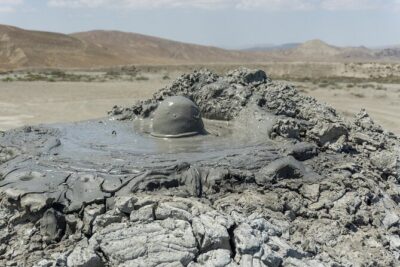
Gobustan & Mud, Fire Temple, Burning Mountain (Group & Private)
Read our review →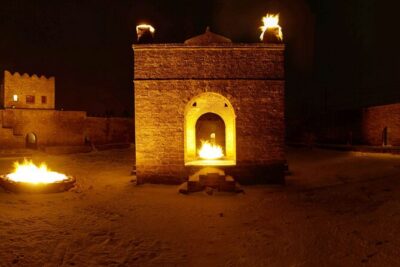
Gobustan-Mud Volcan-Fire Temple and Mountain Tour/Entrance inc
Read our review →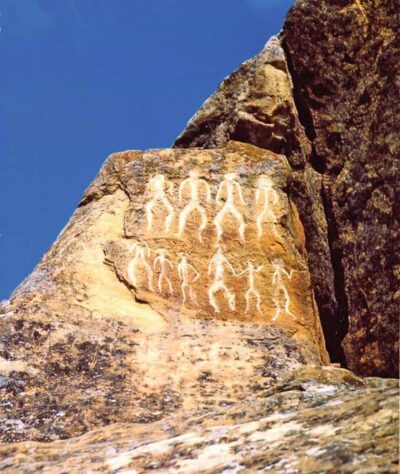
Gobustan Mud Volcanoes Temple & Entry tickets included
Read our review →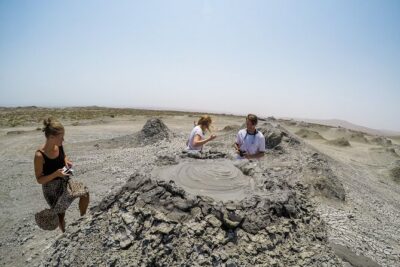
Gobustan, Mud volcanoes, Fire temple, Fire mountain PRIVATE TOUR
Read our review →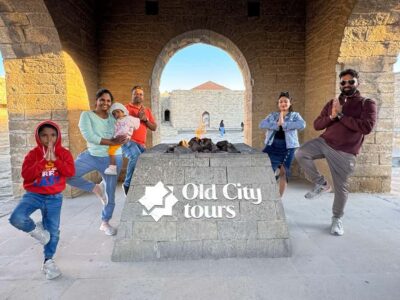
Gobustan & Mud, Fire Temple, Burning Mountain, H.A. Center
Read our review →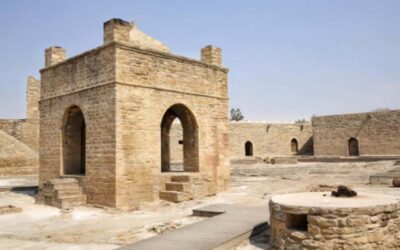
Gobustan, Mud Volcanoes, Fire Temple, & Yanar Dag Tour
Read our review →Browse the lists this tour appears in