
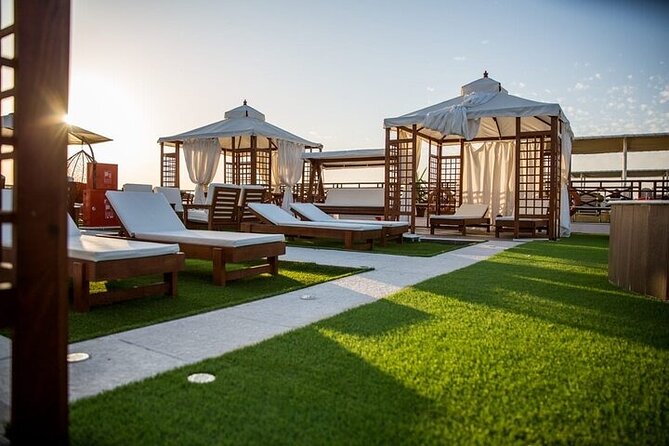
Reviewed · EGYPT TEMPLE TOURS
Luxury Cruise from Aswan to Luxor 4 Days with Abu Simble Temple
Abu Simbel is the big prize here. You begin in Aswan, visit the colossal temples of Ramses II, then cruise north through a string of ancient sites before finishing in Luxor. It is a smart route if you want the Nile itself to connect your sightseeing days rather than piecing together separate day tours.
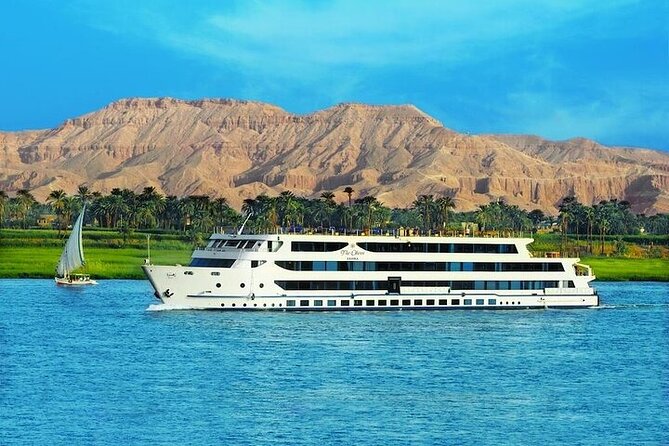
I like the direct Nile views from many cabins, along with full board, private guiding, and ship-based transport between stops. I also like the range of monuments packed into four days, from Philae and Kom Ombo to Karnak and the Valley of the Kings. The main caution is simple: entrance tickets are not included, and the schedule is busy, with late sailing and an early Abu Simbel outing.
Key points to know before booking
- Abu Simbel is included: The famous temples are the standout reason to choose this package.
- Four days means three nights: You cruise from Aswan to Luxor with meals served on board.
- A strong temple lineup: Philae, Kom Ombo, Edfu, Karnak, Luxor Temple, and Hatshepsut are all part of the plan.
- Guiding is private: The package includes a private guide, with Mohammed named in one account and Khaled handling trip support.
- Budget for entrance fees: The cruise, meals, transport, and listed visits are included, but admission tickets are extra.
- Expect a group that may reach 50 people: The maximum group size is not the same as a small private party, so confirm how your guide arrangement will work.
Why this Aswan to Luxor cruise works so well
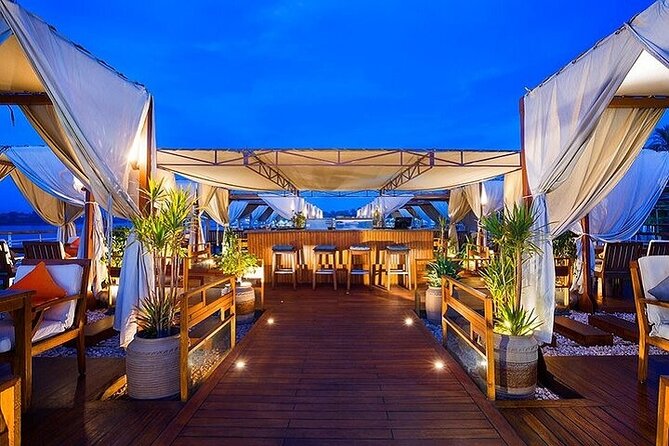
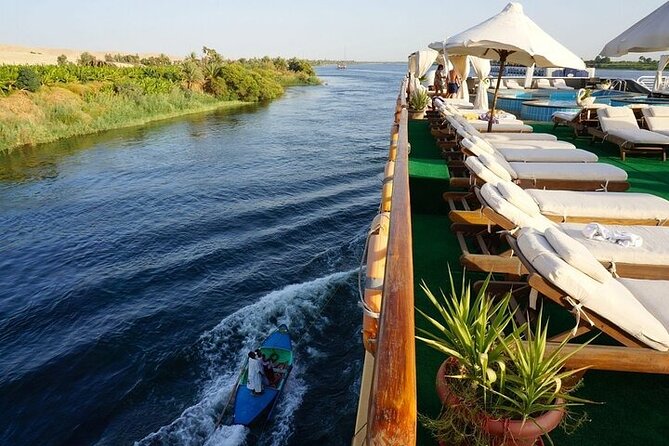
A Nile cruise gives you a moving base. Instead of packing and unpacking every night, you sleep aboard ship while the river carries you between ancient sites. That saves time and gives the trip a pleasant rhythm: breakfast, a temple, lunch, another visit, then sunset from the deck.
This four-day route is especially useful if your Egypt plans already include Cairo and you want a focused southern Egypt program. The tour is listed at $650 per person. That price covers the cabin, full board, an air-conditioned vehicle for land transfers, a private guide, and the sightseeing named in the program. It does not cover entrance tickets, alcoholic drinks, or other drinks.
That last point matters. Egypt’s major temple and tomb fees can add a noticeable amount, especially with Abu Simbel and the Valley of the Kings included. Ask for the current total before you pay so the $650 price does not become a surprise at the ticket office.
The cruise is promoted as luxury, and the strongest praise centers on clean, spacious rooms, Nile-facing cabins, good food, and attentive staff. One practical note appears in the feedback: a guest found the air-conditioning weaker than expected. I would ask about cabin location, window type, and cooling before departure, especially during Egypt’s hotter months.
Other shrines and temple grounds within reach of Egypt:
- From Aswan: Abu Simbel Temple Day Trip with Hotel Pickup
★ 4.4 · 2,807 reviews - Luxor Day Tour: Valley of Kings & Queens & Hatchepsut Temples
★ 5.0 · 1,496 reviews - Luxor: Valley of the Kings and Hatshepsut Temple Day Tour
★ 4.4 · 1,404 reviews
Day 1: Aswan, the High Dam, Philae, and the Unfinished Obelisk
The first day begins with a meeting at Aswan Airport or the train station, followed by transfer to the cruise before lunch. The stated meeting time is 1:00 pm, while the program also mentions a transfer before lunch, so confirm the exact pickup time with the operator.
Your first major stop is the High Dam. It is not an ancient monument, but it explains modern Aswan and the Nile’s controlled flow. The dam created Lake Nasser and changed farming, settlement, and the protection of monuments across southern Egypt. It also sets up the story of Abu Simbel, whose temples were moved when the lake formed.
Next comes the Unfinished Obelisk. This enormous piece of red granite remains attached to the bedrock, offering a useful look at how ancient stoneworkers shaped monuments. You can see the cracks that ended the project and the marks left by the cutting process.
Philae Temple is the day’s visual highlight. The temple complex sits on an island, and its setting gives the visit a special sense of arrival. It was dedicated mainly to Isis and contains layers of Egyptian, Greek, and Roman construction. The relocation of the complex to higher ground saved it from the rising waters caused by the dam.
You return to the ship for lunch and dinner, then spend the night in Aswan. Since the first day includes several stops, the six-hour estimate should be treated as a full outing rather than a relaxed half-day.
Abu Simbel: the reason many people choose this package
Abu Simbel is listed in the program, but the exact timing deserves clarification. It appears alongside the cruise stops, while the first-day schedule begins with Aswan visits. Ask the operator precisely when the Abu Simbel transfer happens and whether it is by road or another arrangement.
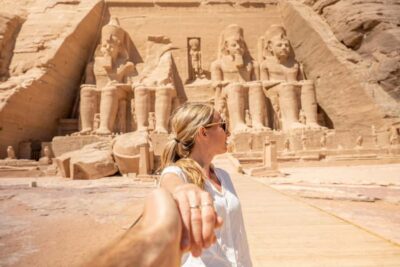
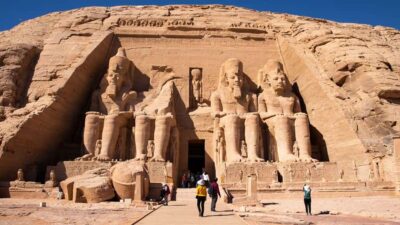
The temples were cut into the rock during the reign of Ramses II. The larger temple has four huge seated figures at its entrance, while the smaller temple honors Queen Nefertari and the goddess Hathor. The scale is hard to grasp from photographs.
This is also the longest potential detour in the itinerary, so prepare for an early start if that is how your departure is arranged. The reward is one of Egypt’s most memorable monuments. The cost of admission is extra, but Abu Simbel is included in the sightseeing plan itself.
One of the strongest positive points attached to this cruise is that Abu Simbel is not treated as an optional add-on. If you are comparing Nile cruises, check this carefully. Some packages leave it out or sell it separately.
Cruising north through Kom Ombo and Edfu
After Aswan, the ship sails toward Kom Ombo. The temple here is unusual because it has a double design, with sections dedicated to Sobek, the crocodile god, and Horus the Elder. The symmetry is easy to spot, and the reliefs give your guide plenty to explain.
Kom Ombo is also a good reminder that Egyptian temples were working religious centers, not just royal monuments. Medical instruments, calendars, and ritual scenes appear in the carvings. The visit is usually compact, but it adds variety after Philae and Abu Simbel.
The ship then continues to Edfu. The Temple of Horus is one of the best-preserved temples in Egypt, with tall pylons, broad courtyards, and clear reliefs. Its condition makes the layout easier to understand than at many more damaged sites.
The schedule lists lunch on board and sailing onward to Edfu, followed by a late arrival in Luxor and dinner on the ship. That makes this portion feel like a real river journey, not simply a collection of bus rides. Still, late arrival can mean a tiring evening. If you prefer a slow pace, ask how long you will have at each temple and when the ship is expected to dock.
Other temple visits near Egypt we have written up
- Luxor: Valley of Kings, Hatchepsut Temple ,Karnak & Luxor-DayTour
★ 5.0 · 735 reviews - Full Day Tour of Luxor West Bank Temples and Tombs (Private)
★ 5.0 · 722 reviews - From Sharm: Mount Moses Trekking, Sunrise & Monastery Visit
★ 4.2 · 698 reviews - Luxor: Karnak Temple and Luxor Temple Tour with Lunch
★ 4.4 · 658 reviews
Day 3: the Valley of the Kings and Luxor’s West Bank
The West Bank program begins after breakfast. You visit the Valley of the Kings, the Temple of Queen Hatshepsut, and the Colossi of Memnon. The estimated duration is eight hours, so bring water, practical shoes, and clothing that works for sun and walking.
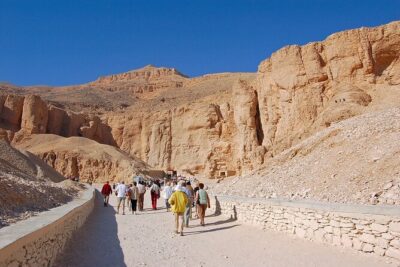
The Valley of the Kings contains royal tombs cut into the desert hills. Your basic admission normally covers a limited number of tombs, while special tombs may require an extra ticket. Since entrance fees are excluded from this tour, ask exactly which tomb access is expected.
The Temple of Hatshepsut is built in broad terraces against the cliffs. Hatshepsut ruled as pharaoh and used the monument to present her authority through architecture, reliefs, and religious imagery. The site is open and exposed, so the heat can be tiring even when the walking distance seems manageable.
The Colossi of Memnon are two giant seated statues that once guarded the entrance to a much larger temple complex. They are a short stop compared with the Valley of the Kings, but they make a useful photo point and help you picture the scale of ancient Thebes.
Lunch and dinner are served on board, with another night in Luxor. This day has the heaviest concentration of major sights. I would not plan a separate evening excursion unless you know you still have energy after the West Bank.
Day 4: Karnak and Luxor Temple before departure
After breakfast, you check out and visit the East Bank. The final program includes Karnak Temple and Luxor Temple, followed by transfer to Luxor Airport or the train station.
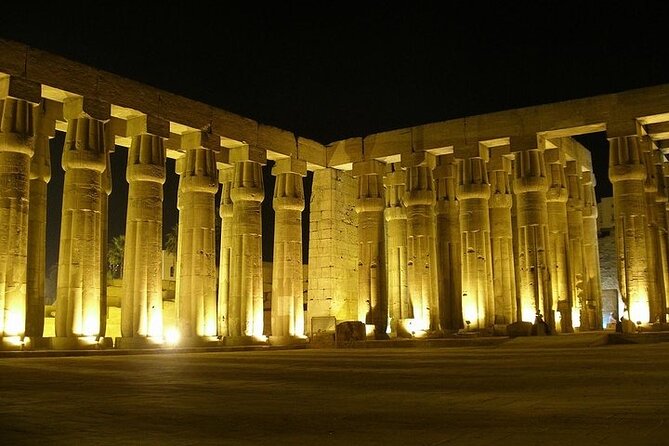
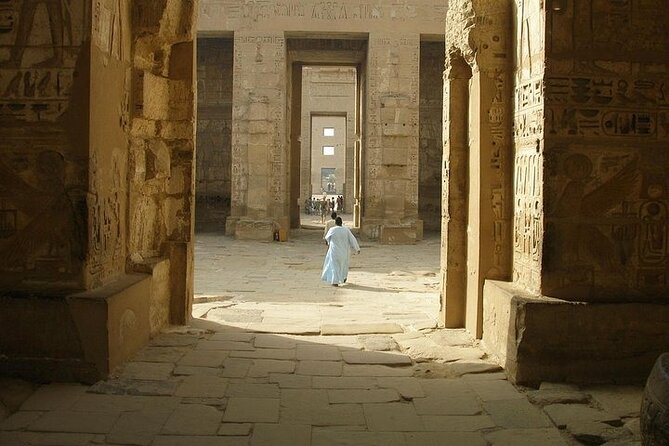
Karnak is a huge temple complex rather than one single building. Its hypostyle hall, with rows of massive columns, is the section most people remember, but the wider complex rewards a slower walk. A good guide can explain how different rulers added halls, pylons, obelisks, and sanctuaries over many centuries.
Luxor Temple feels different. It sits in the middle of the modern city and was closely tied to royal ceremonies and the annual Opet Festival. Seeing Karnak and Luxor Temple together helps you understand their connection, not just their separate monuments.
The timing is important. If your flight or train leaves soon after the visit, the morning may feel rushed. Give yourself a generous buffer for the transfer and confirm the departure schedule before booking transportation onward.
Food, cabins, and service on board

Full board includes breakfast, lunch, and dinner. The food receives some of the warmest praise, with specific approval for fresh meals and a broad selection. That is valuable on a cruise because you are not choosing restaurants between every temple visit.
Cabins are described as clean, comfortable, and often directly facing the Nile. A river view changes the feel of the cruise. You can watch village life, fields, and desert edges pass by without leaving the ship. Ask for the cabin category in writing, since Nile view can mean different things on different boats.
Service is another strong point. The crew and guides are repeatedly described as friendly and helpful. Khaled is specifically praised for answering questions and solving changes before and during the trip. Mohammed is named as a friendly and well-informed guide in one account. Guide assignments can change, so treat those names as useful contacts to confirm rather than a guarantee.
The ship is described as clean and luxurious, but the available information does not name the vessel or provide a detailed cabin specification. You should ask about the ship’s exact name, room size, deck plan, pool, Wi-Fi, and air-conditioning before booking. Those details matter more than the word luxury.
What the $650 price really buys you
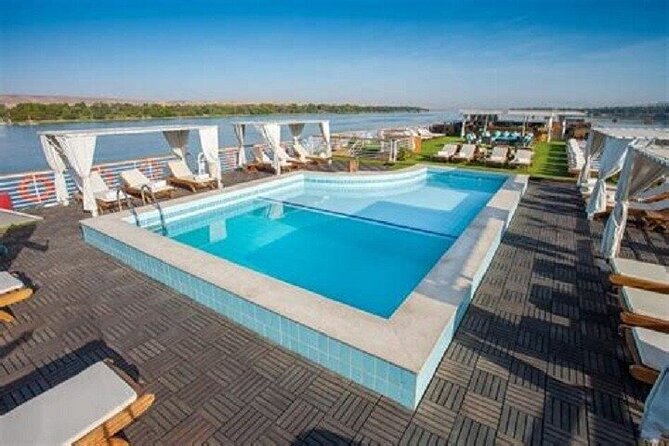
At $650 per person, this is not simply a bed on a boat. You are paying for three nights, all meals, guided sightseeing, ground transfers, and a route that includes Abu Simbel as well as the major Luxor temples.
The value is strongest if you want convenience. The operator organizes the transfers, the cruise, the guide, and the daily touring. You avoid arranging separate transport from Aswan to Kom Ombo, Edfu, and Luxor.
The price is less clear if you compare it with a bare-bones cruise. Entrance tickets are not included, and drinks are limited by the package terms. Ask whether airport or train-station transfers are included for your exact arrival and departure plans, since pickup is offered but the program wording is brief.
The tour can hold up to 50 people. That is a reasonable maximum for a cruise program, but it is not the same as a small private tour. The listing says private guide, so clarify whether your sightseeing group has its own guide or joins a larger shore excursion.
Who should book this cruise?
I would choose this trip if you want a neatly organized first visit to Aswan and Luxor, especially if Abu Simbel is high on your list. It suits you if you value a Nile-facing cabin, included meals, and a guide who can connect the sites instead of leaving you to decode them alone.
It is also a good match for families and first-time Egypt visitors who prefer one operator to handle the moving parts. Most people can participate, service animals are allowed, and the tour is near public transportation at its meeting and departure points.
I would hesitate if you want a quiet, highly flexible cruise with long unscheduled afternoons. The itinerary is full, the group may reach 50, and day three runs about eight hours. I would also hesitate if you need exact ship specifications or guaranteed cabin features before paying. Ask those questions first.
Should you book it?
Book this cruise if you want the classic southern Egypt route in a short, organized package and you understand that entrance fees are extra. Abu Simbel, Philae, the Valley of the Kings, Karnak, and Luxor Temple make the program unusually strong for four days.
Before confirming, get three details in writing: the exact ship and cabin category, the Abu Simbel schedule, and the estimated admission costs. If those answers suit you, the $650 price offers a practical way to see the Nile corridor without arranging each transfer yourself. Free cancellation is available up to 24 hours before the start time, which gives you some room to make those final checks.
FAQ
How long is the cruise?
The experience lasts approximately four days and includes three nights on the Nile cruise.
Where does the cruise begin?
The cruise begins in Aswan. Pickup and meeting assistance are offered at Aswan Airport or the train station.
Where does the cruise end?
The program ends in Luxor, with transfer to Luxor Airport or the train station after the East Bank visits.
Is Abu Simbel included?
Yes. Abu Simbel is included in the sightseeing program, but entrance tickets are not included in the tour price.
Are meals included?
Yes. Full board is provided, including breakfast, lunch, and dinner on the cruise.
Are entrance tickets included?
No. The package includes the listed sightseeing, but entrance tickets must be paid separately.
What is the meeting time?
The stated start time is 1:00 pm. Because the program also refers to a transfer before lunch, confirm the exact pickup time with the operator.
What is the cancellation policy?
You can cancel for a full refund up to 24 hours before the experience start time. Changes or cancellations made less than 24 hours before the start are not accepted for a refund.
Newly written up around Egypt
- Karnak Temple Sound & Light Show QR Ticket with Transfer★ 5.0 · 11 reviews
- Private transfer: Luxor – Dendara Temple – Hurghada★ 5.0 · 14 reviews
- Private Transfer luxor to hurghada with Stop at Dendera Temple★ 5.0 · 18 reviews
- Luxor Private Transfer To Hurghada With visit Dendera Temple★ 4.5 · 45 reviews
- Abu Simbel Temple Day Trip with Hotel Pickup From Aswan★ 4.5 · 48 reviews
- St Catherine Monastery and Mt Sinai Sunrise Tour from Dahab★ 4.5 · 23 reviews
- Mount Sinai Sunrise and St. Catherine’s Monastery Trip from Dahab★ 4.0 · 26 reviews
- Sunrise at Mt.Sinai and St.Catherine monastery. Entrance included★ 4.5 · 64 reviews
Egypt Temple Tours, compared.
Luxor Day Tour: Valley of Kings & Queens & Hatchepsut Temples
Read our review →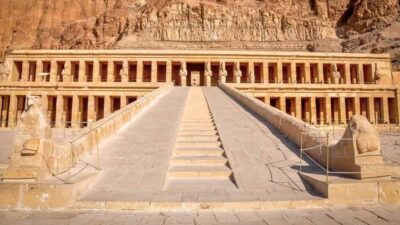
Valley of the Kings and Hatshepsut Temple Day Tour
Read our review →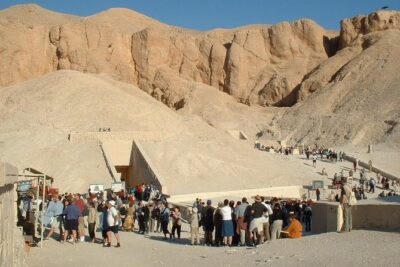
Valley of Kings, Hatchepsut Temple ,Karnak & Luxor-DayTour
Read our review →
Full Day Tour of Luxor West Bank Temples and Tombs (Private)
Read our review →
From Sharm: Mount Moses Trekking, Sunrise & Monastery Visit
Read our review →
Abu Simbel Temple Private Guided Day Trip with Lunch
Read our review →Browse the lists this tour appears in