
Reviewed · WHITE TEMPLE & BLUE TEMPLE TOURS
Chiang Rai White Temple, Blue Temple and more from Chiang Mai
Chiang Rai’s three showpiece temples offer a striking change of pace from Chiang Mai. The White Temple looks like frozen lace, the Blue Temple glows with intense color, and Wat Huay Pla Kang finishes the day with a huge Guan Yin statue and a nine-tiered pagoda.
I like the small group limit of nine, which gives guides such as Jackie, Popcorn, Atikama, and Tomtam room to help with photos and explain temple customs. I also like the sensible coffee stop at Doi Chaang Caffè Mae Suai. The catch is the drive: roughly three hours each way, sometimes longer in traffic, so this is a full and tiring day.
Key points to know before you book
- Three very different temple styles: See the White Temple, Blue Temple, and Wat Huay Pla Kang in one organized day.
- A long minibus ride: Chiang Rai is about 172 kilometers from Chiang Mai, with around six hours on the road in total.
- Small-group format: The vehicle holds no more than nine people, a useful size for questions and personal help.
- White Temple admission included: The THB 100 entrance fee is covered, while lunch and personal purchases are not.
- Lunch costs extra: A local buffet option has been reported at about THB 150 and may require cash.
- Good guides make a difference: Guides named Jackie, Popcorn, Boon, Ratcha, Wasit, Peter, Jin, and Atikama have been praised for humor, temple etiquette, photos, and local explanations.
Three modern temples, one very long day
This is not a quiet pilgrimage through ancient ruins. Chiang Rai’s famous temples are mostly modern creations, designed to impress the eye and make you think. They can feel more like grand public art than old religious monuments.
That distinction matters. If you want centuries-old stonework and a peaceful spiritual setting, this may not be your ideal temple day. If you enjoy bold architecture, unusual symbolism, and memorable photographs, the trip gives you three strong sights for one price.
The tour costs about $39 per person. That is a fair deal for hotel transport, an air-conditioned vehicle, an English-speaking guide, bottled water, and the White Temple entry fee. You are paying mainly for convenience and access rather than luxury. The minibus can feel tight, especially if you are taller than about 5 feet 9 inches, and you should not expect a leisurely private tour.
The small group helps. With a maximum of nine people, your guide can usually keep the group together without shouting across a crowd. Several guides have been praised for keeping the day moving, explaining where to meet, and helping with photographs. That personal touch matters during a schedule with several short stops.
More White Temple and Blue Temple Tours in Chiang Mai:
- Chiang Rai White Temple and Blue Temple Day Tour
★ 4.6 · 3,366 reviews - From Chiang Mai: White Temple & Golden Triangle Day Trip
★ 4.6 · 1,193 reviews - Chiang Mai: Chiang Rai Temples, Golden Triangle & Boat Tour
★ 4.6 · 518 reviews
The road from Chiang Mai to Chiang Rai
The day begins with hotel pickup in Chiang Mai or at an arranged meeting point if your accommodation is outside the pickup zone. Confirm this carefully before the tour date. One practical complaint about the arrangement involved unclear pickup instructions and a delayed minibus, so do not assume every hotel is covered.
The journey to Chiang Rai takes about three hours each way. Some passengers have experienced closer to four hours, depending on traffic, roadworks, and pickup delays. The road can also be winding, so pack motion-sickness medicine if you are prone to carsickness.
This is the main tradeoff. You lose much of a day to driving, but the ride gives you access to sights that are far from Chiang Mai and difficult to cover by public transport in a single day. Breaks help, and the first scheduled stop comes at a pleasant coffee shop.
The air-conditioned vehicle is a major comfort in northern Thailand’s heat. Still, the seats may be close together. If you are tall, ask about seating early, and keep your day bag small enough to fit without blocking your legs.
A useful first break at Doi Chaang Caffè Mae Suai
After the first stretch of road, the group stops for about 30 minutes at Doi Chaang Caffè Mae Suai. Admission is free, and you can walk around, stretch your legs, buy coffee, or have a snack.
This is more than a filler stop. It breaks up the hardest part of the drive and gives you a chance to use facilities before reaching the temples. Several people especially enjoyed the coffee and bread here, with no pressure to make a large purchase.
You might want to bring a little cash for snacks. Bottled drinking water is included, though one report suggests water may not be handed out until later in the afternoon. Carrying your own bottle is a sensible backup.
Wat Rong Khun, the White Temple
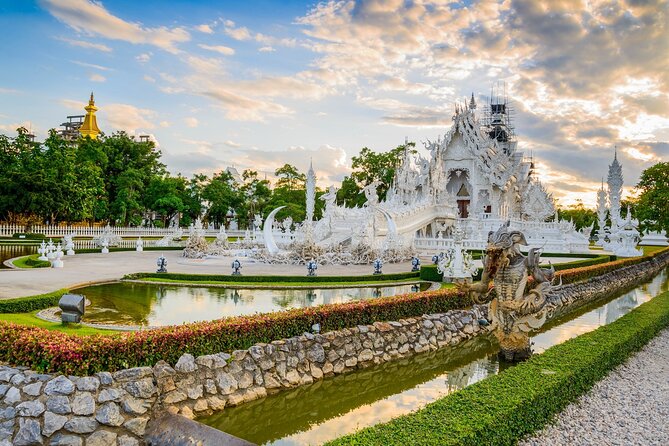
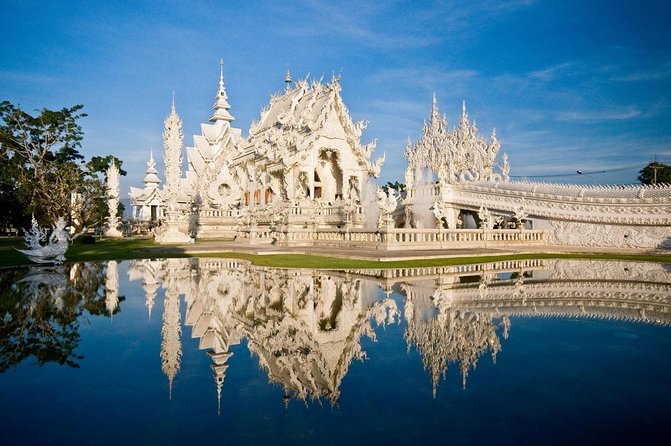
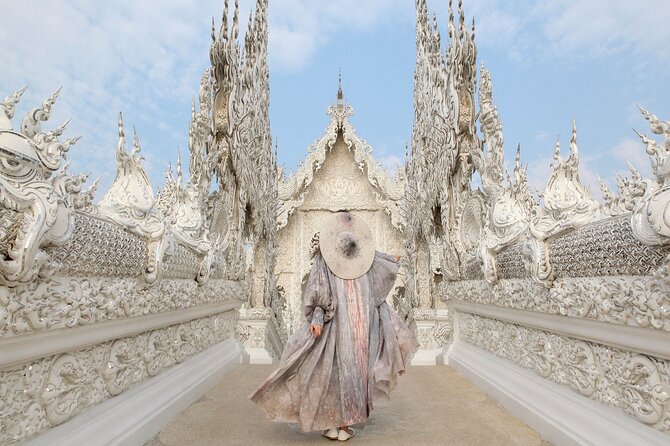
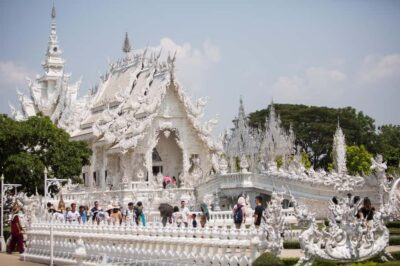
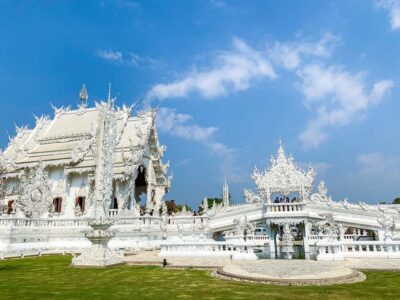
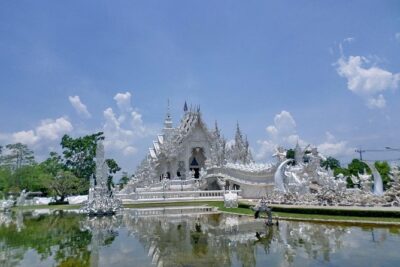
Wat Rong Khun is the headline attraction. Its white exterior is covered with tiny mirrored details that catch the sun, giving the building a glittering, almost icy appearance. The bridge leading toward the main structure is one of the most memorable photo spots in northern Thailand.
The temple was designed by local artist Chalermchai Kositpipat, and it does not follow the look of a traditional Thai temple. Its symbolism mixes Buddhist ideas with modern references. The famous approach over outstretched hands represents desire and suffering, while the route toward the temple suggests movement toward a higher state.
Inside, you may find paintings that combine Buddhist imagery with modern popular culture. This is where opinions often split. Some people find the mix clever and surprising. Others feel that the site resembles a theme park or a carefully managed photo attraction rather than a place for quiet worship.
I recommend treating it as contemporary religious art. Do not arrive expecting an ancient sanctuary. Arrive ready for elaborate design, unusual symbolism, and a temple that deliberately challenges your idea of what a Thai religious building should look like.
You get about one hour here. That is enough for the main approach, the central building, photographs, and a quick look around, but it is not enough for a slow study of every detail. The site can be crowded, so follow your guide’s timing if you want to stay with the group.
Entry to the White Temple costs THB 100 and is included in the tour price. Dress respectfully, covering shoulders and knees where required, and follow instructions about where photography is allowed. Your guide should explain temple behavior, which is particularly helpful if this is your first visit to Buddhist sites in Thailand.
Other temple visits near Chiang Mai we have written up
- Chiang Mai: Chiang Rai Temples, Karen Tribe and Hot Springs
★ 4.7 · 5,401 reviews - Chiang Mai: White, Red/Black & Blue Temples Tour with Lunch
★ 4.2 · 2,017 reviews - Chiang Mai: Doi Suthep and Wat Umong Enchanting Evening Tour
★ 4.6 · 1,811 reviews - Chiang Mai: 3 Hour Old City and Temples Guided Walking Tour
★ 4.6 · 1,568 reviews
Lunch near the Blue Temple
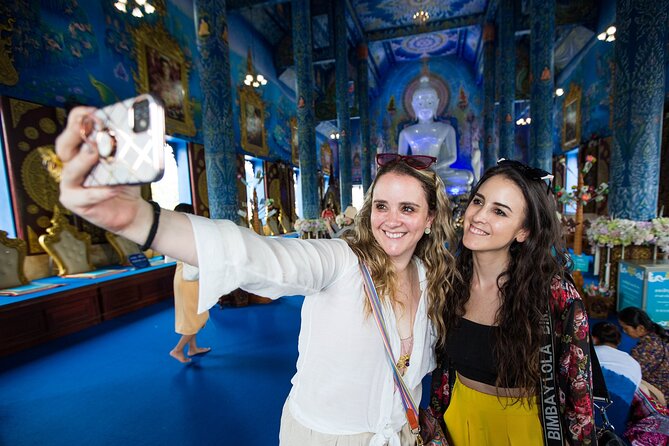
Lunch comes before or around the Blue Temple visit, at a local restaurant. The meal is not included, so keep Thai baht available. A buffet lunch has been described as costing about THB 150, though prices can change.
An included lunch would make the price easier to calculate, but keeping it separate gives you some choice. You can eat a full meal, choose a smaller option, or spend less if you are not hungry after the morning drive.
Do not plan an elaborate, slow lunch. This is a sightseeing day with a fixed route, and the group needs to reach the afternoon stops on time. Ask your guide about the exact cost and payment method when you arrive. Cash is the safest choice.
Wat Rong Seur Ten, the Blue Temple
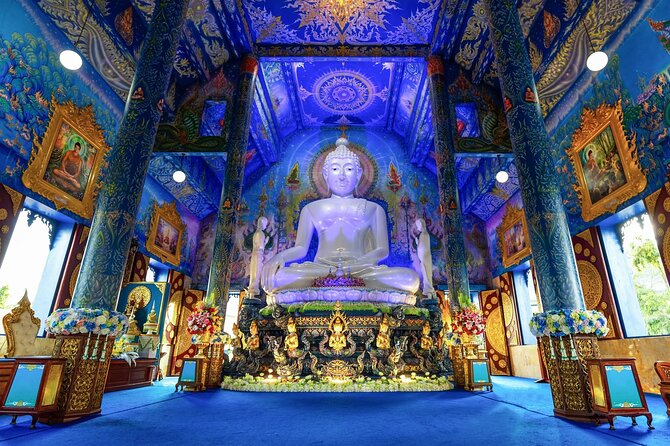
Wat Rong Seur Ten, commonly called the Blue Temple, provides a sharp contrast with the White Temple. Deep blue walls, gold trim, and elaborate Buddhist figures create a dramatic interior and exterior.
The main hall is the focus. Look up at the ceiling, notice the detailed patterns, and take time with the large Buddha image. The color scheme gives the place a calm but theatrical mood. It is intensely photogenic, though the strongest images may require patience if several groups arrive together.
The Blue Temple is free to enter according to the tour details. You get about 1 hour and 30 minutes for the lunch break and temple visit combined, so the exact time inside may depend on the restaurant schedule and traffic.
This is one place where a good guide can add real value. A guide such as Ratcha may show you local Buddhist customs, including a traditional way to wash a Buddha image and make a wish. That small explanation helps you see the site as more than a backdrop for photographs.
The Blue Temple often wins people over because it feels more coherent than the White Temple. It is still modern and popular, but its design has a steadier religious atmosphere. You can appreciate both, while recognizing that they serve different purposes.
Wat Huay Pla Kang and the giant Guan Yin
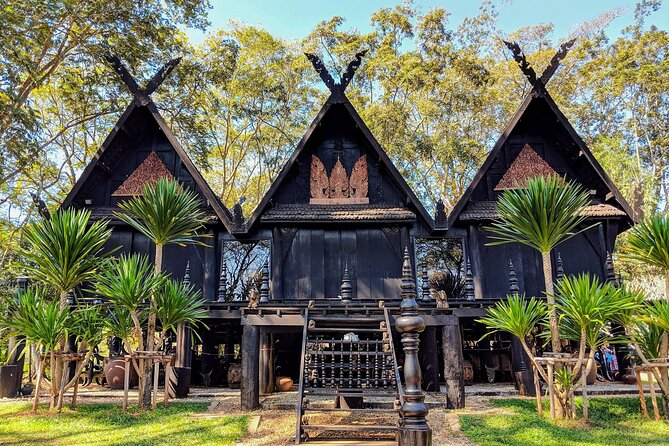
The final stop is Wat Huay Pla Kang, often called the Red Temple complex in tour descriptions. Its most visible features are a large nine-tiered pagoda, ornate shrine halls, and the enormous white Guan Yin statue overlooking the city.
The statue is a colossal representation of Guan Yin, the bodhisattva associated with compassion. You can admire it from the grounds, and the tour may allow you to go inside or up toward the statue’s viewing areas. One especially memorable detail is the chance to look outward through the statue’s eyes.
The nine-tiered pagoda gives the site a different profile from the White and Blue Temples. The buildings are more spread out, and the huge statue gives the visit a sense of scale that photographs do not fully convey.
You have about one hour here. Some people feel that this is not quite enough, especially if they want time inside the pagoda, at the statue, and around the shrine halls. Keep an eye on the meeting time. If photography is important to you, head straight to the main viewpoint before exploring smaller details.
This final stop can be the most meaningful of the three for visitors who want a stronger religious setting. It is still a major attraction, but the Guan Yin figure and active shrine areas can feel less like an art installation than the White Temple.
What the guide adds to the day
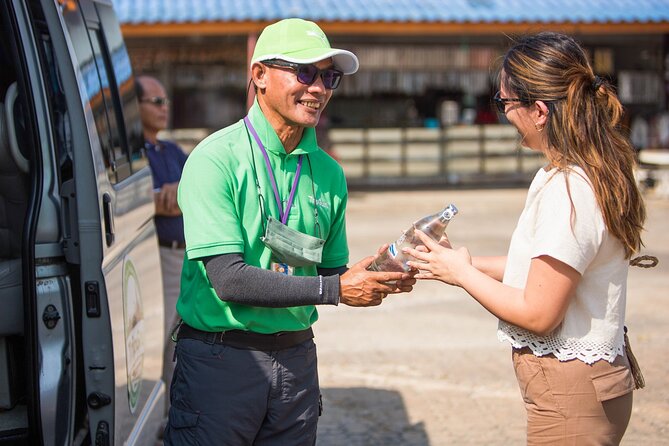
The guide is a major part of this experience because the road time is so long and the visits are short. You need someone who can explain the sites clearly, organize the group, and keep everyone moving.
Guides named Jackie and Popcorn have been singled out for energy, humor, temple explanations, and help with photographs. Atikama has been praised for teaching basic Thai and explaining how to behave respectfully inside the temples. Tomtam was appreciated for keeping spirits up during the long drive, while Boon, Ratcha, Wasit, Peter, Jin, and Avi have also been praised for friendly and helpful guidance.
Your experience can vary by guide, and English clarity may not always be perfect inside a noisy minibus. One useful improvement would be a microphone, since it can be hard to hear explanations from the back. Sit near the front if understanding every detail matters to you.
The strongest guides do more than list facts. They explain when to remove shoes, how to dress, where not to stand, and how to take part in small customs without treating them as a show. That practical instruction helps you visit respectfully.
Timing, crowds, and what to pack
Expect a 12-hour day, including pickup, temple visits, meals, breaks, and the return drive. The schedule gives you roughly 45 minutes to an hour at several sites, with more time built around the Blue Temple and lunch.
Start with a full breakfast. Bring snacks, motion-sickness medicine if needed, sunscreen, and cash for lunch or drinks. Comfortable shoes help because you will be walking across temple grounds and may need to remove footwear in certain areas.
Dress for temple rules. Cover your shoulders and knees, and carry something light that you can put on if your clothing is too casual. A hat and sun protection are useful outside, but remove hats when entering religious buildings if requested.
Crowds affect the experience. The White Temple can feel especially busy, and getting a clean photograph may take patience. Guides who arrive early can improve the visit, but no schedule can guarantee an empty temple.
Who should book this Chiang Rai day trip?
Book it if you have only a short time in northern Thailand and want to see Chiang Rai’s best-known modern temples without arranging transport yourself. It suits first-time visitors, photographers, small groups, and anyone who likes bold architecture more than old ruins.
It also works well if you value a guide who can explain etiquette and keep a complicated day organized. The included transport and entrance fee make the $39 price attractive, especially when a private vehicle would cost much more.
Think twice if you dislike long drives, cramped minibuses, or tightly timed sightseeing. This is not a slow day in the countryside. It is a road-heavy excursion with three major stops at the far end.
Cancellation is free if you cancel at least 24 hours before the start time. Changes or cancellations inside that window are not refunded.
Should you book it?
I would book this tour if the White Temple, Blue Temple, and giant Guan Yin statue are high on your Chiang Mai wish list. The sights are unusual, the price is reasonable, and the small group format is better than a large coach.
I would skip it only if the thought of six or more hours in a minibus sounds miserable. The temples are worth seeing, but the road is part of the deal. Go prepared with water, snacks, comfortable clothes, and realistic expectations, and this becomes a productive, memorable day rather than an exhausting surprise.
FAQ
How long is the Chiang Rai temple tour?
The tour lasts approximately 12 hours, including hotel pickup and drop-off, driving, temple visits, lunch, and breaks.
How far is Chiang Rai from Chiang Mai?
The distance is approximately 172 kilometers one way. The drive takes roughly three hours each way, although traffic, road conditions, and pickups can make it longer.
Which temples are included?
The tour visits Wat Rong Khun, also called the White Temple, Wat Rong Seur Ten, also called the Blue Temple, and Wat Huay Pla Kang, which includes a nine-tiered pagoda and a large Guan Yin statue.
Is lunch included?
No. Lunch is at your own expense. A local buffet has been reported at about THB 150, and cash may be required.
Is the White Temple entrance fee included?
Yes. The THB 100 White Temple entrance fee is included in the tour price.
How many people are in the group?
The tour has a maximum of nine participants.
Is hotel pickup included?
Hotel pickup and drop-off are included, but some accommodations may fall outside the pickup area. Confirm the pickup point before the tour, especially if your hotel is not in central Chiang Mai.
Newly written up around Chiang Mai
- Ex-monk city & temples walking tour: (3.5 hours / 1.7 km.)★ 4.8 · 35 reviews
- Visit Dantewada(Angel Land), Blue Temple, and Sticky Waterfall★ 5.0 · 120 reviews
- Doi Suthep and Wat Pha Lat Sunrise Tour (Small Group Only)★ 5.0 · 70 reviews
- One Day Tour Chiang Rai(White Temple , Blue Temple, Black House) Private Tour★ 5.0 · 63 reviews
- 1 day Private Tour to Unseen Temple in Lampang★ 5.0 · 55 reviews
- Doi Suthep Temple and Bau Thong Waterfalls Private Tour★ 5.0 · 114 reviews
- Chiang Mai: Chiang Rai Famous Temples & Hot Springs Day Trip★ 4.0 · 129 reviews
- Chiang Mai City and Temples Half-Day Tour★ 4.5 · 136 reviews
White Temple & Blue Temple Tours, compared.
Chiang Rai White Temple and Blue Temple Day Tour
Read our review →
Chiang Rai Temples, Golden Triangle & Boat Tour
Read our review →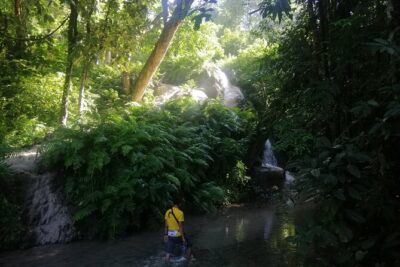
Visit Dantewada(Angel Land), Blue Temple, and Sticky Waterfall
Read our review →
One Day Tour Chiang Rai(White Temple , Blue Temple, Black House) Private Tour
Read our review →Browse the lists this tour appears in