
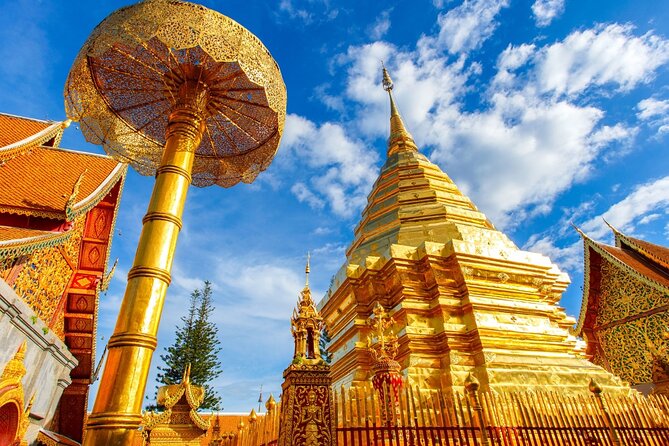
Reviewed · DOI SUTHEP TEMPLE TOURS
Chiang Mai – Doi Suthep Temple & Wat Pha Lat Hike
The best part of this Chiang Mai outing is the sharp change of mood between two mountain temples. You begin on a forest trail used by monks, reaching quiet Wat Pha Lat among trees and stone figures, then continue to grand Doi Suthep, where a gold-covered chedi and city views take center stage.
I like the pairing of a 30 to 40 minute Monk’s Trail hike with an important pilgrimage site. I also like the choice of departure times: sunrise brings cooler air and fewer people, while the 4 p.m. outing can offer cooler walking and sunset light. The main caution is transport and terrain. The open-sided songthaew can be hot, smoky, and winding, and the trail becomes slippery in rain.
Key points to know before you book
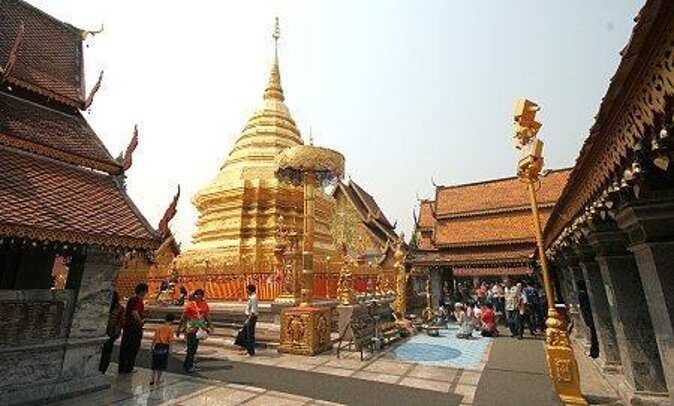
- Wat Pha Lat comes first on most departures: Walk through the forest to a peaceful temple with statues, wall paintings, and mountain views.
- Doi Suthep requires effort or an extra fee: Climb more than 300 naga-flanked steps, or use the cable car for THB 80.
- Sunrise changes the route: The 5 a.m. option visits Doi Suthep first, then takes you down the Monk’s Trail.
- The ride is a real songthaew experience: You travel in a converted pickup with open sides and bench seats, not an air-conditioned van.
- The price is attractive but not all-inclusive: The tour costs $26.09, while temple and trail charges add THB 180 if you use the cable car.
- Guide quality matters: Saman, Jane, Amy, Pia, Bright, Emmy, and Maggie are among the guides praised for clear explanations and personal care.
Two mountain temples, two very different moods
This half-day trip works because the temples do not feel alike. Wat Pha Lat is quiet, green, and spread through the forest. Doi Suthep is formal and imposing, with stairways, shrines, bells, Buddhist images, and a gleaming central chedi.
I would choose this tour if you want more than a quick ride to a famous viewpoint. The walking section gives you a sense of the mountain itself, while the guide adds meaning to details you could easily miss, such as the paintings showing scenes from Buddha’s life and the way Buddhist images are presented.
The experience lasts about four hours. That is long enough to see both sites without giving up a full day in Chiang Mai. It is also short enough to fit before an evening meal or, for the later departure, before the Sunday night market.
The advertised group limit is 10 people, which is a useful size for a trail and a small vehicle. A smaller group also gives your guide more room to answer questions. Guides named Saman, Jane, Amy, Pia, and Maggie receive especially warm praise for their explanations, humor, patience, and care with the walking pace.
More Doi Suthep Temple Tours in Chiang Mai:
- Chiang Mai: Doi Suthep and Wat Umong Enchanting Evening Tour
★ 4.6 · 1,811 reviews - Chiang Mai: Doi Suthep, Wat Umong, and Pha Lat Sunrise Tour
★ 4.7 · 1,425 reviews - Chiang Mai: Wat Pha Lat & Wat Phra That Doi Suthep Tour
★ 4.8 · 1,207 reviews
Walking the Monk’s Trail to Wat Pha Lat
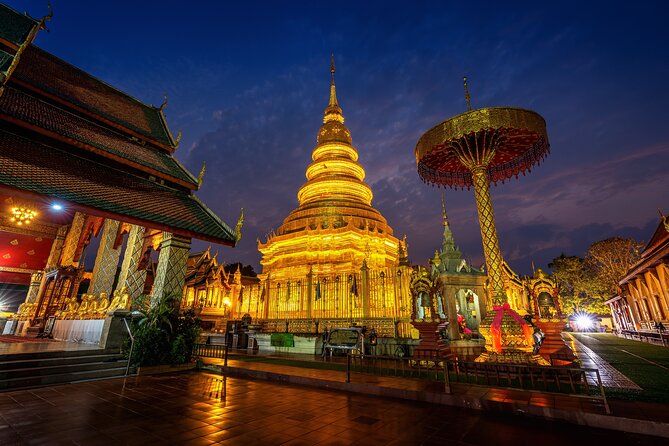
A songthaew takes you to the trailhead, where the walk to Wat Pha Lat begins. The path follows an old route used by monks traveling uphill toward Doi Suthep. You should expect about 30 to 40 minutes of walking, mostly uphill on a forest trail.
This is not a technical trek, but it is not a flat stroll. Good walking shoes matter. In dry weather, the trail is a manageable outing for most people who can walk uphill at a steady pace. In rain, mud and uneven ground make it harder. One account describes a downpour turning the path into a more demanding walk, though the guide kept the group moving in good spirits.
The forest setting is the point. Instead of arriving at a temple parking area and stepping straight into a crowded compound, you approach Wat Pha Lat through trees. Listen for your guide’s explanations about the monks’ route and the mountain as you walk. Some guides have also carried or offered walking sticks, a small touch that can help on wet or rough ground.
You may encounter dogs along the trail. This has worried some people before setting out, but guides familiar with the route know how to manage the situation. That does not mean you should approach the animals. Stay with the group and follow your guide’s instructions.
Wat Pha Lat: statues, stone, and silence
Wat Pha Lat is often called Chiang Mai’s jungle temple, and the name fits. The complex sits among trees rather than on an open urban plaza. Statues, old walls, and decorative details blend into the setting, creating a calmer stop than the much larger Doi Suthep.
I especially like this portion for its sense of discovery. The temple does not rely on one giant structure to impress you. You notice small figures, weathered surfaces, garden corners, and views through the trees. Your guide can help explain what you are seeing instead of leaving you to guess which images are religious symbols and which are decorative elements.
The stop is listed as about two hours, including the walk and temple visit. That gives you time to look around without sprinting from one point to the next. One practical note: the THB 100 Wat Pha Lat and Monk’s Trail fee is not included, and you must pay it in cash on the day.
If the weather turns wet, the temple can feel even more atmospheric, but the trail becomes less comfortable. Bring footwear with a firm grip and protect your phone. Rain also makes the open truck ride less pleasant, although the tour may be changed or canceled if conditions are poor.
Doi Suthep and the 300-step dragon staircase
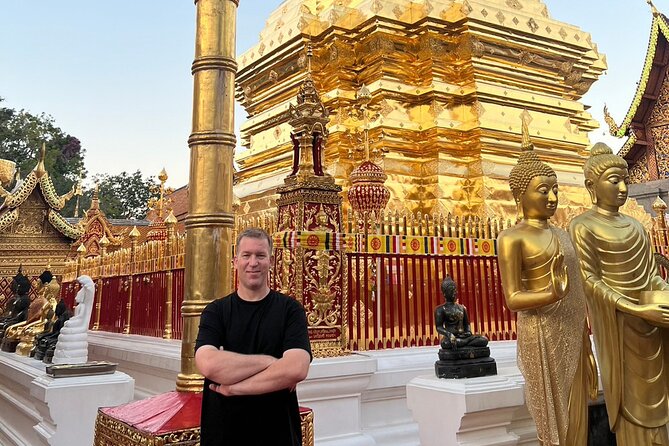
From Wat Pha Lat, the songthaew continues up the mountain toward Wat Phra That Doi Suthep. This is one of Northern Thailand’s most important Buddhist pilgrimage sites, and the approach announces its importance.
The famous staircase has more than 300 steps. A seven-headed naga, a mythical serpent, lines the route. The stairway is one of the most photographed parts of the visit, so pause for the view looking back down the steps before you hurry upward.
You do not have to climb. A cable car is available for THB 80 per person, although that fee is separate. This choice makes the outing more practical for mixed-ability groups. Someone who is comfortable with the trail but not the staircase can still enjoy the upper temple.
At the top, expect pagodas, bells, shrines, Buddhist images, and drawings inside the temple buildings. The original copper-covered chedi is the spiritual center of the complex. This is where a good guide earns the cost of the tour. Guides such as Saman and Jane explain the meaning of the paintings and Buddhist customs in plain language, while others, including Pia and Amy, have been praised for adjusting the pace and helping with the stairs.
The temple is active, not just a monument for photographs. Sunrise departures can place you there when the light is soft and the grounds are quieter. Evening departures may give you a chance to see monks praying, followed by sunset views if timing and weather cooperate.
More temple hikes and treks in Chiang Mai:
- Chiang Mai – Doi Suthep Temple & Wat Pha Lat Hike
★ 4.6 · 740 reviews - Chiang Mai Doi Suthep Temple and Wat Pha Lat Hike
★ 5.0 · 299 reviews - From Barcelona: Montserrat Monastery, Easy Hike, Cable Car
★ 4.9 · 1,021 reviews - From Barcelona: Montserrat Monastery & Scenic Mountain Hike
★ 4.9 · 978 reviews
Sunrise, afternoon, or evening?
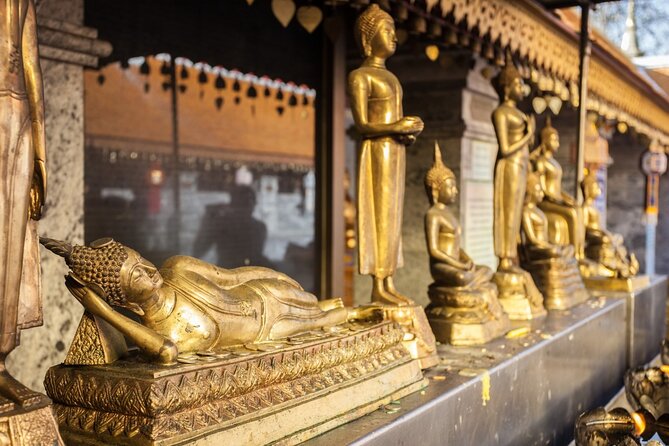
The 5 a.m. sunrise program is the strongest choice if you dislike crowds and do not mind a very early start. This version visits Doi Suthep first, then continues to Wat Pha Lat and walks down the Monk’s Trail rather than up it.
That route makes practical sense. Going downhill after the sunrise stop is easier for many people, especially families or anyone feeling tired from the early alarm. The mountain air is also cooler in the morning, and the sunrise can give you clear views over Chiang Mai.
The standard route begins with Wat Pha Lat and hikes uphill. It gives you the more natural progression from forest temple to grand temple, but it asks more of your legs. The afternoon departure around 4 p.m. can be a good compromise. You avoid the pre-dawn wake-up, walk during cooler hours, and may catch sunset from the mountain.
Timing is not always exact. Pickup can begin up to 45 minutes before the scheduled start, and one delayed pickup caused a long wait for some participants. I would avoid booking a tight connection immediately afterward. The tour usually ends back at the meeting point, though pickup and drop-off inside Chiang Mai’s old city are offered.
The songthaew ride is part of the deal
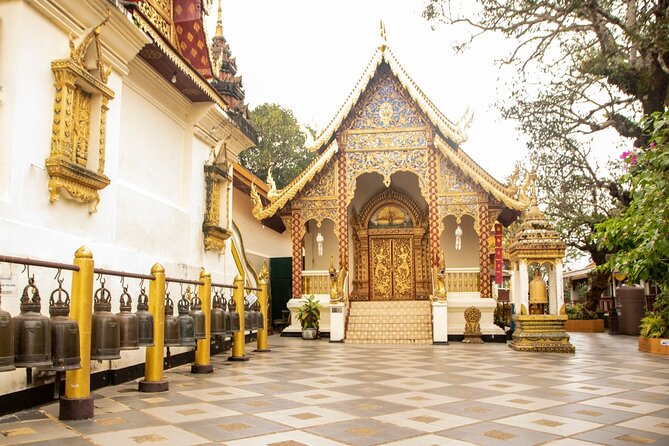
Transportation is a converted red songthaew, the open-sided pickup used across Chiang Mai. You sit on benches in the back, with no air-conditioning. It is a practical and local way to reach the mountain, but it is not luxury transport.
Some people enjoy the open ride and the feeling of moving through the city like a local. Others find the heat, exhaust, and winding mountain road unpleasant. Motion sickness is possible, so sit where you can get airflow, bring water, and consider the issue if you are sensitive to curving roads.
The ride is included in the $26.09 price, along with a bottle of drinking water and an English-speaking guide. For this amount, the tour offers a useful service: transport to both temples, a trail transfer, historical interpretation, and return to the old city. The added fees are modest, but you should carry cash for the THB 100 trail charge and the THB 80 cable car if you plan to use it.
Tips for the driver and guide are not mandatory. Personal expenses are also separate.
Dress, fitness, and what to carry

These are active temple visits, not a ride-and-photo excursion. Wear proper walking shoes, especially during the rainy season. Sandals may be fine for the upper temple, but they are a poor choice for muddy trail sections and the staircase.
Temple rules require covered shoulders and knees. A light scarf or cover-up can help, but make sure your clothing meets the requirement before you leave Chiang Mai.
I would carry:
- Small cash for the THB 100 trail fee and optional THB 80 cable car
- Water, even though one bottle is supplied
- A phone cover or small dry bag in rainy weather
- Light clothing for the warm songthaew
- A walking stick if you prefer extra support on uneven ground
Most people can take part, but the hike and stairs require a reasonable level of mobility. If you cannot walk uphill, the songthaew can take you farther up the mountain. The sunrise version may be better for some people because the Monk’s Trail is walked downhill.
How good is the guiding?
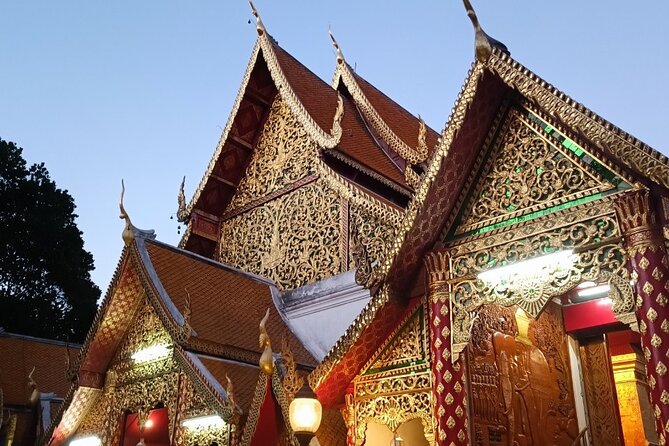
The guide is a major part of the value here. The temples contain plenty of visual detail, but without context you may only notice gold, statues, and stairs. A strong guide connects those details to Buddhism, monk life, local customs, and the stories shown in the wall paintings.
Saman is praised for humor, local insight, and explanations of Buddhist traditions. Jane is described as clear, kind, and strong on temple history. Amy receives praise for her easy-to-follow explanations and careful pacing, while Pia is noted for taking special care of an older solo participant on the stairs.
Bright, Emmy, and Maggie also receive positive attention for their warmth and clear explanations. One poor experience involved a guide who was new to the route and had to call the office repeatedly, so guide performance can vary. Still, the overall pattern is strong, and the group size allows a good guide to stay involved.
Some guides also take photographs for the group. That can be useful at the staircase and sunrise viewpoints, but bring your own phone and do not let photography distract you from temple etiquette.
Who should book this experience?
I would recommend it to first-time visitors to Chiang Mai who want two major mountain sights in one manageable half-day. It suits people who like a little walking and want cultural explanation rather than independent sightseeing alone.
Families can make it work, especially with the sunrise route and the cable car option. Older participants may also manage it if they discuss the stairs and trail with the guide. The tour is less suitable if you want air-conditioned transport, dislike winding roads, or need a completely flat route.
The $26.09 price is good for the transport and guide, even after adding the basic entrance charges. It becomes particularly useful if you are staying inside the old city and do not want to arrange separate transport to two mountain temples.
Book at least a day ahead if your plans are fixed, since changes or cancellations inside 24 hours are not refundable. If bad weather cancels the tour, you can be offered another date or a full refund.
Should you book the Doi Suthep and Wat Pha Lat tour?
Book it if you want a compact Chiang Mai experience that combines forest walking, Buddhist sites, mountain views, and local transport. Choose sunrise for quiet conditions and a downhill trail, or the late afternoon for cooler walking without the punishing wake-up.
Skip it if open-air songthaew transport will make you miserable or if muddy trails and 300-plus steps are beyond your comfort level. For everyone else, this is a well-priced way to see the peaceful side of Doi Suthep before meeting its grand, golden centerpiece.
FAQ
How long does the Doi Suthep and Wat Pha Lat experience last?
The activity lasts approximately four hours, including transport, the Monk’s Trail, Wat Pha Lat, and Wat Phra That Doi Suthep.
How difficult is the hike to Wat Pha Lat?
The hike from the trailhead to Wat Pha Lat takes about 30 to 40 minutes and goes uphill. Proper walking shoes are required, and rain can make the trail muddy and more difficult.
Can I avoid walking up the mountain?
Yes. If you cannot do the uphill hike, you can go farther by songthaew. At Doi Suthep, you can also use the cable car instead of climbing the staircase.
How much are the entrance fees?
The Wat Pha Lat Monk’s Trail fee is THB 100 per person. The Doi Suthep entrance fee and cable car cost THB 80 per person. These charges are not included in the tour price.
What happens on the sunrise departure?
The 5 a.m. program visits Wat Phra That Doi Suthep first. After sunrise, you continue to Wat Pha Lat and walk down the Monk’s Trail instead of hiking up.
Where does pickup take place?
Free pickup and drop-off are available inside Chiang Mai’s old, walled city. If you are not staying at a hotel in the pickup area, the meeting point is in front of Burger King at Tha Phae Gate.
What should I wear to the temples?
Your shoulders and knees must be covered. Wear proper walking shoes for the Monk’s Trail, and bring suitable clothing for the heat, rain, and open-sided songthaew ride.
Newly written up around Chiang Mai
- Ex-monk city & temples walking tour: (3.5 hours / 1.7 km.)★ 4.8 · 35 reviews
- Visit Dantewada(Angel Land), Blue Temple, and Sticky Waterfall★ 5.0 · 120 reviews
- Doi Suthep and Wat Pha Lat Sunrise Tour (Small Group Only)★ 5.0 · 70 reviews
- One Day Tour Chiang Rai(White Temple , Blue Temple, Black House) Private Tour★ 5.0 · 63 reviews
- 1 day Private Tour to Unseen Temple in Lampang★ 5.0 · 55 reviews
- Doi Suthep Temple and Bau Thong Waterfalls Private Tour★ 5.0 · 114 reviews
- Chiang Mai: Chiang Rai Famous Temples & Hot Springs Day Trip★ 4.0 · 129 reviews
- Chiang Mai City and Temples Half-Day Tour★ 4.5 · 136 reviews
Doi Suthep Temple Tours, compared.
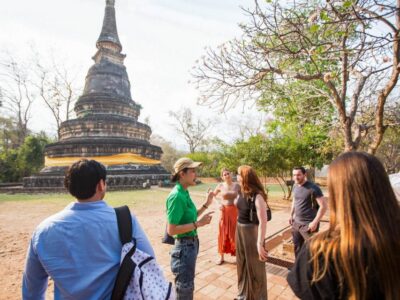
Doi Suthep and Wat Umong Enchanting Evening Tour
Read our review →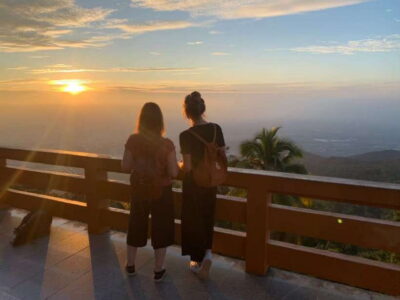
Doi Suthep, Wat Umong, and Pha Lat Sunrise Tour
Read our review →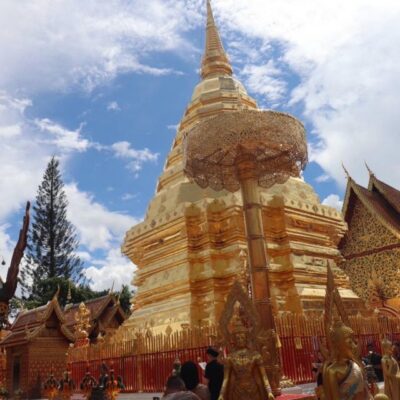
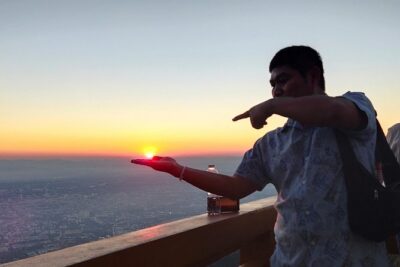
Wat Phra That Doi Suthep spiritual Sunrise Tour with an Ex-monk
Read our review →
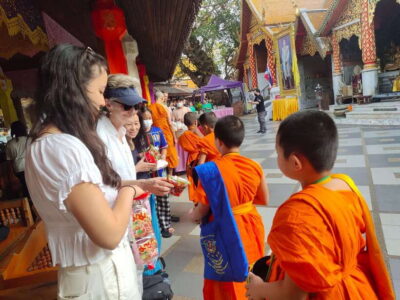
Spiritual Sunrise Wat Doi Suthep, Pha Lat, Alms & Meditation
Read our review →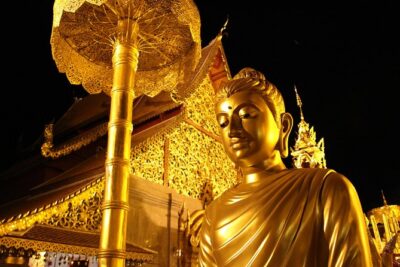
Best seller!! Amazing Night tour, Doi Suthep + Wat umong – Top Must visit!
Read our review →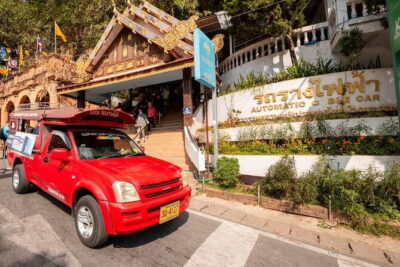
Doi Suthep Temple and Waterfall by Songtaew Trio
Read our review →Browse the lists this tour appears in