
Reviewed · PORTUGAL TEMPLE TOURS
Batalha: A Local’s Guided Tour of the Batalha Monastery
Batalha Monastery tells two stories at once: the story of a major Portuguese victory at Aljubarrota, and the story of a royal family using architecture to secure its place in history. I like that this tour connects the grand stonework to real political choices, rather than treating the monastery as a pretty church with a few old tombs.
I also like the small-group format and the chance to ask questions instead of being pushed through a memorized speech. Guide Anna has earned especially warm praise for her friendly style and broad knowledge. The main drawback is important: the entrance ticket is not included, and the tour is not suitable for wheelchair users.
Key points to know before booking
- A royal monument built after Aljubarrota: The monastery links Portugal’s victory to the rule of King João I and Queen Filipa de Lencastre.
- See the Founder’s Chapel: This is where the king and queen are buried, along with the place’s most important royal symbolism.
- Architecture changes as you walk: Gothic, Manueline, and Renaissance details appear across the church and cloisters.
- Meet at the Condestável statue: Your guide waits in front of the equestrian statue of D. Nuno Álvares Pereira.
- The ticket costs extra: Budget separately for entry to the monument before you arrive.
- Best for history-minded visitors: The 1.5-hour tour suits anyone who wants context, not just photographs.
Why Batalha Monastery matters
Batalha Monastery is not simply a church decorated with fine stone. It was built to mark the Portuguese victory at the Battle of Aljubarrota, a turning point tied to the country’s independence and the authority of its royal family.
That background changes how you read the building. The soaring Gothic form is not only an expression of faith. It also sends a political message: Portugal had survived a major challenge, its crown had a rightful claim, and its alliance with England had serious weight.
The tour brings in the Treaty of Windsor as part of that story. The monastery therefore works as a place of worship, a royal burial site, and a public statement about Portugal’s position in Europe. I find that combination far more interesting than a standard architectural tour.
You will hear about King João I and Queen Filipa de Lencastre, whose marriage also links Portugal and England. Their tombs in the Founder’s Chapel give the history a human focus. Instead of discussing kings and treaties only as dates, the guide can show you where those people were remembered and how the building helped preserve their legacy.
Other temple visits near Portugal we have written up
- Lisbon: Jerónimos Monastery Entrance Ticket
★ 4.1 · 14,164 reviews - Lisbon: Jerónimos Monastery E-Ticket and Audio Guide
★ 3.7 · 660 reviews - Lisbon: Belém Walking Tour with Jerónimos Monastery Ticket
★ 4.9 · 637 reviews
Meeting at the statue of D. Nuno Álvares Pereira
The tour begins at the equestrian statue of the Condestável D. Nuno Álvares Pereira. The guide waits in front of the statue, so you should allow a little time to locate this meeting point before the scheduled start.
The statue is a fitting place to begin. Nuno Álvares Pereira is closely tied to the Battle of Aljubarrota, and starting beside his image gives the tour a useful human entry point. You are not walking into the monastery cold. You first meet one of the figures linked to the victory that inspired it.
From there, the guide takes you into Batalha Monastery for a 1.5-hour visit. That is enough time for a focused look at the major spaces, though it is not a full-day study of every carving and architectural detail. If you enjoy lingering over stonework, you may want to return on your own after the guided portion.
The Gothic and Manueline exterior
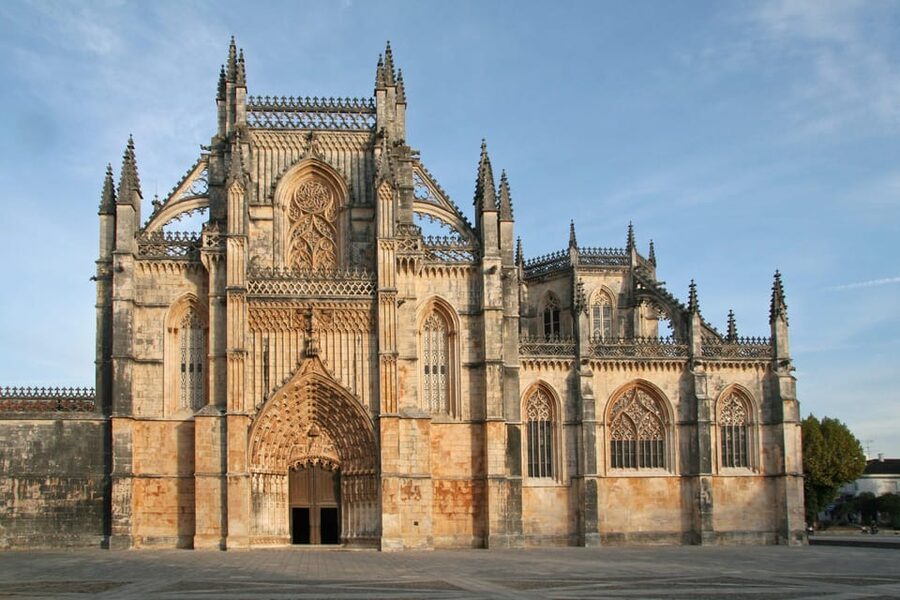
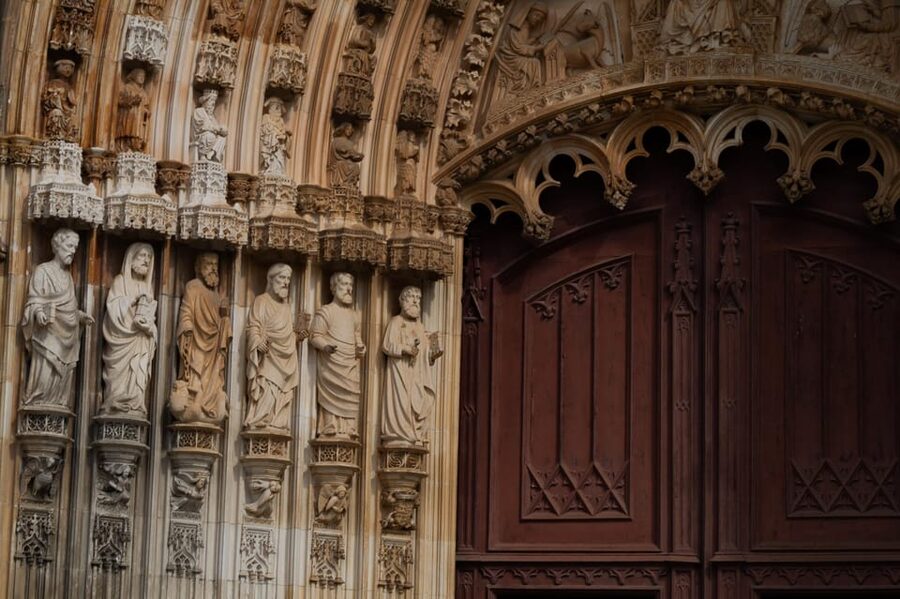
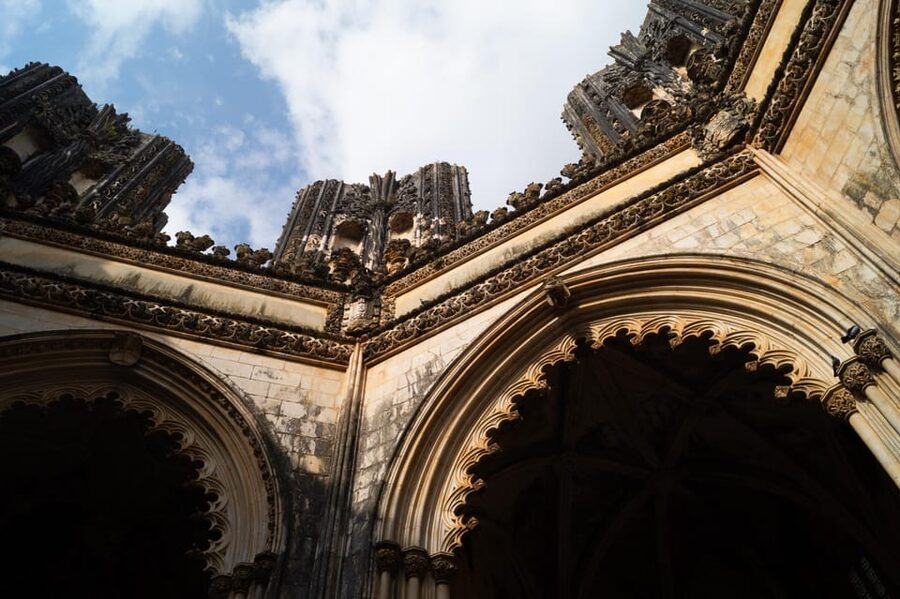
The monastery’s facade sets the tone before you enter. Gothic design gives the building its tall, ordered structure, while Manueline decoration adds a more elaborate Portuguese character. The contrast makes the exterior worth studying rather than treating it as a quick backdrop for a photograph.
Your guide helps explain what you are looking at and why the styles differ. That matters at Batalha, where a casual glance can reduce several periods of construction to one grand wall. You will see how the building carries more than one artistic language.
The Manueline style is especially useful for understanding Portugal’s later royal confidence. Its decorative approach can feel more intricate and expressive than the earlier Gothic structure. With a guide, those changes become easier to spot and place in time.
Renaissance elements also enter the story. The result is not a building with one neat visual identity, but a monument shaped across different periods. I like tours that point out these shifts because they give you a better way to look at churches and monasteries elsewhere in Portugal.
Inside the church and the Founder’s Chapel
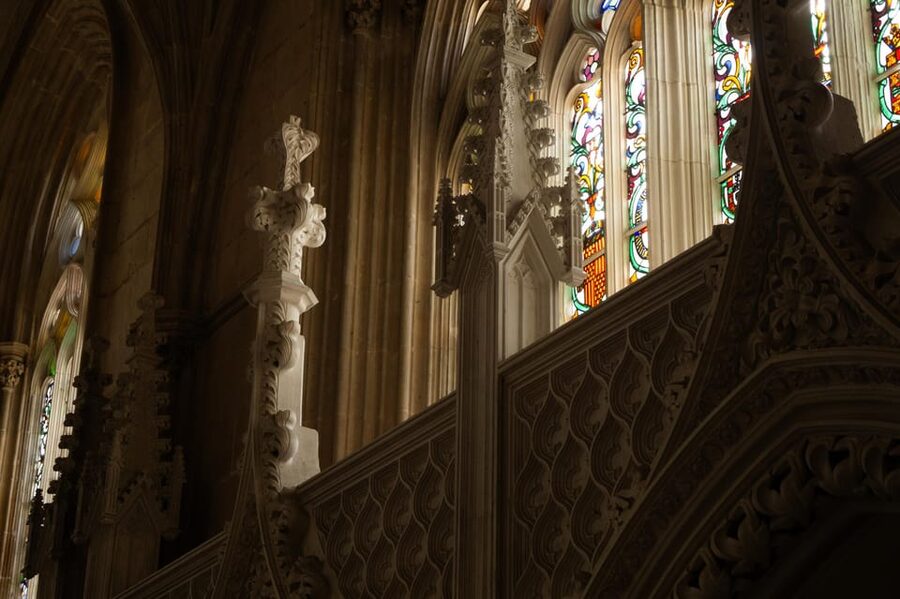
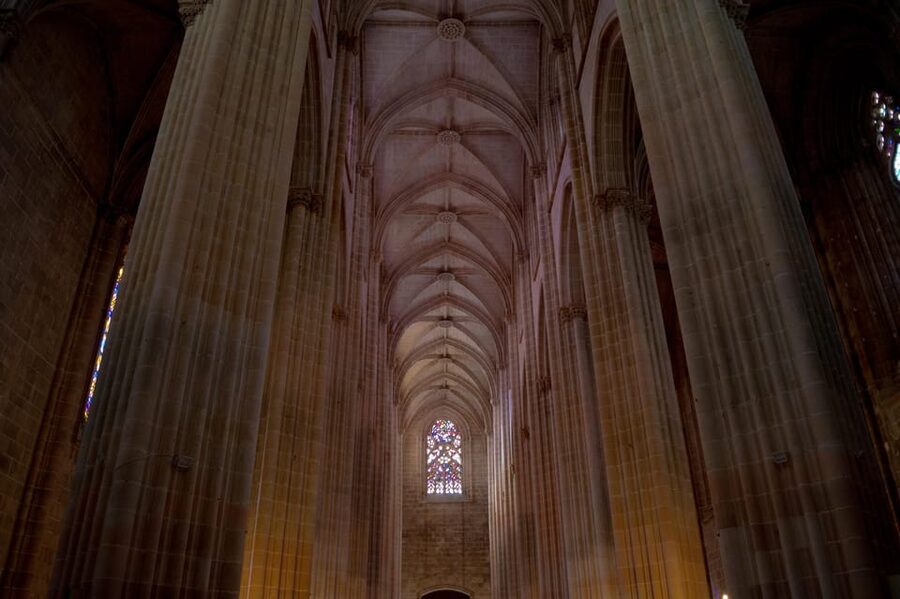
Inside, the tour turns from the scale of the facade to the spaces built for worship and royal memory. You will see intricate stonework and stained glass, along with the Founder’s Chapel, the main focus for the tombs of King João I and Queen Filipa de Lencastre.
The chapel is valuable not only because important people are buried there. It shows how a royal family chose to present itself. The tombs make the connection between monarchy, faith, and national identity visible in one place.
This is also where the tour’s political side becomes easier to grasp. The monastery helped support the legitimacy of the Portuguese Crown. The building says that the royal line was protected by faith, connected to an important foreign alliance, and tied to a victory that shaped the country’s future.
That is a lot to take in during a short visit, so listen for the main thread rather than trying to retain every name. If you have questions, ask them. The small-group setting is designed to allow conversation, and Anna has been praised for explaining ideas clearly and drawing links with other buildings and artistic movements.
The stained glass adds a quieter note to the royal story. Stone tells you about labor, power, and design. Colored glass brings the building back to its religious purpose. The best part of the visit is seeing how those functions overlap rather than separating church, palace, and national monument into different categories.
A different set of gates, same trip:
- Lisbon: Belem Walking Tour with Jeronimos Monastery Ticket
★ 4.7 · 490 reviews - Lisbon: Belem, Jeronimos Monastery, and Coach Museum Tour
★ 4.8 · 478 reviews - Belem and Jeronimos Monastery Guided Small Group Walking Tour
★ 5.0 · 410 reviews - “Porto: Fado Show with Guided Tour in a Historic Monastery”
★ 4.9 · 164 reviews
The cloisters and the slower side of the monument
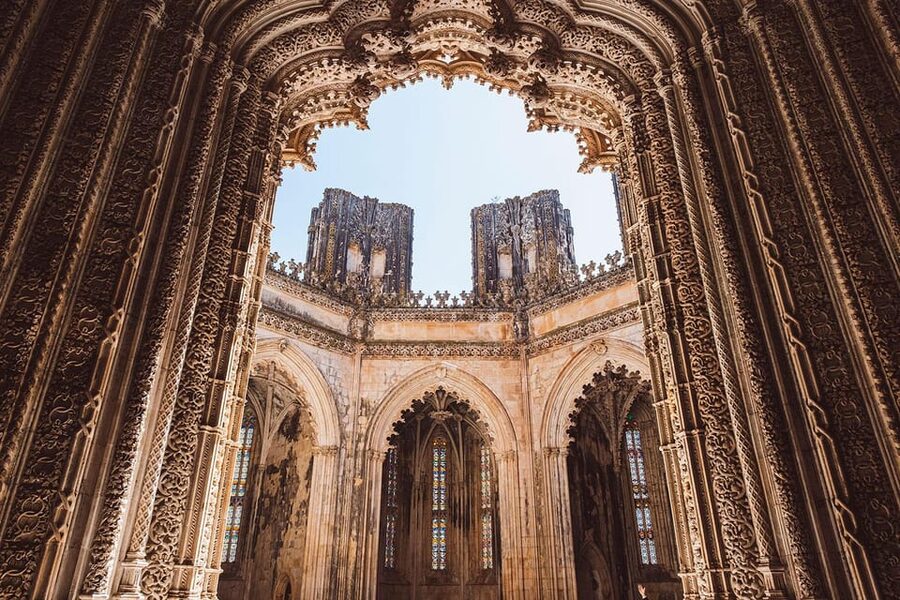
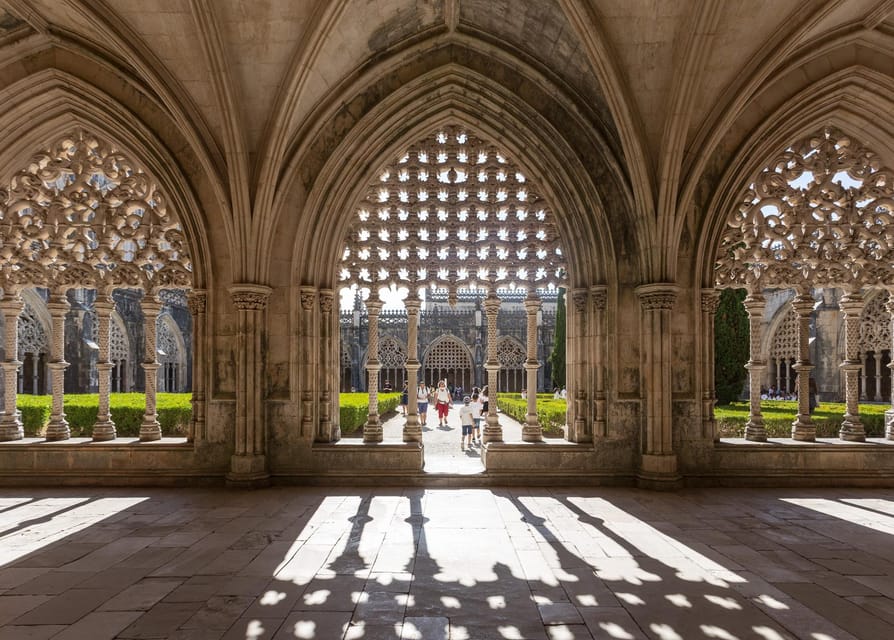
The cloisters offer a change of pace after the church and chapel. Their enclosed design creates a more measured space, where the details matter as much as the overall view.
Here, the guide can point out the relationship between daily religious life and the grand public image of the monastery. Cloisters were practical spaces, but at Batalha they also carry the artistic ambition found throughout the monument.
Look closely at the stonework as you walk. You might find that the smaller details hold your attention longer than the main facade. The 1.5-hour visit gives you a useful introduction, though the amount of information means you may not examine every feature at length.
I would especially recommend keeping the cloisters in mind if you are mainly visiting for the famous facade. The monastery is more than its front elevation. The interior route lets you move through royal memory, worship, and monastic life in a compact sequence.
How the guide affects the experience
A local guide can make the difference between seeing a grand building and understanding why it exists. This tour is built around explanation, with history about Aljubarrota, the Treaty of Windsor, the Portuguese Crown, and the architectural styles woven into the visit.
Anna has received particularly strong praise for her warm manner and ability to explain the monastery and Portuguese history without rushing through a fixed script. That is useful if you want to ask questions or compare Batalha with other buildings you have seen.
The feedback is not perfectly uniform. One booking received a low rating after a serious communication problem involving guide availability and confusion about ticket inclusion. Another concern was that a guide on that occasion seemed less experienced and omitted several references.
That does not erase the positive pattern, but it is a reason to confirm the meeting details and ticket arrangement before setting out. The listed tour offers Portuguese and English, and a private group can be arranged if you want more control over the pace.
The overall rating is 4.7 from eight ratings, with repeated praise for friendly explanations and the educational value of the visit. I would treat that as encouraging, while still paying attention to the entry-ticket note and the exact guide arrangements.
Is $47 a fair price?
At $47 per person, this is not the cheapest way to see Batalha Monastery, especially because entrance tickets are extra. The price makes more sense if you place a high value on an English or Portuguese explanation, a small group, and the chance to ask questions.
If you only want to walk through the monument and read the basic information on your own, a guided visit may not be necessary. If the Battle of Aljubarrota, royal burial customs, and the connection with England interest you, the added context can justify the cost.
The tour lasts 1.5 hours, which keeps the commitment manageable. You are not giving up half a day, but you still receive a structured explanation of the main spaces. For a visitor with limited time, that balance is useful.
Remember to add the monument admission to your budget. The ticket is not included, and one booking problem came from a misunderstanding about this point. Read the inclusions carefully and ask for confirmation if the wording seems unclear.
Who should book this tour?
I would choose this experience if you want to understand the monastery’s purpose rather than simply photograph its facade. It suits visitors interested in medieval and early modern Portugal, royal history, religious buildings, and the links between architecture and political power.
It is also a good fit for people who prefer conversation. The small-group setup should feel more personal than a large coach tour, and a private option is available if you want the guide’s attention focused on your group.
Families with older children may find the battle and royal stories easier to follow than a purely technical architecture talk. Couples and solo visitors who enjoy asking questions should also get good value from the format.
The tour is less suitable if you need step-free access, since wheelchair users cannot take part. It may also disappoint you if you expect a ticket-inclusive package or a long, leisurely examination of every carving. This is a focused introduction, not an all-day research visit.
Practical tips for a better visit
Meet at the equestrian statue of D. Nuno Álvares Pereira, directly in front of it. Because this is the stated meeting point, do not assume the guide will meet you at the monastery entrance.
Check the starting time when booking, since availability changes. The tour runs in Portuguese or English, so select the language that lets you follow historical detail comfortably.
Plan for the entrance fee separately. The guided service includes the interior visit, Founder’s Chapel, and cloisters, but the monument ticket is not part of the $47 price.
If you want the calmest and most personal format, ask about the private-group option. If you prefer flexibility, cancellation is allowed up to 24 hours before the tour for a full refund, and you can reserve now and pay later.
Should you book the Batalha Monastery tour?
Book it if you want Batalha Monastery explained as a royal and national monument, not just admired as a Gothic church. The strongest reasons are the clear focus on Aljubarrota, the Founder’s Chapel, the Treaty of Windsor, and the chance to ask questions in a small group.
I would be cautious if ticket costs are a concern, if you need wheelchair access, or if you want to explore at your own slow pace. Confirm the entry arrangement before paying, then expect a compact, history-focused visit with a friendly local guide and plenty to look at after the tour ends.
FAQ
Where does the Batalha Monastery tour begin?
The tour begins at the Estátua Equestre do Condestável D. Nuno Álvares Pereira. Your guide waits in front of the statue.
How long does the guided tour last?
The guided visit lasts 1.5 hours.
Is the entrance ticket included?
No. The entrance ticket to Batalha Monastery is not included in the tour price.
Which languages are available?
The live tour guide is available in Portuguese and English.
What parts of the monastery are included?
The guided visit includes the interior of the monastery, the Founder’s Chapel, and the Cloisters.
Is the tour private?
A small-group format is offered, and a private group is available as an option.
Is the tour suitable for wheelchair users?
No. The experience is not suitable for wheelchair users.
Can I cancel the booking?
Yes. You can cancel up to 24 hours in advance for a full refund. You can also reserve now and pay later.
Newly written up around Portugal
- Belém: Jeronimos Monastery, Tickets and Guided tour★ 4.9 · 30 reviews
- Lisbon: Tour of Belem and Jerónimos Monastery★ 3.2 · 5 reviews
- Lisbon: Belém Private Walking Tour & Jerónimos Monastery★ 4.5 · 83 reviews
- Lisbon: Skip-the-line Jerónimos Monastery Tour with Tickets★ 5.0 · 4 reviews
- From Lisbon: Évora, Chapel of Bones, & Roman Temple Tour★ 5.0 · 8 reviews
- Lisbon: Belem Tour with Pastéis at Jerónimos Monastery★ 4.7 · 96 reviews
- From Lisbon: Fátima Sanctuary and Batalha Monastery (UNESCO)★ 5.0 · 5 reviews
- Between Life & Death: Roman Temple, Cathedral & Bone Chapel★ 4.9 · 6 reviews
Portugal Temple Tours, compared.
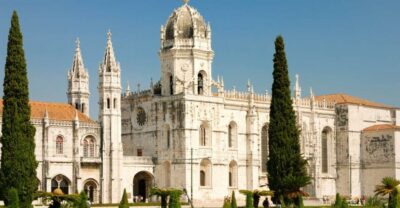
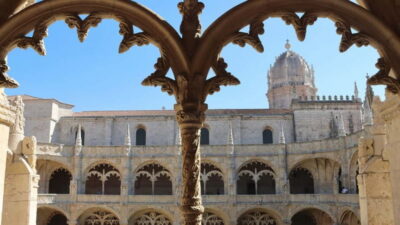
Belém Walking Tour with Jerónimos Monastery Ticket
Read our review →Belem Walking Tour with Jeronimos Monastery Ticket
Read our review →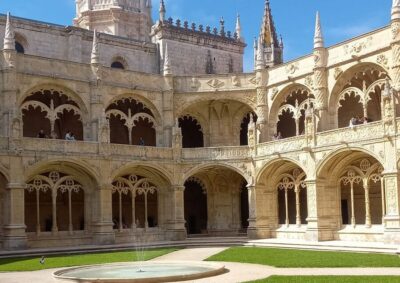
Belem, Jeronimos Monastery, and Coach Museum Tour
Read our review →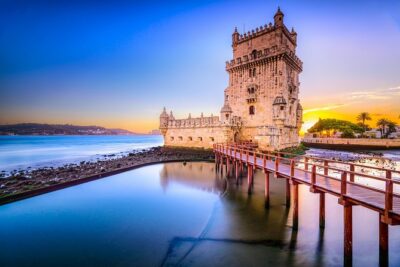
Belem and Jeronimos Monastery Guided Small Group Walking Tour
Read our review →
“Porto: Fado Show with Guided Tour in a Historic Monastery”
Read our review →
Belem Walking Tour with Jeronimos Monastery Entry
Read our review →Browse the lists this tour appears in