
Reviewed · TEMPLE WALKING TOURS
Lisbon: Belem Walking Tour with Jeronimos Monastery Entry
Jerónimos Monastery is the star here, and the best reason to book this tour is simple: you enter with tickets already arranged, then get the story behind the carvings, cloisters, tombs, and church instead of wandering through a grand building without much context. I especially like the early start around 9:30, before the day reaches full heat, and the stop for the original Pastel de Belém, made from the old monastery recipe.
I also like the way the tour connects the monastery to the Monument to the Discoveries and Belém Tower. Guides including Luis, Leo, Leonardo, and Federico have earned strong praise for clear English, lively storytelling, and useful answers. The main drawback is important: Belém Tower is closed for restoration, so you see it from outside rather than going in.
Key points at a glance
- Early access to Jerónimos Monastery: Pre-purchased entry and a separate access route can save substantial time when the public line is long.
- Manueline architecture explained: Your guide points out nautical motifs, royal symbols, and the ideas behind Portugal’s most distinctive architectural style.
- The real Pastel de Belém: A custard tart from the historic shop near the monastery is included.
- A connected Belém walk: The route links the monastery, Empire Square Garden, Monument to the Discoveries, and Belém Tower.
- Strong guide focus: Luis, Leo, Leonardo, Federico, Renan Stein, Ricardo, Daniel, and other English-speaking guides have led this experience.
- Tower visit is exterior only: Restoration work currently prevents entry into Belém Tower.
Why Jerónimos Monastery is worth a guided visit
You can visit Jerónimos Monastery on your own, but the building gives you very little help once you are inside. A guide makes a real difference here. The stonework is beautiful at first glance, yet the details become more rewarding when someone explains what you are looking at and why it was built.
The monastery was connected to Portugal’s great seafaring period in the 15th and 16th centuries. Your guide explains how its architecture reflected royal power, religious belief, and the wealth generated during the Age of Discovery. That context turns the cloister from a photogenic square into a record of Portugal’s ambitions.
The tour begins near the entrance to the monastery, where the guide waits with the admission tickets. The meeting point is in front of the entrance where queues form, close to the south entrance of the church. Pay close attention to the meeting-point photo and arrive early. One person reported difficulty finding the group, and arriving late risks missing the entry window.
The early start matters. Jerónimos is one of Lisbon’s most visited monuments, and the regular ticket line can become long. The separate access arrangement does not mean you walk straight through every crowd, but it does remove the need to buy your own ticket and can move the start along much faster.
More Temple Walking Tours in Portugal
- Lisbon: Belém Walking Tour with Jerónimos Monastery Ticket
★ 4.9 · 637 reviews - Lisbon: Belem Walking Tour with Jeronimos Monastery Ticket
★ 4.7 · 490 reviews - Belem and Jeronimos Monastery Guided Small Group Walking Tour
★ 5.0 · 410 reviews
Upper Cloister: the architectural centerpiece
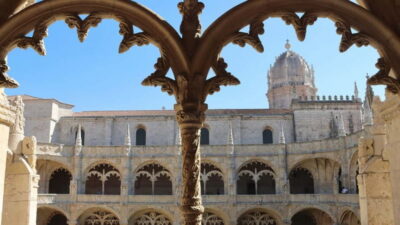
The visit begins in the Upper Cloister, where you can look across the arches and see the level of detail packed into the stone. This is the moment when the scale of Jerónimos becomes clear. The cloister has a calm, open design, but the decoration is anything but plain.
Your guide introduces Manueline architecture, the Portuguese style that developed in the early 16th century. It combines late Gothic structures with Renaissance elements and adds forms linked to Portugal’s maritime ambitions. Expect explanations of carved details, religious symbols, royal references, and nautical themes.
This is where a good guide earns the fee. Luis was repeatedly praised for explaining complex history in clear English, while Leo was noted for using pictures to help make the setting easier to understand. Federico was also singled out for linking the monastery’s design to the monarchy and Portugal’s wider past.
Allow yourself time to look upward. The cloister is not just about the floor plan or the famous arches. The upper level gives you a broad view of the building’s decorative program, while the open center lets you see how the light changes the stone.
The pace is generally measured rather than rushed. The monastery portion lasts about 90 minutes, which gives you enough time to hear the major stories and ask questions. One caution: the amount of information can feel heavy if you prefer a quick photo stop. A guide who loves Portuguese history may give you more detail than you can remember, so do not hesitate to ask for a shorter explanation when you want more time to look.
The lower cloister and the people remembered here
The lower section brings you closer to the monastery’s working spaces. You visit the Chapter Room and the old Refectory, areas that help show how the religious community once used the complex.
You also see the tomb of Fernando Pessoa, which was moved to this space in the 20th century. That detail adds a later literary connection to a building most closely associated with monks, kings, and navigators.
The guide helps you separate the original purpose of each room from its later importance. Without that explanation, it is easy to see a handsome chamber and move on without understanding its role. If you enjoy architecture, religion, literature, or Portuguese political history, this part gives the tour useful range.
The indoor portion is especially valuable on a hot or rainy day. The walk outside continues in all conditions, though, so bring sunscreen and an umbrella as needed. The tour operates rain or shine.
Santa Maria de Belém Church and its famous tombs
The monastery visit continues into Santa Maria de Belém Church. This is a majestic example of Manueline design, with a strong sense of height and ceremony. The church also contains the tombs of important figures from Portugal’s royal and maritime past.
Among those buried here are King Manuel I and his son, King João III, along with Vasco da Gama and the poet Luiz Vaz de Camões. These names help explain why Belém matters so much in Portuguese memory. The church is not simply a beautiful room. It is also a royal burial place and a national memorial to the era of ocean voyages.
Your guide explains who is represented, where the tombs are located, and how the church fits into the wider history of the monastery. That is the sort of information you are unlikely to gather from a quick walk through the building alone.
Photography and quiet behavior matter inside. Alcohol and drugs are not allowed, and the tour asks you not to make noise. Comfortable shoes are essential, since the experience combines interior sightseeing with a substantial outdoor walk.
A different set of gates, same trip:
- Lisbon: Jerónimos Monastery Entrance Ticket
★ 4.1 · 14,164 reviews - Lisbon: Jerónimos Monastery E-Ticket and Audio Guide
★ 3.7 · 660 reviews - Lisbon: Belem, Jeronimos Monastery, and Coach Museum Tour
★ 4.8 · 478 reviews - “Porto: Fado Show with Guided Tour in a Historic Monastery”
★ 4.9 · 164 reviews
Pastéis de Belém: the sweet stop with a real connection
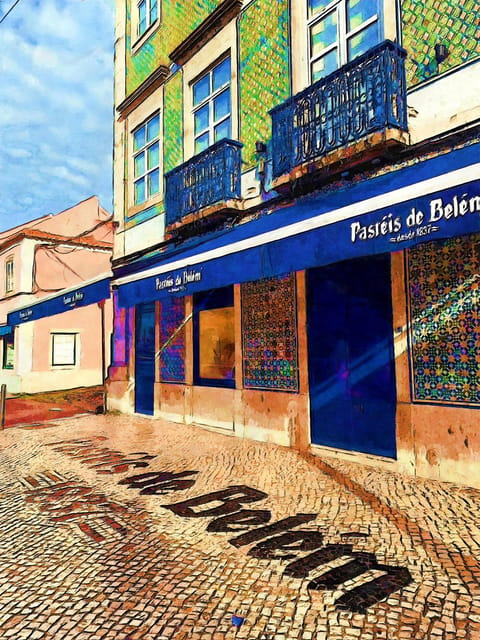
After the monastery and church, you stop at Pastéis de Belém for an original custard tart. This is not just a generic pastry break. The recipe was created by monks connected with Jerónimos Monastery and has been sold at the same establishment since the mid-19th century.
The included pastry gives you a quick taste of Belém’s living connection to the monastery. It also breaks up the history before the outdoor section of the walk. The tart itself is small, but the stop lasts about 30 minutes, giving you time to enjoy it rather than eating while walking.
I would treat this as a tasting, not lunch. Lunch is not included, and one pastel will not replace a meal. If you want more food, plan a separate stop after the tour.
The shop can be busy, especially at popular times, so keep the group schedule in mind. You are there as part of a walking tour, not for an open-ended pastry visit. Still, this is one of the most appealing inclusions because it connects a famous local food to the building you have just explored.
Empire Square Garden and the outdoor walk
The route then moves through Empire Square Garden, which gives you a change of pace after the monastery. The garden portion lasts around 15 minutes and helps place the monuments within Belém’s broad ceremonial setting.
You will be walking outdoors for much of the rest of the tour. The distance between the Monument to the Discoveries and Belém Tower takes about 15 minutes on foot, and the complete experience lasts three to three and a half hours.
This is not a difficult hike, but it is still unsuitable for wheelchair users and people with mobility impairments. The combination of pavement, standing, and several hours on your feet may be tiring. Wear comfortable shoes, a sun hat, and sunscreen. On a hot Lisbon morning, the shade available at one stop may not be available at the next.
Monument to the Discoveries and Portugal’s seafaring story
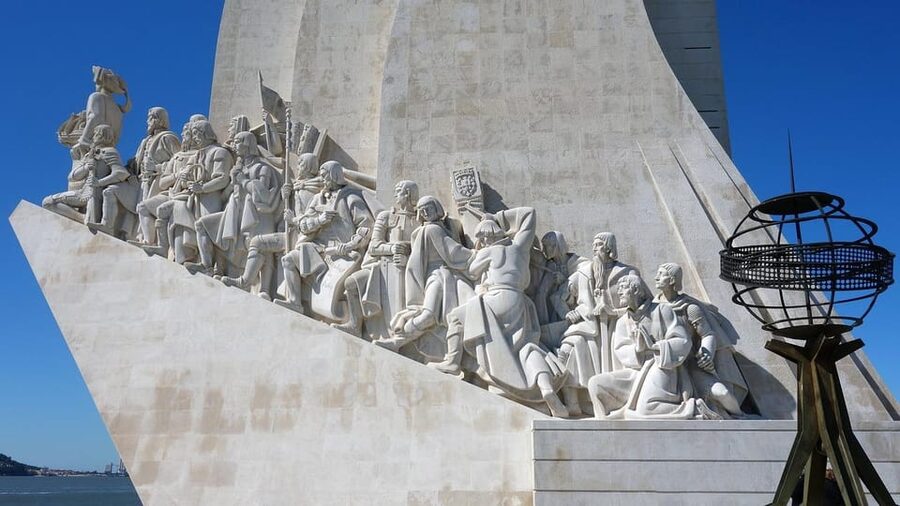
The Monument to the Discoveries was built in 1960 to mark the 500th anniversary of the death of Infante Dom Henrique, also known as Henry the Navigator. The monument shows him alongside other major figures linked with Portugal’s voyages and the spread of Portuguese culture around the world.
Your guide uses this stop to add names and connections to the story introduced inside the monastery. The monument is easier to appreciate after you have heard about the royal and religious forces behind the voyages.
The guided visit and sightseeing here take about 20 minutes. That is enough for an explanation and exterior viewing, but not an extended museum visit. The experience focuses on the monument’s meaning and setting rather than offering a long indoor tour.
This is also a good place to ask questions. Guides such as Luis and Federico have been praised for connecting the monuments with broader Portuguese history and for adapting explanations to the interests of the group. If you are more interested in architecture than military or maritime history, say so. A private group is available, which may allow for a more tailored pace and discussion.
Belém Tower, with an important limitation
The final main stop is Belém Tower, reached after the 15-minute walk from the Monument to the Discoveries. The tower, together with Jerónimos Monastery, is a UNESCO World Heritage Site and another fine example of Manueline architecture.
It was built as a defensive point to protect access to Lisbon. Its position near the river makes the military purpose easy to understand, while its decoration shows how defensive buildings could also carry royal and religious symbols.
At present, restoration work means you cannot visit the inside. The guide still takes you to the exterior and explains the tower’s role and design. That is worth doing, but you should book with the clear expectation that this is an outside visit only.
This limitation is the largest weakness of the current route. If entering Belém Tower is your main reason for coming to Belém, this tour will not meet that goal while restoration continues. If your priority is Jerónimos Monastery and a connected introduction to the district, the closed tower is a smaller disappointment.
The tour ends at the tower, not back at the monastery. That is useful if you plan to continue exploring Belém from the riverfront, but you need to arrange your own transportation afterward. Transportation is not included.
Guides, group size, and the tone of the experience
The strongest part of this experience is the guide. Luis receives frequent praise for his clear English, friendly manner, historical detail, and good communication before the tour. Leo and Leonardo are also described as enthusiastic and entertaining, while Federico is noted for explaining architecture and Portuguese history in an engaging way.
Other named guides include Renan Stein, Ricardo, and Daniel. The exact guide depends on the date and availability, so you should not assume one particular person when booking. The common thread is an emphasis on history, questions, and practical explanations.
Small groups can make a big difference inside the cloister and church. One booking had only four people, while other groups were larger. A private group option is available if you want more control over the pace.
Headsets may be provided, particularly when the group is large or the site is crowded. They help you hear the guide without standing shoulder to shoulder, though you should still stay close enough to follow the route.
Is the $70 price good value?
At $70 per person, this is not the cheapest way to see Belém. You are paying for monastery admission, an English-speaking guide, the pastry tasting, and the time saved by avoiding the standard ticket process.
The value is strongest if you are visiting Jerónimos during a busy period or if you want the building explained in detail. The monastery is the centerpiece, and the guide’s interpretation is what separates this from simply buying an entry ticket.
The value is weaker if you prefer to explore at your own speed, already know the history, or mainly want to enter Belém Tower. The tower is closed, lunch is not included, and transportation is your responsibility.
With a current rating of 4.9 out of 5 from 163 ratings, the experience has a strong record. The most consistent praise centers on the guides, quick monastery access, clear communication, and the quality of the historical explanations. One four-star assessment found the tour almost too full of information, which is a useful warning for anyone who prefers a lighter sightseeing style.
Practical details before you book
Meet in front of Jerónimos Monastery, close to the south entrance of the church and near the queue area. Use the supplied meeting-point image carefully, arrive early, and do not rely on finding the group at the last second.
The tour lasts three to three and a half hours and is conducted in English. Comfortable clothes, walking shoes, sunscreen, and a sun hat are sensible. Bring an umbrella if rain is possible, since the tour continues in poor weather.
You can cancel up to 24 hours before the start for a full refund, and the reserve-now, pay-later option keeps payment flexible. The tour may be canceled if the minimum number of participants is not reached.
The experience is not suitable for wheelchair users or people with mobility impairments. You should also remember that the tour ends at Belém Tower, with no return transportation included.
Should you book this Belém walking tour?
Book it if you want Jerónimos Monastery explained properly, prefer an early organized entry, and like connecting architecture with Portugal’s royal and maritime past. The monastery, church, pastry tasting, Monument to the Discoveries, and tower exterior make a useful first visit to Belém.
Skip it if you need a wheelchair-accessible route, want to enter Belém Tower, or prefer silent self-guided sightseeing. The best fit is someone who values a good guide more than total independence and who can manage several hours of walking.
At $70, the tour earns its price mainly through the guide and the monastery access. Go for Luis, Leo, Leonardo, or Federico if assigned, but the key decision is choosing guided interpretation over a quick look on your own. That is where this experience delivers the most.
FAQ
How long does the Belém walking tour last?
The tour lasts approximately three to three and a half hours.
Where does the tour begin?
It begins in front of Jerónimos Monastery, near the south entrance to the church and the area where access queues form.
Where does the tour finish?
The tour finishes at Belém Tower.
Is entry to Jerónimos Monastery included?
Yes. The entrance ticket to Jerónimos Monastery is included, with the tickets purchased in advance.
Can I enter Belém Tower?
No. Belém Tower is currently undergoing restoration and cannot be visited inside. The tour includes an exterior visit and explanation.
Is the Pastel de Belém included?
Yes. An original custard tart from Pastéis de Belém is included.
What language is the tour conducted in?
The live tour is conducted in English.
Is transportation included?
No. Transportation is not included. You are responsible for reaching the meeting point and leaving from Belém Tower after the tour.
Is the tour suitable for wheelchair users?
No. The experience is not suitable for wheelchair users or people with mobility impairments.
Newly written up around Portugal
- Fatima Private Tour: Shrine, Sacred Way & Shepherds’ Hometown★ 5.0 · 41 reviews
- Half Day Fatima + Aldeia Pastorinhos Private Tour Departure Lisbon★ 4.5 · 22 reviews
- Fátima Private Tour: Shrine| Sacred Path |Shepherds House★ 5.0 · 81 reviews
- Batalha Monastery Entrance Ticket★ 4.3 · 140 reviews
- Fatima, Valinhos, Nazaré, Óbidos on Private tour★ 5.0 · 158 reviews
- “Porto: Fado Show with Guided Tour in a Historic Monastery”★ 4.9 · 164 reviews
- Belem and Jeronimos Monastery Guided Small Group Walking Tour★ 5.0 · 410 reviews
- Lisbon: Belem, Jeronimos Monastery, and Coach Museum Tour★ 4.8 · 478 reviews
Temple Walking Tours, compared.

City Highlights Temple and Market Walking Tour
Read our review →
Asakusa Walking Tour with Sensoji Temple Visit
Read our review →
3 Hour Old City and Temples Guided Walking Tour
Read our review →
Belém Walking Tour with Jerónimos Monastery Ticket
Read our review →
Asakusa Senso-ji Temple and Old Tokyo Walking Tour
Read our review →Belem Walking Tour with Jeronimos Monastery Ticket
Read our review →Browse the lists this tour appears in