
Reviewed · MEIJI SHRINE & SENSO-JI TOURS
Tokyo: Asakusa Walking Tour with Sensoji Temple Visit
Asakusa gives you Tokyo at its most traditional, with the huge red Kaminarimon Gate leading to Sensoji Temple, incense smoke drifting through the grounds, and old-style shops lining Nakamise Street. This tour helps you read the symbols, rituals, and stories instead of simply snapping photos and moving on.
I like the clear two-hour route and the practical food advice many guides add at the end. I also like that it includes both Buddhist Sensoji and nearby Asakusa Shrine, giving you a useful introduction to two Japanese religious traditions. The main drawback is the short schedule: in a crowded district, ten or fifteen minutes at some stops can feel brisk.
Key points to know before booking
- Kaminarimon is the dramatic starting point: Meet on the left side of the gate, near Tokiwado Kaminari-okoshi Honpo, where the guide will hold a tour sign.
- Sensoji gets the most attention: You have about 30 minutes for a guided visit, photos, temple details, incense rituals, and free time.
- You see both Buddhist and Shinto sites: Sensoji Temple and Asakusa Shrine sit close together but serve different religious traditions.
- The route includes more than the temple: Hoppy Street and Shin-Nakamise add food, shopping, and everyday neighborhood character.
- Guides make the difference: Aya, Keiko, Hiroko, Loc, Glenda, Miyu, and others are repeatedly praised for clear English, humor, patience, and useful Tokyo tips.
- The price is modest for a guided introduction: At $22 per person, it is good value if you want context, orientation, and restaurant suggestions rather than a simple self-guided walk.
Why Asakusa is a smart first stop in Tokyo
Tokyo can feel hard to read at first. It is enormous, fast, and full of signs, stations, temples, shops, and narrow streets that seem to change character every few minutes. Asakusa gives you a manageable starting point.
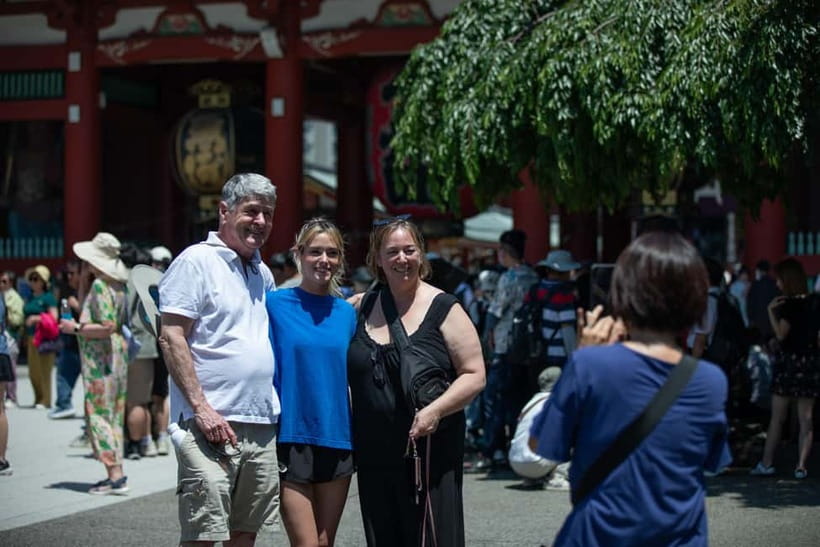
The district is centered on Sensoji, Tokyo’s oldest-established temple, but the experience is not only about one religious building. You move from the famous Thunder Gate to a long shopping approach, then into temple grounds, a Shinto shrine, food streets, and a covered shopping arcade. In two hours, you get a compact lesson in how old Tokyo and present-day Tokyo sit side by side.
I especially like the way the route mixes major sights with ordinary details. You will see the places that fill guidebooks, but you also pass streets where people shop, eat, and meet friends. That balance makes the walk more useful than a temple visit alone.
The tour costs $22 per person. That is a fair price for a live English-speaking guide, especially if this is your first day in Tokyo and you want help understanding local customs. You are paying for interpretation and orientation, not admission to a special attraction. Sensoji itself is visited as part of the walk, and the value comes from learning what you are seeing.
More Temple Walking Tours in Japan
- Tokyo: Meiji Shrine Walking Tour — Shinto & Imperial System
★ 4.9 · 266 reviews - Tokyo: Meiji Jingu Shrine and Shinto Culture Walking Tour
★ 5.0 · 245 reviews - Tokyo: Meiji Shrine and Shinto Culture Walking Tour
★ 5.0 · 225 reviews
Meeting beneath the Thunder Gate
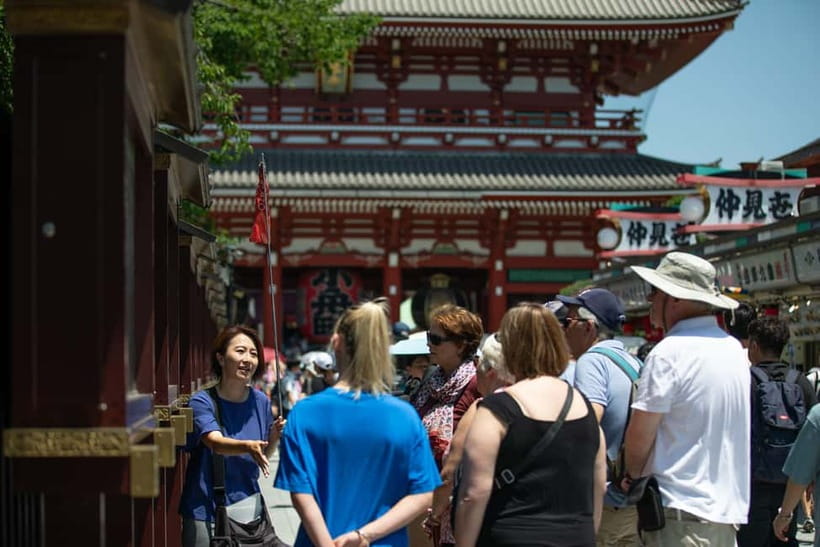
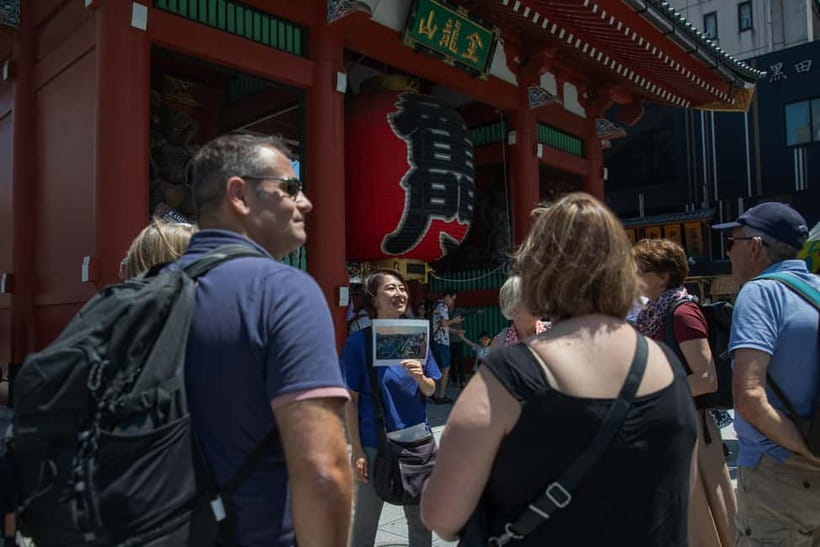
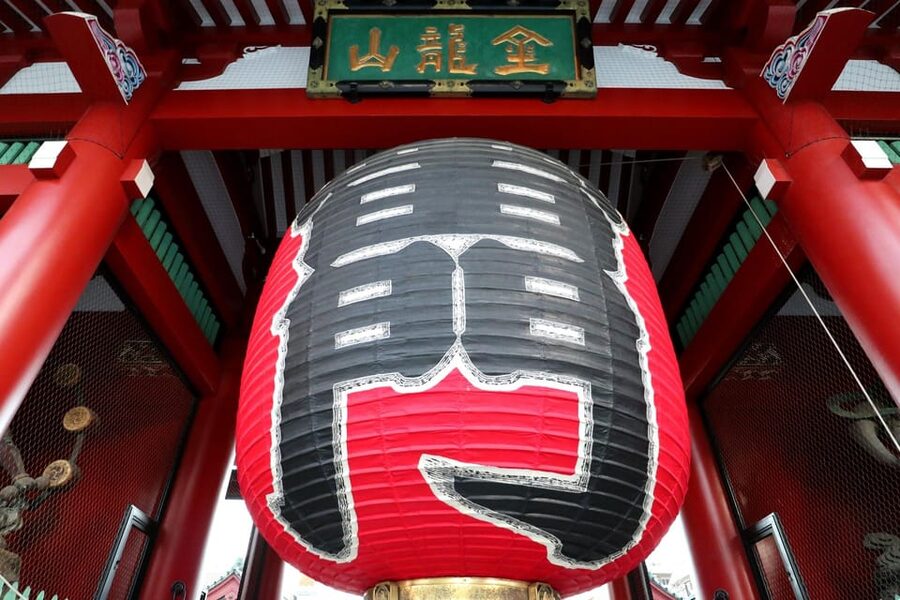
The tour begins at Kaminarimon, the Thunder Gate. The guide waits on the left side of the gate, close to Tokiwado Kaminari-okoshi Honpo, holding a sign for the tour.
Give yourself extra time to find the meeting point. Kaminarimon is one of Asakusa’s busiest landmarks, so the open area around it can be crowded and confusing. The instructions are specific, but arriving early still makes sense. The guide cannot wait long for late arrivals because the walk is shared with other people.
The gate itself is a strong opening. Its large lantern and imposing entrance frame the road toward Sensoji, and your guide can explain why it matters rather than leaving you with only a photograph. The scheduled guided stop here lasts about 10 minutes, enough to set the scene without using up the whole visit.
This is also where a good guide earns the $22 price. Guides such as Aya, Keiko, Hiroko, Loc, Glenda, and Miyu are praised for clear explanations and an easy sense of humor. Some use extra charts or visual material, while others focus on stories and questions. The exact style depends on who leads your departure, but the common strength is personal explanation in English.
Walking Nakamise Street toward Sensoji
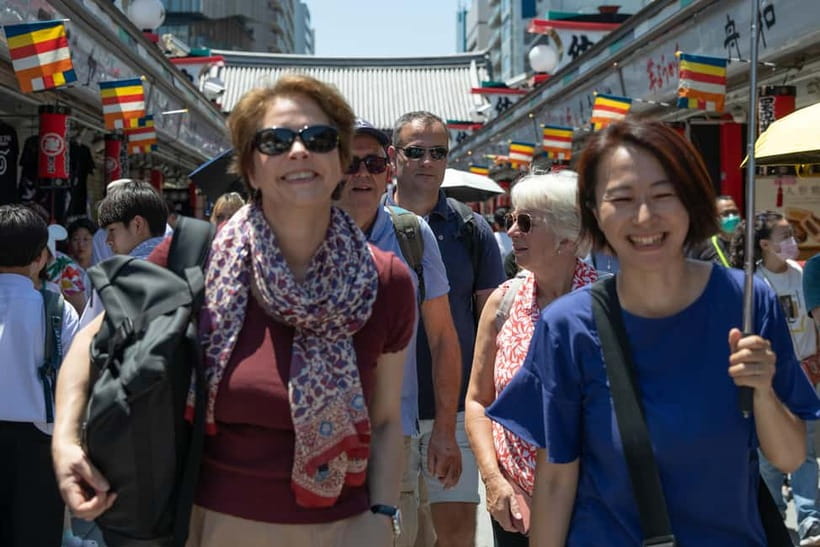
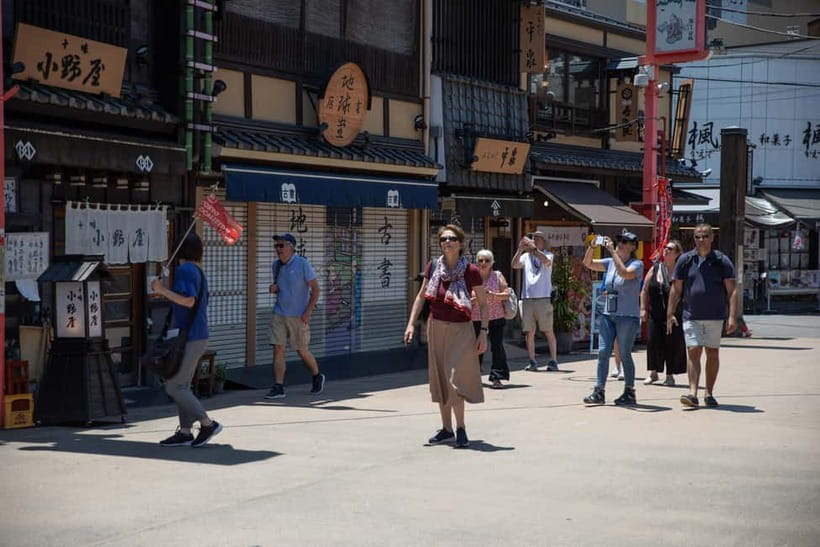
From Kaminarimon, the route follows Nakamise Shopping Street. This is one of Japan’s oldest shopping centers, running toward the temple grounds in a straight, crowded line of stalls and shops.
You can expect traditional crafts, souvenirs, snacks, and small food stops. The street is part of the attraction, but it is also a busy public shopping area. Do not expect a quiet stroll. You may need to keep close to the group, and there may not be time to stop at every shop.
The planned visit here lasts around 15 minutes. That is enough to understand the layout and hear about the goods, but not enough for a serious shopping session. I would treat this section as an introduction. If you see something you want, note the shop or return after the tour.
This is one reason the tour works well early in a Tokyo visit. Your guide can point out foods and shops worth revisiting, helping you avoid spending your first afternoon wandering without a plan. Several guides also give suggestions for lunch and nearby activities at the end.
Sensoji Temple and the rituals you might miss
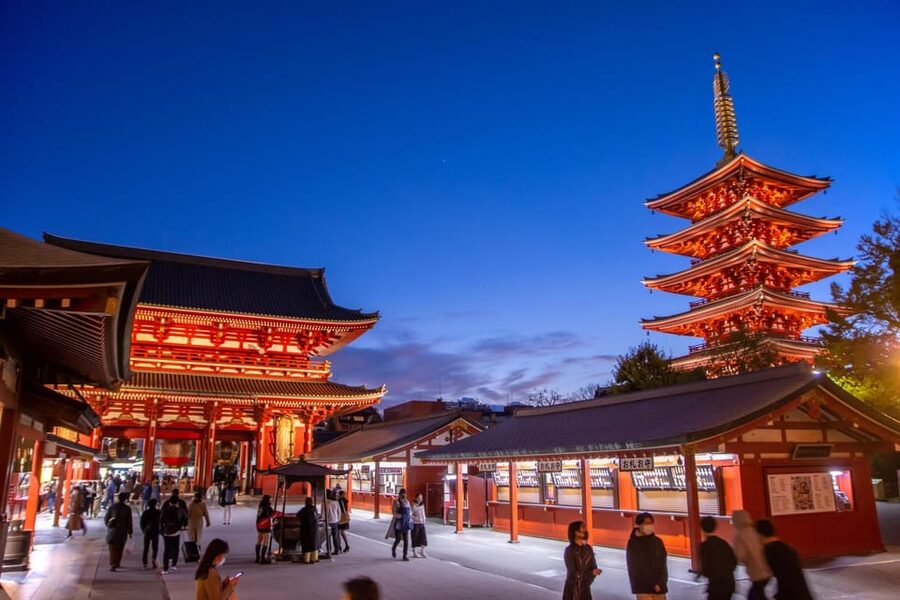
Sensoji receives the longest stop, about 30 minutes. You have time for a guided visit, photos, temple details, and some free time to look around at your own pace.
Sensoji is Tokyo’s oldest Buddhist sanctuary, and its fame is easy to understand once you enter the grounds. The temple architecture, the approach from Kaminarimon, and the movement of people through the site give the visit a strong sense of place. The guide adds the part you cannot get from a quick photograph: the meaning behind the buildings, the traditions connected to them, and the stories associated with the temple.
The incense ritual is one useful example. You may see people wafting incense smoke toward themselves, and your guide can explain the custom rather than leaving you to guess. You will also have a chance to notice small architectural details that are easy to miss when the area is crowded.
The 30-minute schedule is sensible but not generous. If you like temples, architecture, or religious customs, you may want to return later for a slower look. The advantage of a guided visit is that you leave with a framework. On a second visit, the details have more meaning.
The route is also family-friendly in the practical sense. One guide, Keiko, is praised for making sure everyone could hear, keeping an eye on the group’s pace, answering many questions, and engaging a teenager and younger children. That matters in a busy temple district where different ages can lose interest at different speeds.
More Temple Walking Tours in Tokyo
- Tokyo: Meiji Shrine Walking Tour — Shintoism & Imperial System
★ 5.0 · 209 reviews
Asakusa Shrine and two religious traditions
The next major stop is Asakusa Shrine, with about 20 minutes for a visit, photos, and explanation. Seeing this shrine after Sensoji is one of the tour’s best features.
Sensoji is Buddhist. Asakusa Shrine is Shinto. You do not need a background in Japanese religion to appreciate the contrast, but having a guide explain it makes the pair much more useful. The walk shows how two traditions exist close together in the same historic district, each with its own customs and visual language.
The guides place emphasis on respectful behavior and cultural meaning. That is valuable because religious sites can look simple at first glance. A gate, offering area, incense burner, or shrine building may seem like a scenic object, but the explanation helps you understand how people use the space.
This stop also gives the route a better rhythm. After the commercial approach of Nakamise and the large temple grounds, the shrine provides another view of Asakusa. The pace remains active, but you are not simply repeating the same type of sight.
Hoppy Street and Shin-Nakamise
The tour then turns toward Hoppy Street for about 10 minutes. This area adds a more casual food-and-drink side of Asakusa. Your guide can point out local eating options and explain how the street fits into the neighborhood.
Do not expect a long meal here. The schedule is designed for walking and orientation, not a full tasting tour. If you like the look of a restaurant or stall, make a note and return after the tour. Guides often finish with food recommendations, and this is a useful point to ask what suits your budget or preferred style of meal.
The final shopping stop is Shin-Nakamise Shopping Street, also known as 浅草新仲見世商店街. The covered arcade gives you another view of local shopping, with more everyday stores alongside food and souvenirs. It is less about one famous monument and more about seeing how the district functions beyond Sensoji.
These final sections are important because they keep the tour from becoming a temple-only outing. Asakusa is a neighborhood, not just a historic site. You see religious landmarks, tourist shops, food streets, and local commerce in one compact circuit.
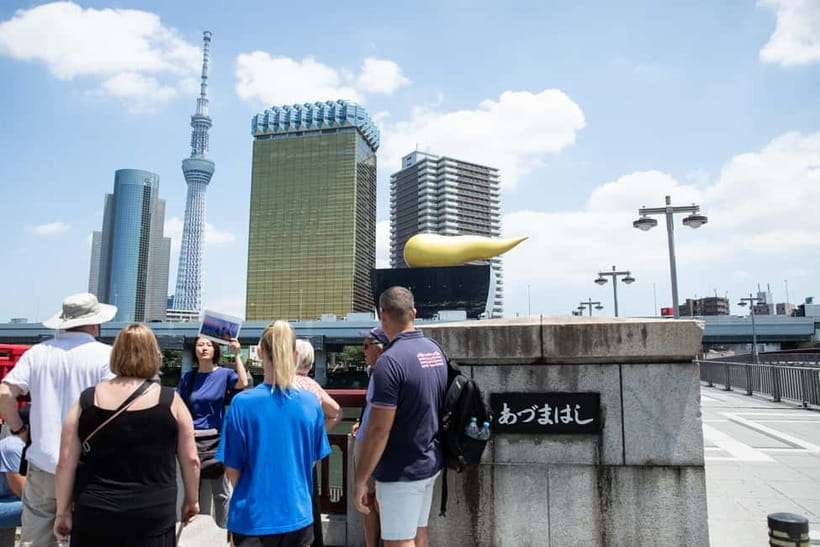
Finishing at Azuma Bridge
The walk ends at Azuma Bridge. This gives you a practical place to continue exploring rather than dropping you back at the starting gate.
Several guides use the end of the tour to suggest restaurants, snacks, and other things to do in Asakusa or elsewhere in Tokyo. The timing is especially handy if your walk finishes around lunch. You can act on the advice immediately, return to a shop you noticed, or continue toward another part of the city.
The route’s finish also helps you understand Asakusa’s position along the river. The tour does not promise a special river cruise or extended bridge sightseeing, so keep expectations realistic. The bridge is the endpoint, not a separate attraction with a long scheduled visit.
The guides are the real variable
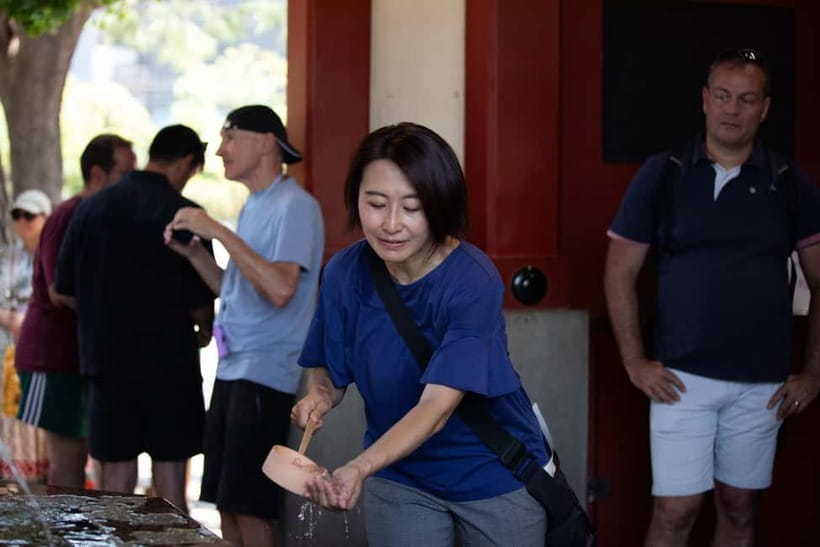
The route is fixed, but the personality of the tour depends on the guide. Names that appear repeatedly in the feedback include Aya, Keiko, Hiroko, Loc, Glenda, Miyu, and Polina. Other departures have been led by Paulina, Mei, Rio, Augustina, and Aka.
The strongest guide qualities are consistent: clear English, patience, humor, attention to group pace, and useful answers to questions. Aya is praised for explaining architecture, traditions, and stories while also adding extra Asakusa sights and places to eat. Keiko is noted for energy, kindness, and practical advice for the rest of a Japan trip. Hiroko is described as attentive and good at including everyone.
That does not mean every departure will feel identical. A guide may spend more time on temple customs, local food, history, or questions from the group. I see that as a benefit, provided you are comfortable with a human-led experience rather than a perfectly scripted presentation.
Some groups have been small, which is helpful in crowded streets. A smaller group makes it easier to hear, ask questions, and stay together. The activity information does not promise a fixed group size, so you should not book solely on the expectation of a private or tiny party.
Who should book this two-hour walk?
I would recommend it to first-time Tokyo visitors, families, and anyone who wants cultural context without committing to a full-day tour. It is also a good choice if you have only a short time in the city and want to see several classic Asakusa sights efficiently.
You will get the most from it if you ask questions. Ask about the incense ritual, the difference between Buddhist and Shinto sites, the meaning of the temple buildings, or where to eat afterward. The guides are set up to explain, not just lead you from one photo stop to the next.
It suits people who enjoy walking but do not want a demanding hike. The route is two hours, wheelchair accessible, and focused on streets and cultural sites. Still, Asakusa can be crowded, and the short stops require you to keep moving. If you need a slow, private visit with lots of time for shopping, this may feel too structured.
It is less suitable if you want a food tour with tastings included. Hoppy Street and the shopping arcades add food interest, but the included services are the walking tour and guide. Food, drinks, and purchases are not listed as included.
Booking details and practical value
The tour lasts two hours and is offered with an English-speaking live guide. Starting times vary, so check availability for your chosen date.
Cancellation is flexible up to 24 hours in advance for a full refund, and you can reserve now while paying later. That helps if your Tokyo plans are still shifting. The guide will not wait long for late arrivals, so the flexible booking policy does not remove the need to reach Kaminarimon on time.
At $22 per person, I consider this a strong value for a short cultural orientation. You could walk through Asakusa for free, but you would miss the explanations that connect the gate, shopping street, temple, shrine, and food lanes. The tour is not designed to provide exclusive access or a private experience. It earns its price through structure, local interpretation, and useful follow-up suggestions.
Should you book the Asakusa walking tour?
Book it if you want a well-shaped introduction to Asakusa, especially near the start of your Tokyo stay. The combination of Kaminarimon, Nakamise, Sensoji, Asakusa Shrine, Hoppy Street, and Shin-Nakamise gives you a lot in two hours, and the guide can help you make sense of customs that are easy to overlook.
Skip it if you prefer to wander alone, spend a long time shopping, or explore temples at a very slow pace. For most visitors, though, $22 is a sensible trade for clear English explanations, a practical route, and food tips you can use after the walk. Arrive early, wear comfortable shoes, and leave room afterward for lunch or a second look at the places that caught your eye.
FAQ
Where does the tour meet?
The guide waits in front of Kaminarimon Gate on the left side, near Tokiwado Kaminari-okoshi Honpo. The guide will be holding a sign for the tour.
How long does the Asakusa walking tour last?
The tour lasts two hours.
What language is the tour conducted in?
The live tour guide speaks English.
Is the walking tour wheelchair accessible?
Yes, the activity is listed as wheelchair accessible.
What places are visited?
The route includes Kaminarimon, Nakamise Shopping Street, Sensoji Temple, Asakusa Shrine, Hoppy Street, and Shin-Nakamise Shopping Street. It finishes at Azuma Bridge.
Is admission to Sensoji Temple included?
The included services are the walking tour and guide. The supplied information does not list a separate admission fee for Sensoji, and the temple visit is part of the walking route.
Can I cancel the booking for a refund?
Yes. You can cancel up to 24 hours in advance for a full refund. You can also reserve now and pay later.
More Meiji Shrine and Senso-ji Tours in Tokyo
- Tokyo Panoramic 1 Day: Meiji Shrine, Asakusa, Odaiba and SKYTREE®
★ 4.5 · 1,222 reviews - Tokyo: Asakusa and Tokyo’s Oldest Temple Senso-ji Tour
★ 4.9 · 352 reviews - Tokyo Morning Tour: Asakusa, Meiji Shrine and Tsukiji Fish Market
★ 5.0 · 128 reviews - Tokyo History: Sensoji Temple & Asakusa District Private Tour
★ 5.0 · 28 reviews
Newly written up around Tokyo
- Tokyo History: Sensoji Temple & Asakusa District Private Tour★ 5.0 · 28 reviews
- Tokyo Private Tour: Temples, Culture & Modern City Highlights★ 5.0 · 56 reviews
- From Tokyo: Snow Monkey Park & Zenko-ji Temple Private Tour★ 4.9 · 42 reviews
- From Tokyo: Nikko Toshogu Shrine and Kegon Waterfall Tour★ 4.0 · 42 reviews
- Tokyo Morning Tour: Asakusa, Meiji Shrine and Tsukiji Fish Market★ 5.0 · 128 reviews
- Tokyo: Snow Monkey Park and Zenkoji Temple Private Day Tour★ 4.7 · 127 reviews
- Tokyo Zen Meditation at Private Temple with Monk★ 5.0 · 178 reviews
- From Tokyo: Private Tour Snow Monkey Park & Zenko-ji Temple★ 4.7 · 184 reviews
Meiji Shrine & Senso-ji Tours, compared.
Tokyo Panoramic 1 Day: Meiji Shrine, Asakusa, Odaiba and SKYTREE®
Read our review →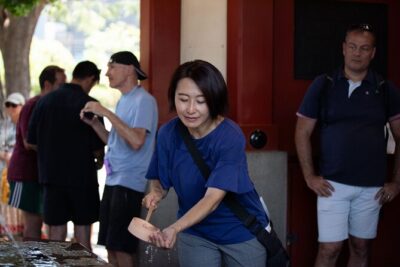
Asakusa Senso-ji Temple and Old Tokyo Walking Tour
Read our review →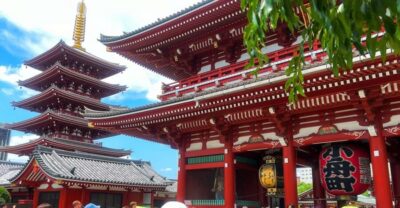
Asakusa and Tokyo’s Oldest Temple Senso-ji Tour
Read our review →
Meiji Shrine Walking Tour — Shinto & Imperial System
Read our review →
Meiji Jingu Shrine and Shinto Culture Walking Tour
Read our review →
Meiji Shrine Walking Tour — Shintoism & Imperial System
Read our review →
Tokyo Morning Tour: Asakusa, Meiji Shrine and Tsukiji Fish Market
Read our review →Browse the lists this tour appears in