
Reviewed · MEIJI SHRINE & SENSO-JI TOURS
Tokyo: Meiji Jingu Shrine and Shinto Culture Walking Tour
Meiji Jingu is one of Tokyo’s best places to slow down. You leave the noise of Harajuku behind and walk beneath towering trees into a sacred forest planted from about 100,000 trees. Along the way, your guide explains how to bow, purify your hands, pray, and read the visual clues around the shrine. The rituals become easier to understand, and the forest gives the visit a calm rhythm.
I especially like the small-group feel and the practical help. Guides such as Maya, Yota, Ryota, Andres, Minori, and Haydn have been praised for answering questions, taking photos, and offering useful Tokyo suggestions. The $19 price is also strong for two hours with entry included. The main limitation is time: you see the key parts of Meiji Jingu, but this is an introduction rather than a slow, detailed study of every corner.
Key points to know before you book
- A quiet route from Harajuku: The walk begins near the Starbucks closest to Meiji Shrine, then moves quickly from city streets into the shrine forest.
- Shinto made practical: You learn the correct way to purify yourself, pray, and understand shrine customs rather than simply taking photographs.
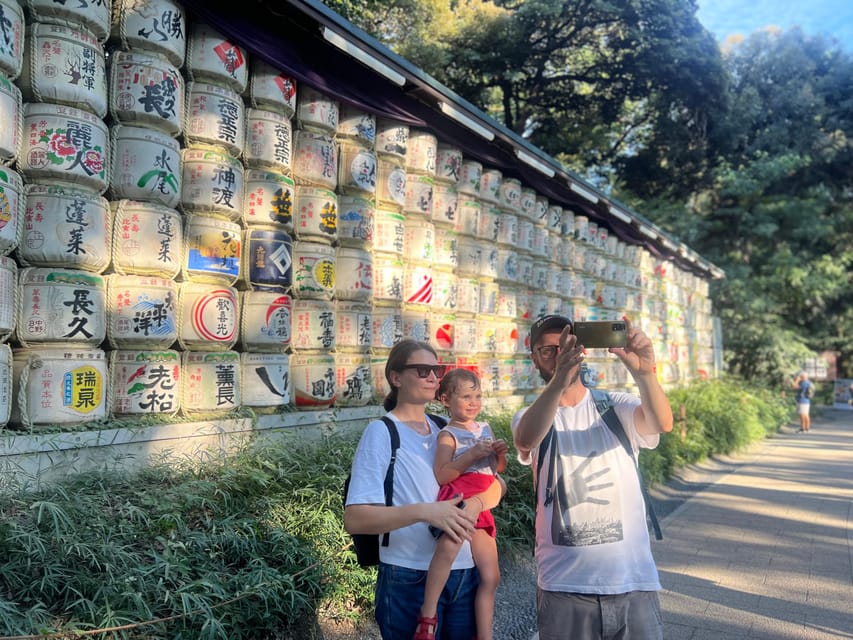
- Sake and wine barrels: The consecrated barrels give your guide a useful way to explain offerings, tradition, and the shrine’s connection to modern Japan.
- Small groups matter: Groups can be as large as 12, but many departures are smaller, which makes questions and personal attention easier.
- Helpful for a first Tokyo day: Guides often explain local etiquette, nearby places to eat, and other sights worth adding to your plans.
- Good value at $19: The price includes an English-speaking guide, photos, historical context, and admission to the shrine and Imperial Garden.
Why Meiji Jingu works so well as a first Tokyo stop
Tokyo can feel like a wall of signs, trains, shops, and people. Meiji Jingu gives you a useful counterpoint. Within a short walk, the city noise fades and the route becomes shaded, earthy, and formal.
The shrine honors Emperor Meiji and Empress Shoken, and the grounds connect Japan’s modern imperial story with older Shinto customs. That mix is part of what makes the visit useful. You are not looking at a remote rural shrine removed from present-day Japan. You are learning how traditional practice still fits into the capital.
I recommend taking this tour early in your Tokyo stay. Several guides, including Yota and Andres, have helped visitors understand shrine etiquette and get comfortable with local customs before the rest of their trip. That can make later visits to shrines and temples much less confusing.
The tour lasts two hours, so it fits neatly into a morning or afternoon. You have enough time to ask questions and see the major features, but you should not expect a full-day cultural program. The pace is best for someone who wants context without giving up half a day.
More Temple Walking Tours in Japan
- Tokyo: Asakusa Walking Tour with Sensoji Temple Visit
★ 4.8 · 1,583 reviews - Tokyo: Meiji Shrine Walking Tour — Shinto & Imperial System
★ 4.9 · 266 reviews - Tokyo: Meiji Shrine and Shinto Culture Walking Tour
★ 5.0 · 225 reviews
Meeting near Harajuku and entering the forest
The meeting point is in front of the Starbucks closest to Meiji Shrine, at coordinates 35.6705208, 139.7031067. This detail matters because there are many Starbucks locations in the Harajuku area. Check the map pin carefully rather than simply searching for the first Starbucks you see.
From there, the guide leads you toward Meiji Jingu Gyoen, the garden area connected with the shrine. This first section is listed at about 30 minutes and works as a gentle introduction to the grounds.
I like this opening because it gives you time to adjust from Harajuku’s commercial energy to the shrine’s more reflective setting. Your guide can explain the history of the district and point out details you might walk past alone. The garden also gives you a chance to appreciate the role of nature in Shinto practice.
Do not expect a botanical tour with plant-by-plant commentary. The useful point is the relationship between trees, water, quiet, and sacred space. The forest is not just decoration around the shrine. It helps create the feeling that you have crossed into a different kind of place.
The Big Torii and the meaning of the entrance
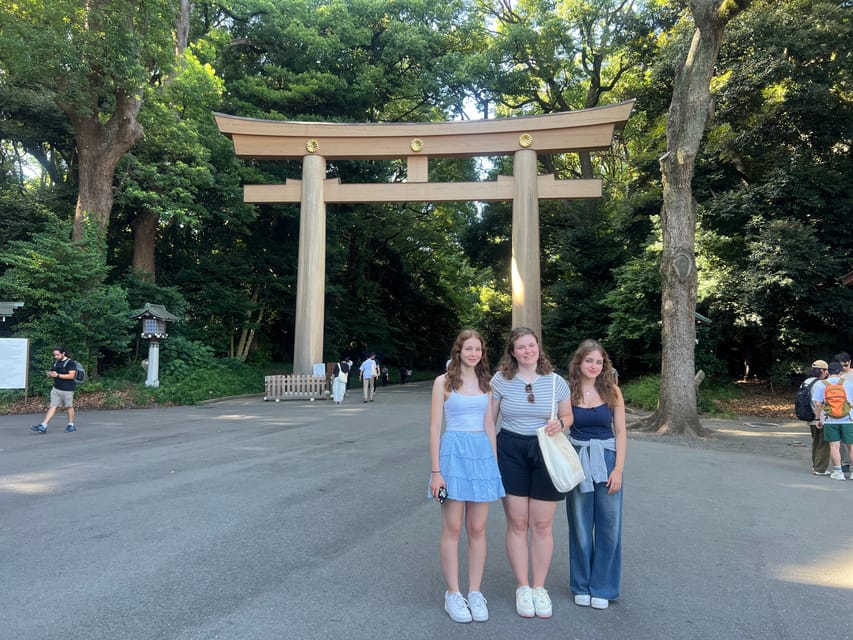
The Big Torii is one of the tour’s first major photo stops. Its scale marks the change from ordinary city space to the shrine grounds, and your guide explains how to approach and pass through it respectfully.
This is where a guide adds real value. A large torii is easy to photograph but less easy to interpret. You learn that the entrance has a ceremonial purpose and that basic behavior, such as walking with awareness and showing respect, matters.
Your guide may also take photos during the tour. That is a practical benefit for couples, families, or solo visitors who want more than self-timer pictures. Ryota has been especially noted for combining guiding with photography, while other guides have offered to take photos at several stops.
The route is still a walking tour, not a seated lecture. Wear shoes you can comfortably use for two hours, and allow for uneven or outdoor surfaces. The activity is listed as wheelchair accessible, but the exact ease of every path can depend on conditions and crowd levels.
Sake and wine barrels with a modern Japanese twist
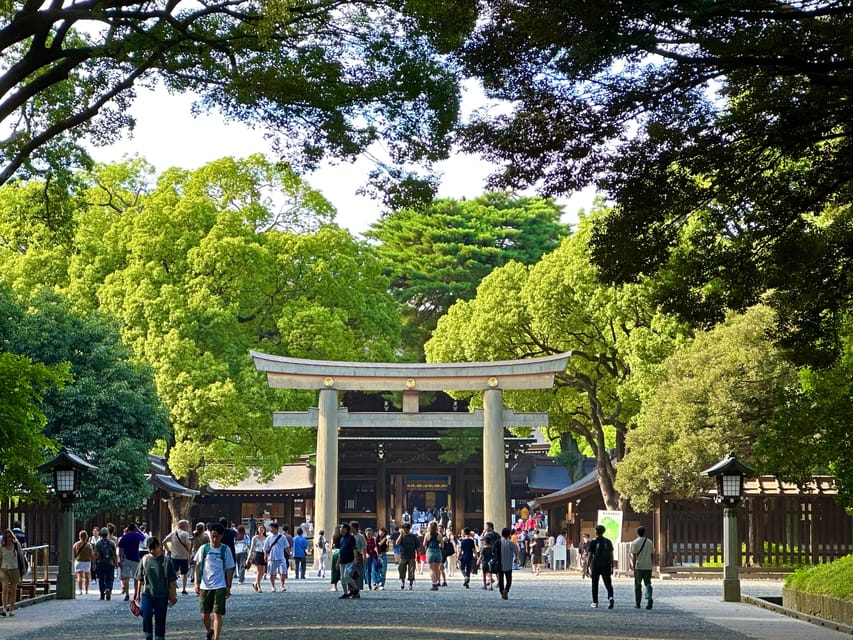
The consecrated sake barrels provide one of the most memorable visual details on the grounds. Stacked together, they show how businesses and local communities present offerings to shrines.
The consecrated wine barrels add an unexpected second layer. Many people arrive expecting only old Japanese customs, so the wine barrels help show that Meiji Jingu is not a frozen museum piece. Your guide can use them to explain how tradition, public life, and newer influences can sit side by side.
These stops are brief, around 10 minutes each, but they are well chosen. They give you something concrete to look at while the guide explains a larger idea. Instead of hearing a long abstract talk about religion, you connect the explanation to objects directly in front of you.
If you are mainly seeking architecture, these barrel displays may feel like quick stops on the way to the shrine buildings. If you want cultural context, they are among the tour’s more useful moments.
More Temple Walking Tours in Tokyo
- Tokyo: Meiji Shrine Walking Tour — Shintoism & Imperial System
★ 5.0 · 209 reviews
Learning Shinto rituals without feeling awkward
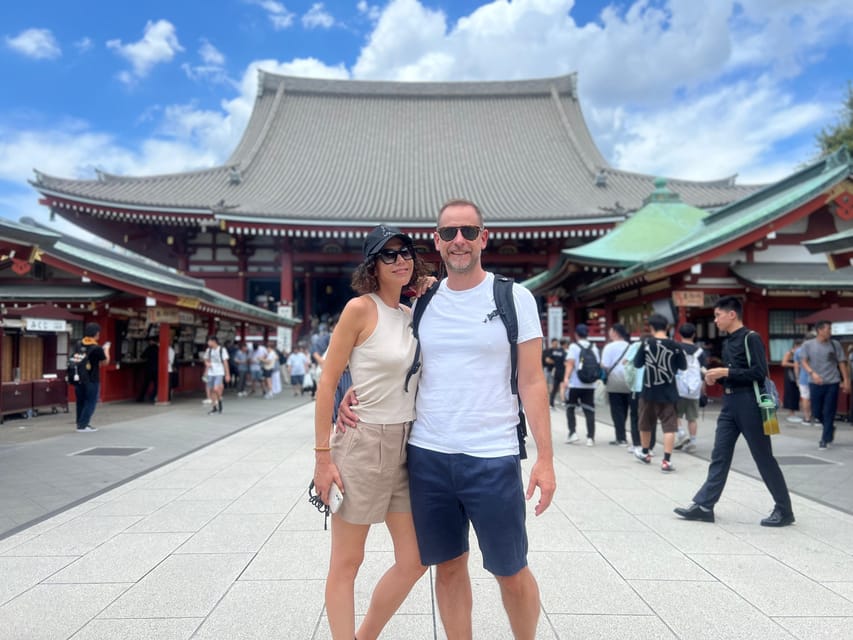
The main visit to Meiji Shrine takes about an hour. This is the heart of the experience, and it is where you learn how to behave at a Shinto shrine.
Your guide explains the steps for purification and prayer, including how to use the water at a purification fountain and how to approach the offering area. You can then try the ritual with a clearer sense of what you are doing.
That practical coaching is valuable. Many first-time visitors worry about making a mistake, especially when a shrine is busy. A calm explanation lets you participate respectfully instead of copying the nearest person and hoping for the best.
The tour also explores the difference between Shinto and Buddhism. Minori was praised for explaining both traditions clearly, while Haydn was noted for giving an introduction that worked for first-time visitors but could also go into greater detail when asked. This is a useful balance because Japan’s religious life does not fit neatly into a single category.
You should still remember that a walking tour cannot explain every belief, ceremony, and historical change in one hour. Think of this section as a solid foundation. It gives you enough understanding to notice more during later visits.
What the guides add to the experience
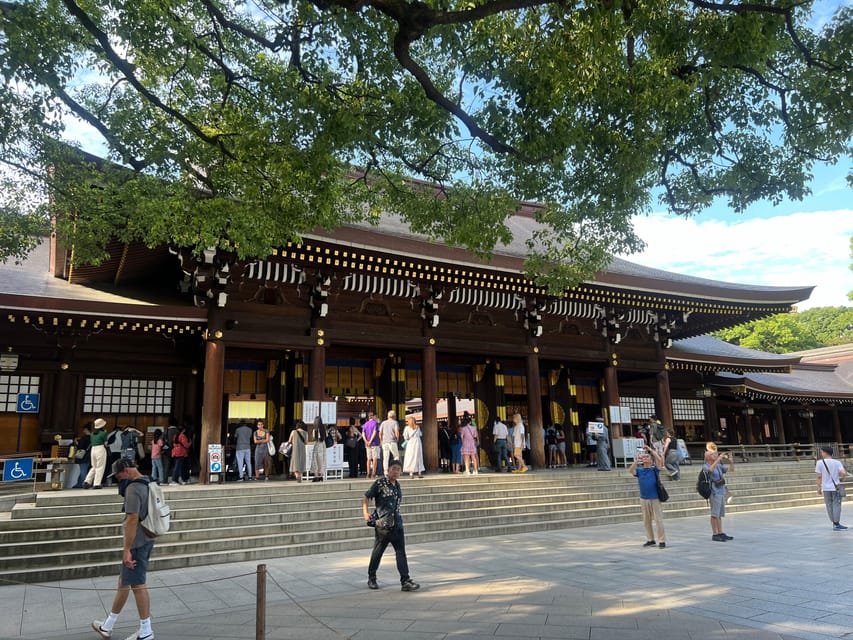
The strongest feature here is the guide-led conversation. The named guides have varied, but the pattern is consistent: Maya, Hoshi, Naruto, Yumi, Hyden, Matt, Sara, Maria, Yota, Ryota, and Andres have all led departures described as friendly, clear, and willing to answer questions.
That matters because Meiji Shrine can be visited without a guide. You can enter the forest, see the torii, photograph the barrels, and walk to the main shrine buildings on your own. The $19 is worth paying only if you want someone to explain what those things mean.
The guides also bring different strengths. Yota has been particularly useful for food suggestions and flexible, personal tours. Andres has helped people with shrine etiquette, Tokyo history, metro basics, and places to eat. Ryota has offered photography help. Minori has explained Shinto and Buddhism in a way that works well for families and curious adults.
Small groups improve this part of the experience. The usual maximum can be about 12 people, but some departures have had only two, four, or even one participant. A small group lets you ask follow-up questions without holding up a large crowd.
Group size is not guaranteed, so book this for the guide and structure rather than expecting a private tour. The experience can still work well at the stated maximum, but the conversation will naturally feel more personal with fewer people.
How much value do you get for $19?
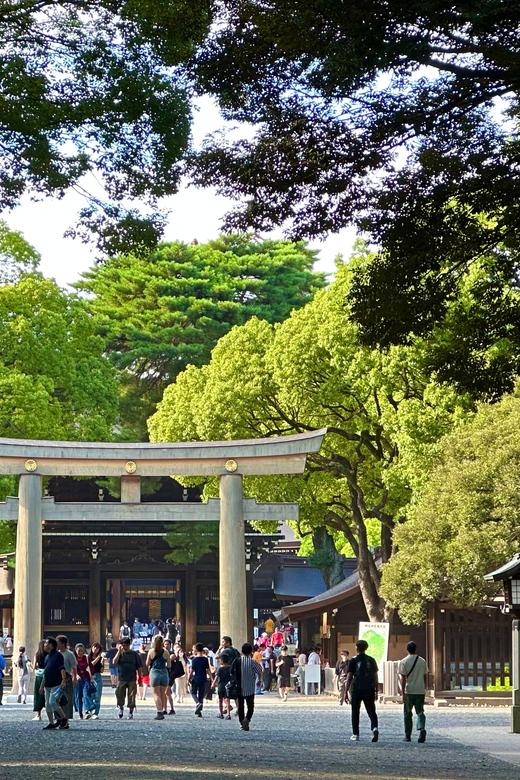
At $19 per person, this is a low-cost guided introduction to one of Tokyo’s major cultural sites. Admission to Meiji Shrine and the Imperial Garden is included, along with an English-speaking guide, photos, and historical information about the area.
The price makes most sense for three types of visitors. First, you get good value if this is your first trip to Japan and you want help with basic customs. Second, it suits you if you enjoy asking questions rather than reading signs. Third, it works well if you want a short activity that leaves time for Harajuku, Omotesando, Shibuya, or another Tokyo stop.
The value is less clear for independent visitors who already understand shrine etiquette and prefer to wander alone. Meiji Jingu is accessible without this tour, so you are paying for interpretation, conversation, and guidance, not simply entry.
I also like that the tour includes practical local suggestions. Several guides have recommended restaurants, snacks, and places to visit around Tokyo. Those tips can be useful, though they should be treated as an extra benefit rather than the main reason to book.
Timing, weather, and what to bring
The tour is two hours, and starting times vary, so check availability when choosing your date. An early departure can be a smart choice if you want a calmer atmosphere. Yota specifically advised visiting shrines early for more peace and stillness.
Tokyo weather can change the feel of the walk. In heavy rain, the forest and shrine grounds remain part of the experience, but you will need suitable rainwear and shoes. One departure went ahead in very heavy rain and still worked because the guides kept the group engaged, but dry weather will make photography and walking more comfortable.
Bring water, especially in warm weather, and keep your clothing respectful and practical. You will be outdoors for the full two hours. The tour includes photos, but bring your own camera if you want to record details at your own pace.
Cancellation is free up to 24 hours in advance, and you can reserve now and pay later. Those policies are useful if your Tokyo schedule is still shifting.
Who should book this Meiji Shrine tour?
I would choose this tour for first-time visitors who want a clear introduction to Shinto and Japanese customs. It is also a good match for families, since the guide can answer children’s questions and make the ritual steps easier to follow.
It suits solo visitors and couples who want company without committing to a full-day group excursion. The small-group format can make the walk feel personal, and the photo help is useful when you are traveling without a companion.
You may also enjoy it on a repeat visit. The shrine itself will not be new, but a guide can help you notice symbols, offerings, and customs that you missed before. Haydn’s approach, for example, was described as useful for both beginners and people ready for more detail.
I would skip it if you want a silent, unstructured walk or if you already have a detailed plan for Meiji Jingu. You should also skip it if your schedule allows only a quick photograph at the torii. The tour works best when you can give the shrine two calm hours.
Should you book it?
Book this Meiji Shrine walking tour if you want more than a scenic forest walk. For $19, you get a practical explanation of Shinto rituals, a guided route through the Imperial Garden, the Big Torii, the sake and wine barrels, and the main shrine area.
The best reason to book is the guide. Names and personalities vary, but the experience is built around clear English, questions, photos, and useful Tokyo advice. Choose an early time if available, arrive at the correct Starbucks meeting point, and treat the tour as your cultural orientation to Japan.
If you prefer total independence, you can visit Meiji Jingu on your own. For most first-time visitors, though, the modest price and two-hour format make this an easy way to begin understanding the sacred space rather than merely passing through it.
FAQ
How much does the Meiji Shrine walking tour cost?
The tour costs $19 per person.
How long does the tour last?
The walking tour lasts two hours.
What language is the tour conducted in?
The tour is conducted in English with a live English-speaking guide.
Where is the meeting point?
You meet in front of the Starbucks closest to Meiji Shrine. The listed coordinates are 35.6705208, 139.7031067.
What places are included in the walk?
The route includes Meiji Jingu Gyoen, the Big Torii, the consecrated sake barrels, the consecrated wine barrels, and Meiji Shrine.
Is admission included?
Yes. Entry to Meiji Shrine and the Meiji Shrine Imperial Garden is included.
Is the tour wheelchair accessible?
Yes, the activity is listed as wheelchair accessible.
Can I cancel for a full refund?
Yes. You can cancel up to 24 hours in advance for a full refund.
Can I reserve without paying immediately?
Yes. The reserve now and pay later option lets you book your place without paying at the time of reservation.
More Meiji Shrine and Senso-ji Tours in Tokyo
- Tokyo Panoramic 1 Day: Meiji Shrine, Asakusa, Odaiba and SKYTREE®
★ 4.5 · 1,222 reviews - Tokyo: Asakusa and Tokyo’s Oldest Temple Senso-ji Tour
★ 4.9 · 352 reviews - Tokyo Morning Tour: Asakusa, Meiji Shrine and Tsukiji Fish Market
★ 5.0 · 128 reviews - Tokyo History: Sensoji Temple & Asakusa District Private Tour
★ 5.0 · 28 reviews
Newly written up around Tokyo
- Tokyo History: Sensoji Temple & Asakusa District Private Tour★ 5.0 · 28 reviews
- Tokyo Private Tour: Temples, Culture & Modern City Highlights★ 5.0 · 56 reviews
- From Tokyo: Snow Monkey Park & Zenko-ji Temple Private Tour★ 4.9 · 42 reviews
- From Tokyo: Nikko Toshogu Shrine and Kegon Waterfall Tour★ 4.0 · 42 reviews
- Tokyo: Snow Monkey Park and Zenkoji Temple Private Day Tour★ 4.7 · 127 reviews
- Tokyo Morning Tour: Asakusa, Meiji Shrine and Tsukiji Fish Market★ 5.0 · 128 reviews
- Tokyo Zen Meditation at Private Temple with Monk★ 5.0 · 178 reviews
- From Tokyo: Private Tour Snow Monkey Park & Zenko-ji Temple★ 4.7 · 184 reviews
Meiji Shrine & Senso-ji Tours, compared.
Asakusa Walking Tour with Sensoji Temple Visit
Read our review →
Tokyo Panoramic 1 Day: Meiji Shrine, Asakusa, Odaiba and SKYTREE®
Read our review →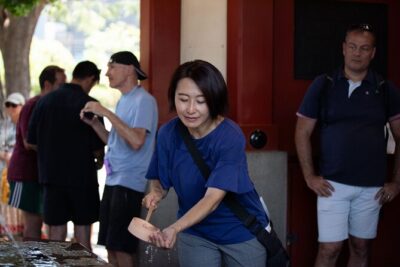
Asakusa Senso-ji Temple and Old Tokyo Walking Tour
Read our review →
Asakusa and Tokyo’s Oldest Temple Senso-ji Tour
Read our review →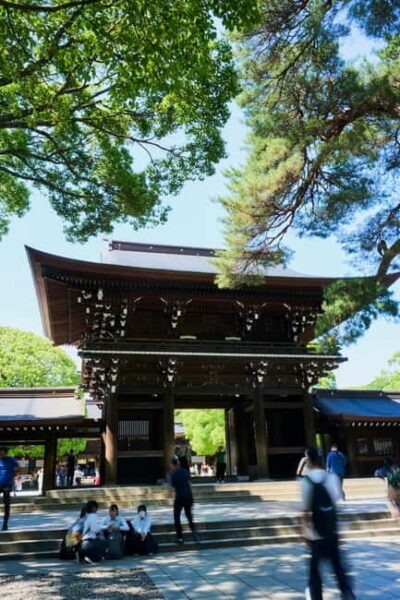
Meiji Shrine Walking Tour — Shinto & Imperial System
Read our review →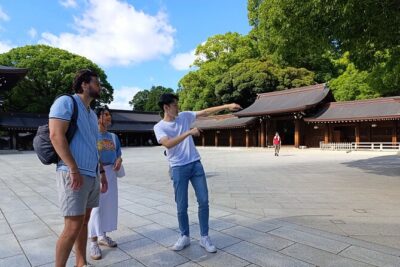
Meiji Shrine Walking Tour — Shintoism & Imperial System
Read our review →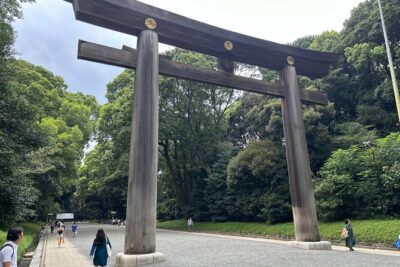
Tokyo Morning Tour: Asakusa, Meiji Shrine and Tsukiji Fish Market
Read our review →Browse the lists this tour appears in