
Reviewed · MEIJI SHRINE & SENSO-JI TOURS
Tokyo Morning Tour: Asakusa, Meiji Shrine and Tsukiji Fish Market
Tokyo makes you work for its landmarks. They are spread across huge districts, and a first visit can lose half a day to train changes and map-checking. This four-hour morning tour links Meiji Jingu Shrine, Tsukiji Fish Market, and Senso-ji Temple, giving you three very different sides of the city before lunch.
I like the small group cap of eight people, which keeps the pace practical and lets you hear the guide in busy places. I also like the early start: guides such as Ryota have timed the visits to reach key spots before larger groups arrive. The main drawback is that the $157 price does not include roughly 600 yen in public transport or food and drinks.
Key points to know before booking
- Three major Tokyo districts in one morning: Move from Harajuku’s forested shrine to Tsukiji’s food stalls and then historic Asakusa.
- A maximum of eight people: Small numbers make it easier to stay together and ask questions.
- The morning timing matters: Early hours help you see Tsukiji and Senso-ji before the day gets crowded.
- You finish in Asakusa: Plan lunch, shopping, or another temple visit in this area afterward.
- Guides handle the route: You do not need to plan the public transport connections between stops.
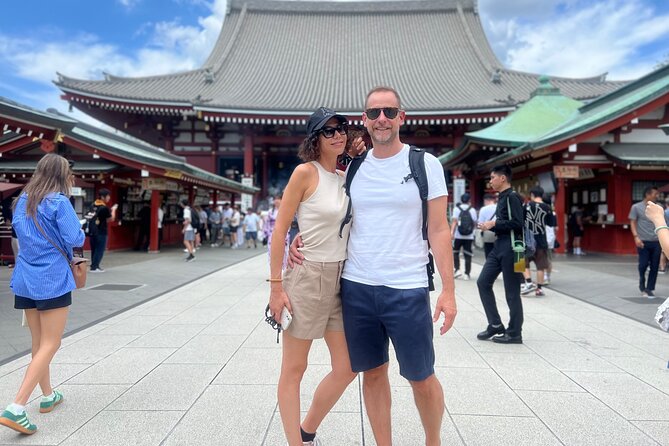
- Photos are included: The guide can take pictures during the tour, a useful touch for solo visitors and couples.
Why this compact Tokyo route works
This outing is built around contrast. Meiji Jingu gives you quiet paths and Shinto customs. Tsukiji shows Tokyo’s food culture in motion. Senso-ji brings you into old Asakusa, with a bright gate, a temple precinct, and a shopping street full of traditional goods.
That mix is the best reason to book it. You are not spending four hours looking at three similar monuments. Each stop has a distinct mood, and the guide’s historical explanations help connect them to Japanese culture.
The route also solves a common Tokyo problem: distance. Harajuku, Tsukiji, and Asakusa are not next door to one another. Public transport is required, and the fare is separate at about 600 yen, but having someone lead the way saves you from guessing which station exit, platform, or connection makes sense.
The experience begins at Starbucks Coffee at With Harajuku, near Harajuku Station, at 1-chome-14-30 Jingumae in Shibuya. You finish in Asakusa, Taito City. That end point is useful because you can continue exploring the area rather than retracing your steps to the start.
More Meiji Shrine and Senso-ji Tours in Tokyo:
- Tokyo: Asakusa Walking Tour with Sensoji Temple Visit
★ 4.8 · 1,583 reviews - Tokyo Panoramic 1 Day: Meiji Shrine, Asakusa, Odaiba and SKYTREE®
★ 4.5 · 1,222 reviews - Tokyo: Asakusa and Tokyo’s Oldest Temple Senso-ji Tour
★ 4.9 · 352 reviews
Meiji Jingu Shrine: a quiet start in central Tokyo
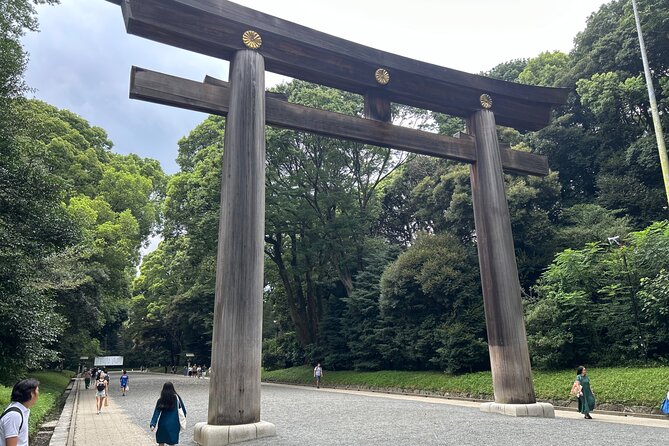
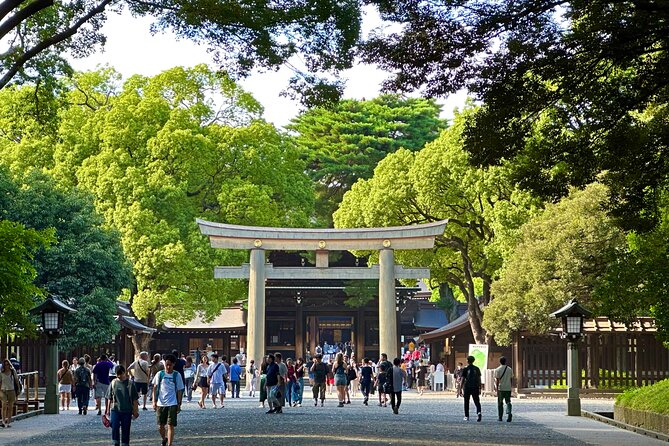
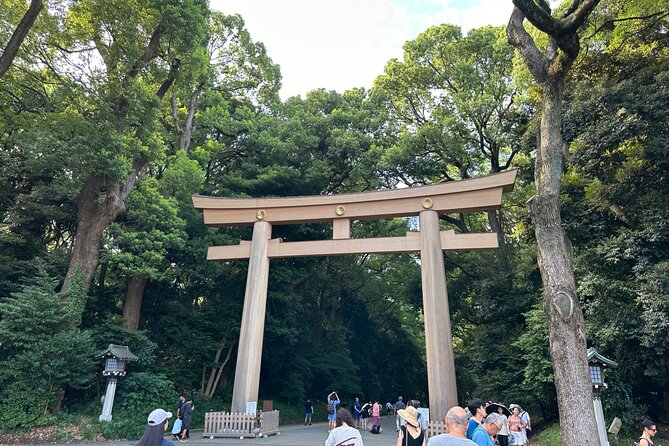
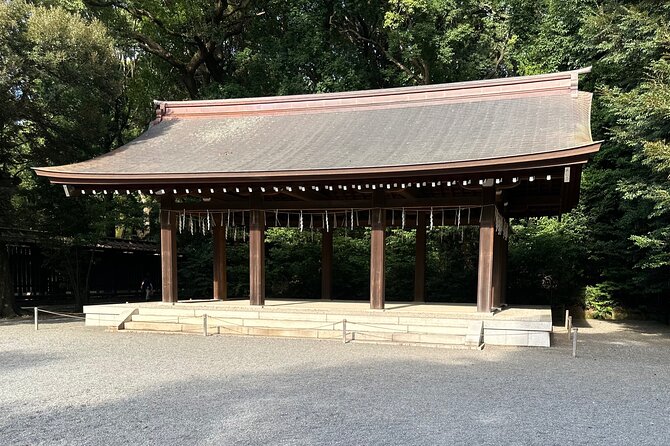
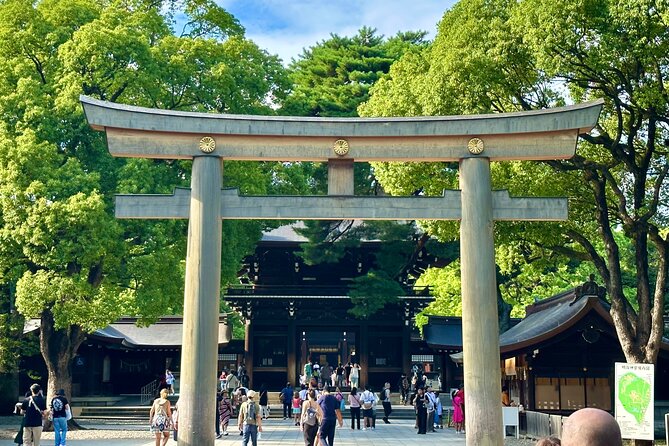
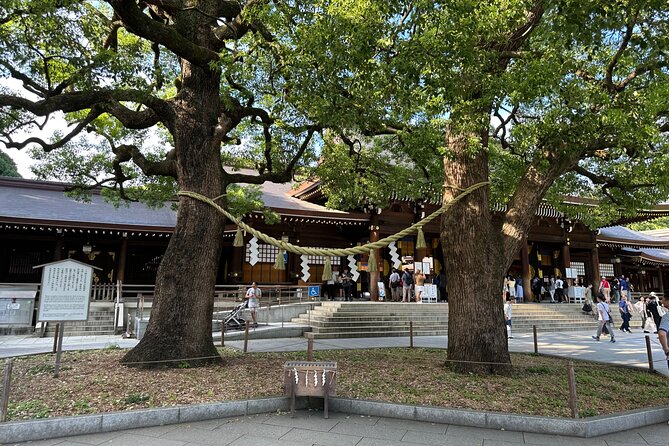
The first stop is Meiji Jingu, where the city quickly gives way to tree-lined paths and a calmer pace. The shrine honors Emperor Meiji and Empress Shoken, and it offers a direct introduction to Shinto customs.
You will have about an hour here, with admission included. Expect to walk along the approach through the forest, pass beneath large torii gates, and see the shrine grounds at a time of day chosen to avoid some of the later crowds.
The value of a guide is especially clear here. A shrine visit can look simple if you do not know what you are seeing or how traditional customs work. Your English-speaking guide can explain the meaning behind the setting and show you how to take part respectfully.
I like starting here because it gives the morning breathing room. You are not thrown straight into shopping or food stalls. Instead, you begin with a place connected to Japan’s spiritual traditions, then move into the more commercial and historic parts of Tokyo.
There is one practical point to remember: this is a walking stop. The tour lasts about four hours overall, and each listed stop takes about an hour, so comfortable shoes matter. The supplied information does not give a full walking distance, so you should be prepared for movement between the shrine paths, transport connections, and the next district.
Tsukiji Fish Market: Tokyo’s food culture at street level
Tsukiji is the tour’s most food-focused stop. The former wholesale market became famous worldwide, and the area remains important for seafood, produce, and ingredients used by local cooks and high-end chefs.
You get roughly an hour to explore. The market setting gives you a chance to see ingredients such as tuna and octopus tentacles, along with other fresh produce. This is not simply a photo stop. It shows how much Japanese food culture depends on careful sourcing and morning trade.
Food and drinks are not included, so budget extra if you want to buy something. That is both a cost and an advantage. You can choose what interests you instead of paying for a fixed meal, although one hour is not a long time for a full market visit and meal.
The guide is useful here for keeping the group together and explaining what you are seeing. Tsukiji can be busy and visually crowded, with many stalls competing for attention. A well-timed visit makes a difference, and feedback about guides such as Ryota points to careful scheduling that reaches important areas before larger groups arrive.
You should also keep your expectations realistic. Tsukiji is not presented as a full cooking class, food tour, or wholesale auction visit. It is a guided look at the market district and its role in Tokyo’s culinary life. If you want a focused seafood tasting, you will need to arrange that separately.
Still, this stop adds something the two temples cannot. You see a working part of Tokyo’s food economy, not only monuments designed for sightseeing. For many people, it will be the most sensory part of the morning.
Senso-ji and Asakusa: finishing with old Tokyo
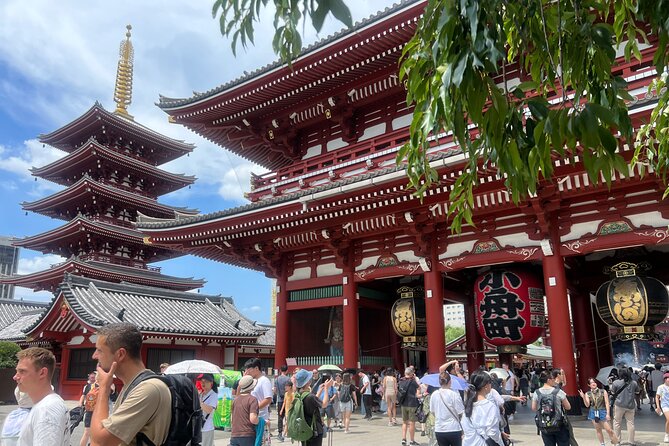
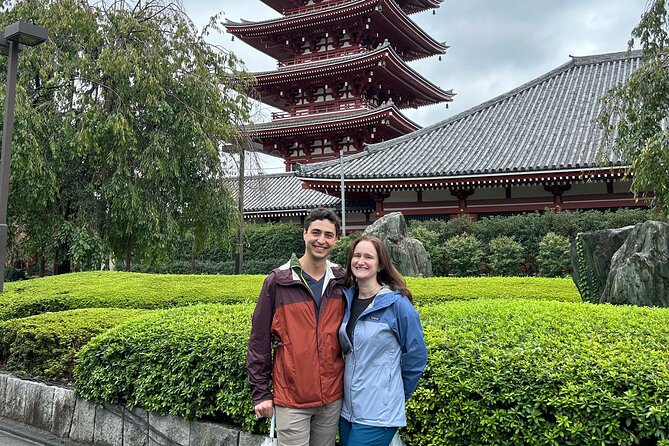
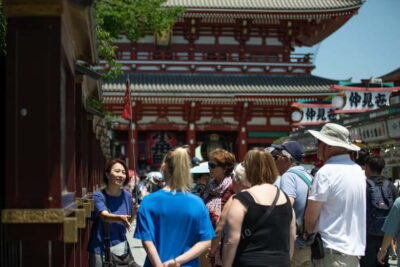
The tour ends in Asakusa at Senso-ji, Tokyo’s oldest temple. This is the most immediately recognizable stop, thanks to the red Kaminarimon Gate and the approach along Nakamise shopping street.
You get about an hour here. The gate makes a strong first impression, while Nakamise gives you time to browse traditional goods and snacks on the way toward the temple. The area has a more historic feel than the newer commercial districts, and the guide’s background about Asakusa helps turn a quick visit into something more meaningful.
Senso-ji is also a smart final stop. You are not rushed back to Harajuku afterward. Once the tour ends, you can stay in Asakusa for lunch, shopping, or further sightseeing. The end point makes this tour easier to combine with a full day in eastern Tokyo.
The tradeoff is time. One hour is enough for an introduction, photos, the approach, and a look around. It is not enough for a slow, detailed study of every building or side street in Asakusa. If you want a deeper visit, treat the tour as your orientation and continue on your own afterward.
This is where the guide’s photo service can be handy. Senso-ji and Kaminarimon are popular photo spots, and having the guide take pictures means you do not have to rely only on selfies or ask another passerby.
More Market Visits in Tokyo:
- Bangkok: City Highlights Temple and Market Walking Tour
★ 4.5 · 3,990 reviews - Mini Group Xian Day Tour to Terracotta Army, City Wall, Pagoda and Muslim Bazaar
★ 5.0 · 1,320 reviews - Bangkok: Railway and Floating Market Tour with Dragon Temple
★ 4.6 · 1,225 reviews - Bangkok: Night Bike Tour with Temples & Flower Market Visit
★ 4.8 · 751 reviews
The guides make the schedule easier
The tour includes an English-speaking guide and historical explanations at each district. That matters because the route is not just a list of stops. You are moving between a Shinto shrine, a food market, and a Buddhist temple, each with different customs and settings.
Several guide names appear in the feedback connected with this experience. Ryota is noted for careful timing, good photo locations, and attention to the group. Yota is described as approachable and well informed, while Andres Burgos is praised for making the whole route friendly and easy to follow.
Guide quality can vary from one departure to another, so I would not book on the assumption that one particular person will lead your date. Still, the repeated strengths are clear: expect help with navigation, explanations that add context, and a guide who keeps the morning moving.
The maximum group size of eight is a real benefit. In a large group, a market visit can become a slow exercise in waiting at every corner. With fewer people, it should be easier to stay close to the guide and ask a question without holding up a busload of people.
What $157 gets you, and what it does not
At $157, this is not a bargain transportation pass. The price reflects a private-feeling small group, an English-speaking guide, route planning, historical context, and photos. It also covers admission to the three listed stops.
You still need to pay about 600 yen for public transport. Food and drinks are also extra, which is particularly relevant at Tsukiji. Add those costs when comparing the tour with exploring independently.
I see the value mainly in time. If you are in Tokyo for only a few days, the tour bundles three major sights into one morning and removes the need to work out the route yourself. You also get explanations that guidebooks and station signs cannot provide on their own.
Independent visitors can spend less. Tokyo’s trains and temples are accessible to people who are comfortable planning their own day, and the tour does not include a meal or a special entry beyond the listed admissions. The $157 price makes the most sense for a first-time visitor, a solo guest who wants company, or anyone who would rather follow a clear route than manage three separate districts.
Timing, meeting point, and pace
The meeting point is Starbucks Coffee at With Harajuku, 1-chome-14-30 Jingumae, near public transportation. Check the exact start time on your booking confirmation and arrive ready to leave promptly, since the route depends on a timed morning schedule.
The tour lasts approximately four hours. Each of the three main stops is listed at about one hour, with the remaining time used for transport and moving between sites. That makes the pace efficient rather than leisurely.
A small group helps, but you should still expect a fair amount of walking and standing. Most people can participate, according to the supplied details, but anyone who needs a highly flexible pace should confirm whether this format suits them before booking.
The tour ends in Asakusa. That is convenient, but it also means you should think ahead about the rest of your day. You will not return to the Harajuku meeting point as part of the experience.
Who should book this morning tour
I would recommend it most strongly to first-time Tokyo visitors who want a useful overview without spending hours on route planning. It is also a good fit if you have only half a day available or want a guide for your first morning in the city.
Solo visitors may appreciate the small group and included photos. Couples can get pictures together without handing a phone to a stranger. Families and older visitors should consider the walking pace and the fact that food, drinks, and transport cost extra.
You may want a different option if you prefer slow temple visits, long meals, shopping time, or a specialized food experience. This tour touches three districts efficiently, but it does not linger for hours at any one place.
The free cancellation policy gives you flexibility if plans change. You can receive a full refund when canceling at least 24 hours before the start time. Cancellations within 24 hours are not refunded, and the operator may offer another date or a full refund if the minimum number of participants is not reached.
Should you book it?
Book this tour if you want efficient introductions to three major Tokyo sights, a small group, and an English-speaking guide to handle the route. The strongest reasons are the early timing, the maximum of eight participants, the useful contrast between shrine, market, and temple, and the fact that you finish in Asakusa with the rest of the day still open.
Skip it if $157 feels high for a four-hour outing or if you are happy navigating trains and researching the districts yourself. For a short Tokyo stay, though, the time saved and the guide’s local context make this a practical first look at the city.
FAQ
How long does the Tokyo morning tour last?
The tour lasts approximately four hours.
Which places does the tour visit?
It visits Meiji Jingu Shrine, Tsukiji Fish Market, and Senso-ji Temple in Asakusa.
Where does the tour start?
It starts at Starbucks Coffee at With Harajuku, located at 1-chome-14-30 Jingumae, Shibuya, Tokyo.
Where does the tour end?
The tour ends in Asakusa, in Taito City, Tokyo.
Is public transportation included?
No. Public transportation costs about 600 yen and is paid separately.
Are food and drinks included?
No. Food and drinks are not included in the tour price.
Is admission to the attractions included?
Yes. Admission tickets for Meiji Jingu Shrine, Tsukiji Fish Market, and Senso-ji Temple are included.
How large is the tour group?
The tour has a maximum of eight travelers.
Is the tour conducted in English?
Yes. An English-speaking guide leads the experience.
Can I cancel for a full refund?
Yes, if you cancel at least 24 hours before the experience start time. Cancellations within 24 hours are not refunded.
More temple and market days in Tokyo
- Seoul: Palace, Temple and Market Guided Foodie Tour at Night
★ 4.9 · 750 reviews - Old Delhi Food-Spice Market-Temples Tour Soon Featured on NETFLIX
★ 5.0 · 304 reviews - Chiang Mai: Elephants, Sticky Waterfalls, Market and Temple
★ 4.9 · 227 reviews - Bangkok: Night Bike Tour with Temples & Flower Market Visit
★ 5.0 · 223 reviews
Newly written up around Tokyo
- Tokyo History: Sensoji Temple & Asakusa District Private Tour★ 5.0 · 28 reviews
- Tokyo Private Tour: Temples, Culture & Modern City Highlights★ 5.0 · 56 reviews
- From Tokyo: Snow Monkey Park & Zenko-ji Temple Private Tour★ 4.9 · 42 reviews
- From Tokyo: Nikko Toshogu Shrine and Kegon Waterfall Tour★ 4.0 · 42 reviews
- Tokyo: Snow Monkey Park and Zenkoji Temple Private Day Tour★ 4.7 · 127 reviews
- Tokyo Zen Meditation at Private Temple with Monk★ 5.0 · 178 reviews
- From Tokyo: Private Tour Snow Monkey Park & Zenko-ji Temple★ 4.7 · 184 reviews
- Tokyo: Meiji Shrine Walking Tour — Shintoism & Imperial System★ 5.0 · 209 reviews
Meiji Shrine & Senso-ji Tours, compared.
Asakusa Walking Tour with Sensoji Temple Visit
Read our review →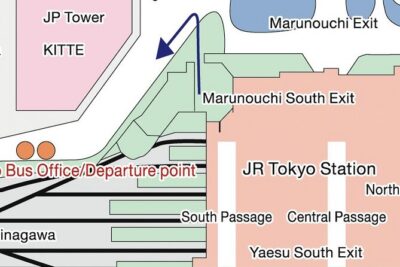
Tokyo Panoramic 1 Day: Meiji Shrine, Asakusa, Odaiba and SKYTREE®
Read our review →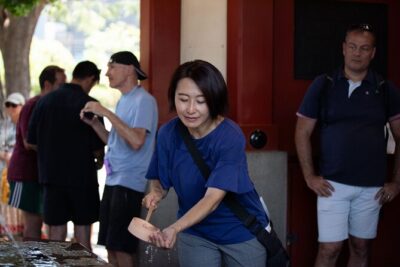
Asakusa Senso-ji Temple and Old Tokyo Walking Tour
Read our review →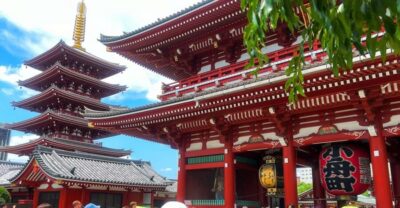
Asakusa and Tokyo’s Oldest Temple Senso-ji Tour
Read our review →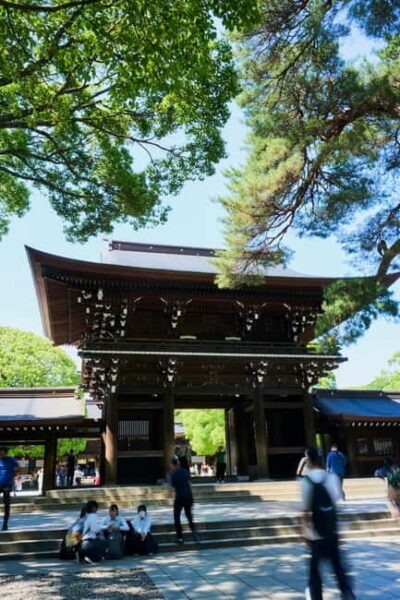
Meiji Shrine Walking Tour — Shinto & Imperial System
Read our review →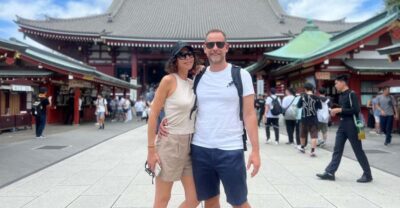
Meiji Jingu Shrine and Shinto Culture Walking Tour
Read our review →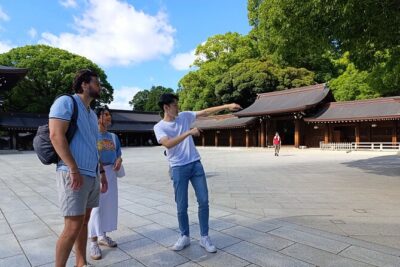
Meiji Shrine Walking Tour — Shintoism & Imperial System
Read our review →Browse the lists this tour appears in