
Reviewed · AZERBAIJAN TEMPLE TOURS
Baku: Gobustan, Volcanoes, Fire Temple and Yanardag Day Trip
The most unusual part of this day is the jump from Stone Age rock art to bubbling mud volcanoes, then on to sacred flames and a hillside fire. Azerbaijan’s land of fire makes more sense after you see these places in one sweep, rather than as separate city sights.
I like the no-shopping-stop promise, which keeps the day focused on history instead of carpets, sweets, or sales pitches. I also like the mix of stops: Gobustan gives you archaeology, the volcanoes add a strange geological thrill, and Ateshgah and Yanardag explain Azerbaijan’s fire traditions. The drawback is the pace. Six to eight hours covers a lot of ground, but some stops can feel brisk, especially on a crowded day.
Key points at a glance
- Old oil, older art: Begin near Bibi-Heybat with a look at one of the world’s first industrialized oil wells, then continue to prehistoric carvings.
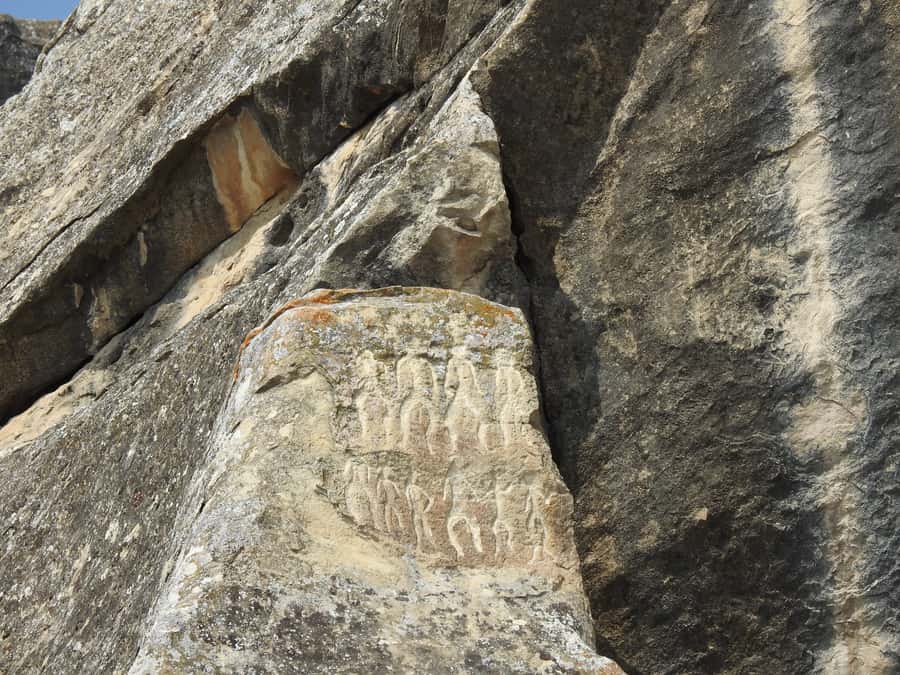
- Gobustan’s petroglyphs: See rock drawings linked to ancient life, work, beliefs, and daily activity in Azerbaijan.
- Mud volcano adventure: Reach the volcanoes by road, sometimes using old Soviet-era Lada vehicles, with the visit skipped in heavy rain.
- Two kinds of fire: Ateshgah presents a former Zoroastrian place of worship, while Yanardag is a natural gas fire burning on a hillside.
- Good low-cost coverage: At $29, transportation, a guide, pickup, and selected entrance fees make this a strong value for a first visit.
- Guides shape the day: Guides such as Sayed, Mahabat, Elcan, Leyla, Musa, and Ughur have been praised for clear explanations, warmth, and help with photos.
Why this day trip makes sense from Baku
Baku itself can fill several days, but the country’s most distinctive sights sit beyond the city center. Gobustan is about 70 kilometers from Baku, and the Absheron Peninsula adds the fire-related sites later in the day. Doing these places independently would mean arranging transport between scattered stops, so this tour is useful if you want the main out-of-town sights in one outing.
The route also tells a clear story. Oil helped shape modern Baku. Gobustan reaches back to prehistoric Azerbaijan. The mud volcanoes show the region’s unusual geology. Ateshgah connects to fire worship, and Yanardag gives you a natural flame that still burns on the hillside.
I would not choose this trip for slow museum visits or long scenic walks. I would choose it if you want a full, varied day with plenty of explanation and minimal shopping pressure. The schedule is active, but the variety keeps it from feeling like one long archaeological stop.
Pickup is offered from a range of Baku hotels, hostels, restaurants, and meeting points. The provider contacts you the day before to confirm the time, and the stated duration is six to eight hours. Private and small-group options are available, which matters if you prefer a quieter vehicle and more room for questions.
More Day Trips in the world:
- Athens: Cape Sounion & Poseidon Temple Sunset Half-Day Trip
★ 4.8 · 8,241 reviews - From Aswan: Abu Simbel Temple Day Trip with Hotel Pickup
★ 4.4 · 2,807 reviews - From Malta: Gozo Day Trip Including Ggantija Temples
★ 4.2 · 2,399 reviews
Bibi-Heybat and the early oil story
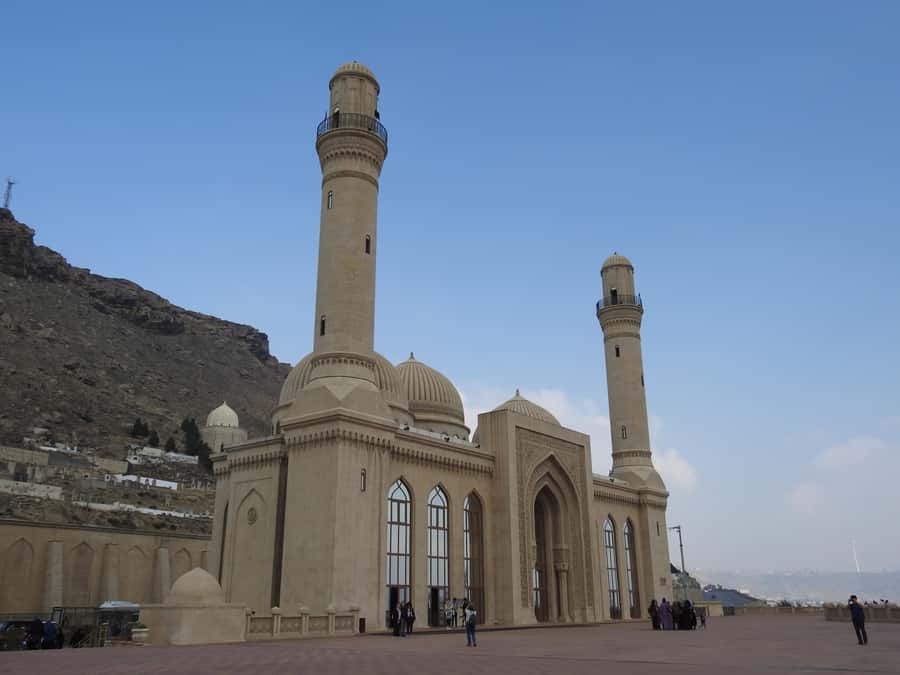
The first stop is near Bibi-Heybat Mosque, where you see an industrialized oil well associated with the beginnings of large-scale oil production. It is a short stop of about 30 minutes, but it gives useful context before the older sites.
Baku’s identity is tightly tied to oil, and this stop helps explain why the city became so important. You are not simply driving from one attraction to another. You are seeing the contrast between industrial Azerbaijan and the far older worlds represented at Gobustan and Ateshgah.
The stop also places you near Bibi-Heybat Mosque, one of the recognizable religious landmarks included in the route. The main focus is the oil well, so do not expect a long mosque visit unless your guide’s timing allows it.
Gobustan’s rocks and ancient drawings
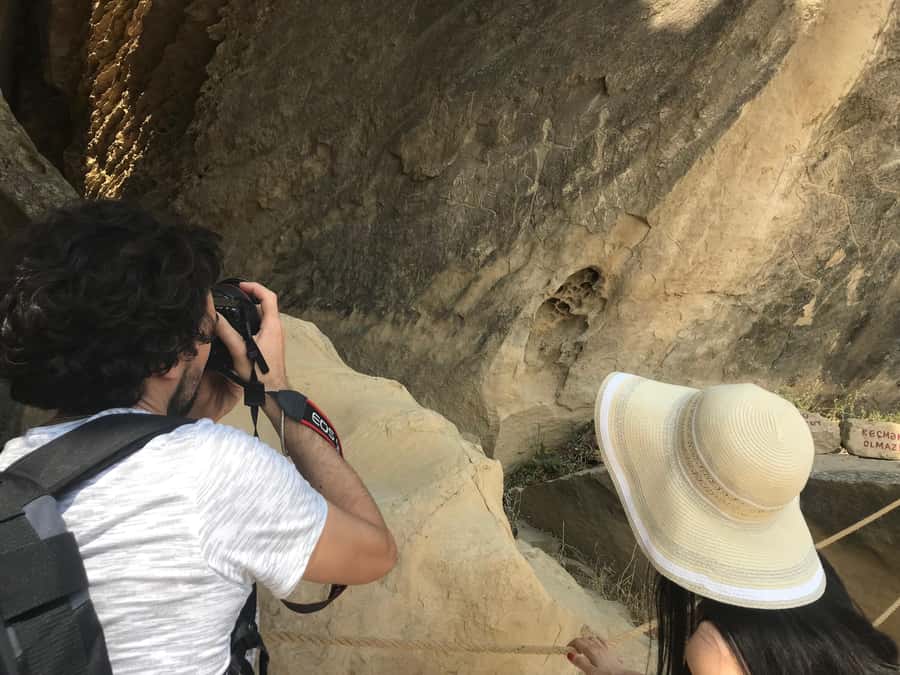
Gobustan National Park Museum is the day’s main archaeological stop. The visit includes an indoor and outdoor museum, with about an hour set aside for a guided tour. You see prehistoric carvings made on cave walls and exposed rock, along with displays that help explain the people who created them.
The drawings reflect ancient work, customs, movement, and beliefs. Your guide’s explanation is important here because the carvings can be easy to skim if you do not know what you are looking at. Guides such as Sayed, Mahabat, Leyla, and Elcan have been praised for making the information clear, answering questions, and adding stories rather than simply pointing at the rocks.
I would give Gobustan your full attention. This is the stop with the greatest historical weight, and it can be crowded. One guide, Mahabat, was specifically praised for handling busy conditions well. Keep your camera ready, but listen first. The value of Gobustan comes from understanding the images, not only photographing them.
The one-hour timing is practical for a broad day trip, though it will not satisfy someone who wants a slow archaeological study. You should expect an introduction to the site rather than an expert-level examination of every carving.
Mud volcanoes and the rougher side of the route
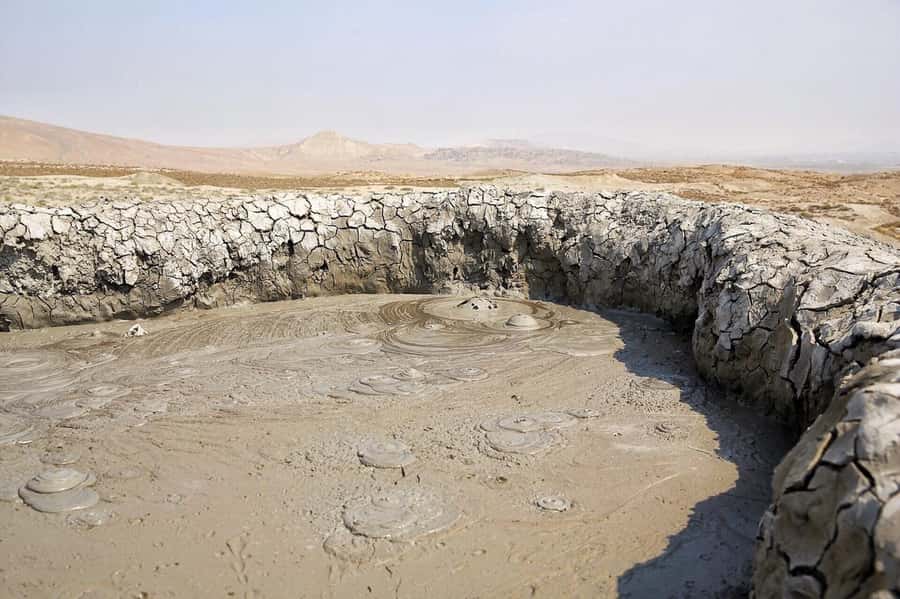
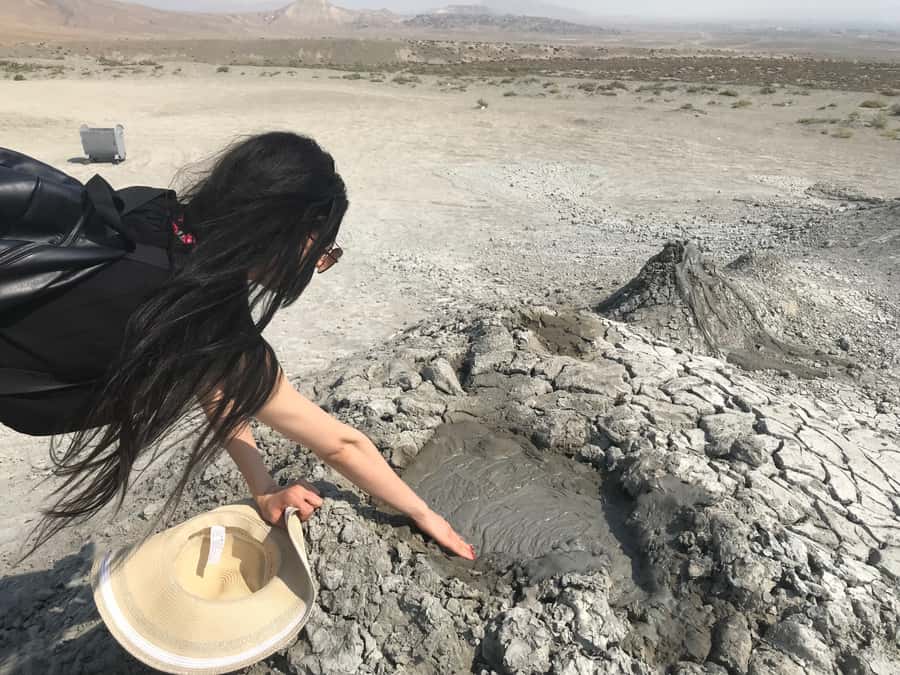
Azerbaijan is home to around 400 mud volcanoes, and the stop gives you a close look at one of the country’s oddest natural features. The visit itself is listed at about 20 minutes, with sightseeing and a guided explanation.
This is not the polished part of the day. The route can be rough, and some tours use old Soviet-era Lada vehicles to reach the volcanoes. That transfer has become one of the memorable parts for many people, especially if you enjoy unusual transport and a little rattling road adventure.
The volcanoes are not fiery cones like Mount Etna. They push up mud and gas, creating small eruptions and strange gray formations. The effect is simple but memorable. You see the ground behaving in a way that feels almost alive.
Weather matters here. On rainy days, the mud volcano stop is skipped for safety. One winter visit lost this part because of heavy rain, and that is a sensible tradeoff. Do not treat the volcano stop as guaranteed in wet weather, and do not judge the whole tour unfairly if the conditions force a change.
Wear shoes you do not mind getting dusty or muddy. That advice follows directly from the setting, which is less controlled than a paved museum. You may also want a jacket or sun protection depending on the season, since much of the appeal is being outside.
Other temple visits near the world we have written up
- Lisbon: Jerónimos Monastery Entrance Ticket
★ 4.1 · 14,164 reviews - Angkor Wat Sunrise or Sunset Tour with Guide from Siem Reap
★ 5.0 · 12,109 reviews - Teotihuacan, Guadalupe Shrine & Tlatelolco Day Tour with Lunch
★ 5.0 · 11,603 reviews - From Bangkok: Ayutthaya Temples Guided Tour with Lunch
★ 4.7 · 10,535 reviews
Lunch at a local buffet
After Gobustan and the volcanoes, the tour stops at a buffet-style local restaurant. Lunch is not included, and you should budget about $8 to $12 for the meal.
This arrangement keeps the advertised price low, but it means the final cost is not quite $29. Add lunch when comparing the tour with more expensive packages. The food selection has been described as good, with plenty of Azerbaijani dishes, though some people have wished for a better lunch venue.
I see the buffet as practical rather than special. It gives you a chance to eat before the afternoon stops without arranging food yourself. If lunch is a major part of your trip, this may be the least impressive element. If you mainly want fuel and a range of local dishes, it should do the job.
The timing of lunch can also affect the day. The itinerary covers many sites, and one visitor felt the schedule was tight. Eat efficiently, but do not rush so much that you lose the chance to try something unfamiliar.
Ateshgah, the fire temple
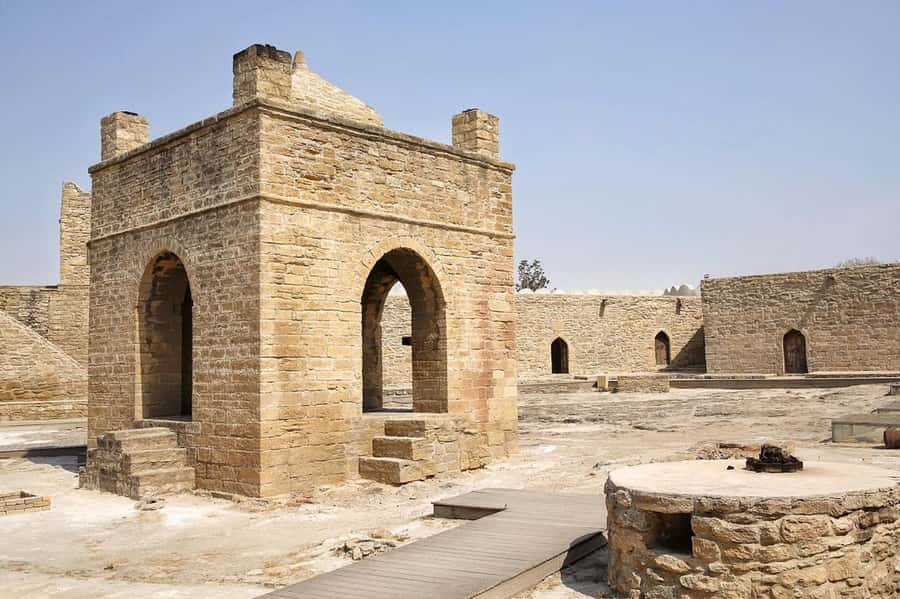
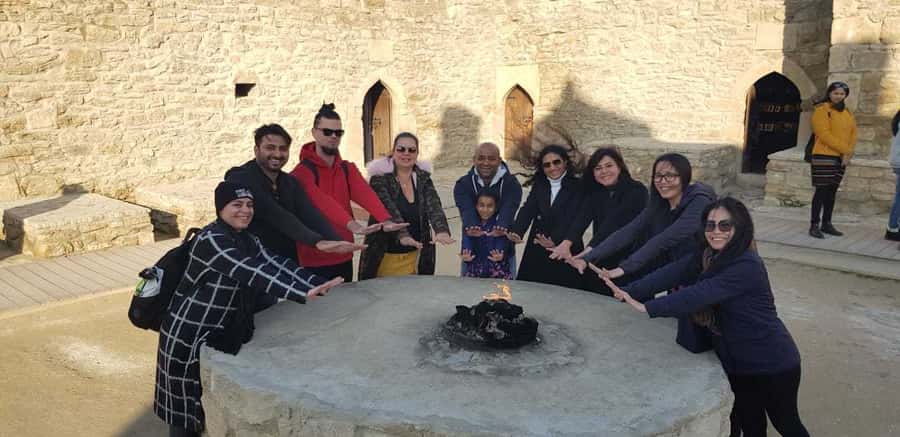
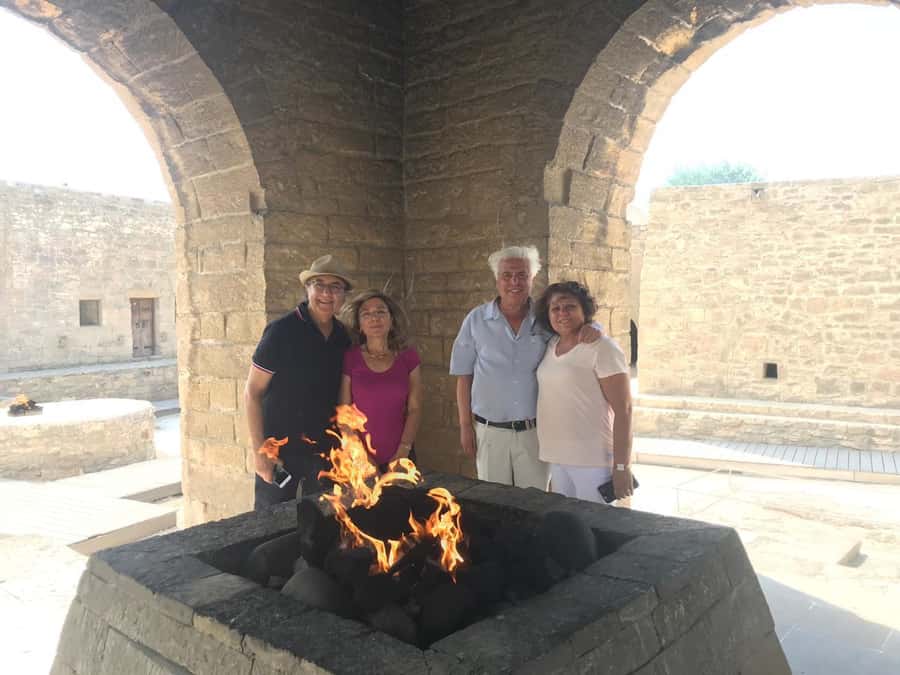
Ateshgah of Baku is an ancient Zoroastrian fire temple and former place of worship. The guided visit lasts about 40 minutes, giving you time to see the temple complex and understand why fire held such importance here.
The site is especially effective after Gobustan because the day has already moved from prehistoric symbols to later religious practice. Ateshgah adds cultural context to the nickname land of fire. It is not simply a place where flames happen to appear. It represents a tradition built around sacred fire and pilgrimage.
Listen closely to the guide at this stop. The courtyard, cells, and central fire area make more sense when someone explains how the temple was used. Sayed and Said have been praised for detailed explanations, while other guides, including Ughur, Irana, and Musa, have been singled out for making the history engaging and easy to follow.
Forty minutes is enough for a guided introduction and photographs. It is not a leisurely study of every corner. If you want to read every panel or linger alone, a private tour may suit you better than a small shared group.
Yanardag and the burning hillside
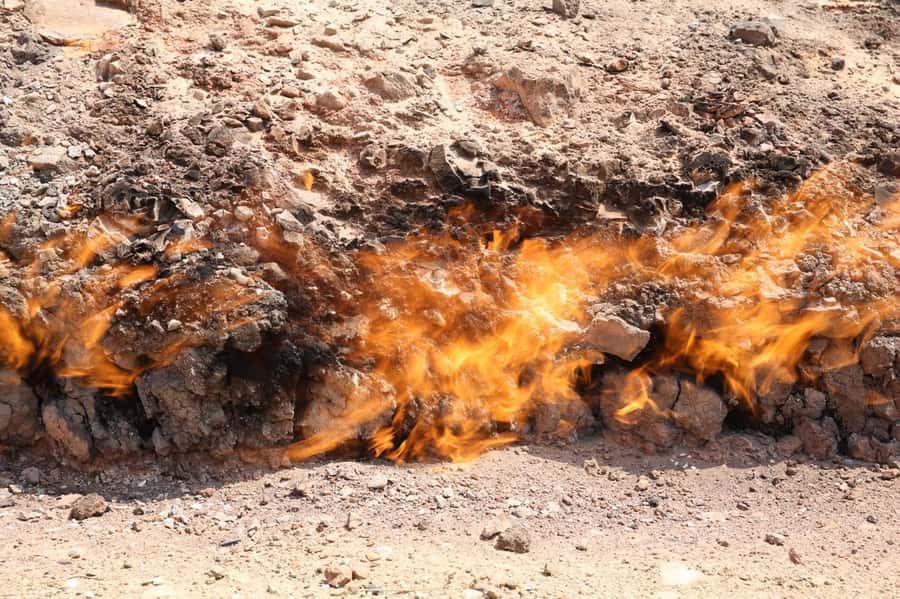
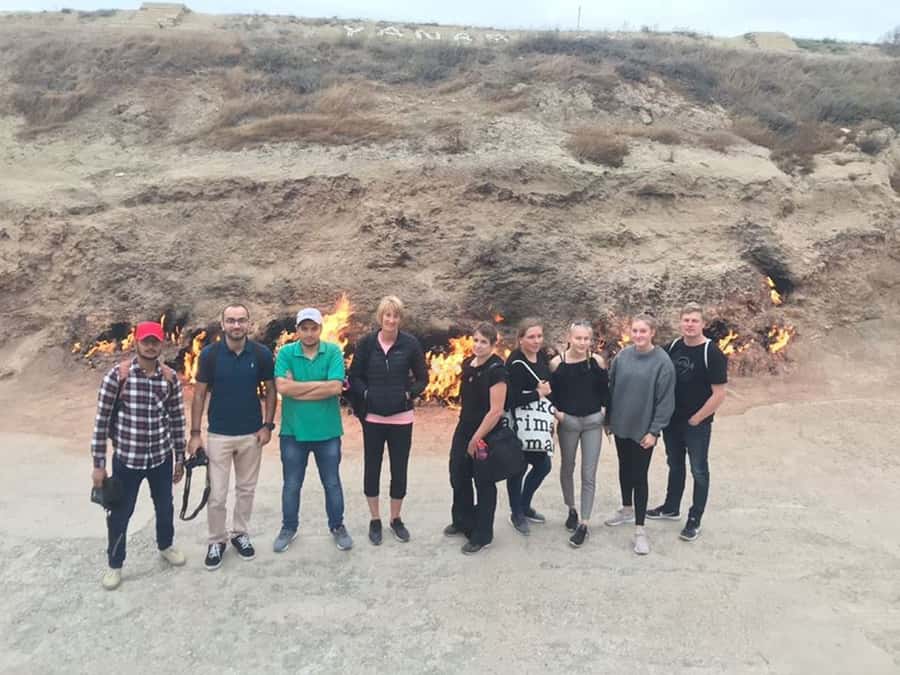
Yanardag closes the sightseeing portion with a natural gas fire that burns continuously on a hillside of the Absheron Peninsula. The stop lasts about 30 minutes.
This is the most immediately visual part of the afternoon. After a day of drawings, museum displays, and temple history, you finish with flames rising from the ground. The fire is natural, not a staged performance, and it gives a direct explanation for the region’s long connection with fire.
Yanardag is a short visit, so your guide’s commentary adds much of the meaning. You will have time to watch the flames and take pictures, but do not expect a long walk or a major hiking experience. The appeal is the sight itself and its place in the wider story of Azerbaijan.
I like having Yanardag at the end because it gives the day a clear final image. The only concern is that the stop can feel brief if you want more time outdoors. Still, after six or more hours on the road, a compact final attraction is not necessarily a bad thing.
Guides, vehicles, and the pace of the day
The guide can make a large difference on a history-heavy route. English and Russian tours are available, and past guide assignments have included Sayed, Said, Mahabat, Elcan, Leyla, Musa, Ughur, Irana, Samir, Yashar, Zaur, Nazir, Aqil, and Haider.
The strongest pattern is clear explanation mixed with a friendly manner. Guides have helped with group photos, answered questions about Azerbaijan beyond the scheduled sites, and kept people comfortable during a long day. One guide was praised for explaining clearly in both English and Turkish, though the stated tour languages are English and Russian, so confirm your language needs before booking.
Transportation is included, with hotel pickup and drop-off. Past groups have used comfortable vans, buses, and smaller vehicles. Small groups can make the long drives more pleasant and allow better conversation with the guide, while a private option gives you more control over questions and timing.
The schedule is the main compromise. You can cover Bibi-Heybat, Gobustan, the volcanoes, lunch, Ateshgah, and Yanardag in one day, but you cannot linger everywhere. I would plan this as an overview tour. If one place captures your imagination, return independently later if possible.
Is $29 good value?
Yes, for most people, the price is strong. At $29 per person, you receive transport, hotel pickup and drop-off, a professional guide, and the main sightseeing route. Museum tickets and entrance fees are included when that option is selected, so check the exact booking choice before paying.
Lunch is extra at about $8 to $12. Even after adding food, the total remains reasonable for a full day outside Baku. You are paying for convenience as much as admission: the driver handles the distances, and the guide links the stops into one story.
The value is best if you want all the headline sights and do not want to arrange a car. It is less ideal if you prefer a slow pace, dislike long road time, or want to spend half a day at Gobustan alone.
The no-shopping format improves the value for me. Your time goes toward the places you came to see, and there is less pressure to spend money along the way.
Who should book this experience?
I would recommend it to first-time visitors staying in Baku who want to understand the region beyond the city center. Families can benefit from the variety, since the volcanoes and burning hillside break up the more serious history stops. Couples and small groups will also get a good mix of photographs, culture, and unusual geology.
It suits people who enjoy guided context. Without explanations, Gobustan and Ateshgah can be easy to underread. The tour is also a good choice if you have only one free day for the outskirts of Baku.
I would hesitate if you need a relaxed schedule or have limited tolerance for road travel. Rain can remove the volcano stop, and the lunch venue is practical rather than a destination in itself. You should also expect a full day with several short visits, not a luxury excursion with long breaks.
Cancellation is free up to 24 hours before departure, and you can reserve now and pay later. Those terms are useful if your Baku plans are still moving around.
Should you book it?
Book this trip if you want the broadest introduction to Baku’s surrounding history and geology for a low price. The combination of Gobustan, mud volcanoes, Ateshgah, and Yanardag is hard to reproduce as easily on your own.
Choose a private or small-group version if you care about questions and a little extra breathing room. If you book a shared tour, accept the faster pace and keep some flexibility in case rain removes the volcanoes. For most visitors, the route offers an unusually good look at Azerbaijan’s ancient art, oil past, religious traditions, and natural fires in one well-packed day.
FAQ
How long does the tour last?
The tour lasts approximately six to eight hours, depending on the schedule and conditions.
What language is the tour offered in?
Live guiding is available in English and Russian.
Is hotel pickup included?
Yes. Pickup and drop-off are included from listed Baku hotels, hostels, restaurants, and meeting points. The provider contacts you the day before to confirm the pickup time.
How much does the tour cost?
The listed price is $29 per person.
Is lunch included?
No. Lunch is purchased separately at a buffet-style restaurant, with an expected cost of about $8 to $12.
What happens at Gobustan?
You visit the Gobustan National Park Museum, an indoor and outdoor museum with prehistoric rock drawings and petroglyphs. The guided visit lasts about one hour.
Will I definitely visit the mud volcanoes?
Not always. The mud volcano stop is skipped on rainy days for safety reasons.
How long is the mud volcano visit?
The sightseeing stop at the mud volcanoes is scheduled for about 20 minutes.
Are entrance fees included?
Museum tickets and entrance fees are included if you select the option that includes them. Check the selected package before booking.
Can I book a private tour?
Yes. Private and small-group options are available.
Newly written up around the world
- Xi’an: Daci’en Temple(Great Wild Goose Pagoda) E-ticket★ 3.3 · 57 reviews
- Kyoto: Fushimi Inari Taisha Shrine Walking Tour with Guide★ 4.8 · 18 reviews
- Xi’an: Terracotta Army, Lunch, City Wall, Pagoda, Bazaar★ 5.0 · 72 reviews
- Varanasi in a Day Ancient Temples Sarnath and Ghats★ 5.0 · 17 reviews
- Hidden Corners of Varanasi Secret Alleys Temples and Traditions★ 5.0 · 9 reviews
- Terracotta Army, Big Wild Goose Pagoda&City Wall Full Day Tour★ 4.5 · 47 reviews
- Bangkok: Grand Palace and Wat Arun Guided Walking Tour★ 4.5 · 118 reviews
- Ex-monk city & temples walking tour: (3.5 hours / 1.7 km.)★ 4.8 · 35 reviews
Azerbaijan Temple Tours, compared.
Gobustan & Mud, Fire Temple, Burning Mountain (Group & Private)
Read our review →
Gobustan-Mud Volcan-Fire Temple and Mountain Tour/Entrance inc
Read our review →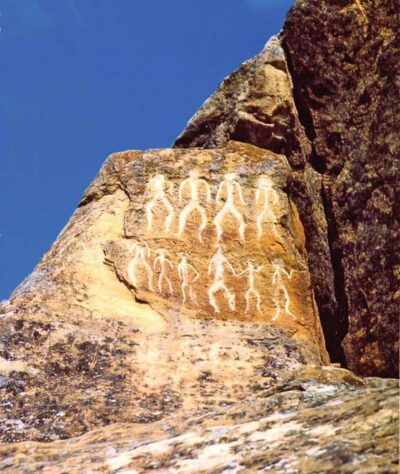
Gobustan Mud Volcanoes Temple & Entry tickets included
Read our review →Browse the lists this tour appears in