
Reviewed · SPA & HOT SPRINGS
Chiang Mai: Chiang Rai Temples, Karen Tribe and Hot Springs
Chiang Rai’s White, Blue, and Red Temples make this a striking day out, but the long-neck village and hot springs give it more range than a temple-only trip. You move from warm mineral water to brass neck rings, modern Buddhist art, and a giant Guan Yin statue in one packed northern Thailand circuit.
I like the excellent value at $35, especially with transport, a guide, insurance, and three temple entrance fees included. I also like the guides’ personal touch. Benz, Kwan, Ruby, Dee, Ann, and others have helped with photos, food tips, timing, and even small medical or transport needs. The drawback is plain: this is a very long day, with roughly six hours on the road and some bumpy sections.
Key points to know before booking
- Three very different temples: Compare the White Temple’s bright, surreal detail with the Blue Temple’s calm interior and Huay Pla Kang’s huge Guan Yin figure.
- Mae Kachan starts the day gently: You can rest, look around, and dip your feet in the hot spring, but swimming is not allowed.
- The Karen village needs thoughtful travel: The 300-baht entry fee is extra, and the neck-ring tradition may raise difficult questions about tourism and consent.
- Guides make a real difference: Benz, Kwan, Ruby, Dee, Ann, and other guides are praised for clear explanations, humor, photographs, and care for older or unwell passengers.
- Expect an 11-hour commitment: Traffic, roadworks, and the return drive can make the day feel closer to 12 hours.
- Bring your own earphones: The official guide speaks English, while a QR audio guide is offered in 41 languages.
Why this Chiang Rai day trip packs in so much
This is not a relaxed sightseeing day. It is a long northbound run from Chiang Mai, with an early meeting, several set stops, and a late return. Yet the route makes sense if you have only one spare day and want to see the best-known cultural sights around Chiang Rai without arranging separate transport.
The advertised duration is 11 hours, or 810 minutes. The drive back to Chiang Mai alone can take about three hours. Roadworks and traffic may add time, and a large coach can take a while to load everyone after each stop. I would not book this on the same day as a flight.
The reward is variety. The day moves through natural hot springs, a hill tribe village, three very different religious sites, small food stops, and views along the road. You will not have hours at each place, but you get a useful first look at northern Thailand beyond Chiang Mai.
More temple trips with a hot-spring stop in Chiang Mai:
- Chiangmai to Chiangrai: 3 Temples, Hot Springs& Lalitta Cafe
★ 4.5 · 659 reviews - Red, Blue, White Temples & Hot Spring Trip from Chiang Mai
★ 4.4 · 143 reviews - Chiang Mai: Chiang Rai Famous Temples & Hot Springs Day Trip
★ 4.0 · 129 reviews
Mae Kachan Hot Springs: a warm start, not a swimming stop
After about 90 minutes by coach, you reach Mae Kachan Hot Springs. This is mainly a rest stop and photo opportunity. You can enjoy the warm mineral water around the spring and, according to the experience details, dip your feet, but swimming is not permitted.
The stop works well early in the day. You can stretch your legs, buy coffee or Thai tea, and look around the small shops. Some people enjoy snacks such as roti here, and the brief pause breaks up the first stretch of driving.
Keep your expectations modest. This is not a spa visit or a quiet natural retreat. It is a convenient roadside stop with hot water, shops, and time to recharge. Wear shoes that are easy to remove if you want to soak your feet, and do not plan on changing into swimwear.
The Mae Kachan Karen village and the question of ethical visits
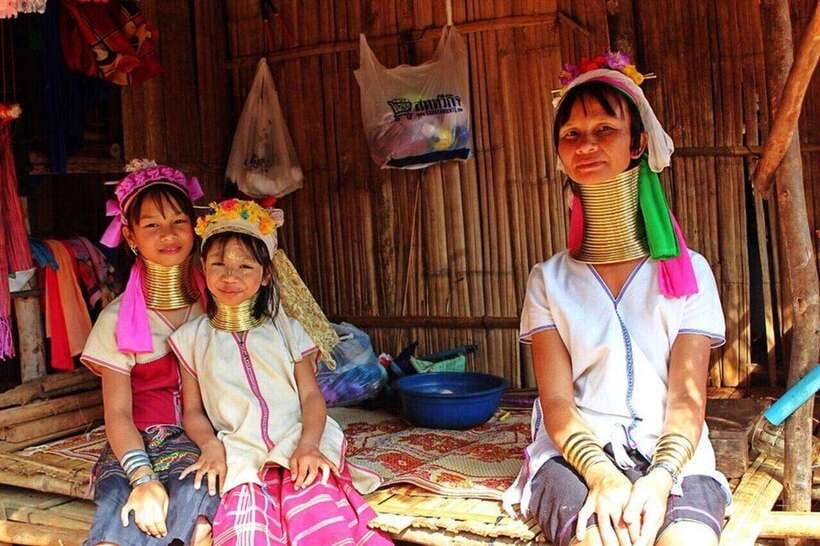
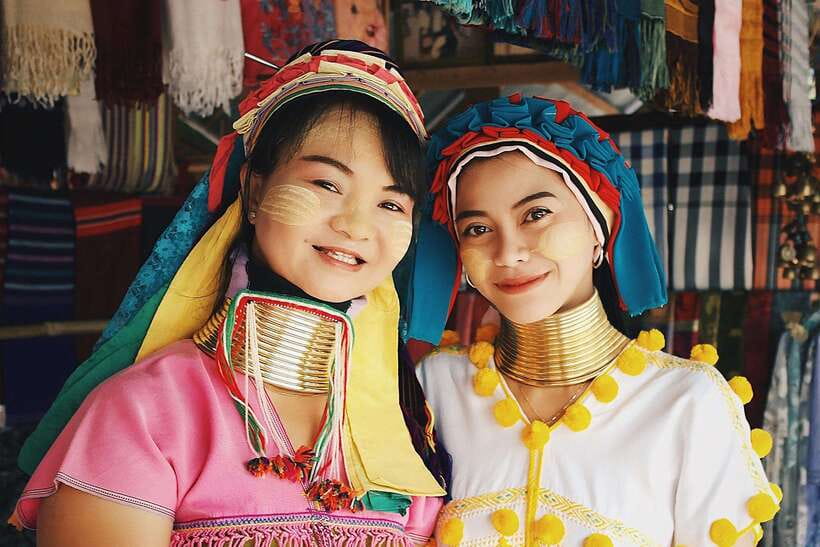
A short 15-minute ride brings you to the Mae Kachan Hill Tribe and Long Neck Village. The women’s brass neck rings are the central focus, along with handmade crafts and woven goods. Scarves made on looms are among the more practical purchases, and buying directly can support the village economy.
The entrance fee is 300 baht per person, paid separately. That cost matters when comparing the advertised tour price, since the $35 fare does not cover it.
You should also arrive with an open but critical mind. The tradition of wearing neck rings is presented as part of Karen cultural life, yet seeing young girls continue the practice can feel uncomfortable. I would avoid treating the visit as a simple photo stop. Look at the crafts, listen to the guide, and remember that the people here are not background decoration for your camera.
The stop lasts long enough to walk around, shop, and take photographs, but it is not described as a workshop or extended cultural exchange. If you want detailed information about the women’s daily work, ask the guide directly. Kwan and several other guides are praised for explaining local customs and helping people understand what they are seeing.
Wat Rong Khun, the White Temple, and modern Buddhist art
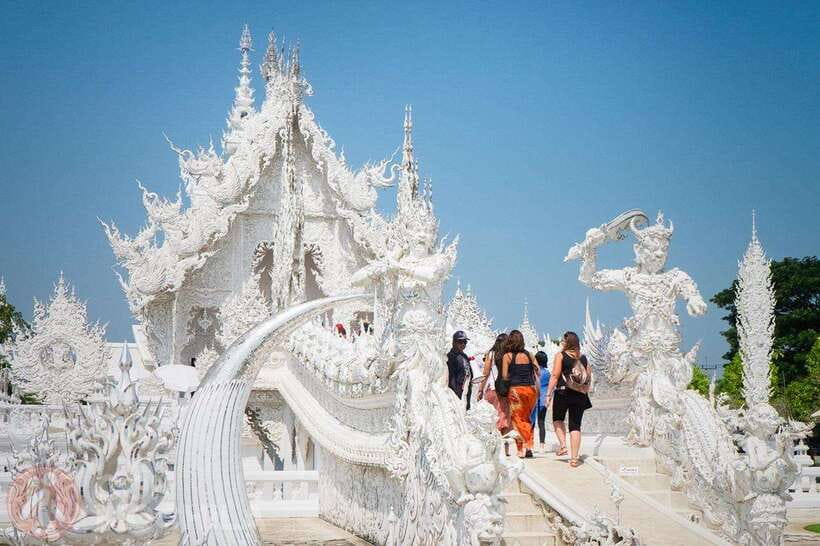
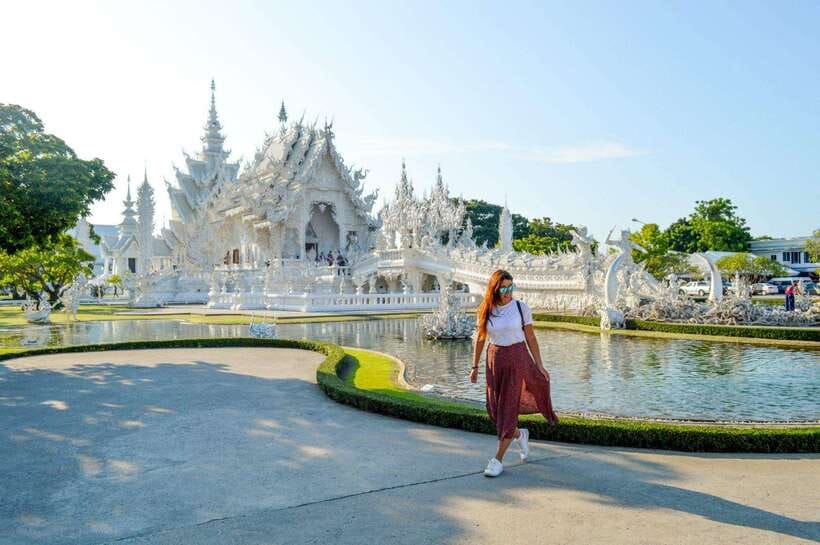
The longest road section follows, about two hours and 15 minutes. Your reward is Wat Rong Khun, better known as the White Temple. This is the visual centerpiece of the day.
Artist Chalermchai Kositpipat created the temple in a contemporary style. Its white surfaces suggest purity, while small glass details catch the light and refer to Buddhist wisdom. The grounds combine familiar religious forms with unusual modern images, so you may find yourself looking twice at details that do not fit a traditional temple visit.
The White Temple is not old, and that is part of its appeal. It shows how Thai religious art can keep changing instead of sitting still as a museum piece. The bright design is carefully built for close viewing, so do not rush straight through the main approach. Pause to study the carvings and the contrast between the pale structure and the surrounding setting.
The tour includes the entrance fee. You have time for photographs and a guided explanation, followed by lunch in Chiang Rai Province. Lunch is not included, but this is a useful place to choose a meal rather than hunt for food later. Guides have recommended Thai vegetarian dishes, and small local snacks are also available during the day.
Some people find the White Temple the strongest stop. Others prefer the Blue Temple because it feels quieter and more restful. I would give the White Temple your full attention, since later stops may feel shorter as the day wears on.
Other temple visits near Chiang Mai we have written up
- Chiang Rai White Temple and Blue Temple Day Tour
★ 4.6 · 3,366 reviews - Chiang Mai: White, Red/Black & Blue Temples Tour with Lunch
★ 4.2 · 2,017 reviews - Chiang Mai: Doi Suthep and Wat Umong Enchanting Evening Tour
★ 4.6 · 1,811 reviews - Chiang Mai: 3 Hour Old City and Temples Guided Walking Tour
★ 4.6 · 1,568 reviews
The Blue Temple brings color and calm
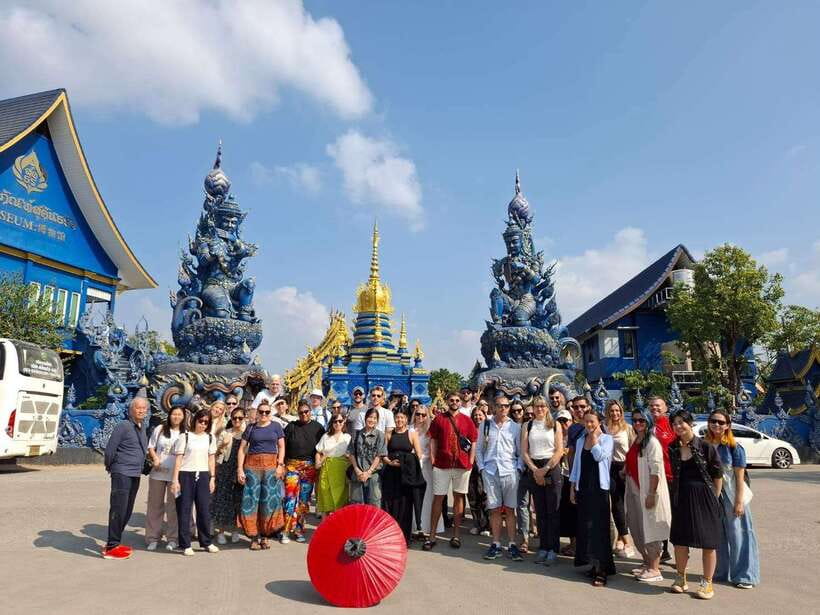
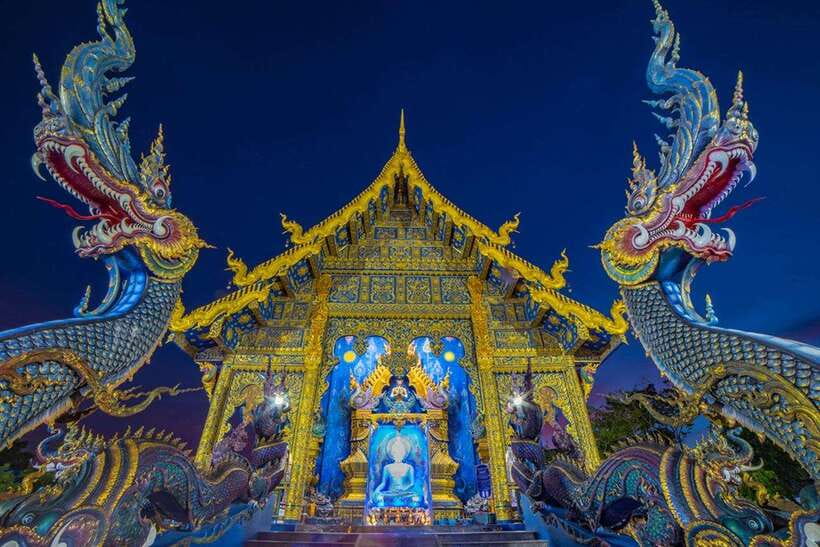
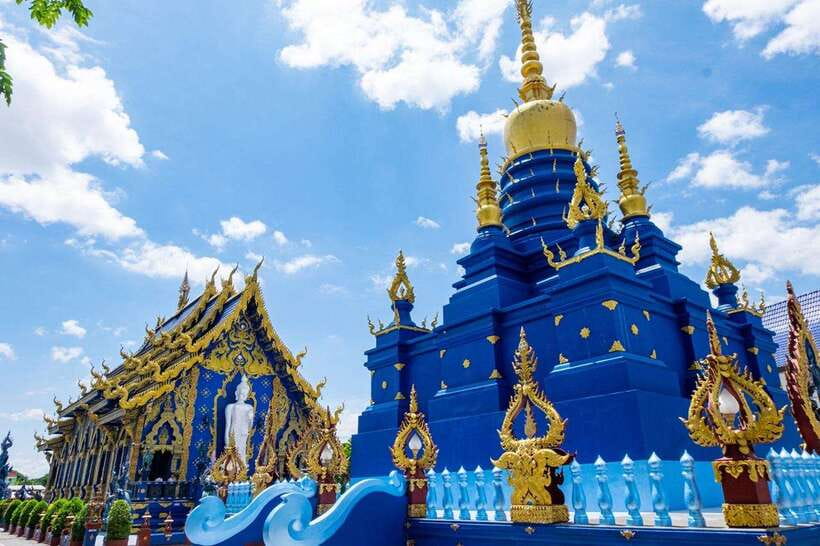
After lunch, a 30-minute drive takes you to Wat Rong Suea Ten, usually called the Blue Temple. It is a sharp contrast to the White Temple. Deep blue walls and gold details create a darker, cooler mood, while dragon figures guard the entrance.
Inside, a bright Buddha image gives the room a calm center. The design blends traditional Buddhist elements with modern artistic choices, much like the White Temple, but the effect is less dazzling and more peaceful. This is the place where I would slow down, lower my voice, and take in the interior before reaching for a camera.
The stop is fairly compact, so you can see the main features without needing a long visit. Blue coconut ice cream is a popular treat here, and several people have enjoyed it as a refreshing break in the heat. You should still dress modestly and follow temple rules. Comfortable shoes help because you will be walking and may need to remove footwear in religious areas.
The Blue Temple may be your favorite if you prefer atmosphere over spectacle. The White Temple catches your eye immediately. The Blue Temple rewards a few quiet minutes.
Huay Pla Kang Temple and the giant Guan Yin
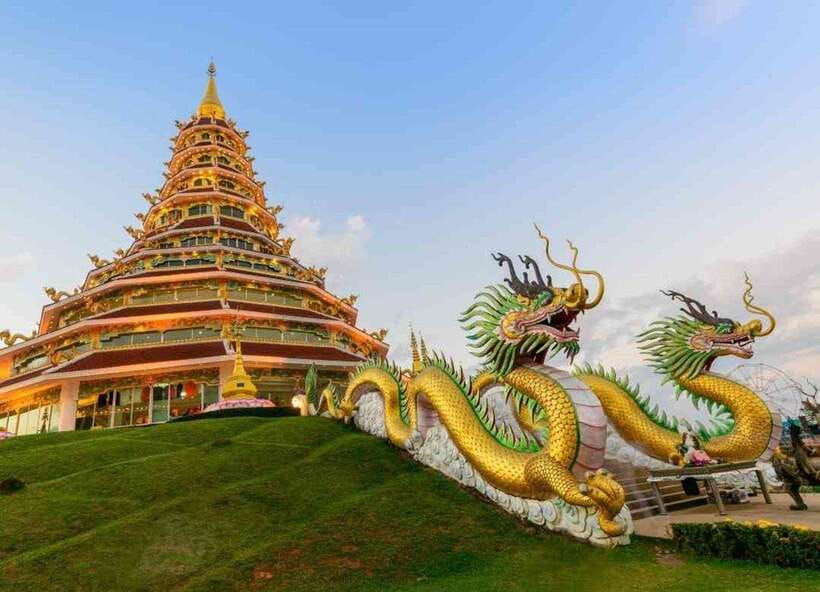
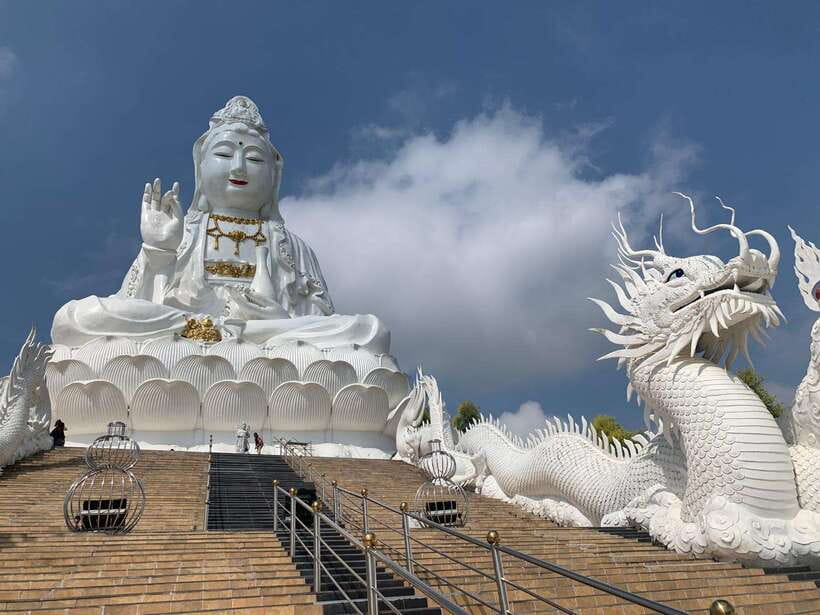
A 15-minute drive brings you to Huay Pla Kang Temple, sometimes called the Red Temple in tour descriptions because of its warm-toned structures. Its best-known feature is the large statue of Guan Yin, the Goddess of Mercy. The nine-tiered pagoda adds another strong viewpoint and gives the last temple a different shape from the first two.
Inside the pagoda, you can see carved figures and decorative details as you move upward. The climb can be tiring after a full day, and the time here may feel limited if you want to eat, take photographs, and explore the grounds. One person with reduced mobility was helped by an electric vehicle, but the tour is officially not suitable for people with mobility impairments.
This stop can be the most personal one. The giant Guan Yin dominates the view, but the smaller carvings and shrine details reward a slower look. If you want to meditate or simply sit quietly, tell your guide early so you can manage your time.
The return trip lasts about three hours. There may be a restroom, coffee, or snack break along the way, but prepare for a tired ride back to Chiang Mai.
Transport, guides, and the real pace of the day
The tour uses an air-conditioned vehicle, and some recent departures have had spacious coaches with USB ports. Bring your own charging cable. Water may be provided, but I would still carry a refillable bottle, sunscreen, and a hat.
The road can be bumpy, especially where construction is underway. That is not something the guide can fix, but it is worth knowing before you commit to a full day in a vehicle. Keep valuables with you, and do not bring large luggage or bags, since luggage is not allowed.
The guide can turn a long ride into useful time. Benz is praised for clear explanations, humor, photography tips, and personal attention. Kwan has helped with restaurant choices, timing, local songs, and arrangements for people continuing on to Chiang Rai. Ruby is known for keeping the group entertained during the long drive, while Dee and Ann are noted for warmth, organization, and clear cultural explanations.
The official guide speaks English only, despite the language options shown for booking. A QR audio guide is available in 41 languages, including Spanish, French, German, Chinese, Japanese, Korean, Thai, Vietnamese, and others. You must bring your own earphones. If English is not comfortable for you, the audio guide is more than a minor extra. It can determine how much meaning you get from each temple.
Large groups can create small delays. One person may be buying a snack while another is still taking photographs, and the bus cannot wait indefinitely. The stated policy is strict about late arrivals at the meeting point and during the tour, so listen carefully when the guide gives return times.
Is $35 good value for Chiang Rai?
At $35 per person, this is a strong deal for a long-distance day trip. The price includes round-trip transport from Chiang Mai, an official guide, insurance, and entrance fees to the White Temple, Blue Temple, and Huay Pla Kang Temple. Those inclusions remove much of the planning work.
You still need money for lunch, drinks, snacks, crafts, and the 300-baht long-neck village entrance fee. Carry smaller banknotes. Some food and craft sellers may not have change for 500 or 1,000 baht notes.
The value is best if you want maximum sightseeing in one day. A private car would give you more control over stops and timing, but it would cost more. This shared tour gives you a practical route, explanations, and transport at a low price, with less freedom and more time on the road.
What to bring and what to wear
Temples require respectful clothing. Bring comfortable clothes that cover shoulders and knees, plus easy walking shoes. You will want sunglasses, sunscreen, a sun hat, and insect repellent.
Bring your passport or ID card, since it is listed as required. Pack earphones if you want the multilingual audio guide. Do not bring large luggage, alcohol, or drugs.
I would also carry a little food for the return trip. There are chances to buy meals and snacks, but the day is long and meal timing depends on the group.
Who should book this tour?
I recommend it for first-time visitors to northern Thailand who have one free day in Chiang Mai and want to see Chiang Rai’s main cultural sights. It suits people who value variety, low cost, and a guide who can explain what they are seeing.
It is less suitable if you dislike long coach rides, need a slow pace, or want extended time at each temple. It is also not a good match for anyone with significant mobility limits.
For me, the strongest reason to book is the combination of the White Temple, Blue Temple, and Huay Pla Kang Temple. The Karen village adds a more complicated cultural encounter, while Mae Kachan gives you a simple break at the start. If you accept the long drive and plan for a full, tiring day, this tour offers a lot for the money.
FAQ
How long does the Chiang Rai day trip take?
The stated duration is 11 hours, or 810 minutes. Traffic, roadworks, and group loading can make the day feel closer to 12 hours.
Where does the tour meet in Chiang Mai?
The meeting point is Burger King Thapae at Hotel M Chiangmai. Arrive 15 minutes before departure, and allow extra time for Chiang Mai traffic.
Is hotel pickup available?
Pickup is optional and depends on the selected option. If you have hotel pickup, wait in the lobby 10 minutes before the scheduled time.
Is lunch included?
No. Lunch is not included, so bring money for food and drinks. Lunch takes place in Chiang Rai Province.
Can I swim at Mae Kachan Hot Springs?
No. Swimming is not allowed there. You can relax by the springs and dip your feet.
How much does the long-neck village cost?
The entrance fee is 300 baht per person and is not included in the tour price.
Is the guide available in languages other than English?
The official guide speaks English only. A QR audio guide is available in 41 languages, but you must bring your own earphones.
Newly written up around Chiang Mai
- Ex-monk city & temples walking tour: (3.5 hours / 1.7 km.)★ 4.8 · 35 reviews
- Visit Dantewada(Angel Land), Blue Temple, and Sticky Waterfall★ 5.0 · 120 reviews
- Doi Suthep and Wat Pha Lat Sunrise Tour (Small Group Only)★ 5.0 · 70 reviews
- One Day Tour Chiang Rai(White Temple , Blue Temple, Black House) Private Tour★ 5.0 · 63 reviews
- 1 day Private Tour to Unseen Temple in Lampang★ 5.0 · 55 reviews
- Doi Suthep Temple and Bau Thong Waterfalls Private Tour★ 5.0 · 114 reviews
- Chiang Mai: Chiang Rai Famous Temples & Hot Springs Day Trip★ 4.0 · 129 reviews
- Chiang Mai City and Temples Half-Day Tour★ 4.5 · 136 reviews
Spa & Hot Springs, compared.
Tiger Cave Temple, Emerald Pool and Hot Springs Tour
Read our review →
Chiangmai to Chiangrai: 3 Temples, Hot Springs& Lalitta Cafe
Read our review →
Lake Vouliagmeni Thermal Spa And Temple Of Poseidon Private Full Day Tour
Read our review →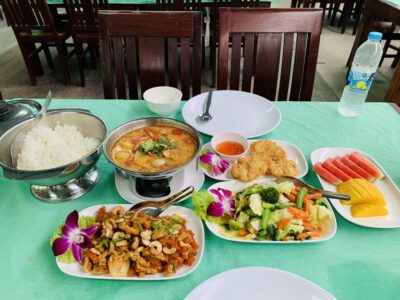
Ao Nang: Hot Spring, Emerald Pool & Tiger Cave Temple Tour
Read our review →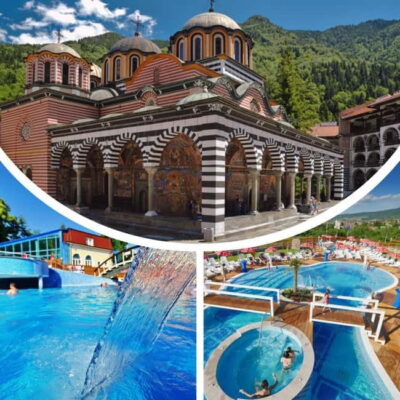
Rila Monastery UNESCO Site & Outdoor Mineral Spa
Read our review →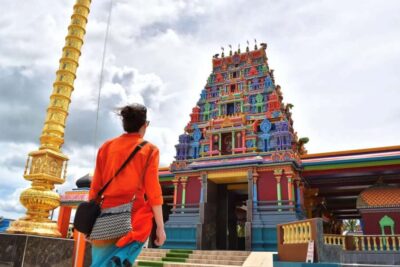
Nadi: Garden Village Hot Spring & Temple Highlights Tour
Read our review →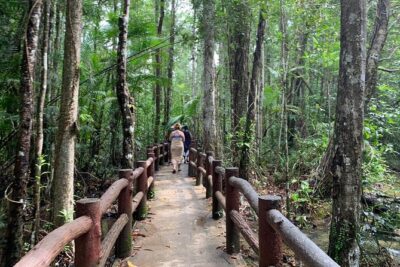
All day Krabi Jungle Tour (Hot Spring Water, Emerald Pool, Tiger Cave Temple)
Read our review →
Discover Krabi – Emerald Pool, Hot Springs & Tiger Cave Temple
Read our review →Browse the lists this tour appears in