
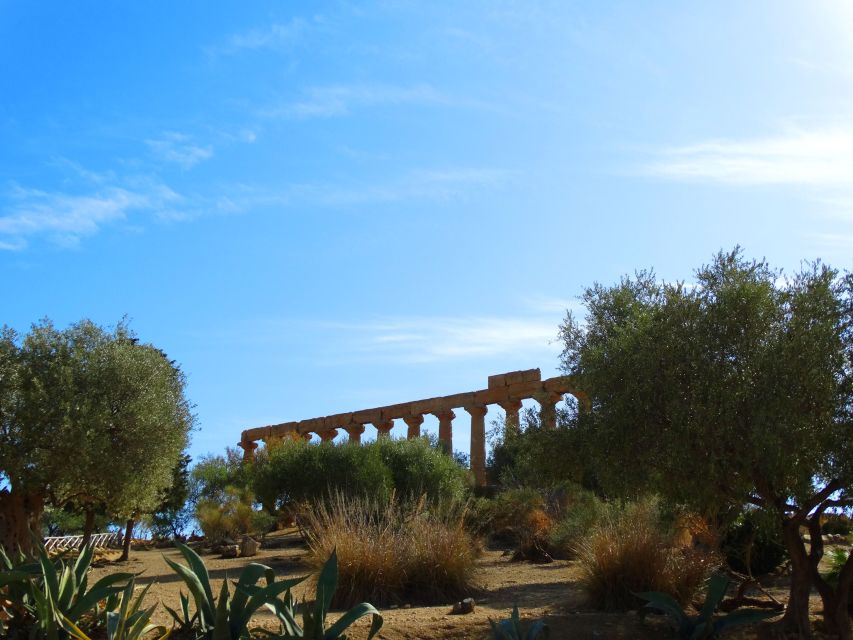
Reviewed · VALLEY OF THE TEMPLES TOURS
Agrigento: Valley of the Temples Private Tour
Agrigento’s Valley of the Temples gives you something rare: a long row of ancient Greek temples that you can explore on foot, with prickly pear plants and wide views across Sicily. The private tour moves through the site’s key monuments in about two hours, so you get the main story without wandering aimlessly.
I like the private format, especially if you want to ask questions about mythology, architecture, or ancient customs. I also like the chance to walk between the Temple of Juno, Concordia, Hercules, and Zeus with a licensed guide who can connect scattered ruins into a clear story. The main drawback is that entry tickets are not included, and the map location has caused at least one group to arrive late, so confirm that your meeting point is the ticket office.
Key points to know before you book
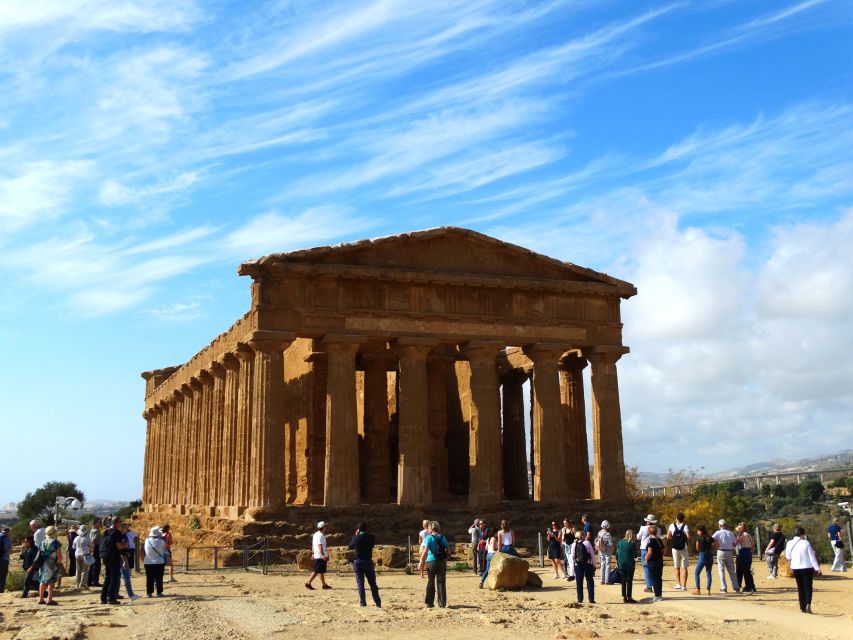
- The Temple of Concordia is the tour’s star: Its excellent preservation makes it one of the clearest examples of a Greek temple you can see in Sicily.
- You meet at the Juno entrance: Find the guide outside the ticket office at the largest car park by the Temple of Juno, not simply at a general map pin.
- The private group can include up to 25 people: The fixed price is $326.26 per group, making the cost easier to justify for families or larger parties.
- The Temple of Zeus includes a reconstructed Telamon: The giant stone figure, more than seven meters tall, helps you picture the original scale of the ruined temple.
- You get more than stone and columns: Guides explain mythology, politics, architecture, customs, and even the plants along the paths.
- The museum is not part of the visit: This experience focuses on the archaeological area and its outdoor monuments.
Why Agrigento deserves a guided walk
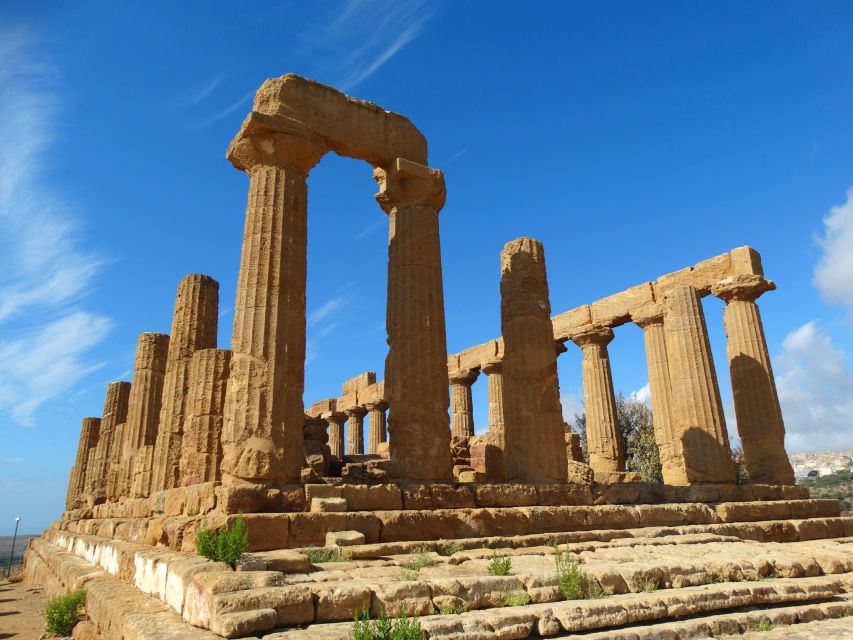
The Valley of the Temples is not a single building or a small ruin tucked behind a museum. It is a large archaeological area with a sequence of Doric temples spread along a ridge, and the walk gives you changing views as you move from one monument to the next.
That layout is part of the appeal, but it can also make the site harder to understand on your own. A column, foundation, or broken block tells only part of the story. A good guide explains what the building was for, how it fit into ancient Agrigento, and why some temples survived better than others.
A private guide also lets you set the pace within the two-hour visit. You can stop for questions, spend a little longer at Concordia, or ask for more detail about the enormous sculptures at Zeus. The strongest guide feedback centers on this personal attention. Rossana Valenti is praised for explaining not only the temples and Agrigento’s past, but also the trees and plants along the route. Daniel is praised for linking architecture with politics, mythology, customs, and the natural setting.
You should still keep your expectations in check. Two hours is enough for the main temples, but not for every corner of the archaeological area or the museum. This is a focused highlights tour, not an all-day archaeological study.
More Private Temple Tours in Italy
- Pantheon: The Iconic Ancient Roman Temple – Semi-Private Tour
★ 5.0 · 173 reviews - Agrigento; Valley of the Temples, Scala dei Turchi from Palermo, Private Tour
★ 5.0 · 68 reviews - Paestum: Private Tour of Greek Temples and Archaeological Museum
★ 5.0 · 60 reviews
Starting at the Temple of Juno
Your tour begins near the Temple of Hera Lacinia, also called Juno, at the upper meeting area by the largest car park. The guide should be easy to identify by a clearly visible license badge around the neck.
This meeting point matters. The exact map pin has reportedly been confusing, and one group arrived about 30 minutes late because of it. The guide extended that visit to make up the lost time, but you should not count on this happening every time. Go directly to the ticket office and the Juno temple car park, and allow a little time to find the guide.
Juno’s temple was erected around 450 BC on high ground. Its Doric columns and position near the top of the ridge give you an immediate sense of the site’s scale. You are not beginning in a quiet underground chamber or a small enclosed ruin. You start among open-air remains with views stretching across the valley.
The temple was dedicated to Juno, a goddess connected with women and fertility. The ancient building also had a role in wedding celebrations. These details give the first stop a human side: this was not only a grand religious structure, but also part of ceremonies and community life.
Walking to the Temple of Concordia
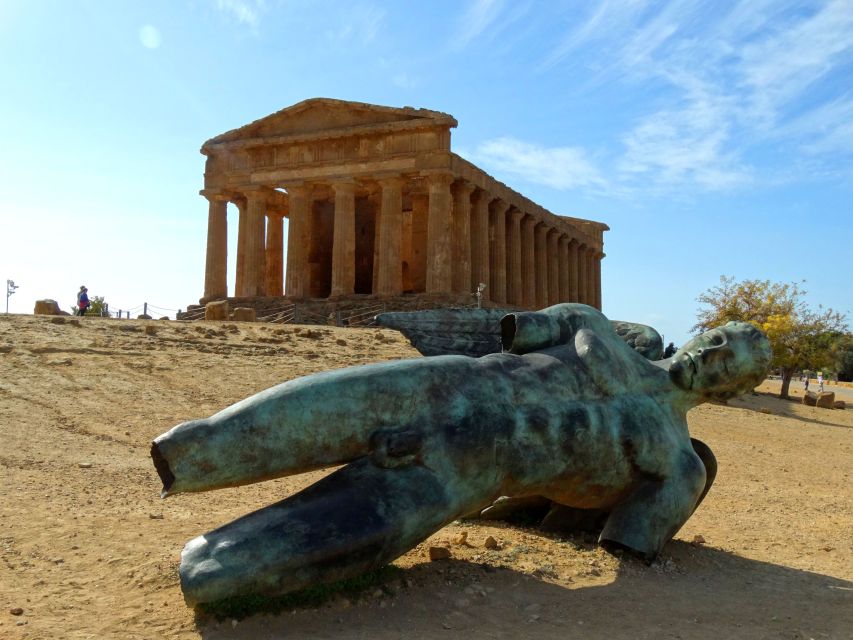
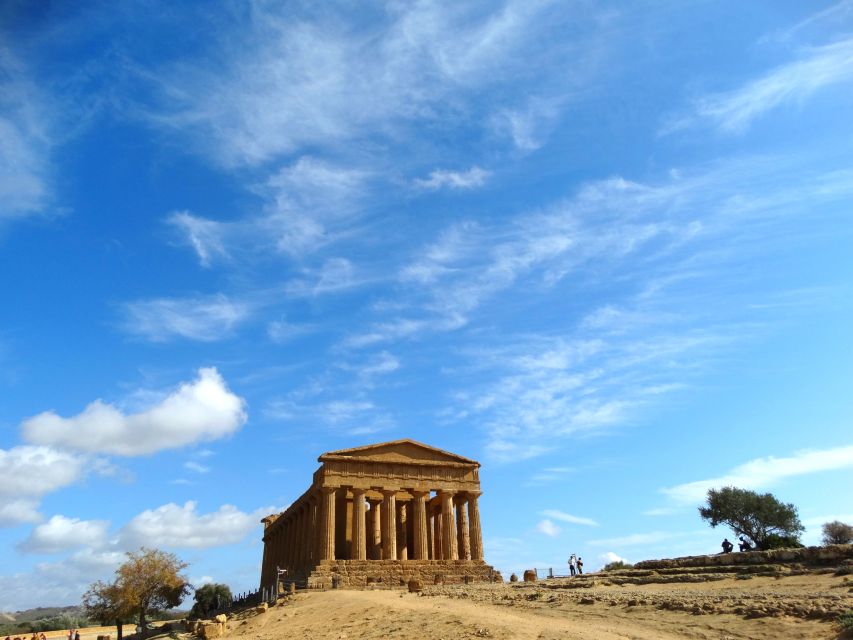
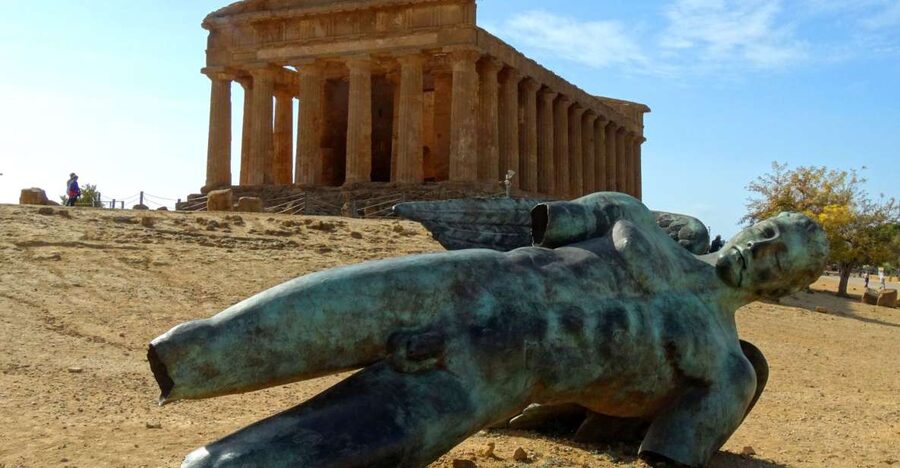
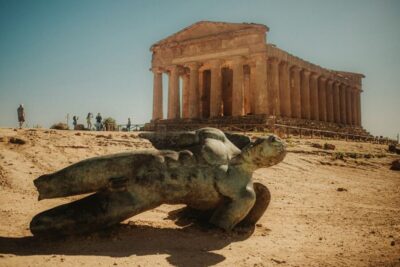
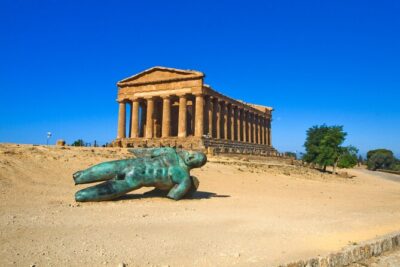
The short walk from Juno leads to the Temple of Concordia, the best-preserved major monument on this route. Dating from around 430 BC, it survived in unusually good condition because it was later converted into a Christian church.
That change in use matters. The building was not left entirely exposed to time and weather, so much of its form remains easy to read. You can look at the columns, roofline, and proportions and get a stronger sense of how a Greek temple appeared when it was still a functioning place of worship.
The Temple of Concordia is often the emotional high point of this visit. It has enough surviving structure to make the ancient design feel immediate rather than abstract. Your guide can help you notice the features that a quick photo stop might miss and explain why its preservation is so unusual.
Near the front is a modern bronze statue of Icarus by Polish sculptor Igor Mitoraj. The fallen figure recalls the myth of Icarus, who flew too close to the sun, melted the wax holding his wings together, and fell into the Mediterranean. The contrast is striking: an ancient temple behind a contemporary sculpture about human ambition and failure.
I like this pairing because it keeps the visit from becoming a parade of old stones. The ancient building tells one story, while the statue adds a modern response to myth. You can appreciate both without confusing the newer artwork with an ancient ruin.
The Temple of Hercules and the open-air walk
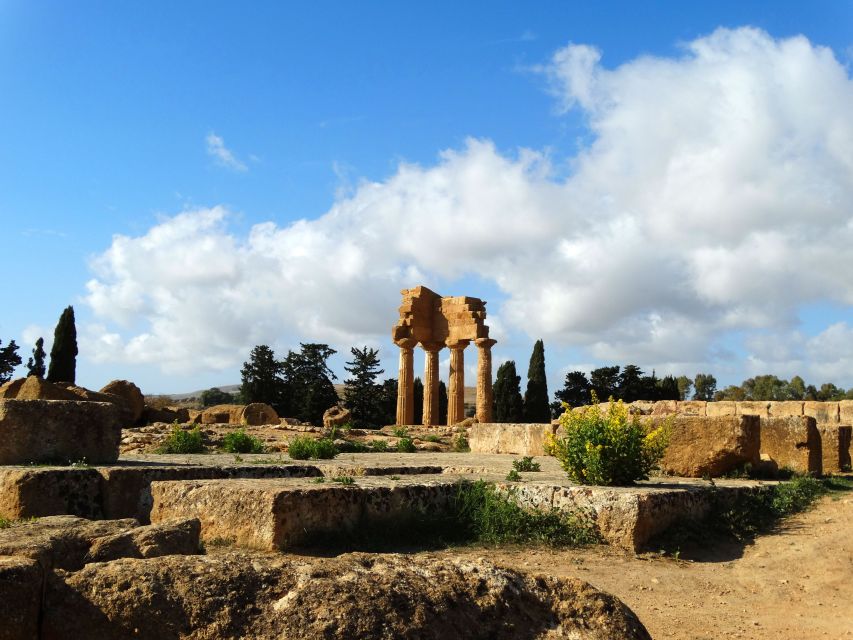
The next stop is the Temple of Hercules, or Heracles in Greek tradition. It is described as the oldest of the Doric temples in Agrigento, and its name is linked to a bronze statue of Hercules that was once kept inside.
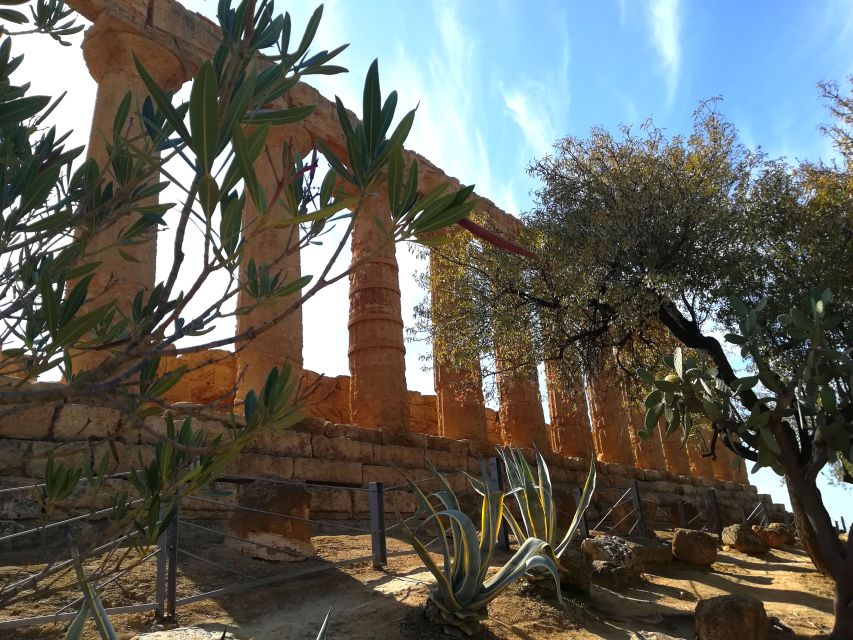
Here, the experience becomes more fragmentary. You will see remains rather than a fully standing temple, so the guide’s explanation becomes especially useful. Columns and foundations can be difficult to picture without help, and a private guide can point out what survives and explain how the original structure may have looked.
This section also brings some of the walk’s simplest pleasures. Prickly pear plants grow along the paths, and the views across the valley open up as you continue. You get a break from staring directly at columns and stones, with the surrounding Sicilian setting becoming part of the visit.
Bring your attention to the ground as well as the horizon. The route is an outdoor walk through an archaeological area, not a paved museum corridor. The supplied information does not specify accessibility details, so if uneven paths or walking distance are a concern, ask the provider before booking.
More Valley of the Temples Tours in Italy:
- Agrigento: Valley of the Temples Skip-the-Line Sunset Tour
★ 4.5 · 1,512 reviews - Palermo: Agrigento and the Valley of the Temples Day Tour
★ 4.2 · 1,240 reviews - Agrigento: Valley of the Temples Ticket & App Audioguide
★ 4.3 · 1,160 reviews - Agrigento: Valley of the Temples E-Scooter Tour
★ 4.6 · 557 reviews
The huge scale of the Temple of Zeus
The Temple of Jupiter, identified with Zeus in Greek tradition, gives the tour its largest sense of ambition. It was originally one of the biggest temples of classical antiquity, though earthquakes damaged it heavily over time.
Its later use as a stone source adds another layer to the story. Blocks from the temple were used in the construction of the pier at Porto Empedocle. Ancient buildings were not always treated as untouchable monuments. They could become quarries for later projects, and the remains here show how much can disappear through both natural damage and human reuse.
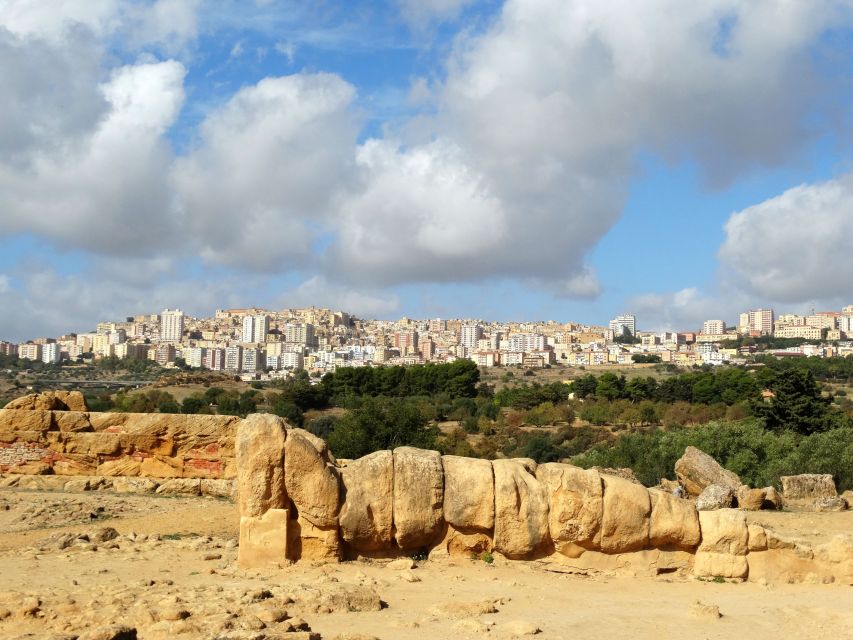
Among the ruins is a reconstruction of a Telamon, a giant male figure more than seven meters high. These figures were placed outside the temple and served as supports and guardians for the divine structure. Even in reconstructed form, the Telamon gives you a useful visual clue about the original scale.
This is where a guide’s architectural explanation pays off. Looking at scattered blocks alone, you might miss the intended size and drama of the temple. The towering figure helps you picture a building designed to overwhelm anyone approaching it.
The Temple of Zeus is also less intact than Concordia, so do not expect the same clean silhouette. Its value comes from scale, imagination, and the story of its destruction and reuse. The contrast between the two temples is one of the reasons the route works well.
What the private format adds
The advertised rate is $326.26 for a group of up to 25 people. That is not a low per-person price for a couple or a small family, but the calculation changes quickly if you are traveling with a larger party. A group of 10 pays far less per person than a group of two, while still getting a private guide rather than joining a general tour.
The main benefit is not simply having the guide to yourself. It is the ability to ask questions that match your interests. One person may want mythology, another may care about construction, and someone else may want to know how the site connects to later Sicilian history. A private format can accommodate those different interests more easily.
The language choice is another practical strength. Tours are offered in Italian, English, Spanish, German, and French. Be sure to select the language you need when checking availability, since the available starting times and languages can vary.
The tour lasts two hours, though one reported visit ran about two and a half hours. I would plan on the stated two-hour duration and treat any extra time as a bonus, not as part of your schedule. If you have a tight connection, a meal reservation, or another timed visit, leave room for delays.
Tickets, timing, and what is not included
Entry tickets are not included in the tour price. You can buy them at the ticket office on the spot, but you should factor that extra cost into your budget before comparing this tour with other options.
The museum visit is also excluded. That is useful to know because the outdoor temples and the museum are separate parts of an Agrigento visit. If you want both, you will need to arrange the museum separately or confirm whether your admission ticket covers it.
The meeting point is outside the ticket office at the Juno Temple car park, described as the largest parking area. The tour ends back at the same meeting point. This makes the experience easy to fit into a day based around the archaeological park, but it does not include transportation to or from Agrigento.
Cancellation is flexible up to 24 hours before the start for a full refund, and you can reserve now and pay later. Those terms are useful if your Sicily plans are still shifting, though the central practical issue remains the same: arrive at the correct ticket office, not just the location shown by a general map marker.
Which guide style suits this tour
You will get the most from this experience if you enjoy explanation rather than simply taking photographs. The strongest guide feedback points to Rossana Valenti and Daniel as especially effective at making the place understandable and lively.
Rossana Valenti is noted for covering a broad range of details, including the temples, Agrigento, historical events, and the plants along the path. That kind of guide is a good match if you like connections between the built site and the natural setting.
Daniel is praised for covering architecture, politics, history, customs, mythology, and plants. If you want to understand why the temples were built and what they meant to the society around them, that wider approach will suit you.
Guide assignments can vary, so you should not assume a particular person will lead every departure. Still, the recorded experience gives you a useful picture of the level of explanation to expect from a strong guide.
Who should book this experience?
I would choose this tour if you have limited time in Agrigento, want the four major temples explained clearly, or are traveling with family and prefer a private pace. It also suits a mixed-interest group, since the guide can shift between architecture, mythology, ancient customs, and the plants along the route.
It is a particularly good fit for a group large enough to share the fixed price. For one or two people, compare the cost carefully with a group tour or self-guided visit. The private attention may be worth it, but the value is strongest when several people split the fee.
You may want something longer if you hope to see every archaeological feature, visit the museum, or study the site in depth. The two-hour route is focused and useful, but it cannot cover everything in this large outdoor area.
Should you book the Valley of the Temples private tour?
Book it if you want the main monuments explained in a clear order, especially Juno, Concordia, Hercules, and Zeus. The Temple of Concordia, the Icarus statue, and the seven-meter Telamon give the walk plenty of memorable sights, while the private format lets you ask questions along the way.
Before paying, check the language, confirm the start time, budget separately for entry tickets, and make a note of the exact meeting point at the Juno ticket office. If you are visiting as a larger party, the $326.26 group price can be a sensible way to get a personal guide. For a small group on a tight budget, the value is less obvious, but the focused route and strong guide options still make it a solid choice for understanding Agrigento rather than simply passing through it.
FAQ
How long does the private tour last?
The tour lasts two hours. Starting times depend on availability.
What temples are visited?
The route includes the Temple of Juno, the Temple of Concordia, the Temple of Hercules, and the Temple of Jupiter, also called Zeus.
Are entry tickets included?
No. Entry tickets are not included, but you can buy them at the ticket office on site.
Is the museum included?
No. The museum visit is not part of this activity.
Where do I meet the guide?
Meet the guide outside the ticket office at the Temple of Juno car park, described as the largest car park. The guide wears a clearly visible license badge.
What languages are available?
The live guide can conduct the tour in Italian, English, Spanish, German, or French.
How many people can join the private group?
The private group can include up to 25 people.
Can I cancel the booking?
Yes. You can cancel up to 24 hours in advance for a full refund. You can also reserve now and pay later.
Newly written up around Italy
- Sunset visit Valley of the Temples Agrigento★ 4.5 · 93 reviews
- Paestum: Private Tour of Greek Temples and Archaeological Museum★ 5.0 · 60 reviews
- Agrigento; Valley of the Temples, Scala dei Turchi from Palermo, Private Tour★ 5.0 · 68 reviews
- Agrigento Valley of the Temples and Villa Romana del Casale Tour from Palermo★ 4.5 · 134 reviews
- Catania: Valley of the Temples & Piazza Armerina with Snack★ 4.5 · 136 reviews
- Valley of the Temples and Villa Romana del Casale Day Trip from Taormina★ 4.0 · 137 reviews
- Agrigento and Valley of the Temples Day Trip from Palermo★ 4.0 · 140 reviews
- Agrigento: Valley of the Temples Tour Skip-the-Line Entry★ 4.4 · 156 reviews
Valley of the Temples Tours, compared.
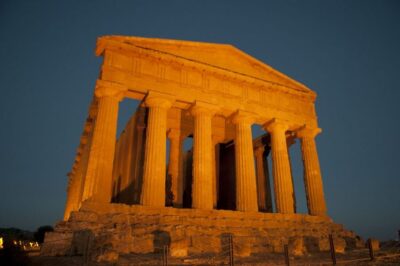
Valley of the Temples Skip-the-Line Sunset Tour
Read our review →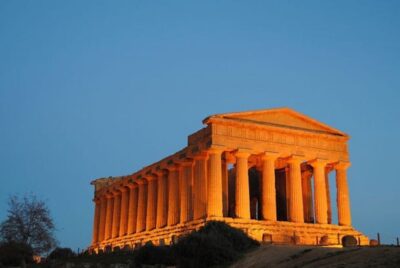
Agrigento and the Valley of the Temples Day Tour
Read our review →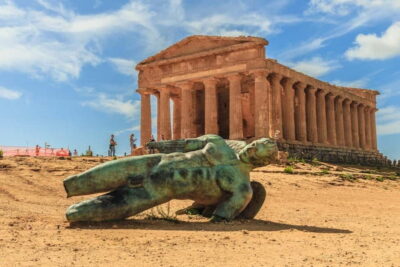
Valley of the Temples Ticket & App Audioguide
Read our review →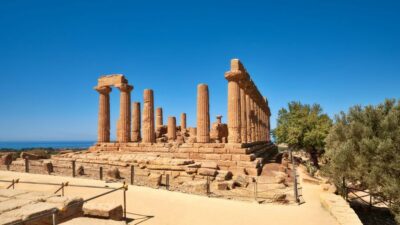
Valley of the Temples and Scala dei Turchi Day Trip
Read our review →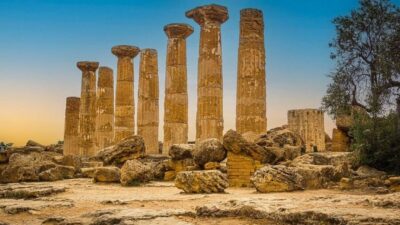
Valley of the Temples and Turkish Steps with Snack
Read our review →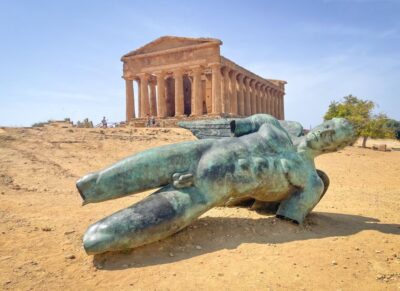
Valley of the Temples Entry Ticket & Audio Guide
Read our review →Browse the lists this tour appears in