
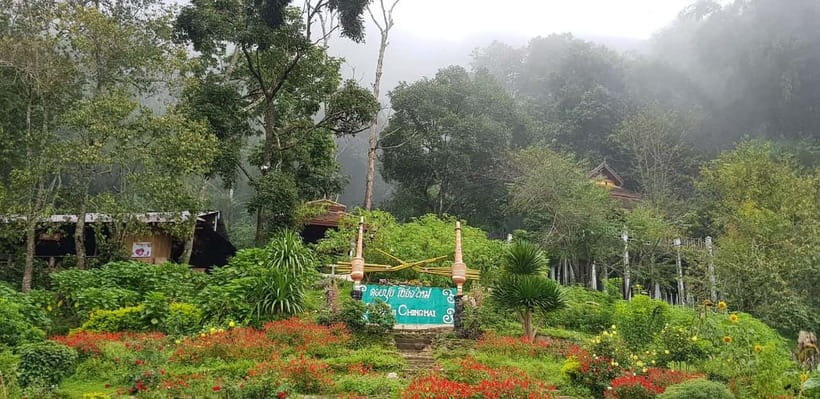
Reviewed · DOI SUTHEP TEMPLE TOURS
Chiang Mai: Doi Suthep Temple & Hmong Village Tour
Chiang Mai’s most famous hilltop temple and a Hmong village fit into one brisk morning on this four-hour trip. The main prize is Wat Phrathat Doi Suthep, where a gold-covered pagoda, Lanna details, and a 3,520-foot viewpoint give you both culture and a fine look over the city.
I like the easy hotel pickup and the included cable car, especially if you do not want to tackle all 306 steps. I also like the mix of a major temple and a hill community in one outing. The catch is time: the Hmong village visit can feel hurried, and the shopping element may seem stronger than the cultural exchange.
Key points at a glance
- The temple is the clear highlight: See a gold-plated pagoda, ornamental umbrellas, and Lanna architecture at Wat Phrathat Doi Suthep.
- You have two ways to reach the top: Take the included cable car or climb the 306 Naga-lined steps.
- The viewpoint is worth the ride: At about 3,520 feet, the mountain offers broad views across Chiang Mai.
- The Hmong village stop is brief: You get roughly 40 minutes for the village, museum option, handicrafts, and local clothing.
- Pickup is limited to central areas: Morning collection covers the Old Town, Night Bazaar, Nimman Haemin, and some Santitham addresses.
- The price is practical: At $22 per person, transport, guide, temple entry, cable car, and accident insurance are bundled together.
Why This Four-Hour Trip Works
This excursion gives you two very different sides of Chiang Mai Province without asking you to arrange transport up the mountain. You begin with a major religious site, then continue to a Hmong village where you can see clothing, handicrafts, and a small museum.
At $22 per person, the value is strongest if you are staying in one of the central pickup zones. The price covers your ride, an English-speaking licensed guide, the Wat Phrathat Doi Suthep ticket, cable car access, hotel pickup and drop-off within downtown, and travel accident insurance. You will still need money for personal purchases and the optional 20-baht Hmong village museum ticket.
I would choose this tour for a first morning in Chiang Mai, especially if you want a simple introduction to the area around Doi Suthep. It is less suitable if you want a slow, reflective temple visit or plenty of time to browse village shops.
More Doi Suthep Temple Tours in Chiang Mai:
- Chiang Mai: Doi Suthep and Wat Umong Enchanting Evening Tour
★ 4.6 · 1,811 reviews - Chiang Mai: Doi Suthep, Wat Umong, and Pha Lat Sunrise Tour
★ 4.7 · 1,425 reviews - Chiang Mai: Wat Pha Lat & Wat Phra That Doi Suthep Tour
★ 4.8 · 1,207 reviews
Morning Pickup From Chiang Mai’s Central Areas
Pickup runs between 8:00 and 8:30 am from the Night Bazaar and Old Town areas. Collection is generally between 8:30 and 9:00 am in Santitham and Nimman.
Give the exact accommodation name and address when booking. Pickup is not offered from an Airbnb that has only a street address and no identifiable business name. In that case, select a nearby hotel or building that is easy to locate on Google Maps.
The trip uses a van, with about one hour on the first drive. The road climbs through the hills around Chiang Mai, so the ride itself gives you a change from the city’s streets. Bring water, sunscreen, and a camera, and wear shoes that can handle steps and uneven walking.
The listed end points are in central Chiang Mai, including McDonald’s near the Thapae area. This can be useful if your accommodation is outside the pickup zone, but check the exact option before booking because the meeting and drop-off points can vary.
Reaching Wat Phrathat Doi Suthep by Cable Car or Stairway
After the roughly one-hour drive, you get about an hour at Wat Phrathat Doi Suthep. From the lower area, you can use the included cable car or climb the famous staircase.
The staircase has 306 steps and is lined by a long Naga, the mythical dragon-headed serpent seen in Thai religious art. The stairway is not just a way up. It is part of the visual arrival at the temple, with the serpent body guiding you toward the upper complex.
The cable car is the sensible choice if your knees are tired, you have limited mobility, or you want to save energy for the temple itself. The information provided describes the activity as wheelchair accessible, but non-folding wheelchairs are not permitted. If you need the cable car or have a mobility concern, confirm the practical arrangements before departure.
At the top, the golden pagoda is the main sight. It is covered with engraved gold plates and framed by four ornamental umbrellas. The design reflects Lanna architecture, the northern Thai style closely linked with Chiang Mai.
You should dress for a religious site. Short skirts and sleeveless shirts are not allowed, so pack a light covering if your clothing does not meet temple rules. Comfortable shoes matter here, even if you take the cable car, because you will still walk around the complex and viewpoint.
The 3,520-Foot View Over Chiang Mai
The temple would be worth visiting for its religious architecture alone, but the mountain view adds a strong second reason to come. From the viewpoint at about 3,520 feet, you can look across Chiang Mai from above.
The view gives you useful orientation. Instead of seeing the city as a collection of streets, you get a broader sense of its spread beneath the surrounding hills. Weather will affect how clear the panorama looks, so do not treat the viewpoint as a guaranteed postcard scene on every morning.
Your guide leads the temple visit and explains what you are seeing. The quality of this part depends on the guide assigned to your group. One guide named Taya received specific praise for making the temple visit informative, while another account found the Doi Suthep explanation too short. That contrast is a fair warning: the temple stop is scheduled for about an hour, so the pace can be brisk.
I would listen closely during the first explanation, then use free moments to look around for yourself. If the guide moves quickly, you may need to ask direct questions rather than wait for a long talk.
Other temple visits near Chiang Mai we have written up
- Chiang Mai: Chiang Rai Temples, Karen Tribe and Hot Springs
★ 4.7 · 5,401 reviews - Chiang Rai White Temple and Blue Temple Day Tour
★ 4.6 · 3,366 reviews - Chiang Mai: White, Red/Black & Blue Temples Tour with Lunch
★ 4.2 · 2,017 reviews - Chiang Mai: 3 Hour Old City and Temples Guided Walking Tour
★ 4.6 · 1,568 reviews
A Short Drive to the Hmong Village
The next van ride takes about 20 minutes. You then have around 40 minutes at the Hmong hill tribe village before the longer ride back toward Chiang Mai.
This stop gives you a look at traditional clothing, handicrafts, ornaments, and textiles. You can also pay 20 baht for an optional museum visit. The village adds a human and everyday angle to the morning, rather than making the entire trip about a single monument.
Still, keep your expectations measured. A 40-minute stop is enough for a quick look, a museum visit, and perhaps a purchase. It is not enough for a long conversation about Hmong history or a relaxed walk through every part of the community.
The shopping element is part of the visit. You can bargain for textiles, ornaments, or handicrafts, but do not feel obliged to buy. Some people may find the commercial side useful, especially if they want locally made souvenirs. Others may feel the stop is aimed too heavily at sales.
One account described the village as not very interesting and focused on tourist spending. Another found the village and museum worthwhile but wanted more time at the market. This tells you what to expect: the stop can be pleasant, but it is not presented as a fully independent cultural visit.
You may also encounter pressure to move quickly between stalls. If you want to browse, politely ask for a few extra minutes, but remember that the van is working to a fixed schedule. The guide may accompany you among sellers, which some people find helpful and others may find uncomfortable.
What the Guide Adds to the Experience
The guide is an English-speaking licensed professional, and the guide can make a real difference to the morning. At Doi Suthep, good explanations help you understand the Lanna style, the gold pagoda, the Naga staircase, and the religious setting instead of simply taking photographs and leaving.
A guide may also help with the practical parts, such as finding the cable car, keeping the group on time, and explaining the village museum. One guide helped a couple who had left their wallet at the hotel by advancing the entrance fees for the village attractions. That kind of help can matter during a short organized trip.
At the same time, the schedule leaves little room for a long, open-ended conversation. If you want more background, ask questions early in the temple visit. Ask about the pagoda, the umbrellas, the staircase, or the village museum while the guide is already explaining the stop.
The tour is in English. If you need another language, this is not the right choice based on the information available.
Transport, Timing, and the Real Pace
The four-hour schedule sounds generous until you break it down:
- About one hour from Chiang Mai to Doi Suthep
- About one hour at the temple
- About 20 minutes to the Hmong village
- About 40 minutes at the village
- About 70 minutes back toward the listed drop-off points
That leaves little spare time for delays, extended shopping, or a leisurely temple visit. The return ride is the longest single travel section, so the experience is best viewed as a compact mountain excursion rather than a slow day in the hills.
The van makes this easier than arranging separate taxis or negotiating transport on your own. It also means you follow the group timetable. You cannot decide to stay longer at the temple and skip the village without affecting the rest of the group.
This pace suits you if you want a broad taste of the area before lunch. It may frustrate you if you prefer to linger, photograph every detail, or spend a full hour at the market.
What to Wear and Carry
Dress for both a temple and a warm outdoor stop. Wear comfortable shoes, bring water, and use sunscreen. A camera is worthwhile for the pagoda and city view.
Your clothing must cover shoulders and knees enough to meet the temple rules. Short skirts and sleeveless shirts are not allowed. A lightweight scarf or overshirt can solve the problem without taking up much space.
Leave large bags and luggage behind. Pets are not allowed, and non-folding wheelchairs and non-folding strollers are also excluded. Unaccompanied minors cannot join the activity.
The mountain setting may feel different from central Chiang Mai, but the tour information does not promise cool weather. Bring sun protection and water rather than assuming the hill will be chilly.
Is the $22 Price Good Value?
For a four-hour organized trip, $22 is a reasonable price if you use the included pickup and transport. The cost covers several items that can add up when arranged separately: the van, an English-speaking guide, the Doi Suthep ticket, cable car access, downtown pickup and drop-off, and travel accident insurance.
The value is less about the length of each stop and more about convenience. You get the temple, the viewpoint, and the village in one morning without worrying about a driver or route planning.
You should budget extra for personal purchases and the optional 20-baht museum ticket. Handicrafts, textiles, ornaments, and other village items are not included. Also remember that the pickup benefit applies only to listed central areas and eligible accommodations.
I would call the price good for a first visit, but not a bargain if your main goal is extensive village contact. The temple and transport carry most of the value.
Who Should Book This Excursion?
I would recommend it to you if you want:
- A short introduction to Doi Suthep
- A practical way to reach the mountain from central Chiang Mai
- A guide to explain the temple
- A city viewpoint without arranging a private car
- A brief look at Hmong handicrafts and village life
- A morning activity that fits into a wider Chiang Mai schedule
I would think twice if you want a quiet spiritual visit, detailed cultural study, or a long shopping stop. The Hmong village is a quick visit, and the fixed timetable can make the market feel rushed.
Families should note that unaccompanied minors are not allowed, and non-folding strollers are not permitted. People using wheelchairs should confirm that their equipment meets the folding requirement, despite the activity being described as wheelchair accessible.
Free cancellation is available up to 24 hours before departure, and you can reserve now and pay later. Those terms help if your Chiang Mai plans are still shifting, but the main decision is still about pace and expectations.
Should You Book the Doi Suthep and Hmong Village Tour?
Book this tour if you want the best-known temple outside Chiang Mai, a high viewpoint, and a short village stop at a low price. The gold pagoda and mountain view are the strongest parts, and included transport makes the morning easy.
Skip it if the Hmong village is your main reason for going and you want unhurried time with the community. For most people, this works best as a compact first look at Doi Suthep and the hills, with the understanding that the village visit is brief and partly focused on handicrafts.
FAQ
How long does the Doi Suthep and Hmong village tour last?
The tour lasts about four hours, including transport from Chiang Mai, the temple visit, the Hmong village visit, and the return to the listed drop-off points.
What time is hotel pickup?
Pickup is between 8:00 and 8:30 am from the Night Bazaar and Old Town areas. Pickup is between 8:30 and 9:00 am from Nimman and Santitham areas.
Which areas have free pickup?
Free pickup is available from hotels or guesthouses in the Old Town, Night Bazaar, Nimman Haemin, and some parts of Santitham. Provide the accommodation name and address when booking.
Is the Doi Suthep entrance ticket included?
Yes. The Wat Phrathat Doi Suthep entrance ticket and cable car are included.
Can I climb the stairs instead of taking the cable car?
Yes. You can climb the 306 steps lined by the Naga staircase, or use the included cable car.
How much time is spent at Wat Phrathat Doi Suthep?
The guided temple visit is scheduled for about one hour.
Is the Hmong village museum included?
No. The museum costs 20 baht and is optional.
Can I buy handicrafts at the Hmong village?
Yes. The visit includes opportunities to buy textiles, ornaments, and other handicrafts. Personal purchases are not included in the tour price.
What language is the tour conducted in?
The tour is conducted in English by a live English-speaking guide.
Newly written up around Chiang Mai
- Monk trails hike, Wat Phalat, Monk chanting, Wat Doi Suthep.★ 5.0 · 3 reviews
- Long Neck Village, Silver Temple & Chiang Mai Top Sites★ 4.7 · 17 reviews
- Lalita Cafe & Chiang Rai Temple(White+Blue) from Chiangmai★ 4.8 · 5 reviews
- Private : Sticky Waterfall & Secret Temple & Karen Village.★ 5.0 · 9 reviews
- Chiang Mai: Temples & Culture Tour★ 4.7 · 64 reviews
- From Chiang Mai: White Temple, Blue Temple & Black House★ 4.5 · 15 reviews
- Chiang Mai: Chiang Rai Temples & Black House Discovery Tour★ 4.4 · 12 reviews
- From Chiang Mai: Lamphun and Lampang Temples Tour★ 4.9 · 33 reviews
Doi Suthep Temple Tours, compared.
Doi Suthep and Wat Umong Enchanting Evening Tour
Read our review →
Doi Suthep, Wat Umong, and Pha Lat Sunrise Tour
Read our review →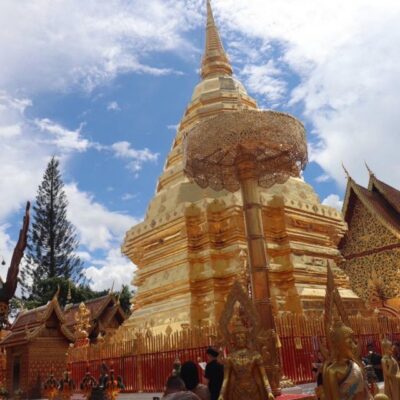

Wat Phra That Doi Suthep spiritual Sunrise Tour with an Ex-monk
Read our review →
Spiritual Sunrise Wat Doi Suthep, Pha Lat, Alms & Meditation
Read our review →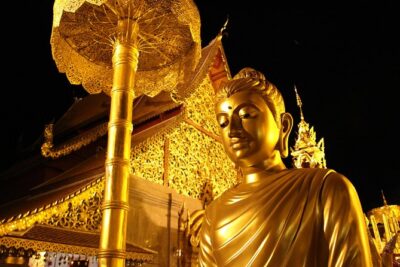
Best seller!! Amazing Night tour, Doi Suthep + Wat umong – Top Must visit!
Read our review →Browse the lists this tour appears in