
Reviewed · MALTA TEMPLE TOURS
Valletta: Monastery and Secret Garden Entry Ticket
For 400 years, St Catherine’s Monastery was shut away from public view. Today, you can enter this working religious home, learn how cloistered Augustinian nuns lived without leaving the building, and finish in a quiet garden tucked behind Valletta’s busy streets. The self-guided format lets you move at your own pace, while the surviving rooms and crypt give the visit a real sense of place.
I like two things here in particular: the peaceful cloister garden, complete with an old vine and fountain, and the honest look at a life built around prayer, work, and strict separation from the outside world. The main consideration is size. The monastery is not huge, and the audio guide depends on your phone, Wi-Fi, and an app that may not work smoothly on every older device.
What makes this small monastery visit worthwhile
- A rare look inside a closed order: St Catherine’s remains linked to Augustinian nuns, with three nuns still living there according to recent visitor information.
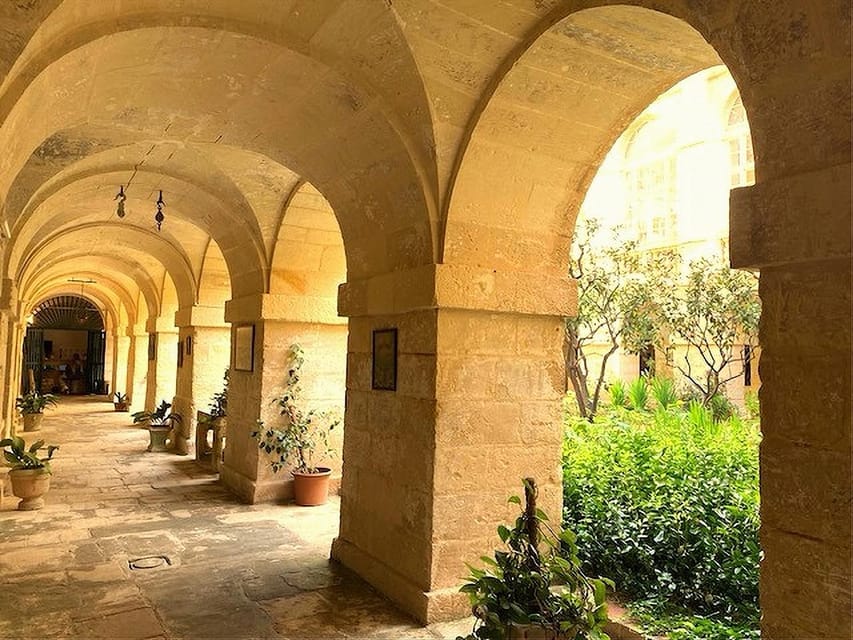
- A garden in the middle of Valletta: The cloister offers shade, plants, a fountain, and a calm pause from the city streets.
- Fifteen information points: Scan QR codes around the complex for the audio tour, or use the English signs instead.
- A 40-minute audio experience: Commentary is available in Maltese, English, French, Italian, Spanish, German, Polish, and Russian.
- A visit with no fixed rush: After the audio tour, you can remain in the cloisters and garden for as long as opening hours allow.
- A useful contribution to a living place: Your $12 admission helps maintain the monastery and supports the two nuns who still live there, according to information given at the entrance.
Entering St Catherine’s Monastery on St Christopher Street

You will find Mysterium Fidei on St Christopher Street, at the corner with Strait Street. This is right in the heart of Valletta, so it is easy to add to a day of walking between the city’s churches, museums, and viewpoints.
The entrance is modest. Do not expect the grand approach of St John’s Co-Cathedral. That is part of the appeal. You step from a busy street into an old religious building, where the pace changes almost at once.
A receptionist or attendant explains how to connect to the Wi-Fi and use the Mysterium Fidei app. The staff have received warm praise, and that matters here because the phone-based tour is not completely self-explanatory for everyone. If you need help, ask before setting off.
The building is old, with a few low stone steps. If steps are a concern, contact the site in advance to discuss assistance with entry. The information provided does not promise full step-free access, so it is better to check before you arrive.
More Entry Tickets in the world:
- Lisbon: Jerónimos Monastery Entrance Ticket
★ 4.1 · 14,164 reviews - Bali: Kecak Fire Dance Show & Uluwatu Temple Entry Ticket
★ 4.2 · 3,023 reviews - Montserrat Museum and Monastery Entry Ticket
★ 4.5 · 1,740 reviews
The 400-year story behind the walls
The central idea of the visit is the life of a cloistered nun. When women entered this order, they vowed never to leave the monastery. Their home, workplace, place of prayer, and final resting place were all within the same walls.
That arrangement can be hard to picture from the street outside. The tour helps by showing how the community maintained a self-sustaining way of life. The nuns were able to remain apart from the outside world because the monastery supported their daily needs.
The experience is not simply a religious display. It is also a look at domestic life, routine, separation, and devotion over several centuries. You get a sense of how much discipline was required to accept such a limited physical world.
The story may feel especially meaningful if you have an interest in women’s history, Catholic traditions, monastic life, or the social rules that shaped earlier generations. One recent visitor connected the stories of the nuns with the mother and baby homes of Ireland. That comparison is personal, but it points to an important strength of the visit: the history can prompt difficult questions as well as admiration.
The presentation is generally respectful and restrained. It does not turn the nuns into a theatrical attraction. Instead, it lets the rooms, signs, and recorded commentary explain the setting.
Following the 15 audio stops
The audio tour takes about 40 minutes. At 15 points around the complex, you scan a QR code and listen to the matching section on your own phone.
This setup gives you freedom. You do not have to keep up with a guide or wait for a group. You can pause, replay, and look around while the commentary continues. If you are visiting with children, that flexibility can make the stop easier to manage.
The app is available in eight languages:
- English
- Maltese
- French
- Italian
- Spanish
- German
- Polish
- Russian
English information boards provide an alternative. They offer an edited version of the history, so you can still understand the visit if you prefer not to download the app or if your phone has trouble with it.
I suggest connecting to the Wi-Fi and opening the app before you begin walking around. One visitor found the app easy to use and detailed. Another found that it loaded slowly and finished a chapter after the person had already moved through the space. A separate visitor found the updated audio did not work on an older phone but had no trouble reading the signs.
That is the main technical weakness. The audio guide is included in the ticket, but it is not a traditional handset handed to you at the door. You supply the phone, and the quality of the experience depends on your device and connection.
If you want the best chance of a smooth visit, bring a charged phone and allow a few minutes at the entrance for setup. If the app is inconvenient, do not let it spoil the visit. The English signs cover the essential material.
The rooms and daily life of the nuns
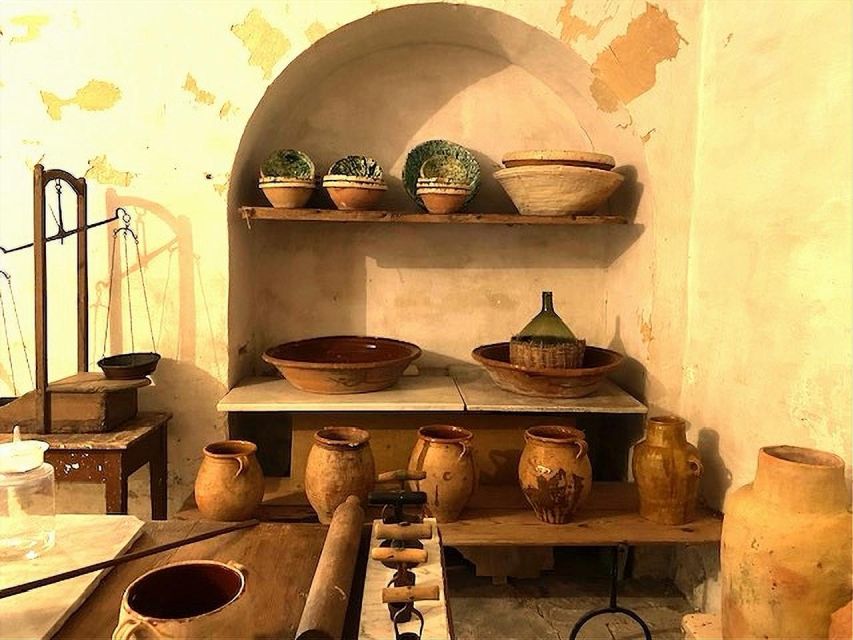
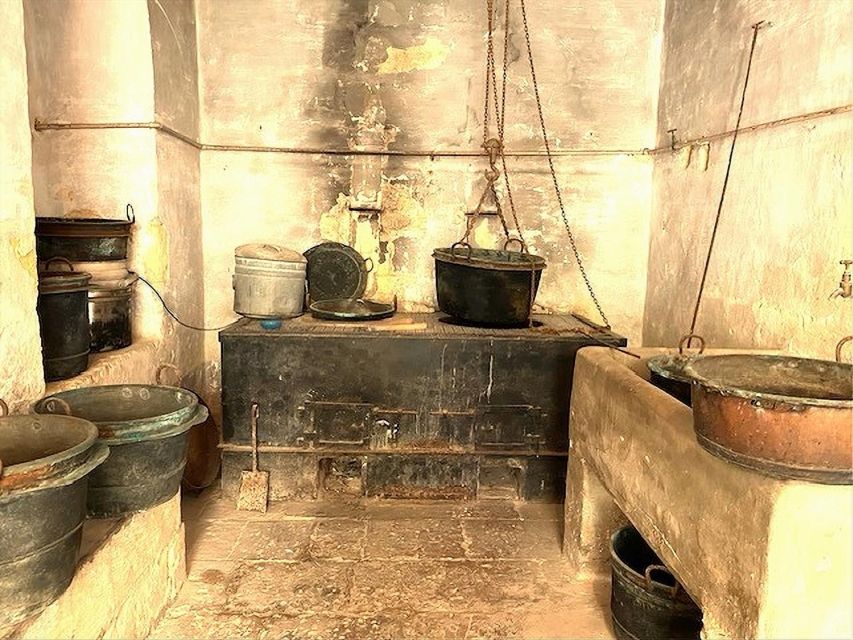
The route explains the use of the monastery’s different areas and gives context for the nuns’ daily routine. Information boards describe what you are seeing, so you are not left to guess at the purpose of each room.
The most valuable part is the connection between simple physical surroundings and the strict life they supported. These are not grand interiors designed to impress wealthy visitors. Their importance comes from repeated use: prayer, work, community life, and the routines that allowed the women to remain inside.
You can consider the difference between seeing a beautiful church and seeing a place where people actually lived. The monastery offers the second experience. Its plainness is part of the story.
The building also shows how a religious community could organize itself within a confined space. That makes the tour worthwhile even for people who are not especially interested in religious architecture. You are looking at a long-running social system, not only old stone walls.
The monastery is still connected to living religious practice. Recent information at the site indicates that three nuns continue to live there, while the ticket revenue helps keep the place running. That gives the visit a present-day purpose. You are not touring an abandoned monument frozen in the past.
Other temple visits near the world we have written up
- Angkor Wat Sunrise or Sunset Tour with Guide from Siem Reap
★ 5.0 · 12,109 reviews - Teotihuacan, Guadalupe Shrine & Tlatelolco Day Tour with Lunch
★ 5.0 · 11,603 reviews - From Bangkok: Ayutthaya Temples Guided Tour with Lunch
★ 4.7 · 10,535 reviews - Siem Reap: Angkor Wat: Small-Group Sunrise or Sunset Tour
★ 5.0 · 9,444 reviews
The crypt and the meaning of the final stop
The crypt is the nuns’ final resting place. It is a short but important part of the visit because it completes the story introduced at the entrance.
The vow never to leave the monastery becomes more powerful when you see that the women who lived there also remained within its walls after death. The crypt is not a decorative extra. It shows the full length of the commitment, from entering the order to burial.
This area may feel solemn, and it is worth giving yourself time rather than treating it as a quick photo stop. The experience is self-guided, so you can move at a respectful pace without being pushed along by a group schedule.
The cloister garden, fountain, and old vines
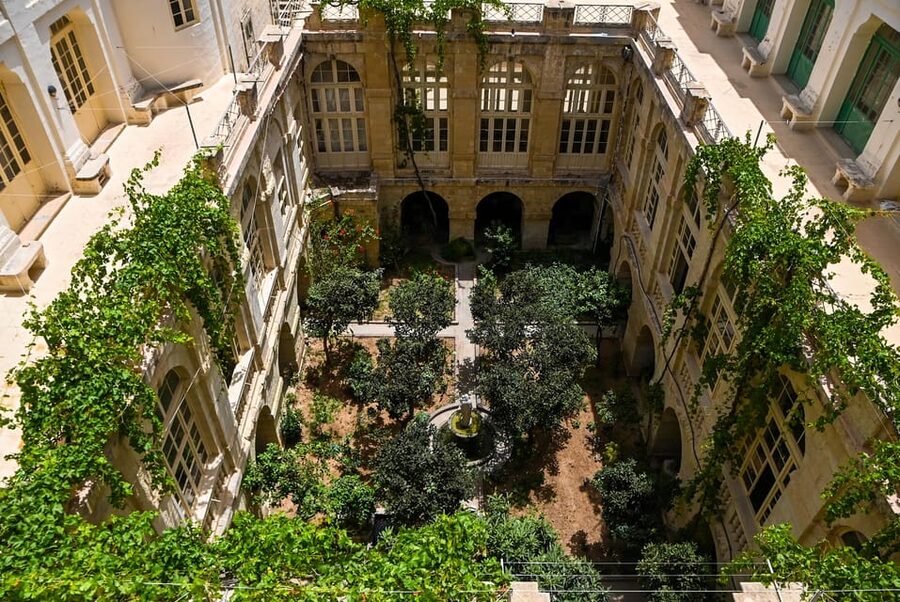
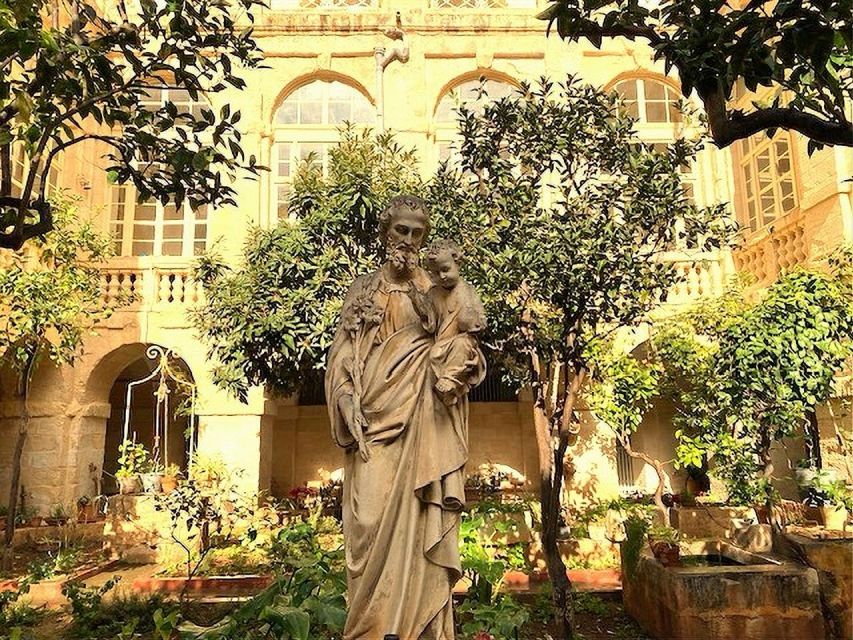
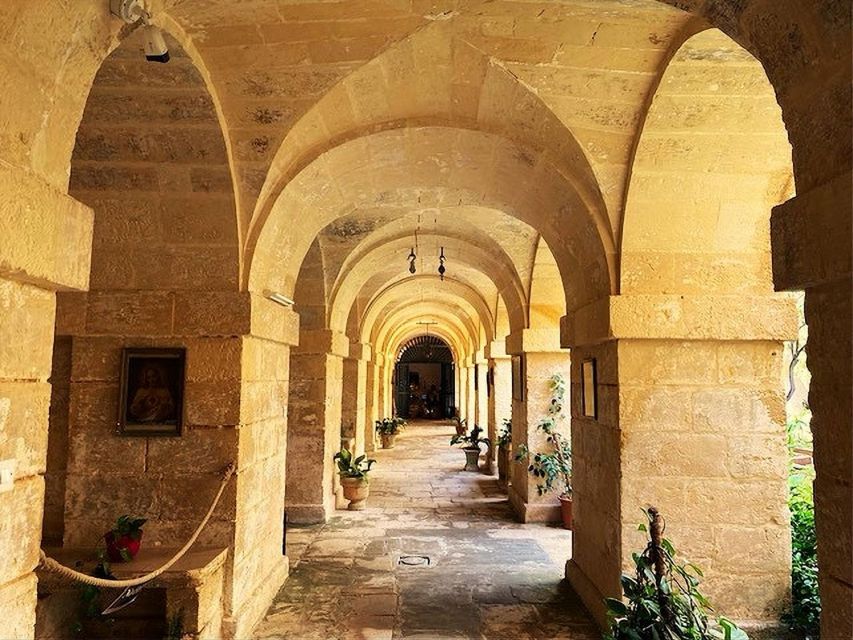
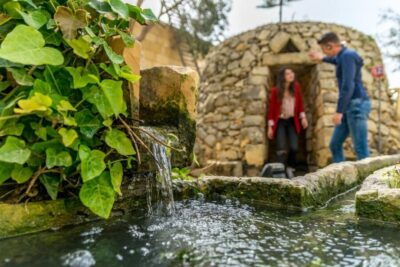
For many people, the garden will be the highlight. Valletta is full of handsome stone buildings, but green spaces are not common. The cloister garden gives you a quiet place to sit or wander after the more factual sections of the tour.
The fountain adds a soft background sound. Plants fill the cloister, and old vines climb high toward the light. These vines were once harvested to make wine, an everyday detail that helps you picture the monastery as a self-supporting home rather than a collection of symbolic rooms.
The garden is not large. That can be a drawback if you are expecting extensive grounds. Its value comes from atmosphere, not scale. You are getting a small, sheltered courtyard where the sound and heat of central Valletta feel far away.
Several visitors appreciated the garden as a refuge during hot weather. One person was offered a glass of water on arrival during a particularly warm day. That is a small touch, but it fits the welcoming tone of the entrance staff.
You may also encounter the monastery’s resident cats. Mina has become a memorable companion for some visitors, and another person met three kittens while looking unsuccessfully for the turtles. These animals are not part of a formal program, so treat them as a possible bonus rather than a promised feature.
The garden works best when you slow down. After the 40-minute audio route, put your phone away for a while. Listen to the fountain, study the stonework, and notice how different this enclosed space feels from Strait Street just outside.
When to go and how long to allow

The stated opening hours are Monday through Saturday from 9:30 a.m. to 4:30 p.m., with last entry at 4 p.m. On Sunday, it opens from 9:30 a.m. to 4 p.m., with last entry at 3:30 p.m.
Although the audio section takes about 40 minutes, you should allow extra time for the garden and cloisters. The total visit depends on how closely you read the signs and how long you want to sit outside.
Earlier in the day is a sensible choice. The complex is not large, and going early gives you more space to move slowly and appreciate the garden. If you arrive close to closing time, you may have enough time for the basic route but less time for lingering.
A quiet period also improves the audio experience. Since visitors scan codes at different stops, people moving through the same small spaces can otherwise create a little congestion.
The ticket is valid for 365 days, which gives you unusual flexibility if your schedule changes or you are spending a long period in Malta. Availability and starting times should still be checked when booking, even though the visit itself is self-guided.
Is the $12 ticket good value?
At $12 per person, this is not the cheapest short stop in Valletta. The monastery is compact, and you should not buy the ticket expecting a large complex with hours of exploration.
I find the price reasonable if you value unusual access, thoughtful interpretation, and a peaceful garden. You are paying for entry to a place that was closed to the public for four centuries, plus multilingual audio content and the chance to support a living religious site.
The value is weaker if you judge tickets mainly by size or the number of rooms. One visitor felt the space was smaller than expected and did not think the ticket matched its scale. That is a fair warning.
The best comparison is not a major museum. Think of it as a focused 45-minute historical stop with time to rest afterward. It fits nicely between larger Valletta attractions and can provide a welcome quiet spell in the middle of a walking day.
The free cancellation up to 24 hours before the visit and the reserve-now, pay-later option also make it fairly easy to fit into a changing itinerary. Those booking terms are useful, but the real question is whether the subject appeals to you.
Who should visit Mysterium Fidei?
You will probably enjoy this experience most if you like:
- Religious and social history
- Small historic buildings with a strong human story
- Self-guided visits
- Quiet courtyards and gardens
- Women’s history and monastic traditions
- Places that still serve a living purpose
It can also work well for families, especially because you can move at your own speed. Younger children may not engage with every part of the audio story, but the garden and cats can offer a change of pace.
I would be more cautious if you want a grand architectural showpiece, a large garden, or a live guide who explains everything in person. The welcome at reception is personal, but the main visit relies on signs and your phone.
The experience may also feel serious. The subjects include vows, separation, devotion, death, and the limits placed on women’s lives. That is a strength for some visitors and a reason to choose a different Valletta attraction for others.
Practical details before you go
The entrance is on St Christopher Street, at the corner of Strait Street, and the location is searchable on Google Maps as Mysterium Fidei.
Bring a charged phone if you want the audio tour. Connect to the site Wi-Fi and ask the reception staff for help before starting. If your phone is older, use the English signs as your backup.
Wear comfortable shoes for the old stone flooring and low steps. The information only mentions a few low steps, but the building is historic and not presented as fully step-free.
The audio tour is offered in eight languages, while the additional information lists English and Maltese as the languages used by the host or greeter. The written boards are available in English.
Do not rush straight out after the final information point. The garden is one of the main reasons to come, and the visit makes more sense when you give yourself time to enjoy its quiet.
Should you book this Valletta monastery visit?
Book it if you want a small, unusual historical experience that shows how cloistered nuns lived and still offers a peaceful garden in central Valletta. The $12 price makes sense when you value access to a normally private place and are happy with a self-guided format.
Skip it if you want a large attraction, a live historian, or a polished audio system independent of your own phone. The monastery is compact, and the app may be slow or incompatible with older devices.
For most visitors who enjoy thoughtful history, simple architecture, and quiet corners, Mysterium Fidei is a worthwhile addition to a Valletta walking day. Plan for the 40-minute route, arrive earlier if possible, and save time to sit by the fountain after the story ends.
FAQ
Where is Mysterium Fidei located?
The entrance is on St Christopher Street in Valletta, on the corner with Strait Street. You can find it on Google Maps by searching for Mysterium Fidei.
How long does the visit take?
The audio tour takes about 40 minutes. Afterward, you are free to spend additional time in the garden and cloisters during opening hours.
What languages are available for the audio guide?
The audio guide is available in Maltese, English, French, Italian, Spanish, German, Polish, and Russian.
Do I need to use the audio guide?
No. You can download the Mysterium Fidei app and scan QR codes at 15 information points, or read the English information boards instead.
What are the opening hours?
From Monday to Saturday, the monastery is open from 9:30 a.m. to 4:30 p.m., with last entry at 4 p.m. On Sunday, it is open from 9:30 a.m. to 4 p.m., with last entry at 3:30 p.m.
Is the building accessible to everyone?
The historic building has a few low stone steps. If you need assistance entering, contact the site in advance to discuss your needs.
Newly written up around the world
- Varanasi in a Day Ancient Temples Sarnath and Ghats★ 5.0 · 17 reviews
- Hidden Corners of Varanasi Secret Alleys Temples and Traditions★ 5.0 · 9 reviews
- Terracotta Army, Big Wild Goose Pagoda&City Wall Full Day Tour★ 4.5 · 47 reviews
- Xi’an: Daci’en Temple(Great Wild Goose Pagoda) E-ticket★ 3.3 · 57 reviews
- Kyoto: Fushimi Inari Taisha Shrine Walking Tour with Guide★ 4.8 · 18 reviews
- Xi’an: Terracotta Army, Lunch, City Wall, Pagoda, Bazaar★ 5.0 · 72 reviews
- Bangkok: Grand Palace and Wat Arun Guided Walking Tour★ 4.5 · 118 reviews
- Ex-monk city & temples walking tour: (3.5 hours / 1.7 km.)★ 4.8 · 35 reviews
Malta Temple Tours, compared.

From Malta: Gozo Day Trip Including Ggantija Temples
Read our review →
From Malta: Gozo Full-Day Tour with Guide, Temples, & Train
Read our review →
Malta: Prehistoric Temples, Limestone Heritage & Blue Grotto
Read our review →
Gozo Guided Day Trip Incl. Ggantija Temples and Lunch
Read our review →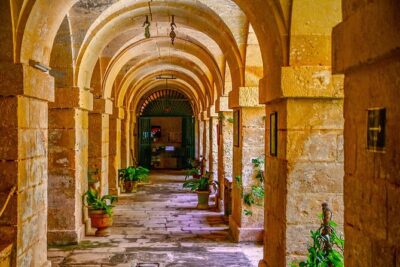
Mysterium Fidei Monastery & Secret Garden in Valletta
Read our review →Browse the lists this tour appears in