
Reviewed · CHIANG MAI TEMPLE TOURS
Chiang Mai: Temple & City Tour Part II
Chiang Mai’s best temple experiences are not always the ones with the biggest gates. This walking tour takes you to four important temples, including Wat Chiang Man, the city’s oldest temple, then adds Shan and Burmese Buddhist sites that many independent sightseers miss. The real value comes from the explanations: guides such as Katoon, a former monk, can connect the buildings to Buddhist practice and daily life.
I like the mix of famous and less-visited stops, and I like the unhurried pace. You get time to ask about meditation, prayer, monks, temple art, and local customs rather than simply snapping a photo and moving on. The main caution is physical: you may walk for hours in Chiang Mai heat, so this is not a good match if you need frequent transport, use a wheelchair, or dislike long walks.
Key points at a glance
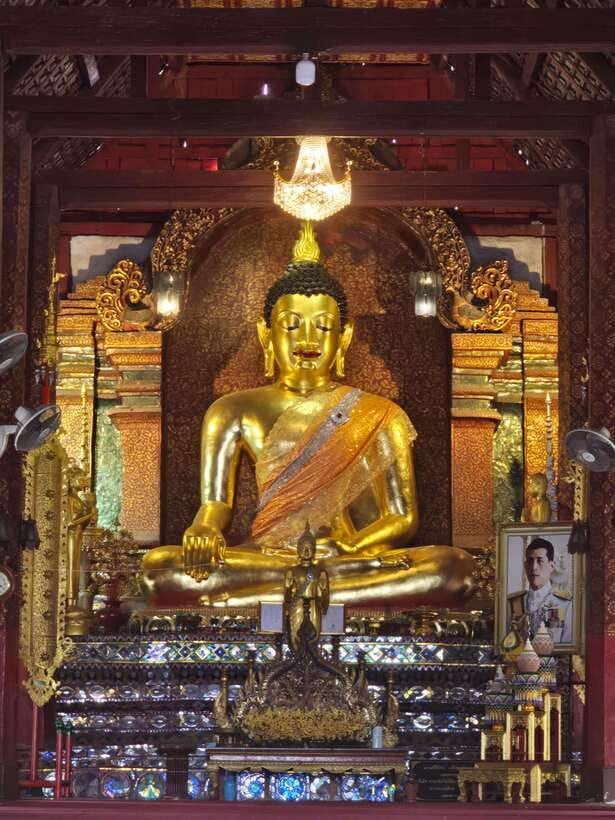
- Wat Chiang Man dates to 1296: See the oldest temple in Chiang Mai and learn about King Mengrai and the crystal Buddha statue.
- Shan and Burmese traditions shape the route: Wat Chiang Yuen and Wat Pa Pao show cultural links beyond the better-known Lanna temple style.
- Wat Ku Tao has an unusual purpose: Its distinctive chedi is linked to Prince Saravadi, the first Burmese overlord of Chiang Mai.
- Former monks add useful context: Guides including Katoon and Big have explained Buddhist practice, meditation, prayer, and monastic life.
- The walk reaches places you might skip alone: The route is designed around temple stories and cultural meaning, not just famous photo stops.
- Plan for heat and tired feet: Bring water, an umbrella, cash, and clothing suitable for entering temples.
Why this temple walk feels different
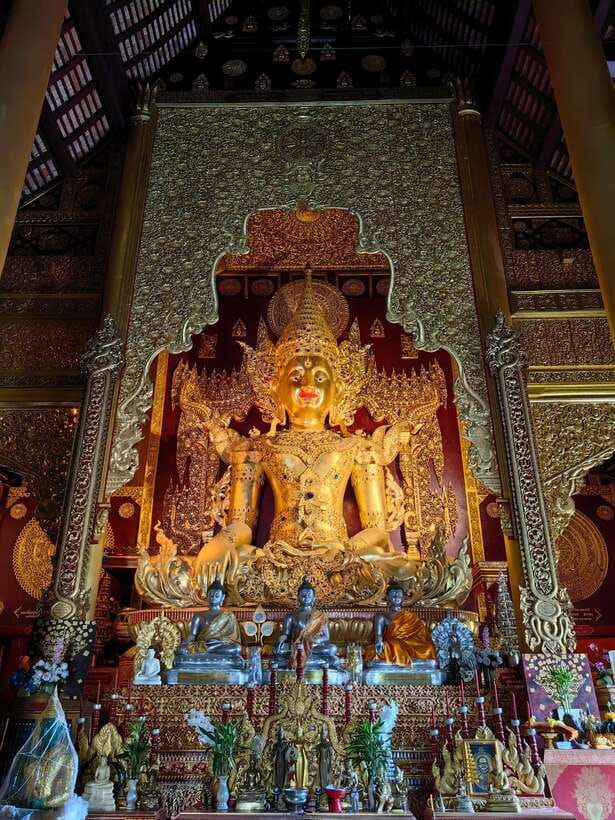
At $31 per person, this is a reasonably priced way to spend a full day learning about Chiang Mai’s religious and political past. You are paying for a guide, a planned route, and the chance to ask questions that a self-guided visit cannot easily answer.
The tour starts at 8:20 am, although some experiences with the same guide have taken place in the afternoon. Check the confirmed start time when booking. The group can be private or small, and hotel pickup and drop-off are included only with the private option.
I like that the route does not simply collect the city’s most photographed temples. It moves through several traditions and periods. You see an early Chiang Mai temple, a former Shan residential area, a Shan Burmese temple outside the old city walls and moats, and a chedi connected with Burmese rule.
That range gives you a better sense of northern Thailand. Chiang Mai was not shaped by one culture alone. The temples here reflect changing rulers, communities, artistic styles, and religious practices.
Other temple visits near Chiang Mai we have written up
- Chiang Mai: Chiang Rai Temples, Karen Tribe and Hot Springs
★ 4.7 · 5,401 reviews - Chiang Rai White Temple and Blue Temple Day Tour
★ 4.6 · 3,366 reviews - Chiang Mai: White, Red/Black & Blue Temples Tour with Lunch
★ 4.2 · 2,017 reviews
Starting at Wat Chiang Man, Chiang Mai’s oldest temple
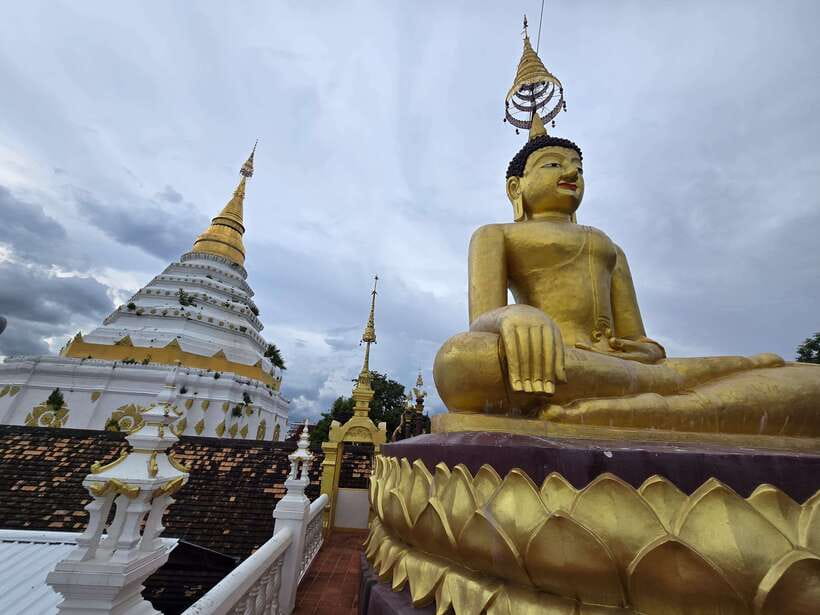
The first stop is Wat Chiang Man, built in 1296 by King Mengrai. That date matters because it places the temple at the beginning of Chiang Mai’s story as a city. It is not just another decorated Buddhist compound. It is tied to the foundation of the city itself.
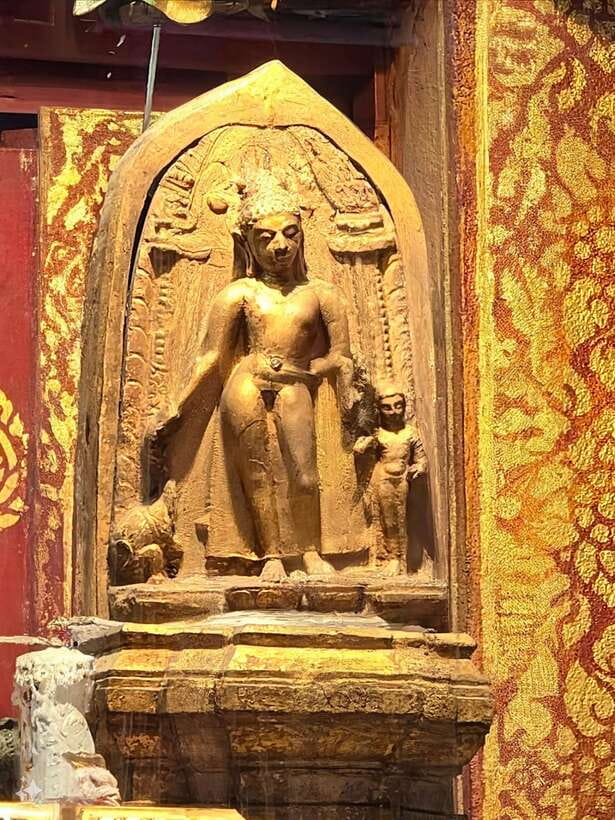
The temple is also associated with a crystal Buddha statue. Your guide can explain why particular Buddha images matter and how they are treated within the temple setting. Guides have also used stops like this to explain basic prayer customs, meditation, and respectful behavior around monks and sacred images.
I find this is the right place to begin because it gives the rest of the walk a clear starting point. You are not looking at isolated buildings. You are following the development of Chiang Mai through its religious centers.
Take your time here. Look beyond the main image and notice how the guide explains the relationship between the temple, the king, and the city. If you have never visited a Thai temple before, ask about entering buildings, removing shoes, sitting respectfully, and how to greet monks. Those small details can make the rest of your temple visits easier.
Wat Chiang Yuen and the Shan connection
Wat Chiang Yuen brings a different cultural layer to the route. It is described as a 16th-century temple in an area that once served as a residential zone for Shan people.
That detail gives the stop a purpose beyond architecture. You are learning how communities lived in and around Chiang Mai, and how religious buildings connected to those communities. The Shan are an important part of the cultural story of northern mainland Southeast Asia, and this temple helps place their presence in the city.
This is also where a good guide makes a real difference. A short label may tell you a date or a name, but it will not necessarily explain why the temple is associated with a particular population. Guides such as Son and Katoon have been praised for answering questions about Buddhism, Thai life, and the role of monks without rushing through the visit.
You may find this stop quieter than the best-known city temples. That is part of the appeal, but it also means you should not expect a large attraction with a long list of displays. The reward is the explanation and the sense of connection between the temple and the neighborhood around it.
Wat Pa Pao, a Shan Burmese-style temple
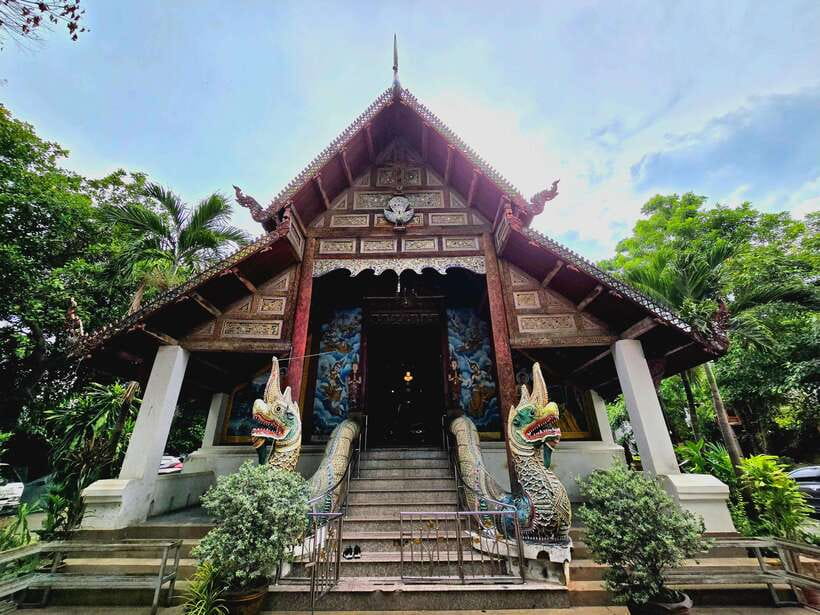
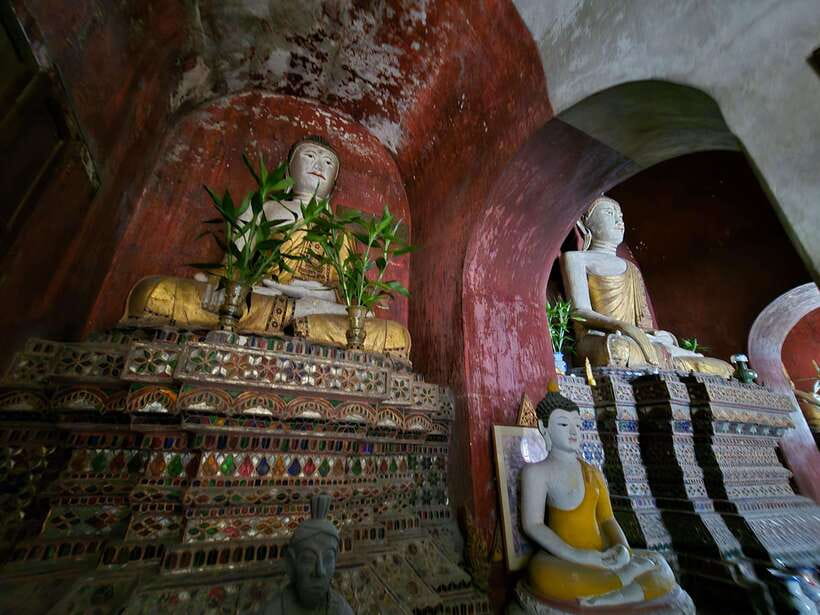
Wat Pa Pao sits outside Chiang Mai’s old city walls and moats. It is identified as a Shan Burmese-style temple, making it one of the clearest cultural contrasts on the walk.
If you have already seen several Lanna-style temples, this stop helps you compare the details. Your guide can point out differences in design and explain how religious architecture reflects movement between communities and regions. You do not need to be an architecture expert. The useful part is having someone show you what to look for.
Wat Pa Pao also helps break up the usual old-city temple circuit. You are not simply moving from one major compound to another inside the same small area. The walk expands your view of Chiang Mai and shows how the city’s religious life extends beyond its most familiar boundaries.
The route is still described as relatively easy, but easy does not mean effortless. You will be outside, on your feet, and walking for much of the experience. Wear shoes you can walk in and bring an umbrella for sun or rain. Keep your clothing temple-appropriate, with shoulders and knees covered where required, and avoid short skirts.
A different set of gates, same trip:
- Chiang Mai: Doi Suthep and Wat Umong Enchanting Evening Tour
★ 4.6 · 1,811 reviews - Chiang Mai: 3 Hour Old City and Temples Guided Walking Tour
★ 4.6 · 1,568 reviews - Chiang Mai: Doi Suthep, Wat Umong, and Pha Lat Sunrise Tour
★ 4.7 · 1,425 reviews - Chiang Rai Temples: Private Tour from Chiang Mai
★ 5.0 · 1,267 reviews
Wat Ku Tao and a Burmese ruler’s final resting place
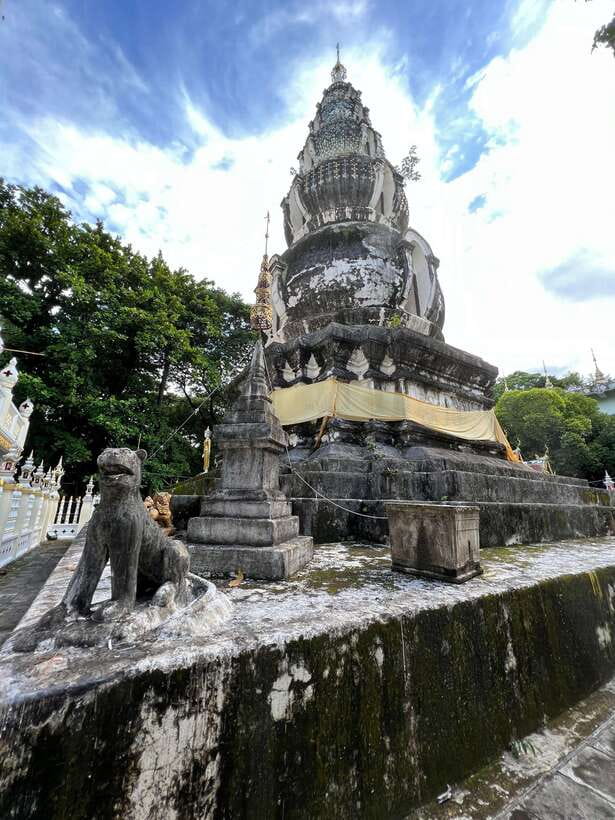
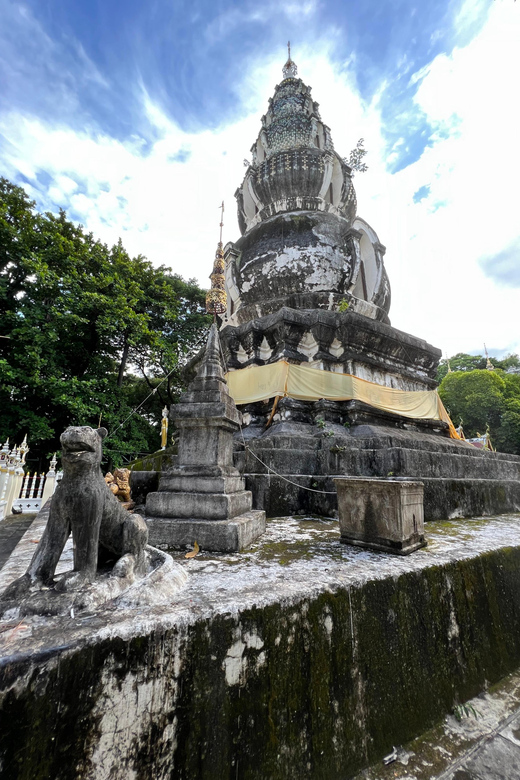
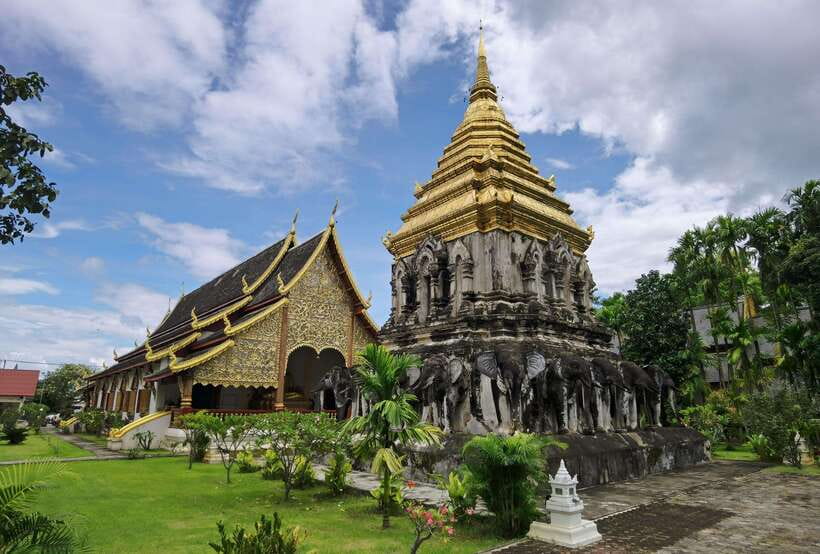
The fourth stop is Wat Ku Tao, known for a highly unusual chedi. It is thought to have been built in 1613 to hold the ashes of Prince Saravadi, who ruled Chiang Mai as its first Burmese overlord from 1578 to 1607.
This is one of the most interesting points on the route because it ties a religious structure to a period of Burmese authority. Chiang Mai’s past was shaped by regional power struggles and changing control, and Wat Ku Tao gives that political story a physical place.
The chedi itself is the reason to pay attention here. Rather than treating it as background scenery, ask your guide to explain its form, purpose, and connection to Prince Saravadi. The stop is especially worthwhile if you want more than a standard introduction to Buddhism and temple etiquette.
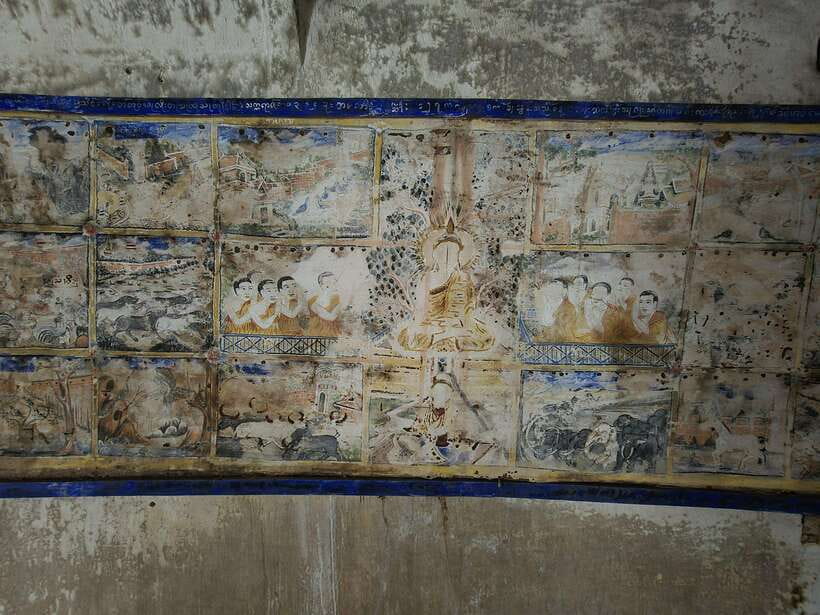
Past guides have also used temple visits to explain Buddha stories shown in artwork, the lives of monks, different temple types, and the place of Buddhism in Thai life. That kind of conversation can turn a short stop into the part of the day you remember most.
What guides add to the experience
The strongest reason to book this tour is the guide. Several guides have led the experience, including Katoon, Big, Eddy, and Son. Katoon is described as a former monk, while Big has also shared experience from his time as a monk. Their backgrounds can help you ask practical questions about monastic life, meditation, prayer, and Buddhist beliefs.
That does not mean every guide will deliver the same presentation. English ability and style can vary, and one guide has been described as still working on his English. Still, the repeated pattern is clear: you should expect a personal, discussion-based approach rather than a memorized list of dates.
A guide may show you how to pray, explain how monks live, discuss what monks eat, or answer questions about previous lives of the Buddha as represented in temple art. On some visits, guides have helped participants enter quieter temple spaces or view Buddha images that would be easy to miss alone. These moments depend on access and timing, so treat them as possible benefits, not guaranteed parts of the schedule.
I also like the practical help with photographs. Eddy, in particular, has been praised for taking pictures and paying attention to the group. That is useful for solo visitors or couples who want more than self-timer shots.
The pace, heat, and practical demands
The walk is presented as relatively easy, but it can still take several hours. One participant completed this second temple route on the same day as the first part and found that their feet were worn out by the end. If you plan to combine both tours, leave time for lunch and rest.
Chiang Mai can be hot, especially when you are walking between open temple grounds. Bring:
- Drinking water
- An umbrella
- Cash
- Comfortable walking shoes
- Clothing suitable for temple visits
Food and additional drinks are not included. Plan to eat before or after the tour, and carry enough water for the walk.
The experience is not suitable for children under two, babies under one, pregnant women, wheelchair users, or people who depend on electric wheelchairs. Baby strollers are not allowed. Pets, drones, smoking indoors, alcohol, drugs, weapons, sharp objects, and noisy behavior are also prohibited.
These rules are not minor footnotes. A temple walk works best when you can move comfortably, remain quiet inside religious spaces, and follow local customs without the group needing to wait for special arrangements.
Private or small group: which option makes sense
A private tour is the better choice if you want hotel pickup and drop-off, a flexible conversation, or help with photography. It may also suit you if you have detailed questions about Buddhism or want the guide to adjust the pace.
A small group keeps the price attractive and can still work well for learning. The route has received strong feedback for answering questions and avoiding a rushed schedule. One solo participant appreciated that the tour continued even with only one person booked, allowing more time for explanation.
The group format can affect how much time you get with the guide. If you want a long conversation about meditation, monk life, or Thai history, private travel gives you more control. If you mainly want an introduction to Chiang Mai’s temples at a sensible price, the small-group option should offer good value.
How the $31 price holds up
At $31, the tour is not simply a walking route you could copy from a map. You are paying for four selected temples, a guide, cultural interpretation, and help with the parts of temple etiquette that can feel uncertain on your own.
The value is strongest if you are new to Buddhism or Chiang Mai. A self-guided visit may show you carved roofs, chedis, Buddha images, and old walls, but it may not explain why one temple is linked to King Mengrai, another to the Shan community, and another to Burmese rule.
The price does not cover food or drinks, so budget for those separately. Hotel transportation is also not part of the standard walking option. If you choose the private version for pickup and drop-off, expect that the price structure may differ from the basic per-person rate.
The tour also supports an approach focused on offsetting carbon emissions and reducing environmental impact. Since the main activity is walking rather than riding between every temple, it suits you if you want a lower-impact way to see the city.
Who should book this experience
I would choose this tour if you want context, not just temple photographs. It suits first-time visitors, people curious about Buddhism, and anyone who wants to see how Shan and Burmese influences fit into Chiang Mai’s story.
It is also a good addition to the provider’s first temple tour. Some people have taken both parts to cover more of the city and build a fuller understanding of its temples. If you have only one day, this second part gives you a useful mix of early Chiang Mai history, local communities, Buddhist practice, and Burmese connections.
You may want to skip it if you have limited mobility, dislike walking in heat, or prefer a vehicle-based sightseeing tour. It is also not ideal if you want a purely visual outing with little explanation. The guide is central to the experience, and the best moments come from asking questions.
One practical warning deserves emphasis: make sure you have the correct meeting point. The location code used for the meeting place has caused confusion, with taxi drivers and hotel staff unable to identify it easily. Check the map and written directions before the morning starts, and allow extra time to get there.
Should you book Chiang Mai Temple and City Tour Part II?
Book it if you want four temples explained as part of Chiang Mai’s story rather than four quick photo stops. The strongest reasons are the carefully chosen route, the Shan and Burmese connections, and the chance to speak with a guide who may have lived as a monk.
I would especially recommend it to anyone who wants to understand Buddhist customs, ask honest questions, or see temples that are easy to overlook. Bring water, dress properly, confirm the meeting point, and expect tired feet. At $31, it offers solid value for a full day of guided cultural sightseeing, provided you are comfortable walking.
FAQ
How much does the Chiang Mai Temple and City Tour Part II cost?
The listed price is $31 per person.
How long does the tour last?
The activity is valid for one day and is described as a full-day walking tour.
What time does the tour start?
The stated starting time is 8:20 am. Check availability for the exact start time when booking.
Which temples are included?
The route includes Wat Chiang Man, Wat Chiang Yuen, Wat Pa Pao, and Wat Ku Tao.
What is special about Wat Chiang Man?
Wat Chiang Man is identified as the oldest temple in Chiang Mai town. King Mengrai built it in 1296, and a crystal Buddha statue is enshrined there.
What cultural background is connected with Wat Chiang Yuen?
Wat Chiang Yuen is a 16th-century temple in an area that once served as a residential area for the Shan people.
What style of temple is Wat Pa Pao?
Wat Pa Pao is described as a Shan Burmese-style temple outside Chiang Mai’s old city walls and moats.
Who is associated with Wat Ku Tao?
Its unusual chedi is thought to have been built in 1613 to hold the ashes of Prince Saravadi, the first Burmese overlord of Chiang Mai.
Which languages can the guides speak?
Guides are available in English, Chinese, and Thai.
Is hotel pickup included?
Hotel pickup and drop-off are included if you select the private option. They are not listed as part of the standard walking tour.
What should I bring?
Bring an umbrella, drinks, and cash. Comfortable walking shoes and suitable temple clothing are also sensible choices.
Can I cancel the booking?
You can cancel up to 24 hours in advance for a full refund. A reserve-now, pay-later option is also available.
Newly written up around Chiang Mai
- Monk trails hike, Wat Phalat, Monk chanting, Wat Doi Suthep.★ 5.0 · 3 reviews
- Long Neck Village, Silver Temple & Chiang Mai Top Sites★ 4.7 · 17 reviews
- Lalita Cafe & Chiang Rai Temple(White+Blue) from Chiangmai★ 4.8 · 5 reviews
- Private : Sticky Waterfall & Secret Temple & Karen Village.★ 5.0 · 9 reviews
- Chiang Mai: Temples & Culture Tour★ 4.7 · 64 reviews
- From Chiang Mai: White Temple, Blue Temple & Black House★ 4.5 · 15 reviews
- From Chiang Mai: Lamphun and Lampang Temples Tour★ 4.9 · 33 reviews
- Chiang Mai: Chiang Rai Temples & Black House Discovery Tour★ 4.4 · 12 reviews
Chiang Mai Temple Tours, compared.
Chiang Rai Temples, Karen Tribe and Hot Springs
Read our review →
Chiang Rai White Temple and Blue Temple Day Tour
Read our review →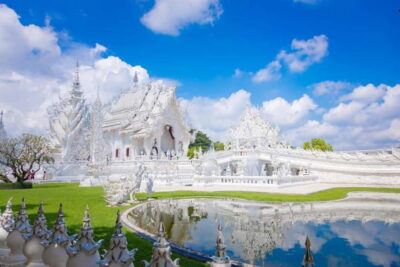
White, Red/Black & Blue Temples Tour with Lunch
Read our review →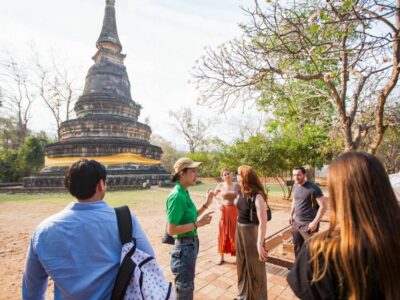
Doi Suthep and Wat Umong Enchanting Evening Tour
Read our review →
3 Hour Old City and Temples Guided Walking Tour
Read our review →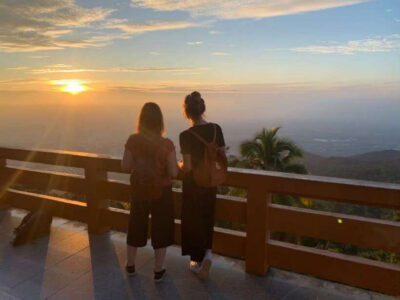
Doi Suthep, Wat Umong, and Pha Lat Sunrise Tour
Read our review →
Chiang Rai Temples: Private Tour from Chiang Mai
Read our review →
Browse the lists this tour appears in