
Reviewed · MADRID TEMPLE TOURS
Combined admission to San Antonio de los Alemanes and the Monastery of San Plácido
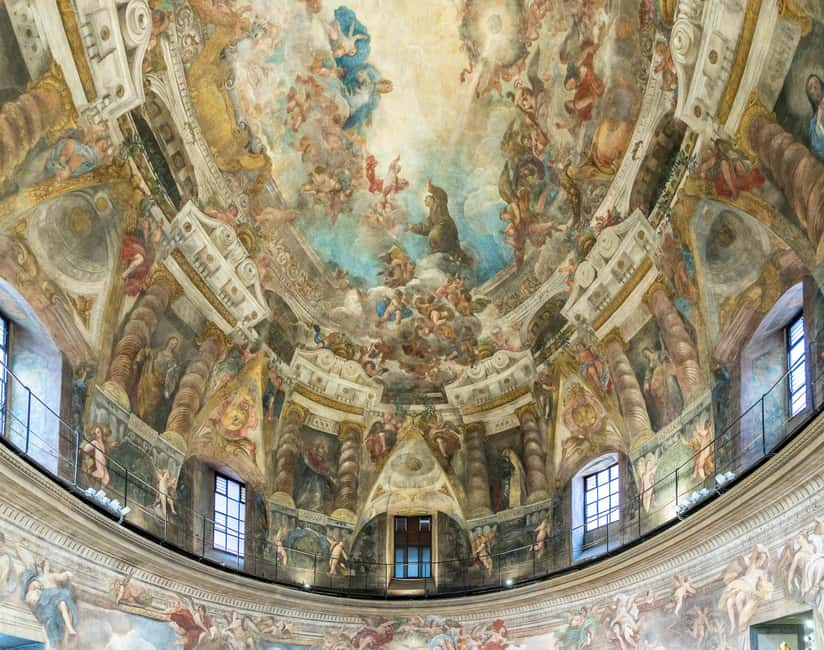
San Antonio de los Alemanes packs an astonishing amount of Baroque art into an unusual elliptical church. Its walls and ceiling glow with frescoes by Luca Giordano, Carreño de Miranda, and Francisco Rizi, earning it the nickname Sistine Chapel of Madrid. Then you continue to San Plácido, a Benedictine monastery with a major collection of works by Claudio Coello.
I like the pairing because you see two very different sacred interiors for one modest price, and I like that both sites open for cultural visits rather than remaining closed religious spaces. The audio guide comes in Spanish, English, and French, so you can take time with the paintings instead of rushing behind a group.
The main consideration is that this is admission with an audio guide, not a live guided tour. San Plácido also has limited areas available to see, so you should book it for the quality of the art, not for a long convent tour.
Key points to know before you go
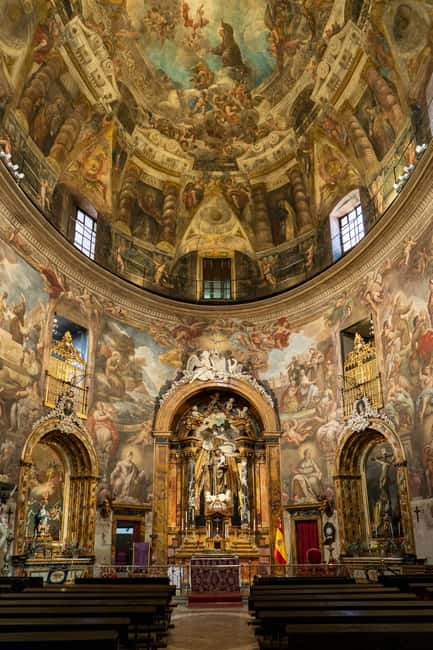
- San Antonio’s elliptical design gives its frescoes a theatrical, all-around effect that differs from a standard rectangular church.
- Luca Giordano, Carreño de Miranda, and Francisco Rizi created much of the painted program at San Antonio de los Alemanes.
- Manuel Pereira’s sculptures add three-dimensional detail to the church interior.
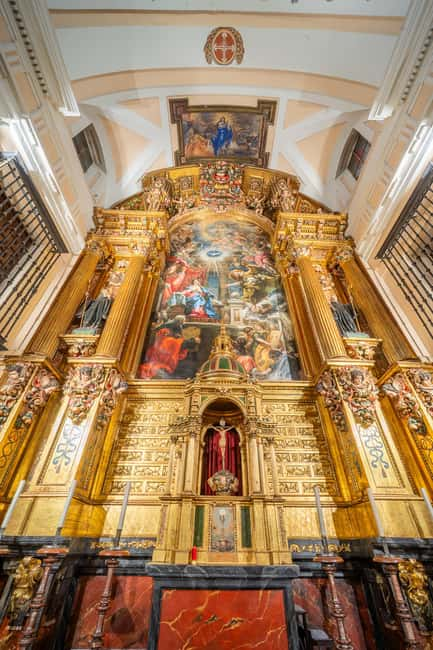
- San Plácido holds a major group of Claudio Coello’s works, including an Annunciation canvas nearly seven meters high.
- The $14 combined admission covers both monuments and an audio guide in Spanish, English, or French.
- You need to show your electronic voucher at the ticket office inside the building at the meeting point.
Why these two Baroque churches belong on your Madrid list
Madrid has famous museums, royal rooms, and grand boulevards. It also has smaller religious buildings that many visitors walk past without realizing what is inside. This experience focuses on two of those places, San Antonio de los Alemanes and the Monastery of San Plácido.
I find the pairing useful because it gives you a concentrated look at Madrid Baroque without asking you to spend a full day in a large museum. The visit lasts within a one-day validity period, and the price is $14 per person. That is a fair deal if you care about painting, architecture, or religious art.
The tone is quiet and focused. You are not being moved along by a guide or a large sightseeing group. Instead, you enter, collect your audio guide, and give each interior the attention it deserves. For me, that makes this a good break from Madrid’s louder streets and crowded major sights.
The experience is also specific in its subject. It is not a general tour of Madrid’s churches. You are coming to see Spanish Baroque architecture and the work of particular artists. If those names mean something to you, you will get more from the visit. If they do not, the audio guide helps explain why the paintings and sculptures matter.
Other temple visits near Spain we have written up
- Montserrat Monastery Half Day Experience from Barcelona
★ 5.0 · 6,014 reviews - Montserrat Monastery Small Group or Private Tour Hotel pick-up
★ 5.0 · 5,144 reviews - Escorial Monastery and the Valley of the Fallen Tour from Madrid
★ 5.0 · 2,494 reviews
San Antonio de los Alemanes and its oval interior
Your first major stop is the Church of San Antonio de los Alemanes. Its unusual elliptical layout is one of the first things to notice. Most churches present their decoration along a straight nave, but this rounded arrangement changes how you read the space.
As you look upward and around the walls, the paintings form a continuous visual program. The decoration is not confined to one altarpiece or one side chapel. The shape of the church helps spread the art across your field of vision, making the interior feel much larger than its footprint suggests.
This is the church’s great strength. The architecture and paintings work together. You are not simply looking at isolated canvases hung on bare walls. The frescoes belong to the building itself, and the curved design gives them a stage.
Luca Giordano, Carreño de Miranda, and Francisco Rizi are the key names connected with the frescoes. The audio guide is useful here because a quick glance cannot tell you who painted which section or how the images relate to the church. Take your time, look from the lower walls toward the ceiling, and let the painted details settle before moving on.
The nickname Sistine Chapel of Madrid is easy to understand once you see the amount of painted decoration overhead. It should not lead you to expect a copy of Michelangelo’s chapel in Rome. The comparison points to the scale and concentration of the artwork, not to identical style or subject matter.
The sculptures by Manuel Pereira add another layer. They break up the painted surfaces with solid forms and shadows, giving the church more variety. I like this balance because it keeps the interior from becoming a flat field of frescoes.
You will probably spend more time looking upward than you expect. That can be tiring, especially if you are trying to follow the audio guide and inspect small details at the same time. A practical approach is to listen to one section, pause, and then look closely rather than attempting to process everything at once.
What the frescoes mean for your visit
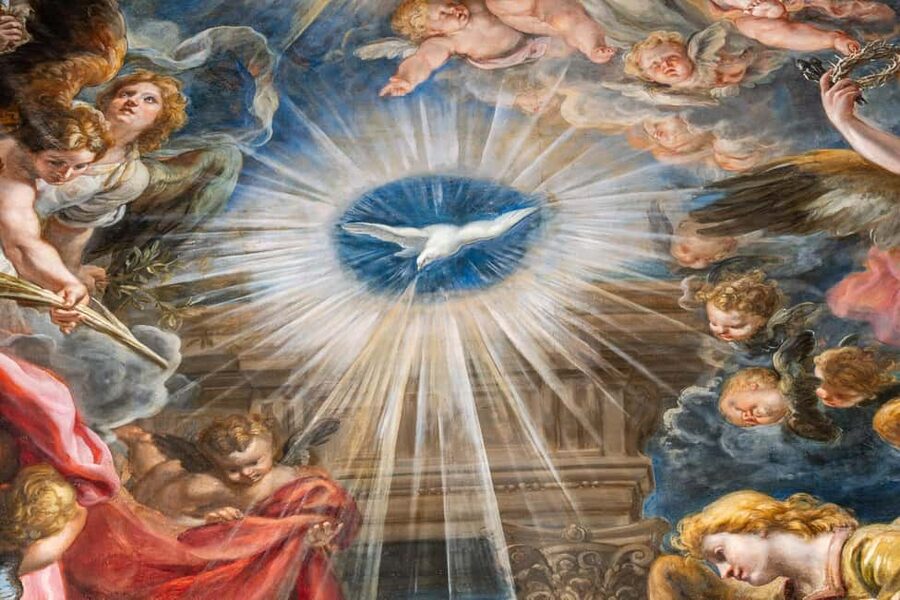
The best way to approach San Antonio de los Alemanes is as a total work of art. The frescoes are the main attraction, but the building’s shape, sculptures, and religious purpose all affect what you see.
I would not rush through this church just to check it off. The artistic value is in the details: the arrangement of figures, the way painted scenes occupy the curved surfaces, and the contrast between fresco and sculpture. You may find that the first impression is grand, while the second look reveals the clever parts.
The audio guide is included in the admission and is available in Spanish, English, and French. That matters because this is not a live tour where you can ask questions or stop the guide to return to a detail. You control the pace, which suits people who want quiet observation, but those who prefer conversation may find the format less personal.
Some of the content may be presented in its original language. If you need every explanation in your chosen language, pay attention to the audio options when you begin. The available languages are Spanish, English, and French.
San Plácido and Claudio Coello’s monumental Annunciation
The second stop is the Monastery of San Plácido, connected with the Benedictine order. Its cultural importance comes partly from its long period closed to public visits. After four centuries without regular public access, the church now allows visitors to see its Baroque interior.
The main artistic draw is Claudio Coello. San Plácido contains the largest collection of his works in the world, making this stop especially worthwhile for anyone interested in Spanish Baroque painting.
The focal point is the Annunciation on the main altar. The canvas is almost seven meters high, so it has a scale that changes the whole impression of the church. Large altar paintings can be hard to judge in reproduction. Here, you can see how the size, placement, and surrounding architecture affect the work.
I would give yourself time to look at the painting from a distance first. Then use the audio guide to consider the composition and details. The work is not presented as a small museum object. It presides over the altar, and its position is part of its meaning.
San Plácido is also a different experience from San Antonio de los Alemanes. The first church is famous for its elliptical design and broad fresco decoration. San Plácido directs your attention more strongly toward Claudio Coello and the altar. Seeing both makes the visit more rewarding because the two interiors do not simply repeat the same visual experience.
There is one limitation to keep in mind. The opportunity to visit San Plácido does not mean every part of the monastery is open. The available visit centers on the church and its art, not on a full tour of the monastic complex. If you expect to explore every room, you may leave wanting more.
A different set of gates, same trip:
- Montserrat Museum and Monastery Entry Ticket
★ 4.5 · 1,740 reviews - Montserrat Small Group: Monastery, Black Madonna & Natural Park
★ 5.0 · 1,690 reviews - From Madrid: Escorial Monastery and the Valley of the Fallen
★ 4.7 · 1,434 reviews - Madrid: Flamenco Show at Tablao Sala Temple with Drink
★ 4.8 · 1,206 reviews
How the audio guide changes the pace
This experience gives you an audio guide rather than a live guide. I see that as both an advantage and a drawback.
The advantage is freedom. You can stop in front of a fresco, replay an explanation, or move ahead when you are ready. You do not have to match the pace of a group, and you can spend extra time with the artists or works that interest you most.
The drawback is that you must manage the visit yourself. There is no guide to point out a detail at the right moment, answer a follow-up question, or connect the churches to other places in Madrid. If you enjoy independent sightseeing, that will not be a problem. If you want a lively lecture, choose a different format.
The audio guide has received particularly strong praise for giving complete information. That is important here because the interiors can look overwhelming at first. Good explanations help you separate the work of Giordano, Carreño de Miranda, Rizi, Pereira, and Coello rather than treating everything as one general mass of Baroque decoration.
Bring patience more than speed. The experience is valid for one day, but the available starting times depend on the schedule you select. Check availability before booking, and plan your Madrid day around the opening time you receive.
Is $14 good value?
At $14 per person, the combined admission offers solid value for a focused art visit. You are paying for entry to two important Baroque sites, not just one small chapel. The audio guide is included, which makes the price easier to justify for independent visitors.
The value is strongest if you already plan to visit central Madrid’s cultural sights and want something less predictable than another major museum. San Antonio de los Alemanes alone would be a worthwhile stop for its interior. Adding San Plácido gives you a second church and a substantial connection to Claudio Coello.
The price is less attractive if you are mainly looking for a broad sightseeing tour or a live explanation of Madrid. There is no guided tour included, and the visit does not promise access to every area of the monastery.
I also like the flexible booking terms. You can reserve now and pay later, and cancellation is free up to 24 hours in advance for a full refund. Those terms help if your Madrid schedule is still changing, but the main value remains the art itself.
Who will enjoy this visit most?
I recommend this experience to art lovers, architecture fans, and repeat visitors who have already seen Madrid’s headline sights. It also suits anyone who wants a short cultural stop with a clear focus.
You do not need to be an expert in Spanish Baroque. The audio guide supplies the basic context, and the interiors provide an immediate visual reward. Still, you will appreciate the visit more if you enjoy taking time with paintings and noticing how a building frames them.
Families with older children may find the churches interesting, especially if the children like grand interiors and dramatic paintings. Younger children may have less patience for a quiet audio-guided visit, particularly because much of the detail is above eye level.
This is not the best pick for someone seeking entertainment, a social group outing, or a long walking tour. It is a calm, art-centered admission experience. You get the most from it by moving slowly and listening carefully.
Practical details before you arrive
You need to go inside the building at the meeting point. There you will find a ticket office, where you show your electronic voucher to the staff. Keep the voucher easy to access so the entry process does not slow you down.
The experience is listed as valid for one day, but you must check availability for the starting times. The exact schedule matters because these are religious monuments that open for cultural visits at set times.
You can cancel up to 24 hours before the visit for a full refund. You can also reserve without paying immediately under the reserve now and pay later option.
The provider is San Antonio de los Alemanes. Staff service has been praised as friendly, and the audio guides have been described as complete. That matches the needs of this kind of visit, where clear instructions and good explanations matter more than a large tour operation.
My call: book it for the art, not the length
I would book this combined admission if I wanted to see Madrid’s Baroque at close range without committing to a full museum afternoon. San Antonio de los Alemanes is the star for its elliptical interior and sweeping frescoes, while San Plácido rewards anyone interested in Claudio Coello and monumental altar painting.
I would skip it only if you need a live guide, broad monastery access, or a flexible stop with no set starting time. For everyone else, $14 is a sensible price for two distinctive churches and an audio guide in three languages.
The strongest reason to go is simple: these are not generic historic interiors. You get a very specific look at Madrid’s Baroque, from the painted curves of San Antonio de los Alemanes to the towering Annunciation at San Plácido. Give the art your full attention, and this compact visit can become one of the more memorable cultural stops in Madrid.
FAQ
What does the combined admission include?
It includes admission to San Antonio de los Alemanes and the Monastery of San Plácido, plus an audio guide.
How much does the experience cost?
The price is $14 per person.
Is a live guided tour included?
No. The admission includes an audio guide, but not a live guided tour.
Which languages are available for the audio guide?
The audio guide is available in Spanish, English, and French.
What can I see at San Antonio de los Alemanes?
You can see its elliptical church design, Baroque frescoes by Luca Giordano, Carreño de Miranda, and Francisco Rizi, plus sculptures by Manuel Pereira.
Why is San Antonio de los Alemanes called the Sistine Chapel of Madrid?
The nickname refers to the church’s extensive and impressive fresco decoration, which covers much of its interior.
What is important at the Monastery of San Plácido?
The monastery contains a major collection of works by Claudio Coello, including an Annunciation canvas almost seven meters high above the main altar.
Is the entire monastery open to visitors?
The provided information describes access to the Baroque church and its cultural visit, not every area of the monastery.
Where do I show my electronic voucher?
Go inside the building at the meeting point and show your electronic voucher to the staff at the ticket office.
Can I cancel the booking?
Yes. You can cancel up to 24 hours in advance for a full refund. You can also reserve now and pay later.
Newly written up around Spain
- Montserrat Monastery Horse Riding & Walk – Small Group (Max 8)★ 5.0 · 45 reviews
- Transfer to Montserrat Monastery from Barcelona★ 4.5 · 94 reviews
- Montserrat & beyond private from Barcelona with different options★ 5.0 · 32 reviews
- Private Montserrat & Hot-Air Balloon Ride with Monastery visit★ 4.5 · 5 reviews
- Montserrat Nature Walk, Monastery and Museum from Barcelona★ 5.0 · 58 reviews
- Montserrat Monastery and Mountain Half Day Hiking from Barcelona★ 4.5 · 6 reviews
- Montserrat Tour with Cogwheel Train, Monastery & Black Madonna★ 4.0 · 10 reviews
- Montserrat Land of Shrines – One Day Small Group Hiking Tour from Barcelona★ 5.0 · 38 reviews
Madrid Temple Tours, compared.
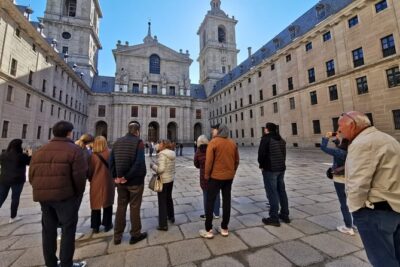
Escorial Monastery and the Valley of the Fallen Tour from Madrid
Read our review →
Flamenco Show at Tablao Sala Temple with Drink
Read our review →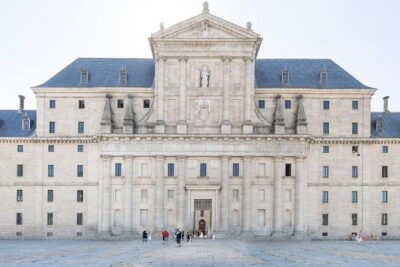
Escorial Monastery and the Valley of the Fallen from Madrid
Read our review →
Entrance to the Flamenco Temple Room in Madrid with Tapas Option
Read our review →
Madrid Must-see with Atardeder at the Debod Temple
Read our review →
San Lorenzo de El Escorial Monastery Private Tour
Read our review →
Royal Monastery of the Barefoot nuns: Guided Tour + Tickets
Read our review →Browse the lists this tour appears in