
Reviewed · PORTUGAL TEMPLE TOURS
Alcobaça: Entry to UNESCO Alcobaça Monastery
Alcobaça Monastery gives you a rare chance to walk through a Cistercian abbey founded in 1153, where bare Gothic design does much of the talking. The white stone, huge medieval spaces, and preserved monastic rooms make this feel less like a quick monument stop and more like a lesson in how religious life shaped Portugal.
I like the access to the medieval rooms, which adds real substance beyond the grand church. I also like the simple $17 setup: buy entry, skip the ticket line, and explore independently. The catch is just as clear: there is no guide, and the ticket is non-refundable, so check the opening dates and allow enough time before booking.
Key points to know before you go
- Founded in 1153: Alcobaça began as one of Portugal’s most important Cistercian foundations.
- Built from 1178: The abbey’s construction had strategic, religious, and political importance during Portugal’s Christian expansion.
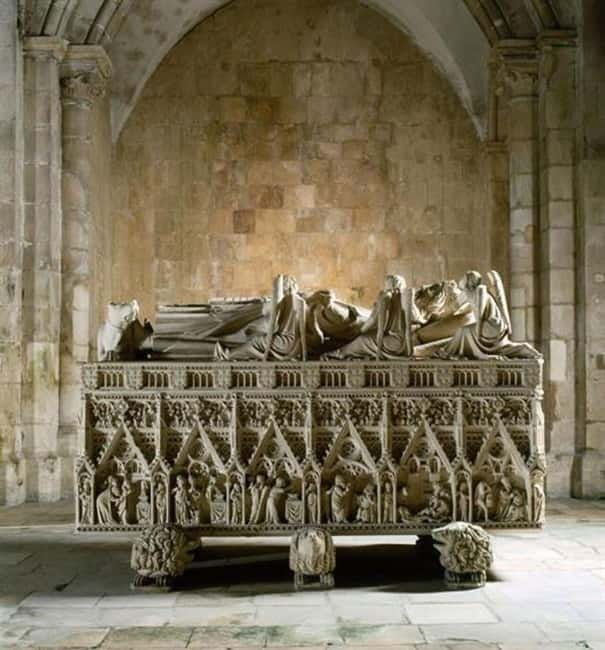
- Medieval rooms included: Your ticket covers more than the church, giving you access to preserved monastic spaces.
- Self-guided visit: No guide, meals, or drinks are included, so you set the pace and bring your own context.
- Skip-the-line entry: Meet at the main entrance on Praça 25 de Abril rather than arranging transport or a separate meeting point.
- Plan around closures: The monastery is closed on January 1, Easter Sunday, May 1, August 20, and December 25.
Why Alcobaça Monastery deserves your time
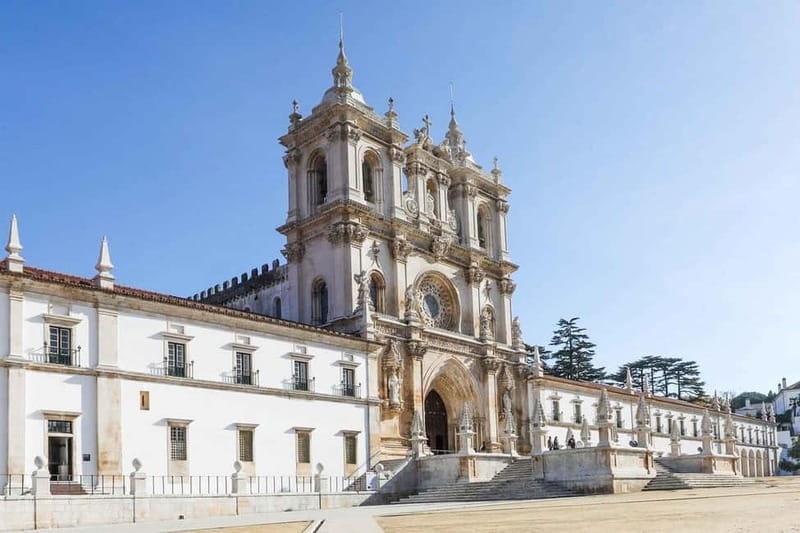
Alcobaça is one of those Portuguese sights where the building itself explains the story. You do not need elaborate decoration to feel the scale of the place. The Gothic architecture uses height, pale stone, and open space to create a calm, serious mood.
That quiet character fits the Cistercian tradition. The order favored discipline and simplicity, and those values are easy to sense as you move through the monastery. The complex later changed across several centuries, so you are not seeing one perfectly uniform building. You are seeing Portuguese architecture develop from the 12th through the 18th centuries.
The monastery also mattered beyond religion. Its construction, begun in 1178, was tied to the consolidation of Christian power in Portugal. That makes your visit useful for understanding the country’s formation, not just its church architecture.
You will find the building in a central part of Alcobaça, at Praça 25 de Abril. After your visit, you are already positioned for further exploration of the town. The setting is practical: no remote transport, long approach, or complicated transfer is required.
Other temple visits near Portugal we have written up
- Lisbon: Jerónimos Monastery Entrance Ticket
★ 4.1 · 14,164 reviews - Lisbon: Jerónimos Monastery E-Ticket and Audio Guide
★ 3.7 · 660 reviews - Lisbon: Belém Walking Tour with Jerónimos Monastery Ticket
★ 4.9 · 637 reviews
Entering at Praça 25 de Abril
Your visit begins at the monastery’s main entrance. The meeting point is easy to identify because it is the monument itself, not a nearby café or tour office. That matters if you are arranging the visit independently or fitting it into a day in the Norte Region.
The ticket costs $17 per person. For that price, you receive entry, access to the medieval rooms, and skip-the-line ticket access. The value is strongest if you want freedom rather than a tightly managed tour. You can spend more time in the architecture that interests you and move quickly through areas that do not hold your attention.
You should not expect a guide waiting inside. No guided tour is included, and no guide’s name is provided. That keeps the cost reasonable, but it also means you should arrive with at least a basic idea of what you are seeing. Plaques and the building itself will help, yet visitors who want a full explanation of the monastery’s politics, religious life, and construction phases may prefer a separate guided option.
Photography is allowed, but flash is not. That is good news for anyone who wants to record details of the Gothic stonework, though you will need to respect the no-flash rule throughout the complex.
The church and the white Gothic interior
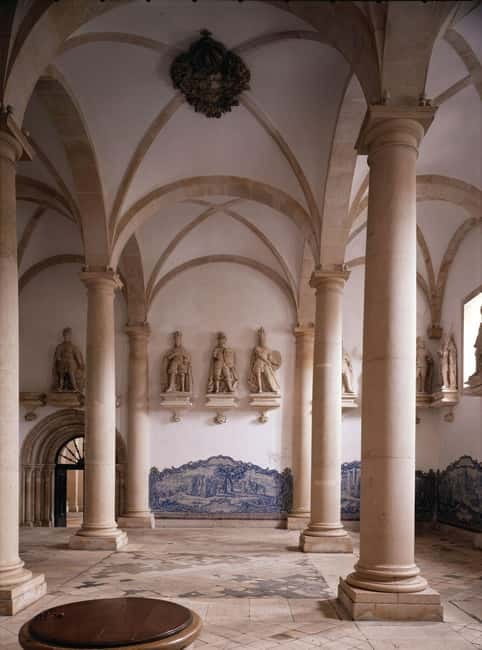
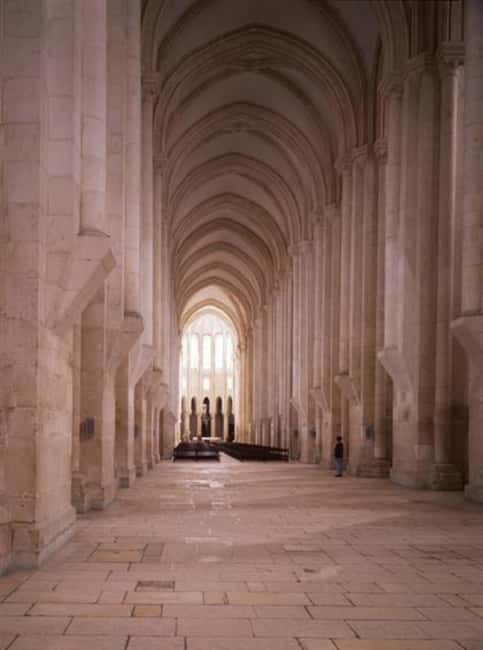
The first major impression comes from the monastery’s Gothic character. The architecture is often described as a white jewel, and the phrase makes sense once you see how the pale surfaces catch the light. The effect is not colorful or ornate. It is spacious, cool, and restrained.
I like this part of the visit because the scale works without a large amount of decoration. You can look upward at the structure, then back down at the clean lines and stonework. The serenity is not an added performance. It comes from the proportions and the absence of visual clutter.
The monastery’s style is also historically useful. It lets you see how Gothic ideas took root in Portugal and how the complex changed over time. The building’s importance is not limited to one famous room or one architectural trick. The interest comes from seeing a long period of Portuguese building history held in one place.
Take your time here. A rushed pass through the church will give you the outline, but not much of the mood. Since the ticket is valid for one day, you have a better chance of enjoying the visit if you choose a starting time that leaves room for a measured walk through the interior.
Medieval rooms and monastic life
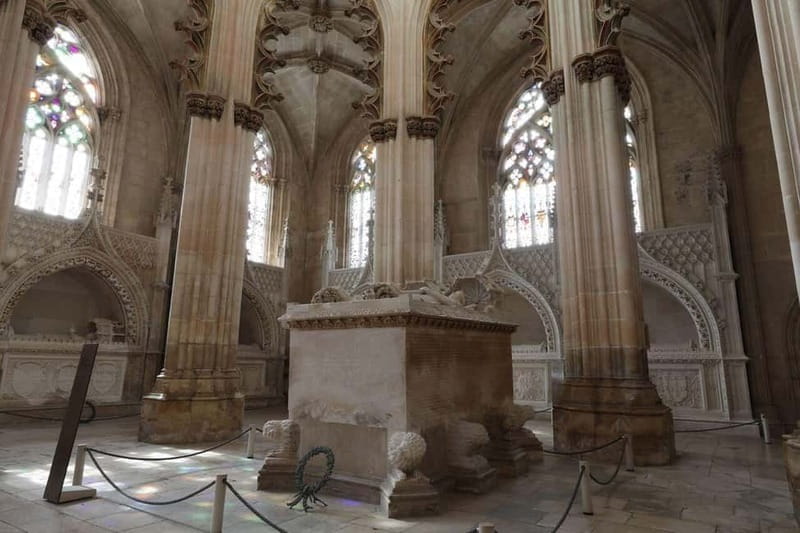
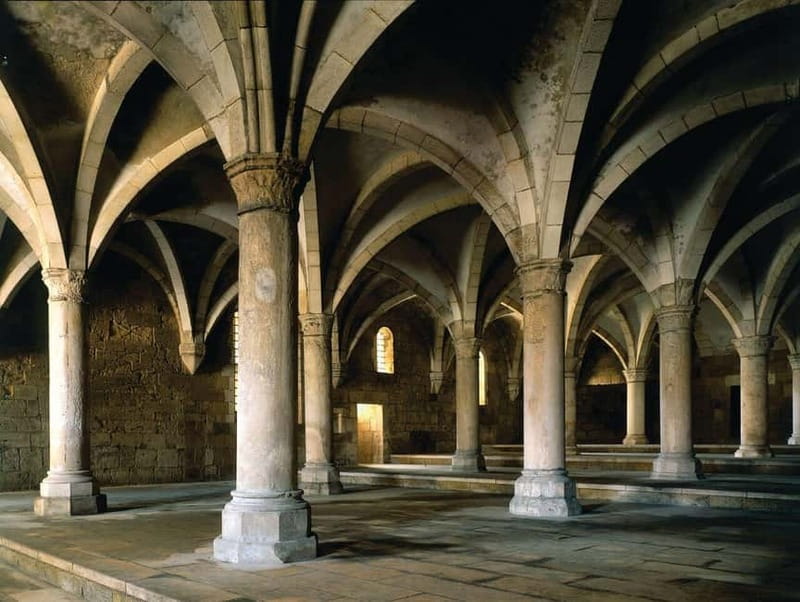
The access to the medieval rooms is one of the strongest reasons to choose this ticket. These spaces help connect the grand abbey to the people who lived and worked inside it. The church shows the public face of the foundation. The medieval rooms give you a closer sense of its daily operation.
You might find that these rooms appeal to you more than the main architectural views. Their value is in their age, simplicity, and connection to monastic life. They have been preserved over centuries, allowing you to see parts of the complex that are less ceremonial than the church.
This is also where the self-guided format requires a little patience. Without a guide, you will need to read the available information and use the rooms themselves as clues. Look for changes in materials, scale, and decoration. Those differences can help you understand how the complex expanded and adapted.
Do not leave the medieval rooms until the final few minutes. A late visit caused one person to miss the dormitories because staff were preparing to close, despite entry being allowed half an hour before closing. The practical lesson is simple: arrive earlier than the final admission time if you want to see every area without pressure.
A different set of gates, same trip:
- Lisbon: Belem Walking Tour with Jeronimos Monastery Ticket
★ 4.7 · 490 reviews - Lisbon: Belem, Jeronimos Monastery, and Coach Museum Tour
★ 4.8 · 478 reviews - Belem and Jeronimos Monastery Guided Small Group Walking Tour
★ 5.0 · 410 reviews - “Porto: Fado Show with Guided Tour in a Historic Monastery”
★ 4.9 · 164 reviews
Understanding the abbey’s strategic role
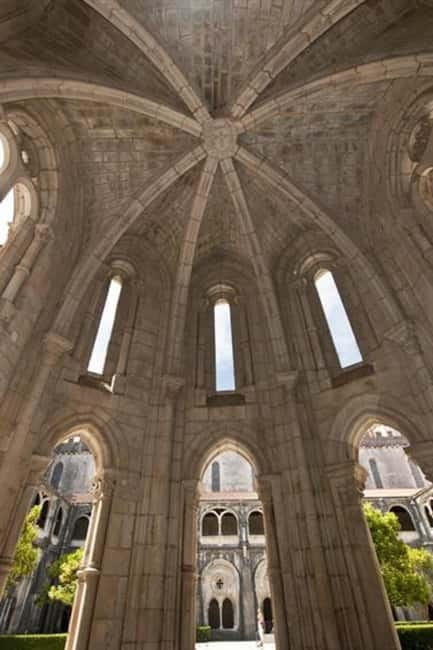
Alcobaça was not built in isolation from Portugal’s wider story. Its foundation in 1153 and construction from 1178 came during a period when Christian power was expanding and becoming more firmly organized. The monastery had cultural and religious meaning, but it also occupied an important strategic place in that process.
You do not need to turn the visit into a history lecture. Just keep this context in mind as you walk through the complex. The abbey was part of a larger effort to establish Christian institutions, support settlement, and give lasting form to Portuguese authority.
That background makes the architecture more interesting. The monastery was not merely designed to be beautiful. It was meant to express order, permanence, and the strength of a religious foundation. Its prominent position helped make that message visible.
The experience is especially useful if you are visiting other historic sites in Portugal. Alcobaça helps connect religious buildings to the country’s political development. You leave with a better understanding of why an abbey could matter so much to a growing kingdom.
A self-guided visit, with no group schedule
This is an entry ticket, not a guided excursion. There is no transport, meal, beverage, or scheduled group itinerary. You meet at the main entrance, enter, and explore on your own.
That format suits you if you like to stop for photographs, read at your own speed, or linger in a quiet room. It also works well if you are building a flexible day around Alcobaça. You do not need to match another group’s pace or wait for a guide to finish explaining a room.
The tradeoff is a lack of built-in interpretation. You will not have someone pointing out the most important details or explaining the abbey’s Christian expansion role as you move through it. If architecture and atmosphere are your main goals, that may not matter. If you want every room placed in its historical context, plan to do some reading before arrival or arrange separate guidance.
The rating of 4.3 out of 5 reflects a generally positive experience, with short comments describing the visit as excellent and fully satisfactory. The weaker experiences focus less on the monument than on misunderstanding what was being purchased, arriving when the site was closed, or having too little time before closing. Read the ticket wording carefully: you are buying admission, not a travel guide and not a guided tour.
Timing, closures, and the last-entry trap
This activity is valid for one day, with starting times shown during the availability check. That gives you flexibility, but it does not remove the need to check the calendar. The monastery is closed on January 1, Easter Sunday, May 1, August 20, and December 25.
The Christmas closure deserves special attention. A booking made for December 25 resulted in a wasted visit because the monument was shut. Check the date directly before you commit, especially around public holidays and religious celebrations.
You should also avoid treating the last admission time as the ideal arrival time. A visit beginning at 5:30 pm before an 6 pm closing left too little time to see everything comfortably, and the dormitories were not available during the final preparation for closure. Even if admission is technically still possible, staff may begin closing rooms before the building’s official closing time.
I would allow at least enough time to explore the church, medieval rooms, and main architectural areas without watching the clock. The exact amount depends on how closely you read and how many photographs you take, but the safest approach is to visit well before the final entry period.
Who gets the best value for $17
At $17, this works best for independent sightseers who want the monument itself and do not need transport or a guide. The price covers the central parts of the experience, including the medieval rooms, and skip-the-line entry can save time at the entrance.
It is a good match for:
- Architecture lovers who enjoy Gothic spaces and long building histories.
- Visitors interested in Portugal’s religious and political development.
- People who prefer self-guided sightseeing.
- Anyone planning a wider day in central Alcobaça.
- Visitors who need wheelchair-accessible entry.
- Photographers who want to capture the stonework without using flash.
It may be less suitable if you want a full narrated tour. Since no guide is included, you will need to create your own context. It may also be poor value if you arrive near closing, miss one of the closure dates, or assume the ticket includes a guide.
The non-refundable policy makes date checking especially important. Once you book, you should be confident that the monastery is open and that your schedule allows enough time inside.
Accessibility and practical details
The experience is wheelchair accessible, which makes it a useful option for visitors who need accessible entry. The supplied information does not give further details about which individual rooms or routes may have specific access limits, so you should confirm any particular mobility needs before booking.
The meeting point is the main entrance at Praça 25 de Abril. Entry is for one day, and the activity uses available starting times rather than a named guide or fixed walking route.
Meals and beverages are not included. That is not a serious drawback for a short independent monument visit, but you should plan food separately if Alcobaça is part of a full-day outing.
The provider is GetYourGuide Tours & Tickets GmbH. The activity is non-refundable, so check the date, closure calendar, and arrival time before payment.
Should you book the Alcobaça Monastery ticket?
Book it if you want a calm, independent look at one of Portugal’s major Cistercian foundations, especially if medieval rooms and Gothic architecture interest you. The $17 price is reasonable for entry, skip-the-line access, and a one-day visit, provided you arrive early enough to see the full complex.
Skip it if you are looking for a guided historical tour or if your schedule only allows a last-minute visit before closing. This ticket gives you access, not interpretation. Choose a date when the monastery is open, arrive with time to spare, and treat the church and medieval rooms as the heart of the experience.
FAQ
Where is Alcobaça Monastery located?
The monastery is in the Norte Region of Portugal. The meeting point is the main entrance at Praça 25 de Abril in Alcobaça.
How much does admission cost?
The listed price is $17 per person.
What does the ticket include?
The ticket includes entry to Alcobaça Monastery, access to the medieval rooms, and skip-the-line ticket access.
Is a guided tour included?
No. A guided tour is not included, and the experience is designed as independent entry.
How long is the ticket valid?
The activity is valid for one day. Starting times are shown when you check availability.
Is the monastery wheelchair accessible?
Yes. The activity is listed as wheelchair accessible.
Can I take photographs inside?
Yes. Photography is allowed, but flash photography is not permitted.
Is the ticket refundable?
No. The activity is non-refundable.
When is Alcobaça Monastery closed?
It is closed on January 1, Easter Sunday, May 1, August 20, and December 25.
Newly written up around Portugal
- Belém: Jeronimos Monastery, Tickets and Guided tour★ 4.9 · 30 reviews
- Lisbon: Tour of Belem and Jerónimos Monastery★ 3.2 · 5 reviews
- Lisbon: Skip-the-line Jerónimos Monastery Tour with Tickets★ 5.0 · 4 reviews
- Lisbon: Belém Private Walking Tour & Jerónimos Monastery★ 4.5 · 83 reviews
- From Lisbon: Évora, Chapel of Bones, & Roman Temple Tour★ 5.0 · 8 reviews
- Lisbon: Belem Tour with Pastéis at Jerónimos Monastery★ 4.7 · 96 reviews
- From Lisbon: Fátima Sanctuary and Batalha Monastery (UNESCO)★ 5.0 · 5 reviews
- Between Life & Death: Roman Temple, Cathedral & Bone Chapel★ 4.9 · 6 reviews
Portugal Temple Tours, compared.
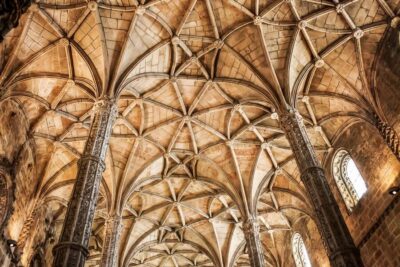
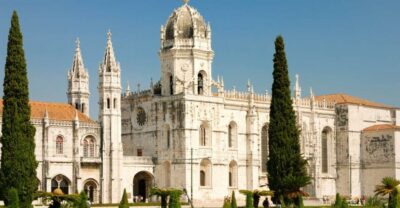
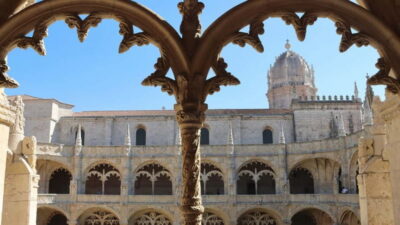
Belém Walking Tour with Jerónimos Monastery Ticket
Read our review →Belem Walking Tour with Jeronimos Monastery Ticket
Read our review →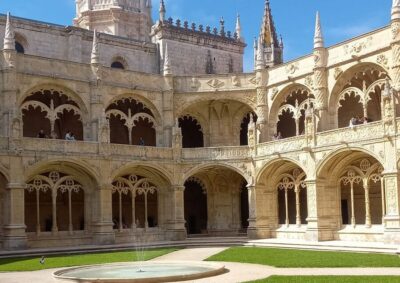
Belem, Jeronimos Monastery, and Coach Museum Tour
Read our review →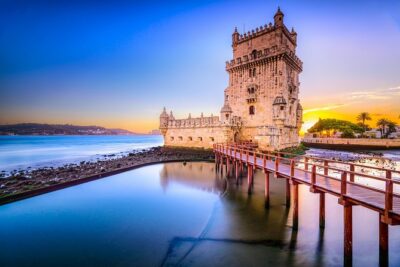
Belem and Jeronimos Monastery Guided Small Group Walking Tour
Read our review →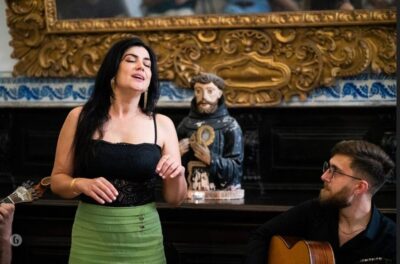
“Porto: Fado Show with Guided Tour in a Historic Monastery”
Read our review →
Belem Walking Tour with Jeronimos Monastery Entry
Read our review →Browse the lists this tour appears in