
Reviewed · TEMPLE OF HEAVEN TOURS
Beijing: Lama Temple (Yonghe Temple) Admission Ticket
The Lama Temple is one of Beijing’s most striking places to see living religious practice, not just preserved architecture. I like the chance to watch worshippers light incense and pray in the courtyards, and I like the mix of Han, Manchu, Tibetan, and Mongolian design across the complex. The famous 18-meter sandalwood Buddha is the main visual reward.
The main drawback is that this is admission only. You receive no guide or audio tour, and the booking process requires your passport details in advance. Security checks still apply, so fast-track ticket entry does not mean walking straight through every checkpoint.
Key points to know before you go
- See the 18-meter sandalwood Buddha: The huge Maitreya figure is carved from one piece of sandalwood and is the temple’s most famous treasure.
- Watch a working place of worship: Incense, prayers, and daily Buddhist practice give the temple a more immediate feel than a silent museum.
- Explore several architectural styles: Han, Manchu, Tibetan, and Mongolian details appear throughout the halls and gateways.
- Use WhatsApp or email for your actual ticket: The GetYourGuide QR code alone is not valid for entry.
- Plan around the closing rules: Final admission is one hour before closing, and everyone must leave 30 minutes before closing.
- Expect independent sightseeing: The ticket covers entry and exhibitions, but not a guide or audio commentary.
Why Beijing’s Lama Temple feels different
Many Beijing sights are grand, formal, and tied to imperial power. Yonghe Temple has that scale, but it also feels active. People arrive to burn incense, bow, and pray, so you are not simply walking through old rooms and looking at objects behind glass.
That mix is what I like most. You can study painted beams and carved roofs, then watch a family carry incense through the courtyard. Smoke from the incense burners can soften the view and add a strong sensory element, though it may be less comfortable if you are sensitive to smoke.
The temple is also known as Yonghe Temple, or Yonghe Gong in Chinese. It began in 1694, during the 33rd year of the Kangxi Emperor’s reign. Before he became emperor, Yongzheng lived here. The site later became an imperial palace in 1725, then changed into a Tibetan Buddhist temple in 1744 under the Qianlong Emperor.
That story gives the buildings extra weight. This was not built as an ordinary neighborhood temple. It passed through imperial use before becoming one of Beijing’s major centers of Tibetan Buddhism.
More Temple of Heaven Tours in Beijing:
- Beijing: The Temple of Heaven or Summer Palace Entry Ticket
★ 4.6 · 1,286 reviews - Beijing Classic Full-Day Tour including the Forbidden City, Tiananmen Square, Summer Palace and Temple of Heaven
★ 4.0 · 610 reviews - Temple of Heaven Ticket
★ 5.0 · 482 reviews
Entering through the gates and courtyards
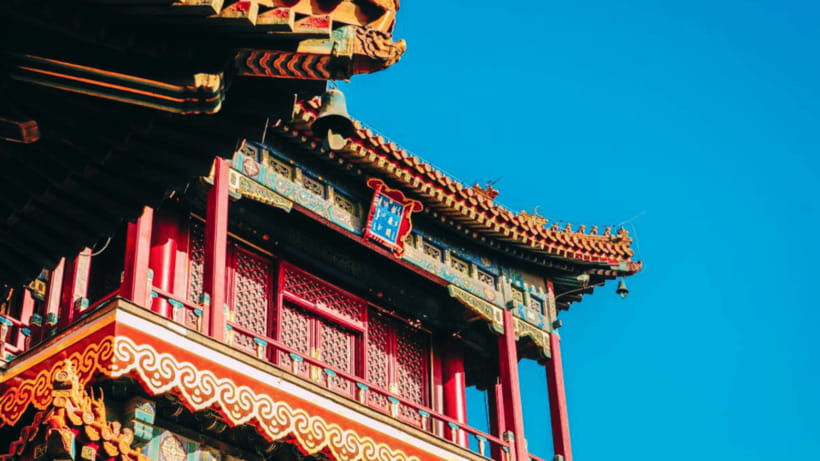
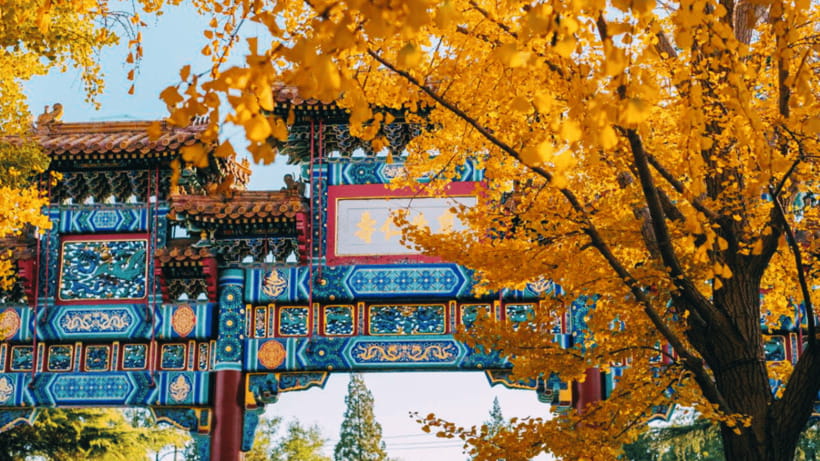
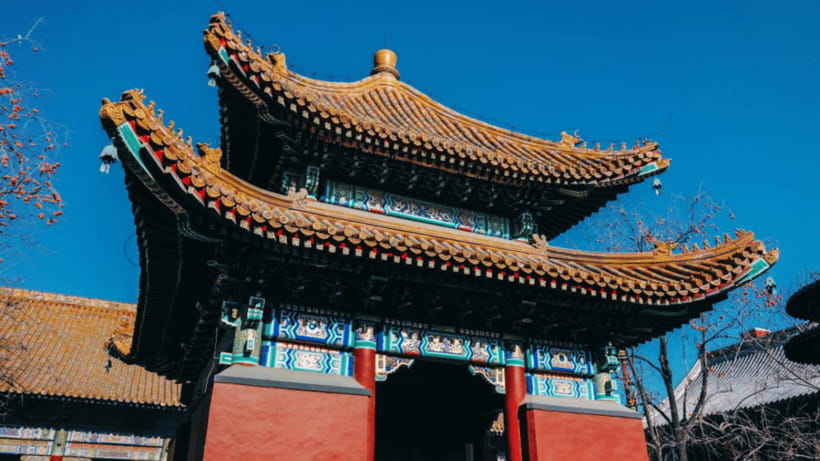
The complex is arranged along a clear central route. You pass through three decorated archways before reaching the main halls and courtyards. The first impression is one of order: gates, rooflines, courtyards, and halls follow one another in a measured sequence.
I suggest you slow down at the entrance rather than rushing toward the largest building. The archways carry much of the visual language of the temple, with painted surfaces, traditional roof forms, and carefully framed views into the next courtyard.
Your ticket is designed to reduce the work of buying admission on site. However, you still need to show the confirmed ticket at the correct entrance channel and pass through security. Sharp objects, weapons, explosive substances, and pets are not allowed.
Bring the passport used during booking. Real-name ticketing is required, and the name and passport number must match the information accepted at the gate. This is one of those small details that can decide whether an otherwise simple visit goes smoothly.
Yonghe Gate and Yonghe Palace Hall
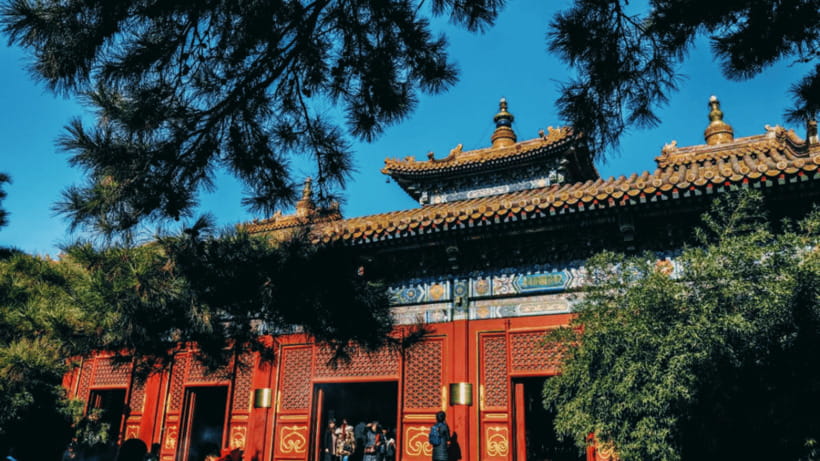
The Yonghe Gate leads into the heart of the complex. From here, the buildings begin to feel more ceremonial and the sequence of courtyards becomes easier to understand.
The Yonghe Palace Hall is one of the important stops on the route. The exact objects that catch your eye will depend on how busy the building is and how much time you spend looking upward, but the hall helps show how the temple combines imperial Chinese planning with Tibetan Buddhist purpose.
Look for the relationship between the roof decoration, the painted details, and the statues within the halls. The attraction is not one isolated style. The temple’s appeal comes from the way different traditions were brought together without losing the formal layout of a Beijing imperial complex.
Since no guide is included, I would recommend reading the basic background before arrival or using the small information guide sent with some bookings. You can still enjoy the visit independently, but a little context helps you understand why the site has both palace-like and monastic qualities.
The Four Learning Halls
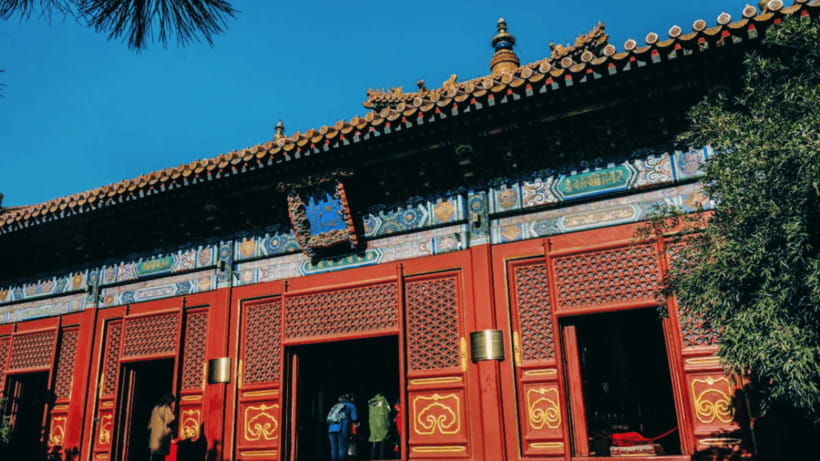
One of the more unusual features is the group known as the Four Learning Halls. These include the Hall of the Medicine Buddha, Mathematics Hall, Tantric Hall, and Lecture Hall.
The names hint at the range of Buddhist study connected with the temple. This is more than a collection of prayer rooms. It reflects teaching, religious practice, and the transmission of Buddhist learning.
The halls are not presented as a modern attraction with a timed performance or structured tour. You walk through at your own pace, taking in the architecture, statues, and atmosphere. That freedom suits visitors who prefer to pause when something interests them, but it means you must supply your own structure.
I would give yourself time for each courtyard instead of treating the Four Learning Halls as a quick checklist. The details can be easy to miss when the complex is crowded, especially around major prayer areas.
More Entry Tickets in Beijing:
- Temple of Heaven Ticket
★ 4.9 · 271 reviews - Beijing: Yonghe Lama Temple Entry Ticket
★ 4.5 · 147 reviews - Beijing: Temple of Heaven Ticket with 5 UNESCO Site Options
★ 5.0 · 130 reviews - Lisbon: Jerónimos Monastery Entrance Ticket
★ 4.1 · 14,164 reviews
The famous sandalwood Buddha
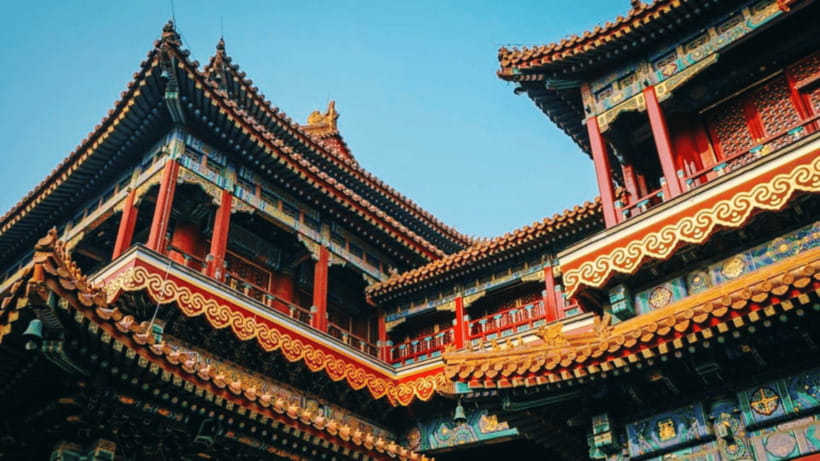
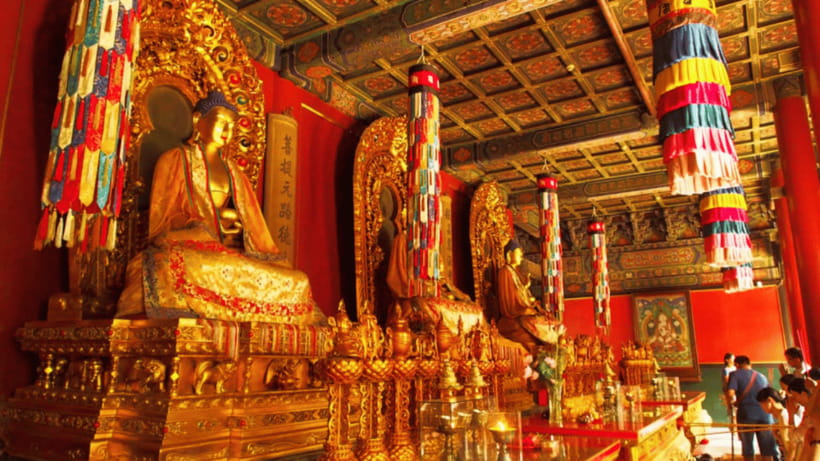
The biggest single reason many people make time for Yonghe Temple is the 18-meter Buddha carved from a single piece of sandalwood. It is identified as a Maitreya Buddha and has held a Guinness World Records entry since 1990.
The scale is difficult to take in from photographs. Inside the hall, look upward and let the statue’s height register gradually. The fact that it was carved from one piece of wood adds another layer of interest, since the material itself had to be large enough and sound enough for such a work.
This is usually the moment when the temple shifts from attractive architecture to something more memorable. Even visitors who are less interested in Buddhist art can appreciate the technical challenge and the presence of the figure in its hall.
Photography rules and access conditions can vary by building, so follow posted instructions and staff directions. Do not treat the most important hall as a quick photo stop. The space is religious, and people may be praying around you.
Statues, thangkas, and exhibition rooms
The temple contains Buddha statues, thangkas, and other valuable religious objects. Three exhibition rooms add a more museum-like element to the visit and help explain the artistic traditions represented in the complex.
Thangkas are painted or embroidered religious works used in Tibetan Buddhist practice. Their detail rewards a slower look. You may find that the first view gives you the overall colors and figures, while a second look reveals smaller symbols and patterns.
The exhibitions are useful because the temple does not rely only on its buildings. They give you a chance to see objects connected with Buddhist worship and artistic practice. Still, the ticket does not include an audio guide, so the amount of explanation available on site may be limited.
If you want a fully guided historical walk, this is not the right product. If you prefer to move independently and spend more time with the objects that interest you, the arrangement works well.
Incense, prayer, and everyday worship
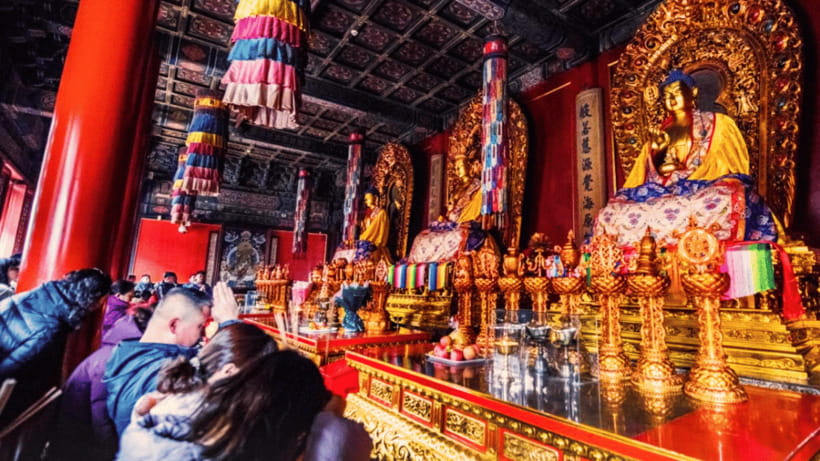
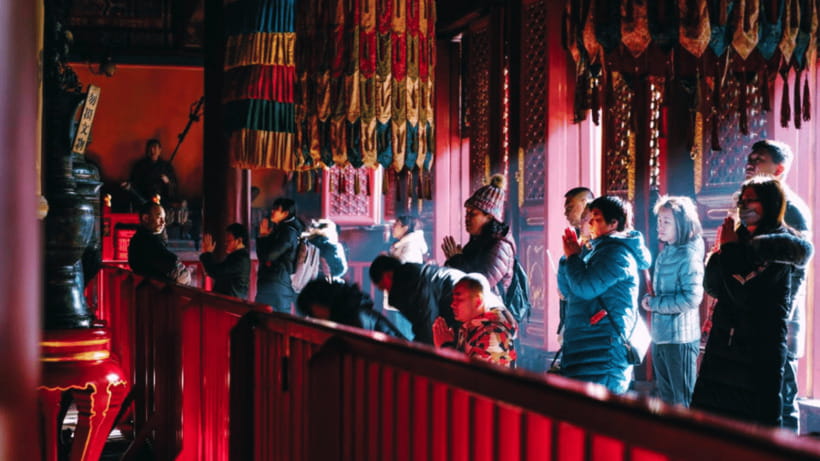
The most authentic part of the visit may be the simplest one: watching people use the temple. Incense burners, prayer gestures, and quiet movement through the courtyards show that Yonghe Temple is still part of daily religious life.
You may be able to burn incense as part of your visit, depending on current site arrangements. Treat this as a religious practice rather than a performance for visitors. Keep your voice low near prayer areas, avoid blocking worshippers, and follow local instructions.
The incense can create a hazy, atmospheric view across the courtyards. It can also make the air smoky, especially during busy religious periods. January 1, for example, can be especially crowded because many people come to pray at the start of the year.
For a calmer visit, I would avoid major holiday periods if your schedule allows. The temple can still be worthwhile when busy, but a crowd changes the experience. You may spend more time waiting to enter halls and less time looking closely at the details.
Is the $10 ticket good value?
At about $10 per person, the ticket is reasonably priced for a major Beijing cultural site with access to the main buildings and exhibitions. The value is strongest if you care about architecture, religious art, or seeing a working temple rather than only checking off a famous landmark.
The reservation fee is included, and advance booking removes some uncertainty from the admission process. This matters because real-name reservations are mandatory, and the process can be less convenient if you arrive without the correct information.
The ticket is less attractive if you expect transport, a personal guide, an audio tour, or a long organized itinerary. None of those are included. You are paying for admission and booking assistance, then exploring independently.
That can be an advantage. You decide how long to spend at the sandalwood Buddha, how closely to study a thangka, and when to pause in a courtyard. For many visitors, that freedom is worth more than being moved from hall to hall by a group schedule.
How the booking and entry process works
The booking requires your full name as printed in your passport and your passport number. Send both details on time. If the information is missing or incorrect, the reservation can be canceled and a cancellation fee may apply.
Do not rely on the standard GetYourGuide QR code as your admission document. The instructions specifically say it is not valid by itself. Wait for the actual confirmation by email or WhatsApp, then keep it available on your phone.
The service provider, PANDA144, has been praised for sending tickets and visit information through WhatsApp, sometimes on the morning of the visit. That timing can be convenient, but it also means you should monitor your messages rather than assume the first QR code you receive is enough.
Some bookings also include a small guide or e-guide. It is useful for basic orientation, but it does not replace a live guide or detailed audio commentary.
You can cancel up to 24 hours before the visit for a full refund. Check availability for the operating times shown for your chosen date. Final entry is one hour before closing, and you must leave 30 minutes before closing.
The site is wheelchair accessible. Security checks remain part of the process, and fast-track admission does not remove them.
Who will enjoy Yonghe Temple most?
I would recommend this visit to anyone interested in Buddhist art, Chinese architecture, imperial history, or ordinary religious life. It also suits independent visitors who want a flexible stop rather than a packaged tour.
Families may appreciate the striking scale of the Buddha and the clear progression through the gates and courtyards. Children who enjoy large statues and unusual buildings may find the visit engaging, though the prayer areas call for calm behavior.
Photography-focused visitors should come for the architecture and roof details, but they should not expect unrestricted photography in every hall. The religious setting matters more here than getting a picture of every object.
This is not the best choice if you need constant explanation. Without a guide or audio device, you must read, observe, and make your own connections. A little preparation will make the $10 admission feel much more worthwhile.
Should you book this Lama Temple ticket?
Book it if you want a low-cost, self-guided visit to one of Beijing’s most distinctive religious sites. The combination of imperial origins, Tibetan Buddhist art, active worship, and the 18-meter sandalwood Buddha gives the temple more depth than a quick photo stop.
I especially like the advance booking for visitors who want to avoid sorting out admission in person. Just remember that the process depends on accurate passport details and a confirmed ticket sent by email or WhatsApp.
Skip this option if you want transport, a live expert, or an audio tour included. For independent sightseeing, however, it is a practical way to enter Yonghe Temple and spend an unhurried day with its halls, courtyards, incense, and sacred artwork.
FAQ
How much does admission to Beijing’s Lama Temple cost?
The listed price is $10 per person. This includes fast-track ticket entry, access to the major temple buildings and cultural exhibitions, and the reservation fee.
Is a guide included with the ticket?
No. A guided tour and audio guide are not included. You explore the temple independently, although booking support may send a small guide or e-guide.
Is the GetYourGuide QR code valid for entry?
No. The GetYourGuide QR code is not a valid admission ticket by itself. Wait for the confirmation email or WhatsApp message with the actual ticket information.
What passport information is required?
You must provide your full name as it appears on your passport and your passport number. Real-name booking is mandatory, and genuine identification information must be accepted at the entrance.
Do I still need to pass through security?
Yes. Fast-track admission does not skip security checks. Pets, weapons, sharp objects, and explosive substances are not allowed.
Can I cancel the booking for a refund?
Yes. You can cancel up to 24 hours in advance for a full refund.
Is the temple wheelchair accessible?
Yes. The activity information lists the Lama Temple as wheelchair accessible. Final entry is one hour before closing, and visitors must leave 30 minutes before closing.
Newly written up around Beijing
- Beijing: Temple of Heaven and Forbidden City Private Tour★ 4.9 · 110 reviews
- Temple of Heaven, Summer Palace&Forbidden City Private Tour★ 4.9 · 53 reviews
- Beijing Private Tour to Temple of Heaven, Panda House and Summer Palace★ 5.0 · 101 reviews
- Beijing: Temple of Heaven Ticket with 5 UNESCO Site Options★ 5.0 · 130 reviews
- Beijing: Yonghe Lama Temple Entry Ticket★ 4.5 · 147 reviews
- Forbidden City, Summer Palace & Temple of Heaven Tour★ 4.9 · 177 reviews
- Beijing Historical Tour II including Summer Palace, Lama Temple & Panda Garden★ 4.0 · 187 reviews
- Beijing Private Tour of Temple of Heaven, Tian’anmen Square, Forbidden City★ 5.0 · 184 reviews
Temple of Heaven Tours, compared.
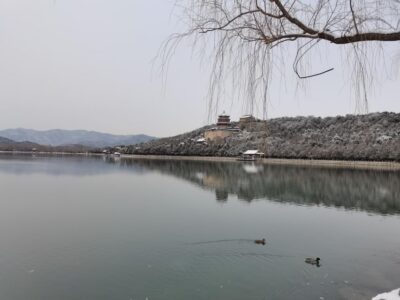
The Temple of Heaven or Summer Palace Entry Ticket
Read our review →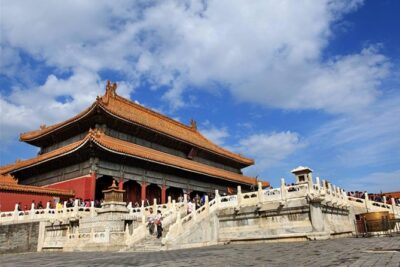
Beijing Classic Full-Day Tour including the Forbidden City, Tiananmen Square, Summer Palace and Temple of Heaven
Read our review →
Temple Heaven, Lama Temple, Summer Palace & Peking Duck Bus Tour
Read our review →
Temple Heaven, Summer Palace, Lama Temple, Hutong Bus Tour
Read our review →
Temple of Heaven, Summer Palace, Lama Temple, Hutong Tours
Read our review →Browse the lists this tour appears in