
Reviewed · TEMPLE OF HEAVEN TOURS
Temple Heaven, Summer Palace, Lama Temple, Hutong Bus Tour
Beijing’s grandest sights come quickly on this full-day cultural circuit. You move from the Temple of Heaven, where emperors prayed for good harvests, to the Lama Temple, old hutong lanes, and the Summer Palace, then finish near the Bird’s Nest. It is a lot of Beijing in one day, and the range is the point.
I like the strong mix of sights and the way the guides bring structure to a city that can feel overwhelming. I also like the practical bus transfers between distant areas, plus the chance to walk through an old neighborhood rather than seeing only palaces and monuments. The catch is simple: this is a walking-heavy day. One guest logged more than 20,000 steps, and shade and sitting time can be limited.
At a glance
- Four major stops in one day: Visit the Temple of Heaven, Lama Temple, hutongs, and Summer Palace without arranging several separate trips.
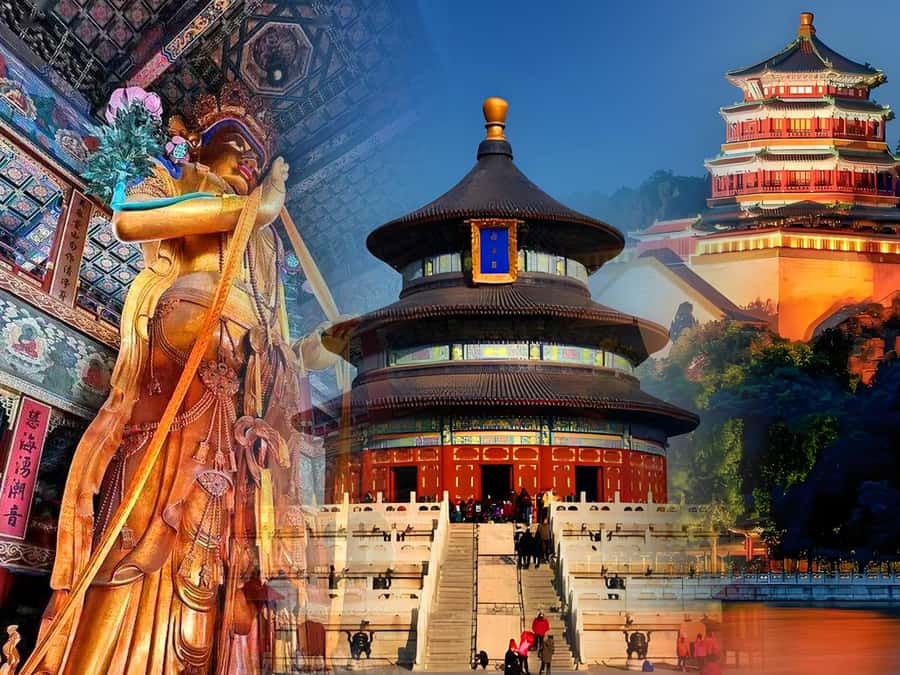
- The Temple of Heaven sets the tone: See the Hall of Prayer for Good Harvests and the imperial altar complex where emperors performed ceremonies.
- The Lama Temple adds a spiritual side: Look for the 18-meter Maitreya Buddha carved from one sandalwood tree.
- Hutong time is less formal: Walk old Beijing lanes and find your own lunch at a local eatery.
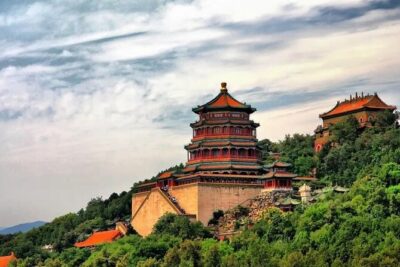
- The Summer Palace is the longest scenic stop: See Kunming Lake, the Long Corridor, and the imperial garden buildings.
- The day may end at the Bird’s Nest: Confirm your exact drop-off when booking, since the supplied details describe both the Bird’s Nest and the original meeting point as the endpoint.
Why this route works for a first Beijing visit
Beijing is spread out. The Temple of Heaven sits south of the historic center, the Lama Temple is farther north, and the Summer Palace lies well to the northwest. Seeing all three independently in one day means working out transport, entrance tickets, directions, and timing on your own.
For $58 per person, the value comes from combining transport, site access, and an English-speaking guide in one package. The day is not slow or leisurely, but it gives you a useful first picture of Beijing: imperial ritual, Buddhist worship, traditional residential lanes, and royal gardens.
I would choose this tour if you have only a short stay or want help with the city’s layout. I would not choose it if you prefer to linger for hours at one garden or museum. The schedule keeps moving, and a large group can mean occasional delays.
The guides are one of the biggest strengths. Joy is described as energetic and careful with meeting instructions. Jimmy receives repeated praise for clear explanations and historical detail. Shannon is noted for patience and for looking after people who need help, while Andy has used photographs to make the sites easier to understand. Bonnie, Helly, Tony, Jackie, Ivy, and others are also described as friendly, clear, and attentive.
Guide quality can vary from day to day, as it does on any group tour, but the pattern here is encouraging. You should expect storytelling, practical directions, and help keeping the group together rather than a silent ride between attractions.
More Temple of Heaven Tours in Beijing:
- Beijing: The Temple of Heaven or Summer Palace Entry Ticket
★ 4.6 · 1,286 reviews - Beijing Classic Full-Day Tour including the Forbidden City, Tiananmen Square, Summer Palace and Temple of Heaven
★ 4.0 · 610 reviews - Temple of Heaven Ticket
★ 5.0 · 482 reviews
9:00 at Tiantandongmen Station
The meeting point is Exit A2 of Tiantandongmen Station on Subway Line 5. The Chinese address for a taxi driver is 天坛东门地铁站A2出口. Look for a guide holding a Mubus signboard.
Arrive early. The schedule begins with the group meeting at 9:00, followed by the walk into the Temple of Heaven at about 9:10. Beijing’s subway is the most useful way to reach the starting point, and using the station exit removes much of the guesswork.
Bring your passport or ID card. You should also wear comfortable shoes. This advice is not a formality: the tour includes several large compounds, long paved paths, garden walks, and transfers that leave little time to recover from sore feet.
The transport is useful, but do not picture a day spent sitting on a coach. The bus mainly solves the problem of moving across Beijing. At each stop, you will walk extensively.
Temple of Heaven and the Hall of Prayer
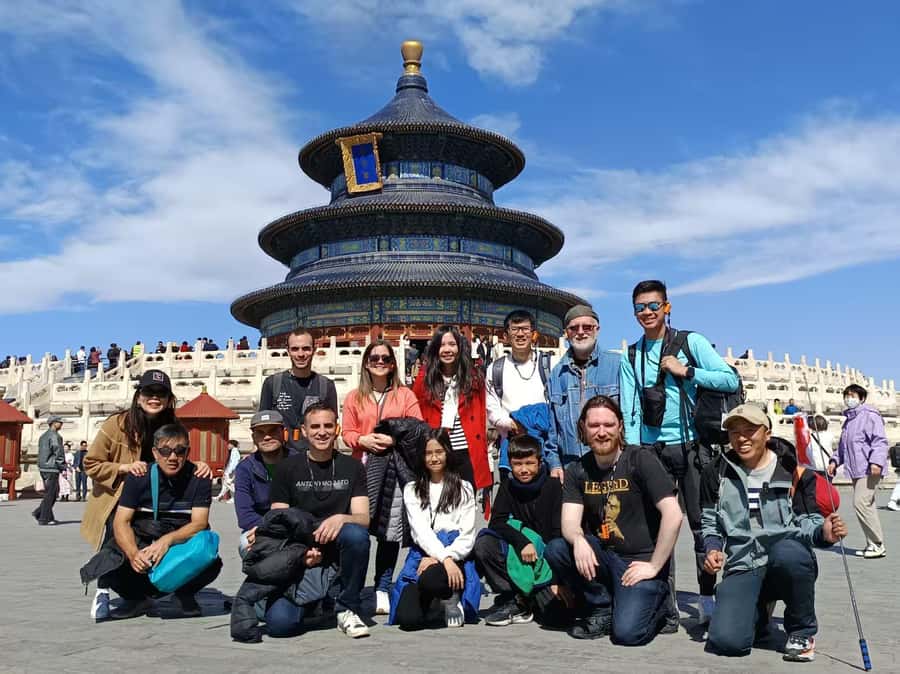
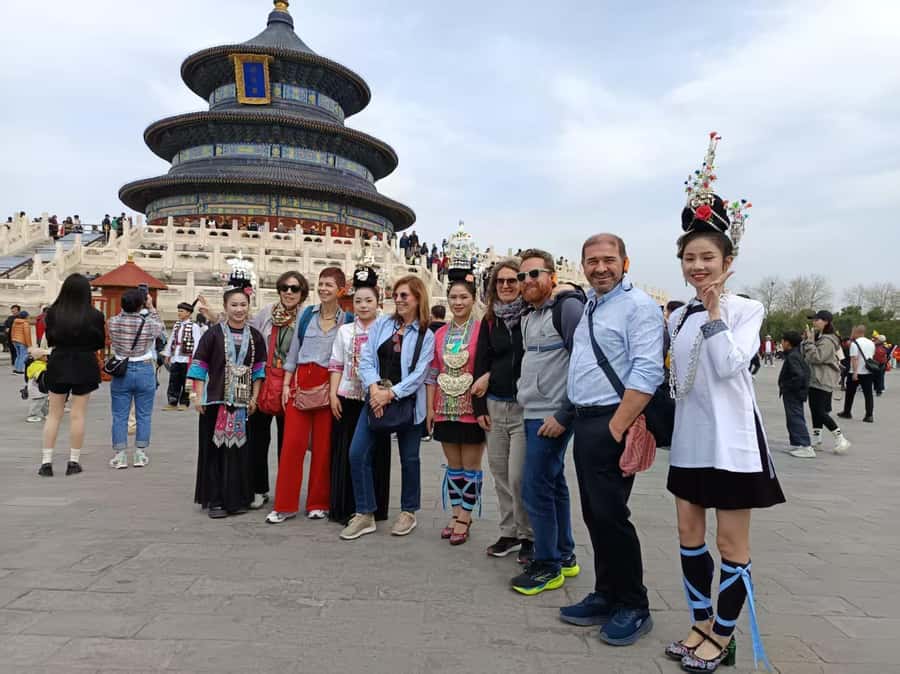
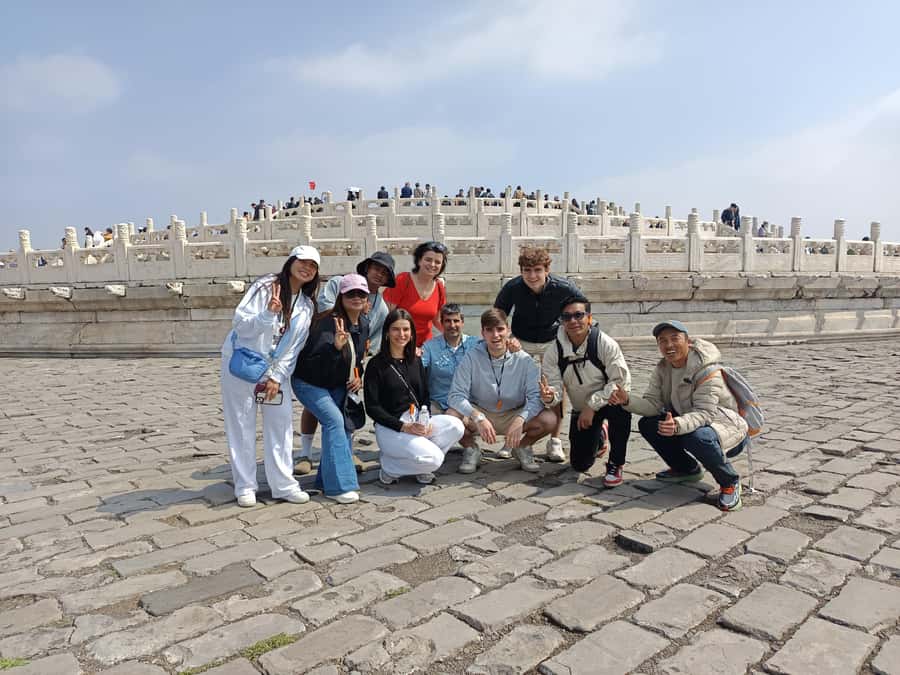
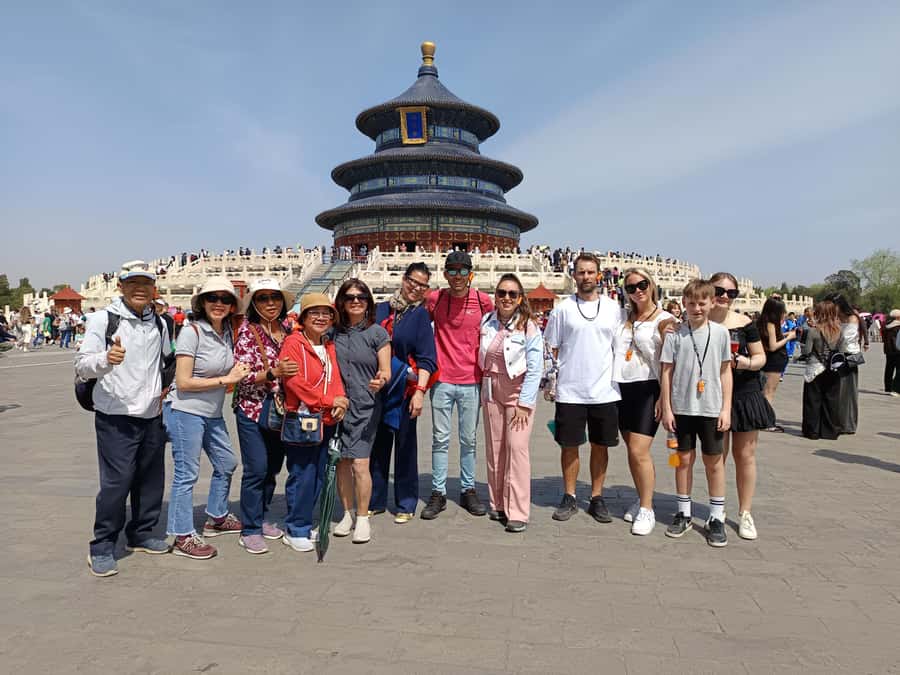
The first stop is the Temple of Heaven, described as China’s largest imperial worship complex. Emperors came here to pray for good harvests and carry out ceremonies tied to the well-being of the empire.
The star attraction is the Hall of Prayer for Good Harvests. Its tall, circular form and carefully arranged colors make it one of Beijing’s most recognizable buildings. Your guide will explain how the site functioned, so the architecture is not just a backdrop for photographs.
This early visit works well. You see one of Beijing’s essential landmarks before the day’s heat, crowds, or fatigue become a bigger issue. The compound is large, so listen carefully when your guide gives meeting instructions. Joy, Jimmy, Helly, and other guides are repeatedly praised for giving clear directions and keeping groups organized.
Allow yourself time to look beyond the main hall. The Temple of Heaven is an entire ceremonial complex, not a single building. The scale helps you understand the power of the imperial court and the importance placed on ritual, calendars, farming, and heaven’s approval.
The drawback is pace. You will not have unlimited time to wander every path. If you want a quiet photographic study of the complex, an independent visit would give you more freedom.
Lama Temple and the sandalwood Buddha
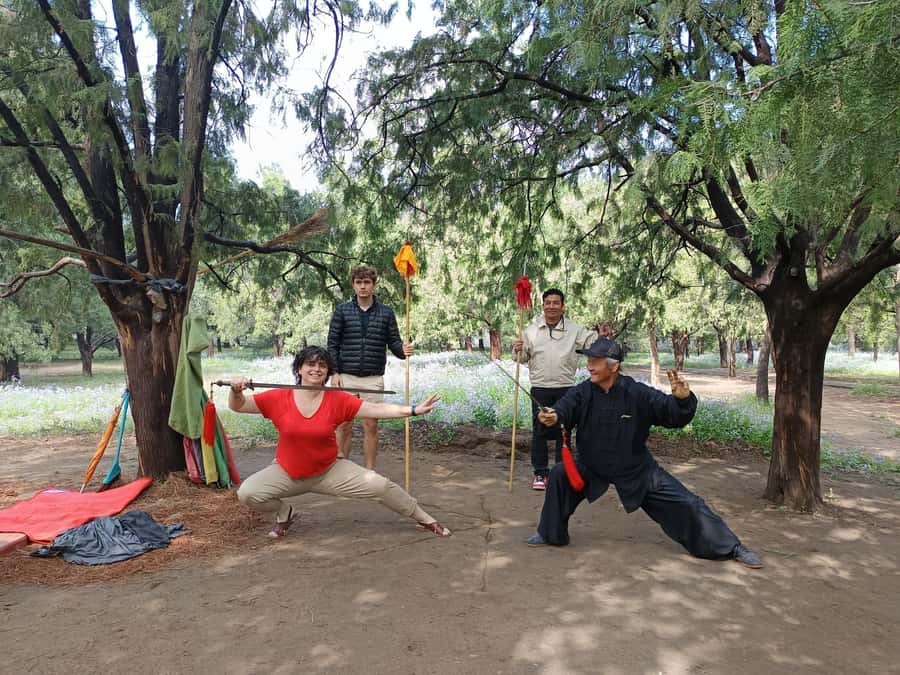
After the Temple of Heaven, the bus goes to Yonghe Lama Temple, usually arriving around 11:30. This is presented as the grandest Tibetan Buddhist monastery in northern China, and it gives the day a very different mood.
The temple blends Han Chinese and Tibetan Buddhist design. Instead of imperial worship connected to harvests and state ceremony, you encounter an active religious site with incense, halls, devotional images, and Buddhist symbolism.
The main detail to watch for is the 18-meter Maitreya Buddha carved from a single sandalwood tree. Its size and material make it an unforgettable feature, and your guide’s explanation helps you appreciate why it matters.
This stop is shorter than the Summer Palace, but it adds balance to the route. Without it, the day would be mostly imperial architecture and gardens. Here, you get a look at Beijing’s religious traditions and a building style different from the Temple of Heaven.
Stay close to the group. Religious sites can be busy, and the schedule depends on getting everyone back to the bus on time. Guides such as Leo, Jay, and Yan are praised for explaining details clearly and helping people stay oriented.
Other temple visits near Beijing we have written up
- Temple Heaven, Lama Temple, Summer Palace & Peking Duck Bus Tour
★ 5.0 · 377 reviews - Beijing: Entry to Temple of Heaven Park
★ 4.6 · 314 reviews - Temple of Heaven, Summer Palace, Lama Temple, Hutong Tours
★ 5.0 · 311 reviews - Beijing: Lama Temple (Yonghe Temple) Admission Ticket
★ 4.8 · 297 reviews
Hutong lanes and an independent lunch
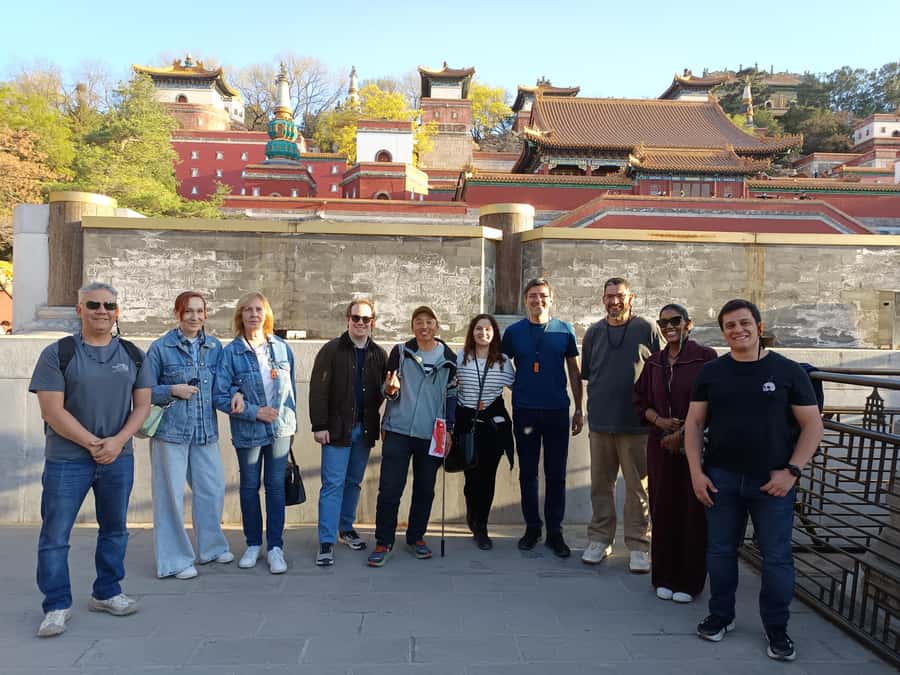
Around 12:30, the tour moves into Beijing’s hutongs. These old residential lanes are a useful change of scale after the formal courtyards and monumental halls.
The hutongs show a more ordinary side of the city. You walk through lanes that preserve the feel of traditional Beijing neighborhoods, with residential life replacing imperial ceremony. The visit is not presented as a long museum-style tour. Instead, you get time to walk and look around.
Lunch is at your own expense and pace. You can explore local eateries in the area, but the tour does not include a set meal. This gives you flexibility, though it also means you should be ready to make a quick decision because the afternoon departure is scheduled for 1:30.
I like this part because it gives the itinerary a human scale. Palaces can explain how rulers lived, but hutongs help you picture how neighborhoods functioned. Just keep an eye on the clock and your meeting instructions. In a group, one late lunch can affect everyone.
Summer Palace and Kunming Lake
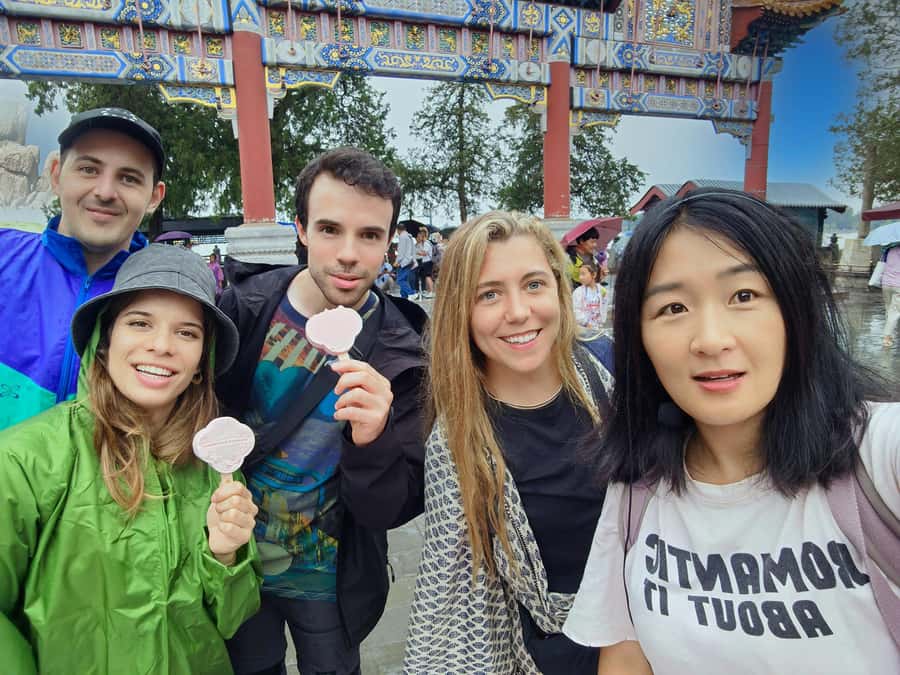
The bus leaves for the Summer Palace at about 1:30, with arrival scheduled around 2:30. This is the day’s broadest and most scenic stop.
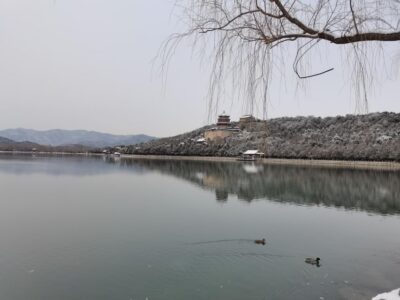
The Summer Palace is known as an imperial garden masterpiece and a museum of royal gardens. Its design brings together water, hills, pavilions, temples, bridges, and covered walkways. The centerpiece is Kunming Lake, which gives the grounds their open, restful feel after the tighter hutong lanes.
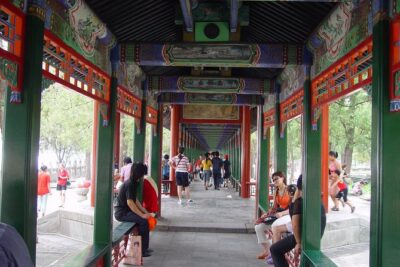
Your guide will lead you along important sections, including the famous Long Corridor. The corridor stretches roughly 728 meters and is decorated with thousands of painted scenes. It is both practical and beautiful, giving you shelter while framing views across the garden.
The Summer Palace is where good guiding matters most. There is too much to absorb from a map alone, and the site can be crowded. Shannon is praised for explaining the history in a lively way while giving people time for photographs. Ivy is described as warm and attentive, and several guides are credited with showing the most important parts without rushing the group through every view.
Plan for a busy visit. The grounds are large, and you may walk more than expected between major features. The reward is variety: painted architecture, water views, bridges, and ceremonial buildings all appear within one royal garden.
If you have extra energy, look for the Seventeen-Arch Bridge and the Tower of Buddhist Incense. The available information specifically highlights the bridge, the Long Corridor, and views over Kunming Lake. You should follow your guide’s route, since the amount of free time depends on the group and the day’s conditions.
Is the waterway cruise worth 100 yuan?
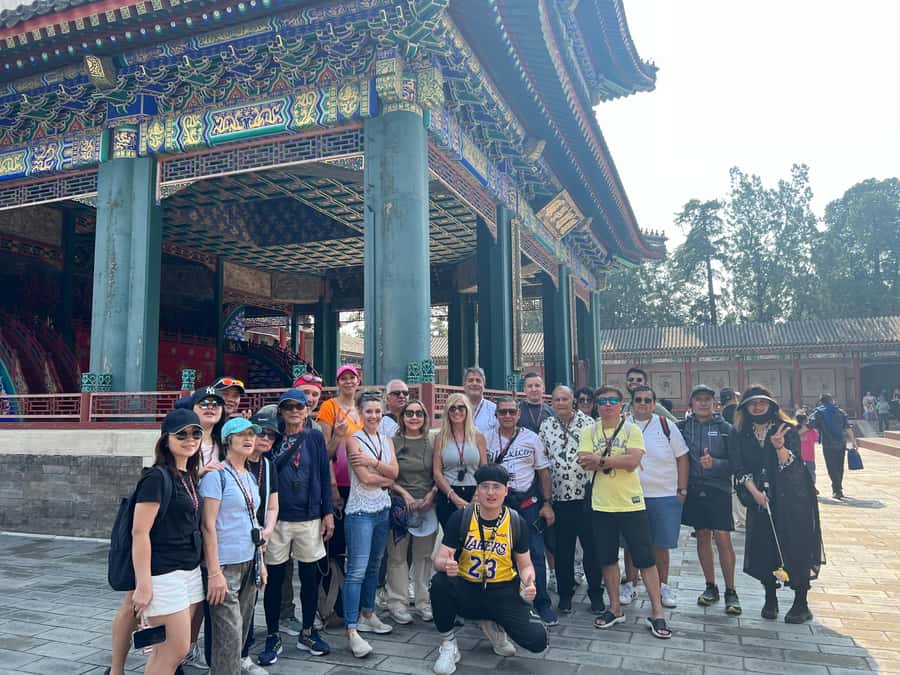
The Imperial Waterway Cruise is optional and costs 100 yuan per person. It follows the historic route used by royalty to enter the Summer Palace by boat.
This can be a smart add-on if you are tired of walking or want a different view of the approach to the palace. One detailed account praised a boat ride from Purple Bamboo Park to the Summer Palace as a restful part of the day. The cruise gives you a break while still keeping the imperial theme in view.
It is not included in the $58 price. Decide based on your energy, budget, and interest in seeing the palace from the water. If your priority is covering more paths and buildings on foot, skip it. If you value a slower transition and attractive lake views, the extra cost may be worthwhile.
Check the exact cruise arrangement when you reserve, since the schedule describes it as optional and notes the 100-yuan price separately.
The Bird’s Nest finish and a small logistics question
The planned finish is near Beijing’s Bird’s Nest, the Olympic landmark. The stated timing is roughly 5:30 for the return toward the city center, and you can continue exploring the Olympic area and see the Bird’s Nest lit at night.
This is a clever ending. After a day of imperial sites and traditional lanes, the Olympic architecture gives you a modern Beijing finale. It also lets you continue independently if you still have energy.
There is one point to clarify before you book. The itinerary says the tour ends at the Bird’s Nest, while the meeting-point information says the activity ends back at the original meeting point. Ask the operator or guide for the exact drop-off on your date. Do not assume you can retrieve luggage or reach a specific hotel from the final stop.
What the $58 price really buys
At $58, this is good value if your booking includes the bus, English-speaking guide, and entrance tickets. The included items are presented as dependent on the option selected, so read the specific package details before paying.
The price does not include lunch, personal expenses, or the optional 100-yuan Imperial Waterway Cruise. Those extras are easy to understand, and the lack of a fixed lunch can actually help you control spending.
The strongest value is time. You are paying to connect four major cultural stops that are far apart, with someone explaining what you are seeing. The trade-off is personal freedom. A private guide or independent day would let you stay longer at the Temple of Heaven or Summer Palace, but it would require more planning and transport decisions.
For a first day in Beijing, the combination is efficient. For a return visit focused on photography, gardens, or religious architecture, the fixed schedule may feel restrictive.
Who should book this day?
You should consider this tour if you:
- Have limited time in Beijing and want several major sights in one day.
- Prefer an English-speaking guide to explain architecture, customs, and historical use.
- Want transport between distant parts of the city.
- Are comfortable walking for many hours.
- Like a structured day with clear meeting points and timed departures.
Think twice if you:
- Have low fitness or need frequent sitting breaks.
- Prefer quiet visits with no group schedule.
- Want to eat a relaxed lunch rather than fit it between stops.
- Need a guaranteed hotel drop-off.
- Already plan to spend a full day at the Summer Palace alone.
The experience is not physically gentle. One person reported more than 20,000 steps before even counting the Olympic Stadium portion, and another noted that there are few chances to sit. Guides try to find shade and rest points, but you should prepare for sun, crowds, and long paths.
Practical verdict
I would book this tour for a first Beijing visit when time matters more than a slow pace. The Temple of Heaven, Lama Temple, hutongs, and Summer Palace show four distinct sides of the city, and the guides add context that is hard to gather while navigating alone.
Wear good shoes, bring identification, carry water, and keep lunch simple. Confirm which entrance tickets are included, decide on the waterway cruise, and verify the final drop-off at the Bird’s Nest or Tiantandongmen Station.
Book it if you want maximum cultural coverage with minimum planning. Skip it if you want an unhurried garden day. For the right person, $58 buys a demanding but highly useful introduction to Beijing.
FAQ
What time does the tour begin?
The meeting time is 9:00am at Exit A2 of Tiantandongmen Station on Subway Line 5. The guide will hold a Mubus signboard.
Which places does the tour visit?
The route includes the Temple of Heaven, Yonghe Lama Temple, old Beijing hutongs, and the Summer Palace. The itinerary also describes a finish near the Bird’s Nest.
Is lunch included?
No. Lunch is not included, and you have time to find a local eatery during the hutong visit.
Is the Imperial Waterway Cruise included?
No. The cruise is optional and costs 100 yuan per person.
What should I bring?
Bring your passport or ID card and wear comfortable shoes. The tour involves long-distance walking.
Can I cancel the booking?
You can cancel up to 24 hours in advance for a full refund.
Newly written up around Beijing
- Beijing: Temple of Heaven and Forbidden City Private Tour★ 4.9 · 110 reviews
- Temple of Heaven, Summer Palace&Forbidden City Private Tour★ 4.9 · 53 reviews
- Beijing Private Tour to Temple of Heaven, Panda House and Summer Palace★ 5.0 · 101 reviews
- Beijing: Temple of Heaven Ticket with 5 UNESCO Site Options★ 5.0 · 130 reviews
- Beijing: Yonghe Lama Temple Entry Ticket★ 4.5 · 147 reviews
- Forbidden City, Summer Palace & Temple of Heaven Tour★ 4.9 · 177 reviews
- Beijing Historical Tour II including Summer Palace, Lama Temple & Panda Garden★ 4.0 · 187 reviews
- Beijing Private Tour of Temple of Heaven, Tian’anmen Square, Forbidden City★ 5.0 · 184 reviews
Temple of Heaven Tours, compared.
The Temple of Heaven or Summer Palace Entry Ticket
Read our review →
Beijing Classic Full-Day Tour including the Forbidden City, Tiananmen Square, Summer Palace and Temple of Heaven
Read our review →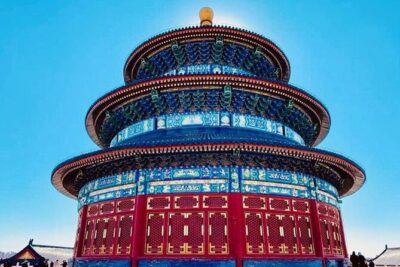
Temple Heaven, Lama Temple, Summer Palace & Peking Duck Bus Tour
Read our review →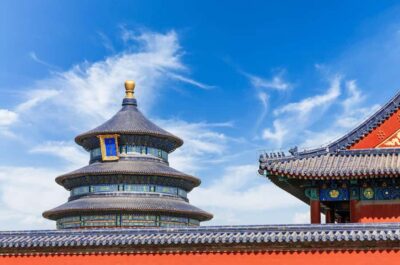
Temple of Heaven, Summer Palace, Lama Temple, Hutong Tours
Read our review →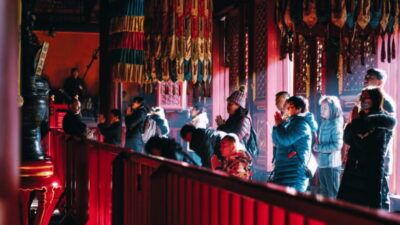
Browse the lists this tour appears in